
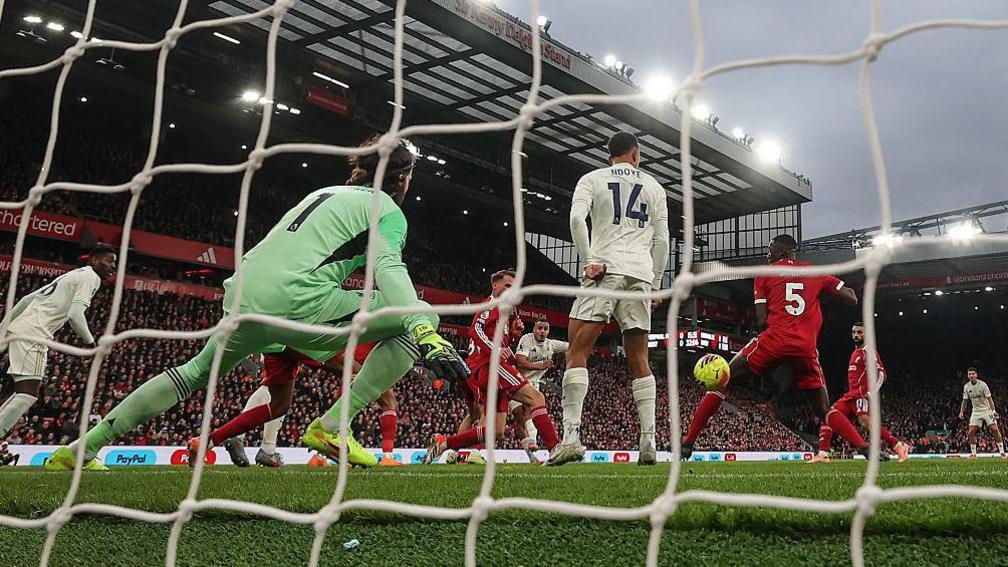

Few topics in football spark as much debate as the offside rule. Whether it is a disallowed goal in a World Cup final or a hairline VAR call in a midweek league match, the rule touches every level of the game. Yet for all its controversy, the offside rule evolution over the past 160 years is a fascinating story of football finding its identity, balancing attacking freedom against defensive organisation, and ultimately chasing the impossible ideal of perfect officiating. Understanding where it came from, how it changed, and what it looks like today makes you a smarter fan and a sharper critic of the decisions that shape matches.
Table of Contents
- The Origins of the Offside Rule in 1863
- The 1925 Reform That Changed Football Forever
- How Active Play Redefined the Offside Rule Evolution
- Redefining the Body Line: Arms, Heads and Feet
- The Introduction of the Assistant Referee Flag Protocol
- VAR and the New Era of Offside Rule Evolution
- Semi-Automated Offside Technology: The Next Step
- What the Offside Rule Evolution Tells Us About Football Itself
The Origins of the Offside Rule in 1863
When the Football Association was founded in 1863 and the Laws of the Game were first written down, a basic offside principle was already in place. A player was considered offside if fewer than three opponents stood between them and the goal at the moment the ball was played forward. This three-player rule was designed to prevent goal-hanging, a habit where attackers would simply loiter near the opposing goalkeeper waiting for long passes. The spirit of the law was clear: players should be involved in the game, not just camping at the far post waiting for a scoring opportunity to fall into their lap. This early framework set the philosophical foundation for every version of the offside rule evolution that would follow.
The 1925 Reform That Changed Football Forever
The most dramatic single moment in the offside rule evolution came in 1925, when the Football Association reduced the minimum number of defenders required from three to two. This seemingly minor change had enormous consequences. Before 1925, goal totals across the Football League had been falling sharply. Defenders, led by tacticians at clubs like Newcastle United, had mastered the art of stepping up to trap attackers offside before they could threaten the goal. The game was becoming stagnant and heavily weighted toward defence.

The two-player rule transformed everything almost overnight. In the 1925 to 1926 season, goals per game in the Football League jumped from around 2.5 to over 3.5. Tactics had to be rethought entirely. Herbert Chapman at Arsenal famously developed the WM formation in direct response, using a centre-back to plug the gap that the new rule created. The offside trap did not disappear, but the entire geometry of the game shifted toward a more open, goal-hungry style that supporters loved.
How Active Play Redefined the Offside Rule Evolution
Through the mid-twentieth century, the core offside structure remained relatively stable. But referees and the game’s governing bodies increasingly recognised that simply being in an offside position was not the same as actually influencing play. Gradual interpretations began to take hold, eventually codified formally by FIFA and the International Football Association Board (IFAB). A player who was in an offside position but not involved in active play would not be penalised. This concept of active involvement became central to the modern game, allowing attackers to take up advanced positions without automatically killing a move if the ball was played to a teammate in an onside position.
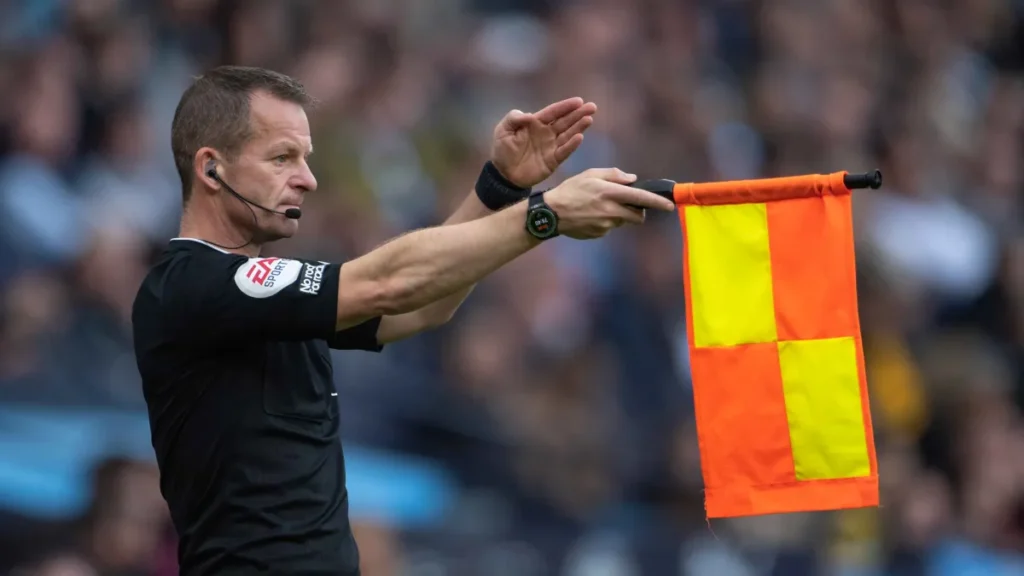
This interpretation introduced far more nuance for linesmen and referees, but it also made the rule far more difficult to apply consistently across competitions and continents. Disputes about what constituted active play versus passive positioning became the dominant debate at coaches’ and referees’ associations for decades.
Redefining the Body Line: Arms, Heads and Feet
Another important chapter in the offside rule evolution came through clarifications about which part of the body counted when determining a player’s position. IFAB confirmed over time that only body parts from which a goal can legally be scored are considered. This excluded the arms, meaning a player’s outstretched arm extending ahead of the last defender would not make them offside. The relevant body parts are the head, torso, and legs. On the surface this sounds straightforward, but in practice it produced some of the tightest and most agonising calls in football, particularly once high-definition cameras and frame-by-frame analysis became standard tools in stadium broadcasts.
The Introduction of the Assistant Referee Flag Protocol
For most of the twentieth century, the key instruction to linesmen was to raise their flag the moment they spotted an offside. This created a significant problem: linesmen would flag before knowing whether the player in the offside position would touch the ball or become involved in play. Goals were regularly disallowed because a flag went up too early, even when the offside player never touched the ball and a different, clearly onside player scored. In response, football authorities introduced guidance instructing assistant referees to delay their flag when there was doubt about whether the offside player would become actively involved.
This change in flagging protocol was a meaningful step in the offside rule evolution, because it asked officials to make a judgement about the future rather than simply reacting to the present. It reduced incorrect disallowances but also introduced a new wave of controversy when goals were allowed following passages of play that involved players who had been in offside positions.
VAR and the New Era of Offside Rule Evolution
The introduction of Video Assistant Referee technology from 2018 onwards, including its use at that year’s FIFA World Cup in Russia, represented the single biggest operational change to offside decisions since the 1925 law amendment. VAR gave officials access to multiple camera angles, freeze-frame imagery, and semi-automated line-drawing tools to review potential offside incidents. In theory, this promised an end to the human error that had plagued the rule for over a century. In practice, it delivered extraordinary accuracy alongside extraordinary controversy.
The core issue is that VAR offside lines are drawn manually by operators, using broadcast cameras that are rarely placed perfectly perpendicular to the plane of the field. A fraction of a pixel difference in line placement can be the difference between a valid goal and a disallowed one. Goals were overturned for a player’s shoulder being marginally ahead, toenails being marginally offside, and attacking players being ruled out by armpit margins. While technically more accurate than the naked eye, VAR’s precision exposed the fundamental problem with the offside rule evolution reaching its current state: the law does not have a margin for error, even though every measurement method does.
Semi-Automated Offside Technology: The Next Step
In response to the delays and controversies that VAR line checks produced, FIFA introduced semi-automated offside technology at the 2022 World Cup in Qatar. The system uses dedicated cameras tracking 29 data points on every player’s body at 50 frames per second, combined with artificial intelligence to calculate three-dimensional player positions automatically. Decisions that once took several minutes of manual line-drawing can be produced in seconds. The 2022 World Cup marked a genuine landmark in the offside rule evolution, moving from human judgement and hand-drawn lines to algorithmic measurement and spatial tracking.
Several major leagues began adopting similar systems in the seasons that followed, with the Premier League implementing its own automated offside technology. The debates did not disappear entirely, but the nature of criticism shifted from accuracy concerns to philosophical ones: is millimetre precision actually the right standard for a rule designed around the broad concept of gaining an unfair advantage?
What the Offside Rule Evolution Tells Us About Football Itself
Looking at the full arc from 1863 to the present, the offside rule evolution is really a story about football trying to define fairness in a game that is fundamentally fluid, fast, and imprecise. Every major change responded to a genuine problem: attacking play being choked off, goals being wrongly disallowed, human error costing clubs crucial results. Yet every solution created its own set of controversies. The rule has never been loved. It has, however, always been essential.
The ongoing debate about whether to introduce a tolerance margin, or to redefine what constitutes an offside advantage rather than an offside position, suggests the evolution is far from over. Football continues to wrestle with the same core tension it always has: how do you protect fair competition without interrupting the spontaneous, chaotic beauty that makes the game worth watching in the first place?







[…] the world both the most controversial goal and the most brilliant goal in World Cup history, and football has never stopped talking about […]