
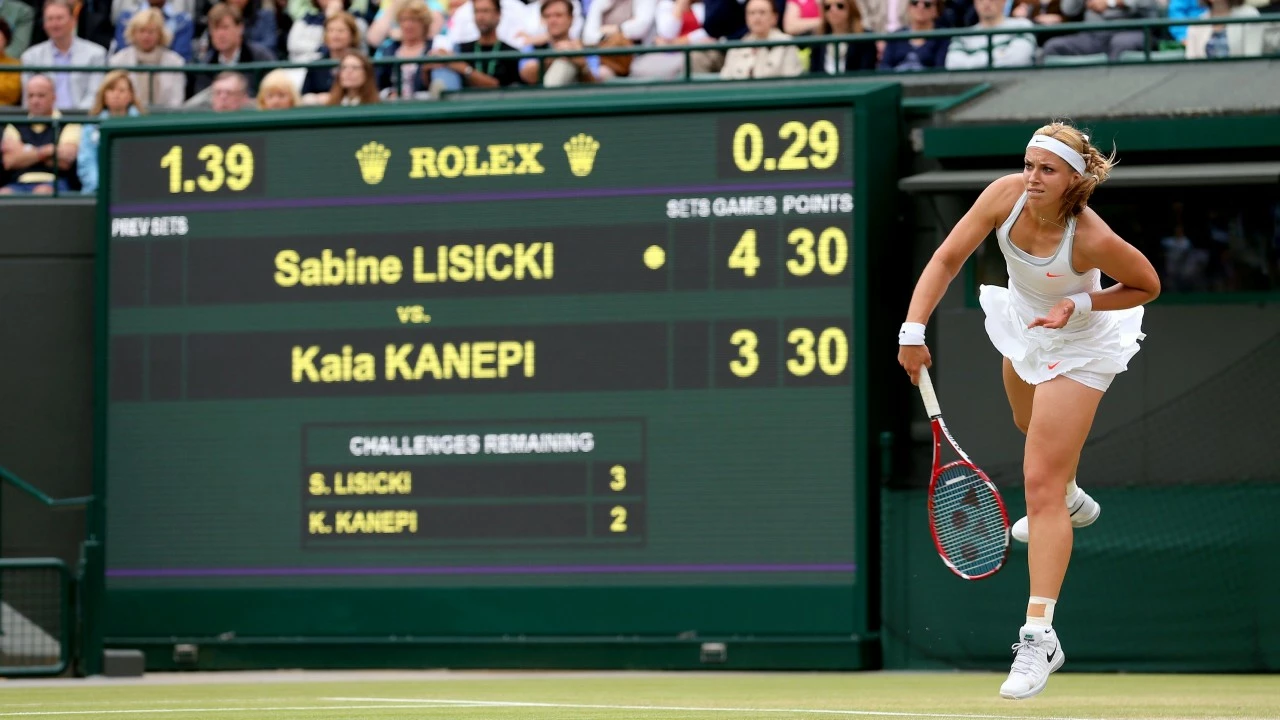

If you have ever sat down to watch a tennis match and wondered why the score jumps from 0 to 15 to 30 to 40 instead of just counting 1, 2, 3 like every other sport on the planet, you are not alone. It is one of the most commonly asked questions in sports, and the answer takes us on a surprisingly deep journey through medieval France, clock faces, and centuries of sporting tradition. Understanding the tennis scoring system origins does not just satisfy curiosity. It gives you a whole new appreciation for every point played at Wimbledon, the US Open, or your local club court.
Table of Contents
- Why Does Tennis Use 15, 30, and 40?
- The 45 That Became 40: A Linguistic Shortcut
- What Does “Love” Mean in Tennis and Where Did It Come From?
- The Deuce Rule: Why Two Points Are Not Always Enough
- How Did Tennis Scoring System Origins Influence the Modern Game?
- Other Theories Worth Knowing About Tennis Scoring
- Why the Tennis Scoring System Still Fascinates People Today
Why Does Tennis Use 15, 30, and 40?
The most widely accepted explanation for the tennis scoring system origins traces back to medieval France in the 1400s. The game played back then was called “jeu de paume,” which roughly translates to “game of the palm,” since players originally hit the ball with their hands before rackets came into use. This early version of tennis was enormously popular among French nobility, and its scoring was tied to something almost everyone owned in that era: a clock.
The theory goes that a clock face was used to keep score. Each point won moved the hand of the clock forward by 15 minutes. So the first point moved the hand to 15, the second to 30, and the third to 45. When a player reached 60, they won the game. Simple enough, right? So where did 40 come from?
The 45 That Became 40: A Linguistic Shortcut
Here is where the tennis scoring system origins get genuinely interesting. The jump from 45 to 40 is most commonly attributed to a simple matter of practicality and pronunciation. When calling out scores quickly during a fast-moving match, “forty-five” was a mouthful. Over time, players and officials began shortening it to “forty,” and the abbreviation stuck permanently.

There is also a second theory worth considering. Some historians believe the change from 45 to 40 was made deliberately to accommodate the concept of “deuce,” which requires a player to win two consecutive points after reaching a tied score. If both players reached 45, there would be no room on the clock face to represent the advantage point needed before winning. By dropping the final score to 40, the system allowed a logical progression: 40, then advantage, then game. Whether it was convenience or clever design, the result is the same scoring system tennis players use today across every tournament in the world.
What Does “Love” Mean in Tennis and Where Did It Come From?
No discussion of tennis scoring system origins is complete without addressing “love,” the term used for zero. If you have ever wondered why a score of nothing is called love, there are two main theories that historians debate.
The first and most popular theory links the word to the French word “l’oeuf,” which means “the egg.” An egg, of course, is oval shaped and resembles a zero visually. This kind of number-to-object association is not unique to tennis. You see the same logic in cricket, where a score of zero is called a “duck” because of the duck-egg shape. Over time, English-speaking players may have anglicized “l’oeuf” into “love,” and the term carried forward through generations of the sport.
The second theory suggests the word comes from the English phrase “to play for love,” meaning to play for the joy of the game rather than for money or reward. In this reading, starting at “love” means you have nothing to lose and everything to gain. While this interpretation is more poetic, most linguistic historians lean toward the French egg theory as the more likely origin.
The Deuce Rule: Why Two Points Are Not Always Enough
Understanding the tennis scoring system origins also means understanding deuce, which is arguably the most dramatic rule in the sport. When both players reach 40, the game does not end on the next point. Instead, the score is called deuce, and the winner must win two consecutive points to claim the game.
The word “deuce” itself comes from the French word “deux,” meaning two, reflecting the requirement to win by two clear points. This rule was introduced to prevent matches from being decided by a single lucky shot when both competitors are evenly matched. It adds tension, drama, and a genuine test of mental and physical stamina. In high-level matches, players can spend several minutes locked in a deuce battle for a single game, which is part of what makes tennis so compelling to watch.
How Did Tennis Scoring System Origins Influence the Modern Game?
The scoring structure that evolved from those French courtyards has proven remarkably resilient. Despite centuries of change in equipment, court surfaces, and playing styles, the fundamental scoring system has remained almost entirely intact. That consistency speaks to how well-designed the system actually is, even if its origins were never planned with modern professional sport in mind.
Today, some competitions have introduced tie-breaks and “no-ad” scoring to speed up matches, particularly in doubles and lower-stakes tournament formats. The ATP and WTA tours have experimented with formats like the match tie-break to reduce extremely long matches. But at the Grand Slams, traditional scoring largely rules, especially in the men’s game where five-set matches with standard deuce rules are still the norm.
Other Theories Worth Knowing About Tennis Scoring
While the clock face explanation dominates most conversations about tennis scoring system origins, it is worth noting that not all historians agree. Some researchers argue there is no direct documented evidence linking early tennis scores to actual clock faces. They suggest the clock theory may itself be a later rationalization invented to explain a system that grew more organically through custom and tradition.
Another alternative theory points to the use of “chases” in real tennis, the older indoor version of the game still played in a handful of courts worldwide. In real tennis, court measurements and positional markers may have influenced how points were tracked, though this connection is also difficult to verify with certainty. What is clear is that by the time the modern outdoor lawn tennis game was codified in the 1870s by Major Walter Clopton Wingfield and later standardized through the All England Club, the 15-30-40 system was already firmly established and simply carried over.
Why the Tennis Scoring System Still Fascinates People Today
Centuries after those first French courtiers batted a ball back and forth across a net, people are still asking where the numbers came from. That curiosity is part of what makes tennis such a rich sport. Its rules carry the weight of history, and every time an announcer calls “fifteen-love” or “deuce,” they are echoing terminology that has survived kings, revolutions, and the rise and fall of entire empires.
The tennis scoring system origins remind us that sports are living artifacts of the cultures that created them. The quirks we inherit are not bugs in the system. They are features with stories attached. And in tennis, those stories happen to stretch back more than five hundred years.
So the next time you are watching a tiebreak at Wimbledon and the crowd goes quiet at 40-all, take a second to appreciate that the drama you are witnessing is playing out within a framework built by medieval French nobility who used a clock to keep score. That is not just a fun fact. That is history, still in motion.






No Comments