
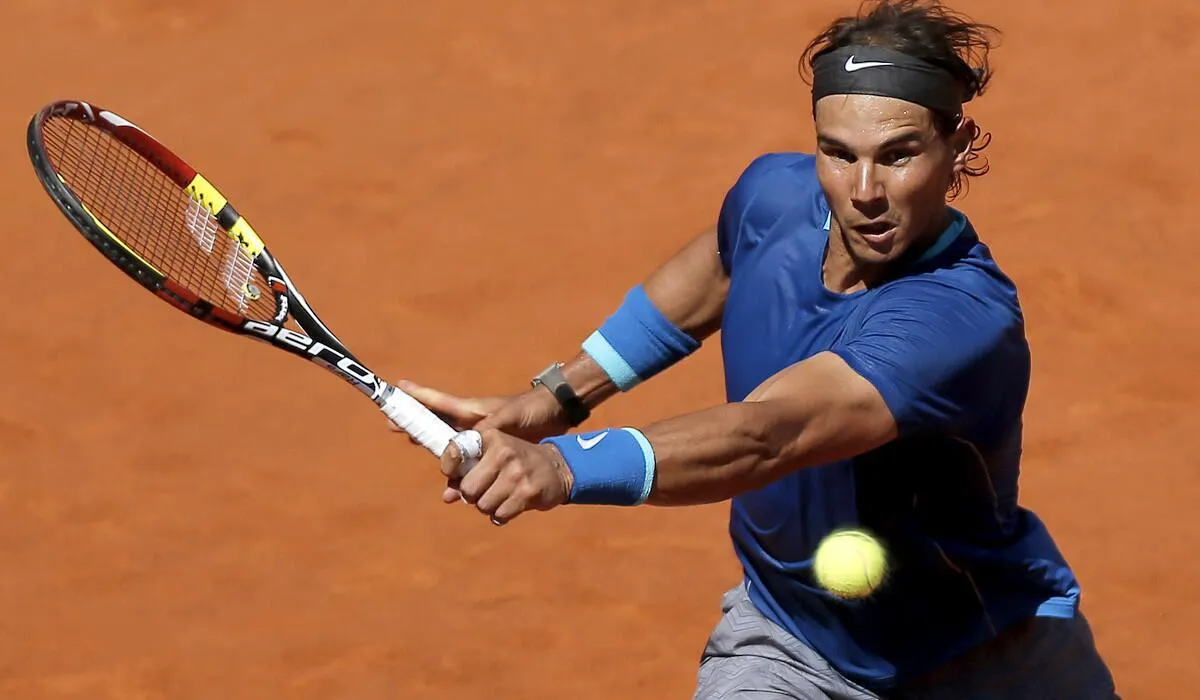

In a sport defined by fine margins and constant evolution, one achievement stands almost beyond comparison. Rafael Nadal’s clay court dominance, particularly at the French Open, represents the most overwhelming display of superiority tennis has ever witnessed. Winning a Grand Slam once is a career milestone. Winning it 14 times borders on the unimaginable. At Roland Garros, Nadal didn’t just win titles, he redefined what dominance looks like on a single surface.
Table of Contents
- Why Clay Courts Suit Nadal Perfectly
- Physical and Mental Endurance
- Nadal’s First French Open Triumph (2005)
- The Golden Years – Establishing Total Control
- Rivalries That Defined Nadal’s Clay Era
- Federer and Djokovic on Clay
- Setbacks, Injuries, and Comebacks
- The Second Peak – Extending the Impossible
- Breakdown of the 14 French Open Titles
- Why Nadal at Roland Garros Is Untouchable
- Can Anyone Ever Match This Record?
- What Nadal’s Clay Dominance Means for Tennis History
- The King of Clay Forever
Why Clay Courts Suit Nadal Perfectly
Clay courts reward patience, endurance, and heavy topspin, all of which align perfectly with Nadal’s natural strengths. His left-handed forehand produces extreme topspin that pushes opponents far behind the baseline, especially on slower clay surfaces. The high bounce neutralizes flatter hitters, while Nadal’s speed and defensive instincts turn points into physical battles few can survive.
Physical and Mental Endurance
Clay matches often stretch into long rallies and extended matches. Nadal’s fitness, resilience, and willingness to grind gave him a decisive edge, allowing him to outlast even the most talented opponents.
Nadal’s First French Open Triumph (2005)
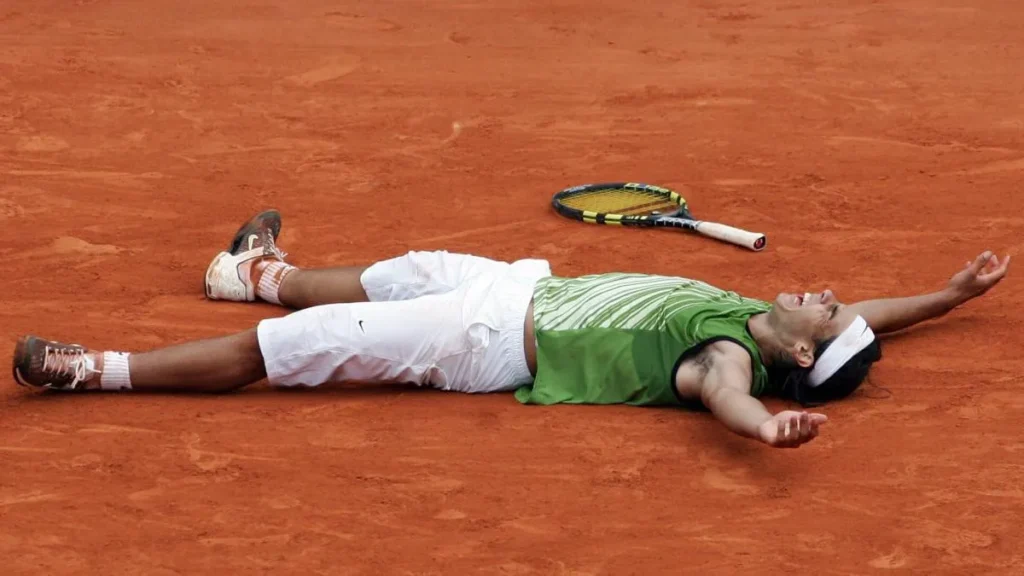
Nadal announced himself to the tennis world in 2005 at just 19 years old. In his first appearance at the French Open, he dominated the field and defeated Mariano Puerta in the final. It was immediately clear this was not a one-off breakthrough. His movement, confidence, and composure on clay suggested a future built around Roland Garros success.
The Golden Years – Establishing Total Control
Between 2006 and 2014, Nadal turned Paris into his personal fortress. During this period, he captured nine French Open titles, often winning with startling ease. He adapted to different opponents, weather conditions, and even rule changes, yet his grip on the tournament never loosened. Many finals were decided in straight sets, highlighting the gap between Nadal and the rest of the field on clay.
Rivalries That Defined Nadal’s Clay Era
Nadal’s dominance becomes even more impressive when considering the opponents he faced. He regularly battled legends like Roger Federer and Novak Djokovic, players who dominated other surfaces.
Federer and Djokovic on Clay
Federer, arguably the greatest grass-court player, struggled to impose his attacking style against Nadal’s heavy topspin. Djokovic pushed Nadal harder than anyone at Roland Garros, handing him rare defeats, yet Nadal still finished with a vastly superior clay record.
Setbacks, Injuries, and Comebacks
Nadal’s journey was not uninterrupted. Chronic knee and foot issues forced him to miss the French Open in 2009, 2017 preparation phases, and later years. Remarkably, setbacks often preceded comebacks. Each return seemed to strengthen his legend, as he repeatedly proved doubts premature.
The Second Peak – Extending the Impossible
Winning Grand Slams after age 30 is rare. Nadal won eight French Open titles after turning 25 and multiple titles in his mid-30s, including his final triumph in 2022. Adjustments to scheduling, shorter points, and improved serve efficiency allowed him to conserve energy while remaining lethal.
Breakdown of the 14 French Open Titles
From 2005 to 2022, Nadal amassed a 112–4 win-loss record at Roland Garros. He won 14 titles, many without dropping a set. His finals record stands at a perfect 14–0, an unmatched statistic in tennis history. Several of those victories came against top-ranked opponents, reinforcing that his dominance was not due to weak competition.
Why Nadal at Roland Garros Is Untouchable
Beyond technique and fitness, Nadal developed a psychological edge. Opponents often entered matches beaten before the first ball. Familiarity with the court, crowd support, and years of success created an aura that no other player has replicated at a single Grand Slam.
Can Anyone Ever Match This Record?
Modern tennis scheduling, surface homogenization, and physical demands make it highly unlikely any player will approach 14 French Open titles. Even winning half that number would be considered extraordinary. Nadal’s record stands as one of the most secure achievements in sports.
What Nadal’s Clay Dominance Means for Tennis History
Rafael Nadal clay court dominance reshaped discussions about greatness. It demonstrated that specialization, when paired with excellence, can redefine a sport. His achievements elevated the prestige of clay tennis and set a benchmark future generations may never reach.
The King of Clay Forever
Rafael Nadal did more than dominate clay courts, he became synonymous with them. His 14 French Open titles are not just records, they are monuments to perseverance, adaptation, and excellence. Long after statistics fade, Nadal’s legacy at Roland Garros will remain the gold standard for dominance in sport.




No Comments