
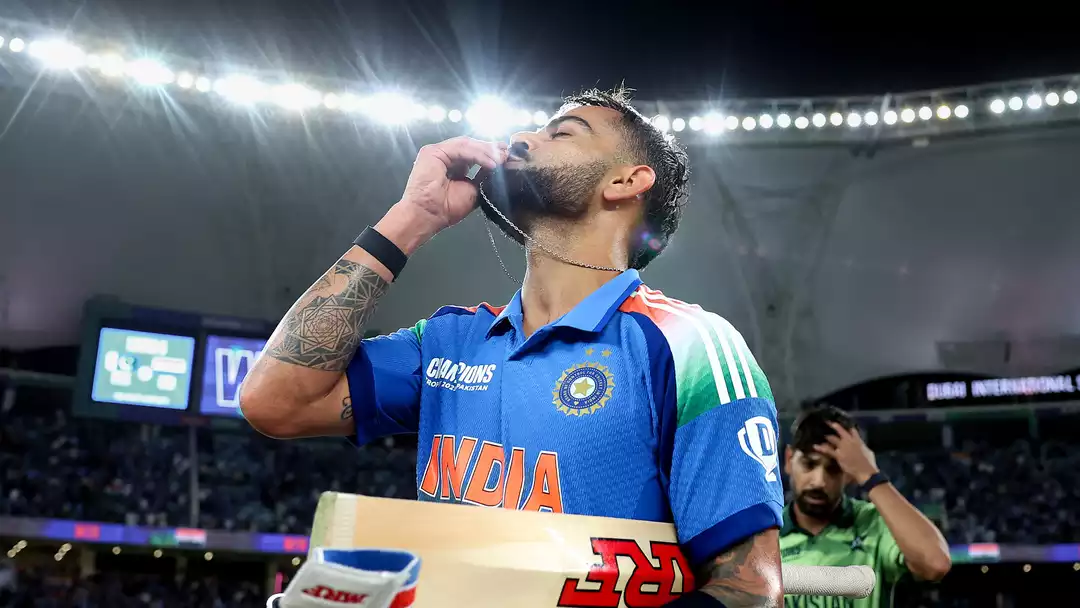

When the target seems impossible and pressure fills every corner of the ground, one name has consistently risen above the rest. Virat Kohli run chases have become the stuff of cricketing legend, a body of work so extraordinary that analysts, fans, and fellow cricketers struggle to find adequate words to describe it. Over nearly two decades at the international level, Kohli has turned the art of chasing into a science, combining mental toughness with flawless technique to deliver wins that once seemed out of reach.
Table of Contents
- Why Virat Kohli Run Chases Stand Apart from Every Other Batter
- The Numbers Behind the Greatest Virat Kohli Run Chases in ODI Cricket
- How Kohli’s Test Match Run Chases Cemented His All-Format Dominance
- The Mental Framework Behind Virat Kohli’s Chase Mastery
- Memorable Virat Kohli Run Chases That Defined an Era
- What Kohli’s Run Chase Record Means for Future Generations
- Virat Kohli Run Chases Across All Three Formats: A Statistical Summary
- Conclusion: The Enduring Legacy of the Greatest Chase Master in Cricket
This article takes a deep dive into the numbers, the moments, and the mindset behind Kohli’s unparalleled success in run chases across all formats of the game.
Why Virat Kohli Run Chases Stand Apart from Every Other Batter
Most batters perform well in ideal conditions. Very few can produce match-winning innings when their team needs it most. What separates Kohli is his extraordinary ability to raise his game precisely when the stakes are at their highest. His conversion rate under pressure is unmatched in modern cricket, and his average in successful run chases dwarfs what most batters manage in regular match situations.
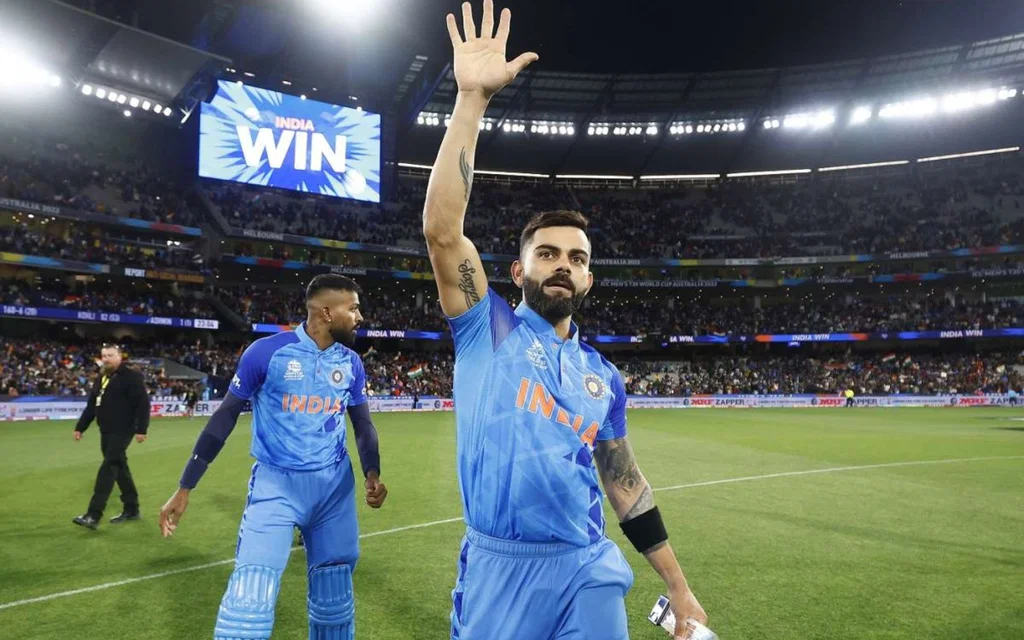
In One Day Internationals alone, Kohli averages above 95 when India successfully chases a target. That number is not a typo. It reflects a pattern of sustained, match-defining excellence that has played out across different opponents, different conditions, and different parts of the world. His success is not luck, it is architecture built on preparation, focus, and an almost obsessive attention to the demands of each situation.
The Numbers Behind the Greatest Virat Kohli Run Chases in ODI Cricket
Statistics in cricket rarely tell the whole story, but in Kohli’s case, they come very close. His ODI record in run chases is the single most dominant individual statistic in the history of limited-overs cricket. With over 6,000 runs scored in successful ODI chases at the time of writing, he leads the format comfortably, both in volume and in average.
Some of his most celebrated ODI chases include a stunning unbeaten 183 against Pakistan in the Asia Cup in 2012, where he guided India from a difficult position to an improbable victory almost single-handedly. There was also the iconic 148 against Pakistan in the 2012 Asia Cup, chasing down 330 with composure that left cricket fans worldwide speechless. These were not cameo contributions. They were complete, authoritative performances that redefined what was considered chaseable.
How Kohli’s Test Match Run Chases Cemented His All-Format Dominance
While ODI chasing records get most of the attention, Kohli’s contributions in Test match run chases are equally staggering. Test cricket is widely considered the ultimate examination of a batter’s skill, and chasing in the fourth innings of a Test match is one of its most brutal challenges. Pitches deteriorate, bowlers are fresh with ideas, and the pressure of a result game amplifies every mistake.
Kohli has delivered in that environment repeatedly. His century against Australia at Adelaide in 2014 during a difficult fourth-innings chase showcased his ability to read a match situation and pace an innings accordingly. His performances in Test chases in conditions helpful to swing and seam bowling, such as in England and South Africa, further underline why he is regarded as the most complete batter of his generation. Under him as Test captain, India became one of the most aggressive and successful chasing sides in the world, a cultural shift that is directly tied to the confidence his batting gave the team.
The Mental Framework Behind Virat Kohli’s Chase Mastery
Records and averages do not fully explain the Kohli phenomenon. To understand his chasing brilliance, you have to look at the mental framework that drives it. Kohli has spoken extensively about the concept of process over outcome, focusing entirely on what is required ball by ball rather than being overwhelmed by the size of the target. This approach, deeply rooted in sports psychology, allows him to break any chase into manageable segments.
He also thrives on pressure rather than wilting under it. There is a well-documented pattern in his career where a team in trouble seems to sharpen his focus rather than distract it. He has spoken about using crowd noise, opponent celebrations, and high-pressure moments as fuel rather than friction. This mental inversion, turning adversity into motivation, is rare even among elite athletes and sets him apart from virtually every contemporary batter in world cricket.
Memorable Virat Kohli Run Chases That Defined an Era
To appreciate the full scope of Kohli’s legacy, it helps to revisit some of the specific innings that have shaped cricketing history. Each of the following performances represents not just a win, but a moment that changed how people perceived what was achievable in a run chase.
The 2012 CB Series chase against Sri Lanka, where India needed 321 to win and Kohli anchored the innings with an unbeaten 133, stands out as one of his earliest statements of intent on the world stage.
Against Australia in the 2016 T20 World Cup, chasing 161 in the final over required two sixes off the last two balls, and while Kohli did not finish the job personally, his anchoring innings under pressure set the platform. His 82 not out in that match in conditions suited to pace bowling was a masterclass in calculated aggression.
Then there is the 2022 T20 World Cup knock of 82 not out against Pakistan. With India needing 28 off the last over and 16 off the last ball seemingly impossible, Kohli single-handedly shifted the momentum of the entire tournament with an innings that is already considered one of the greatest in T20 history. He combined raw power with extraordinary calmness, a combination that seems to visit him precisely when it is needed most.
What Kohli’s Run Chase Record Means for Future Generations
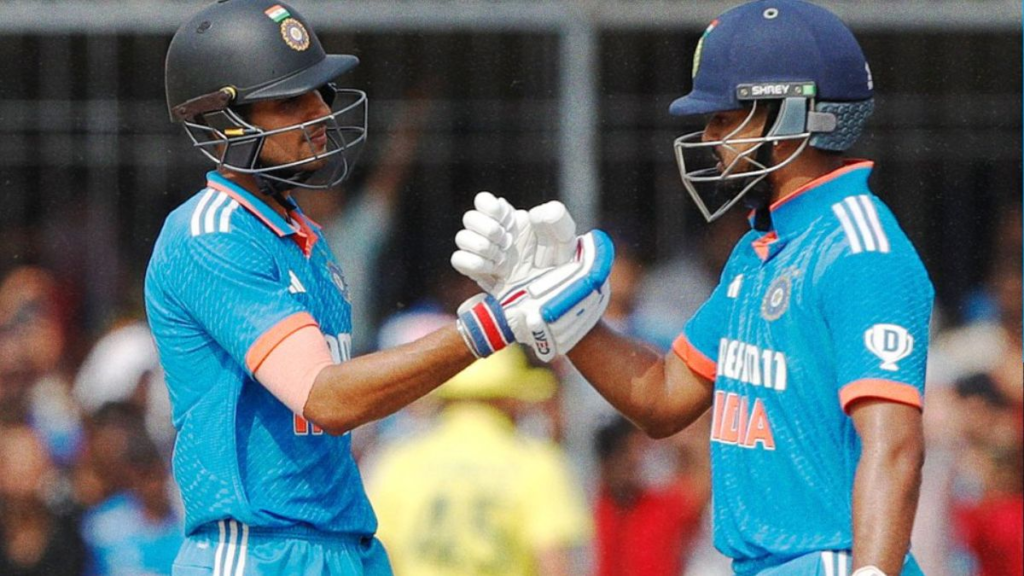
Beyond the personal records, Virat Kohli’s run chases have had a generational impact on how Indian cricket approaches batting in pursuit situations. A culture of chasing with ambition, rather than survival, now defines India’s batting philosophy. Younger players like Shubman Gill and Shreyas Iyer have grown up watching Kohli build these innings and have absorbed a blueprint for pressure batting that will shape Indian cricket for years to come.
Coaches, analysts, and academies around the world now use footage of Kohli’s chase innings as teaching material. The footwork, the shot selection, the running between wickets, and the body language under pressure are all studied as models of how the game should be played when results are on the line. His influence extends well beyond India and will continue to be felt long after his playing days are over.
Virat Kohli Run Chases Across All Three Formats: A Statistical Summary
Looking at the numbers across formats gives a clearer picture of how sustained this excellence has been. In ODIs, his batting average in chases exceeds 95, which is more than double the global average for top-order batters in the same situation. In Tests, he averages close to 60 in fourth-innings chases, well above what most world-class batters achieve in first-innings conditions. T20 Internationals, his strike rate in chase situations exceeds 135, demonstrating that he adapts his approach without compromising his fundamental strengths.
These numbers, taken together, tell the story of a batter who does not simply perform well in pursuit situations occasionally. He performs at his peak, consistently, across formats, across opponents, and across the full span of a career that has now stretched nearly two decades. That level of consistency in high-pressure scenarios has never been seen before in cricket and may never be replicated.
Conclusion: The Enduring Legacy of the Greatest Chase Master in Cricket
Virat Kohli run chases are more than a collection of brilliant innings. They represent a philosophy, a standard, and a legacy that has permanently changed the game. He has shown that run chases, no matter how steep, are opportunities rather than obstacles, and he has backed that belief with performance after performance that has left the cricketing world in awe.
Whether you are a lifelong cricket fan or someone discovering the sport for the first time, the story of Kohli’s record-breaking run chases is one of the most compelling narratives in the history of sport. It is a story about skill, yes, but more than anything, it is a story about the unshakeable belief that any target can be chased down when the right person is at the crease.




No Comments