
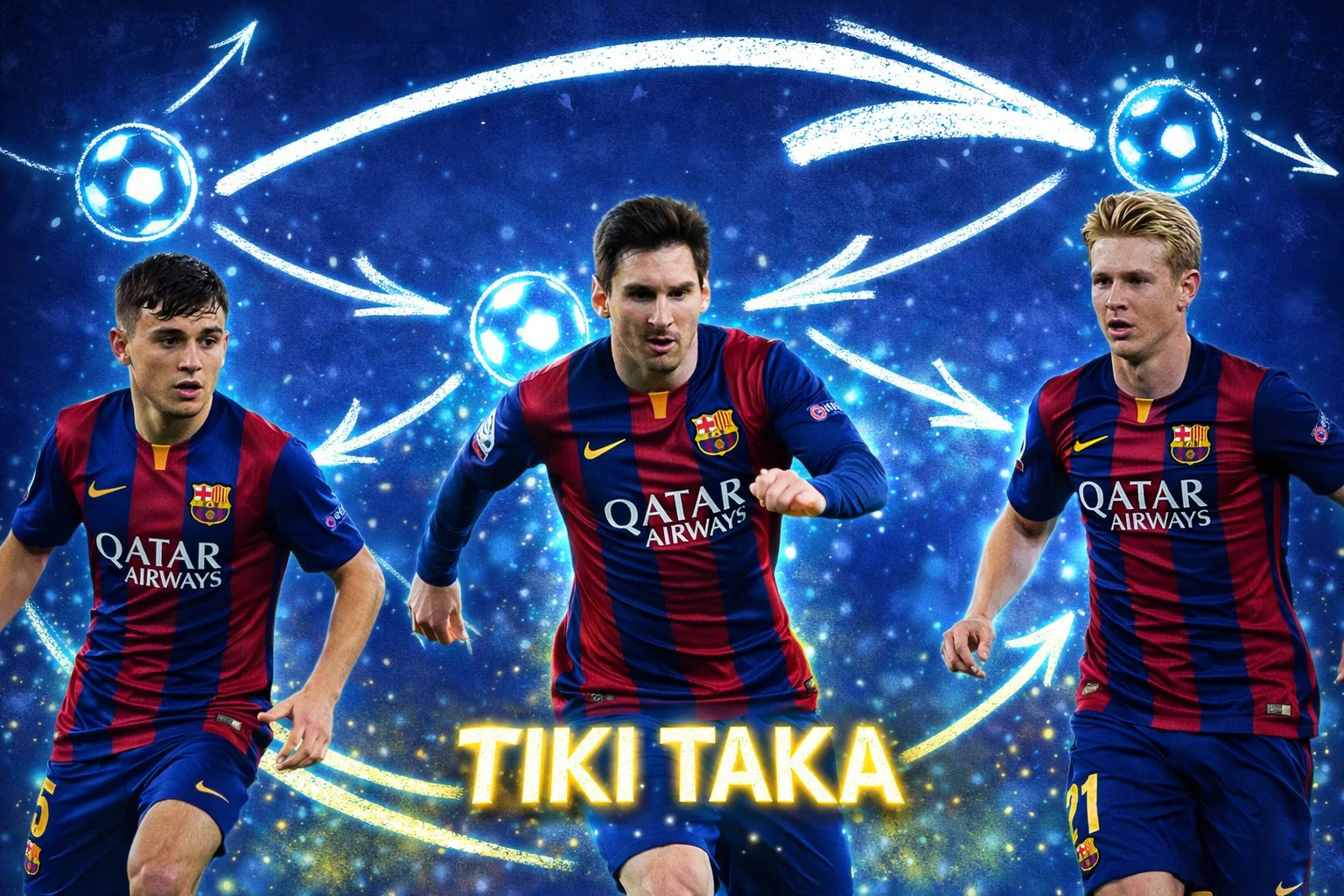

Barcelona’s Tiki-Taka is one of the most influential football philosophies ever developed. At its core, it is a style of play built on short, precise passing, constant movement, relentless pressing, and maintaining possession to dominate opponents rather than simply outscoring them. The name itself comes from the Spanish onomatopoeia for the quick “tick-tack” sound of a ball moving rapidly between players. While the roots of this philosophy trace back to Johan Cruyff’s “Total Football” era at Barcelona in the late 1980s, it reached its absolute peak between 2008 and 2012 under Pep Guardiola, producing what many football analysts consider the greatest club side ever assembled.
Table of Contents
- The Origins: From Cruyff to Guardiola
- The Core Principles That Made Tiki-Taka Unstoppable
- The Players Who Brought Tiki-Taka to Life
- The Trophy Haul That Proved the Philosophy Worked
- How Tiki-Taka Influenced Football Globally
- The Decline and the Legacy Left Behind
- Why Barcelona’s Tiki-Taka Still Matters Today
The Origins: From Cruyff to Guardiola
To understand Barcelona’s Tiki-Taka, you have to go back to Johan Cruyff. When the Dutch legend took charge of Barcelona as manager in 1988, he planted the philosophical seeds that would eventually blossom decades later. Cruyff believed football should be played with intelligence, positional discipline, and creativity. He installed a 4-3-3 system, emphasised technical youth development through La Masia, and demanded his players think faster than the opposition.
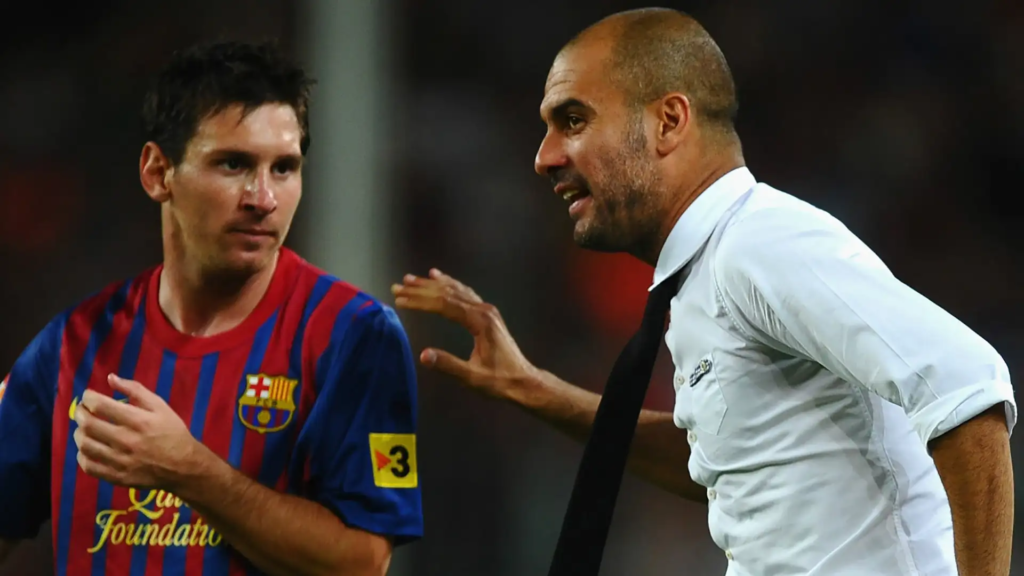
Pep Guardiola, who played under Cruyff during those years, absorbed every lesson. When Guardiola was appointed Barcelona’s first-team manager in 2008, he had already coached the B team and understood the club’s DNA deeply. He didn’t reinvent the wheel. He refined it to an extraordinary degree, combining Cruyff’s positional principles with obsessive pressing, intelligent spacing, and world-class talent to create something the football world had never quite seen before.
The Core Principles That Made Tiki-Taka Unstoppable
Barcelona’s Tiki-Taka rested on several non-negotiable tactical principles that worked together as a unified system rather than isolated ideas.
Positional Play and Spatial Control was the foundation. Guardiola demanded his players always position themselves to create numerical superiority in any zone of the pitch. The idea was simple but brutally difficult to execute: always have more passing options available than the opponent has defenders nearby. This stretched the opposition and created pockets of space that elite technicians like Xavi Hernández and Andrés Iniesta could exploit in an instant.
High Pressing After Losing the Ball was equally central. Barcelona famously operated on the “six-second rule,” a concept Guardiola drilled relentlessly. The moment possession was lost, every player pressed aggressively to win it back within six seconds. This transformed defence into an extension of attack. The opposition rarely had time to transition or think, which psychologically dismantled teams before they could settle into any rhythm.
Dominating Possession Without Purpose was something Guardiola actively rejected. Critics often misrepresent Tiki-Taka as passing for the sake of passing, but Guardiola was explicit that possession only mattered when it moved the opponent out of shape. Every sequence of passes had an underlying intention, to stretch, to tire, to create a gap, or to draw a press before switching the play.
The Players Who Brought Tiki-Taka to Life
No tactical system, however brilliant on a whiteboard, functions without the right players executing it. Barcelona were fortunate to have an extraordinary generation of talent, many of whom came through La Masia, perfectly suited to Guardiola’s demands.
Xavi Hernández was the conductor. Arguably the greatest passing midfielder in football history, Xavi’s ability to receive under pressure, scan the pitch, and deliver the ball to exactly the right teammate at exactly the right moment was the heartbeat of the system. He averaged pass accuracy figures that had never been seen at elite level before.
Andrés Iniesta provided the creativity and unpredictability that prevented Tiki-Taka from becoming predictable. While Xavi controlled the tempo, Iniesta broke lines with dribbles, through balls, and movement that defenders simply could not plan for.
Sergio Busquets anchored the defensive structure as a deep-lying playmaker. His spatial awareness and ability to receive in tight areas while shielding the defence gave Barcelona complete control in the build-up phase. Many coaches argue Busquets was the single most important player in the system.
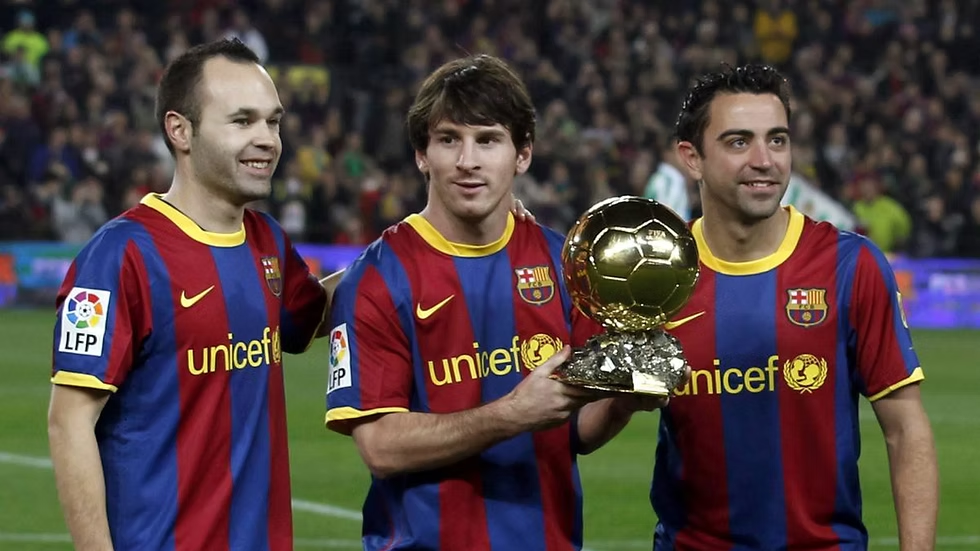
And then there was Lionel Messi. Guardiola’s decision to deploy Messi as a “false nine,” dropping deep to receive rather than staying high as a traditional striker, was genius. It created constant confusion in opposition defences who had no template for dealing with the problem. Messi became the most devastating attacking force in football history operating within this system, winning the Ballon d’Or four consecutive times between 2009 and 2012.
The Trophy Haul That Proved the Philosophy Worked
Between 2008 and 2012, Barcelona’s Tiki-Taka didn’t just win games beautifully. It dominated world football in a way that is almost impossible to repeat. Under Guardiola, the club won two UEFA Champions League titles, three La Liga titles, two Copa del Rey trophies, two FIFA Club World Cups, and multiple Supercopa de España and UEFA Super Cup honours. The 2009 treble winning season, where Barcelona claimed La Liga, the Copa del Rey, and the Champions League, remains one of the greatest single-season achievements in the sport’s history.
The famous 6-2 victory over Real Madrid at the Bernabéu in May 2009 became symbolic of this era. It wasn’t just the scoreline that stunned football. It was how effortlessly Barcelona dismantled a world-class opponent on their own ground.
How Tiki-Taka Influenced Football Globally
Barcelona’s Tiki-Taka changed the way coaches, analysts, and academies across the world thought about football at every level. The Spanish national team, built almost entirely around the Barcelona core, won three consecutive major international tournaments, Euro 2008, the 2010 World Cup, and Euro 2012, validating the philosophy on the biggest international stage possible.
Coaches worldwide began rethinking their approaches to pressing, possession, and positional play. Guardiola himself went on to implement evolved versions of the philosophy at Bayern Munich and Manchester City, winning league titles in Germany and England with dominant, possession-based football. His work at City produced one of the Premier League’s highest ever points totals, 100 points in the 2017/18 season, proving the system could be adapted and exported.
Even coaches who oppose possession-based football openly acknowledge that Barcelona’s Tiki-Taka forced them to develop new counter-strategies, which in itself changed the tactical landscape permanently.
The Decline and the Legacy Left Behind
By 2012 and 2013, teams had begun to find answers. José Mourinho’s Chelsea used deep, compact defensive blocks in the 2012 Champions League semi-final to suffocate Barcelona’s rhythm. Bayern Munich’s high-energy press under Jupp Heynckes dismantled them 7-0 on aggregate in the 2013 semi-final. The tactical arms race had begun, and opponents were studying Barcelona closely enough to expose limitations.
Guardiola left in 2012. Without him, the system gradually lost its precision and intensity. Later iterations of Tiki-Taka at Barcelona under subsequent managers became the slow, possession-heavy caricature that critics had always unfairly accused Guardiola’s version of being.
But the legacy is completely secure. Barcelona’s Tiki-Taka permanently raised the standard of what technical, positional football could achieve. It proved that a team could win the highest honours in world football while playing in a way that was not only effective but genuinely thrilling to watch. It produced the greatest individual player of his generation in Messi, the greatest passing midfielder in Xavi, and a tactical framework that coaches are still studying, debating, and adapting today.
Why Barcelona’s Tiki-Taka Still Matters Today
Modern football continues to evolve rapidly, but the fingerprints of Barcelona’s Tiki-Taka are everywhere. High pressing, positional play, false nines, inverted wingers and build-up from the goalkeeper are now standard concepts across elite football. Teams from the Premier League to the Bundesliga to South American leagues study positional play principles directly descended from what Cruyff planted and Guardiola perfected.
Barcelona’s Tiki-Taka was not just a passing phase in football history. It was a revolution that permanently changed what the sport demands from its players and its coaches. It proved that beauty and winning are not opposites. When executed with the right people and the right conviction, they are exactly the same thing.




No Comments