
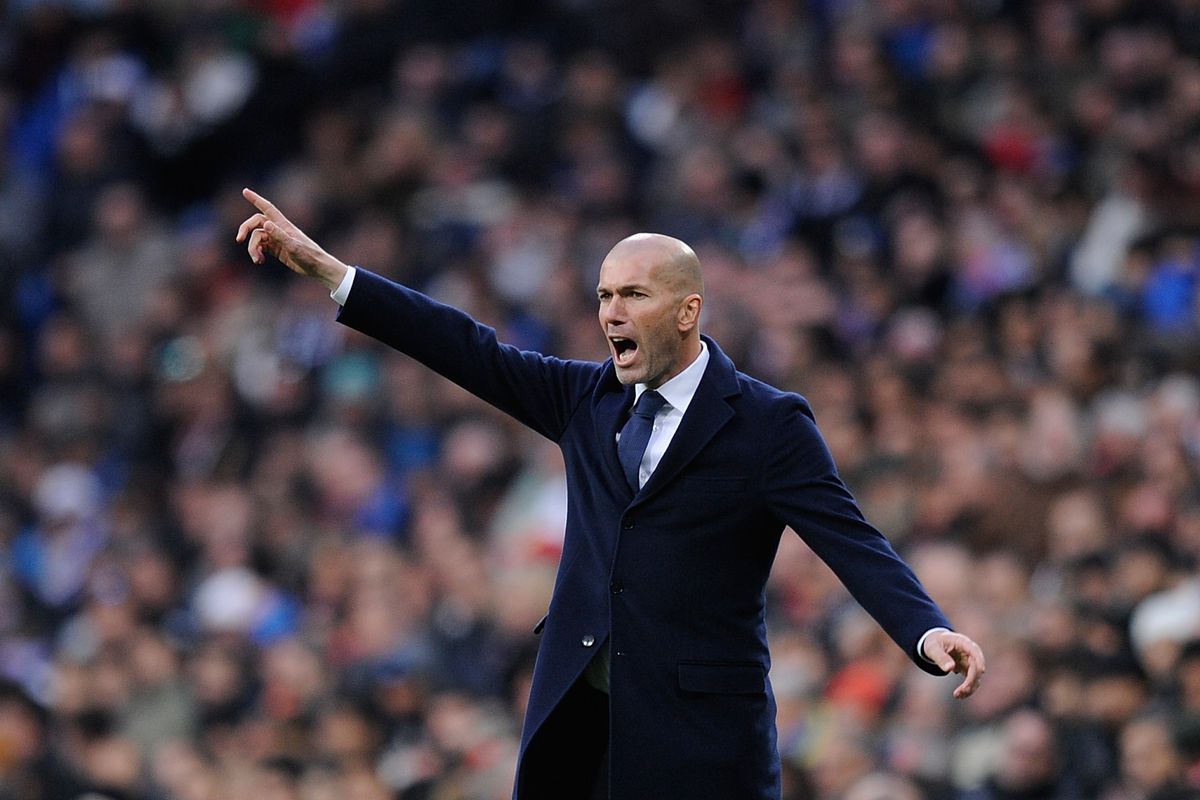

The wait is over. After five years of silence, rejected offers, and endless speculation, Zinedine Zidane is returning to management and he’s doing it on his own terms. As of March 2026, the French Football Federation (FFF) has finalized the agreement that will see “Zizou” take charge of the French national team, succeeding the legendary Didier Deschamps following the conclusion of the 2026 FIFA World Cup in North America.
Table of Contents
- Why Zidane Waited and Why France Was Always the Destination
- The Key Terms of the Agreement
- Tactical Blueprint: From Pragmatism to Artistry
- The Formation Shift
- The Pressing Game
- The Mbappé Liberty
- Wing-Back Width
- The Mbappé Factor: More Than Just Football
- Navigating the Post-Deschamps Transition
- Comparing the Eras: Deschamps vs. Zidane
- The Global Ripple Effect
- Conclusion: A Homecoming Built for History
This isn’t just a coaching appointment. It is a cultural moment for French football, and arguably, for the global game. Zinedine Zidane’s 2026 managerial terms carry implications that stretch far beyond tactics and tournament cycles. Here is a comprehensive breakdown of everything we know.
Why Zidane Waited and Why France Was Always the Destination
To understand why this appointment matters so much, you need to appreciate what Zidane walked away from to get here. During his five-year hiatus from management, he turned down some of the most lucrative and high-profile positions in world football. Manchester United came calling. Paris Saint-Germain pursued him. A reported €100 million annual package from Al-Hilal in Saudi Arabia was placed on the table and declined.
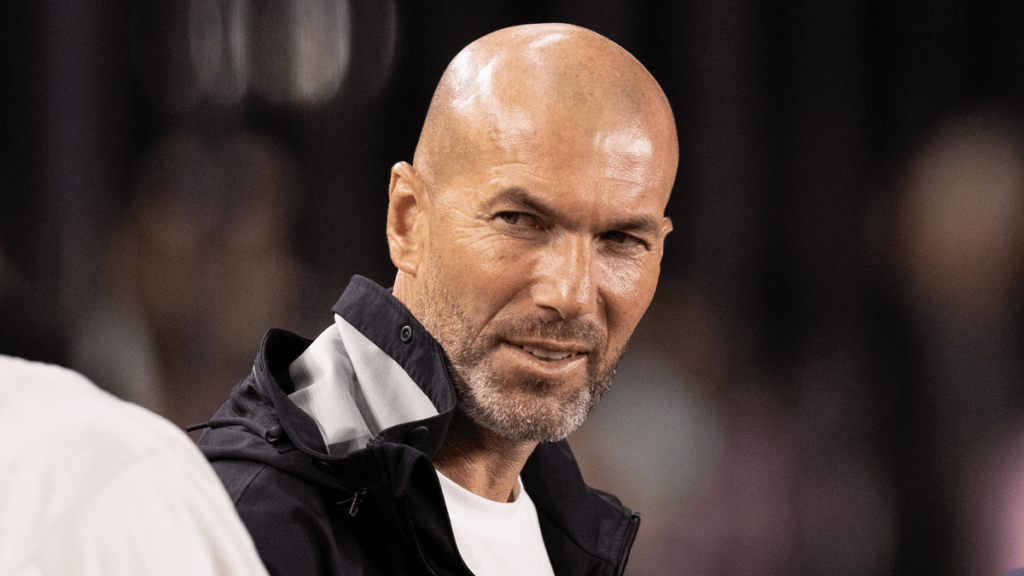
His reason, consistent and unwavering throughout, was singular: he was waiting for France. For Zidane, the national team was never just another job. It represents the pinnacle of his footballing identity, the shirt he wore when he lifted the World Cup in 1998 and the platform he believes deserves his complete, undivided commitment. That patience, rare in modern football, has only deepened the anticipation surrounding his arrival.
The Key Terms of the Agreement
FFF President Philippe Diallo confirmed in March 2026 that a successor to Deschamps had been identified, with reports from both Le Parisien and transfer insider Fabrizio Romano confirming that a verbal pact had been reached. Zidane will formally take office on August 1, 2026, immediately after the World Cup final in New Jersey brings the curtain down on the Deschamps era.
Crucially, the agreement isn’t just about the role itself. Zidane has negotiated conditions that reflect the lessons learned from his time at Real Madrid, where friction over recruitment decisions occasionally complicated his work.
The three pillars of his agreement include:
- Total Technical Control: Zidane has demanded, and received, full authority over the national team’s technical direction, from the senior squad all the way down to the youth academies at Clairefontaine. He will not be a figurehead with a board pulling strings behind him.
- His Own Backroom Staff: He has secured the appointment of long-time lieutenant David Bettoni, widely regarded as the sharp tactical mind that complements Zidane’s world-class man-management instincts.
- A Four-Year Mandate: The contract takes him through to the 2030 World Cup, giving him a full cycle to implement his vision rather than chasing short-term results.
Tactical Blueprint: From Pragmatism to Artistry
The most persistent criticism of Didier Deschamps’ 14-year reign was not the results, a 2018 World Cup win and a 2022 final appearance speak for themselves, but the style. France, despite possessing arguably the most talented generation in European football history, often played with what critics described as the “handbrake on.” Defensive solidity and counter-attacking efficiency were prioritized over the expressive, possession-based football that the squad’s individual quality should have made possible.
Zidane’s mandate is to change that identity fundamentally.
The Formation Shift
Zidane is expected to move France away from the rigid 4-2-3-1 that defined the Deschamps years toward a more fluid 4-3-3 or 3-4-3 structure. The emphasis will shift from defensive organization to technical dominance and proactive pressing.
The Pressing Game
Central to his plan is a high-energy press led by the next generation of French midfielders. Warren Zaïre-Emery and Eduardo Camavinga are expected to be the primary engines of this system, winning the ball higher up the pitch and turning defense into attack at speed.
The Mbappé Liberty
Perhaps the most exciting element of Zidane’s tactical vision is what he plans to do with Kylian Mbappé. Rather than continuing to use him as a traditional left winger or central striker with defensive tracking responsibilities, Zidane is expected to give him the kind of positional freedom he once extended to Cristiano Ronaldo at Real Madrid. A “roaming ten” or drifting inside-forward role that allows Mbappé to find pockets of space and influence matches on his own terms.
Wing-Back Width
To give Mbappé and the central midfield that freedom, Zidane will lean heavily on the athleticism of Theo Hernández and Bradley Barcola to provide width from advanced wing-back positions, keeping the team wide and the opposition defense stretched.
The Mbappé Factor: More Than Just Football
The relationship between Zinedine Zidane and Kylian Mbappé is arguably the emotional core of this entire project. By 2026, Mbappé is no longer a prodigy being managed carefully through tournament football. He is the undisputed leader of the team, the player every tactical decision is ultimately designed to unlock.
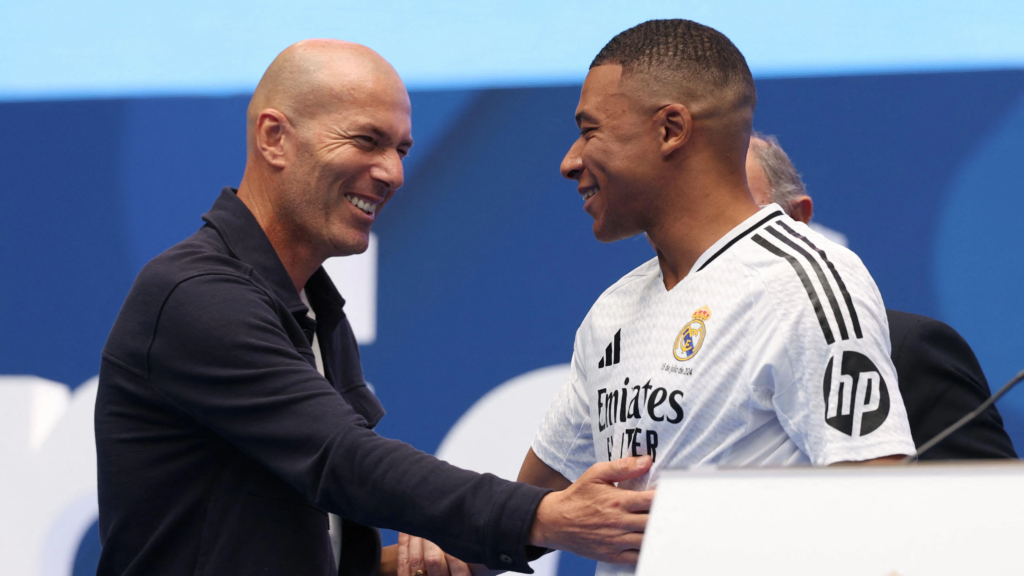
For Mbappé, Zidane represents something different from any other manager he has worked under. As one unnamed FFF official put it in March 2026, Zizou is the only person in French football that Mbappé regards with total, silent reverence. That dynamic, a superstar player genuinely looking up to his coach, is a rare and powerful foundation for a successful international partnership.
The commercial dimension is equally significant. Marketing analysts predict the FFF’s commercial valuation could rise by as much as 25% within the first year of Zidane’s tenure, driven by kit sales and new global sponsorship deals with brands such as Nike and Hublot. The pairing of the greatest French player of the 1990s with the greatest French player of the 2020s is, from a brand perspective, a phenomenon the sport rarely gets to witness.
Navigating the Post-Deschamps Transition
Replacing a manager who delivered a World Cup and 14 years of consistent success is never straightforward. Zidane is acutely aware of this, and his approach to the first 100 days reflects a carefully considered “soft power” strategy rather than an aggressive overhaul.
His opening priorities are expected to include:
- Veteran Audits: Making clear, respectful decisions about the international futures of aging stars like Antoine Griezmann and N’Golo Kanté, ensuring the transition is handled with dignity.
- Fast-Tracking the New Guard: Accelerating the introduction of talents like Michael Olise, Rayan Cherki, and Mathys Tel into meaningful starting roles rather than easing them in gradually.
- Culture Reset: Dismantling the isolated camp atmosphere that has characterized France camps for years and replacing it with a more open, connected relationship between the squad and the French public.
Comparing the Eras: Deschamps vs. Zidane
To appreciate the scale of the shift Zidane represents, it helps to place the two eras side by side.
| Metric | Deschamps Era (2012–2026) | Zidane Terms (2026–2030) |
|---|---|---|
| Primary Style | Defensive Pragmatism | Creative Possession |
| Squad Focus | Proven Veterans | Youth Integration |
| Tactical Setup | Rigid 4-2-3-1 | Fluid 4-3-3 / 3-4-2-1 |
| Public Image | Clinical and Stoic | Iconic and Inspirational |
Neither approach is wrong. Deschamps’ method delivered a World Cup. But football evolves, and Zidane’s appointment signals that French football is ready for its next identity.
The Global Ripple Effect
Zinedine Zidane’s 2026 managerial terms don’t just affect France. With Zidane committed to the national team, the European club market loses its most coveted managerial name. Real Madrid, Bayern Munich, and Liverpool, all of whom have reportedly monitored his availability at various points, must now look elsewhere for their next high-profile appointment.
On a broader level, Zidane’s return gives FIFA a premier global ambassador active in the dugout for the sport’s most important international cycle, the one leading into the centenary World Cup in 2030. His aura, remarkably, has not diminished during his five years away. If anything, the silence has made the anticipation greater.
Conclusion: A Homecoming Built for History
Zinedine Zidane’s return to management is not a nostalgic exercise. It is a forward-looking project built on structure, ambition, and a clear tactical identity designed to take France to 2030 as the dominant force in world football.
In an era increasingly obsessed with data models and analytical frameworks, Zidane stands apart as the rare figure who combines emotional intelligence, tactical intuition, and an aura that transcends the sport itself. The terms are agreed. The vision is set. When the final whistle blows on the 2026 World Cup, the real work begins.

No Comments