
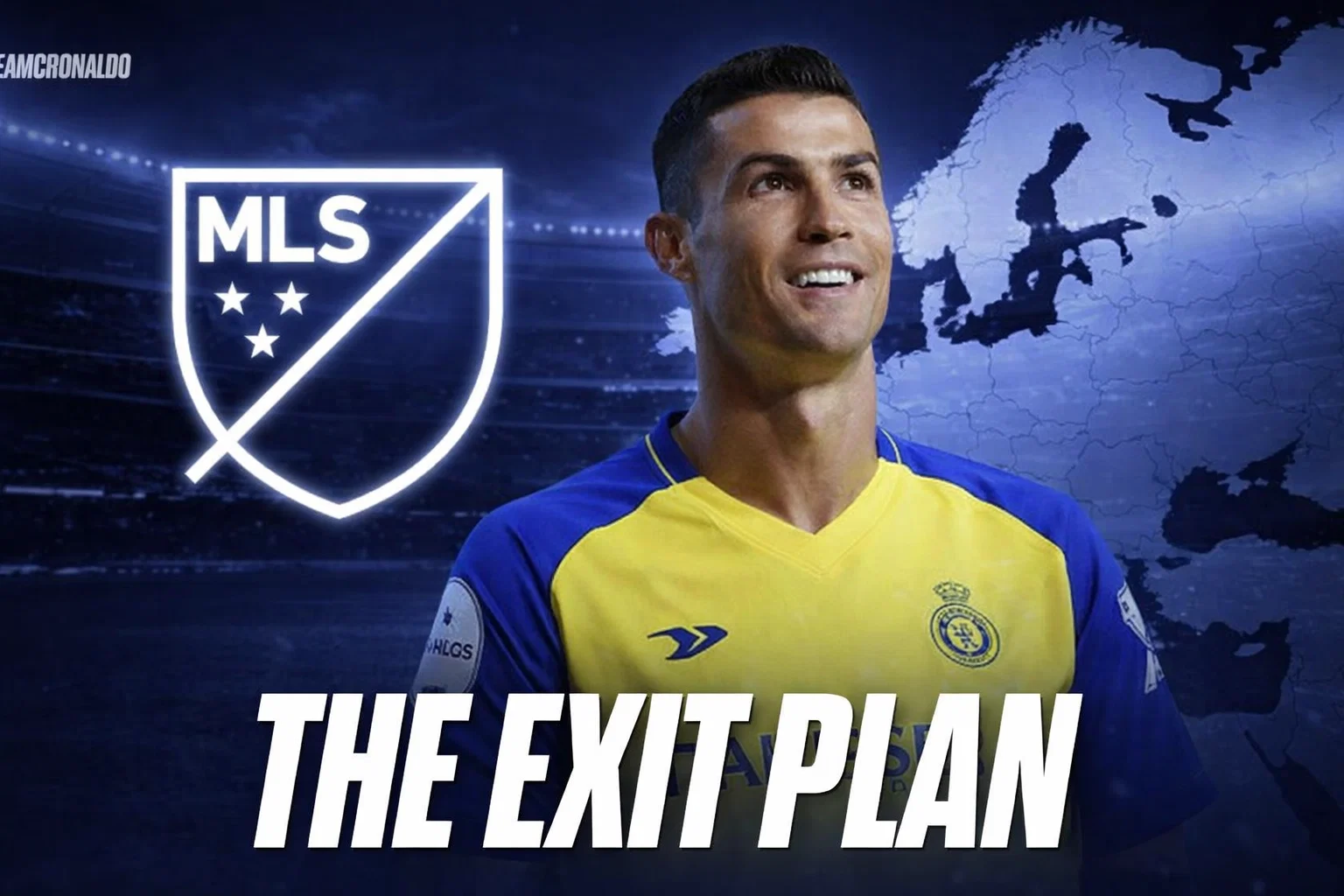

At 41, most footballers are arguing about tactics on television. Cristiano Ronaldo is arguing with defenders in the Saudi Pro League, and winning. Leading the Golden Boot race in March 2026 and captaining Portugal toward a World Cup, Ronaldo is not winding down. He is executing what may be the most meticulously planned retirement in the history of sport.
Table of Contents
- Why Cristiano Ronaldo Al-Nassr exit Is Unlike Anything Football Has Seen
- Phase 1: Locking In the Foundation with a 2027 Contract Extension
- Phase 2: The Road to 1,000 Goals
- How Ronaldo Has Reinvented His Playing Style
- Phase 3: One Last World Cup and the Hunt for Football’s Final Trophy
- What the World Cup Means for the Exit Strategy
- Phase 4: From the Pitch to the Boardroom, The 2027 Transition
- The Full Timeline at a Glance
- Why This Exit Strategy Could Redefine How Athletes Retire
This is not a story about a legend reluctantly calling it quits. Cristiano Ronaldo Al-Nassr exit strategy is a documented, multi-phase roadmap built around one audacious final mission: becoming the first person in history to score 1,000 official career goals, while still leaving the game on his own terms.
Why Cristiano Ronaldo Al-Nassr exit Is Unlike Anything Football Has Seen
Most elite athletes fade. Contracts expire, form dips, and the farewell tour happens by accident rather than design. Ronaldo has flipped that script entirely. Every decision he has made since joining Al-Nassr in January 2023 has been oriented toward a specific endpoint: not just retirement, but a structured transition from footballer to global sports mogul.
The strategy breaks down into four clearly defined phases, each building on the last.
Phase 1: Locking In the Foundation with a 2027 Contract Extension
The first move in Ronaldo’s exit plan came in June 2025, when he signed a landmark two-year extension with Al-Nassr, keeping him at the club until June 2027. On the surface, it looked like a straightforward renewal. In reality, it was the cornerstone of everything that follows.
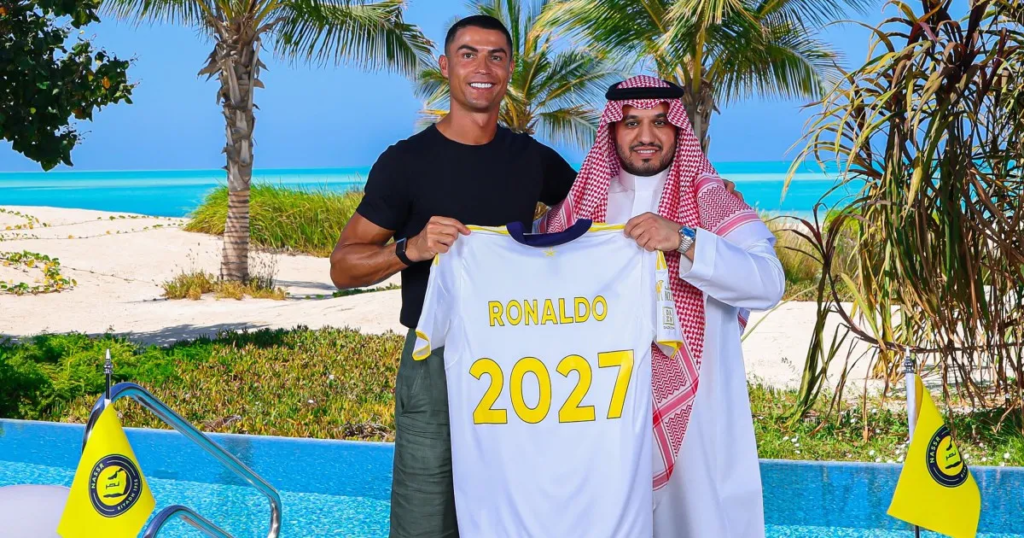
By securing his future before his original deal expired, Ronaldo eliminated the noise of transfer speculation during the 2025–26 season, his most critical scoring year. Staying in Saudi Arabia also guaranteed him something no European club could offer at this stage of his career: guaranteed starts, a system built around him, and the statistical runway to chase 1,000 goals without the pressure of fighting for a place in a squad.
Financially, the extension reportedly maintains his staggering $200 million per year package. That capital is not sitting idle. It is actively funding the hotels, fitness brands, and media ventures that will define CR7’s post-playing identity.
Phase 2: The Road to 1,000 Goals
This is the centrepiece of Ronaldo’s entire exit strategy, and the numbers are compelling.
| Milestone | Status (March 2026) |
|---|---|
| Total Career Goals | 965 |
| Goals Needed for 1,000 | 35 |
| 2025–26 Season Goals | 21 in 22 matches |
| Projected 1,000th Goal | January 2027 |
At his current rate of roughly one goal per game, Ronaldo is comfortably on track to reach 1,000 before his contract ends. But this is not happening by accident. His entire game has been retooled for this purpose.
How Ronaldo Has Reinvented His Playing Style
Gone are the dribbling runs and trademark step-overs from his Manchester United and Real Madrid peak. Ronaldo has consciously evolved into what analysts are calling a penalty box predator, conserving energy, reading the game from a central position, and arriving at precisely the right moment to finish.
Al-Nassr have supported this transition by investing heavily in creative wide players. The presence of Sadio Mané, along with newer 2025 signings providing width and delivery, means Ronaldo no longer needs to create his own chances. He just needs to convert them. It is a ruthlessly efficient arrangement, and the goals are flowing.
Hitting 1,000 career goals would be a statistical landmark that may genuinely never be broken. Lionel Messi, the only realistic rival for such a milestone, currently sits significantly behind. For Ronaldo, it would be the definitive answer to every comparison debate: a number so singular it would outlast both of them.
Phase 3: One Last World Cup and the Hunt for Football’s Final Trophy
If the 1,000-goal milestone is Ronaldo’s personal Everest, the 2026 FIFA World Cup is the team trophy that has always eluded him. In November 2025, he made it official:
I will be 41 years old and I think that will be the moment… the 2026 World Cup will definitely be my last.
Portugal travel to North America in June 2026 with Ronaldo as captain and talisman, and the squad is arguably stronger now than it has been in years, with a generation of talented midfielders and forwards finally maturing around him. Manager Roberto Martínez has maintained Ronaldo as the focal point of Portugal’s attack, a decision made easier by the fact that Ronaldo is still averaging a goal per game at club level.
What the World Cup Means for the Exit Strategy
The 2026 tournament serves a dual purpose in Ronaldo’s broader plan. On the pitch, it is his last shot at the only major trophy missing from a cabinet that includes five Champions League titles, five Ballon d’Or awards, and a UEFA European Championship. Off the pitch, a strong World Cup performance, watched by billions across North America’s three host nations, would be the perfect global stage for launching the next chapter of his brand.
Ronaldo has always understood that football is as much about narrative as it is about goals. Ending his international career at a World Cup, ideally with Portugal going deep into the tournament, would write the final page of his playing story in the most spectacular way possible.
Phase 4: From the Pitch to the Boardroom, The 2027 Transition
When the World Cup ends in July 2026, Ronaldo will have approximately 12 months remaining on his Al-Nassr contract. Those final months are being framed not as a farewell tour, but as a handover.
Here is what his post-football plan reportedly looks like:
- Club Ownership: Ronaldo is expected to transition into a stakeholder role within the Al-Nassr structure, potentially taking equity in the club or a connected Saudi sporting project. This keeps him embedded in the league he helped legitimise on a global scale.
- 2034 World Cup Ambassador: Saudi Arabia has been awarded hosting rights for the 2034 FIFA World Cup. Ronaldo is slated to become the official global ambassador for that tournament, a role that would keep him at the centre of world football for nearly a decade after he stops playing.
- The Sporting CP Fairytale: Perhaps the most emotionally resonant element of the entire plan is a rumoured “fairytale clause,” a possible short-term loan or legacy match series with Sporting CP in late 2027. Ronaldo began his career in Lisbon. Ending it there, even briefly, would bring his story full circle in a way that no other arrangement could.
The Full Timeline at a Glance
| Date | Milestone |
|---|---|
| June 2026 | Final World Cup appearance, USA |
| January 2027 | Projected 1,000th career goal |
| June 2027 | Official retirement from professional football |
| Late 2027 | Possible Sporting CP legacy appearance |
| July 2027 onwards | Full transition to ownership and ambassadorship |
Why This Exit Strategy Could Redefine How Athletes Retire
What makes Cristiano Ronaldo’s Al-Nassr exit strategy genuinely remarkable is not the scale of it, though the scale is extraordinary, but the intentionality. Every phase has a purpose. The contract extension gave him stability. The 1,000-goal target gave him motivation. The World Cup gives him a stage. The ownership transition gives him relevance that outlasts his boots.
Most athletes retire when the game tells them to. Ronaldo is retiring when he decides to, at a moment he has largely scripted himself. Whether he reaches 1,000 goals, whether Portugal win in 2026, whether the Sporting CP homecoming happens, none of those outcomes will change the fact that he approached the end of his career with the same intensity and calculation with which he approached everything else.
In football, legends are made on the pitch. Empires are built off it. Ronaldo, at 41, is clearly playing for both.



No Comments