
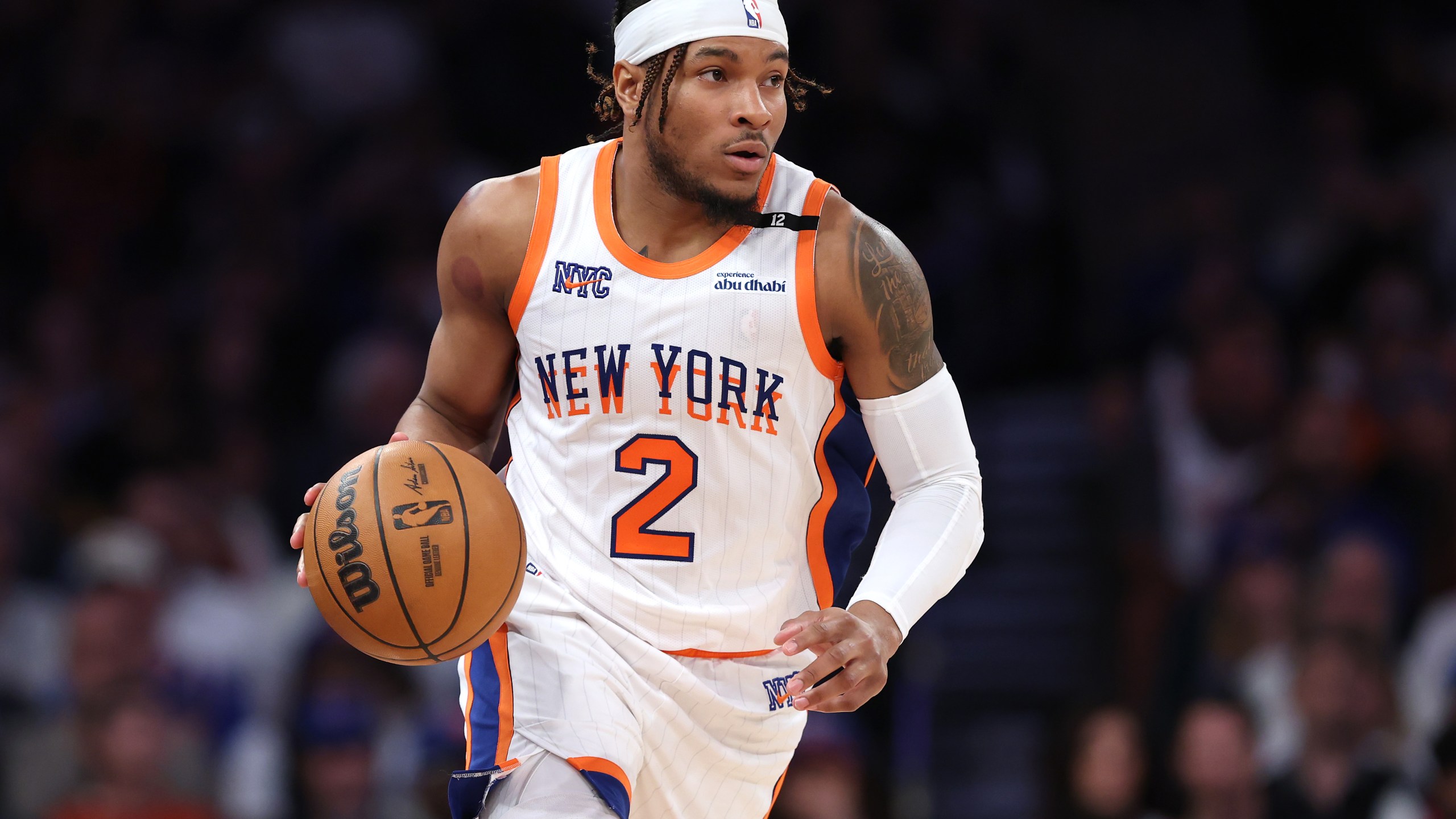

NEW YORK — Miles McBride has missed 28 games, undergone core muscle surgery, and spent two months watching from the sideline as the New York Knicks chased a second seed without him. His net worth, estimated at approximately $3 million in 2026, reflects a player still on the front end of a financial journey that is about to enter its most important chapter — on the court and in the contract room.
Table of Contents
The 25-year-old guard known as Deuce is back. He returned Sunday against the Oklahoma City Thunder after the longest absence of his professional career, upgraded from questionable and cleared to play just as New York enters the most consequential stretch of their season. The timing of his comeback is as significant as the contract that keeps him in New York through 2027 — and both tell a story worth understanding.
From Second-Round Doubt to a $13 Million Guarantee
McBride’s professional life did not begin with fanfare. The Oklahoma City Thunder selected him 36th overall in the second round of the 2021 NBA Draft — a slot that typically produces role players and roster fillers, not franchise contributors. His draft rights were swiftly traded to the New York Knicks alongside Rokas Jokubaitis in exchange for Jeremiah Robinson-Earl, a move that opened a door McBride has refused to close ever since.
His rookie deal was modest, as all second-round contracts are. He earned $925,258 in his first season, $1,563,518 in his second, and $1,836,096 in his third — a steady climb that reflected his growth but not yet his true value. Across his first three NBA seasons, he accumulated $4,324,872 in total earnings.
Then the Knicks made their statement. On December 30, 2023, New York handed McBride a three-year, $13 million extension — fully guaranteed, every dollar of it. The average annual value sits at $4,333,333. His 2025-26 base salary is $4,333,333, with a slight reduction to $3,956,523 in his final contract year in 2026-27. Combined with his rookie deal earnings, McBride has now secured over $17 million in total career NBA contract value. For a second-round pick out of West Virginia, that figure carries real weight.
The Career Year That Made His Return Headline News
Before surgery interrupted his 2025-26 season, McBride was producing at the highest level of his professional life. He was averaging 12.9 points per game — a career best — while connecting at 42.0 percent from three-point range on 6.9 attempts per game, another career high. He had started 14 of his 35 appearances, the team played 22-13 in games he appeared in, and he had quietly become the most reliable and dangerous player coming off the Knicks’ bench.
Then came December — a high ankle sprain that cost him three weeks. When he returned, he played some of his best basketball of the season. Then came January 27, his last game before the medical staff discovered what the ankle soreness was masking: a core muscle injury, commonly known as a sports hernia. He went under the knife on February 6. The projected recovery window was six to eight weeks. He missed 28 straight games — the longest absence of his career.
The Injury Diary: From Surgery Table to Game Night
The road back was longer and slower than anyone wanted to admit publicly. In late February, McBride traveled with the team to Milwaukee and spoke to reporters for the first time since surgery. His word of choice was “slow.” He had begun form shooting on the court but was doing so without jumping — a detail that underlined how far he still had to go.
By March 17, he had been cleared for contact work. By March 25, coach Mike Brown confirmed he had progressed to full scrimmaging against teammates — the final significant hurdle before game clearance. On March 24, The Athletic’s James L. Edwards III spotted McBride doing his normal pre-game workout at the customary 6:15 time slot and noted it was the first time in weeks he had looked like himself out there. Four days later, Deuce was back on the floor.
What He Brings Back That No One Else Could Provide
The Knicks went 20-8 in the 28 games McBride missed, which sounds fine until you examine how they actually won those games. The bench production was inconsistent by the coaching staff’s own admission. Jose Alvarado, acquired at the trade deadline specifically to offset the loss of McBride, saw his minutes shrink as the season progressed — coach Mike Brown eventually preferred Jordan Clarkson and Tyler Kolek in key stretches. The Charlotte loss that snapped a seven-game winning streak exposed the seams in a reserve rotation that never quite settled.
What McBride brings back is specific and hard to manufacture: two-way guard production. He is a hounding perimeter defender who can guard at the point of attack, a reliable catch-and-shoot threat at 42 percent from deep, and an off-the-dribble creator who generates his own looks without needing plays run for him. New York ranks ninth in three-point makes and fourth in three-point percentage as a team. McBride does not hurt those numbers. He elevates them.
The Cincinnati Kid Who Made New York Home
The financial story of Miles McBride is inseparable from the personal one. He grew up in Cincinnati, Ohio, and attended Archbishop Moeller High School before heading to West Virginia University, where he built the defensive reputation and competitive edge that first attracted NBA attention. He is the product of a system that tends to overlook second-round prospects — and he has spent every season since 2021 proving that system wrong.
He has fully embraced New York in a way that matters commercially as well as culturally. He lives in the One High Line building in West Chelsea, one of the city’s most distinctive residential addresses, in a two-bedroom apartment that runs $15,500 per month — a lifestyle that reflects both his earnings and his investment in the city itself. McBride is not a player passing through New York. He is a player who has made it his home, and the Knicks fan base has responded to that identity accordingly.
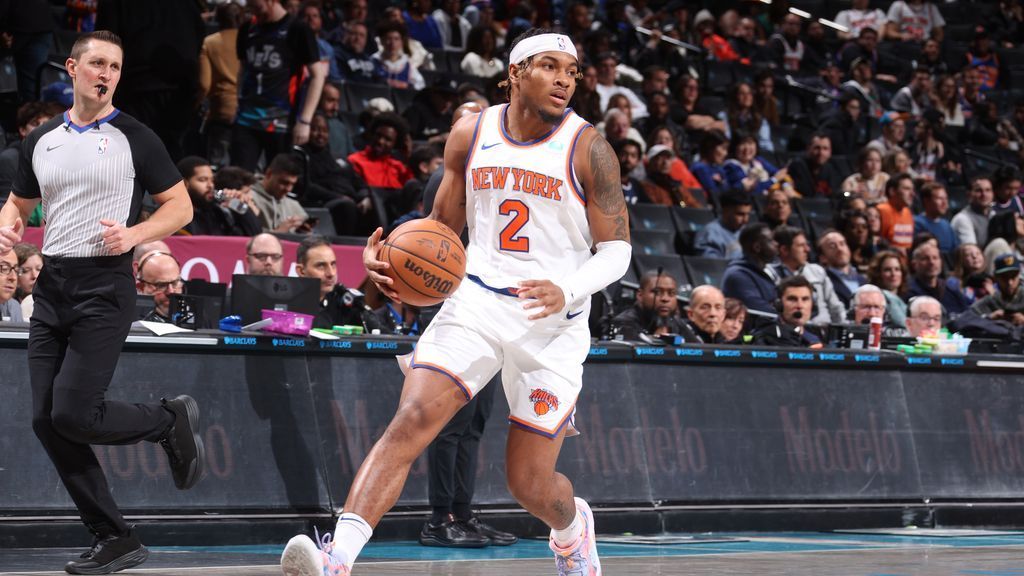
His Instagram handle is deucemcb11. His nickname, Deuce, was not invented by a marketing team. It has followed him since before he was a professional, and in New York it has taken on the quality of a genuine sports identity — the kind that translates into endorsement appeal and local commercial value over time.
What His Financial Future Looks Like
McBride becomes an unrestricted free agent at the end of the 2026-27 season. That reality, combined with what he is producing on the floor this year, makes the coming months the most financially consequential of his professional life. A strong playoff performance with the Knicks in April and May would be the single most powerful argument he can make heading into a free agency market that will have multiple contending teams looking for exactly his profile — a defensive-minded, three-point shooting guard who can play at both ends.
The Knicks, operating near the NBA’s second apron financial threshold, face a complex salary cap picture heading into next offseason. Retaining McBride will require careful maneuvering. But the front office, led by Leon Rose, has demonstrated a consistent willingness to prioritize homegrown contributors who understand the culture. McBride is precisely that player.
Analysts expect his net worth to grow substantially over the next two seasons. A market-rate extension or new contract reflecting his current production level would represent a significant jump from the $4.3 million annual value of his existing deal. A figure in the range of $15 to $20 million annually is a realistic outcome for a player averaging 12.9 points on 42 percent from three, assuming health through the postseason.
Looking Ahead
Miles McBride is 25 years old, back on the floor, and entering the biggest stretch of games his career has produced. The Knicks are 1.5 games behind the Celtics for the second seed in the East, with the Thunder and Rockets still on the schedule. He returns under a minutes restriction that will loosen over the next three weeks before the playoffs tip off on April 18.
The kid from Cincinnati who was selected 36th overall, signed for under a million dollars, and worked his way to a fully guaranteed $13 million deal is now the most anticipated returning player in New York basketball. For Deuce McBride, the financial ceiling and the basketball ceiling are pointing in exactly the same direction — up.





No Comments