
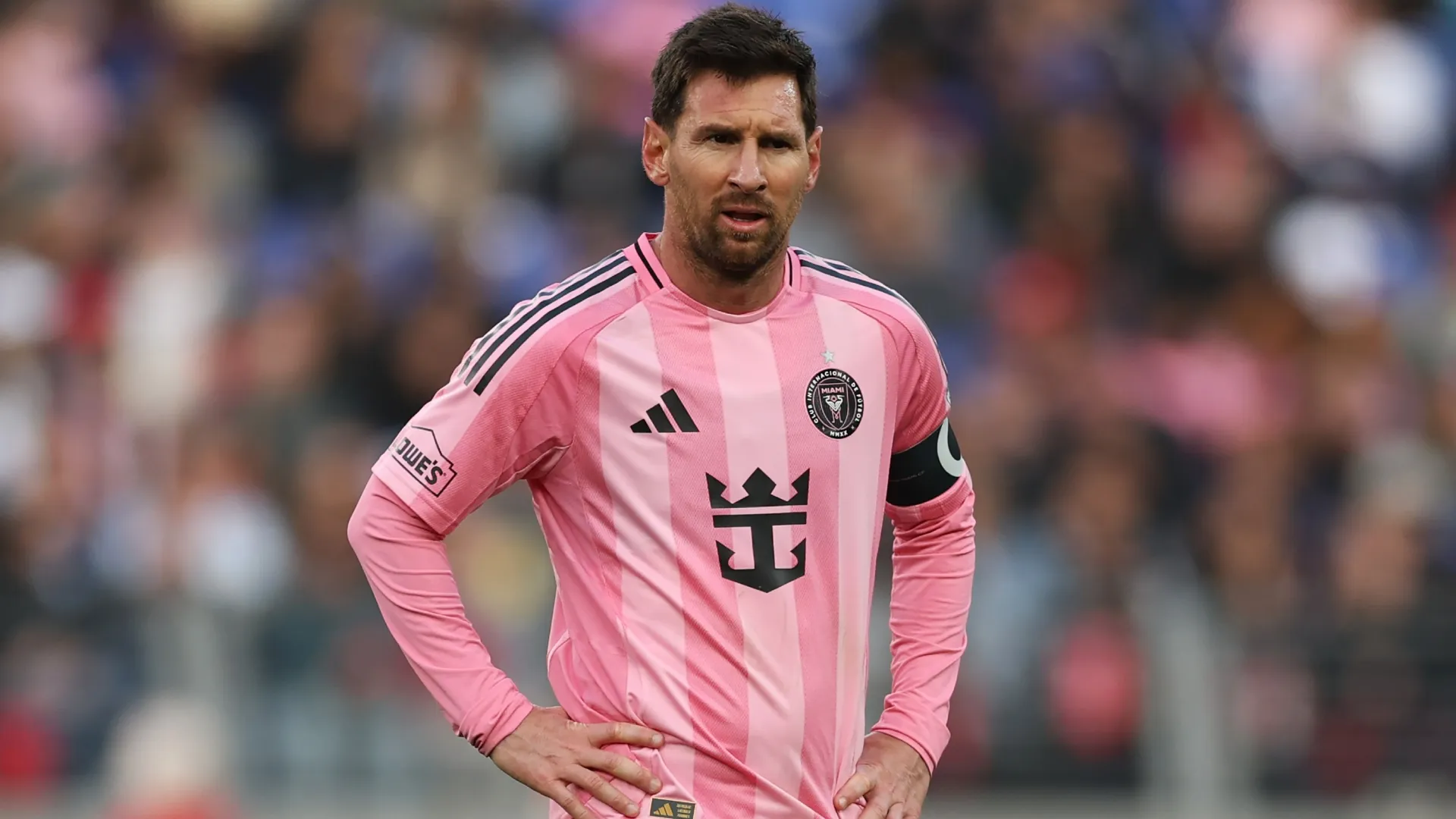

When Lionel Messi announced he was joining Inter Miami CF in the summer of 2023, the football world reacted with a mixture of excitement and skepticism. Could the greatest player of all time genuinely elevate a three-year-old MLS franchise into something meaningful? As of April 2026, the numbers have answered that question with stunning clarity. Inter Miami is now the most valuable franchise in the history of North American soccer, carrying a valuation of $1.45 billion and a growth story that has left even the most seasoned sports business analysts reaching for superlatives.
Table of Contents
- Inter Miami Valuation 2026: The Numbers That Tell the Story
- How Messi’s Contract Created an Ownership Stake
- The Modern Version of the Beckham Clause
- The Key Drivers Behind the $1.45 Billion Valuation
- On-Field Success: The 2025 MLS Cup
- Miami Freedom Park: The Stadium That Changes Everything
- Global Commercial Tours
- Inter Miami vs. Global Soccer: Where Does $1.45 Billion Stand?
- The Post-Messi Question: Is This Valuation Sustainable?
- What the Inter Miami Story Means for Sports Business
This is not simply a story about a famous footballer boosting ticket sales. It is a masterclass in sports franchise building, brand strategy, and the extraordinary financial power of a single transcendent athlete arriving at exactly the right moment.
Inter Miami Valuation 2026: The Numbers That Tell the Story
The headline figure is striking enough on its own. As of February 2026, major financial outlets including Forbes and Sportico have confirmed Inter Miami’s position at the top of the MLS valuation rankings. But the context around that number is what makes it truly remarkable.
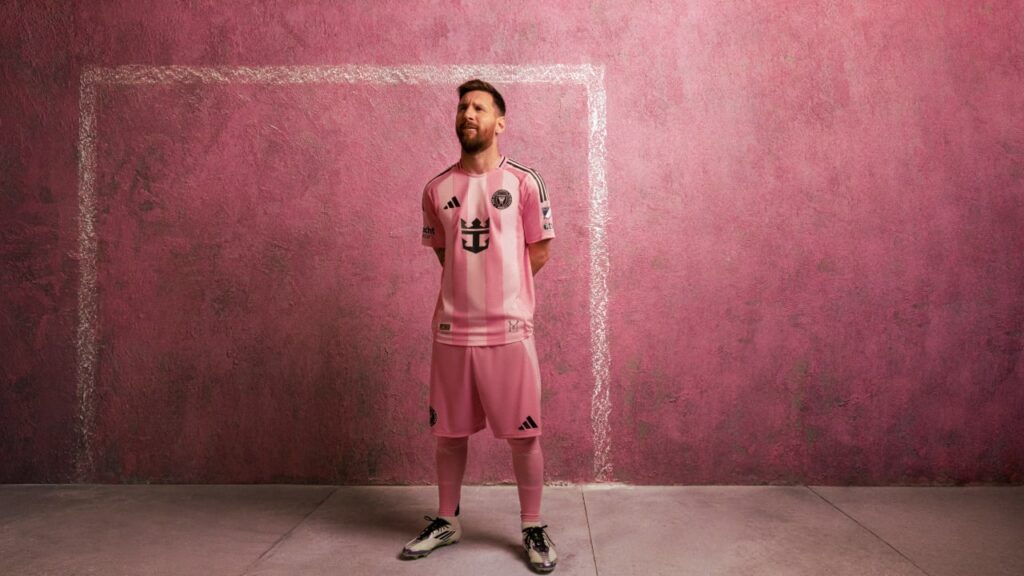
When Messi arrived in 2023, the club was valued at approximately $600 million, already a respectable figure for a young American soccer franchise. In less than three years, the Inter Miami valuation has added nearly $850 million in value, representing a year-over-year growth rate of 22% heading into 2026. To put that in perspective, that single year of growth alone is larger than the entire valuation of many established soccer clubs around the world.
The revenue picture is equally dramatic. Club revenue has risen from $56 million in 2022 to an estimated $200 million in 2026, a figure that represents a 260% increase since Messi’s arrival and confirms that the financial transformation is not built on hype alone.
How Messi’s Contract Created an Ownership Stake
One of the most innovative and consequential aspects of Messi’s move to Miami was the structure of his deal. This was not a conventional player contract. It was designed from the ground up to compete with the $500 million per year offers reportedly coming from the Saudi Pro League, and it did so not by matching that cash figure, but by offering something more compelling: long-term generational wealth through equity.
The Modern Version of the Beckham Clause
Football fans will remember that David Beckham’s 2007 contract with the LA Galaxy included a fixed-price option to purchase an MLS expansion team for $25 million, an option he eventually used to create Inter Miami itself. Messi’s arrangement operates on a similar but more sophisticated principle.
Reports indicate that Messi was granted an option to take a partial ownership stake in Inter Miami CF, exercisable upon his retirement or at the conclusion of his contract, which has since been extended through 2028. Industry experts estimate his potential stake at somewhere between 10% and 15% of the club. At the current $1.45 billion valuation, even a 10% stake translates to $145 million in pure asset value, a figure that effectively doubles his playing salary through appreciation alone.
Beyond direct equity, Messi’s commercial arrangements include a revenue sharing component tied to Apple TV+ subscriber growth through the MLS Season Pass and a profit-sharing agreement with Adidas connected to the surge in shirt and apparel sales. His financial relationship with the club operates at multiple levels simultaneously.
The Key Drivers Behind the $1.45 Billion Valuation
The Inter Miami valuation in 2026 is not a celebrity bubble. Several concrete, structural factors have combined to produce and sustain this figure.
On-Field Success: The 2025 MLS Cup
Financial value in professional sports is ultimately anchored to winning. Inter Miami’s victory in the 2025 MLS Cup served as the critical proof of concept the club needed. It demonstrated that the project could translate star power and global attention into actual silverware, which in turn justified premium ticket pricing, elite sponsorship renewals, and the kind of commercial conversations that only champions can have.
Miami Freedom Park: The Stadium That Changes Everything
A significant portion of the 2026 valuation is tied directly to the club’s move into its permanent home at Miami Freedom Park. The transition from the temporary Chase Stadium to a privately funded, state-of-the-art 25,000-seat venue fundamentally changes the club’s revenue ceiling. Owning and operating their own stadium means Inter Miami now controls 100% of concessions and parking, can maximize match-day income through luxury suites and premium hospitality offerings, and can host concerts, international friendlies, and major events throughout the year. Stadium ownership is one of the most reliable drivers of franchise valuation in professional sports, and Inter Miami now has it.
Global Commercial Tours
Inter Miami has become one of the most sought-after touring properties in world football. Pre-season tours across Asia and South America have commanded appearance fees that were previously reserved exclusively for clubs like Real Madrid or Manchester United, with some reports suggesting individual match fees exceeding $10 million. This global commercial reach at the club level, rather than merely at the individual player level, is a sign of genuine brand maturity.
Inter Miami vs. Global Soccer: Where Does $1.45 Billion Stand?
To properly appreciate the scale of the Inter Miami valuation in 2026, it helps to place it in a global context.
| Club | League | Estimated Valuation |
|---|---|---|
| Real Madrid | La Liga | $6.7 billion |
| Manchester United | Premier League | $6.0 billion |
| Inter Miami CF | MLS | $1.45 billion |
| West Ham United | Premier League | ~$1.0 billion |
| Everton FC | Premier League | ~$700 million |
Inter Miami is now worth more than several long-established Premier League clubs. While the revenue gap between Miami and European giants remains large, with the Big Six generating $700 million or more annually compared to Miami’s $200 million, the MLS single-entity structure and the absence of relegation make American soccer franchises exceptionally attractive investments. Owners are buying into a system with a financial safety net that European football simply does not offer.
The Post-Messi Question: Is This Valuation Sustainable?
The most common challenge to Inter Miami’s valuation story is the “Messi Premium” argument, the concern that when he retires, the value collapses with him. It is a fair question, and the club’s leadership has clearly taken it seriously.
David Beckham and co-owner Jorge Mas have pursued a deliberate strategy to institutionalize the brand rather than depend indefinitely on a single player. The arrivals of Luis Suárez, Sergio Busquets, and Jordi Alba were not random signings. They were part of a coordinated effort to position Miami as the global destination for elite veteran talent and promising young South American players, building a pipeline that can outlast any individual.
The cultural positioning has been equally deliberate. By leaning into Miami’s identity as the unofficial capital of Latin America and building a brand aesthetic around the city’s unique character, Inter Miami has created fan loyalty and commercial appeal that extends well beyond Messi’s presence on the pitch.
Crucially, Messi’s contract extension through 2028 provides a vital bridge period. It ensures he will be on the field when Miami Freedom Park opens fully, and it keeps global attention on the club through the 2026 World Cup, which is being held across North America. That alignment of Messi, a new stadium, and a home World Cup is not accidental planning. It is a franchise-building masterstroke.
What the Inter Miami Story Means for Sports Business
The Inter Miami valuation in 2026 is a watershed moment that extends far beyond one club or one league. It establishes a new template for how a single elite athlete, placed in the right market with the right ownership structure, can function as a venture capital multiplier for an entire sports franchise.
The financial summary is worth restating clearly. Inter Miami began 2023 valued at $600 million. It enters 2026 valued at $1.45 billion. Revenue has grown 260% in that window. The club holds the top spot in MLS valuations, ahead of Los Angeles FC at $1.4 billion and the LA Galaxy at $1.17 billion.
For Lionel Messi, the equity stake he is building in Miami is not a retirement gift. It is a calculated investment in what may become the fastest-growing soccer market in the world. As the 2026 World Cup approaches and the eyes of global football turn toward North America, Inter Miami finds itself perfectly positioned at the center of everything. The experiment that began with a single signing has become something far larger than anyone outside the ownership group dared to predict.





No Comments