
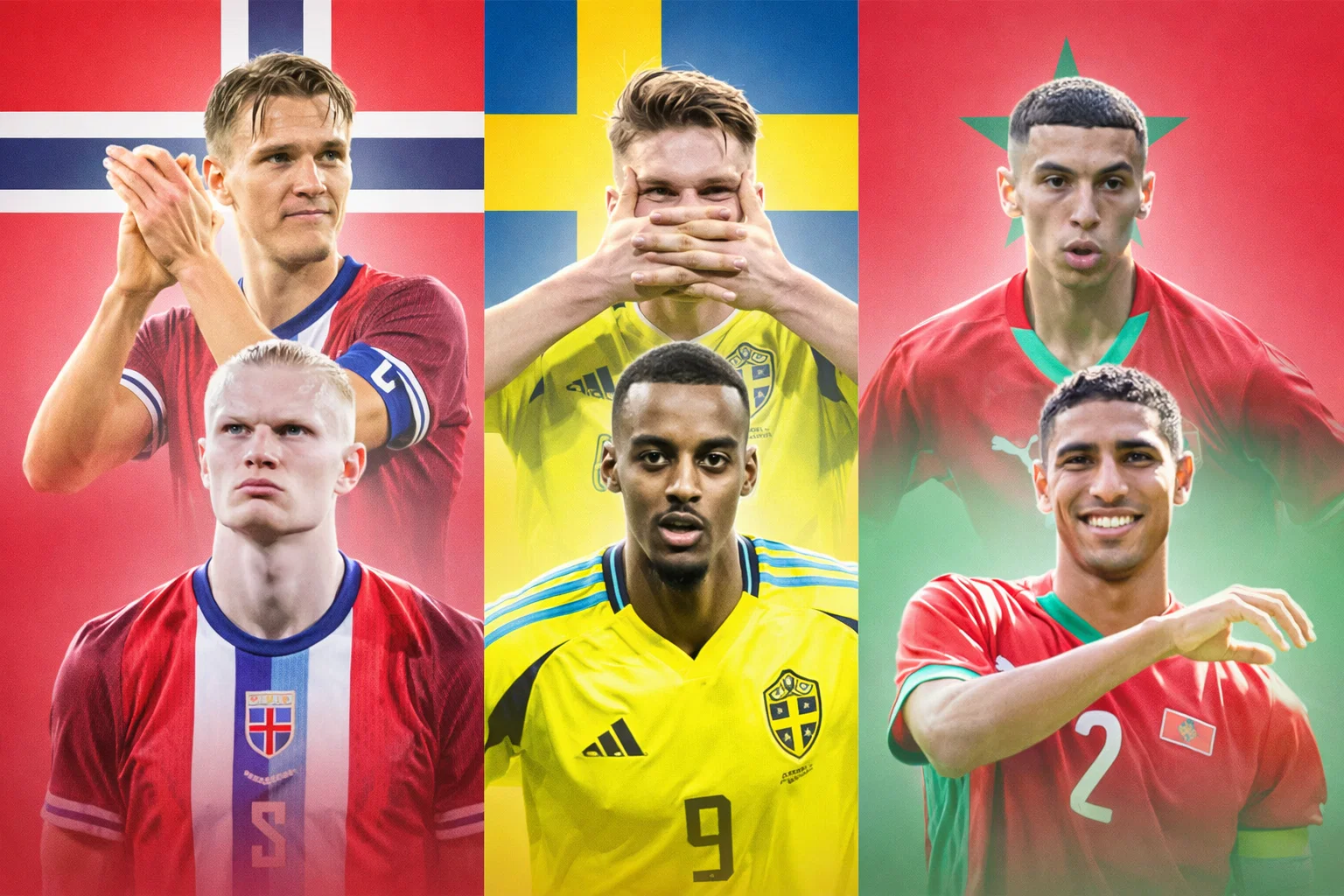

The FIFA World Cup 2026 is unlike any tournament that has come before it. For the first time in history, 48 nations will compete across three host countries, Canada, Mexico, and the United States, in a expanded format that introduces a Round of 32 and creates more opportunities than ever for the unexpected to happen. Brazil, France, and Argentina will arrive as favorites, but the beautiful game has never been kind to certainty.
Table of Contents
- Why the 2026 Format Is Built for Upsets
- 1. Japan: Tactical Architects Who Have Outgrown the Underdog Label
- 2. Ecuador: South America’s Battle-Hardened Physical Force
- 3. Norway: The Haaland Factor Is Not a Gimmick
- 4. Morocco: The Giant-Killers Who Only Got Better
- 5. Colombia: The Americas Resurrection Story
- 6. Uzbekistan: The Debutant Nobody Has Figured Out Yet
- 7. Turkey: Chaos, Youth, and the Spirit of 2002
- 8. South Korea: More Than Just Son Heung-min
- 9. Switzerland: The Tournament’s Most Consistent Overperformers
- 10. Austria: Rangnick’s Pressing Machine
- The Dark Horses That Could Change History
In this new landscape, the dark horses matter more than ever. One disciplined defensive shape, one moment of individual brilliance, one upset in a single 90-minute window, and the entire bracket shifts. These ten nations are the ones to watch: teams with the tactical identity, the rising stars, and the competitive pedigree to genuinely threaten the traditional giants of world football.
Why the 2026 Format Is Built for Upsets
Before diving into the teams themselves, it is worth understanding why this particular World Cup is so favorable for dark horses. The expanded 48-team format means every knockout match carries amplified variance. A tactically disciplined side does not need to be better than a favorite across multiple games. They only need to be better for 90 minutes, or sometimes just better for one moment in extra time.
Add in the diverse climates across North American host cities, from the summer humidity of the US East Coast to the high-altitude conditions of Mexican venues, and the physical and tactical demands become unpredictable in ways that favor well-drilled, physically prepared underdogs. The 2026 dark horses listed below understand this landscape better than most.
1. Japan: Tactical Architects Who Have Outgrown the Underdog Label
Japan enters the 2026 World Cup no longer as a surprise package but as a genuine tactical blueprint for how to compete against elite opposition. Under coach Hajime Moriyasu, the Samurai Blue have evolved from a hardworking but limited side into a team capable of dictating tempo against world-class opponents.
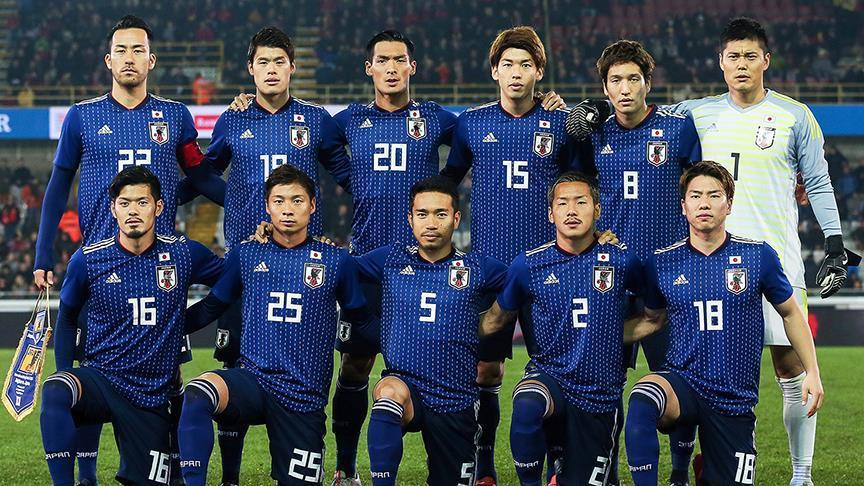
Their system, a 4-2-3-1 and 3-4-3 hybrid, is built around intelligent pressing rather than aimless chasing. Japan baits elite midfields into specific trap zones before launching rapid transitions that few international teams can handle in real time. With Takefusa Kubo of Real Sociedad and Kaoru Mitoma of Brighton providing genuine world-class threat on the wings, and Wataru Endo anchoring the defensive structure, Japan boasts arguably their strongest squad in history. Almost their entire starting eleven plays in Europe’s top five leagues, a depth that makes them one of the most credible dark horses FIFA World Cup 2026 has to offer.
2. Ecuador: South America’s Battle-Hardened Physical Force
If any tournament prepares a team for the pressures of a World Cup, it is CONMEBOL qualifying. Ecuador survived the most demanding regional qualification process in world football and emerged as a team built on athleticism, defensive discipline, and collective resilience.
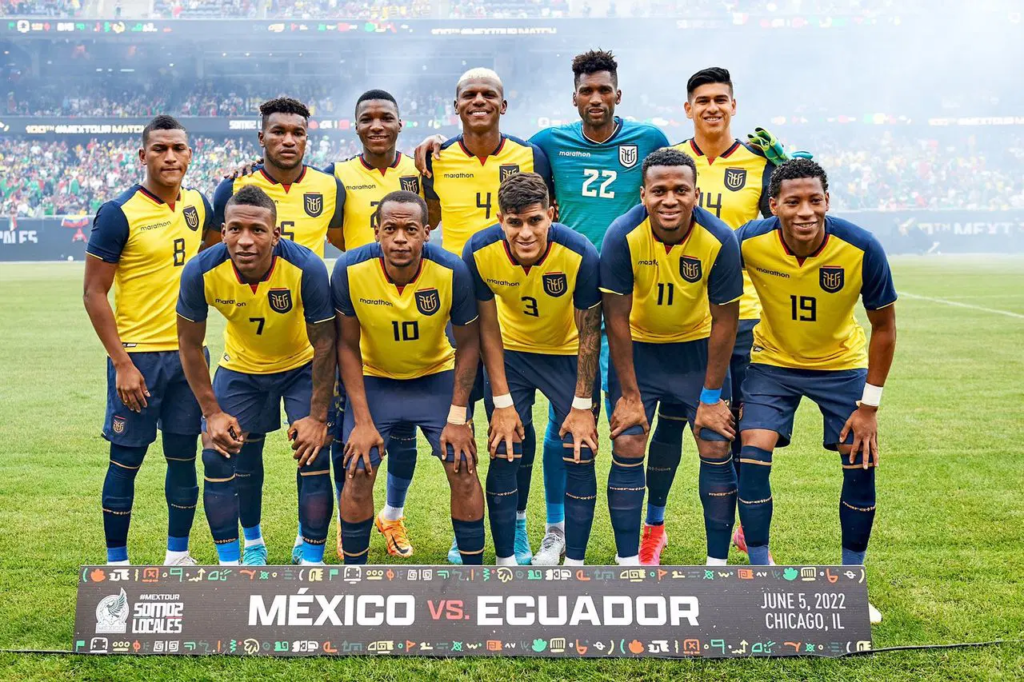
La Tri are a nightmare matchup for European giants precisely because of their physical profile. They are fast, strong in the air, and entirely comfortable competing in the high-intensity environments that the 2026 climate diversity will demand. The midfield spine of Moisés Caicedo combined with the defensive solidity of Piero Hincapié gives Ecuador a foundation that rivals established European nations. The most exciting addition to this picture is Kendry Páez, the teenage creative spark who provides something Ecuador has historically lacked: the ability to unlock a low defensive block in the group stages when the opposition sits deep.
3. Norway: The Haaland Factor Is Not a Gimmick
Norway returns to the World Cup stage for the first time since 1998, and they arrive with the most clinical finisher in world football leading the line. Erling Haaland’s presence alone changes the tactical calculus for any opponent Norway faces, but reducing this team to one player significantly undersells what they bring to the tournament.

Martin Ødegaard provides Premier League quality in the playmaking role, while the emergence of Oscar Bobb and Alexander Sørloth has transformed Norway from a two-man threat into a genuinely multi-dimensional attacking unit. Their strategy is straightforward but brutally effective: defensive solidity combined with direct service to Haaland whenever the opportunity arises. In a tournament where fatigue accumulates and margins shrink, having a striker who needs half a chance to score is one of the most valuable assets any dark horse FIFA World Cup 2026 contender can possess.
4. Morocco: The Giant-Killers Who Only Got Better
Morocco’s historic semi-final run at the 2022 Qatar World Cup announced them to the world. Many expected them to decline after losing key figures from that campaign. Instead, they doubled down, won the Africa Cup of Nations, and arrived at 2026 sharper and more complete than before.
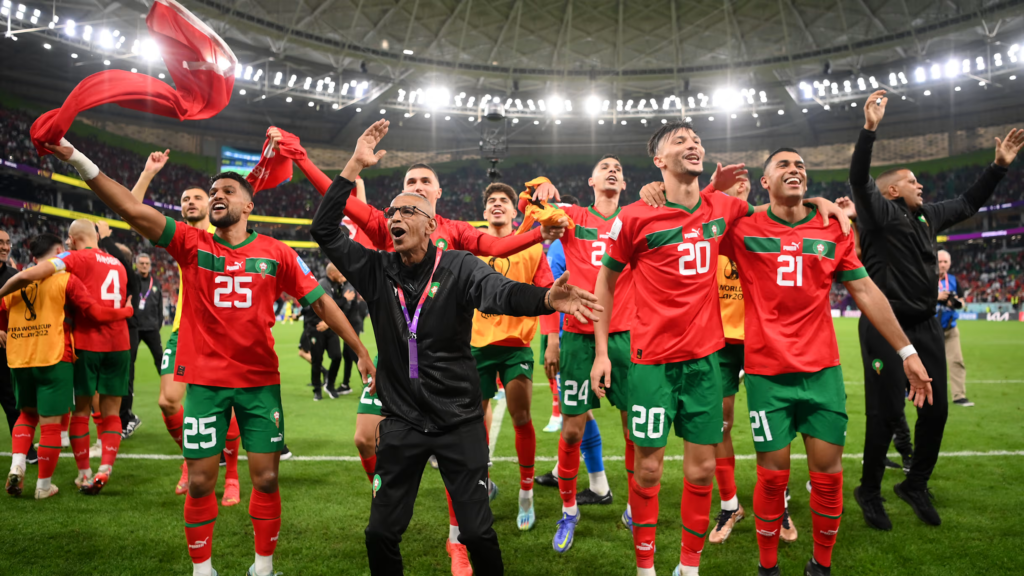
The Atlas Lions defend not out of fear but out of tactical intelligence, using their shape to control space rather than simply absorb pressure. Achraf Hakimi and Noussair Mazraoui represent arguably the finest fullback partnership in international football, capable of neutralizing elite wingers while remaining primary attacking threats themselves. The most significant upgrade since Qatar is the integration of Brahim Díaz from Real Madrid in a central creative role, giving Morocco a possession-based dimension that pure counter-attacking teams simply do not have. They are not just a dark horse. They are a genuine quarterfinal threat.
5. Colombia: The Americas Resurrection Story
Colombia missed the 2022 World Cup entirely, and the reset that followed has produced something genuinely exciting. They enter 2026 on one of international football’s longest unbeaten streaks, combining experienced leadership with a new generation of explosive attacking talent.
Luis Díaz is the prototype for the modern dark horse attacker: capable of creating danger entirely through individual quality even when his team is being outplayed in possession. Colombia’s additional advantage is geography and culture. Playing significant matches in US host cities with enormous Latin American communities means many of their fixtures will generate an atmosphere resembling a home game, a psychological edge in tight knockout moments that is easy to underestimate and very difficult to replicate.
6. Uzbekistan: The Debutant Nobody Has Figured Out Yet
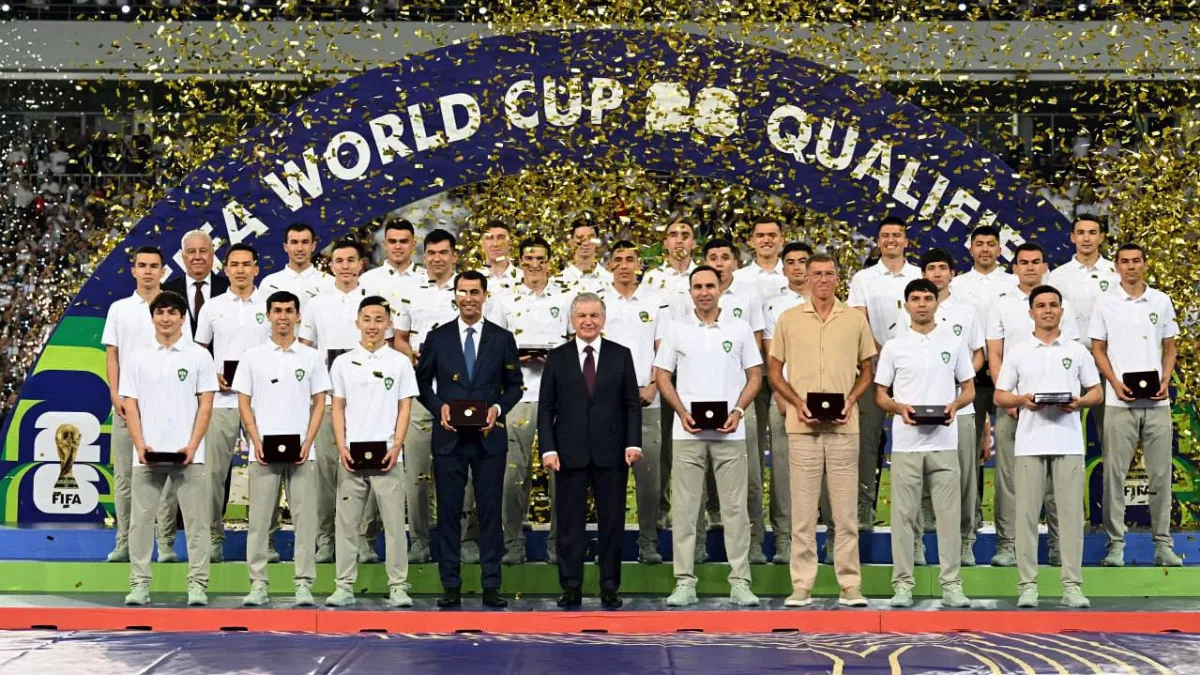
Making their first ever World Cup appearance, Uzbekistan represents perhaps the most intriguing tactical unknown of the entire tournament. They qualified through the AFC with a blend of technical midfield play and a collective work rate that overwhelmed opponents across a two-year campaign.
Their primary advantage is the “unknown factor.” Unlike established European or South American sides who are extensively scouted and analyzed, Uzbekistan’s tactical setups are relatively unfamiliar to the global elite. Their disciplined 5-3-2 shape is exceptionally difficult to break down against teams without specific preparation, and creative midfielder Abbosbek Fayzullaev has the quality to punish any opponent who grows impatient and overcommits. As dark horses FIFA World Cup 2026 go, Uzbekistan might be the least predictable name on the entire list.
7. Turkey: Chaos, Youth, and the Spirit of 2002
Turkey is the most volatile team in international football, and in a World Cup that rewards unpredictability, that volatility is a competitive asset. After a long absence from the tournament, this generation of Turkish players arrives with a fearlessness and attacking ambition that can unsettle even the most composed opponents.
Arda Güler and Kenan Yıldız lead a youthful attacking unit that plays with intensity and creativity in equal measure. Turkey’s matches are rarely predictable or comfortable, characterized by high-risk football that makes them a dangerous draw for any seeded nation. Their significant supporter base across US host cities is also expected to create intimidating atmospheres during the group stages, adding another layer of psychological pressure for opponents.
8. South Korea: More Than Just Son Heung-min
South Korea has evolved. While Son Heung-min remains captain and talisman, the squad built around him in 2026 operates on a completely different tactical level from previous tournaments. The team’s pressing structure is coordinated and relentless, designed not to dominate possession but to force mistakes and exploit transitions at speed.
Kim Min-jae anchors the defensive line with authority, allowing the rest of the squad to press high without fear of being exposed on the counter. South Korea does not need to outplay opponents to beat them. They need opponents to make errors, and their pressing system is engineered specifically to manufacture those errors. Against fatigued or complacent sides in the knockout rounds, this approach can be devastating.
9. Switzerland: The Tournament’s Most Consistent Overperformers
Switzerland may be the most underrated nation in international football. They have eliminated France and Italy in recent major tournaments, consistently performing above what their global ranking and squad depth might suggest. The reason is simple: they are extraordinarily difficult to panic.
Manuel Akanji, Granit Xhaka, and Yann Sommer provide a spine of Champions League and Premier League experience that gives Switzerland composure in high-pressure moments few dark horse sides can match. Their tactical flexibility, shifting between a back four and a back five depending on the game state, makes them exceptionally difficult to prepare for. Switzerland will not beat you with flair. They will beat you with intelligence and experience.
10. Austria: Rangnick’s Pressing Machine
Austria under Ralf Rangnick have become Europe’s most intense pressing team, playing at a tempo that many international sides, accustomed to slower buildup play, simply cannot sustain against for 90 minutes. Their system is built around collective pressing triggers rather than individual brilliance, making them a nightmare to game plan against.
Konrad Laimer and Marcel Sabitzer provide the engine in midfield, but Austria’s true strength is organizational. Every player understands precisely when to initiate the press and when to hold their shape, producing a level of collective discipline that generates high-turnover scoring opportunities. In a summer tournament where heat and fatigue accumulate across rounds, Austria’s ability to maintain physical intensity through squad rotation could be their most underestimated weapon.
The Dark Horses That Could Change History
The FIFA World Cup 2026 is entering uncharted territory. More teams, more matches, more variance, and more opportunity for the unexpected to become the defining story of the tournament. The ten nations on this list are not here by accident. Each brings a specific combination of tactical identity, key personnel, and competitive preparation that makes them genuinely capable of going deep into the bracket.
One of them will not just participate. One of them will change the story of world football entirely.
| Team | Key Player | Greatest Strength |
|---|---|---|
| Japan | Takefusa Kubo | Intelligent pressing and transition speed |
| Ecuador | Moisés Caicedo | Physical dominance and defensive structure |
| Norway | Erling Haaland | Clinical finishing from minimal chances |
| Morocco | Achraf Hakimi | World class fullback pair and tactical discipline |
| Colombia | Luis Díaz | Individual match-winning quality |
| Uzbekistan | Abbosbek Fayzullaev | Tactical unfamiliarity and defensive solidity |
| Turkey | Arda Güler | Fearless attacking youth |
| South Korea | Kim Min-jae | Pressing system and transition speed |
| Switzerland | Granit Xhaka | Tournament experience and tactical flexibility |
| Austria | Konrad Laimer | Relentless collective pressing intensity |




No Comments