
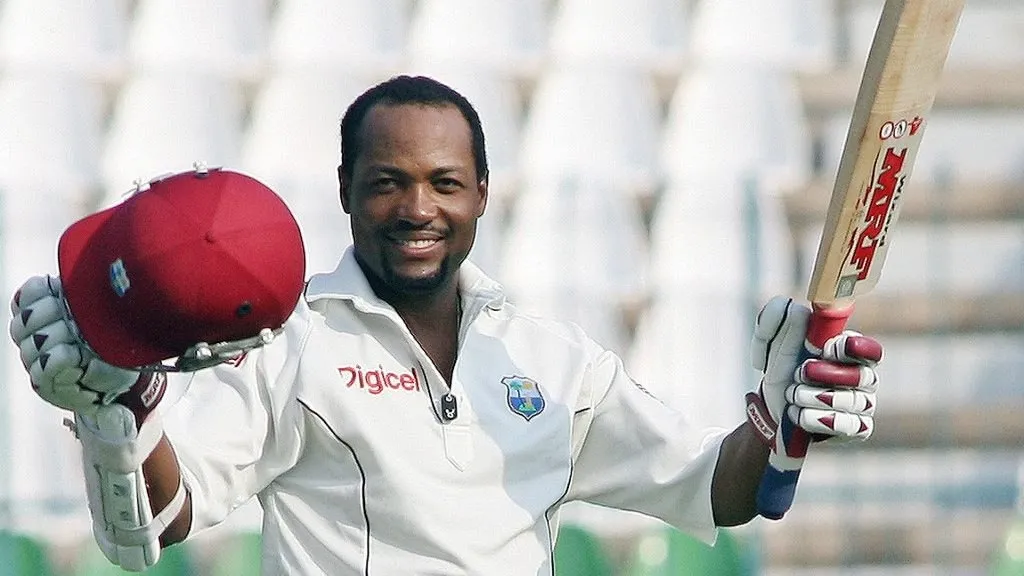

Some records feel temporary. Others feel eternal. Brian Lara 400 not out belongs firmly in the second category. In April 2004, at the Antigua Recreation Ground, Lara crafted an innings so monumental that it reshaped how cricket viewed individual greatness.
Table of Contents
- The Setting – West Indies vs England, Antigua 2004
- The Road to 400 – How the Innings Unfolded
- Reclaiming the Crown – Breaking Matthew Hayden’s Record
- Technical Masterclass – What Made 400 Possible
- The Mental Architecture Behind 400 Not Out
- Statistical Breakdown of the 400 Not Out
- How 400* Redefined Individual Greatness in Test Cricket
- The Debate – Was It the Greatest Test Innings Ever?
- Legacy – Why Brian Lara’s 400 Still Towers Over Cricket
- Conclusion – A Monument Carved in Time
Test cricket has seen triple centuries, heroic fourth-innings chases, and match-saving marathons. But 400 not out remains its highest individual score, a summit untouched for more than two decades. It was not merely about volume. It was about reclaiming supremacy, carrying history, and batting long enough to bend time itself.
The Setting – West Indies vs England, Antigua 2004
The stage was the fourth Test between West Indies and England in Antigua. The series had already been decided in England’s favor, but pride, especially in Caribbean cricket, never loses relevance. The pitch at the Antigua Recreation Ground offered steady bounce and limited early threat, ideal for batting once settled.
Lara entered the match with a point to prove. Months earlier, Australia’s Matthew Hayden had scored 380 against Zimbabwe in Perth, breaking Lara’s long-standing world record of 375 set in 1994 against England. The symbolism was unavoidable. Lara had lost his crown.
In Antigua, he would attempt to reclaim it.
The Road to 400 – How the Innings Unfolded
Lara did not begin recklessly. The early phase of the innings was structured and controlled. He absorbed the new ball, found rhythm through timing rather than aggression, and built partnerships that anchored the innings.
As the hours passed, fluency replaced caution. His footwork against spin became decisive, and his drives through cover carried the authority that defined his career. By the time he crossed 200, the match had slowed into a personal pursuit of history.
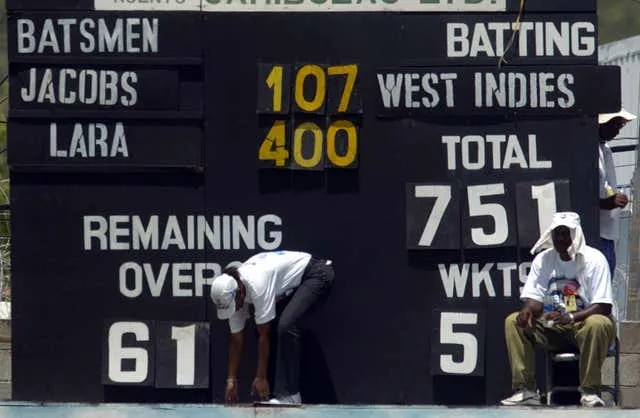
When he moved beyond 300, the stadium shifted from anticipation to inevitability. The crowd sensed they were witnessing something singular. With precision and composure, Lara edged past Hayden’s 380 and then his own previous mark of 375. He finally reached 400 not out off 582 deliveries, batting for 778 minutes and striking 43 boundaries and four sixes.
West Indies declared at 751 for 5. The match eventually ended in a draw, but the result felt secondary. The record had been reclaimed.
Reclaiming the Crown – Breaking Matthew Hayden’s Record
The psychological layer of the Brian Lara 400 not out innings cannot be overstated. He remains the only cricketer to have broken the world record for the highest individual Test score twice.
In 1994, his 375 against England in Antigua had surpassed Sir Garfield Sobers’ 365*. Nearly a decade later, Hayden eclipsed him. Many assumed the era of monumental individual scores had passed him by. Instead, Lara responded with something even larger.
Reclaiming the record was not coincidence. It was intent backed by extraordinary endurance.
Technical Masterclass – What Made 400 Possible
Lara’s technique during the innings revealed remarkable discipline. His balance at the crease allowed him to manipulate gaps effortlessly. Against pace, he relied on soft hands and precise placement. Against spin, he used nimble footwork to convert good balls into scoring opportunities.
Despite the marathon nature of the innings, his strike rate remained controlled yet progressive. He never appeared rushed, nor did he stagnate. Risk was calculated, never forced. Over 778 minutes at the crease, concentration became the defining skill.
Fitness also played a role. Batting for nearly 13 hours in Caribbean heat demands not just stamina but mental clarity. Fatigue often breeds error. Lara refused to yield.
The Mental Architecture Behind 400 Not Out
Statistics alone cannot explain such longevity. The mental framework behind the Brian Lara 400 not out innings reflects a rare capacity to compartmentalize pressure.
Lara later described focusing on incremental milestones rather than the distant summit. Fifty became one hundred. One hundred became two hundred. Each passage of play was segmented into manageable goals.
There was also national expectation. Caribbean cricket, once dominant, had entered a rebuilding phase. Lara carried the weight of history and hope simultaneously. The 400 was both personal redemption and collective pride.
Statistical Breakdown of the 400 Not Out
The raw numbers underline the scale:
- 400* runs
- 582 balls faced
- 778 minutes at the crease
- 43 fours, 4 sixes
- Strike rate just under 69
At the time of writing, it remains the highest individual score in Test cricket history. Only a handful of batters have crossed 350, and none have surpassed 400. Compared to other triple centuries, Lara’s innings stands apart for both duration and final tally.
How 400* Redefined Individual Greatness in Test Cricket
Before Antigua 2004, the idea of a 400-run individual score in Test cricket felt theoretical. After Lara, it felt achievable—but only in theory. Modern Test cricket’s tempo, declarations, and result-oriented strategies make such marathon innings increasingly rare.
The record has survived despite flatter pitches, heavier bats, and evolving training methods. That endurance adds to its aura. The number 400 carries symbolic weight precisely because it has resisted replication.
The Debate – Was It the Greatest Test Innings Ever?
Critics sometimes point to context. The match ended in a draw. England’s bowling attack was disciplined but not among the most feared in history.
Yet greatness in Test cricket is not always defined by match result. It is often defined by endurance, concentration, and technical supremacy. When compared to other monumental innings, Lara’s 400 stands out for scale alone. It was less about urgency and more about permanence.
Legacy – Why Brian Lara’s 400 Still Towers Over Cricket
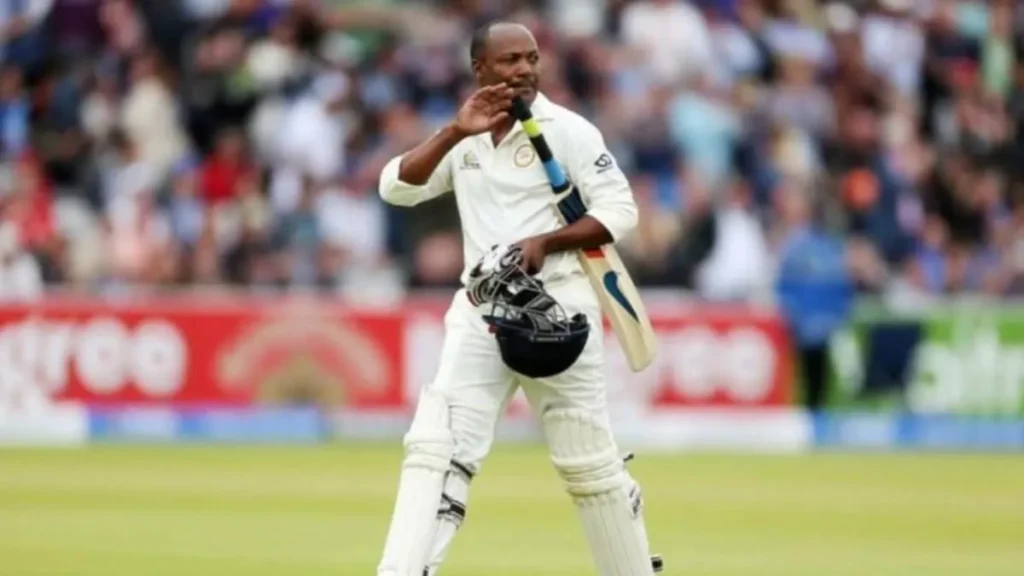
Brian Lara highest Test score is not merely a statistical entry; it is a cultural landmark in West Indies cricket. It symbolizes resilience during a transitional era and affirms Lara’s place among batting immortals.
The fact that no one has crossed 400 since reinforces its mythic status. As formats accelerate and attention spans shorten, the idea of batting nearly 13 hours feels almost archaic. That contrast enhances the legacy.
Conclusion – A Monument Carved in Time
Records in sport are built to be broken. Some are surpassed quickly. Others endure across generations. The Brian Lara 400 not out remains cricket’s highest individual Test score not just because of its numerical value, but because of the intent, technique, and mental strength that produced it.
In Antigua, Lara did more than bat for 778 minutes. He reclaimed a throne, reshaped history, and constructed a monument in numbers that still stands untouched. Whether the record eventually falls or not, its symbolism has already secured its place among the greatest achievements in the history of sport.





No Comments