
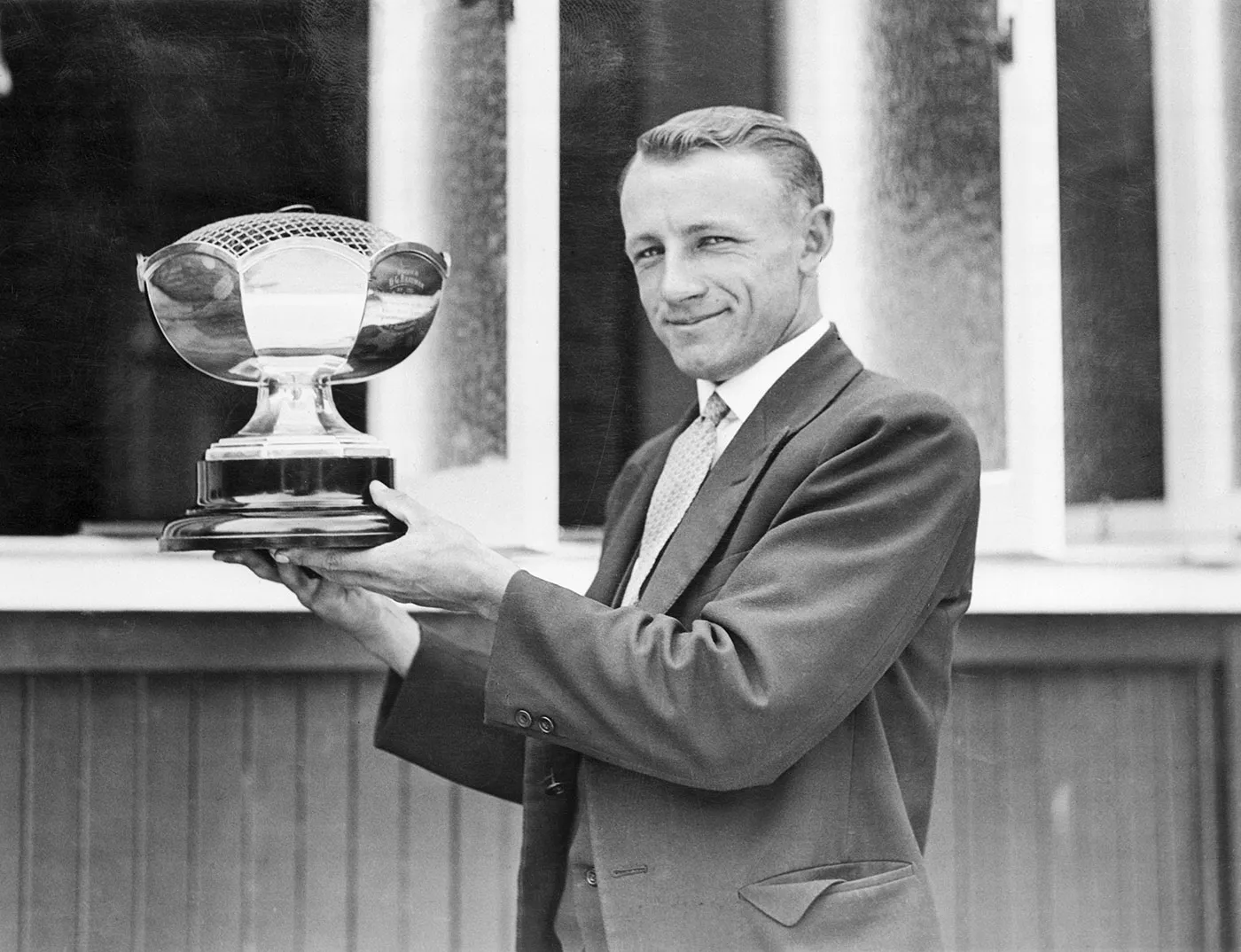

In a sport built on numbers, no statistic carries the weight or mystique of Don Bradman’s Test batting average of 99.94. More than just a figure, it represents a level of dominance that cricket has never seen before or since. Across eras, formats, and generations, this number continues to stand apart as the most unbreakable record in the game’s history.
Table of Contents
- Why 99.94 Still Astonishes Cricket Fans
- Who Was Don Bradman?
- Understanding the Batting Average in Cricket
- Breaking Down the 99.94 Test Average
- The Infamous Final Innings – How Bradman Missed 100
- Era, Conditions, and Opposition Quality
- Comparing Bradman to Modern Batting Legends
- Why the Record Is Considered Unbreakable
- Psychological Dominance and Aura
- Attempts to Challenge the Record
- Bradman’s Legacy Beyond the Numbers
- A Record That Defines Greatness
This article examines how Bradman achieved this extraordinary average, why it defies comparison, and why modern cricket makes it virtually impossible to replicate.
Why 99.94 Still Astonishes Cricket Fans
In Test cricket, a batting average of 40 is considered very good. An average of 50 defines greatness. Only a handful of players in history have sustained averages above 55 across long careers. Bradman’s 99.94 almost doubles that elite benchmark.
What makes the record even more astonishing is its context. Bradman played in an era without modern equipment, protective gear, video analysis, or sports science. Yet his output remains unmatched nearly a century later, making 99.94 not just a record, but an anomaly in sporting history.
Who Was Don Bradman?
Sir Donald George Bradman was born in 1908 and made his Test debut for Australia in 1928. Over a career spanning 20 years, he became the most dominant batter cricket has ever known.
Bradman played 52 Test matches, scoring 6,996 runs across 80 innings, with 29 centuries. His impact extended beyond numbers. Opponents altered entire bowling strategies specifically to stop him, and captains set fields rarely used against any other player.
Bradman wasn’t merely Australia’s best batter. He was the game’s measuring stick.
Understanding the Batting Average in Cricket
A batting average measures runs scored divided by times dismissed. Unlike strike rate, it rewards consistency, endurance, and the ability to avoid failure over time.
Historically:
- An average of 30 is respectable
- 40 indicates high quality
- 50+ places a player among the elite
Before Bradman, the highest career average was in the low 60s. Bradman didn’t just raise the bar. He shattered it.
Breaking Down the 99.94 Test Average
Bradman’s average was built on remarkable consistency:
- He scored 100 or more runs in 36% of his Test innings
- He passed 50 in over half his innings
- He averaged over 100 against every Test-playing nation of his era
Even more striking is that his average never dipped below 95 after his early years. Most batters see their averages decline as their careers extend. Bradman maintained near-perfection until his final match.
The Infamous Final Innings – How Bradman Missed 100
Bradman entered his final Test innings in 1948 needing just four runs to finish his career with a perfect average of 100.
Facing England at The Oval, he was bowled for zero by Eric Hollies.
That single dismissal dropped his average from 100 to 99.94. Ironically, this moment made the record even more legendary. The fact that perfection slipped away by four runs humanized an otherwise superhuman career.
Era, Conditions, and Opposition Quality
Bradman played on uncovered pitches, where rain could turn wickets into unpredictable surfaces known as “sticky dogs.” Protective gear was minimal, bats were heavier and less forgiving, and travel between tours was exhausting.
He faced high-quality bowlers, including Harold Larwood, whose Bodyline tactics were designed almost exclusively to curb Bradman’s run scoring.
Despite these challenges, Bradman averaged:
- 89.78 in England
- 102.84 in Australia
- Over 120 against South Africa
These were not inflated by weak opposition or favorable conditions.
Comparing Bradman to Modern Batting Legends
Modern greats like Sachin Tendulkar, Jacques Kallis, Ricky Ponting, and Kumar Sangakkara finished with averages between 50 and 58. Even the best of the modern era fall 40 runs per innings short of Bradman.
Adjustments for era, pitch quality, and professionalism still fail to close the gap. Statistical modeling consistently shows that Bradman’s dominance relative to his peers exceeds that of any other cricketer or athlete in major global sports.
Why the Record Is Considered Unbreakable
Mathematically, sustaining a 99.94 average over a long career is nearly impossible.
A modern batter would need:
- 50+ Tests
- Minimal low scores
- Multiple double centuries
- No prolonged form slumps
Modern cricket also presents challenges Bradman never faced: all-format scheduling, constant international travel, extensive video analysis by opponents, and higher athletic standards among bowlers.
Even one poor series can permanently damage an average. Bradman simply didn’t have those declines.
Psychological Dominance and Aura
Beyond technique, Bradman exerted psychological control over opponents. Bowlers entered matches already beaten mentally. Fielding captains spread fields defensively before he had settled.
Teammates fed off his confidence. Opponents built entire game plans around stopping him, often at the expense of other batters.
This mental dominance is a crucial, often overlooked reason why his numbers reached such extraordinary heights.

Attempts to Challenge the Record
Several players began their careers with averages in the 60s or 70s, prompting speculation about Bradman’s record. Every single one eventually regressed toward the mean.
Cricket’s history shows that longevity always brings statistical correction. Bradman remains the lone exception.
Bradman’s Legacy Beyond the Numbers
Bradman’s influence extends into cricket culture itself. He became a symbol of excellence, humility, and national pride in Australia. His standards still shape how greatness is measured.
Awards, honors, and tributes followed him throughout his life, but his true legacy lies in the fact that every great batter is still compared to him and found wanting.
A Record That Defines Greatness
Don Bradman’s 99.94 is not just cricket’s greatest record. It is one of the most dominant statistical achievements in all of sport.
Generations have come and gone. Formats have changed. Conditions have evolved. Yet this number remains untouched, not because no one has tried, but because it exists beyond normal human performance.
Some records are broken. Others endure. Bradman’s 99.94 belongs firmly to the latter.




No Comments