
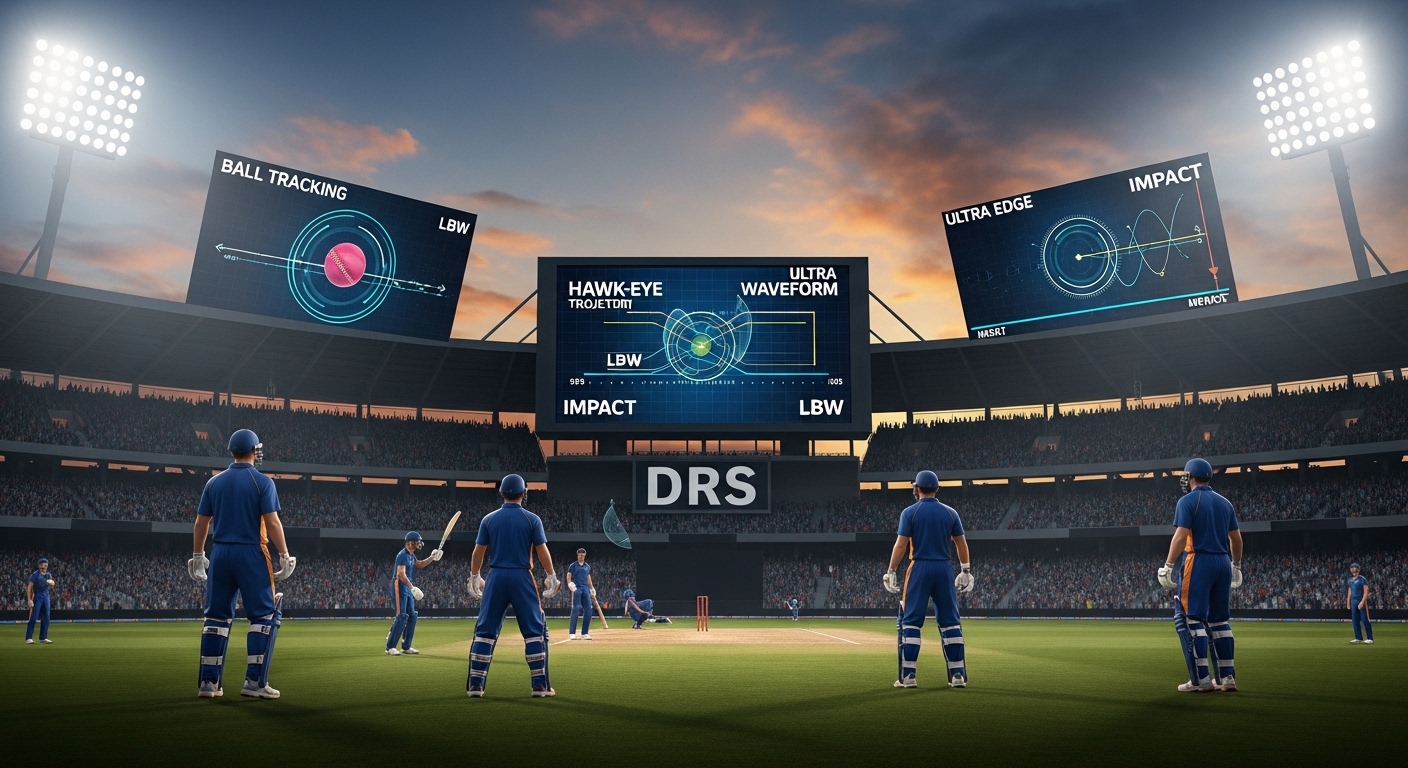

Cricket has always been a game of fine margins. A ball kissing the edge of the bat, an lbw appeal that divides a stadium, a run-out decided by millimetres. For most of cricket’s history, these moments came down to the judgment of two men standing on a field with nothing but their eyes and experience. That changed when DRS technology in cricket was formally introduced, and the sport has never looked back.
Table of Contents
What Is DRS Technology in Cricket?
The Decision Review System, commonly known as DRS, is a technology-based process that allows players to challenge on-field umpiring decisions during a match. It was developed to reduce the impact of human error in officiating and to give teams a structured way to seek justice when they believe a decision is wrong.
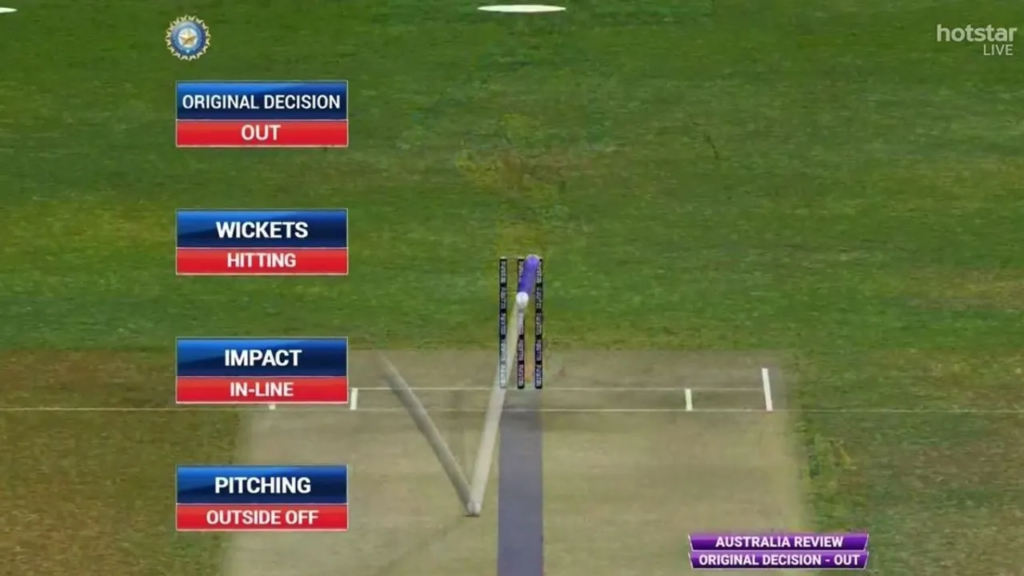
Under the DRS framework, each team is given a limited number of reviews per innings. If a team challenges a decision and the review overturns the call, they retain that review. If the original decision stands, they lose one. This system keeps the review process meaningful rather than turning it into a free-for-all appeal mechanism.
The ICC formally adopted DRS for Test cricket in 2009, and it has since been expanded to One Day Internationals and T20 Internationals, though its use in domestic and franchise cricket depends on available technology and governing body regulations.
The Core Technologies Behind DRS
What makes DRS technology in cricket so powerful is that it is not a single tool but a suite of systems working in combination. Each component targets a specific aspect of decision-making.
Hawk-Eye Ball Tracking is perhaps the most widely recognised element. Originally developed for tennis, Hawk-Eye uses multiple high-speed cameras to track the ball’s trajectory from the moment it leaves the bowler’s hand. For lbw decisions, it predicts where the ball would have gone had the batsman not intercepted it. This predictive element is why lbw calls under DRS come with a margin of uncertainty, sometimes resulting in the famous “umpire’s call” outcome when the ball is only clipping the stumps.
UltraEdge (Snickometer) detects faint nicks by measuring sound waves produced when the ball passes or touches the bat. Combined with a live waveform display synced to video footage, it allows the third umpire to identify edges that are invisible to the naked eye. Before this technology, a nick that flew to the keeper could go either way based entirely on gut reaction.
Hot Spot uses infrared imaging to detect the heat generated by friction when ball meets bat or pad. A white spot appears on the infrared image at the point of contact, offering visual confirmation of an edge. Hot Spot is not universally used in all DRS setups due to its cost, but when available it adds a valuable layer of confirmation.
Ball Spin RPM and Trajectory Analysis has also been introduced by some broadcasters to help viewers understand spin bowling in real time, though this is more of an analytical broadcasting tool than a formal DRS component.
Together, these technologies give the third umpire a comprehensive picture that no on-field official could ever replicate in real time.
How DRS Technology in Cricket Changed Umpiring
Before DRS, umpiring errors were simply part of the game. Batsmen walked off for balls that never touched the bat. Bowlers were denied wickets by plumb lbws given not out. Over time, these errors accumulated and shaped match results in ways that had nothing to do with skill.
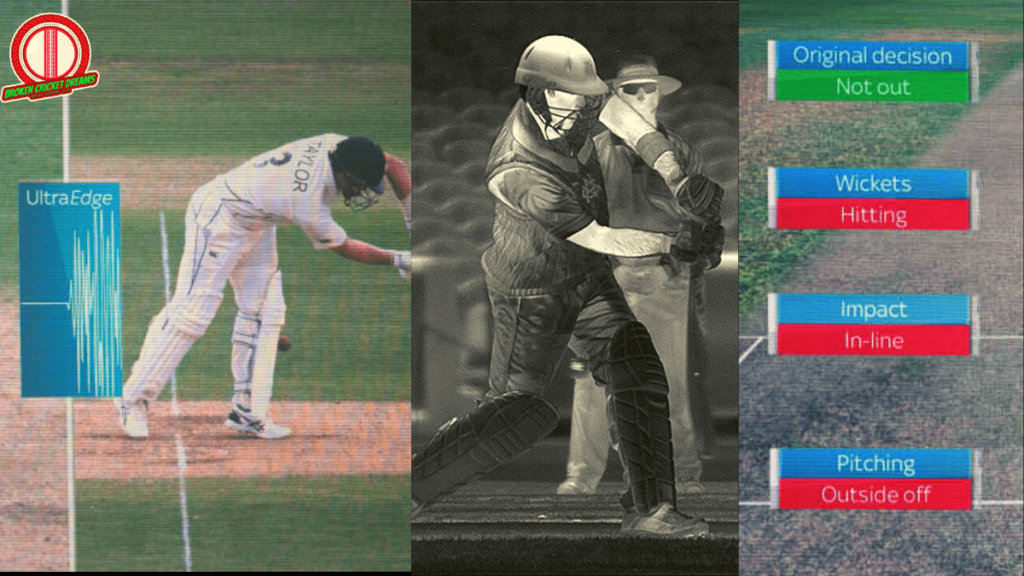
DRS fundamentally altered the accountability structure of cricket officiating. On-field umpires still make the first call, and their authority remains intact. But the existence of a review system has been shown to sharpen concentration at the crease level. Teams now study technology data to understand tendencies, pace their reviews strategically, and use the system as a tactical as well as a corrective tool.
The introduction of “umpire’s call” was a deliberate design choice that preserved on-field authority while still correcting clear errors. It acknowledged that technology has margins of uncertainty and that umpires should not be completely overridden by probabilistic models alone. This balance remains one of the more nuanced aspects of how DRS technology in cricket operates.
Controversies and Criticism
No system is without flaws, and DRS has generated its fair share of debate. The “umpire’s call” ruling has frustrated players and fans who feel that if technology exists to make a call, it should be definitive. Why introduce a review system, the argument goes, if its outcome can still be partly subjective?
Hawk-Eye’s predictive modelling has also been questioned. The ball’s path after hitting the pad is a mathematical extrapolation, not a certainty. If the prediction has even slight error at the point of contact, that error compounds over distance. Critics argue that decisions hinging on millimetres of projected trajectory are not as scientific as they appear.
There is also the question of access. Franchise tournaments and lower-tier international cricket often operate without full DRS technology due to cost and infrastructure limitations. This creates an uneven standard across different formats and venues, where the same type of disputed decision might be reviewed in one match and simply accepted in another.
The Strategic Dimension of DRS
Beyond correcting errors, DRS technology in cricket introduced an entirely new layer of strategy to the game. Captains must now decide when to review, how to conserve reviews for critical moments, and how to read their players’ certainty before committing to a challenge.
Some teams have developed strong review cultures. Players are coached on when to ask for a review based on feel, ball position, and the nature of the dismissal. Experienced wicketkeepers often serve as informal review advisers because of their close vantage point on edges and pad contact. This in-game intelligence gathering has become a genuine skill set.
The pressure of a fading review count can also affect team morale. Losing both reviews early in an innings leaves a team exposed to unchallenged errors later. Conversely, a well-timed review that overturns a match-turning decision can shift momentum dramatically.
DRS Technology in Cricket Today and What Comes Next
Today, DRS is considered an essential part of elite cricket. The debate has shifted from whether to use it to how to make it better. Broadcasters continue to refine camera setups and tracking algorithms. Research into improving the accuracy of predictive ball tracking is ongoing.
There is growing discussion about expanding DRS availability to women’s cricket and domestic competitions globally, recognising that the sport benefits when officiating standards are consistent regardless of the level of play.
Artificial intelligence is likely to play a larger role in future iterations of DRS, potentially enabling real-time automated detection of edges and impact points without relying on the third umpire to manually sift through multiple footage angles.
Why DRS Technology in Cricket Matters
At its core, DRS technology in cricket exists to make the right decision more often. It does not eliminate human judgment but supplements it with data that human senses simply cannot gather unaided. The result is a sport where genuine skill and genuine bowling merit are more consistently rewarded.
For players whose careers hinge on single decisions, for fans who invest deeply in the outcome of every delivery, and for the integrity of a game that prizes fair contest above all else, DRS technology in cricket is not just a useful addition. It is now an indispensable part of what modern cricket looks like.




No Comments