
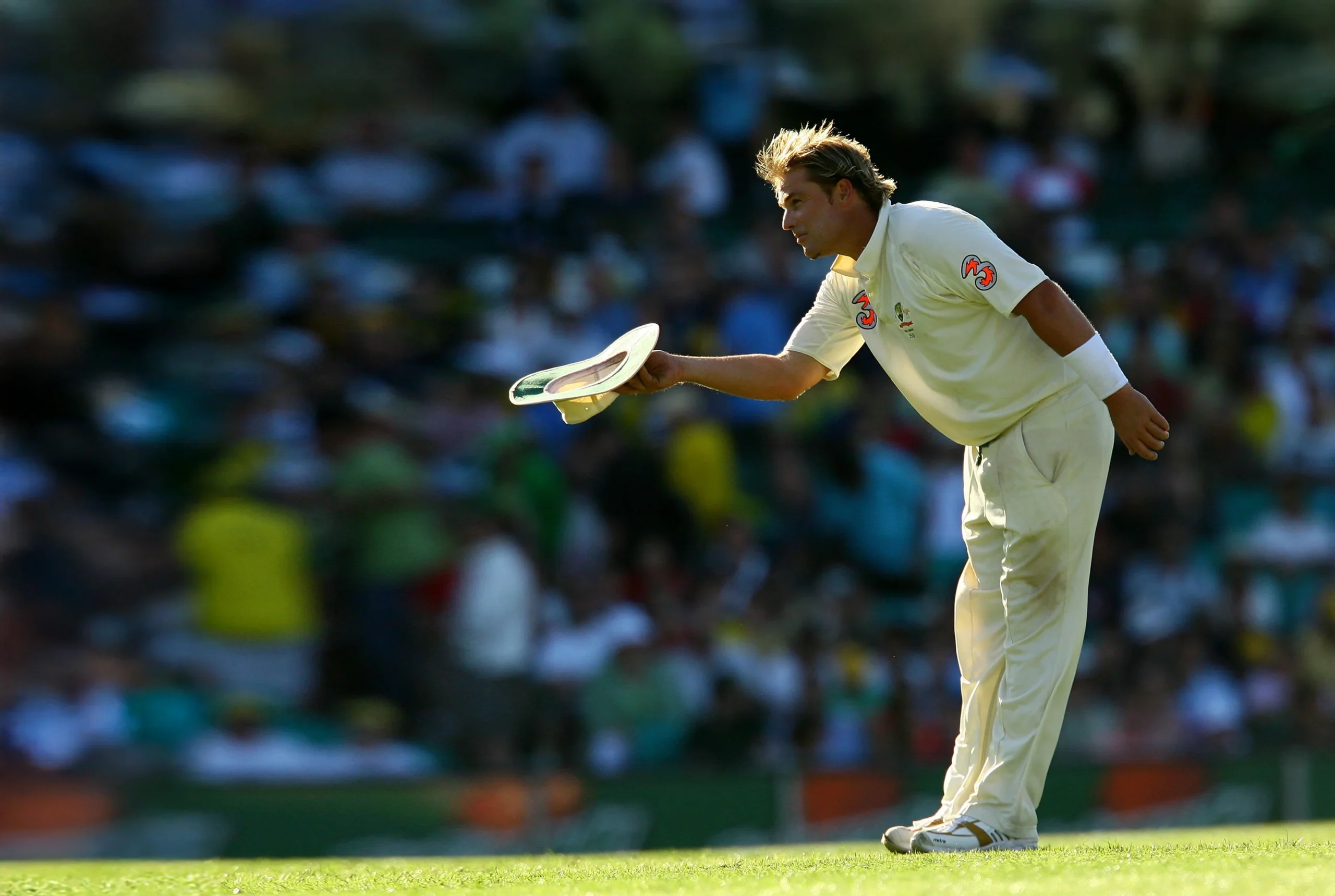

Shane Warne did not just play cricket. He reinvented it. In an era when fast bowling dominated Test cricket and leg-spin was considered a dying art, this blond Australian from Melbourne walked onto the world stage and changed everything. His 708 Test wickets stand as a monument to skill, courage, and an unmatched competitive spirit that burned in him until his very last delivery.
Table of Contents
- How Shane Warne’s 708 Test Wickets Began With a Single Ball
- The Art and Science Behind Shane Warne’s Spin Bowling Mastery
- Shane Warne’s 708 Test Wickets Across the Greatest Rivalries in Cricket
- The Numbers Behind Shane Warne’s 708 Test Wickets
- Shane Warne’s Influence on Leg-Spin Bowling Around the World
- Why Shane Warne’s 708 Test Wickets Remain Unmatched in Spirit
- Remembering the Man Behind the Legend
- The Eternal Legacy of Shane Warne’s 708 Test Wickets
How Shane Warne’s 708 Test Wickets Began With a Single Ball
Most careers take years to define themselves. Shane Warne’s was defined in a single moment. On June 4, 1993, at Old Trafford in Manchester, Warne bowled his very first delivery in an Ashes Test match to England’s Mike Gatting. The ball pitched outside leg stump and turned viciously to clip the off stump. Gatting stood at the crease in absolute disbelief. The commentators fell silent. Cricket had just witnessed what would forever be called the Ball of the Century.
That one delivery announced to the world that something extraordinary had arrived. It was not just a great ball. It was a statement. Warne had declared war on batsmen everywhere, and over the next 14 years, he made good on that promise 708 times in Test cricket alone.
The Art and Science Behind Shane Warne’s Spin Bowling Mastery
What separated Warne from every other leg-spinner before or after him was his ability to combine raw skill with psychological warfare. He did not simply bowl. He performed. Every delivery was a trap, a story, a piece of theatre designed to make the batsman doubt himself before the ball had even left Warne’s hand.
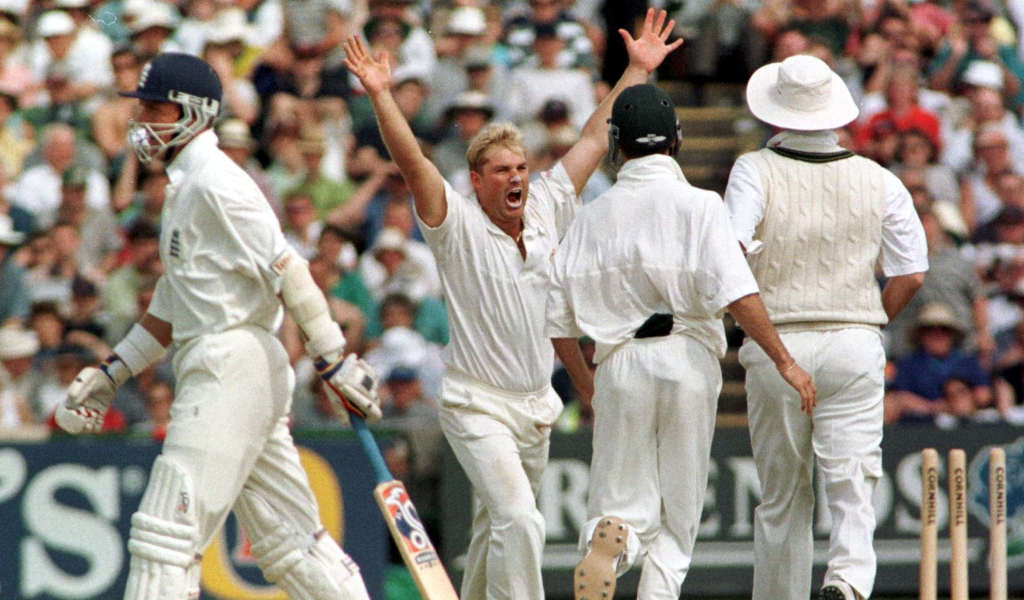
His arsenal was breathtaking in its variety. The standard leg break, bowled with precision and dangerous drift, was his stock delivery. But surrounding it were weapons that kept batsmen permanently off balance. The flipper, a back-spinning delivery that skidded low and fast through the air, trapped countless batsmen lbw who were expecting a turning ball. The googly, a ball that turned the opposite way to a leg break, was used sparingly but devastatingly. His slider was almost undetectable even to expert eyes.
What made it all work was Warne’s control. He could land the ball on a precise spot over and over again, varying pace, flight, and spin while keeping his action deceptively similar. Batsmen who faced him described a feeling of helplessness, not because they did not know what was coming, but because knowing still was not enough to stop it.
Shane Warne’s 708 Test Wickets Across the Greatest Rivalries in Cricket
No collection of 708 wickets tells a complete story without examining where and against whom those wickets were taken. Warne was at his most dangerous against England. He took 195 wickets in Ashes contests alone, a number that terrified generations of English batsmen and defined the Ashes rivalry for an entire era. The sight of Warne steaming in at Headingley, the MCG, or Lord’s became something English fans both dreaded and somehow admired.
South Africa, India, New Zealand, Sri Lanka, the West Indies — no team escaped his dominance. He was equally effective on flat pitches in subcontinental heat as he was on green English tracks. Adaptability was part of his genius. Where other spinners required helpful conditions, Warne created his own.
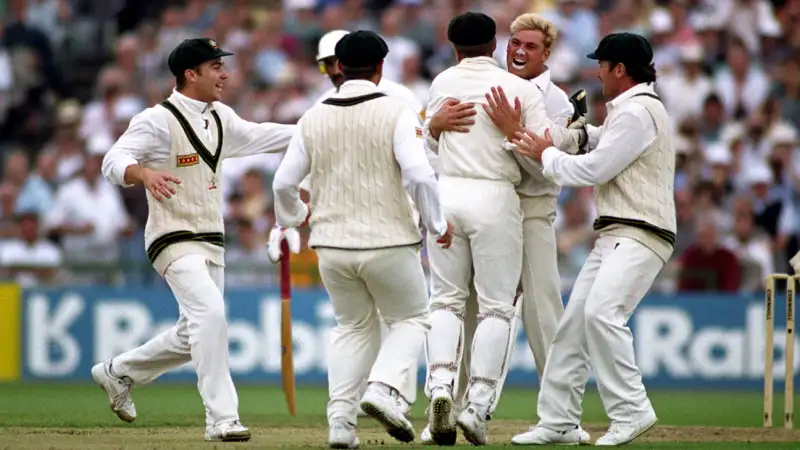
His battles with Brian Lara, Sachin Tendulkar, and Rahul Dravid were among cricket’s greatest individual contests. Tendulkar, in particular, was a batsman Warne respected deeply, and their duels produced some of Test cricket’s most technically absorbing passages of play. Neither man ever fully mastered the other, which is exactly how great rivalries should work.
The Numbers Behind Shane Warne’s 708 Test Wickets
Warne played 145 Test matches across 14 years and claimed his 708 wickets at an average of 25.41. That average is extraordinary for a spinner in Test cricket, reflecting not just how often he took wickets but how cheaply he did so. He took five wickets in an innings 37 times and ten wickets in a match on 10 occasions. These are not just statistics. They are evidence of relentless, sustained excellence.
He was the first bowler in Test history to reach 700 wickets. When he retired in January 2007 after Australia’s 5-0 Ashes whitewash, he held the record for most Test wickets ever taken. Muttiah Muralitharan later surpassed him, but the debate about who was cricket’s greatest bowler has never truly settled, and perhaps it should not. Both men redefined what was possible in their craft.
Shane Warne’s Influence on Leg-Spin Bowling Around the World
Before Warne, leg-spin was considered too expensive and too risky for Test cricket. Coaches discouraged it. Selectors avoided it. The art form was genuinely in danger of disappearing from the highest level of the game. Warne’s success did not just save leg-spin. It created a global revival.
A generation of young bowlers across Australia, India, Pakistan, and beyond picked up the ball differently because of what they saw him do. Coaches who once told promising young spinners to bowl off-spin or seam instead suddenly found parents and children arriving at cricket academies wanting to learn the leg break, the flipper, and the googly. Warne made leg-spin glamorous again.
His impact extended beyond technique. He showed that a spin bowler could be aggressive, theatrical, and match-winning from the very first over. He wore the ball as a weapon rather than a support act to the fast bowlers, and in doing so he changed how captains around the world thought about spin bowling in Test cricket.
Why Shane Warne’s 708 Test Wickets Remain Unmatched in Spirit
Numbers in cricket can be broken. Records come and go. But what Warne built across those 708 wickets was something numbers cannot fully capture. He changed the atmosphere of a cricket ground the moment he was thrown the ball. Crowds leaned forward. Batsmen tightened. Something was always about to happen.
He was also a cricketer who performed at his highest in the biggest moments. World Cups, Ashes series, final day chases, Warne rose when cricket demanded it most. His match-winning performance in the 1999 Cricket World Cup final, his dominant displays in back-to-back Ashes series victories, and his unforgettable spell in the tied Super Series Test against the World XI in 2005 all spoke to a man who wanted the ball when the game was on the line.
Remembering the Man Behind the Legend
Shane Warne passed away on March 4, 2022, in Thailand, at the age of 52. The cricket world went quiet. Tributes poured in from every corner of the globe, not just from players and administrators but from people who had watched him bowl on grainy television sets in living rooms around the world and fallen in love with cricket because of what he made the ball do.
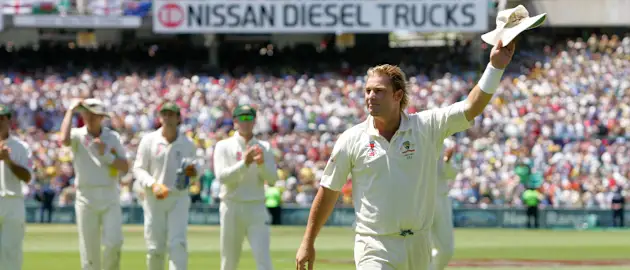
He was not a simple man off the field. His life was filled with controversies, headlines, and personal complexities that he never tried to hide entirely. But on the cricket field, there was only genius. There was only Warne, the ball, and the hapless batsman at the other end.
The Eternal Legacy of Shane Warne’s 708 Test Wickets
Shane Warne’s 708 Test wickets will always represent more than a number in a record book. They represent a philosophy: that cricket is entertainment, that a spinner can be a match-winner, and that skill combined with courage and personality can define an entire era of sport.
He gave leg-spin bowling back to the world and made it beautiful. Every time a young bowler grips the ball with wrist cocked, ready to rip a leg break across a batsman’s defences, they are in some way continuing what Warne started at Old Trafford in 1993. The art form lives on because he refused to let it die.
That is the true measure of Shane Warne’s 708 Test wickets. Not just what he did, but what he made possible for everyone who came after him.




No Comments