
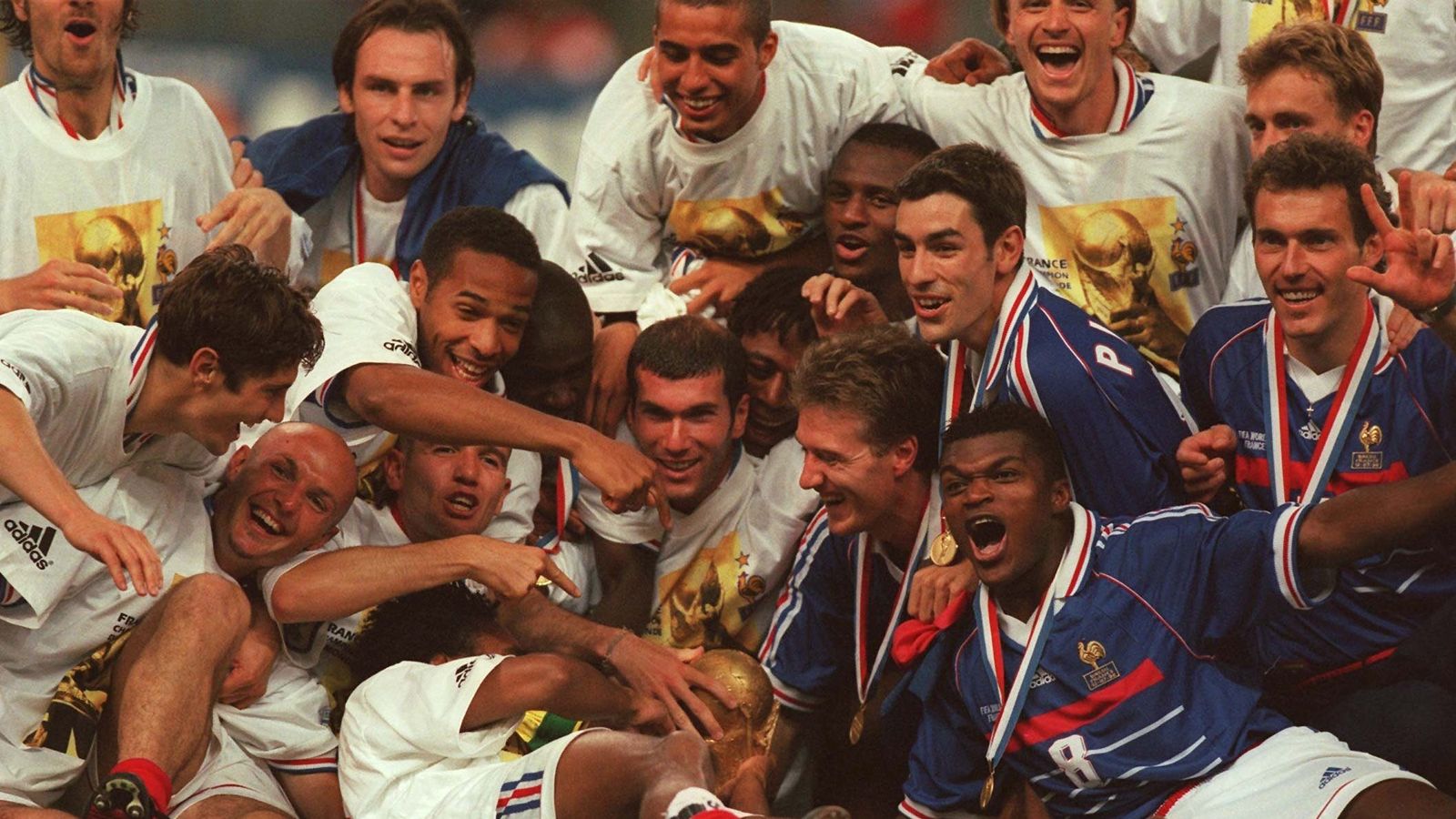

Two World Cup trophies. One of the most humiliating exits the tournament has ever witnessed. A headbutt that stopped the world. And a final comeback so extraordinary it has already entered the permanent folklore of the game. France World Cup history is not a story of steady dominance. It is a story of the highest highs and the most crushing lows, often separated by just a few years.
Table of Contents
No nation has given the tournament more emotional extremes at the top level. The two stars on the French shirt were earned through brilliance, but the journey between them was never straightforward.
Before the Glory: France’s Early World Cup Story
France were founding members of the World Cup in 1930. Their early campaigns were largely unremarkable. The first genuine flash of world-class quality arrived in 1958 in Sweden, when Just Fontaine scored 13 goals in a single tournament. That remains the all-time record for goals in one World Cup edition. France finished third that year.
Then came years of underachievement and failed qualification attempts through the 1960s and 1970s. Michel Platini’s generation provided the next high point, finishing third at the 1986 World Cup in Mexico. It was a foundation, not yet a dynasty. What followed twelve years later changed French football forever.
1998: The First Trophy, On Home Soil
Aimé Jacquet’s France arrived at their own World Cup carrying enormous weight. The expectation was national. So was the pressure. But the squad Jacquet had built was different. It combined individual genius with defensive discipline and collective spirit. Zinedine Zidane was at its centre, but Didier Deschamps led it from the back, Thierry Henry terrorised defences from the flanks, and Emmanuel Petit controlled the tempo.
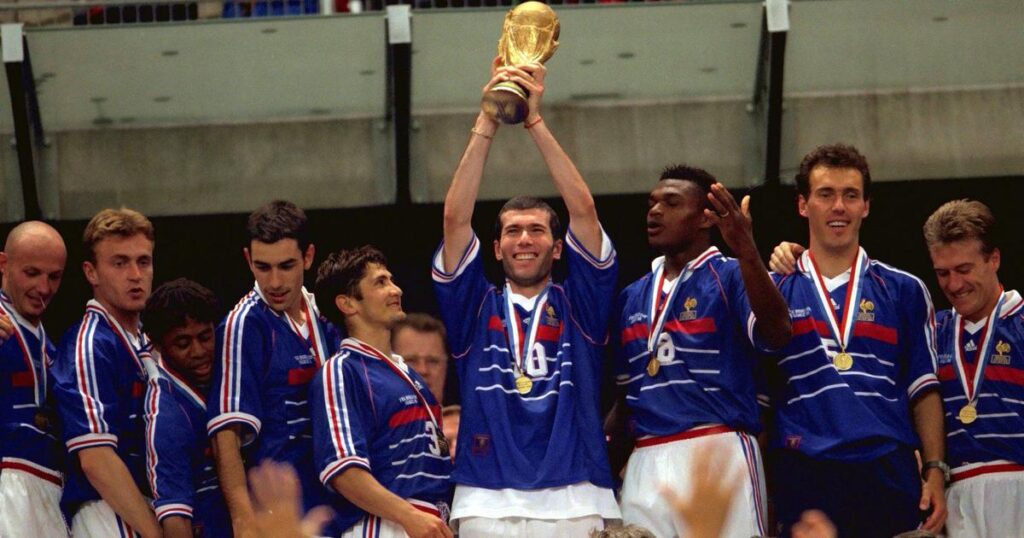
The final against Brazil on July 12, 1998, at the Stade de France, was the perfect night. Zidane scored twice in the first half with headers from corners, 27th and 45th minute. Petit added a third in stoppage time. The final score was 3-0. France were world champions for the first time. The streets of Paris held one of the largest public gatherings in French peacetime history. The multicultural squad that won it represented a vision of France that the nation celebrated with fierce pride. It was more than a football match. It was a cultural moment.
The Tragedy of 2002: Defending Champions Eliminated Without Scoring
Four years later, France arrived in South Korea and Japan as world champions and European champions simultaneously. The most decorated international side on the planet. They were eliminated in the group stage without scoring a single goal. It remains the most catastrophic defence of a World Cup title in the tournament’s history.
Zidane was injured for the opening two matches. France lost 1-0 to Senegal in the tournament’s very first game. Papa Bouba Diop scored the only goal. Then came a 0-0 draw with Uruguay, during which Thierry Henry was sent off for a reckless challenge. France needed to beat Denmark by two goals in the final group game. Zidane returned but was clearly unfit. Denmark won 2-0. Three games. Zero goals. One point. Exit. The psychological collapse behind those numbers was rooted in complacency, injury, and the curse of arriving as the overwhelming favourite with nothing to prove. Roger Lemerre was sacked the following week.
2006: A Final That Will Never Be Forgotten
Four years after the lowest point in French football history, a retiring generation gathered for one final act. Zidane came out of international retirement. Raymond Domenech’s side reached the final against Italy in Berlin. France were competitive throughout. They went ahead early through a Zidane penalty.
Then came the headbutt. In extra time, with the match level, Marco Materazzi said something to Zidane. What exactly was said has been debated for nearly two decades. What happened next was not. Zidane turned, walked back, and drove his head into Materazzi’s chest. The red card was immediate. France, reduced to ten men, lost on penalties. Zidane’s final act as a professional footballer was one of the most discussed moments in sporting history. The exit was simultaneously heroic and heartbreaking. That paradox is perfectly French.
2018: The Second Star
Twenty years after 1998, Didier Deschamps returned to the World Cup final. This time as manager rather than captain. The squad he brought to Russia was built around different qualities. Mbappé provided the explosion. Antoine Griezmann provided the craft. Paul Pogba provided the power. Hugo Lloris provided the calm.
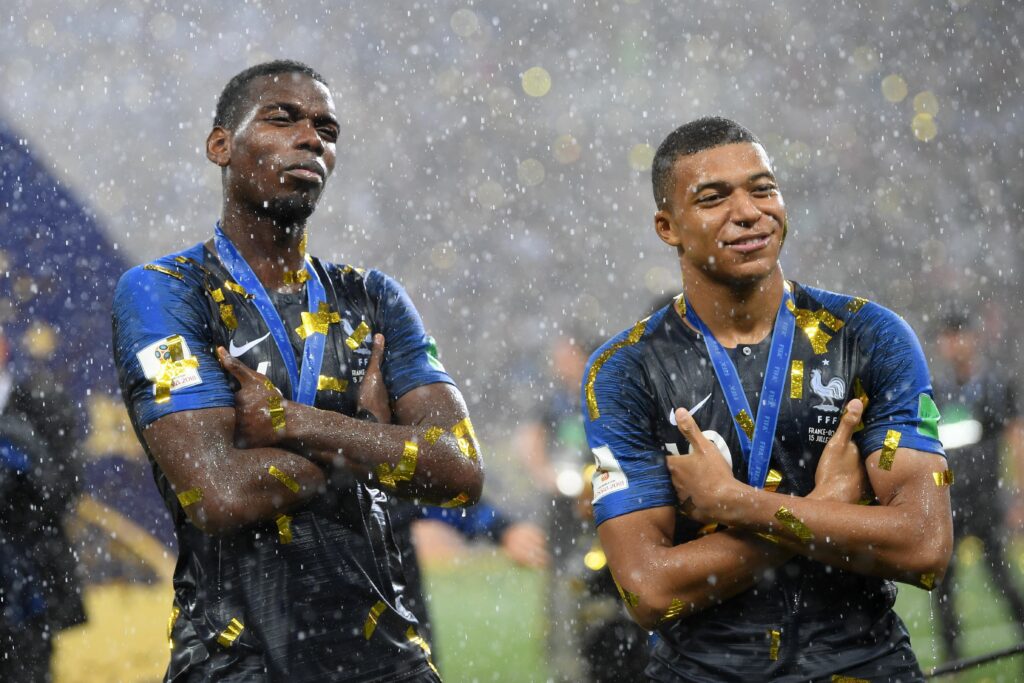
The final against Croatia was won 4-2. Mbappé scored at 19 years old. Griezmann scored from the penalty spot. The second star was sewn onto the French shirt. Deschamps became only the third man to win the World Cup as both player and manager, following Brazil’s Mário Zagallo and Germany’s Franz Beckenbauer. The collective system he built, channelling individual brilliance into disciplined structure, was the same formula that had delivered 1998. History had found a way to repeat itself.
2022: So Close Again
The 2022 final in Qatar against Argentina produced one of the most extraordinary evenings in World Cup history. France were 2-0 down with around ten minutes of normal time remaining. Mbappé scored twice in two minutes to level at 2-2. Messi put Argentina back ahead in extra time. Mbappé converted a penalty to make it 3-3. After 120 minutes, the finest World Cup final of the modern era went to penalties. France lost 4-2 in the shootout. Mbappé scored a hat trick in a final and still finished on the losing side. French football wept. The rest of the world stared in disbelief.
A World Cup Legacy Built on Extremes
France World Cup history is not a story of consistency. It is a story of intensity. Two titles separated by two decades. A group-stage exit without scoring. A red card in a final. One of the greatest comeback performances in the tournament’s history. No nation has delivered more drama at the highest level of the competition. The stars on the shirt were earned. Everything around them was lived fully, painfully, and magnificently. That is France at the World Cup. That has always been France at the World Cup.

No Comments