
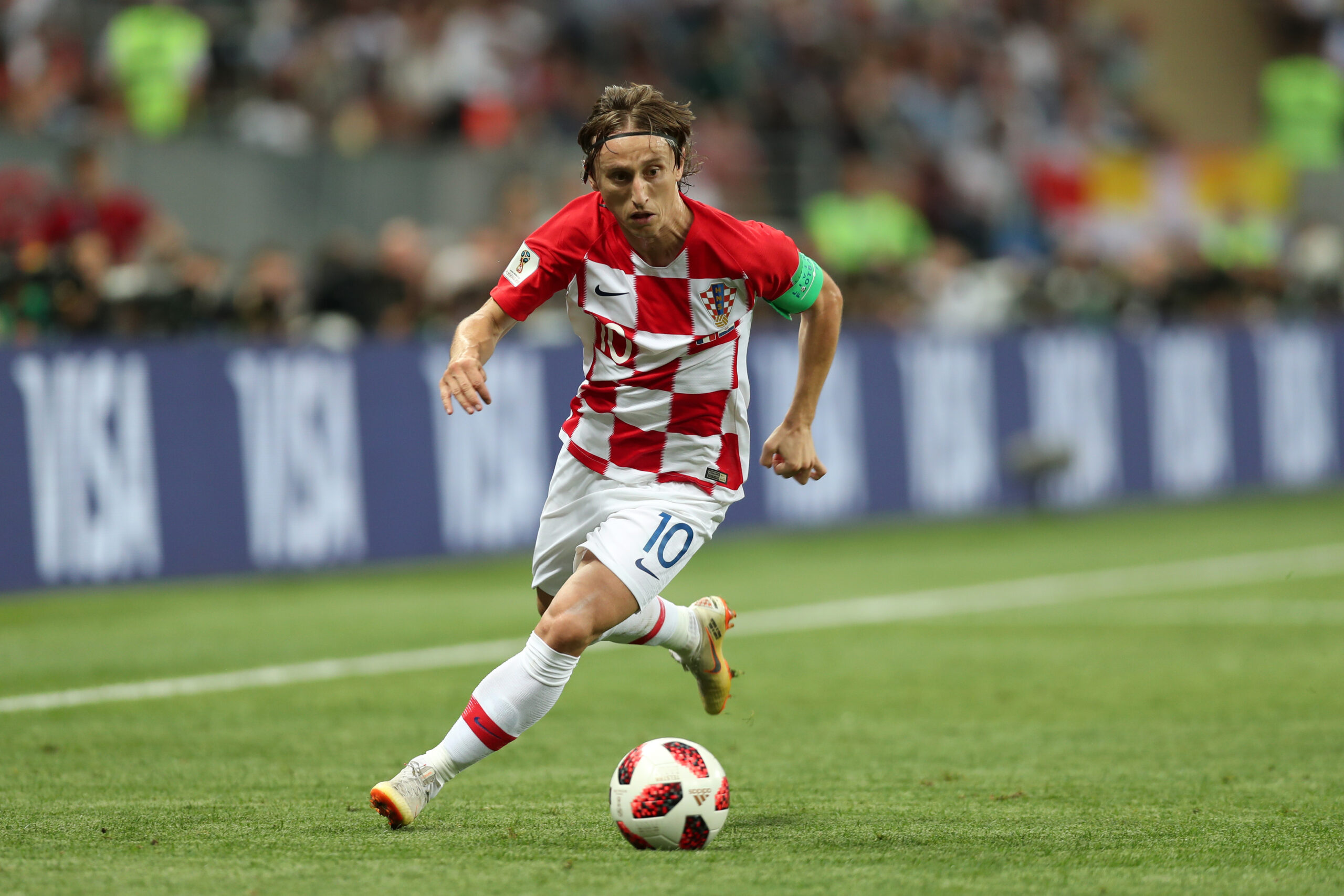

Croatia has fewer than four million people. It has no history of football dominance. It has no pipeline of resources to rival the nations it faces. And yet, across four World Cups, it has reached heights that its size and means should never have allowed. That story has one engine at its centre. One player who carried more than any individual should be asked to carry, and delivered more than anyone expected.
Table of Contents
Luka Modric’s World Cup career is not simply the story of one man. It is the story of a small nation that refused to accept the limits the world placed on it.
Croatia’s Underdog Identity and Where Modric Fits
Croatia’s football identity was built on the 1998 World Cup in France, where they made the semifinals in their very first tournament as a nation following the breakup of Yugoslavia. Davor Suker won the Golden Boot. The world took notice. Then, for years, Croatia flickered in and out of tournament football without producing another run of that magnitude.
Modric inherited that tradition. He became the creative engine, the leader, and the symbol of everything Croatian football aspired to be. His influence on every World Cup campaign went beyond any statistic. He was the heartbeat. Every attack flowed through him. Every defensive transition started with his pressing. And every moment of adversity was answered, at least in part, by his composure.
2006: A Quiet Debut on the Biggest Stage
Modric made two appearances at the 2006 FIFA World Cup finals as a substitute in the group fixtures against Japan and Australia. He was 20 years old. His total playing time across both appearances was 35 minutes. Croatia were eliminated at the group stage.
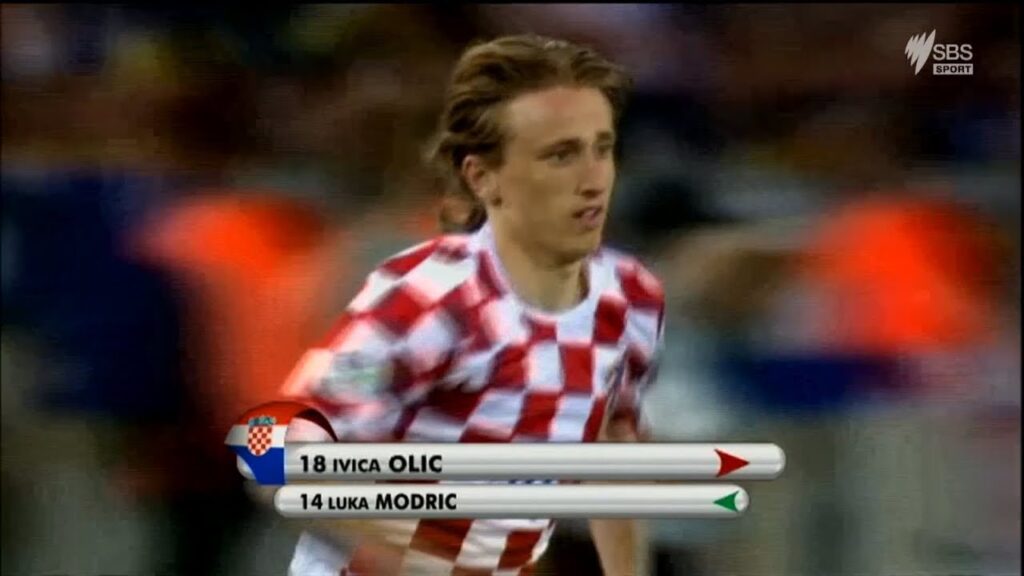
There were no headlines attached to that debut. No defining moments. Just a young midfielder absorbing the scale of the World Cup for the first time and storing everything he experienced. Players who become great at tournaments rarely arrive as finished articles. They arrive as learners. Modric’s 2006 campaign was exactly that.
2014: The Weight of Expectation
By 2014 in Brazil, Modric was one of the finest midfielders on the planet. He had won the Champions League with Real Madrid weeks before the tournament. Croatia were placed in Group A alongside hosts Brazil, Mexico, and Cameroon. Croatia faced Brazil in their opening game and took the lead first through Marcelo’s own goal, but lost 1-3. Modric suffered a minor foot injury in the match.
Croatia beat Cameroon 4-0 in their second game but then lost 1-3 to Mexico in the final group match, finishing third in their group and going home. It was a second consecutive group stage exit. Modric was playing the best football of his club career. The gap between individual quality and collective tournament success had never felt wider. What happened four years later made that frustration worthwhile.
2018: The Tournament That Defined a Career
Russia 2018 is the centrepiece of the Luka Modric World Cup career. Croatia became the first team to earn three come-from-behind victories at a single FIFA World Cup, with all three matches going into extra time. What that statistic does not capture is the psychological demand of sustaining belief through three consecutive knockout matches decided beyond 90 minutes.
In the round of 16, Croatia faced Denmark. Both teams drew 1-1 after extra time. Modric took a penalty in extra time but it was saved by Kasper Schmeichel. Croatia won the subsequent shootout 3-2. He stepped up again in the shootout and scored. The composure required to take a second penalty after missing the first is not taught. It is earned.
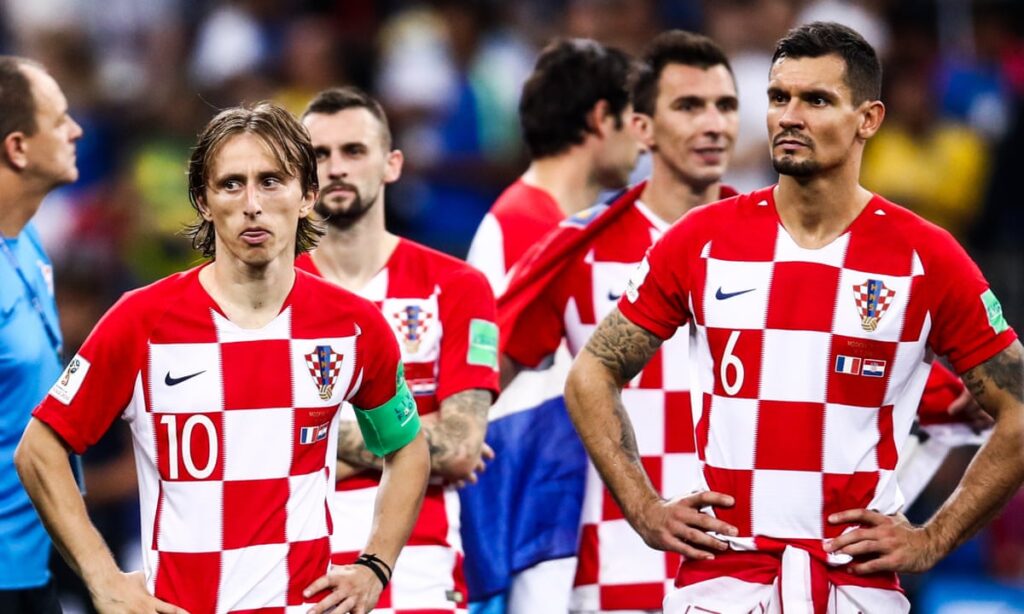
The quarterfinal against hosts Russia produced another 1-1 draw after 90 minutes. Croatia took a 2-1 lead in extra time when Domagoj Vida headed in from Modric’s corner. Russia equalised in the 115th minute. Croatia won the shootout 4-3. The semifinal against England in Moscow saw Croatia trail to a Kieran Trippier free kick inside five minutes. Ivan Perisic equalised. Mario Mandzukic won it in the 109th minute. Croatia were in a World Cup final.
The final against France in Moscow ended 4-2. Croatia led 1-0 through an early own goal before France took control. The defeat was painful. Modric won the Golden Ball as the tournament’s best player. He became the first player in over a decade to claim the award ahead of both Lionel Messi and Cristiano Ronaldo. The recognition was not simply for one tournament. It was for a body of work, across five weeks, that had stretched the limits of what a team his size should be capable of achieving.
2022: One Final Act at 37
Qatar 2022 brought Modric back to the World Cup stage at 37 years old. Croatia reached the semifinals again, losing 3-0 to Argentina. They finished third after beating Morocco in the third-place playoff. At the 2022 World Cup, he led the team to a third-place finish, winning the Bronze Ball as the tournament’s third best player.
Two semifinals in four tournaments. That is the measure of what Modric built around himself. Not a superteam. Not a golden generation of eight world-class players. A well-organised, deeply motivated group of footballers who, when led by him, consistently exceeded what their talent level alone would have allowed.
What Made Modric Unplayable at World Cups
The tactical explanation for Modric’s World Cup performances centres on his ability to do two jobs simultaneously. He won the ball back with the urgency of a defensive midfielder. He then distributed it with the vision of a playmaker. No single opponent could neutralise both functions at once. Pressing him high left space in behind. Sitting off him gave him time to dictate the rhythm of the entire match.
Beyond the tactical, the psychological dimension was equally decisive. He missed a penalty in a World Cup knockout match against Denmark and then stepped up to take another one minutes later in the same shootout. That is not a quality that can be coached. It is the definition of a big-game player. For a country of just 3.9 million people, what Modric led Croatia to achieve was an extraordinary feat.
A Small Nation’s Greatest World Cup Story
Croatia should never have reached a World Cup final. Modric should never have won the Golden Ball ahead of the game’s two greatest players. The underdog story should not have lasted four tournaments. It did. The Luka Modric World Cup career is proof that the game’s biggest stage does not belong exclusively to the biggest nations. It belongs to those who arrive with the quality to compete and the belief to keep competing when the odds run out. For a small country on the Adriatic coast, he was both. He always will be.



No Comments