
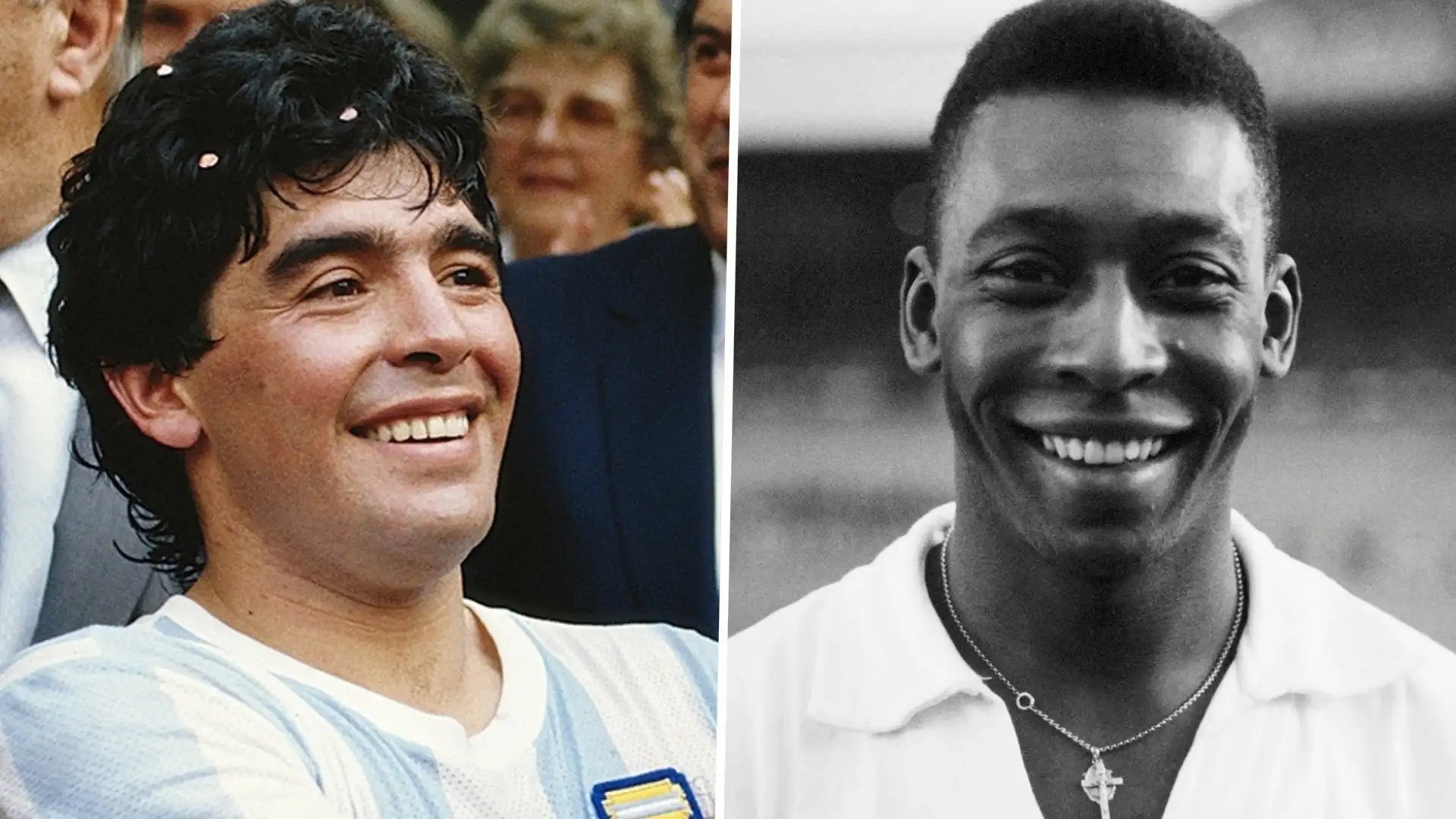

Few arguments in sports history have sparked as much passion, nostalgia, and outright disagreement as the Pelé vs Maradona GOAT debate. Ask a Brazilian, and the answer is immediate. Ask an Argentine, and you will hear an equally convincing case. The truth is, both men transcended football in ways that statistics alone cannot capture. But since the debate exists, it deserves a serious, honest look at what made each of them extraordinary and why the conversation still matters decades after their peak years.
Table of Contents
- Who Was Pelé and Why Does He Still Matter in the GOAT Conversation?
- The Maradona Factor: Why Diego Remains Untouchable for Millions
- Comparing Their Skills: Where Pelé vs Maradona GOAT Debate Gets Complicated
- Trophies, Records, and the Weight of Legacy
- What Modern Football Owes to Both Men
- So Who Wins the Pelé vs Maradona GOAT Debate?
Who Was Pelé and Why Does He Still Matter in the GOAT Conversation?
Edson Arantes do Nascimento, known universally as Pelé, burst onto the world stage at just 17 years old during the 1958 FIFA World Cup in Sweden. He did not just participate in that tournament; he dominated it, becoming the youngest player ever to score in a World Cup final. Brazil won, and a legend was born.
What followed over the next two decades was a career of almost impossible consistency. Pelé won three FIFA World Cups with Brazil in 1958, 1962, and 1970, a record no other player in history has matched. His goal tally, officially recognized by FIFA, stands at over 1,000 career goals, a number that remains the subject of some debate but speaks volumes about his relentless productivity in front of goal.
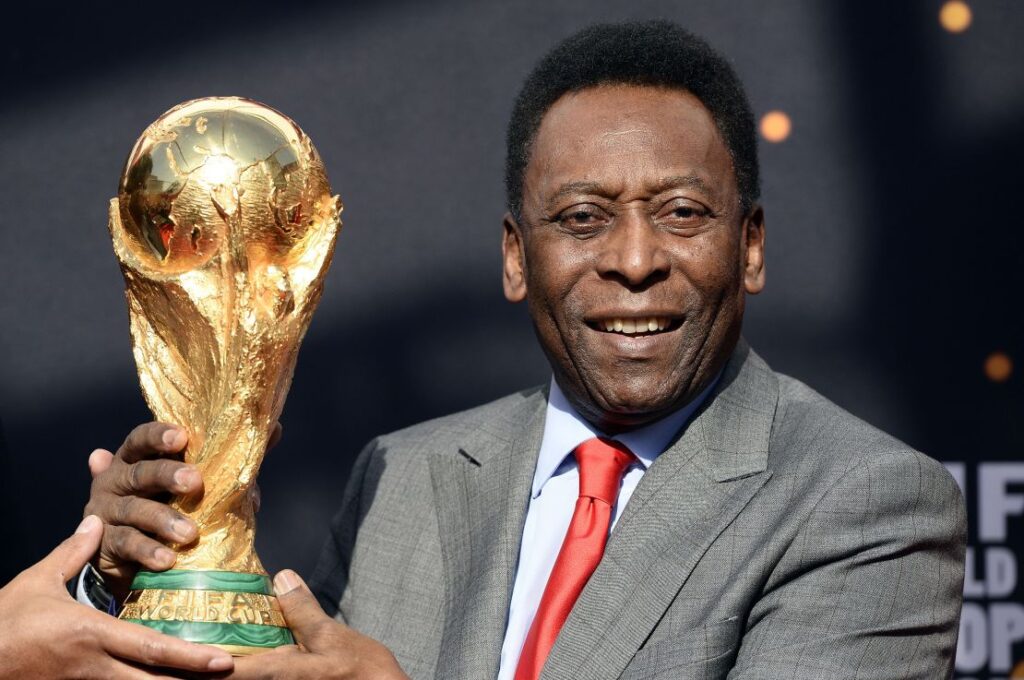
Beyond the numbers, Pelé played with a combination of athleticism, vision, creativity, and finishing ability that was simply ahead of his time. He was powerful yet graceful, a player who could score from any angle, with either foot, and with his head. He was not just a great player within the Brazilian system. He was the system. Santos FC and the Brazilian national team were built around making the most of a once-in-a-generation talent.
The Maradona Factor: Why Diego Remains Untouchable for Millions
Diego Armando Maradona represents something different in football. Where Pelé was celebrated and admired, Maradona was worshipped and mythologized. His story carried the weight of a nation, a city, and an era. Born in a poor neighbourhood outside Buenos Aires, Maradona rose from genuine poverty to become the most talked-about footballer on the planet.
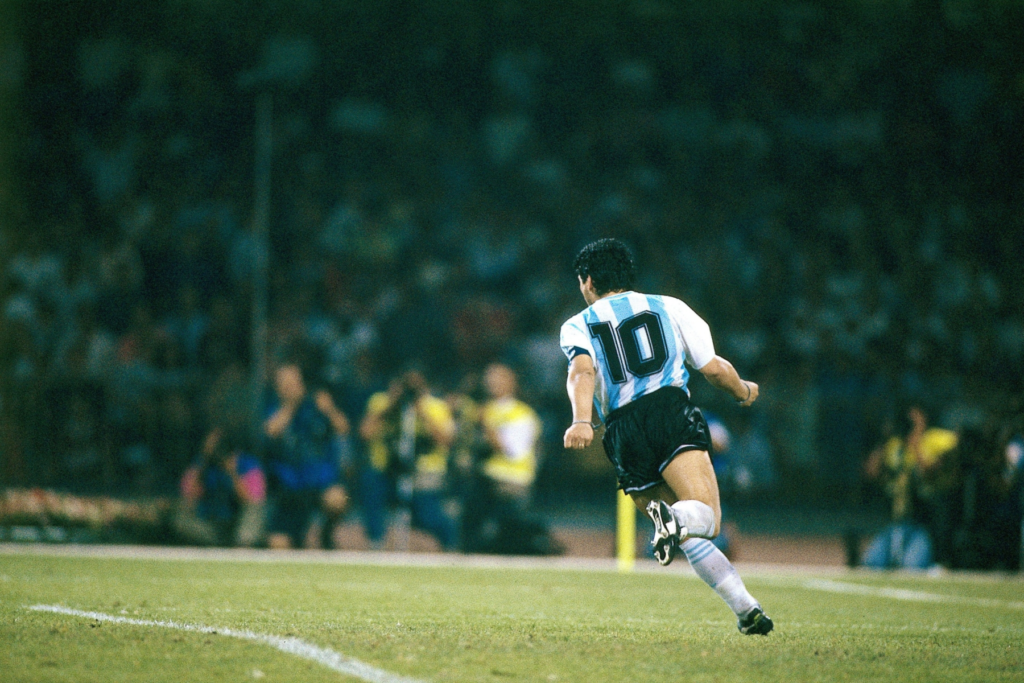
His 1986 World Cup campaign in Mexico is arguably the single greatest individual tournament performance in football history. Maradona almost single-handedly carried Argentina to the title. The quarterfinal against England alone contained the two most famous goals ever scored. The first, the notorious Hand of God, showed his cunning and street-smart mentality. The second, widely voted the Goal of the Century, saw him dribble past five England players and the goalkeeper before slotting the ball home. That one tournament, that one match, tells you almost everything you need to know about what made Maradona special.
At club level, his years at Napoli from 1984 to 1991 represent one of the most remarkable achievements in European football. He took a club from the south of Italy, historically overshadowed by the wealthy northern giants, and won them two Serie A titles. In Naples, he was not just a footballer. He was a god. The streets there still carry murals of his face.
Comparing Their Skills: Where Pelé vs Maradona GOAT Debate Gets Complicated
When people engage in the Pelé vs Maradona GOAT debate, they often focus on goals and trophies, which is understandable. But the more fascinating comparison lies in their styles and what those styles demanded of them.
Pelé was the complete footballer. He could do everything brilliantly. His physical attributes were exceptional, his technical quality was world class, and his intelligence on the ball was decades ahead of his peers. He was a team player in the truest sense, someone who made everyone around him better.
Maradona, on the other hand, was a different kind of genius. He was shorter and stockier, not the prototypical athletic specimen. What he had was an impossibly low centre of gravity, balance that defied logic, and a left foot that could seemingly bend the ball to his will. Defenders knew what he was going to do. They simply could not stop him. That is a rare and extraordinary quality.
The honest answer is that both men had different gifts. Comparing them is not entirely straightforward because football in the 1960s and 1970s looked different from football in the 1980s. Pitches were different, tackling was more physical, and the global spread of quality was uneven. These contextual factors matter when placing either player in their era.
Trophies, Records, and the Weight of Legacy
From a trophies standpoint, Pelé has the edge. Three World Cups is an achievement that may never be surpassed. However, it is worth noting that Maradona played in weaker Argentina squads for much of his career and still managed to deliver a World Cup in 1986 on sheer individual brilliance. The 1990 World Cup final, where Argentina lost to West Germany, further illustrated that Maradona could carry a limited team remarkably far.
At club level, both men dominated their respective eras. Pelé’s Santos won multiple Brazilian championships and international club titles. Maradona’s Barcelona stint was undermined by injury and politics, but his Napoli years were nothing short of miraculous.
One element often overlooked in the Pelé vs Maradona GOAT debate is cultural and social impact. Maradona represented the underdog, the working class, the people who felt overlooked by the world. His connection with the poor of Naples and the streets of Buenos Aires gave his story a political and human dimension that resonated globally. Pelé, meanwhile, became a global ambassador, an icon in the truest commercial and cultural sense.
What Modern Football Owes to Both Men
The influence of Pelé and Maradona on modern football is impossible to overstate. Every technically gifted forward who plays with joy and freedom carries a piece of Pelé’s DNA. Every attacking midfielder who takes the ball under pressure and runs at defenders owes something to the Maradona blueprint.
Players like Ronaldo, Messi, Neymar, and Mbappé have all spoken about the inspiration they drew from one or both of these legends. Lionel Messi’s own GOAT debate is in many ways an extension of the Maradona legacy, with Messi finally delivering Argentina’s World Cup in 2022 in a moment that felt like a full-circle tribute to Diego.
So Who Wins the Pelé vs Maradona GOAT Debate?
Here is the honest truth: there is no definitive winner, and that is precisely what makes this debate so enduring and enjoyable. Pelé was arguably the more complete footballer across a longer career. Maradona produced the most electrifying peak performances the sport has ever seen.
If you value consistency, longevity, and collective achievement, Pelé is your answer. If you value individual brilliance, the ability to change a game entirely on your own, and a career story that reads like a novel, Maradona makes an equally compelling case.
The Pelé vs Maradona GOAT debate will never truly be settled, and perhaps it should not be. What it does is remind every generation of football fans that greatness can take many forms. Both men gave the world a version of football that felt like art. That alone is enough to honour both of them without needing a final verdict.
The beautiful game was lucky to have either. It was extraordinary to have both.



No Comments