
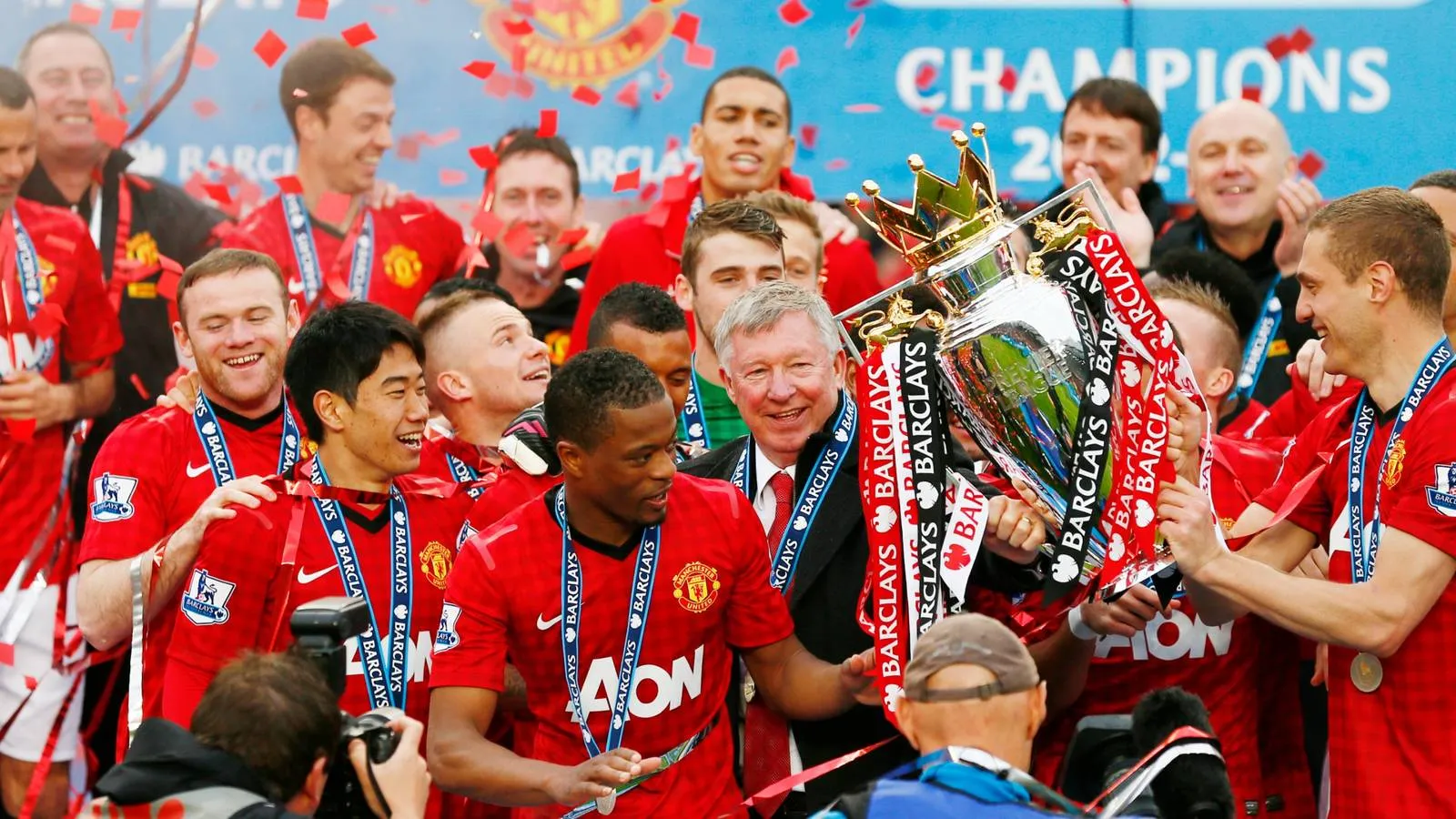

Sir Alex Ferguson didn’t just manage Manchester United. He built an empire, dismantled it, and built another one without ever loosening his grip on English football. Across 26 years at Old Trafford, he delivered 13 Premier League titles, a record so far ahead of any other manager in the competition’s history that it exists in a category entirely its own.
Table of Contents
- How Sir Alex Ferguson’s Manchester United Redefined English Football
- The First Title and the Dynasty That Followed
- The Treble Season: Sir Alex Ferguson’s Manchester United at Their Peak
- The Players Who Built the Titles
- Ferguson’s Tactical Genius Across Thirteen Campaigns
- The Rivals Ferguson Refused to Let Win
- What Sir Alex Ferguson’s 13 Premier League Titles Mean for Manchester United’s Legacy
- The Final Title and the End of an Era
- The Enduring Legacy of the Greatest Manager English Football Has Ever Seen
Understanding how those titles were won, and what they collectively represent, is to understand the greatest dynasty English football has ever produced.
How Sir Alex Ferguson’s Manchester United Redefined English Football
When Ferguson arrived at Old Trafford in November 1986, he inherited a club that had not won the First Division title since 1967. The culture was stale, the standards were slipping, and the gap to Liverpool, then the dominant force in English football, felt enormous.
What followed was a systematic reconstruction of everything — the youth academy, the scouting network, the dressing room culture, and the expectation of what Manchester United should be. By the time the Premier League era began in 1992, the foundations were already laid. What came next was simply inevitable.
The First Title and the Dynasty That Followed
The 1992–93 season delivered United’s first league title in 26 years, and the relief it carried was almost physical. With Eric Cantona arriving from Leeds United midseason, the missing piece clicked into place. United finished ten points clear and the Premier League era had its first dominant force.
The 1993–94 title followed immediately, this time by eight points, and it became clear that this was not a one-season correction. Ferguson had changed something structural at the club, and the trophies were the proof.
The Treble Season: Sir Alex Ferguson’s Manchester United at Their Peak
If any single season defines what Sir Alex Ferguson’s Manchester United were capable of, it is 1998–99. United won the Premier League, the FA Cup, and the UEFA Champions League in the same campaign, completing a treble that no English club had achieved before and none has matched since.
They clinched the Premier League on the final day of the season, then won the Champions League final against Bayern Munich with two injury-time goals. The improbability of it, the sheer refusal to accept defeat, carried Ferguson’s fingerprints all over it. It remains the most celebrated season in the club’s history.
The Players Who Built the Titles
No manager wins thirteen championships alone, and Ferguson’s greatest skill may have been his ability to identify, develop, and cycle through generations of exceptional players. Eric Cantona gave the first titles their swagger. Roy Keane provided the aggression and leadership that defined the late 1990s teams.
Paul Scholes and Ryan Giggs anchored the midfield across multiple eras with a consistency that defied time. Cristiano Ronaldo arrived in 2003 as a raw teenager from Sporting Lisbon and left in 2009 as the best player on the planet. Wayne Rooney added physicality and clinical finishing to the 2007–08 and 2010–11 title campaigns. Each generation was different. Each one won.
Ferguson’s Tactical Genius Across Thirteen Campaigns
What makes the Ferguson Premier League titles particularly remarkable is how stylistically varied they were. Early title-winning sides were built on pace, direct play, and the platform of a dominant home record at Old Trafford. By the mid-2000s, the system had evolved into something more controlled and possession-based, reflecting the influence of players like Scholes and Michael Carrick.
The 2007–08 title-winning team, which also claimed the Champions League, played some of the most complete football the Premier League had seen. Ferguson never allowed his methods to become predictable or outdated, and that tactical evolution is precisely why the titles continued arriving long after rivals assumed he had peaked.
The Rivals Ferguson Refused to Let Win
Every great dynasty needs adversity, and Ferguson faced it repeatedly. Arsenal’s Invincibles went the entire 2003–04 season unbeaten and claimed the title that year, one of the few campaigns where United fell short. Rather than accept the shift in power, Ferguson rebuilt and returned stronger.
When Roman Abramovich’s money transformed Chelsea into serial contenders from 2004 onward, Ferguson matched them psychologically and tactically, winning three of the next seven titles. When Manchester City began spending on a scale that redefined football’s financial landscape, he delivered the 2010–11 title by nine points. He never conceded the landscape. He simply adapted and overcame.
What Sir Alex Ferguson’s 13 Premier League Titles Mean for Manchester United’s Legacy
The statistical weight of thirteen titles is almost difficult to process in isolation. The next highest total by any Premier League manager stands at six, and Ferguson’s 13 came at a single club, across a single era, in the most competitive league in the world. His win percentage across Premier League seasons exceeded 60 percent.
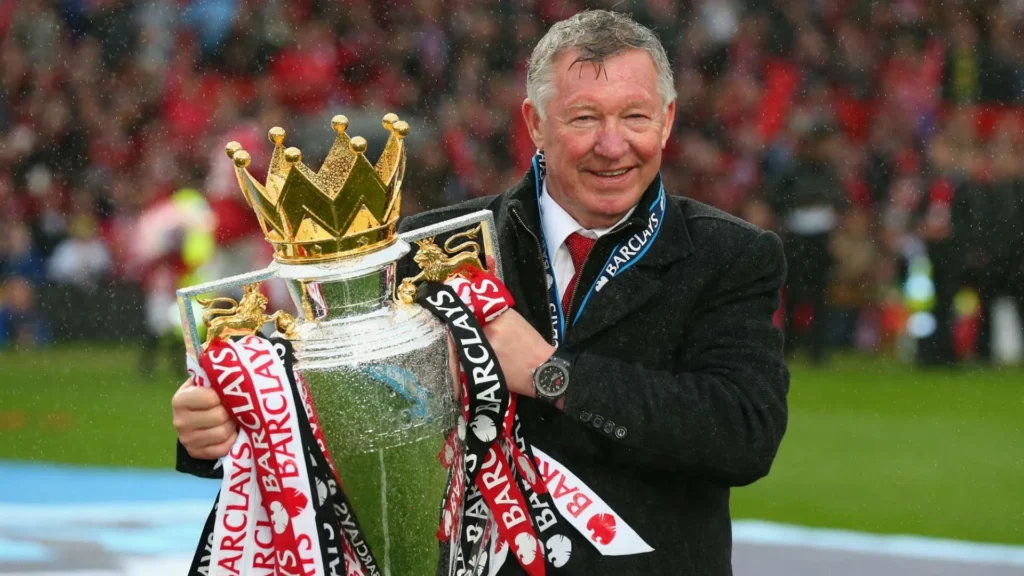
United finished outside the top three only once during his entire tenure in the Premier League. These numbers, placed alongside any measure of managerial greatness in football history, leave Ferguson without a credible rival for the title of the greatest club manager the game has ever seen.
The Final Title and the End of an Era
The 2012–13 season was Ferguson’s farewell, and he delivered it in the manner of someone who had always controlled the ending. United won the Premier League by eleven points, their largest winning margin in the competition’s history, with Robin van Persie’s partnership with Rooney providing the attacking foundation.
When Ferguson announced his retirement in May 2013, it felt simultaneously like the perfect conclusion and the beginning of an unresolvable absence. No successor has come close to replicating what he built. The Premier League title has not returned to Old Trafford since.
The Enduring Legacy of the Greatest Manager English Football Has Ever Seen
Sir Alex Ferguson’s Manchester United left behind something that statistics alone cannot fully contain. Thirteen Premier League titles represent a record, yes, but they also represent a philosophy — that excellence is not accidental, that dynasties are built through relentless standards, and that the measure of a great manager is not one title but the sustained, repeated, unyielding pursuit of the next one.
That pursuit, carried across 26 years and every variation of challenge English football could produce, is the true and enduring legacy of the most decorated manager the Premier League has ever witnessed.


No Comments