
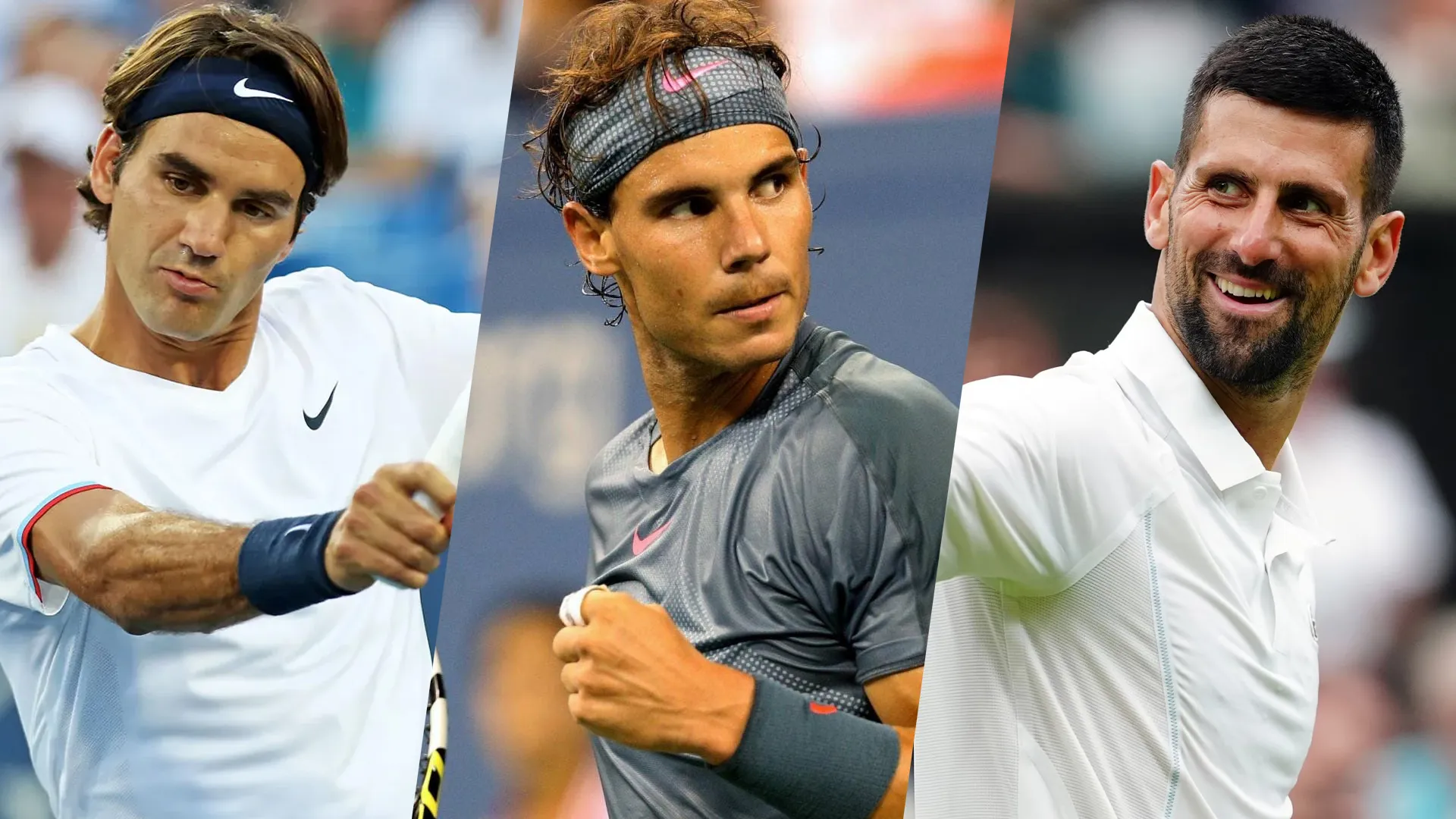

For nearly two decades, men’s tennis was defined by a single reality: if you wanted to win a Grand Slam, you likely had to defeat one—or sometimes two—of Roger Federer, Rafael Nadal, or Novak Djokovic. The Big Three Era in tennis transformed the sport into a prolonged masterclass in excellence, rivalry, and endurance.
Table of Contents
- The Birth of the Big Three Era
- Grand Slam Domination Explained
- Rivalries That Defined a Generation
- Federer vs Nadal – Elegance vs Relentless Power
- Nadal vs Djokovic – Physical and Mental Warfare
- Federer vs Djokovic – Precision vs Elastic Defense
- Surface Specialization and Adaptability
- Mental Strength, Longevity, and Evolution
- Records Broken and Benchmarks Redefined
- Impact on Other Generations of Players
- Criticism and Debate Around the Era
- The Beginning of the End?
- Why This Era May Never Be Repeated
- Tennis’s Golden Age of Rivalry and Greatness
Between them, the trio accumulated an unprecedented share of major titles, weeks at world No. 1, and iconic matches. Their dominance was not merely statistical; it reshaped expectations of greatness and extended the physical and mental limits of the modern game.
The Birth of the Big Three Era
The story began with Federer. From 2004 to 2007, the Swiss maestro produced one of the most dominant stretches in tennis history, blending elegance with ruthless efficiency. His fluid movement and attacking precision established a new aesthetic standard for the sport.
Then came Nadal. Bursting onto the scene as a teenage phenom, the Spaniard’s heavy topspin forehand and unmatched intensity disrupted Federer’s reign—particularly on clay. By the late 2000s, their rivalry had already produced classics, most famously the 2008 Wimbledon final.
Djokovic completed the triumvirate. After breaking through with his first major at the 2008 Australian Open, he elevated his game to historic levels in 2011, when he won three Grand Slams and began challenging both Federer and Nadal consistently. From that point onward, men’s tennis became a closed circle at the very top.
Grand Slam Domination Explained
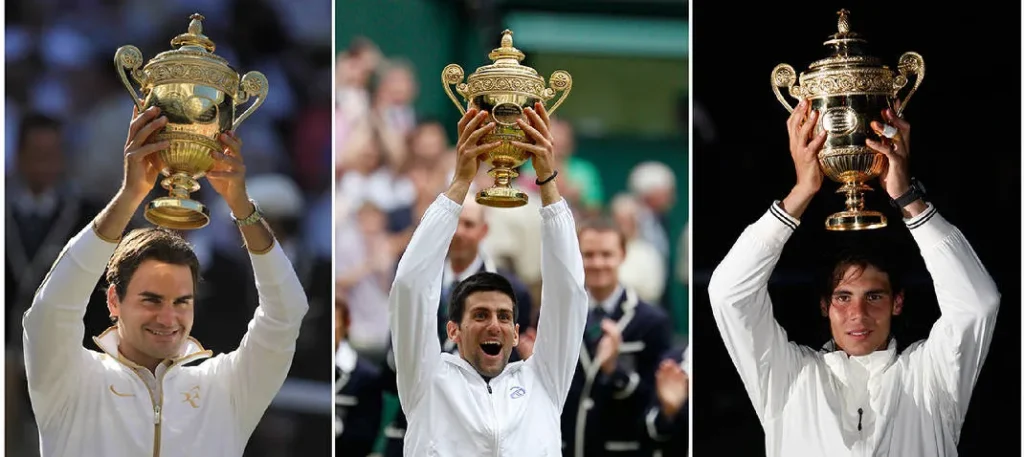
The numbers illustrate the stranglehold. Federer finished his career with 20 Grand Slam singles titles, Nadal with 22, and Djokovic has surpassed them both, holding the all-time men’s record with 24 majors as of 2024.
From 2003 through 2023, the trio won the overwhelming majority of Grand Slam tournaments, leaving only a handful for the rest of the field. Entire generations of talented players found themselves blocked by the same three names at semifinals and finals.
No previous era—not even those of Borg, Sampras, or Laver—saw such sustained, collective dominance by three contemporaries over such a long period.
Rivalries That Defined a Generation
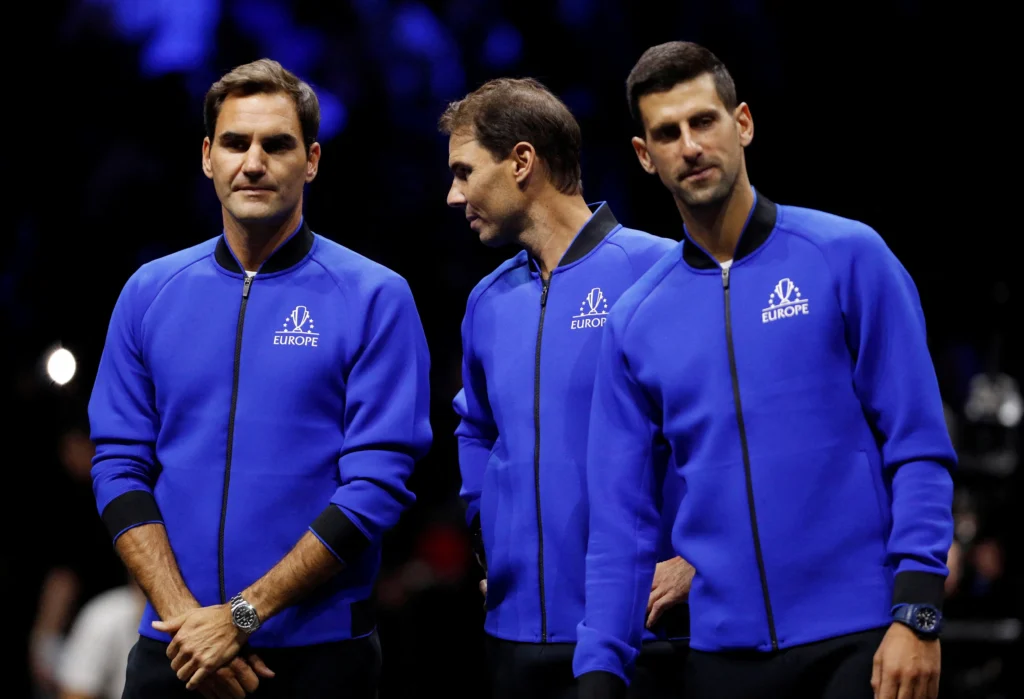
Federer vs Nadal – Elegance vs Relentless Power
This rivalry contrasted styles as much as personalities. Federer’s attacking grace met Nadal’s physical resilience and topspin-heavy assault. Their 2008 Wimbledon final is often cited as one of the greatest matches ever played, symbolizing a shifting balance of power.
Nadal vs Djokovic – Physical and Mental Warfare
Few matchups tested human endurance like Nadal versus Djokovic. Their 2012 Australian Open final lasted 5 hours and 53 minutes, the longest Grand Slam final in the Open Era. Their baseline exchanges redefined defensive and counterpunching standards.
Federer vs Djokovic – Precision vs Elastic Defense
Djokovic’s ability to neutralize Federer’s attacking patterns produced numerous high-stakes encounters, including multiple Wimbledon finals. Their rivalry often hinged on narrow margins and mental resilience in tiebreaks and deciding sets.
Together, these rivalries elevated tennis into a weekly showcase of contrasting philosophies and relentless adaptation.
Surface Specialization and Adaptability
Nadal built an unparalleled legacy at Roland Garros, winning 14 French Open titles—a record unlikely to be matched. Federer dominated grass courts, capturing eight Wimbledon titles, while also excelling on hard courts.
Djokovic distinguished himself with all-surface mastery, winning multiple majors on clay, grass, and hard courts, and holding records at the Australian Open in particular.
What made the Big Three Era in tennis extraordinary was not just specialization, but cross-surface excellence. Each forced the others to evolve beyond comfort zones.
Mental Strength, Longevity, and Evolution
Longevity separated the trio from the rest. Advances in sports science, nutrition, and recovery played roles, but their psychological resilience was equally vital.
Federer reinvented his backhand late in his career. Nadal adjusted his serving patterns and court positioning. Djokovic transformed his fitness and flexibility, turning defense into offense with unmatched elasticity.
Their ability to adapt prolonged their reign well into their 30s—an age once considered beyond peak performance in tennis.
Records Broken and Benchmarks Redefined
Beyond Grand Slams, the trio redefined consistency. Federer and Djokovic both surpassed 300 weeks at world No. 1, with Djokovic setting the all-time men’s record for most weeks atop the rankings.
They also accumulated record numbers of Masters 1000 titles and ATP Finals appearances. Head-to-head battles between them filled the latter stages of major tournaments for over a decade.
Impact on Other Generations of Players
The so-called “Lost Generation”—players born in the late 1980s and early 1990s—faced perhaps the toughest competitive landscape in tennis history. Talented stars repeatedly ran into the same three obstacles.
Only in recent years have younger players begun consistently breaking through, capitalizing on aging curves and physical wear.
Criticism and Debate Around the Era
Some argue that prolonged dominance limited unpredictability at majors. Others counter that the era’s depth was higher than ever, making sustained supremacy even more impressive.
What remains undisputed is that the trio pushed each other to historically high standards. Their rivalries were symbiotic; without one another, none might have reached such towering heights.
The Beginning of the End?
Federer retired in 2022. Nadal has battled persistent injuries. Djokovic remains competitive, but generational transition is inevitable.
The sport is now entering a post-dominance phase, with new champions emerging and redefining competitive balance.
Why This Era May Never Be Repeated
Modern tennis is deeper, more global, and more physically taxing than ever. The probability of three players maintaining elite form simultaneously for nearly two decades is extraordinarily low.
The Big Three Era in tennis was a convergence of talent, rivalry, and timing that may never align again.
Tennis’s Golden Age of Rivalry and Greatness
The stranglehold of Federer, Nadal, and Djokovic was not accidental. It was forged through relentless improvement, tactical brilliance, and mental fortitude.
The Big Three Era in tennis stands as a golden chapter in sporting history—defined not just by trophies, but by the elevation of the game itself. Their rivalry did not merely produce champions; it reshaped the very definition of greatness.



No Comments