
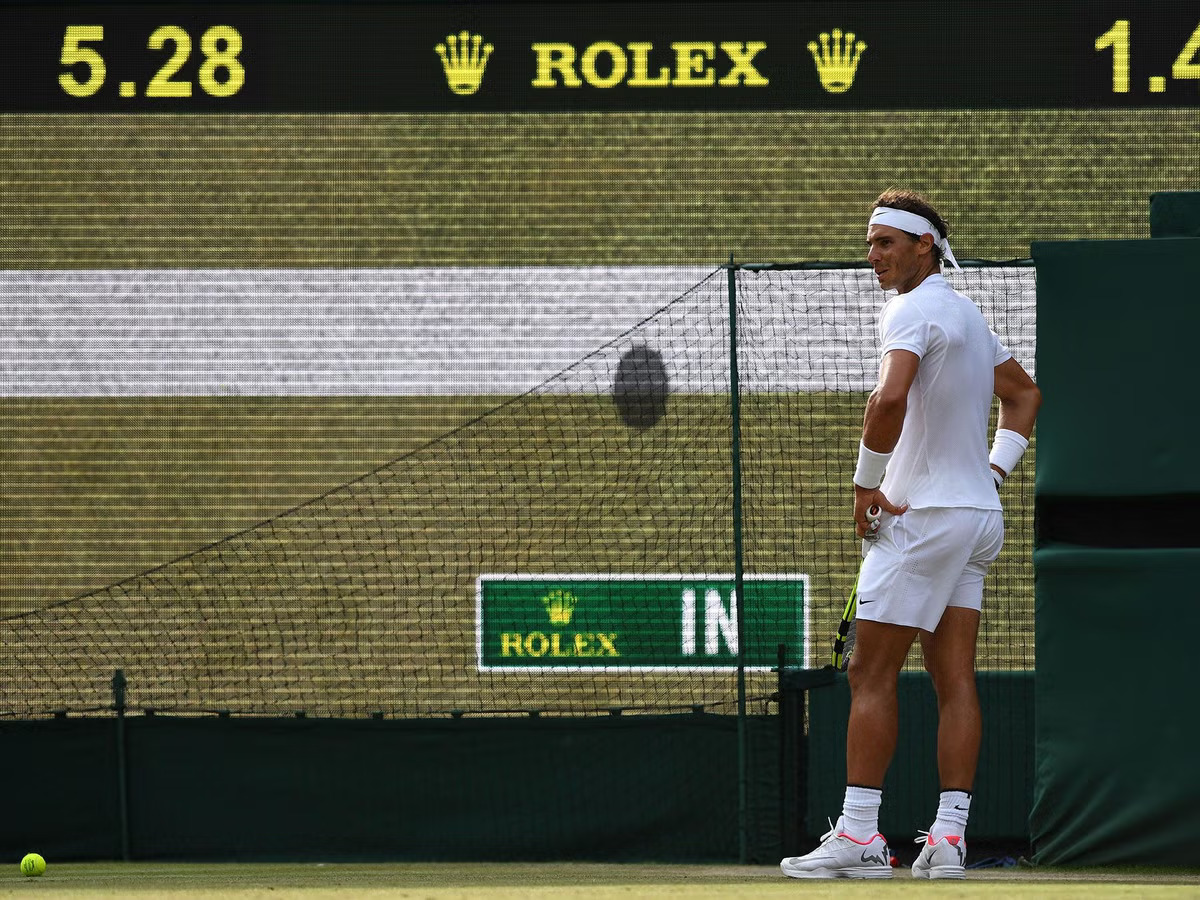

Tennis has always been a sport where a single point can change everything. A match-winning ace, a crucial break point, a championship rally ending on the line. For most of tennis history, those decisions rested entirely in the hands of line judges and chair umpires. Then came Hawk-Eye, and the game was never quite the same again.
Table of Contents
- What Is Hawk-Eye Technology in Tennis?
- How Does Hawk-Eye Actually Work?
- The Accuracy of Hawk-Eye Technology in Tennis
- Hawk-Eye on Clay Courts: The Biggest Controversy
- The Player Challenge System and How Fans Experience It
- Full Electronic Line Calling: Removing Humans From the Equation Entirely
- High-Profile Controversies Involving Hawk-Eye Decisions
- Why Hawk-Eye Technology in Tennis Still Matters
What Is Hawk-Eye Technology in Tennis?
Hawk-Eye is a computer vision system that uses a network of high-speed cameras placed around the court to track the trajectory of the tennis ball in real time. Developed by Paul Hawkins and introduced commercially in the early 2000s, it was first used in professional tennis at the 2006 US Open as part of the Electronic Line Calling (ELC) system, commonly known to fans as the Hawk-Eye Challenge or player review system.
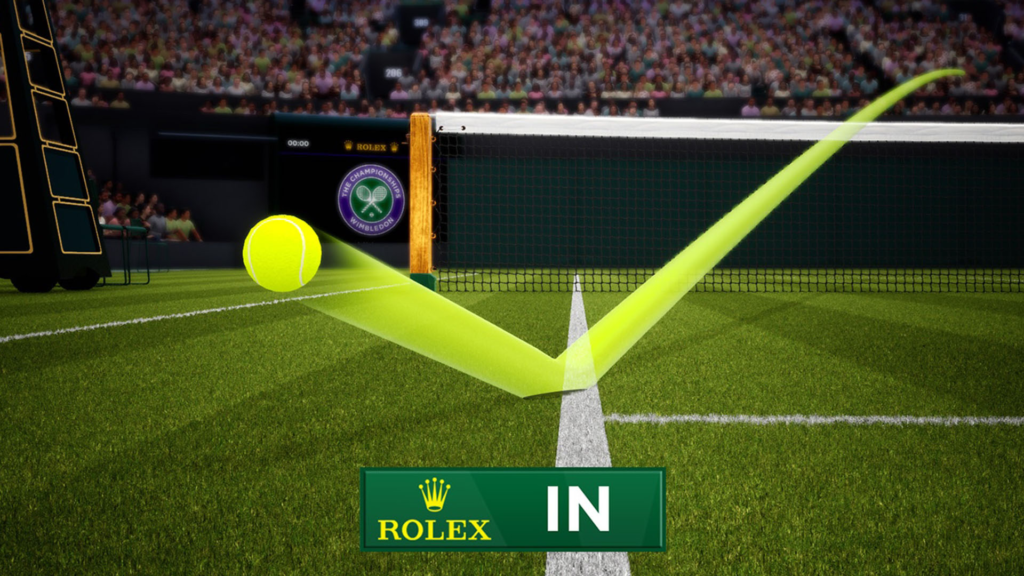
The system processes images from multiple cameras simultaneously, typically six to ten cameras per court, to triangulate the ball’s exact position at any given moment. It then generates a three-dimensional model of the ball’s path and calculates precisely where it landed in relation to the court lines.
How Does Hawk-Eye Actually Work?
Each camera captures the ball at around 340 frames per second. The software stitches these images together, removes visual noise, and calculates the ball’s trajectory using predictive modeling. Because a tennis ball compresses on impact, Hawk-Eye does not simply detect the ball touching the ground. Instead, it models the deformation and calculates the footprint of where the ball made contact with the surface.
The final result is displayed on court screens and broadcast to fans within seconds, showing a visual representation of the ball’s bounce and its relationship to the line. What looks like a simple animation is actually the output of a complex real-time physics calculation.
The Accuracy of Hawk-Eye Technology in Tennis
This is where things get genuinely interesting. Hawk-Eye’s manufacturers claim an average margin of error of just 3.6 millimeters. To put that in perspective, a standard tennis ball is approximately 67 millimeters in diameter. That level of precision sounds extraordinary, and in most circumstances it is.
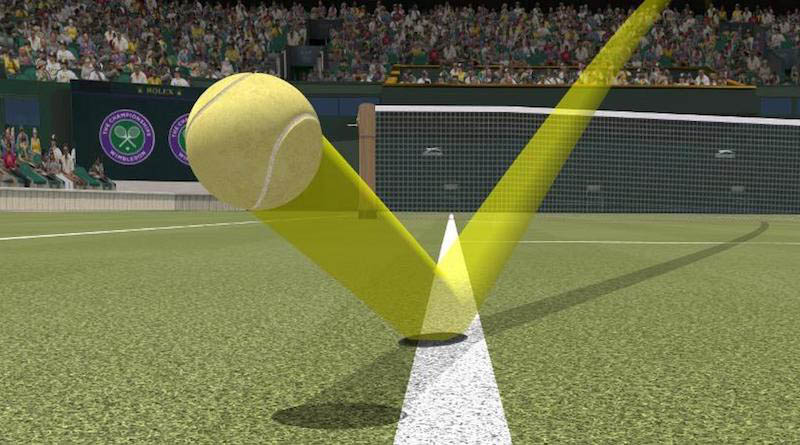
However, accuracy depends heavily on how well the cameras are calibrated, the condition of the court surface, lighting conditions, and how cleanly the cameras can see the ball at the moment of impact. On clay courts, for example, the ball leaves a visible mark. Players and fans have occasionally noticed discrepancies between the physical skid mark on clay and what Hawk-Eye shows on screen, which became one of the most significant points of controversy in the technology’s history.
Independent studies and peer-reviewed analyses have broadly supported Hawk-Eye’s reliability for grass and hard court surfaces. For these surfaces, the 3.6mm average error is generally accepted as accurate. The system has been audited multiple times by the ITF (International Tennis Federation) and has consistently passed the required accuracy thresholds for official use.
Hawk-Eye on Clay Courts: The Biggest Controversy
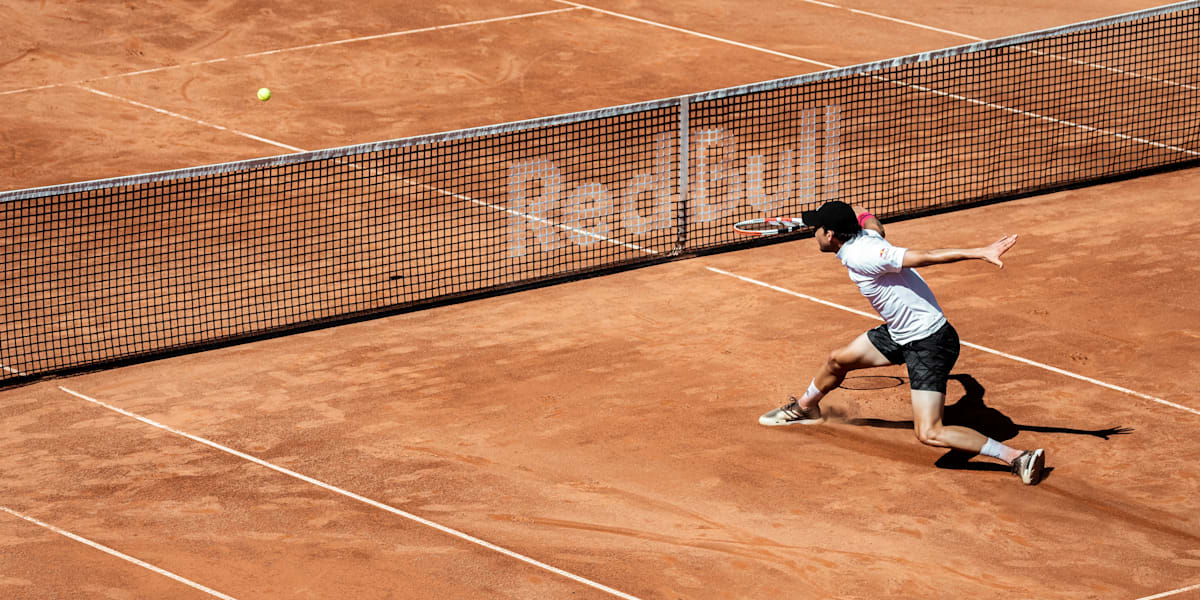
No conversation about Hawk-Eye technology in tennis is complete without addressing clay. For years, the French Open at Roland Garros was the only Grand Slam that did not use Hawk-Eye for player challenges, and the reason was straightforward: clay leaves a physical ball mark that is visible to the naked eye. Chair umpires would physically walk to the mark and inspect it, making the traditional system arguably more precise on that surface than any camera-based technology.
Rafael Nadal, the undisputed king of clay, was among the most vocal critics of using Hawk-Eye at Roland Garros. In several interviews, he pointed out that the clay mark does not lie, and that a computerized model, however sophisticated, introduces a layer of abstraction that the physical mark does not.
Roland Garros finally introduced electronic line calling in 2024, ending decades of reliance on human line judges for the clay court Grand Slam. The decision was controversial among purists but welcomed by those who argued that consistency across all four Grand Slams was long overdue.
The Player Challenge System and How Fans Experience It
When Hawk-Eye was first introduced as a challenge system, players were typically given two incorrect challenges per set, with an additional challenge granted if a set went to a tiebreak. The drama of a player burning a challenge, the crowd going quiet, the animated replay building tension on the screen, became one of tennis’s most electric moments.
The challenge system did more than just correct mistakes. It changed the psychological dimension of the game. Players began using challenges tactically, sometimes to break an opponent’s momentum or to buy recovery time. It added a new layer of strategy that the sport had never seen before.
Full Electronic Line Calling: Removing Humans From the Equation Entirely
In recent years, the sport has moved beyond the challenge system toward what is called Live Electronic Line Calling or full ELC, where Hawk-Eye replaces human line judges entirely. Calls are made automatically and instantly by the system, with no challenge process needed because every call is already a machine call.
The ATP Tour has been rolling out full ELC across tournaments steadily since 2021. The US Open and Australian Open have adopted it fully. Wimbledon, after considerable internal debate, introduced it in 2025, marking a significant cultural shift for the All England Club, which had long valued the traditions of the sport including the presence of line judges on court.
The move to full ELC has not been without criticism. Some players and coaches feel that removing the human element strips the sport of something important. Others argue that human line judges, however skilled, will always be prone to errors that a well-calibrated machine can eliminate.
High-Profile Controversies Involving Hawk-Eye Decisions
Over the years, a number of specific incidents have put Hawk-Eye technology in tennis under the spotlight in uncomfortable ways.
At Wimbledon 2007, a challenge by Andy Roddick showed a ball that Hawk-Eye marked as “out” but the visible grass mark suggested it may have clipped the line. The image became widely circulated and fueled early debates about whether the system was truly trustworthy at the margins.
At the 2023 Australian Open, several players publicly questioned automated calls during matches, citing situations where the speed and certainty of machine calls felt wrong in the moment. While post-match reviews generally upheld the system’s accuracy, these incidents highlighted a deeper issue: when humans are removed from decision-making entirely, player trust in the process becomes critically important.
Why Hawk-Eye Technology in Tennis Still Matters
What Hawk-Eye ultimately represents is a broader question about technology and fairness in sport. Tennis was one of the first major sports to integrate real-time ball tracking into its officiating structure at the professional level, and it has served as a model for other sports including cricket, football, and volleyball.
The technology is not perfect, but no officiating system ever has been. What Hawk-Eye offers is consistency, speed, and a form of objective record that human perception simply cannot match. At 340 frames per second, it sees what no eye can see.
As the sport continues to evolve, the debate will likely shift from whether to use the technology to how to use it most responsibly, how to communicate its limitations honestly, and how to maintain the trust of players and fans who need to believe in the integrity of every call.
In a sport decided by millimeters and milliseconds, that trust is everything.






No Comments