
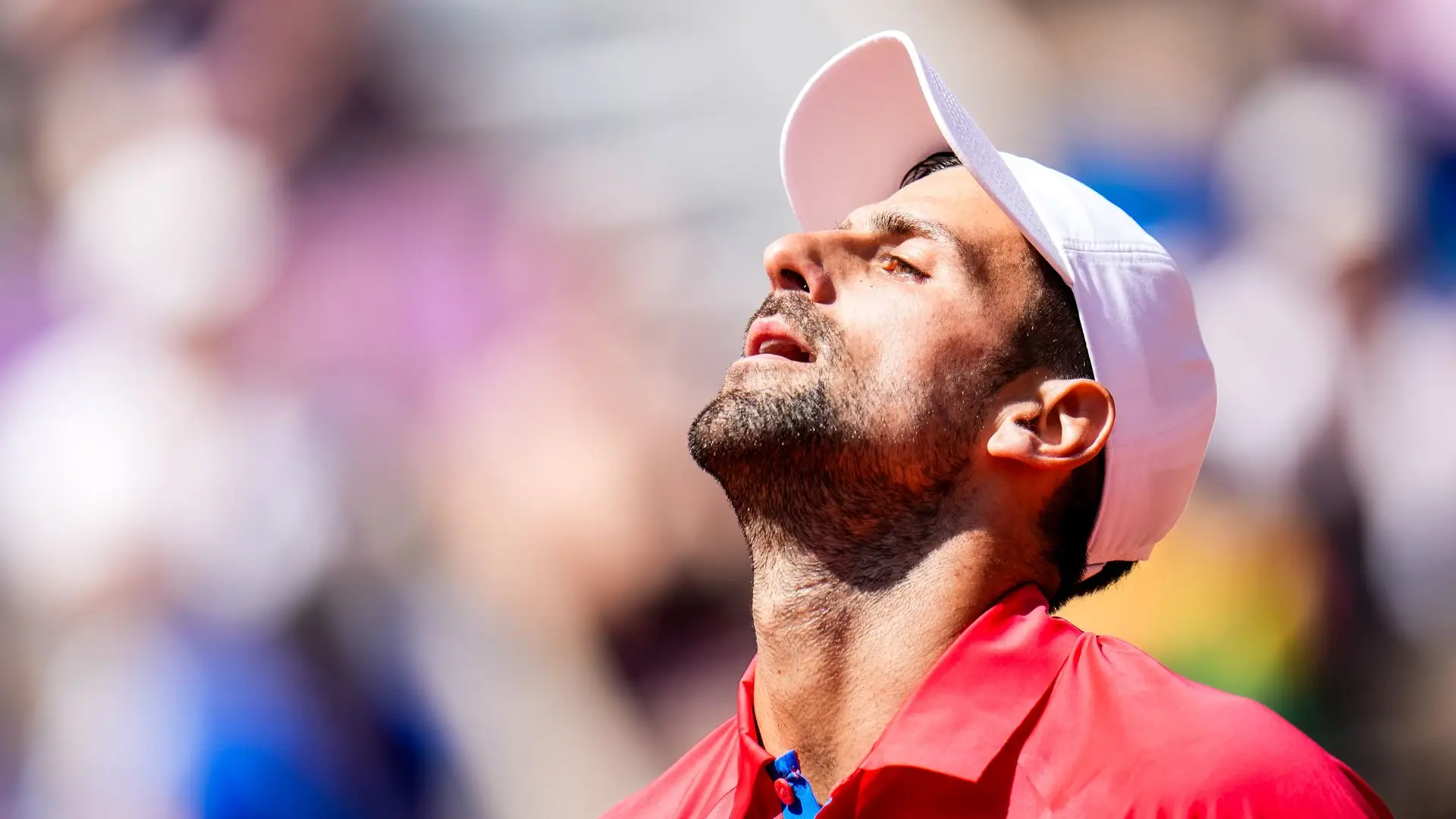

At 38 years old, Novak Djokovic is doing something no tennis player has done before. Not just competing at the top level, but actively engineering his biology to get better with age. While most athletes at his stage are managing decline, Djokovic has entered 2026 with a singular, almost obsessive mission: reconstruct the machine.
Table of Contents
- The Philosophy Behind the Plan: Food as Information
- The 2026 Morning Ritual: The “Golden Hour” Detox
- Strategic Fasting and Glycemic Management
- Fueling During Competition
- The Caffeine Switch
- Longevity Technologies: The “Reconstruction” Stack
- The Regenesis Pod
- Combating Sarcopenia: Preserving Explosive Power
- The 2026 “Lean” Tournament Schedule
- The Mental Dimension: Mindfulness as Longevity Medicine
- What Djokovic’s 2026 Plan Means for the Rest of Us
His approach combines cutting-edge sports science, a meticulously designed anti-inflammatory diet, and recovery technologies that sound more like science fiction than sports medicine. The result? Biomarkers that reportedly rival those of a man in his late twenties. This is the story of how Novak Djokovic’s 2026 diet and longevity strategy is rewriting the rules of elite athletic performance.
The Philosophy Behind the Plan: Food as Information
Before diving into the specifics, it’s worth understanding how Djokovic thinks about nutrition, because it’s fundamentally different from most athletes. He doesn’t view food as fuel in the traditional sense. He views it as information for his cells.
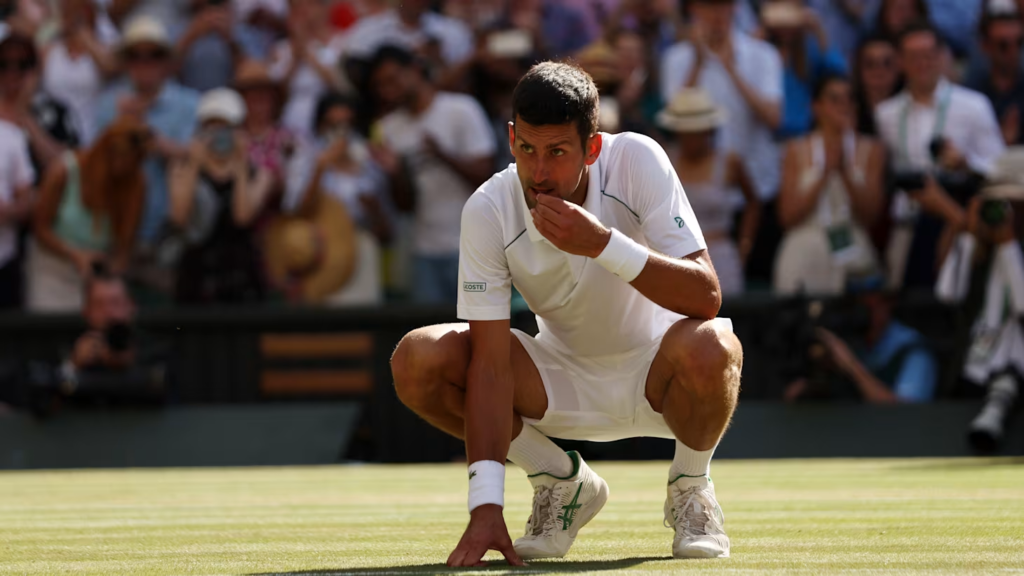
This shift in mindset, which has been building since he first went gluten-free in 2011 after a food sensitivity test changed his career, has evolved into something far more sophisticated by 2026. His current protocol is a low-inflammation, highly personalized system designed to keep his body in an almost constant state of cellular repair.
The 2026 Morning Ritual: The “Golden Hour” Detox
Djokovic’s day doesn’t start with a coffee and a training session. It starts with a precise, sequential morning ritual intended to alkalinize the body and prime the digestive system before a single calorie of solid food enters the picture.
Here’s how his morning unfolds:
- Lukewarm lemon water with a pinch of salt: Chosen specifically over cold water to avoid shocking the internal organs first thing in the morning. The combination supports gentle hydration and electrolyte balance.
- Fresh celery juice on an empty stomach: A dedicated step before any solid food, aimed at improving gut lining integrity and supporting liver function.
- The “Blue” Smoothie: His primary breakfast is a nutrient-dense blend of mixed berries, hemp seeds, maca powder, and blue spirulina. Djokovic has openly admitted the spirulina tastes unpleasant on its own, but its antioxidant density makes it non-negotiable in his recovery window.
The sequencing matters as much as the ingredients. Each step prepares the body for the next, creating a cascade of benefits that set the metabolic tone for the entire day.
Strategic Fasting and Glycemic Management
One of the most discussed elements of Djokovic’s 2026 nutrition plan is his use of 16/8 intermittent fasting. By restricting his eating window to eight hours, typically running from 10:00 AM to 6:00 PM, he allows his body extended time in a fasted state, during which a process called autophagy takes place.
Autophagy is essentially the body’s cellular housekeeping mechanism. It clears out damaged proteins and dysfunctional cell components, which plays a direct role in reducing systemic inflammation and slowing the biological markers of aging. For an athlete pushing through the physical demands of Grand Slam tennis at nearly 39, this recovery edge is significant.
Fueling During Competition
When it comes to on-court energy, Djokovic has made a notably clean choice: dates. Rather than relying on the processed energy gels or sugar-heavy sports drinks common on tour, dates offer a rapid yet sustained glycemic response, delivering quick energy without the sharp crash that follows most simple sugars. Paired with electrolyte-rich liquids, this keeps him sharp across long, physically brutal matches.
The Caffeine Switch
As of 2026, Djokovic has largely phased out coffee in favor of high-grade green tea. The reasoning is precise: coffee elevates cortisol, and elevated cortisol interrupts deep-stage sleep, the most critical window for physical repair and hormonal recovery. Green tea provides a gentler, more sustained alertness without the cortisol spike, protecting the sleep quality that underpins everything else in his recovery stack.
Longevity Technologies: The “Reconstruction” Stack
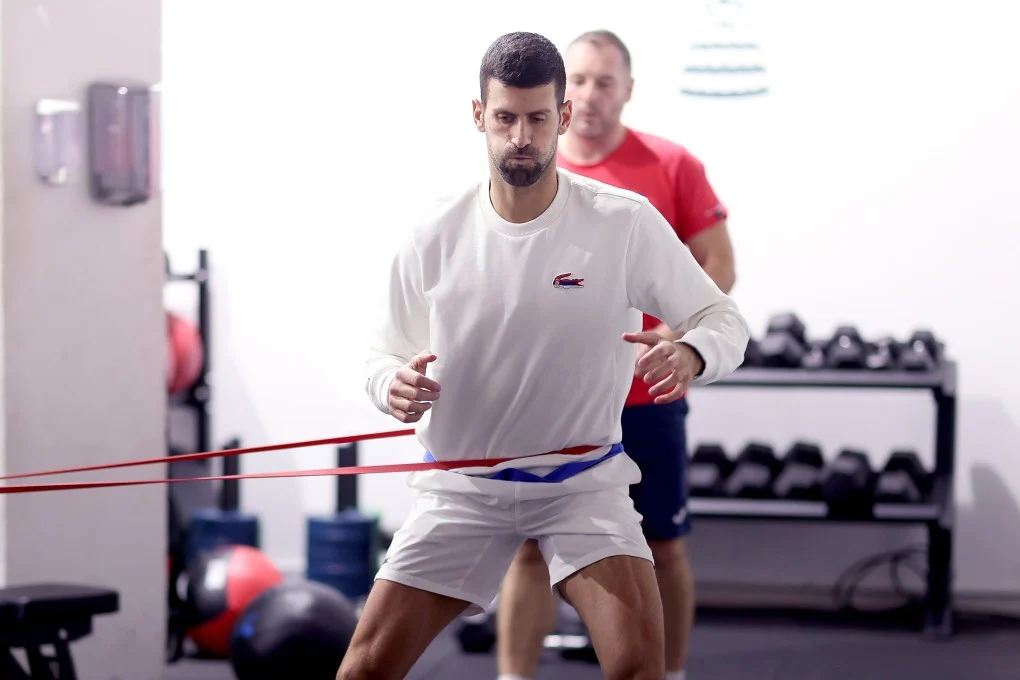
Diet alone doesn’t explain Djokovic’s physical state in 2026. Entering the preseason, he partnered with Dr. Mark Kovacs, a sports scientist specializing in the biomechanics of aging athletes, to implement what they call a “reconstruction” plan, treating his body with the precision of a Formula 1 engineering team.
The Regenesis Pod
Central to this reconstruction is Djokovic’s partnership with Qatar Airways and the use of the Regenesis Pod, a recovery system combining three distinct modalities:
| Technology | Mechanism | Benefit |
|---|---|---|
| Hyperbaric Oxygen Therapy (HBOT) | Saturates blood with 100% oxygen | Accelerates healing of muscle micro-tears |
| Red Light Therapy (Photobiomodulation) | Specific light wavelengths stimulate cells | Boosts mitochondrial ATP production |
| Temperature Contrast | Alternating cryotherapy and infrared heat | Reduces systemic inflammation and improves circulation |
Together, these three approaches target recovery at a cellular level, not just muscle soreness, but the deeper biological processes that determine how quickly an aging athlete can bounce back between matches and training blocks.
Combating Sarcopenia: Preserving Explosive Power
One of the most insidious challenges for any athlete over 35 is sarcopenia, the natural, age-related loss of muscle mass and fast-twitch fiber recruitment. Djokovic and Kovacs have addressed this directly by shifting his resistance training toward high-intensity, low-volume work: sets of six to eight repetitions near his maximum load.
This approach maintains explosive, fast-twitch power, the kind required to fire a 190 km/h serve or explode into a split-step return, without adding unnecessary bulk that would compromise his court speed or increase injury risk.
The 2026 “Lean” Tournament Schedule
Even the most advanced recovery technology has limits, and Djokovic knows this. His 2026 tournament strategy reflects a ruthless prioritization of biological ROI: play less, peak higher.
Having transitioned to an essentially Grand Slam-focused schedule, he is deliberately avoiding the cumulative biological tax of a full ATP tour season. His approach uses smaller events as calculated tune-ups rather than points-chasing opportunities.
His 2026 schedule logic:
- Adelaide ATP 250 (January): Testing ground for preseason reconstruction
- Australian Open (January): Primary target for a 25th Grand Slam title
- Qatar Open (February): Paired with Global Ambassador duties; lower physical intensity
- Clay Season (April–May): Monte Carlo and Geneva as Roland Garros preparation
- Wimbledon and US Open: The peak targets of his physiological cycle
By maintaining a 78% win rate on a curated schedule, he protects his joints and energy reserves for the five-set crucibles where experience and physical readiness matter most against younger rivals like Carlos Alcaraz and Jannik Sinner.
The Mental Dimension: Mindfulness as Longevity Medicine
Djokovic’s longevity plan extends beyond the physical. He treats mental discipline as a biological tool, not just a competitive edge. Daily visualization practice, yoga, Tai Chi, and grounding are all part of his routine to manage the cortisol load of elite competition.
His reasoning carries scientific weight: chronic stress elevates cortisol, and chronically elevated cortisol accelerates telomere shortening, the degradation of the protective caps on DNA strands that serve as one of the most reliable markers of biological aging. By actively managing stress through structured mindfulness, Djokovic is, in a very literal sense, trying to slow down the clock at a genetic level.
What Djokovic’s 2026 Plan Means for the Rest of Us
The practical gap between a Grand Slam champion and a recreational gym-goer is vast. But the principles underlying Novak Djokovic’s 2026 diet and longevity approach, reducing inflammation, optimizing sleep, using fasting strategically, and prioritizing recovery as seriously as training, are accessible at any level.
His story is a compelling proof of concept: that the traditional athletic decline curve is not a fixed law, but a variable that science, discipline, and intelligent recovery can meaningfully bend. Whether you’re 38 and competing at Wimbledon or 38 and trying to keep up with your kids, the underlying philosophy carries the same message.
The machine can be reconstructed. The only question is how serious you are about the work.

No Comments