
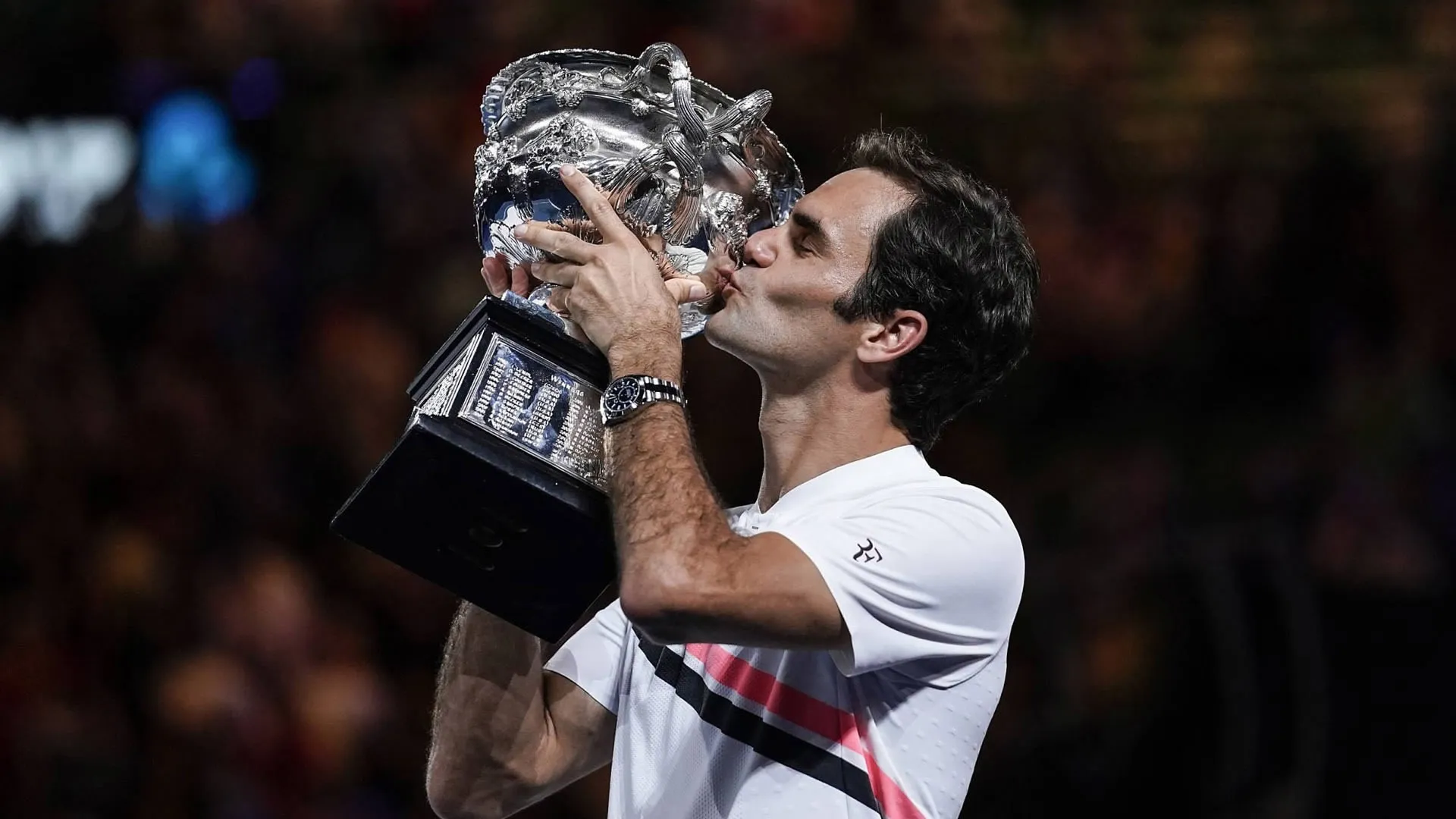

Roger Federer’s name is synonymous with elegance, longevity, and excellence. His 20 Grand Slam titles were not just trophies collected over time but milestones that shaped modern men’s tennis. Spread across different surfaces, eras, and rivals, each title tells a story of evolution, resilience, and unmatched skill. This article breaks down Roger Federer’s 20 Grand Slams victories and explains why they still matter in the history of the sport.
Table of Contents
- The Legacy of Federer’s Grand Slam Era
- Federer’s First Grand Slam Breakthrough
- Dominance at Wimbledon
- Australian Open Success
- US Open Era of Supremacy
- The French Open Challenge
- Grand Slam Wins by Playing Style and Evolution
- Rivalries That Shaped Federer’s Grand Slam Wins
- Comebacks and Late-Career Triumphs
- Statistical Breakdown of Federer’s 20 Titles
- Why Federer’s 20 Grand Slams Still Matter
- More Than Just 20 Trophies
The Legacy of Federer’s Grand Slam Era
When Federer won his final major in 2018, he set a benchmark that once seemed untouchable. His success spanned nearly two decades, bridging generations of players and redefining what longevity at the highest level looks like. More than numbers, Federer’s Grand Slam record reflects consistency across surfaces, adaptability to change, and a playing style that influenced the global perception of tennis.
Federer’s First Grand Slam Breakthrough
Federer’s Grand Slam journey began at Wimbledon Championships in 2003, where he defeated Mark Philippoussis in the final. That victory marked his transformation from a gifted talent into a champion capable of dominating the sport. It also announced the arrival of a new grass-court king and laid the foundation for one of the greatest careers in tennis history.
Dominance at Wimbledon
Wimbledon was Federer’s most successful Grand Slam tournament, where he won eight titles, the most by any male player. His fluid movement, precise serve, and attacking instincts made him nearly unbeatable on grass.
From early wins in the mid-2000s to the emotional triumph in 2017, Federer’s Wimbledon titles showcased his adaptability. Even as the game became more physical, his timing and shot-making allowed him to stay competitive against younger opponents. Wimbledon was where Federer’s elegance and efficiency were most visible.
Australian Open Success
Federer claimed six titles at the Australian Open, demonstrating his mastery on hard courts. His victories in Melbourne highlighted his ability to handle fast conditions while maintaining control from the baseline.
The 2017 Australian Open stands out as one of the defining moments of his career. Returning from injury at age 35, Federer defeated Rafael Nadal in a classic final, proving that experience and tactical intelligence could still overcome youth and power.
US Open Era of Supremacy
Federer’s dominance at the US Open was unmatched during his peak. He won five consecutive titles from 2004 to 2008, a run that underlined his control over the men’s game.
These victories came during the height of his athleticism, where his aggressive baseline play and improved serve made him nearly impossible to break. The US Open years cemented Federer’s reputation as the best player in the world during the mid-2000s.
The French Open Challenge
The French Open proved to be Federer’s greatest challenge, largely due to the dominance of Rafael Nadal on clay. Federer reached multiple finals but repeatedly fell short against his greatest rival.
That changed in 2009, when Federer finally won the French Open, completing the career Grand Slam. Although Nadal was absent from the final, the victory was monumental. It removed the last remaining gap in Federer’s résumé and confirmed his versatility across all surfaces.
Grand Slam Wins by Playing Style and Evolution
Federer’s 20 Grand Slams can be divided into phases that reflect his evolution as a player. Early in his career, he relied on explosive shot-making and aggressive net play. During his peak years, he refined his baseline game and improved his defensive skills.
In the later stages of his career, Federer reinvented himself. Shorter points, smarter shot selection, and a more aggressive backhand allowed him to compete effectively despite declining physicality. This ability to adapt was key to extending his Grand Slam success well into his 30s.
Rivalries That Shaped Federer’s Grand Slam Wins
Federer’s major victories were heavily influenced by his rivalries, particularly with Rafael Nadal and Novak Djokovic. Nadal pushed Federer to improve on clay and develop greater mental toughness, while Djokovic tested his endurance and precision on hard courts.
Many of Federer’s most memorable Grand Slam finals came against these rivals. Even in defeat, those matches elevated the quality of tennis and defined an era often regarded as the greatest in the sport’s history.
Comebacks and Late-Career Triumphs
Winning Grand Slams after the age of 30 is rare in men’s tennis, yet Federer achieved this multiple times. His titles in 2017 and 2018 were not just victories but statements about preparation, discipline, and belief.
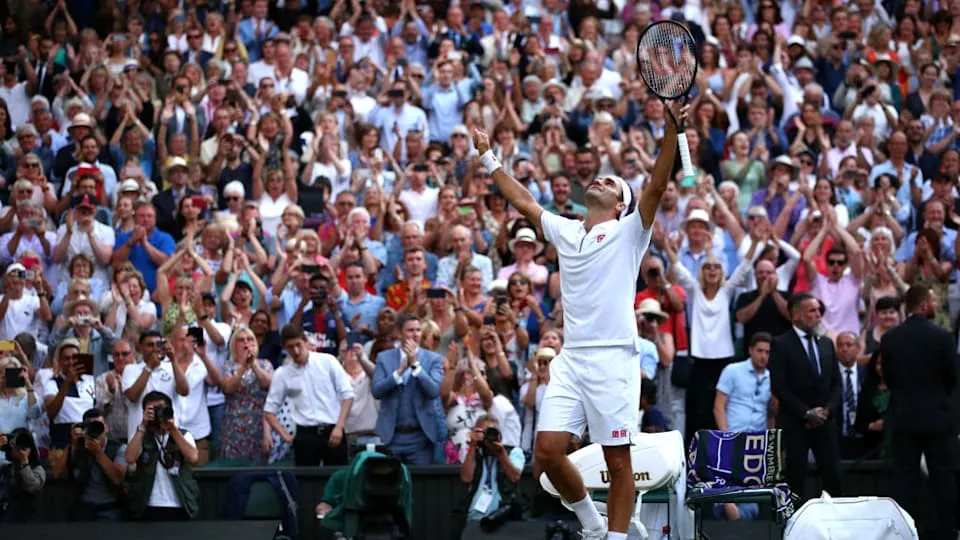
By managing his schedule carefully and focusing on major tournaments, Federer extended his career at the top level. These late-career wins added depth to his legacy, proving that greatness is not confined to youth.
Statistical Breakdown of Federer’s 20 Titles
Federer’s Grand Slam tally breaks down as follows:
- Wimbledon: 8 titles
- Australian Open: 6 titles
- US Open: 5 titles
- French Open: 1 title
He reached 31 Grand Slam finals overall, winning nearly two-thirds of them. His success across all four majors places him among the most complete players in tennis history.
Why Federer’s 20 Grand Slams Still Matter
Although other players have since surpassed Federer’s total, his 20 Grand Slams remain historically significant. He set the benchmark that others chased, changing expectations around longevity and consistency.
Federer also globalized tennis in a new way. His sportsmanship, style, and accessibility attracted fans beyond traditional audiences, leaving an impact that statistics alone cannot capture.
More Than Just 20 Trophies
Roger Federer’s 20 Grand Slams titles represent more than numerical achievement. They tell the story of a player who evolved with the sport, faced legendary rivals, and maintained excellence across generations.
While records may fall, Federer’s Grand Slam legacy endures as a symbol of balance between skill, grace, and competitive greatness.



No Comments