
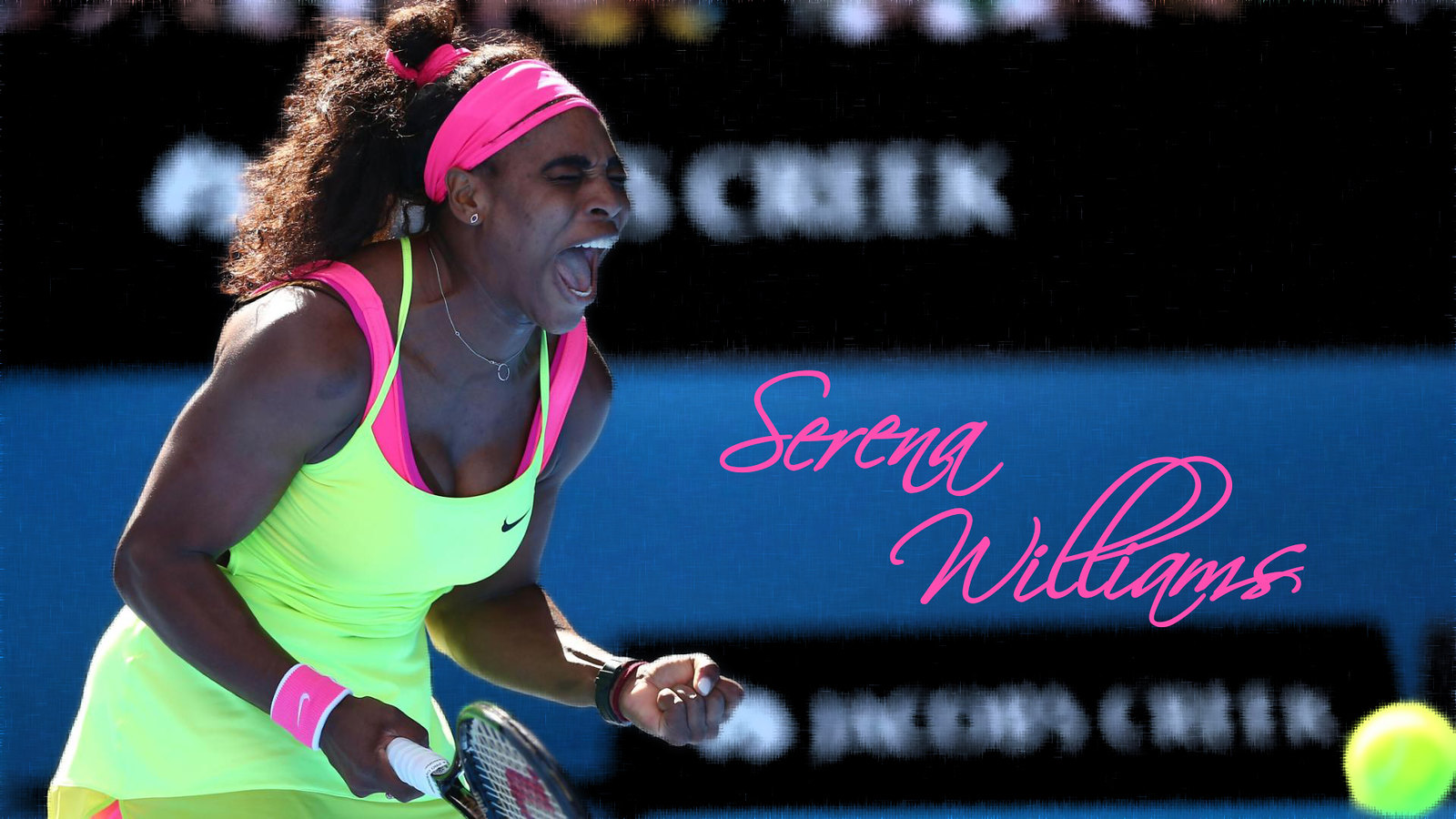

Serena Williams didn’t just win Grand Slams. She hunted them, dominated them, and redefined what it meant to be a champion. Across four different decades, she stepped onto the biggest stages in tennis and delivered performances that left opponents, analysts, and fans in collective disbelief. Her 23 Grand Slam singles titles remain the most by any player in the Open Era, and understanding how she won each one reveals just how multidimensional her greatness truly was.
Table of Contents
- The Early Years: How Serena Williams’ 23 Grand Slam Finals Began
- The Australian Open: Her Most Successful Hunting Ground
- Wimbledon Finals: Serena Williams’ 23 Grand Slam Finals on Grass
- The US Open Finals: Coming Home
- The French Open and the Clay Court Chapters
- Rivalries That Defined the Finals
- What Made Serena Williams’ 23 Grand Slam Finals Winnable
- The Later Titles and What They Meant
- The Final Chapter of a Historic Career
The Early Years: How Serena Williams’ 23 Grand Slam Finals Began
Serena’s first Grand Slam final came at the 1999 US Open when she was just 17 years old. She defeated Martina Hingis 6-3, 7-6 in a performance that announced her arrival in a way the tennis world hadn’t seen before. What made it remarkable wasn’t just the scoreline but the composure. She played like someone who had already been there, already won it, and was simply collecting what was hers.
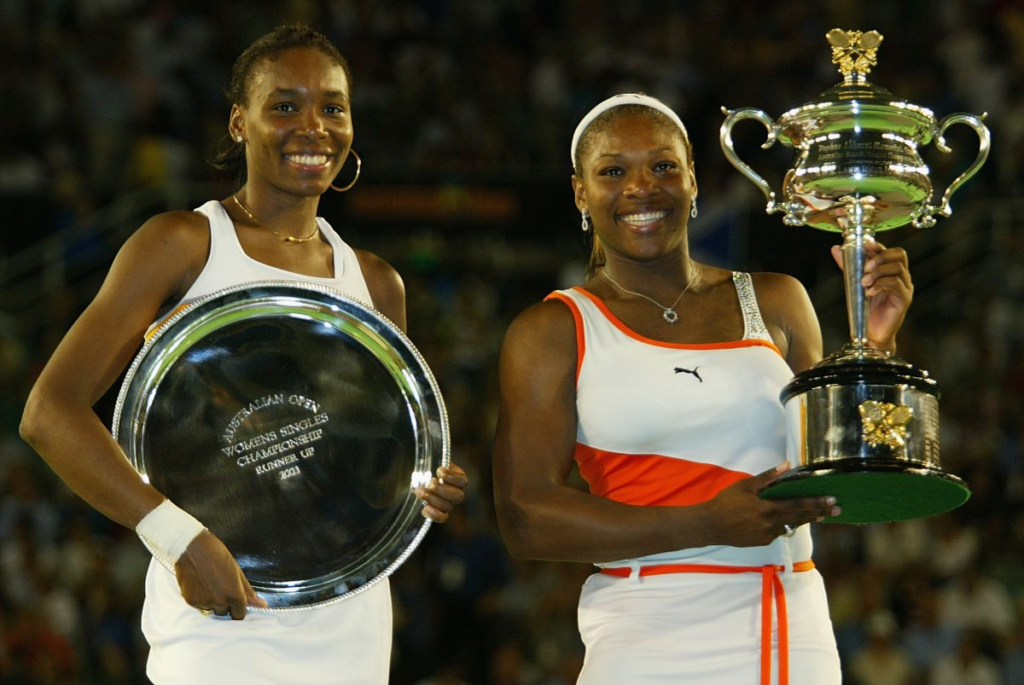
The Australian Open 2003 completed what became known as the “Serena Slam,” her holding all four Grand Slam titles simultaneously. This period of dominance showed her ability to win on every surface, hard court, clay, and grass, adjusting her game while keeping her serve as the most feared weapon in women’s tennis.
The Australian Open: Her Most Successful Hunting Ground
Serena claimed seven Australian Open titles, making Melbourne her most successful Grand Slam venue. Her finals there spanned from 2003 to 2017, covering 14 years of sustained excellence. Each title told a different story about where she was in her career and her life.
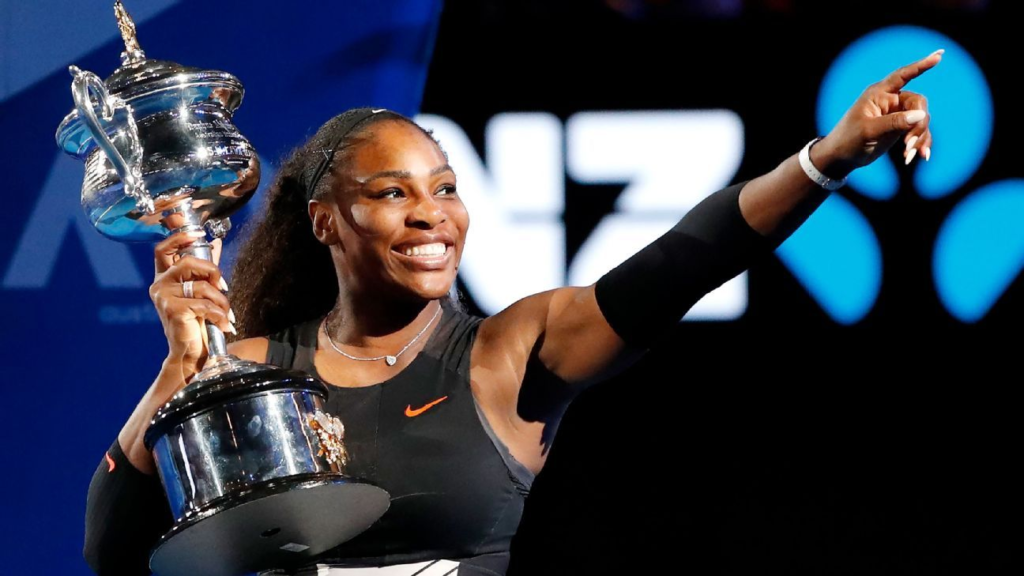
Her 2017 Australian Open final win over Venus, achieved while eight weeks pregnant, stands as one of the most extraordinary athletic feats in sports history. She defeated her sister 6-4, 6-4 in a match that carried enormous emotional weight. It wasn’t just a title. It was a statement that even at 35, even carrying a child, Serena Williams was still the best player on the planet.
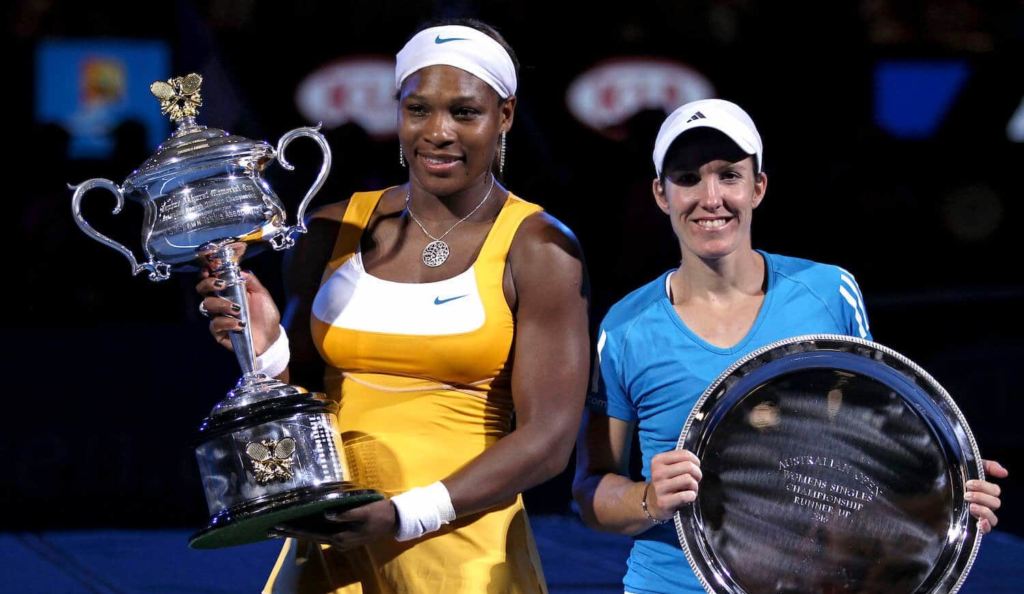
The 2010 Australian Open final against Justine Henin showed a different kind of Serena, one who had fought through injury and personal hardship and returned to the top with something to prove. She dropped only one set across the entire tournament and delivered a masterclass in big-match tennis.
Wimbledon Finals: Serena Williams’ 23 Grand Slam Finals on Grass
Wimbledon gave Serena seven titles and some of her most iconic moments. Her serve on grass was essentially unplayable at its peak, and she used the surface to expose every weakness in her opponents’ games.
Her 2003 Wimbledon final against Venus was the first time two sisters had met in back-to-back Grand Slam finals in the Open Era. Serena won 4-6, 6-4, 6-2 in a match that showed her mental resilience. Going down a set to your sister, in front of a global audience, requires a specific kind of mental steel that Serena possessed in quantities no one else could match.
The 2012 Wimbledon final against Agnieszka Radwanska was perhaps her most dominant grass performance. She lost only six games across the entire match, serving 18 aces and barely giving her Polish opponent a foothold. It was destruction delivered with grace.
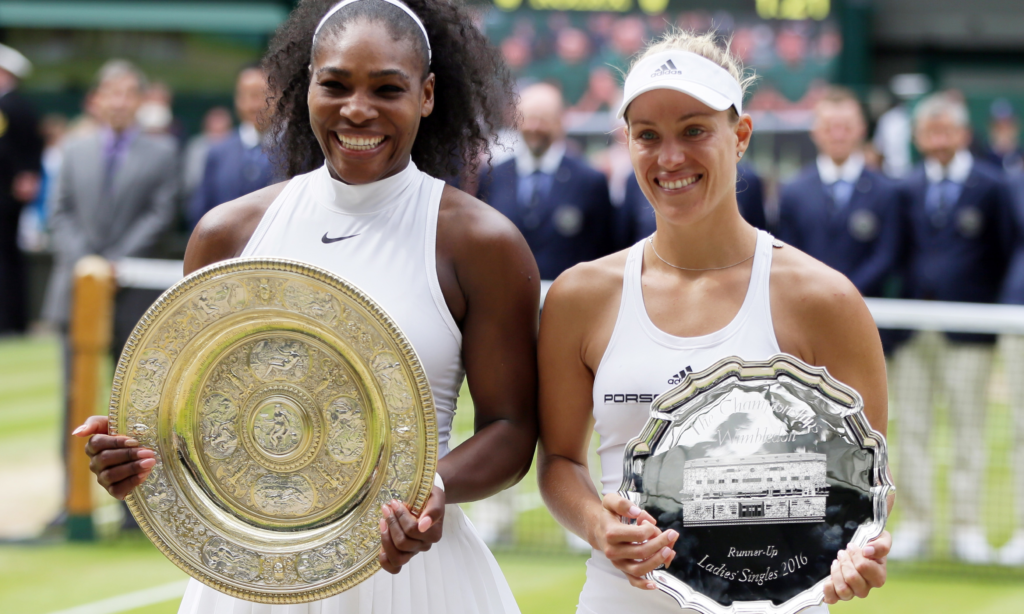
Her 2016 Wimbledon title, her 22nd Grand Slam overall, was a career milestone that drew comparisons to Steffi Graf’s Open Era record of 22. When she held that trophy, she had equaled the greatest mark in women’s tennis history.
The US Open Finals: Coming Home
The US Open was where it all started, and Serena returned to Flushing Meadows six times as a champion. The New York crowd gave her energy that was almost visible, and she fed on it in ways that made her particularly lethal there.
Her 2008 US Open final against Jelena Jankovic came during a period when Serena had faced questions about her commitment to tennis. She answered with a 6-4, 7-5 victory that was clean, sharp, and thoroughly professional. It served as a reminder that when Serena focused, outcomes were not really in doubt.
The 2013 and 2014 back-to-back US Open titles showed her operating at the peak of her powers. She dropped just one set across both tournaments combined and played some of the most aggressive baseline tennis women’s tennis had ever seen. Her return game had evolved to complement her serve, and opponents simply had no answer.
The French Open and the Clay Court Chapters
Roland Garros was always considered her most challenging surface, yet she claimed three French Open titles. Clay slows the ball, neutralizes the serve advantage, and rewards baseline consistency above raw power. That Serena won there at all speaks to her adaptability. That she won three times speaks to her genius.
Her 2015 French Open final against Lucie Safarova was her most dramatic clay court final. Safarova pushed her to three sets, and Serena had to dig into reserves that only champions possess. She won 6-3, 6-7, 6-2 in a match that reminded the world she wasn’t just a serve-and-power player. She could grind, problem-solve, and outlast.
Rivalries That Defined the Finals
Serena met Venus in nine Grand Slam finals, the most between siblings in the Open Era. The dynamic was always complex, the love between them evident, the competitiveness absolute. Serena won seven of those nine meetings, but the margins were often far closer than the scorelines suggested.
Her finals against Maria Sharapova, Victoria Azarenka, and Angelique Kerber each brought different tactical challenges. Azarenka pushed her hardest, winning the 2012 Australian Open final and repeatedly testing Serena’s mental resolve in major finals. Against Kerber at the 2016 Wimbledon final, Serena underlined that even at 34 she remained the defining force in the sport.
What Made Serena Williams’ 23 Grand Slam Finals Winnable
Across all 23 titles, certain patterns emerge. Her first-serve percentage in Grand Slam finals consistently exceeded 60 percent. Her second-serve points won rarely dropped below 50 percent, a figure that most players cannot match even on first serves. She broke serve more often than any other player in women’s tennis over the same period.
Beyond statistics, there was the psychological dimension. Serena believed she would win. Not hoped. Believed. That certainty transferred into her body language, into her shot selection, into the way she responded to adversity. She never seemed to panic. She seemed, instead, to recalibrate and then strike harder.
The Later Titles and What They Meant
Her titles from 2015 onward carried additional weight because the conversation had shifted. People spoke openly about GOAT debates, about records, about legacy. Serena played through all of it and kept winning. The 2015 Wimbledon and US Open titles brought her within one of Graf’s record, and the 2017 Australian Open delivered that 23rd title that placed her alone at the summit of Open Era tennis.
The Final Chapter of a Historic Career
Serena announced her retirement from tennis in August 2022, framing it not as retirement but as evolution. She stepped away from a sport she had transformed, leaving records that may stand for generations. Across every surface, against every generation of opponent, in every emotional context imaginable, she delivered.
Serena Williams’ 23 Grand Slam finals were not simply tennis matches. They were chapters in the story of the greatest competitor women’s tennis has ever produced, won through power, intelligence, resilience, and an unrelenting belief that the trophy at the end of every fortnight belonged to her.



No Comments