


Dominance in tennis is never permanent. It only feels that way when one player sets a standard others struggle to reach. Over the past few seasons, Iga Swiatek has defined the tempo of the WTA Tour with consistency, tactical clarity, and mental steel. As 2026 approaches, the question is no longer whether she deserves the top spot. The real intrigue lies in the coming WTA Rankings Battle 2026 and who possesses the tools to threaten her reign.
Table of Contents
- Understanding the WTA Rankings System
- Iga Swiatek’s Grip on the Top Spot
- The Established Contenders – Proven Threats
- The Rising Generation – Young Players Closing the Gap
- Surface Dynamics – Where Swiatek Is Most Vulnerable
- The Mental Game – What It Takes to Dethrone a World No.1
- Injuries, Scheduling, and Ranking Volatility
- Statistical Pathways to No.1 in 2026
- Legacy at Stake – Is This Still Swiatek’s Era?
- Conclusion – The Coming Rankings War
Swiatek has already built a résumé that includes multiple Grand Slam titles and extended stays at World No.1. But history shows that every era eventually faces resistance. The 2026 season could represent the first sustained challenge to her authority.
Understanding the WTA Rankings System
To understand the potential challengers, one must understand how the rankings work. The Women’s Tennis Association operates a rolling 52-week ranking system. Players earn points based on performance at Grand Slams, WTA 1000, WTA 500, and WTA 250 events.
Grand Slams offer 2,000 points to the champion. WTA 1000 tournaments provide up to 1,000 points. Crucially, players must defend points earned the previous year. Failure to replicate results leads to immediate ranking drops.
This structure means consistency outweighs sporadic brilliance. A player cannot simply win one Slam and disappear. Sustained excellence across surfaces defines the WTA No.1 race 2026.
Iga Swiatek’s Grip on the Top Spot
Swiatek’s ranking dominance stems from three pillars: clay-court supremacy, hard-court evolution, and mental resilience. Her multiple titles at the French Open established her as the premier clay-court force of her generation. Yet she has also claimed major hard-court success, including titles at the US Open.
Statistically, Swiatek separates herself through break-point conversion, return-game dominance, and sustained winning streaks. Her ability to control baseline exchanges forces opponents into reactive patterns. Unlike many power hitters, she constructs points with layered aggression rather than reckless force.
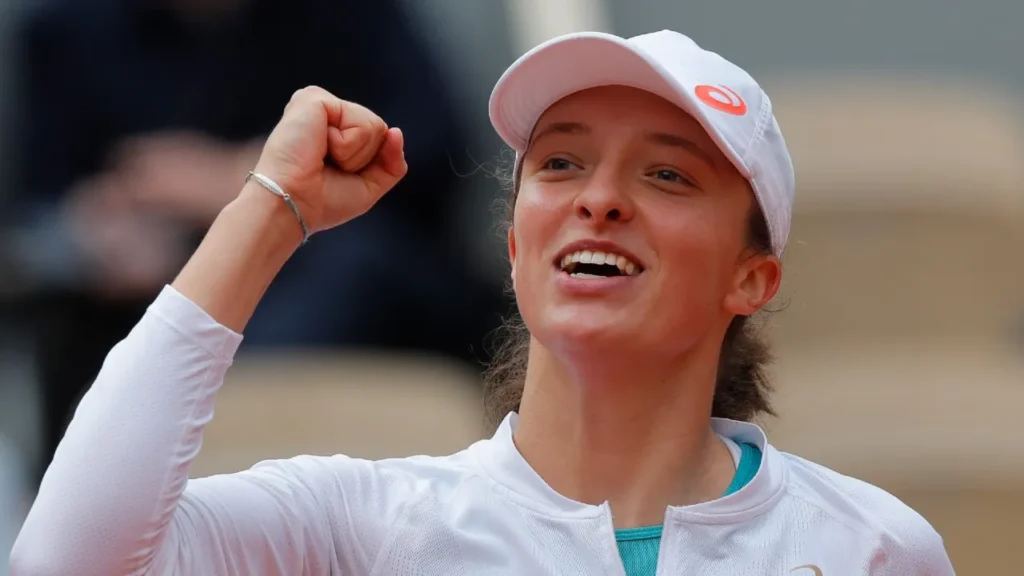
However, dominance invites pursuit. Entering the WTA Rankings Battle 2026, Swiatek must defend significant ranking points, particularly on clay. Even minor dips in form could open doors for rivals.
The Established Contenders – Proven Threats
The first wave of challengers includes players already entrenched in the Top 10. Aryna Sabalenka brings explosive power and proven Grand Slam pedigree, including success at the Australian Open. Her aggressive style shortens rallies and can overwhelm even elite defenders.
Elena Rybakina combines flat groundstrokes with one of the most effective serves on tour. Her grass-court title at Wimbledon Championships demonstrated her ability to peak on the biggest stage.
Coco Gauff has matured tactically and mentally, adding Grand Slam credentials and defensive versatility. Each of these players owns weapons capable of disrupting Swiatek’s rhythm.
The question is not talent. It is week-to-week reliability.
The Rising Generation – Young Players Closing the Gap
Beyond established stars, the next generation waits. Young players who have already posted breakthrough WTA 1000 results are gaining belief. Their games reflect modern baseline aggression paired with improved athleticism.
For any emerging contender to lead the women’s tennis rankings battle, she must translate flashes of brilliance into consistent semifinal appearances across multiple surfaces. The rankings system rewards depth of tournament runs more than isolated upsets.
Momentum, not hype, will determine who truly challenges in 2026.
Surface Dynamics – Where Swiatek Is Most Vulnerable
Surface distribution may decide the WTA No.1 race 2026. Swiatek’s clay dominance remains formidable. On slower hard courts, she controls tempo effectively. Grass, historically the most unpredictable surface, often produces volatility.
Power players with flat trajectories tend to thrive on quicker courts. Should a rival accumulate strong results at Wimbledon and North American hard-court events while Swiatek defends heavy clay points, the standings could tighten rapidly.
Surface specialization can create ranking pressure even without head-to-head superiority.
The Mental Game – What It Takes to Dethrone a World No.1
The technical blueprint alone cannot dethrone a No.1. The psychological dimension separates contenders from champions.
Challengers must embrace the burden of expectation. They must defend points, manage travel fatigue, and handle media scrutiny. Swiatek has demonstrated composure in high-stakes finals. Any rival must match that clarity under pressure.
In a season-long WTA Rankings Battle 2026, mental endurance may outweigh isolated match brilliance.
Injuries, Scheduling, and Ranking Volatility
The WTA calendar remains demanding. A single injury absence during a Grand Slam can cost 2,000 potential points. Strategic scheduling also influences ranking swings. Players must balance physical preservation with mandatory tournament commitments.
Volatility defines modern tennis. The difference between World No.1 and No.4 can narrow within months. As 2026 unfolds, durability could become the most decisive factor.
Statistical Pathways to No.1 in 2026
Realistically, a challenger must accumulate multiple deep Slam runs and at least one WTA 1000 title to mount serious pressure. Consistent quarterfinal and semifinal appearances provide steady point accumulation.
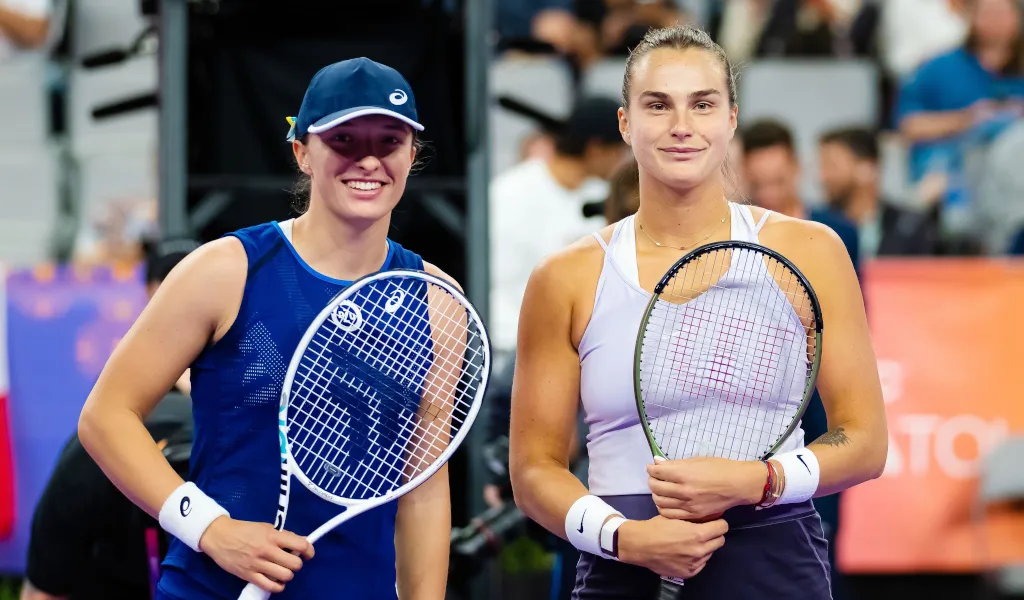
If Swiatek experiences early exits at one or two majors while a rival capitalizes, the points gap could shrink dramatically. The rankings system leaves little margin for complacency.
The pathway is clear. Execution remains uncertain.
Legacy at Stake – Is This Still Swiatek’s Era?
Every era faces a turning point. Should Swiatek maintain her hold through 2026, she would cement a sustained period of dominance comparable to previous WTA greats. If a new No.1 emerges, it would signal the beginning of competitive redistribution at the top.
The coming season is less about rivalry and more about structural change. Tennis history evolves in cycles. The WTA Rankings Battle 2026 may define the next one.
Conclusion – The Coming Rankings War
Iga Swiatek stands as the benchmark of her generation. Yet benchmarks exist to be tested. The structure of the rankings system ensures that every dominant phase invites calculated pursuit.
The WTA Rankings Battle 2026 will not hinge on one final or one headline victory. It will unfold across 52 weeks of pressure, adaptation, and resilience. Whether Swiatek tightens her grip or a challenger rises, the coming season promises a defining chapter in modern women’s tennis.





No Comments