
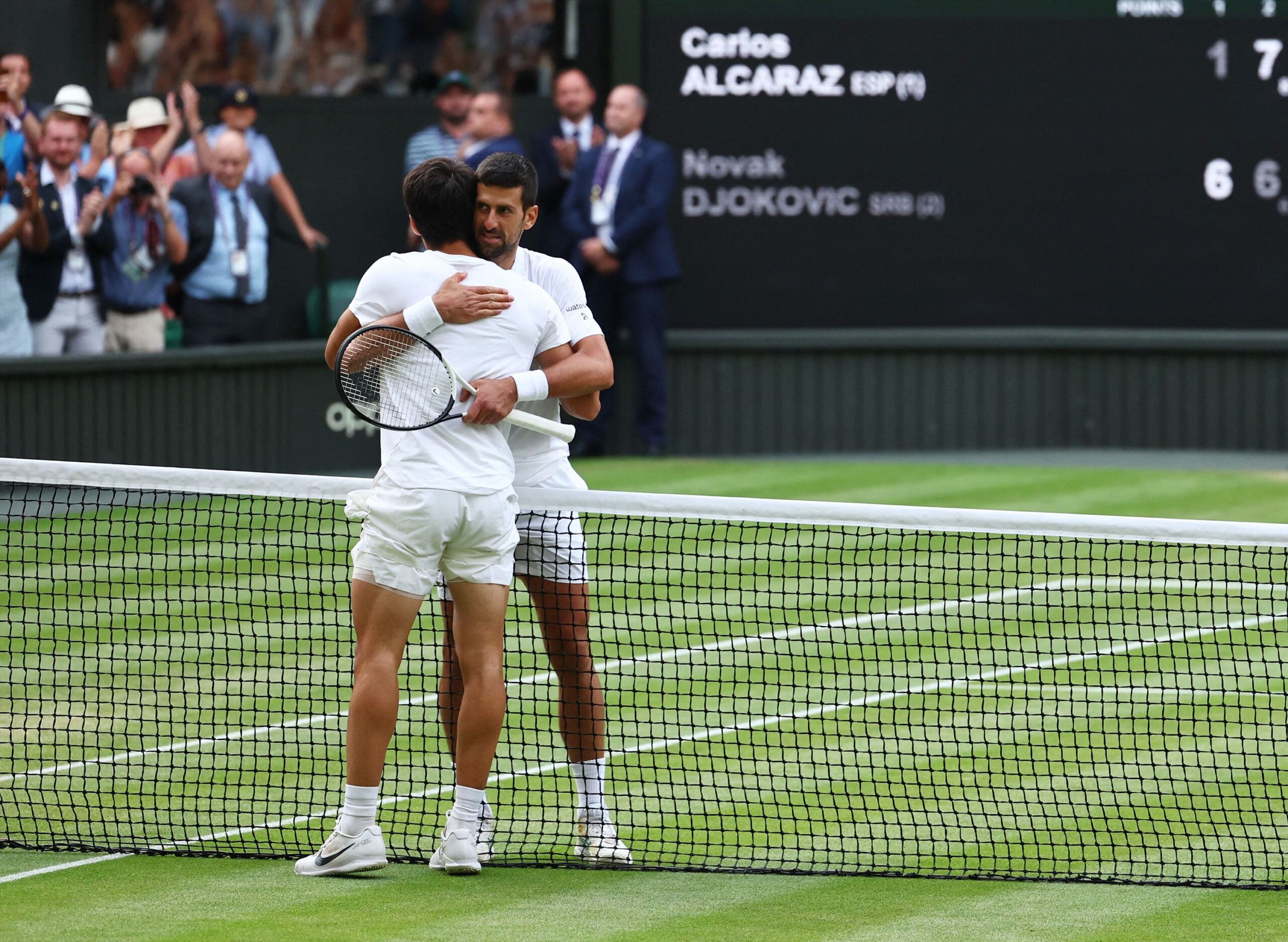

The 2026 Australian Open Final delivered everything tennis fans had hoped for and more. On the night of February 1 at Rod Laver Arena, Melbourne Park became the stage for one of the sport’s most compelling storylines: a 38-year-old Novak Djokovic, chasing an unprecedented 25th Grand Slam title, against a 22-year-old Carlos Alcaraz hungry to complete his career collection. The result was a match that will be debated, replayed, and remembered for years to come.
Table of Contents
Alcaraz defeated Djokovic 2–6, 6–2, 6–3, 7–5 to claim his first Australian Open title and seventh Grand Slam overall, becoming the youngest man in tennis history to complete the career Grand Slam. But to understand the full magnitude of the night, you have to look at Djokovic’s extraordinary journey to get there.
How Djokovic Reached the Australian Open 2026 Final
At 38 years and 255 days old, Djokovic became the oldest man in history to reach the Australian Open final, and the oldest major finalist overall in decades. That alone tells you this was no ordinary campaign. The Serb, who had not won a major since the 2023 US Open, came into Melbourne Park with renewed hunger and a point to prove against a new generation that had largely taken over the Grand Slam stage.
Djokovic’s semifinal win came against Jannik Sinner, the two-time defending champion, in a rematch of their clash two years prior. That victory ended Sinner’s remarkable streak of five consecutive major finals dating back to the 2024 US Open. Beating the reigning world number one going into a final is no small feat, and it showed that Djokovic’s competitive fire had not dimmed one bit despite his age.
Djokovic was arguably fresher heading into the final, having spent four hours less on court than Alcaraz during the tournament, benefiting from a fourth-round walkover and an injury-forced retirement by Lorenzo Musetti in the quarterfinals. That physical freshness would prove critical in the opening stages of the match.
The First Set: Djokovic Fires and Melbourne Roars
The Australian Open 2026 Final began in stunning fashion for Djokovic. Under the open roof of Rod Laver Arena, with Rafael Nadal watching from the stands, the Serb came out with a level of intensity that silenced even his critics.
Djokovic won five of six rallies over eight shots in the opening set, and with extra pace on his serve, clocking 170km/h compared to his tournament average of 166km/h, he was able to put Alcaraz under immediate pressure. Alcaraz won just one of eight points on his second serve in that first set. The crowd was electric, and for a moment it genuinely looked as though Djokovic might run away with the match entirely.
He dispatched the first set 6–2, coming out firing from the baseline in a way that was characteristic of his best years. The dream of a 25th Grand Slam felt very much alive.
The Turning Point: Alcaraz Adjusts and Djokovic Unravels
What separates great champions from good ones is the ability to adapt mid-match, and that is precisely what Carlos Alcaraz did. The Australian Open 2026 Final turned dramatically in the second set as Alcaraz made subtle but decisive tactical changes.

Alcaraz slowed his second-serve speed to 159km/h in the second set to disrupt Djokovic’s rhythm on return, and the adjustment worked immediately. Djokovic, who had been so clinical in the long rallies during the first set, began to force winners at the wrong moments, sending backhands down the line that sailed long or crashed into the net.
Djokovic, averaging 28 unforced errors at AO 2026 before the final, had committed just four in the opening set. But as Alcaraz took control of the longer exchanges in the final two sets, that number swelled to 31 unforced errors. For a player of Djokovic’s calibre, that kind of statistical collapse tells the story of a match that slipped away from him one rally at a time.
Alcaraz won 14 long rallies to Djokovic’s nine in the final three sets, completely reversing the first-set dynamic. The Spaniard also completed 48 sprints compared to Djokovic’s 22, which was 10 sprints above his own tournament average, demonstrating a relentless physical commitment that proved impossible to match.
Djokovic’s Perfect Australian Open Record Ends
For over a decade, Rod Laver Arena had been Novak Djokovic’s fortress. Ten finals, ten titles. No player in the Open Era had dominated a single Grand Slam with such completeness. The Australian Open 2026 Final was his first opportunity to go 11 from 11, and the pressure of that statistic weighed heavily on the night.
Djokovic fended off six break points to hold serve in a marathon second game of the fourth set, sending his Serbian fans into a frenzy and showing every sign of his legendary fighting spirit. The match was not over. Not while Djokovic was still standing.
But as Djokovic served at 5–6 to stay in the match and force a tiebreak, Alcaraz gained the upper hand in a nail-biting 24-stroke rally. Two errors from the Serb handed over championship points, and on the first of them, Djokovic’s forehand sailed out. Alcaraz fell to the ground and covered his face in disbelief and joy. A perfect record had finally been broken.
Djokovic’s Gracious Response and Legacy
What Djokovic said afterwards may have been even more striking than his performance. Cradling the finalist’s silverware for the first time in his Australian Open career, Djokovic told Alcaraz: “Congratulations Carlos, an amazing tournament. What you’ve been doing is, I think the best word to describe it is historic, legendary.”
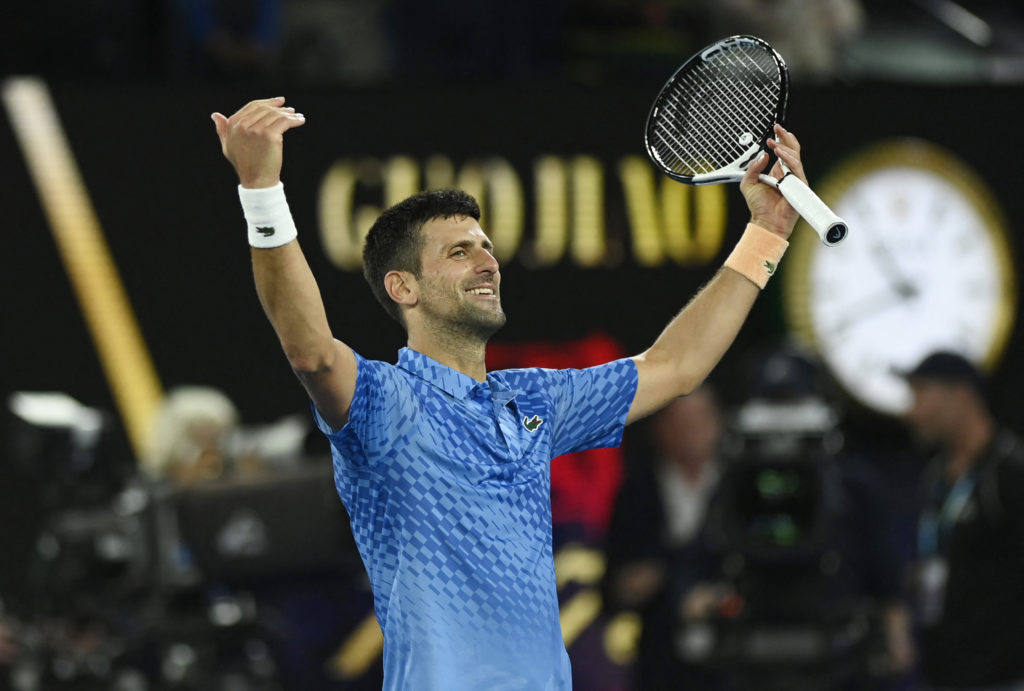
Coming from the most decorated men’s singles player in history, those words carry immense weight. Djokovic knows history. He has written most of it himself. And his acknowledgement of Alcaraz’s achievement says everything about the generational shift happening right now in men’s tennis.
Djokovic’s wait for his elusive 25th Grand Slam title continues, and the 38-year-old is a runner-up at the Australian Open for the first time in his career. Yet finishing runner-up after beating the two-time defending champion in the semifinals, while becoming the oldest man to reach the Melbourne final in modern history, is far from a failure. It is, in many ways, one of the most remarkable achievements of his later career.
What the Australian Open 2026 Final Means for the Sport
The Australian Open 2026 Final was a perfect encapsulation of where men’s tennis stands today. A 38-year-old legend refusing to fade, and a 22-year-old prodigy writing new chapters in the record books with every swing.
With Alcaraz’s win, he and Jannik Sinner have now combined to win the last nine Grand Slam titles between them, dating back to Djokovic’s triumph at the 2023 US Open. The torch has been passed, but Djokovic’s willingness to keep fighting ensures the conversation around him never becomes purely nostalgic.
Djokovic’s path to glory at the 2026 Australian Open did not end with a trophy. But it ended with something arguably more enduring: proof that his greatness is not a matter of the past tense. A player who redefines what is possible at 38 in a sport that brutalises the body, who beats the reigning world number one in a semifinal, and who pushes the sport’s brightest young talent to a gruelling four-set battle, is not a man in decline. He is still, undeniably, one of the greatest competitors tennis has ever seen.






No Comments