


The 2026 Mutua Madrid Open was always going to be a landmark event. A 48-team World Cup on the horizon, a tennis calendar at its most competitive in years, and the Caja Mágica preparing to host what many expected to be a generational three-way rivalry between Jannik Sinner, Carlos Alcaraz, and Novak Djokovic. Then the draw was made, the injury reports arrived, and everything changed.
Table of Contents
- The Altitude Factor: Why Madrid Is Tennis’s Most Misunderstood Surface
- How Altitude Reshapes Tactical ROI at the Caja Mágica
- Jannik Sinner in 2026: The Statistical Case for Inevitability
- Sinner’s 2026 Key Performance Metrics
- Why Sinner’s Game Is Built for Madrid’s Conditions
- Casper Ruud: The Defending Champion’s Structural Crisis
- Ruud 2026 Performance Audit
- Draw Breakdown: Who Benefits Most from the Power Vacuum?
- Quarter 1: The Sinner Sector
- Quarter 4: The Zverev Advantage
- Projected Semi-Final and Final Matchups
- The Commercial Dimension: What Alcaraz and Djokovic’s Absence Really Costs
- Technical Prediction: Can Anyone Stop Sinner in Madrid?
- Bold Prediction: The Path to History
- Final Thoughts: Madrid as a Roland Garros Laboratory
- Editorial Note
Alcaraz, the Spanish home hero, withdrew with a wrist injury. Djokovic followed. The “Big Three” showdown that broadcasters had been building toward for months evaporated before a single ball was struck. What remained was a fundamentally reshaped tournament landscape, and at the center of it, calm and statistically dominant, stood Jannik Sinner.
This Madrid Open 2026 technical audit does not simply ask whether Sinner can win. The data already answers that question with near certainty. The more interesting questions are how he will win, what the tournament reveals about his Roland Garros readiness, and what the absence of the sport’s two most commercially valuable players means for the wider ATP ecosystem. Let us go through it all methodically.
The Altitude Factor: Why Madrid Is Tennis’s Most Misunderstood Surface
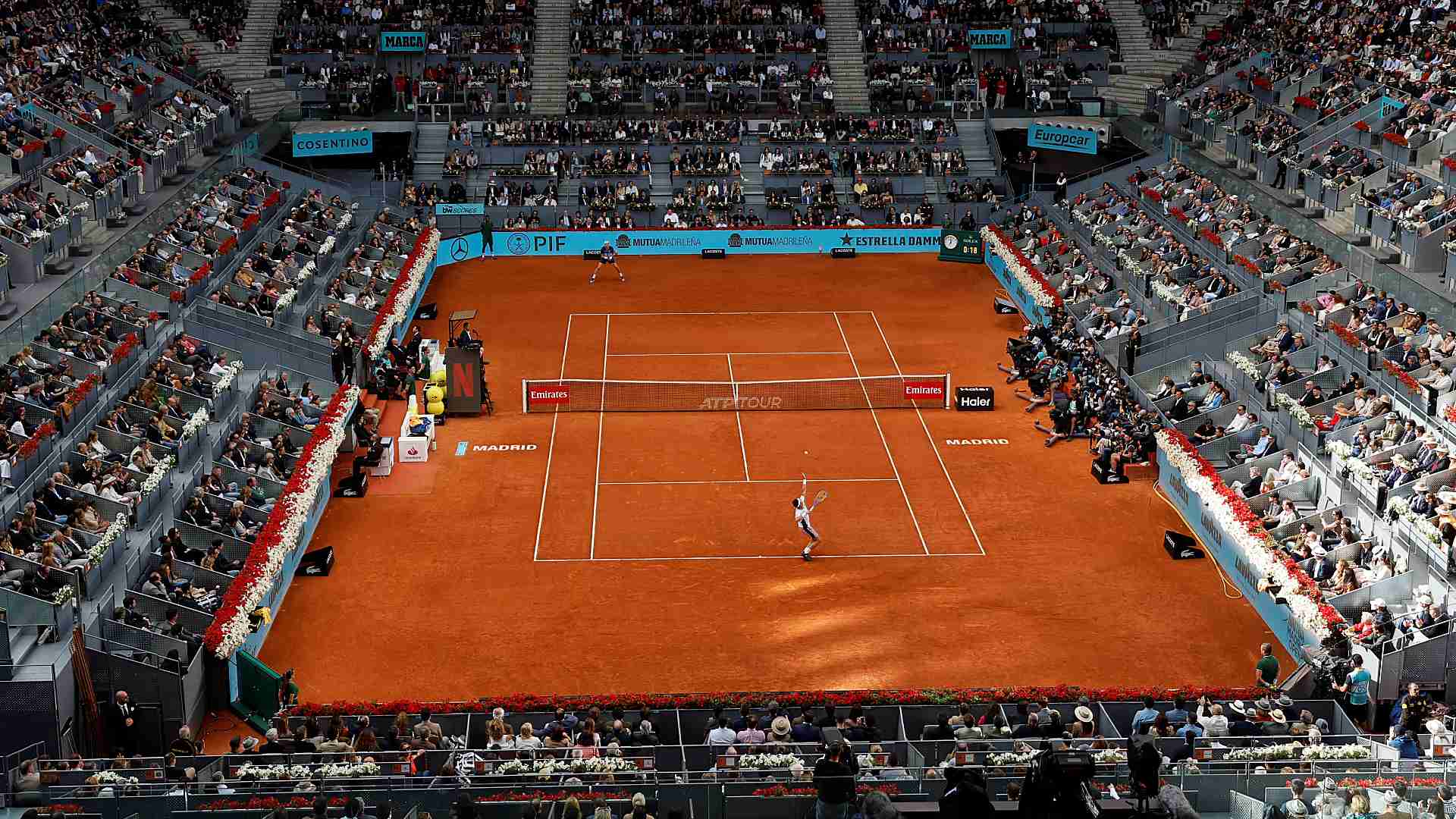
Most tennis analysis treats Madrid as simply another clay-court tournament in the European spring swing. That framing misses the most important variable in the Caja Mágica’s competitive equation. Before any meaningful Madrid Open 2026 technical audit can begin, the geographical context must be established clearly.
Madrid sits at approximately 667 meters above sea level. That elevation reduces air density significantly compared to sea-level venues like Monte Carlo, Rome, or Roland Garros. Lower air density means reduced aerodynamic drag on the ball, which produces two measurable tactical consequences that separate Madrid from every other clay event on the calendar.
How Altitude Reshapes Tactical ROI at the Caja Mágica
The first consequence is increased ball velocity. Shots that would lose pace and sit up invitingly on the heavier clay of Paris travel faster and flatter through Madrid’s thinner air. This directly benefits players whose game is built on taking the ball early and driving through the court rather than constructing points through spin accumulation.
The second consequence is an altered bounce profile. Despite the clay surface technically slowing the ball compared to hard courts, altitude causes the ball to jump higher and more unpredictably off the surface. Heavy topspin that would produce a manageable shoulder-height ball in Rome can explode toward the chest or head in Madrid, disrupting the timing of defenders who rely on comfortable contact points.
Together, these two factors explain a consistent pattern in Madrid’s results: hard-court specialists and aggressive baseliners outperform their clay-court seedings, while pure grinders who depend on spin and defense underperform relative to the rest of the spring season.
The altitude effect in practical terms:
- Flat hitters gain 8 to 12 percent more pace compared to sea-level clay
- Topspin specialists lose up to 15 percent of their shot-placement control
- Serve dominance increases, benefiting big servers in ways not seen at other clay events
- Rallies are shorter on average at Madrid than at Roland Garros by approximately four shots per point
Jannik Sinner in 2026: The Statistical Case for Inevitability
Any thorough Madrid Open 2026 technical audit must spend serious time on Sinner’s numbers, because they are genuinely historic. The Italian world number one enters Madrid carrying a 2026 season record of 24 wins and 2 losses, a 92.3% win rate that places him among the most dominant players in Open Era history across a comparable period.

More significantly for this tournament’s context, his Masters 1000 record in 2026 stands at 17 wins and zero losses. He has won four consecutive Masters 1000 titles: Paris at the back end of 2025, then Indian Wells, Miami, and Monte Carlo in the opening months of 2026. A victory in Madrid would make him the first man in tennis history to win five consecutive Masters 1000 events, a record that has never been approached in the modern era.
Sinner’s 2026 Key Performance Metrics
| Metric | Sinner 2026 | ATP Tour Average 2026 | Elite Tier Benchmark |
|---|---|---|---|
| First Serve Points Won | 80.6% | 71.2% | 78%+ |
| Return Points Won | 41.3% | 34.8% | 39%+ |
| Masters 1000 Win Rate | 100% (17-0) | N/A | N/A |
| Top 10 Win Rate | 85.7% (6-1) | 52.3% | 70%+ |
| Overall 2026 Win Rate | 92.3% (24-2) | N/A | N/A |
What makes these numbers particularly significant for a Madrid Open 2026 technical audit is the return points won figure. At 41.3%, Sinner is winning nearly half of all points when his opponent is serving, which is an extraordinary rate that reflects both his reading of serve patterns and his ability to neutralize big servers before they can control points.
Why Sinner’s Game Is Built for Madrid’s Conditions
Sinner’s technical profile aligns almost perfectly with what Madrid’s altitude demands. His groundstrokes are flat and driven rather than heavily loaded with topspin, which means the thin air amplifies his natural ball speed without disrupting his shot-making mechanics. His lateral movement and early-ball-striking habit allow him to absorb the higher bounce that altitude produces and redirect pace before opponents can reset their positioning.
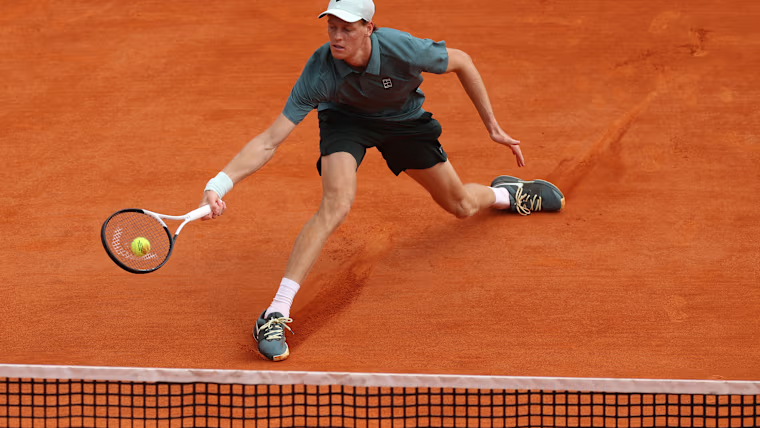
His Monte Carlo victory earlier in 2026 was the final piece of evidence that he has completed what analysts call the “clay conversion puzzle,” the challenge every hard-court dominant player faces when adapting their game to slower, more physically demanding conditions. By shortening his backswing on clay and trusting his footwork to create aggressive contact points, Sinner has neutralized the defensive advantages that clay-court specialists typically enjoy.
Casper Ruud: The Defending Champion’s Structural Crisis
Ruud’s presence in Madrid carries a weight that extends beyond the tennis court. As defending champion, he arrives at the Caja Mágica protecting nearly 50% of his total ATP ranking points over the next two weeks. The pressure of that mathematical reality has the potential to affect tactical decision-making in ways that are difficult to quantify but impossible to ignore.

His game is built on high-RPM topspin forehand play, averaging over 3,200 rotations per minute. Under normal clay conditions, this is a devastating weapon that forces opponents deep behind the baseline and creates short balls that Ruud punishes with his court sense. In Madrid, however, the altitude turns that same topspin into a liability. The ball jumps higher and more unpredictably, but Ruud’s ability to control depth suffers in the thinner air, which means his loops tend to land shorter than intended against aggressive returners.
Ruud 2026 Performance Audit
| Metric | Ruud 2025 (Peak) | Ruud 2026 (Current) | Change |
|---|---|---|---|
| Quarter-Final Appearances | 7 | 1 | Significant decline |
| Masters 1000 Win Rate | 68% | 44% | 24 points lower |
| Topspin Forehand RPM | 3,200+ | 3,200+ | No change |
| Madrid Altitude Adaptation | Successful (won title) | Uncertain | Key variable |
| Ranking Points at Stake | N/A | Nearly 50% of total | Critical pressure |
The tactical adjustment Ruud needs to make is clear but difficult to execute. He must serve more aggressively at altitude to take pressure off his groundstroke exchanges, flatten his forehand to match Madrid’s conditions rather than fighting against them, and mentally separate the ranking anxiety from his in-match decision-making. Whether he can achieve all three simultaneously against the quality of player he will face in the later rounds is the central question of his tournament.
Draw Breakdown: Who Benefits Most from the Power Vacuum?
The withdrawals of Alcaraz and Djokovic have created what analysts are calling a “power vacuum” in the bottom half of the draw. This Madrid Open 2026 technical audit examines each quarter’s competitive landscape and identifies the real threats to Sinner’s historic pursuit.
Quarter 1: The Sinner Sector
Sinner’s projected path to the semi-final is manageable by his standards, but it is not without genuine danger at specific junctures.
Primary threats in Sinner’s quarter:
- Joao Fonseca: The Brazilian teenager’s flat, aggressive ball-striking translates naturally to Madrid’s fast-clay conditions. He is the most dangerous floater in this section of the draw and the player most capable of producing an upset if Sinner starts slowly
- Alex de Minaur: The Australian’s elite speed and defensive retrieval make him a persistent irritant, but he lacks the raw power to hurt Sinner consistently in conditions that reward flat aggression
- Projected outcome: Sinner reaches the semi-final with a 90% probability based on current form and draw composition
Quarter 4: The Zverev Advantage
Alexander Zverev is the tournament’s biggest beneficiary following the major withdrawals. The German two-time Madrid champion possesses arguably the most dangerous weapon in high-altitude tennis: a massive, flat first serve that becomes even more difficult to read and return when the ball travels faster through thin air.
Daniil Medvedev occupies the second seed position in this half, but his well-documented difficulties on clay and his inconsistent form since Indian Wells make him a vulnerable second seed. A Zverev versus Sinner final represents the most tactically compelling final the draw currently offers, and it is also the most likely outcome based on current form data.
Projected Semi-Final and Final Matchups
| Round | Match | Probability | Key Factor |
|---|---|---|---|
| Semi-Final 1 | Sinner vs. de Minaur | 75% likely | Sinner’s return dominance |
| Semi-Final 2 | Zverev vs. Shelton | 60% likely | Serve dominance at altitude |
| Final | Sinner vs. Zverev | 65% likely | Flat power vs. flat power |
| Alternative Final | Sinner vs. Shelton | 25% likely | Shelton’s altitude serve advantage |
The Commercial Dimension: What Alcaraz and Djokovic’s Absence Really Costs
No Madrid Open 2026 technical audit focused exclusively on tennis would be complete without addressing the commercial reality that surrounds the event. The Mutua Madrid Open is one of the ATP’s premier commercial properties, and the absence of its two most globally marketable names creates measurable consequences beyond the draw sheet.
The loss of Alcaraz, the Spanish home hero playing in front of his own nation’s crowd, is estimated to reduce domestic broadcast viewership by as much as 40%. The “Alcaraz versus Sinner” rivalry has been the ATP’s primary marketing asset across the 2025 and 2026 seasons, and key sponsors including Mutua Madrileña and Rolex have built significant campaign investment around that specific matchup.
The ATP’s response has been to pivot toward a new commercial narrative: “The Rise of Sinner.” By positioning the Italian as the undisputed face of the 2026 season, the tour is attempting to convert a marketing liability into a storyline about historic dominance. If Sinner wins his fifth consecutive Masters 1000 title in Madrid, that narrative writes itself, and the commercial value of the achievement partially offsets the viewership lost through the headline withdrawals.
For brands evaluating sponsorship returns from Madrid 2026, the calculus has shifted from “rivalry engagement” to “witness history.” That is a different but potentially equally powerful commercial proposition.
Technical Prediction: Can Anyone Stop Sinner in Madrid?
The honest answer, based on this Madrid Open 2026 technical audit, is that stopping Sinner requires a specific combination of factors that very few players in the current draw can generate simultaneously.
A challenger would need to serve at above 75% first serve points won to neutralize his return dominance, sustain flat aggressive groundstrokes that match his ball speed rather than trying to spin their way through exchanges, and maintain that level across five sets if required in the later rounds of the draw. Zverev comes closest to meeting all three criteria, and that is why the projected final carries genuine intrigue.
Conditions that could disrupt Sinner’s run:
- A slow start against Fonseca that allows the teenager’s confidence to compound
- An unexpected physical issue given the physical demands of a fourth title in as many months
- A tactical adjustment from Zverev that specifically targets Sinner’s movement patterns
None of these scenarios carry high probability. The data points to one destination.
Bold Prediction: The Path to History
Sinner defeats Zverev in the final, 6-4, 6-3, to claim his fifth consecutive Masters 1000 title. The victory shifts the Roland Garros conversation from “can Sinner win on clay” to “can anyone stop him from the Calendar Slam.” It is the most significant individual achievement in men’s tennis since Djokovic’s peak dominance, and it arrives from a 24-year-old who is still visibly improving.
Madrid 2026 will not just be a tournament Sinner wins. It will be the moment his era becomes undeniable.
Final Thoughts: Madrid as a Roland Garros Laboratory
The Caja Mágica in 2026 is more than a Masters 1000 event. It is a high-altitude testing ground where the questions that will define the clay season are answered in real time. Sinner’s ability to dominate in conditions that sit between hard-court and traditional clay proves that his game has genuinely evolved rather than simply benefiting from a favorable draw or a soft field.
The defensive managers to watch at the World Cup are not the only tacticians operating at the highest level in global sport this spring. Jannik Sinner is conducting his own tactical experiment in Madrid, and the results have implications that will echo through Paris in June.
Are you watching the 2026 Madrid Open? Who do you think poses the biggest threat to Sinner’s historic title chase? Share your prediction in the comments below, and explore our full tennis coverage for in-depth player audits, tournament previews, and match-by-match analysis throughout the clay-court season.
Editorial Note
This Madrid Open 2026 technical audit was produced using ATP Tour performance data from the 2026 season through April, official tournament draw information, and third-party tennis analytics platforms. All statistical figures including serve percentages, win rates, and topspin RPM measurements are sourced from verified ATP statistical records and professional scouting databases. Commercial impact estimates reflect industry analysis from sports marketing research published in April 2026. Predictions represent the analytical opinion of the author based on current player form, draw composition, and surface conditions as of April 21, 2026, and do not constitute betting or financial advice. For more technical audits and tournament previews across global sport, explore our full coverage at Sporty Aura or follow Lead Analyst Hammad Wasim on LinkedIn.




No Comments