


The Miami Open history is a story of growth, legacy, and elite competition. Since its launch in 1985, the tournament has evolved into one of the most important events in professional tennis, often referred to as the “Fifth Slam.”
Table of Contents
- The Origins of Miami Open History
- Key Biscayne Era: Where the Legacy Was Built
- A Tournament Defined by Greatness
- Miami Open at a Glance
- Record Holders and Historic Achievements
- The Move to Miami Gardens
- A New Generation Emerges
- The 2025 Final: A Defining Moment
- Women’s Excellence in Miami Open History
- Why the Miami Open Is Called the “Fifth Slam”
- Conclusion: A Legacy Still Being Written
Held annually on outdoor hard courts in Miami Gardens, Florida, the Miami Open is a cornerstone of both the ATP Masters 1000 and WTA 1000 circuits. It consistently delivers high-quality matches, iconic champions, and defining moments that shape the sport.
The Origins of Miami Open History
The Miami Open began in 1985 under the name Lipton International Players Championships. The goal was ambitious: create a tournament that could rival the scale and prestige of Grand Slams.

The first champion, Tim Mayotte, set the tone for what would quickly become a world-class competition. From the outset, top players participated, giving the tournament immediate credibility.
By the late 1980s, the Miami Open had already secured its place as a major stop on the tennis calendar.
Key Biscayne Era: Where the Legacy Was Built
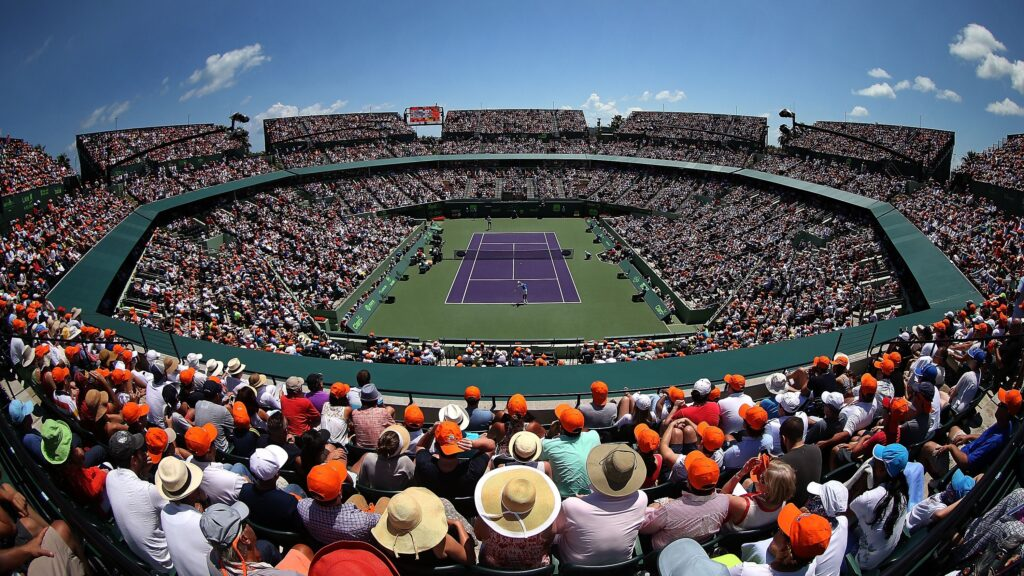
From 1987 to 2018, the tournament was hosted at Key Biscayne. This period is widely considered the foundation of Miami Open history.
During these years, the event grew in stature, attracting massive crowds and global attention. It became known not just for tennis, but for its vibrant atmosphere and high-energy matches.
Players like Andre Agassi, Pete Sampras, and Ivan Lendl defined this era. Among them, Agassi stood out with his dominance and connection to the tournament, becoming one of its most successful champions.
A Tournament Defined by Greatness
As the competition evolved, so did its legends. The 2000s and 2010s brought a new level of excellence with the rise of tennis icons.
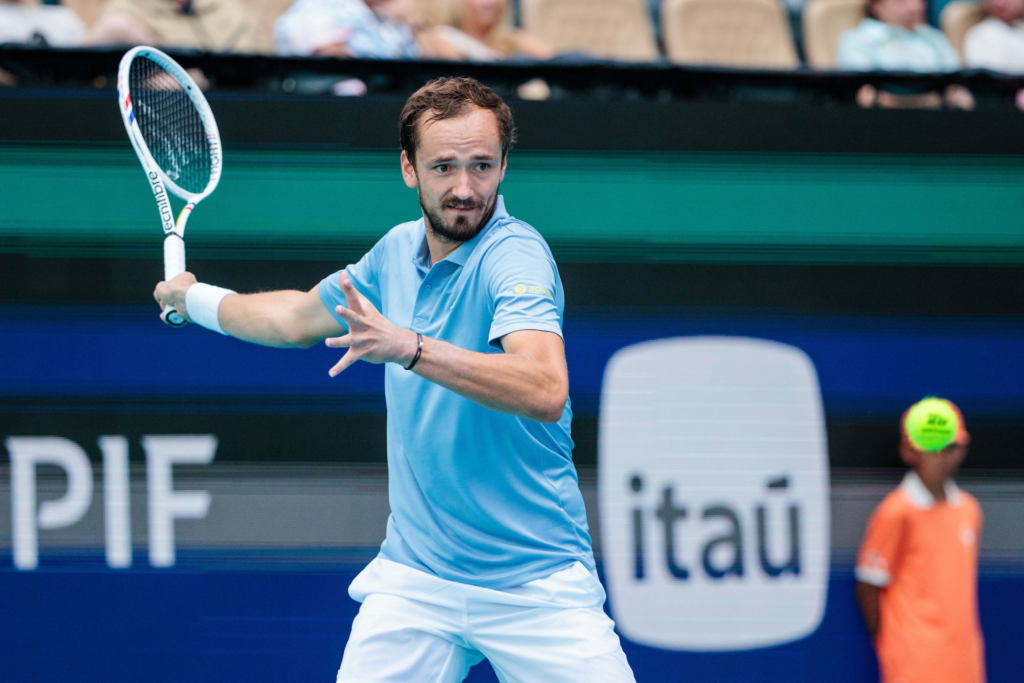
Roger Federer brought elegance and composure, producing unforgettable performances.
Rafael Nadal added intensity, reaching multiple finals and delivering classic battles despite never winning the title.
Novak Djokovic emerged as the most dominant force, matching the all-time record of six titles.
One of the most iconic moments in Miami Open history came in the 2005 final, where Federer staged a dramatic comeback against Nadal after being two sets down. Matches like these helped elevate the tournament’s global reputation.
Miami Open at a Glance
| Milestone | Detail |
|---|---|
| First Edition | 1985 |
| Current Venue | Hard Rock Stadium |
| Move to New Venue | 2019 |
| Surface | Outdoor Hard Court |
| Category | ATP Masters 1000 / WTA 1000 |
This evolution reflects how the tournament has continuously adapted to modern standards while preserving its legacy.
Record Holders and Historic Achievements
The Miami Open history is filled with remarkable records that highlight the tournament’s competitive depth.
- Andre Agassi and Novak Djokovic share the record for most men’s titles with six each
- Agassi also holds the record for most match wins at the event
- Rafael Nadal reached multiple finals without winning a title
In recent years, Jannik Sinner added his name to the history books by setting a record for consecutive sets won at Masters level during the 2026 tournament.
The Move to Miami Gardens
In 2019, the Miami Open entered a new phase by moving to Hard Rock Stadium in Miami Gardens. This shift marked a modern transformation for the tournament.
The new venue brought:
- Larger capacity
- State-of-the-art facilities
- Enhanced fan experience
This move ensured the tournament could continue growing while maintaining its elite status.
A New Generation Emerges
Recent editions of the tournament highlight a shift in Miami Open history, with younger players taking center stage.
Names like Carlos Alcaraz, Daniil Medvedev, and Jannik Sinner have introduced a new era of competition.
The variety of recent winners reflects the increasing unpredictability and depth in modern tennis, making the tournament even more exciting for fans.
The 2025 Final: A Defining Moment
One of the most inspiring chapters in recent Miami Open history came in 2025, when Jakub Menšík shocked the tennis world.
He defeated Novak Djokovic in the final to win his first major title. What made this victory remarkable was that he nearly withdrew before the tournament due to injury.
Instead, he went on to complete one of the most unexpected and memorable runs in the tournament’s history.
Women’s Excellence in Miami Open History
The women’s side has been just as influential in shaping the tournament’s legacy.
Serena Williams leads all players with eight titles, making her the most successful champion in Miami Open history.
Steffi Graf follows with five titles, including a dominant three-year streak.
Victoria Azarenka also made her mark with multiple wins.
In recent years, players like Aryna Sabalenka and Iga Świątek have carried the tournament forward with powerful and consistent performances.
Why the Miami Open Is Called the “Fifth Slam”
The Miami Open has earned its nickname through decades of excellence. It offers:
- Elite-level competition
- Global viewership
- High ranking points
- Historic matches and rivalries
These factors combine to give it a Grand Slam-like importance within the tennis world.
Conclusion: A Legacy Still Being Written
The Miami Open history reflects the evolution of tennis itself. From its beginnings in 1985 to its current status as a global sporting spectacle, the tournament has consistently delivered excellence.
It has been a stage for legends, a launchpad for future stars, and a source of unforgettable moments. As new champions emerge and records continue to fall, the Miami Open remains one of the most important and exciting tournaments in the sport.
Its story is far from over, and that’s what makes it truly special.






No Comments