
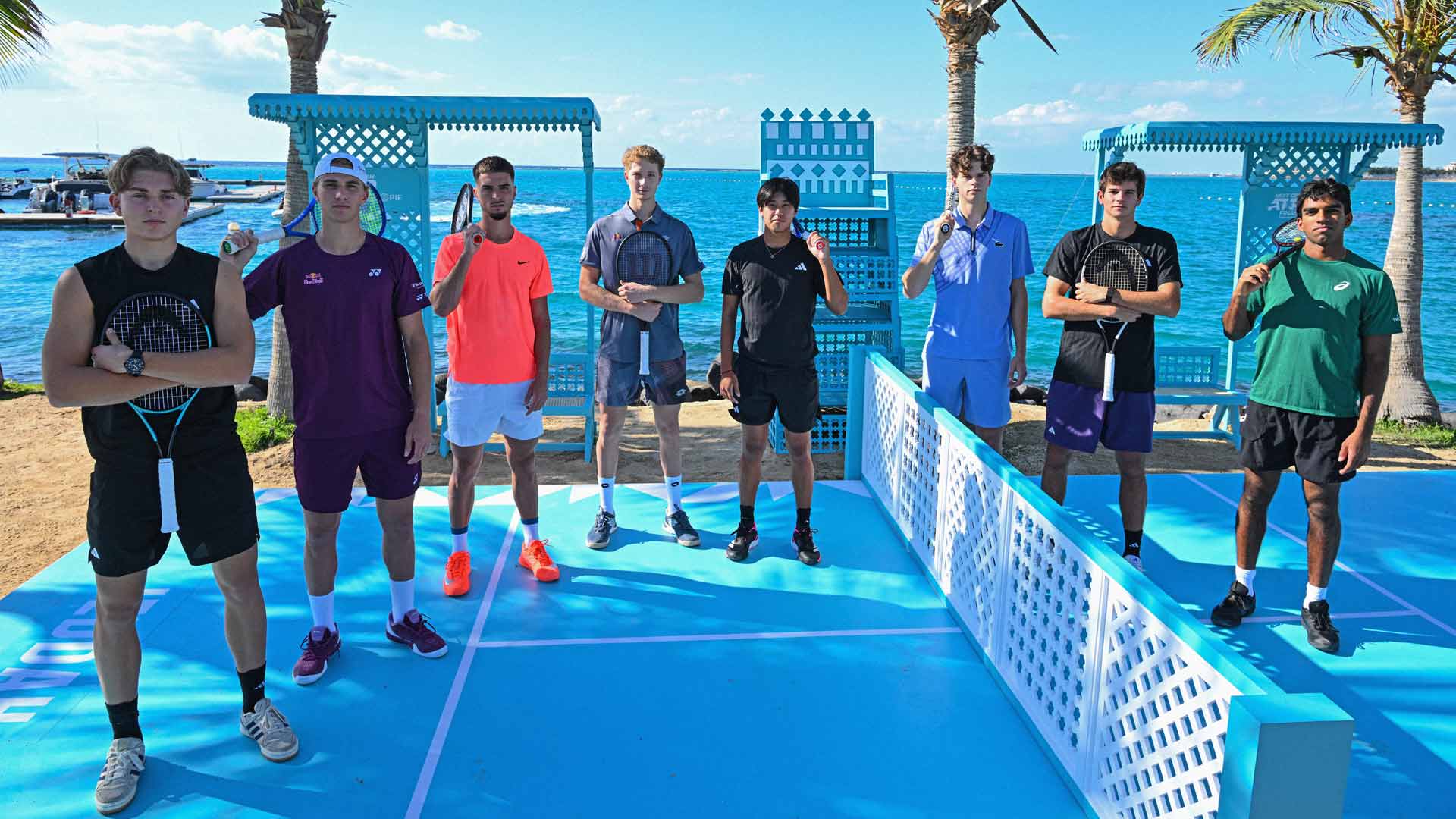

The generational shift in men’s tennis is no longer approaching. It has arrived, and it has arrived with a completeness that even the most optimistic predictions did not fully anticipate. Carlos Alcaraz and Jannik Sinner have between them claimed nine consecutive Grand Slam titles dating back to the 2024 Australian Open, a streak of combined dominance that has no parallel in the modern era of the sport. The Big Three era defined men’s tennis for two decades. The next generation has not waited politely for its turn. It has simply taken over.
Table of Contents
- How the Next Gen ATP Stars Are Redefining Men’s Tennis in 2026
- Carlos Alcaraz: The Most Complete Next Gen ATP Star in the Game
- Jannik Sinner: The Relentless Baseline Force at the Top of the Rankings
- The Next Gen ATP Stars Beyond Alcaraz and Sinner
- How the Next Generation Compares to the Big Three at the Same Age
- Playing Styles That Define the New Era of Men’s Tennis
- Grand Slam Records and What 2026 Has Already Delivered
- The Future of Men’s Tennis and What the Next Gen ATP Stars Will Define
- What This Generation Means for the Sport
This is the full breakdown of the Next Gen ATP Stars leading men’s tennis into 2026, what they have already built, how they compare to those who came before, and what the decade ahead looks like with this generation at the summit.
How the Next Gen ATP Stars Are Redefining Men’s Tennis in 2026
The transition away from the Federer, Nadal, and Djokovic era has been faster and more total than anyone predicted. Roger Federer retired in September 2022. Rafael Nadal retired in November 2024 after his final Davis Cup campaign with Spain. Novak Djokovic, at 38, remains a force capable of reaching Grand Slam semifinals at all four majors in 2025, but the points gap between him and the top two in the current ATP rankings tells its own story clearly.
As of March 2026, Carlos Alcaraz leads the ATP rankings with 13,550 points. Jannik Sinner sits second with 10,400 points. Djokovic is third with 5,280 points. That gap between second and third is not a marginal difference. It is a structural statement about where the sport now lives and who it belongs to.
Carlos Alcaraz: The Most Complete Next Gen ATP Star in the Game
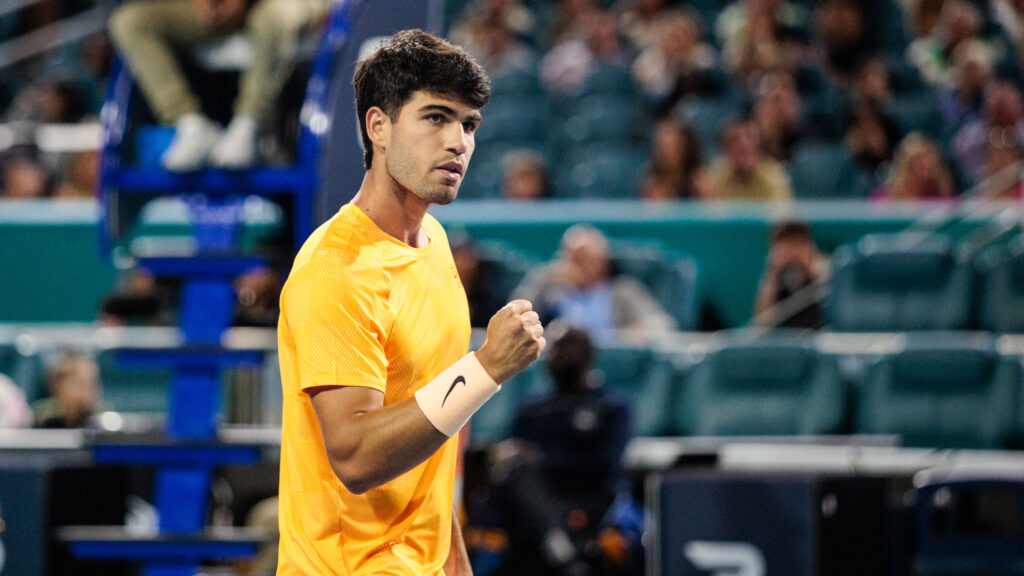
Carlos Alcaraz completed the Career Grand Slam on February 1, 2026, defeating Novak Djokovic in four sets in the Australian Open final to claim his seventh major title at just 22 years and 272 days old. He became the youngest male player in tennis history to achieve the feat, eclipsing Rod Laver’s record set in 1969. His seven Grand Slam titles span every surface — the US Open in 2022 and 2025, Wimbledon in 2023 and 2024, Roland Garros in 2024 and 2025, and now the Australian Open in 2026.
\
What separates Alcaraz from every other young player the game has produced is not any single attribute but the width of his game. His serve, his returning, his net play, his physicality, and his ability to manufacture winning shots from seemingly impossible positions combine into something the sport has not seen at this age before. He won a Big Title for every 3.7 tournaments played in his career, a rate that only Djokovic and Nadal have ever surpassed.
Jannik Sinner: The Relentless Baseline Force at the Top of the Rankings
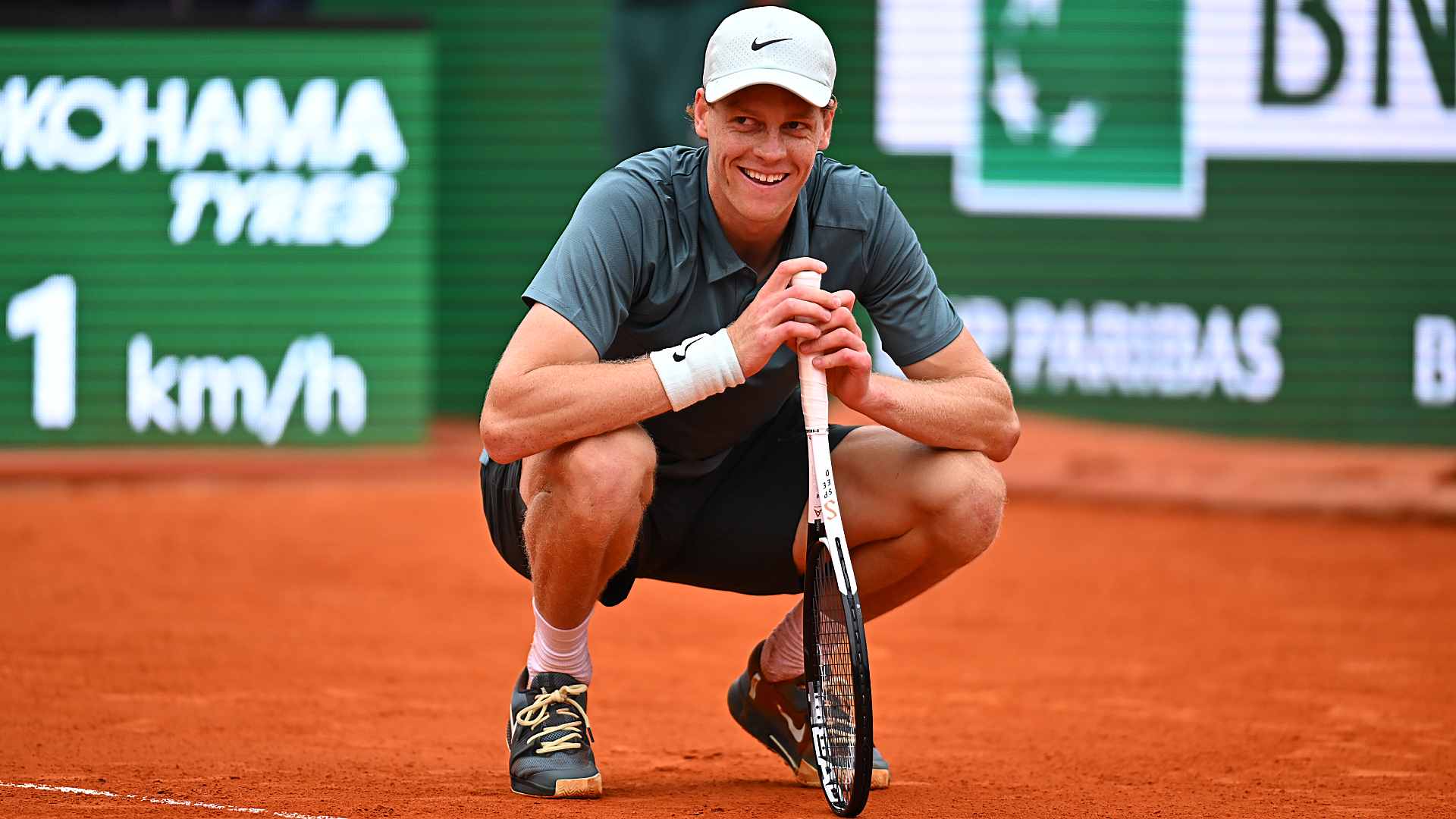
Jannik Sinner holds four Grand Slam titles, won the Australian Open in 2024 and 2025, the US Open in 2024, and Wimbledon in 2025. He became the third youngest man in history, after Federer and Djokovic, to reach the final of every Grand Slam and the ATP Finals in the same calendar year, which he achieved during the 2025 season. He also won back-to-back ATP Finals titles in 2024 and 2025 without dropping a set in either edition, a record no player has previously achieved across multiple years.
His two-handed backhand generates more topspin than any other player on the ATP tour, and his groundstroke consistency under pressure across five-set matches has produced a hard court win-loss record of 227 wins and 52 losses at a winning percentage of 81.4 percent. On the ATP circuit he has spent 66 weeks as world number one and holds a career-high 12 Big Titles across Grand Slams, Masters 1000 events, and the ATP Finals. His mental composure, demonstrated through a 26-match winning streak in 2025, the seventh-longest since 1990, places him in rare psychological company.
The Next Gen ATP Stars Beyond Alcaraz and Sinner
Alcaraz and Sinner lead but do not define the full picture of where men’s tennis currently stands. The players immediately behind them in the rankings represent a generation of genuine quality rather than simply a gap left by the Big Three’s departure.
Lorenzo Musetti of Italy is ranked world number five as of March 2026, and his clay court game combined with an elegant one-handed backhand makes him a consistent threat at Roland Garros. Ben Shelton of the United States sits ninth in the world at 23 years old, with a serve that ranks among the fastest on tour and a left-handed game that creates problems no other American has generated since Andy Roddick.
Jack Draper of Great Britain won the Indian Wells Masters in 2025 and reached the Madrid Masters final before injuries disrupted his season, and at 24 he has already demonstrated the physical and tactical tools required to challenge at the very top. Jakub Mensik of the Czech Republic, born in 2005, won the Miami Open in 2025 at just 19 years old, announcing a talent that may yet belong in the conversation alongside Alcaraz and Sinner within the next two seasons.
How the Next Generation Compares to the Big Three at the Same Age
The most revealing way to understand what this generation has already achieved is to place it alongside where Federer, Nadal, and Djokovic stood at equivalent career stages. At 22, Novak Djokovic had won exactly one Grand Slam title, his 2008 Australian Open. Roger Federer had won three majors by the time he turned 23. Rafael Nadal, the most directly comparable case given his similarly explosive early trajectory, had won six Grand Slams by age 22 — a number Alcaraz has already matched and exceeded.
Alcaraz and Sinner are two of only twelve men who have earned at least three major titles before turning 24. Together, across a shared total of eleven Grand Slam titles at the ages of 22 and 24 respectively, they represent the most prolific early-career pairing in men’s Grand Slam history. That context does not guarantee what follows. But it describes the scale of what has already been delivered.
Playing Styles That Define the New Era of Men’s Tennis
The way Alcaraz and Sinner play is not simply a continuation of the Big Three style. It is a distinct evolution that reflects changes in physical preparation, racket technology, and tactical philosophy that have accumulated across the sport over the past decade.
Both players generate heavier topspin from deeper in the court than the previous generation’s baseline game demanded. Both return more aggressively from deeper positions and convert return games into offensive sequences more consistently than any player outside the Big Three previously managed. Alcaraz’s all-surface adaptability, combining clay court construction with the serve-and-volley confidence to attack on grass, represents a tactical range that even Djokovic, the most complete all-surface player of the Big Three era, did not display at the same age.
Sinner’s indoor hardcourt dominance, built on extraordinary groundstroke depth and first-serve accuracy, has produced a 31-match winning streak on indoor surfaces that stands as one of the great sustained surface performances of the 21st century.
Grand Slam Records and What 2026 Has Already Delivered
The grand total of Grand Slam titles between Alcaraz and Sinner, eleven combined at their respective ages, represents the most significant individual scoring accumulation the sport has produced outside the Big Three themselves. Alcaraz’s seven titles already place him among the active players with the most major championships, second only to Djokovic across all current professionals.
Their consecutive Grand Slam final meetings in 2025, at Roland Garros, Wimbledon, and the US Open, produced three of the most technically accomplished finals in the sport’s recent history. The Roland Garros final, which Alcaraz won in five hours and 29 minutes after saving three match points, was the longest French Open final ever played. The Wimbledon final saw Sinner win in three decisive sets, confirming that the rivalry operates on terms of genuine equality rather than one-sided dominance. The US Open final, settled 6-2, 3-6, 6-1, 6-4 in Alcaraz’s favour, provided further evidence of how the contest shifts depending on surface, form, and momentum.
The Future of Men’s Tennis and What the Next Gen ATP Stars Will Define
The defining question for men’s tennis over the next decade is not whether Alcaraz and Sinner will continue winning. Based on trajectory, records, age, and the structural depth of their respective games, both will continue competing for Grand Slams at the highest level for at minimum another ten years. The more compelling question is which players from below them in the current rankings will grow capable of interrupting their shared dominance.

Holger Rune, ranked 17th in the world in March 2026 and currently recovering from a ruptured Achilles tendon, was once considered the most likely candidate to push into the top two. Jack Draper and Ben Shelton represent the best cases from outside Italy and Spain. Jakub Mensik, at 19, has already shown the kind of serve-based game and composure under pressure that could develop into a genuine Grand Slam contender within the next two or three seasons.
What This Generation Means for the Sport
The Next Gen ATP Stars have not simply filled the space left by the Big Three. They have redefined what that space looks like and raised the performance standard required to compete within it. Alcaraz completes Career Grand Slams at 22. Sinner wins back-to-back ATP Finals without dropping a set in either tournament. Together they have shared every Grand Slam title for two consecutive seasons.
The sport asked whether anyone could follow Federer, Nadal, and Djokovic and still make men’s tennis worth watching at the same level of sustained excellence. Alcaraz and Sinner have answered that question emphatically, and the generation they lead is still only just beginning to show what it is fully capable of producing.





No Comments