In tennis, the Grand Slam is everything. The Australian Open, Roland Garros, Wimbledon, and the US Open represent the sport’s ultimate measure of greatness, and players who collect them are immortalized in the record books. But what about the players who built extraordinary fortunes without ever lifting one of those four trophies? Their stories are just as compelling, and in some cases, their bank accounts are just as impressive.
This list of the richest tennis players without a Grand Slam title proves that sustained excellence, global marketability, and smart business decisions can create generational wealth regardless of what happens in a Major final. Here is the complete breakdown.
Number 1: Alexander Zverev ($35 Million to $40 Million)
Alexander Zverev sits at the top of the richest tennis players without a Grand Slam list, and it is not particularly close. The German star has accumulated over $42 million in career prize money alone, placing him among the highest earners in ATP history. He has come agonizingly close to a Major title, most notably at the 2020 US Open and the 2024 French Open, but the trophy has continued to elude him.
What keeps Zverev firmly at the top of this list is the caliber of his commercial portfolio. Partnerships with Adidas, Richard Mille, and Rolex place him in the same marketing tier as confirmed Grand Slam champions. His Olympic gold medal at Tokyo 2020 and multiple ATP Finals victories have ensured his marketability remains at a premium even without a Major to his name.
Number 2: Kei Nishikori ($30 Million to $35 Million)
Kei Nishikori is perhaps the most commercially extraordinary player on this entire list. His career prize money sits at approximately $25 million, which is impressive on its own, but his off-court earnings have at times rivaled those of the sport’s absolute elite. At his commercial peak, Nishikori was reportedly earning over $30 million per year from endorsements alone.
The explanation lies in his market. As the defining Japanese tennis star of his generation, Nishikori became a national icon in one of the world’s largest consumer economies. Long-term partnerships with Uniqlo, Wilson, and Japan Airlines reflect the extraordinary commercial value he held in the Asian market. He reached one Grand Slam final, the 2014 US Open, but his financial legacy extends far beyond that single result.
Number 3: Stefanos Tsitsipas ($25 Million to $30 Million)
Stefanos Tsitsipas has built something genuinely unique in professional tennis: a personal brand that exists almost independently of his match results. With career prize money surpassing $30 million and sponsorships with Rolex and Red Bull, the Greek star has secured his financial future through a combination of on-court consistency and off-court creativity.
Tsitsipas runs a successful YouTube channel, engages fans through social media subscriptions, and presents himself as a philosopher and traveler as much as an athlete. This approach has attracted brands looking for authenticity rather than just trophies, and it has paid off handsomely. His repeated deep runs at the Australian Open and Roland Garros have kept him relevant at the sport’s highest level throughout the 2020s.
Number 4: Milos Raonic ($25 Million to $30 Million)
Milos Raonic was the face of Canadian tennis for a full decade before the next generation arrived. The powerful serve-and-volley specialist reached the Wimbledon final in 2016 and peaked at World No. 3, collecting over $20 million in prize money during a career significantly disrupted by injuries. His early dominance during the era of Federer, Nadal, and Djokovic, three players who dominated every Major for over fifteen years, made his achievements all the more remarkable.
Beyond prize money, Raonic became a pioneer for New Balance in tennis through a significant apparel partnership that considerably boosted his net worth. Smart investments in real estate and technology startups have continued growing his wealth well beyond his playing peak, making him one of the savvier financial operators this sport has produced.
Number 5: Casper Ruud ($18 Million to $22 Million)
Casper Ruud has built his fortune on two things: clay court dominance and one of the most likeable public images in professional tennis. The Norwegian has reached multiple Grand Slam finals at Roland Garros and the US Open, coming close to a title on more than one occasion, but his career prize money of approximately $20 million reflects consistent excellence across years of high-level competition.
His “nice guy” reputation has proven genuinely valuable in commercial terms. Sponsorships with Yonex and Samsonite, combined with his status as arguably the most prominent athlete in Scandinavia, a region with significant purchasing power, have made Ruud a highly sought-after commercial partner. He is proof that personality and consistency can build a very comfortable fortune even without the sport’s biggest titles.
Number 6: Jessica Pegula ($13 Million to $20 Million)
Jessica Pegula’s entry on this list comes with important context. Her personal career earnings from prize money and endorsements exceed $18 million as of early 2026, making her one of the wealthiest active players on the WTA Tour through her own efforts. She is also, separately, the daughter of Terry and Kim Pegula, owners of the NFL’s Buffalo Bills and NHL’s Buffalo Sabres, placing her family wealth in an entirely different category.
On the court, Pegula has been a model of top-ten consistency, regularly reaching Grand Slam quarterfinals and winning WTA 1000 level events. Off it, she has demonstrated genuine entrepreneurial instincts through the launch of her own skincare line, Ready 24, alongside endorsement deals with Adidas and Yonex. She represents the new generation of tennis players who build personal commercial ecosystems that extend well beyond the sport itself.
Number 7: Elina Svitolina ($15 Million to $20 Million)
Ukraine’s greatest tennis player has accumulated over $23 million in career prize money while winning the prestigious WTA Finals in 2018 and claiming an Olympic bronze medal in Tokyo. Elina Svitolina’s financial story is one of consistent top-level performance combined with strong brand partnerships, most notably long-running relationships with Nike and Wilson across the Eastern European market.
Her return to professional tennis following maternity leave in 2023 became one of the most talked-about stories in the sport, generating significant media attention and further enhancing her endorsement profile. Svitolina has shown that a player can remain commercially valuable through compelling personal narratives as much as through match results.
Number 8: Karolina Pliskova ($15 Million to $18 Million)
Former World No. 1 Karolina Pliskova has earned over $25 million in prize money during a career that included two Grand Slam final appearances and a long reign at the top of the WTA rankings. The Czech player’s powerful game and commanding physical presence made her a natural fit for brands like Fila and Hublot, both of which valued the combination of elite performance and visual impact she brought to their campaigns.
Pliskova’s longevity on the tour, remaining a consistent competitive threat for well over a decade, has allowed her to build a diversified financial portfolio that extends beyond what her match results alone might suggest. She is a reminder that sustained presence at the top level carries its own commercial value.
Number 9: David Ferrer ($16 Million)
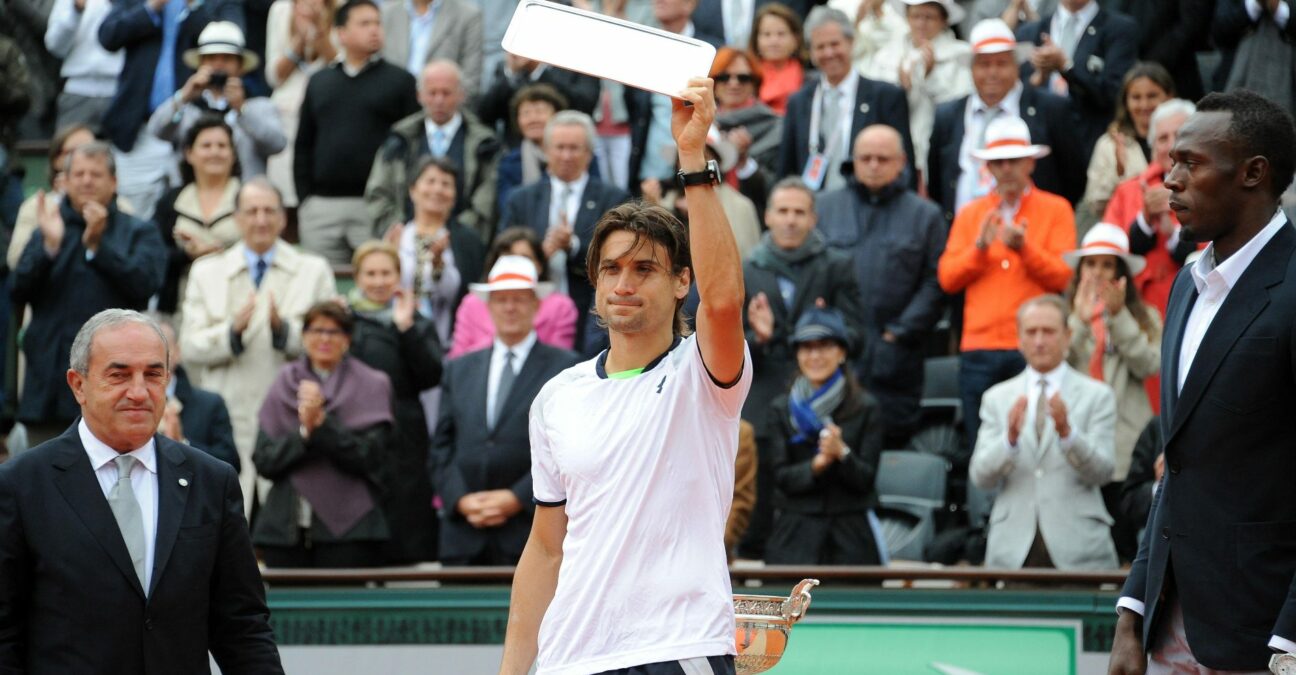
David Ferrer may be the purest example of what relentless hard work can achieve in professional tennis. Competing throughout the era dominated by Federer, Nadal, and Djokovic, three of the greatest players in history, Ferrer somehow carved out a career that included 27 ATP titles, a French Open final appearance in 2013, and over $31 million in prize money, the most accumulated by any player without a Grand Slam for many years.
Brands like Lotto and Babolat invested in Ferrer because his never-say-die attitude resonated with fans in a way that transcended results. Since retiring, he has remained deeply connected to the sport through coaching and tournament direction, ensuring his influence on tennis continues well beyond his playing days.
Number 10: Andrey Rublev ($12 Million to $15 Million)
The youngest player on this list, Andrey Rublev has already crossed $23 million in career prize money and shows no signs of slowing down. Known for his explosive baseline game and a decade of consistent Grand Slam quarterfinal appearances, Rublev has established himself as one of the tour’s most reliable top-ten performers.
What makes his entry particularly interesting is his entrepreneurial move beyond tennis. Rublev recently launched his own clothing brand, Rublo, with a focus on mental health awareness and sustainable fashion, two areas with strong commercial momentum among younger consumers. This combination of on-court consistency and off-court initiative positions him to climb significantly higher on this list in the years ahead.
Quick Reference: Net Worth Summary
Rank
Player
Estimated Net Worth
1
Alexander Zverev
$35M to $40M
2
Kei Nishikori
$30M to $35M
3
Stefanos Tsitsipas
$25M to $30M
4
Milos Raonic
$25M to $30M
5
Casper Ruud
$18M to $22M
6
Jessica Pegula
$13M to $20M
7
Elina Svitolina
$15M to $20M
8
Karolina Pliskova
$15M to $18M
9
David Ferrer
$16M
10
Andrey Rublev
$12M to $15M
What the Richest Tennis Players Without a Grand Slam Tell Us About Modern Tennis
The collective success of these ten players points to a broader shift in how wealth is created in professional tennis. The ATP and WTA Tours now offer substantial prize money at Masters 1000 and 500-level events, meaning a player who consistently reaches quarterfinals and semifinals across a full season can accumulate serious career earnings without ever standing on a Major final podium.
More significantly, the rise of social media, global streaming, and personal branding has created commercial opportunities that simply did not exist a generation ago. Players like Tsitsipas and Pegula have built what might be called personal economies, revenue streams and brand relationships that exist entirely independently of their trophy cabinets.
In the modern era of professional tennis, winning the crowd and the algorithm can be just as financially rewarding as winning the tournament.





No Comments