
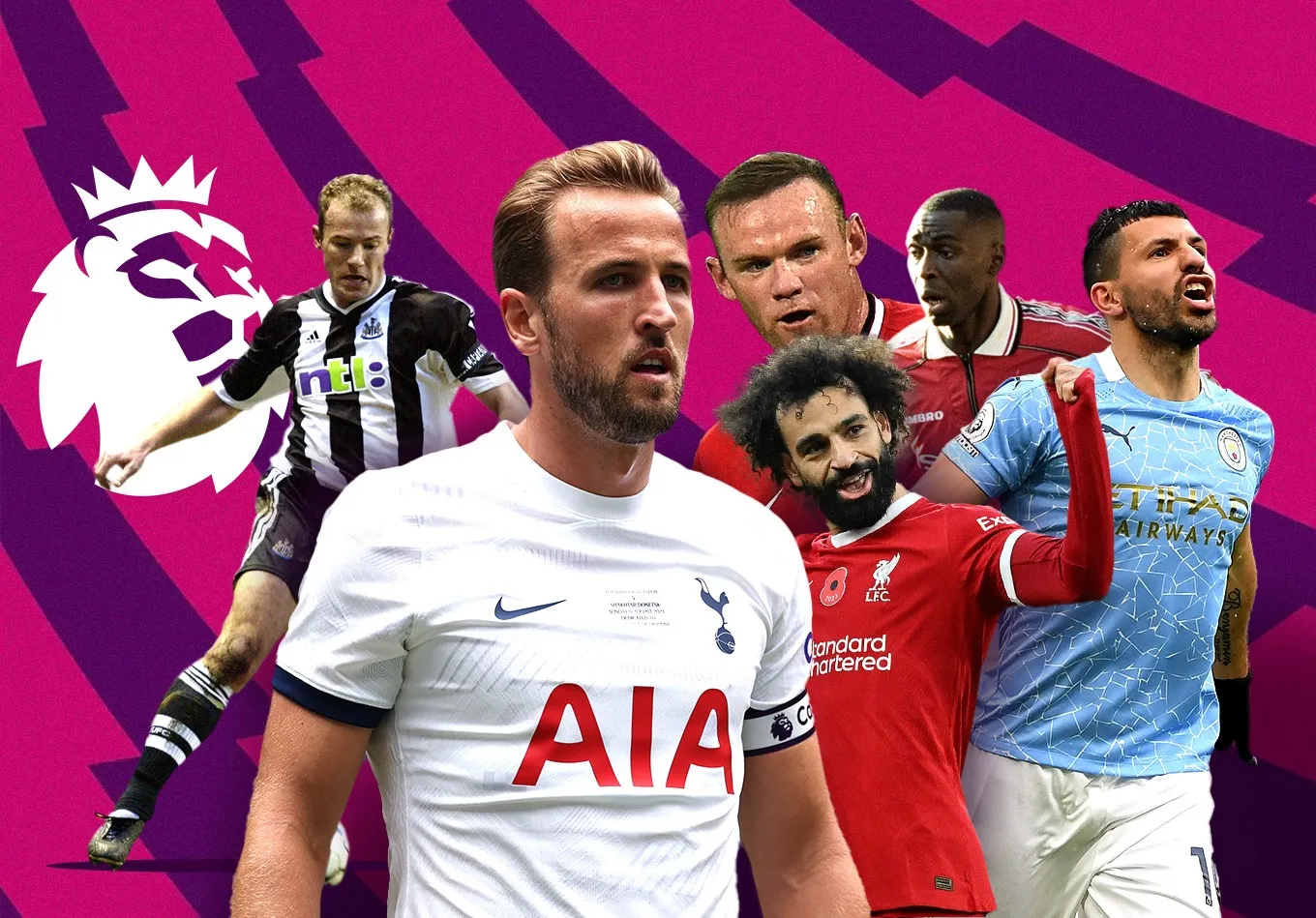
Premier League Top Scorers of All Time: Alan Shearer to Harry Kane
Since its launch in 1992, the Premier League has been defined by goals. Fast-paced football, global broadcasting, and attacking flair turned English football into a spectacle, and at the heart of it all stood elite goal scorers. The Premier League top scorers of all time are more than just numbers on a list. They represent eras, tactical shifts, and moments that shaped modern football culture. What It Takes to Be a Premier League Goal Machine Scoring consistently in the Premier League demands more than raw talent. Players must adapt to physical defenders, evolving tactics, and relentless schedules. Longevity matters as much as brilliance. Injuries, managerial changes, and team quality all influence whether a striker can remain productive season after season. Only a handful have survived these challenges long enough to enter the all-time list. Alan Shearer – The Benchmark That Still Stands Alan Shearer remains the gold standard. With 260 Premier League goals, his record has endured for nearly three decades. Playing primarily for Blackburn Rovers and Newcastle United, Shearer combined power, positioning, and ruthless finishing. Unlike many modern forwards, he thrived in physically demanding systems and faced defensive styles designed to stop him specifically. His record is remarkable not only for its volume but for the era in which it was achieved. Why Shearer’s Record Is So Hard to Break Shearer played in an era of aggressive defending and fewer protections for attackers. His consistency across multiple seasons, without relying on modern sports science, makes his tally even more remarkable. The Elite Chasers Behind Shearer Several greats followed but never quite caught him. Andy Cole scored prolifically in the league’s early years, while Wayne Rooney’s versatility allowed him to score consistently across multiple roles and managers. Sergio Agüero brought efficiency and big-game impact, becoming Manchester City’s greatest scorer. Each came close in different ways, but none sustained the volume needed to dethrone Shearer. Harry Kane’s Rise Into the All-Time Conversation Harry Kane emerged later but climbed rapidly. By the time he left Tottenham Hotspur in 2023, Kane had scored 213 Premier League goals, placing him second on the all-time list. Unlike traditional poachers, Kane blended playmaking with finishing, often dropping deep while still finishing seasons as a top scorer. His consistency across multiple managerial systems highlighted his tactical intelligence as much as his finishing ability. Comparing Scoring Eras in the Premier League Comparing eras adds complexity. Early Premier League football was more physical, with fewer tactical protections for attackers. Modern players benefit from advanced sports science and attacking systems but face more structured defenses. Why Context Matters Goal totals must be understood in context. That perspective helps explain why Shearer’s record remains so difficult to surpass despite higher-scoring seasons today. One-Club Legends vs Modern Movers Loyalty has played a role in shaping records. Shearer and Kane both built legacies largely at one club, accumulating goals through continuity. Modern players move more frequently, chasing trophies or financial security, which can interrupt momentum. Transfers abroad also limit opportunities to climb the Premier League charts, as Kane’s move to Bayern Munich demonstrated. Penalties, Assists, and All-Round Contribution Critics often debate penalties when discussing goal totals. While spot-kicks inflate numbers, earning them still requires attacking involvement. Kane and Shearer both converted penalties with consistency, but they also contributed in open play. Modern analysis increasingly values assists, pressing, and build-up play, reminding fans that scoring alone does not define a forward’s total impact. Modern Strikers Chasing History Current Premier League forwards face a different landscape. Tactical rotations, squad depth, and intense schedules make long-term consistency harder. While several players show elite finishing ability, matching Shearer’s longevity remains unlikely. The Premier League top scorers of all time list may grow, but its summit looks increasingly secure. Why the Premier League Scoring Record Matters The record resonates because it symbolizes dominance in the world’s most competitive league. Fans use it as a benchmark when debating greatness across generations. Media narratives, rivalries, and legacy discussions all orbit this number. It remains one of English football’s most iconic statistical milestones. From Shearer to Kane and Beyond From Alan Shearer’s relentless power to Harry Kane’s refined versatility, the Premier League has showcased extraordinary goal scorers. While the record still belongs to Shearer, Kane’s rise confirmed that greatness can evolve with the game. Future strikers may challenge the list, but the standard set by these legends ensures the conversation will endure for decades.
Read More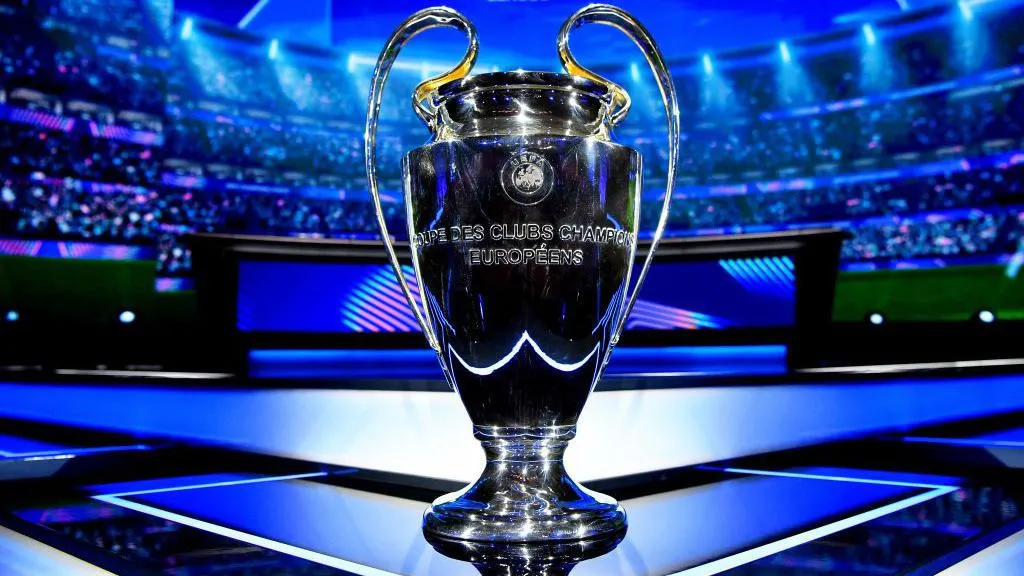
UEFA Champions League Anthem History: Why It Gives You Goosebumps
Few sounds in sport trigger emotion as instantly as the UEFA Champions League anthem. The moment the opening notes echo around a packed stadium, time seems to slow. Players stand taller. Fans fall silent. The stakes suddenly feel enormous. Long before the ball is kicked, the anthem tells everyone watching that this is football at its highest level. This is not accidental. The Champions League anthem was designed to create awe, pressure, and anticipation. Decades later, it continues to deliver goosebumps on the biggest nights in world football. The Soundtrack of Football’s Biggest Nights For millions of fans, the Champions League anthem signals something sacred. It means midweek nights under floodlights, legendary stadiums, and careers defined by moments that last seconds. Unlike chants that belong to clubs or countries, this anthem belongs to the competition itself. It unites fans across rivalries and languages. Whether you support a perennial giant or a surprise underdog, hearing the anthem instantly places your team on football’s grandest stage. Origins of the Champions League Anthem The anthem was introduced in 1992, the same year the European Cup was rebranded as the UEFA Champions League. UEFA wanted more than a name change. It wanted an identity that felt elite, timeless, and unmistakably prestigious. At a time when football was becoming increasingly commercial, UEFA chose not to follow pop trends. Instead, it leaned into classical tradition, signaling that the Champions League was not just another tournament but the pinnacle of European football. The Composer and Musical Inspiration The anthem was composed by Tony Britten, who was tasked with creating something grand, authoritative, and emotionally powerful. Britten based the anthem on George Frideric Handel’s “Zadok the Priest,” a piece traditionally used in British coronations. This choice was deliberate. Handel’s composition carries associations of ceremony, royalty, and historical importance. By adapting a coronation anthem for football, Britten gave the Champions League an almost regal status. Winning it would feel like being crowned king of Europe. Lyrics, Language, and Meaning The lyrics are written in three of UEFA’s official languages: English, French, and German. This multilingual approach reinforces the competition’s pan-European identity. The words themselves are simple. They speak of champions, the best teams, and the meeting of great clubs. Yet the meaning lies less in the lyrics and more in what they represent. Fans rarely sing along. Instead, they listen, absorb, and feel. The anthem does not demand participation. It commands respect. Why the Anthem Sounds So Powerful Musically, the anthem is built to create anticipation. It begins with a slow, controlled introduction before swelling into a powerful choral climax. The use of a full orchestra and choir gives it depth and weight that modern music often lacks. Repetition plays a key role. Fans hear the anthem again and again throughout the season, but always at moments of significance. Over time, the brain associates the sound with tension, excitement, and history. The result is a conditioned emotional response that feels almost automatic. The Anthem’s Role in Matchday Rituals Before every Champions League match, the anthem plays as players line up and the iconic starball flag is unfurled. Stadiums that moments earlier were roaring often fall into near silence. This ritual transforms a football match into an event. It marks the transition from anticipation to reality. Players frequently describe this moment as when the pressure truly hits. For 90 minutes, everything that follows must live up to the promise of the music. Psychological Impact on Players Many players have spoken about the anthem as a defining experience in their careers. Hearing it for the first time confirms arrival at the elite level. Hearing it in a final represents a lifetime goal. The anthem heightens nerves, but it also sharpens focus. It reminds players that they are part of something larger than themselves. For veterans, it evokes memories of past triumphs and heartbreaks. For newcomers, it represents the dream they grew up watching. Iconic Moments Defined by the Anthem Some of football’s most unforgettable nights are inseparable from the anthem that preceded them. Dramatic comebacks, last-minute goals, and emotional finals all feel larger because of the buildup the anthem creates. When fans recall historic Champions League moments, the music often plays in their memory before the images do. It has become an emotional anchor, tying sound to history. How the Anthem Became a Global Football Symbol The Champions League is broadcast in more than 200 countries, and the anthem opens every match. This repetition has made it globally recognizable, even among casual viewers. Children who may not understand tactics or formations still recognize the anthem as the sound of something important. Few pieces of music in sport have achieved such universal recognition without lyrics that fans actively sing. Variations, Remixes, and Live Performances Over the years, UEFA has commissioned orchestral and live choir performances for finals, adding visual grandeur to the music. While subtle variations exist, the core composition remains untouched. Attempts to modernize or remix the anthem have been limited, and deliberately so. Its power lies in familiarity. Any major alteration would risk breaking the emotional connection built over decades. Comparison with Other Football Anthems Many leagues and tournaments have theme music, but none carry the same emotional weight. Domestic league anthems grow familiar through frequency, while international tournament songs change every cycle. The Champions League anthem is different. It is permanent, ceremonial, and reserved only for the highest level of club football. That exclusivity is central to its impact. Why the Anthem Still Gives Goosebumps Decades Later The anthem’s effect is rooted in psychology as much as music. It is associated with high stakes, elite performance, and moments that define careers. Over time, nostalgia strengthens this bond. Fans remember where they were when they heard it before historic matches. Players remember what it felt like to stand beneath it. Each repetition deepens the emotional imprint. More Than Just a Song The Champions League anthem is not just music played before a match. It is football mythology. It represents
Read More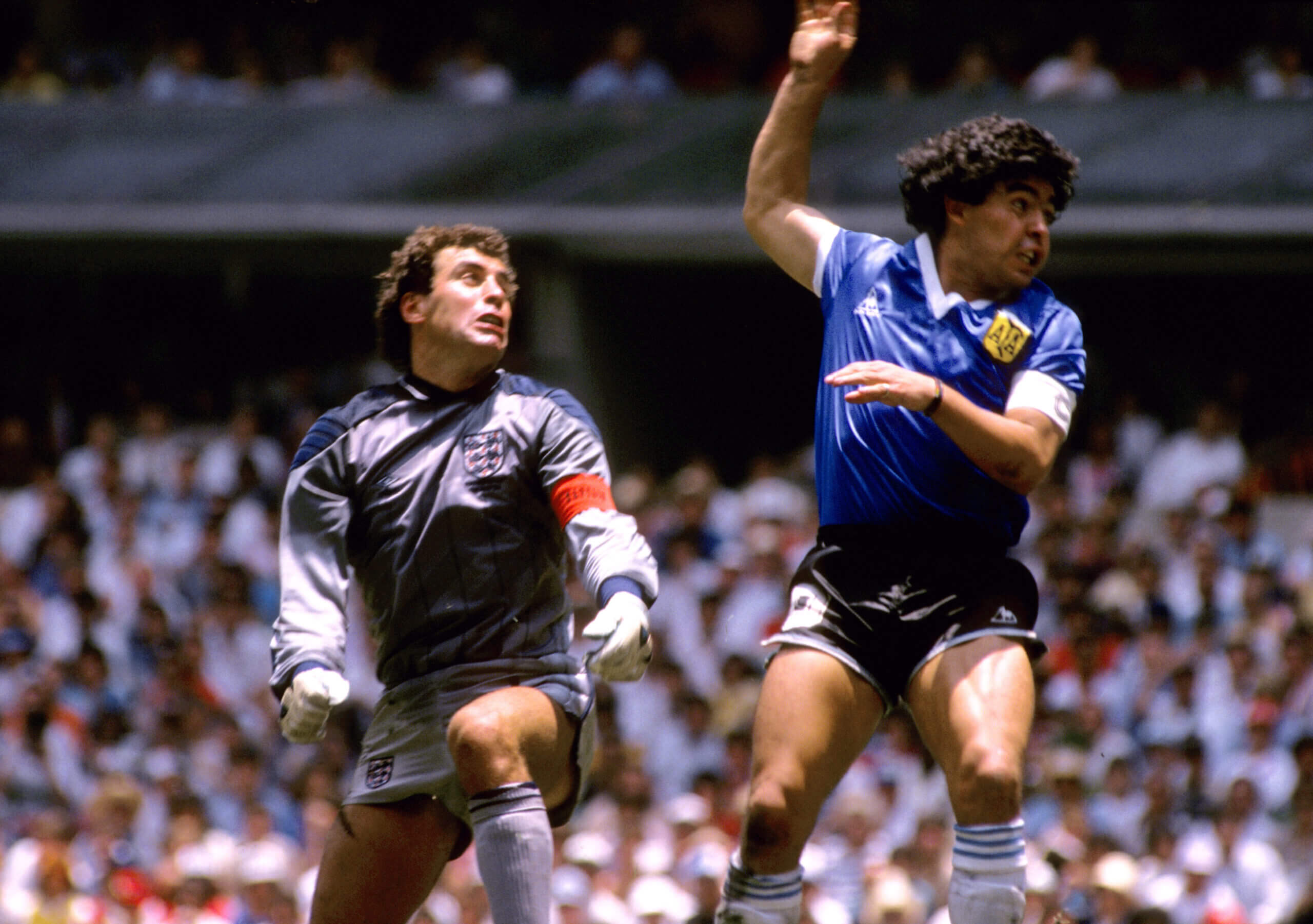
Maradona’s Hand of God Goal: The Most Controversial Moment in World Cup History
Mexico City, Azteca Stadium · Argentina vs England · 1986 FIFA World Cup On June 22, 1986, Diego Maradona punched a football into England’s net with his left hand, looked the referee in the eye, and kept running. Four minutes later, he scored the greatest goal ever recorded. One afternoon in Mexico City gave the world both the most controversial goal and the most brilliant goal in World Cup history, and football has never stopped talking about either. The World Stage: Argentina vs England in 1986 The 1986 FIFA World Cup quarter-final between Argentina and England was never going to be a simple football match. Just four years earlier, the two nations had fought the Falklands War, a brutal 74-day armed conflict over a remote chain of islands in the South Atlantic. Soldiers from both countries had died. The wound was raw. By the time the two squads lined up at the Estadio Azteca in Mexico City, the match carried the weight of something far greater than sport. Argentina entered the tournament as a team built almost entirely around one extraordinary man. Diego Armando Maradona, then 25 years old, was at the absolute peak of his powers. England, managed by Bobby Robson, featured a strong squad including Peter Shilton in goal and striker Gary Lineker. Both teams knew they were playing not just for a World Cup semi-final berth, but for national pride in the truest and most complicated sense. What Actually Happened: Breaking Down Maradona’s Hand of God Goal The first half ended goalless. In the 51st minute of the second half, Argentine midfielder Jorge Valdano played a through ball toward Maradona. England midfielder Steve Hodge, under pressure, attempted to hook the ball back to goalkeeper Peter Shilton but sent it looping awkwardly into the air above the penalty box. Maradona and Shilton both rushed toward it. What followed took less than a second. Maradona, several inches shorter than Shilton, raised his left arm and punched the ball into the net. Shilton immediately began protesting to Tunisian referee Ali Bin Nasser. England’s players swarmed the official. Maradona, meanwhile, sprinted toward his teammates with his arms raised, deliberately avoiding eye contact with the referee, fully aware of exactly what he had done. The referee, who had not seen the handball clearly and received no assistance from his linesman, allowed the goal to stand. Argentina led 1–0. It was a little with the head of Maradona and a little with the hand of God.Diego Maradona, post-match press conference, June 22, 1986 That single sentence became one of the most quoted lines in sports history. It was defiant, poetic, and completely unapologetic. Maradona never expressed genuine remorse for the act itself, though he later admitted in his 2004 autobiography that the hand was deliberate, calling it a form of “symbolic revenge” against England for the Falklands War. The Goal of the Century: Maradona’s Redemption Four Minutes Later If the Hand of God goal revealed Maradona’s cunning, what came next revealed his genius. In the 55th minute, just four minutes after the controversial opener, Maradona received the ball inside his own half. What followed was a 10-second, 60-metre run in which he dribbled past five England outfield players and then goalkeeper Peter Shilton before sliding the ball into an empty net. In 2002, a poll of 36,000 football fans conducted by FIFA voted this the Goal of the Century. It remains the standard against which all other individual goals are measured. The same man who had cheated his way to a goal had then produced perhaps the greatest piece of individual skill the game has ever seen, all in the same half, against the same opponents. The contrast was staggering and deliberate, as though Maradona himself understood the narrative he was writing in real time. England’s Reaction and the Immediate Controversy Peter Shilton was furious immediately after the match and remained so for decades. He has consistently and publicly refused to forgive Maradona for the handball, calling it a stain on the game. Bobby Robson called it “blatant cheating.” Gary Lineker, who scored England’s consolation goal in the 81st minute to make it 2–1, was characteristically measured but nonetheless clear that the result had been decided by an act of dishonesty. English fans and media were incensed, and the controversy was amplified by television replays that made the handball unmistakably clear to millions of viewers worldwide who had seen what the referee had not. British tabloids were unsparing. In Argentina, however, the reaction was the polar opposite: Maradona was celebrated as a hero who had outwitted the English at everything, including at their own game. Why Maradona’s Hand of God Goal Still Matters Decades Later The Hand of God goal is not just controversial in isolation. It asks fundamental questions about sport, nationalism, and morality that have no clean answers. Was it cheating? Yes, without any doubt. Was it a product of its political context? Almost certainly. Does the brilliant goal that followed four minutes later somehow complicate the moral ledger? That is a question football supporters have debated for nearly 40 years. The goal also changed football in a very practical sense. The introduction of Video Assistant Referee (VAR) technology, which now allows officials to review incidents including potential handballs in real time, is in no small part a legacy of moments like the Hand of God. The modern game has invested heavily in tools specifically designed to ensure that a referee can never again be fooled the way Ali Bin Nasser was in Mexico City. Maradona’s Hand of God goal has also entered the broader cultural conversation far beyond football. It appears in films, literature, philosophy classes, and political speeches. It is used as a case study in discussions of fair play, the morality of competition, and the relationship between sport and war. Few moments in any sport carry quite so much meaning in such a short number of seconds. Maradona’s Legacy and the Hand of God’s Place in Football
Read More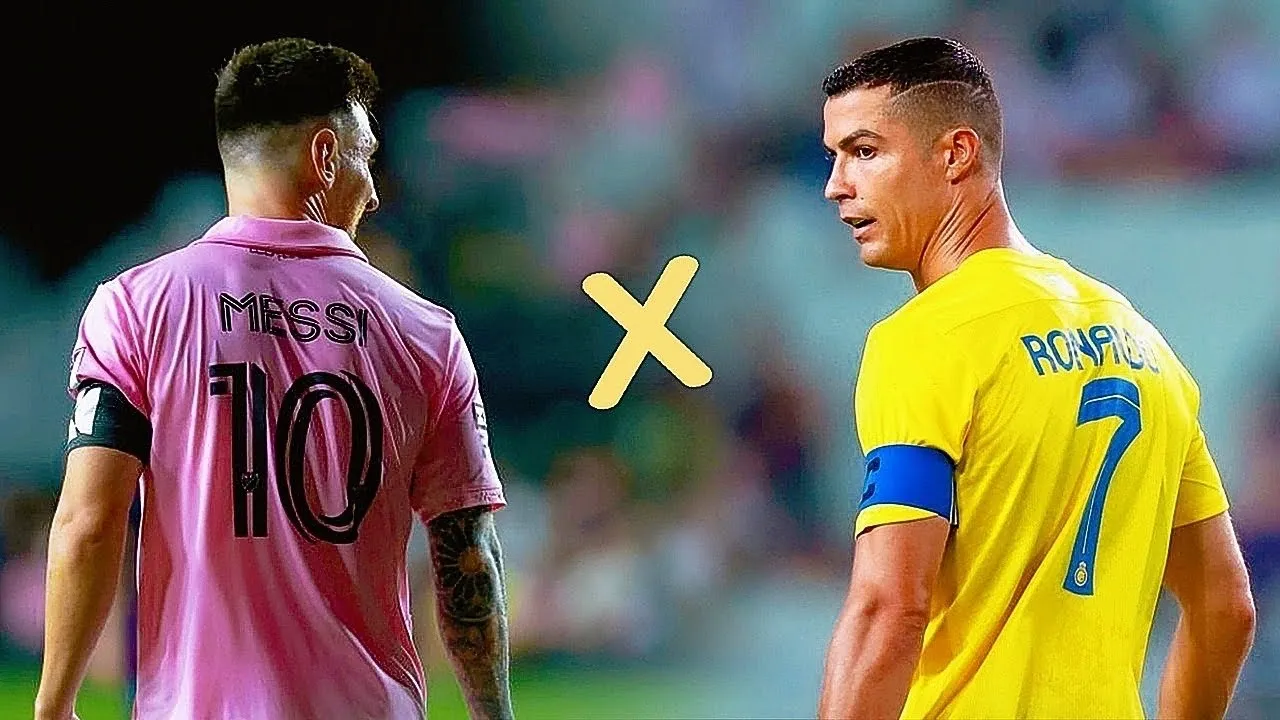
Lionel Messi vs Cristiano Ronaldo: Statistical Breakdown of Football’s Greatest Rivalry
The football world has been fortunate to witness one of the most compelling rivalries in sports history: Lionel Messi vs Cristiano Ronaldo. Spanning over 15 years, their competition has captivated fans, defined an era, and constantly pushed the boundaries of performance. While debates often revolve around personal preferences, statistics offer an objective lens to evaluate their influence on the game. This article breaks down their careers, records, and contributions to give a clear statistical perspective on football’s greatest rivalry. Career Overview – Messi and Ronaldo Lionel Messi began his professional career at FC Barcelona, rising through their famed La Masia academy. He spent more than 17 seasons at the club before moving to Paris Saint-Germain in 2021. Messi has won numerous league titles, domestic cups, and UEFA Champions League trophies, cementing his reputation as a playmaker and prolific goal scorer. Cristiano Ronaldo started at Sporting CP before making his name at Manchester United. His career has seen top performances at Real Madrid, Juventus, and a return to Manchester United. Ronaldo’s physical prowess, goal-scoring consistency, and versatility across leagues have earned him a place among football legends. Internationally, Messi has won the Copa America with Argentina and reached World Cup finals. Ronaldo has led Portugal to victory in the UEFA European Championship and the UEFA Nations League, showcasing his leadership and clutch performances. Goalscoring Records Statistics often highlight the dominance of Messi and Ronaldo in front of goal. As of 2026, Messi has scored over 800 career goals for club and country, while Ronaldo has surpassed 850. Breaking it down by competition: Goals per season reflect their consistency. Both players have averaged around 30–40 goals per season in peak years, a remarkable feat given the longevity of their careers. Assists and Playmaking Stats While Ronaldo is often celebrated for his finishing, Messi excels as a creator. Over his career, Messi averages approximately 0.35 assists per game, contributing to his team beyond scoring. Ronaldo’s assist rate is slightly lower at 0.25 per game but still impressive given his focus on goal-scoring. Messi’s vision, dribbling, and passing enable him to influence games even when he does not score. Ronaldo’s off-the-ball movement and crosses also generate opportunities, particularly in counter-attacking setups. Overall, Messi edges ahead in playmaking statistics, while Ronaldo remains a lethal finisher. Efficiency and Accuracy Metrics Analyzing efficiency provides another angle: Goal involvement per 90 minutes shows that both players consistently influence matches, whether through goals or assists, often matching or exceeding entire teams’ output in key games. Big Match Performances In high-stakes matches, statistics further highlight their rivalry: These numbers underline how their greatness extends beyond mere accumulation of statistics, influencing crucial moments. Longevity and Consistency Both players have maintained peak performance well into their 30s. Messi has displayed remarkable consistency across two decades, rarely dipping below 20 goals per season in top-flight football. Ronaldo’s physical conditioning allows him to maintain elite output even as he moves across leagues, with more than 30 goals in multiple seasons well past 30 years of age. Injuries have been minor relative to their careers, allowing uninterrupted streaks that set benchmarks for future generations. Awards and Individual Honors Individual accolades reflect their dominance: Statistics often justify these awards, showing that their output is more than reputation; it is measurable performance. Head-to-Head Comparison Messi and Ronaldo have faced each other in direct competition more than 30 times. Messi has a slight edge in goals scored in these encounters, but Ronaldo has delivered match-winning performances in crucial fixtures, such as Champions League knockout ties. Beyond numbers, both players influence each other psychologically. Their presence pushes teammates and opponents alike to perform at higher levels, and tactical adjustments often revolve around countering their unique skills. Who Has the Edge? Statistically, the rivalry is remarkably even. Messi excels in playmaking, dribbling, and creative influence, while Ronaldo leads in raw goal output, physical dominance, and performance in multiple leagues. Numbers alone cannot declare a definitive winner — the debate often comes down to personal preference, style, or loyalty. What is undeniable is that Messi vs Ronaldo has defined a generation, pushing football standards higher and inspiring millions worldwide. Their rivalry is not just a clash of talent but a measurable testament to consistency, skill, and competitive excellence.
Read More
Offside Rule Evolution From 1863 to VAR, Every Major Change Explained
Few topics in football spark as much debate as the offside rule. Whether it is a disallowed goal in a World Cup final or a hairline VAR call in a midweek league match, the rule touches every level of the game. Yet for all its controversy, the offside rule evolution over the past 160 years is a fascinating story of football finding its identity, balancing attacking freedom against defensive organisation, and ultimately chasing the impossible ideal of perfect officiating. Understanding where it came from, how it changed, and what it looks like today makes you a smarter fan and a sharper critic of the decisions that shape matches. The Origins of the Offside Rule in 1863 When the Football Association was founded in 1863 and the Laws of the Game were first written down, a basic offside principle was already in place. A player was considered offside if fewer than three opponents stood between them and the goal at the moment the ball was played forward. This three-player rule was designed to prevent goal-hanging, a habit where attackers would simply loiter near the opposing goalkeeper waiting for long passes. The spirit of the law was clear: players should be involved in the game, not just camping at the far post waiting for a scoring opportunity to fall into their lap. This early framework set the philosophical foundation for every version of the offside rule evolution that would follow. The 1925 Reform That Changed Football Forever The most dramatic single moment in the offside rule evolution came in 1925, when the Football Association reduced the minimum number of defenders required from three to two. This seemingly minor change had enormous consequences. Before 1925, goal totals across the Football League had been falling sharply. Defenders, led by tacticians at clubs like Newcastle United, had mastered the art of stepping up to trap attackers offside before they could threaten the goal. The game was becoming stagnant and heavily weighted toward defence. The two-player rule transformed everything almost overnight. In the 1925 to 1926 season, goals per game in the Football League jumped from around 2.5 to over 3.5. Tactics had to be rethought entirely. Herbert Chapman at Arsenal famously developed the WM formation in direct response, using a centre-back to plug the gap that the new rule created. The offside trap did not disappear, but the entire geometry of the game shifted toward a more open, goal-hungry style that supporters loved. How Active Play Redefined the Offside Rule Evolution Through the mid-twentieth century, the core offside structure remained relatively stable. But referees and the game’s governing bodies increasingly recognised that simply being in an offside position was not the same as actually influencing play. Gradual interpretations began to take hold, eventually codified formally by FIFA and the International Football Association Board (IFAB). A player who was in an offside position but not involved in active play would not be penalised. This concept of active involvement became central to the modern game, allowing attackers to take up advanced positions without automatically killing a move if the ball was played to a teammate in an onside position. This interpretation introduced far more nuance for linesmen and referees, but it also made the rule far more difficult to apply consistently across competitions and continents. Disputes about what constituted active play versus passive positioning became the dominant debate at coaches’ and referees’ associations for decades. Redefining the Body Line: Arms, Heads and Feet Another important chapter in the offside rule evolution came through clarifications about which part of the body counted when determining a player’s position. IFAB confirmed over time that only body parts from which a goal can legally be scored are considered. This excluded the arms, meaning a player’s outstretched arm extending ahead of the last defender would not make them offside. The relevant body parts are the head, torso, and legs. On the surface this sounds straightforward, but in practice it produced some of the tightest and most agonising calls in football, particularly once high-definition cameras and frame-by-frame analysis became standard tools in stadium broadcasts. The Introduction of the Assistant Referee Flag Protocol For most of the twentieth century, the key instruction to linesmen was to raise their flag the moment they spotted an offside. This created a significant problem: linesmen would flag before knowing whether the player in the offside position would touch the ball or become involved in play. Goals were regularly disallowed because a flag went up too early, even when the offside player never touched the ball and a different, clearly onside player scored. In response, football authorities introduced guidance instructing assistant referees to delay their flag when there was doubt about whether the offside player would become actively involved. This change in flagging protocol was a meaningful step in the offside rule evolution, because it asked officials to make a judgement about the future rather than simply reacting to the present. It reduced incorrect disallowances but also introduced a new wave of controversy when goals were allowed following passages of play that involved players who had been in offside positions. VAR and the New Era of Offside Rule Evolution The introduction of Video Assistant Referee technology from 2018 onwards, including its use at that year’s FIFA World Cup in Russia, represented the single biggest operational change to offside decisions since the 1925 law amendment. VAR gave officials access to multiple camera angles, freeze-frame imagery, and semi-automated line-drawing tools to review potential offside incidents. In theory, this promised an end to the human error that had plagued the rule for over a century. In practice, it delivered extraordinary accuracy alongside extraordinary controversy. The core issue is that VAR offside lines are drawn manually by operators, using broadcast cameras that are rarely placed perfectly perpendicular to the plane of the field. A fraction of a pixel difference in line placement can be the difference between a valid goal and a disallowed one. Goals were overturned for a player’s shoulder being
Read More
La Liga Title Race 2026: How Real Madrid Closed the Gap on Barcelona
The Spanish football landscape has been transformed in recent weeks, with the La Liga title race evolving from what appeared to be a comfortable Barcelona lead into one of the most gripping competitions in European football. What seemed like a foregone conclusion just weeks ago has become a nail-biting contest that could go either way. The Current State of the La Liga Title Race January brought unexpected drama to Spanish football’s premier competition. Barcelona entered the new year sitting comfortably at the summit with a four-point cushion over their eternal rivals. Fast forward just a few weeks, and that advantage has been slashed to a single point following a series of shocking developments. The turnaround reflects the unpredictable nature of elite football, where momentum can shift dramatically within days. Both Spanish giants have experienced extreme highs and devastating lows, making this season’s championship battle one for the history books. Barcelona’s Stumble: When Confidence Met Reality The Catalan club started 2026 in exceptional form, winning their opening fixtures convincingly and securing passage to the Super Cup final in Saudi Arabia. Their attacking prowess was on full display, netting twelve goals across four consecutive victories. Manager Hansi Flick seemed to have found the perfect formula, with his squad executing his tactical vision flawlessly. However, football has a way of humbling even the most dominant teams. Barcelona’s encounter with Real Sociedad ended their impressive eleven-match winning streak across all competitions. Despite controlling much of the match, the Blaugrana fell to a frustrating defeat, their second consecutive loss to Sociedad in league play. Flick acknowledged his team’s misfortune while maintaining they deserved better. Sometimes in football, effort and quality don’t translate to results, and Barcelona learned this harsh lesson at a critical juncture in the La Liga title race. Real Madrid’s Transformation Under New Leadership The managerial change at the Santiago Bernabéu initially appeared to destabilize Los Blancos. When Alvaro Arbeloa took charge of the first team following Xabi Alonso’s departure, expectations were high given his legendary status at the club. Yet his tenure began disastrously with an embarrassing Copa del Rey elimination to second-division side Albacete. That humiliating defeat sent shockwaves through Madrid. Club captain Dani Carvajal didn’t mince words, admitting the team had reached their lowest point. Supporters questioned whether promoting from within was the right decision, and Barcelona fans relished their rivals’ disarray. But Real Madrid have historically thrived when their backs are against the wall. Arbeloa regrouped his squad, and the response was emphatic. A dominant Champions League performance against Monaco, where Madrid scored six goals, signaled a potential turning point. The manager praised both his players’ commitment and the supporters’ renewed faith. What Makes This La Liga Title Race So Compelling Several factors have elevated this season’s competition into must-watch territory: Unpredictability: Neither team has been able to establish sustained dominance. Just when one appears to be pulling away, unexpected results bring their rivals back into contention. Historical Context: Last season’s championship provides a blueprint for comeback possibilities. Real Madrid held a six-point advantage at a similar stage, only to watch Barcelona overturn the deficit and claim the trophy. Managerial Intrigue: Arbeloa’s inexperience at the highest level contrasts with Flick’s proven track record, adding an intriguing subplot to the tactical battles ahead. The Pending Clasico: The rivals won’t meet again until May, meaning every match between now and then carries enormous significance. Real Madrid claimed the first encounter in October, making the return fixture potentially decisive. The Road Ahead in Spain’s Championship Battle Both clubs face crucial tests in the coming weeks. Real Madrid must navigate a challenging fixture against third-placed Villarreal, a match Arbeloa has identified as essential for building confidence and maintaining pressure on Barcelona. Meanwhile, the Catalans face bottom-dwelling Oviedo, a fixture they’re expected to win comfortably. The margin for error has evaporated. A single slip could prove costly in determining who lifts the trophy in May. Barcelona cannot afford to replicate their surprising loss to Real Sociedad, while Real Madrid must maintain the momentum generated by their Champions League demolition of Monaco. Why This Season Could Go Either Way Form, psychology, and squad depth will all play crucial roles in determining the eventual champion. Barcelona possess superior firepower and have demonstrated greater consistency throughout most of the campaign. However, Real Madrid’s championship pedigree and ability to perform under pressure cannot be discounted. The La Liga title race has become a test of mental fortitude as much as technical ability. Which squad can handle the mounting pressure? Which manager can make the crucial tactical adjustments when it matters most? Which team will maintain composure when faced with adversity? Conclusion: A Championship Battle for the Ages Spanish football fans are witnessing something special unfold. The La Liga title race has all the ingredients of a classic championship battle: storied rivals, dramatic momentum swings, managerial intrigue, and the promise of more twists to come. With Barcelona clinging to a slender one-point advantage and Real Madrid breathing down their necks, the next few months promise high-stakes drama at the pinnacle of Spanish football. Neither team can claim superiority, and neither fanbase can rest easy. One thing remains certain: this title race will be decided not by who starts strongest, but by who finishes with the most determination, quality, and nerves of steel. The stage is set for an unforgettable conclusion to Spain’s football season.
Read More