

Miami Open History: From Humble Beginnings to Tennis’ “Fifth Slam”
The Miami Open history is a story of growth, legacy, and elite competition. Since its launch in 1985, the tournament has evolved into one of the most important events in professional tennis, often referred to as the “Fifth Slam.” Held annually on outdoor hard courts in Miami Gardens, Florida, the Miami Open is a cornerstone of both the ATP Masters 1000 and WTA 1000 circuits. It consistently delivers high-quality matches, iconic champions, and defining moments that shape the sport. The Origins of Miami Open History The Miami Open began in 1985 under the name Lipton International Players Championships. The goal was ambitious: create a tournament that could rival the scale and prestige of Grand Slams. The first champion, Tim Mayotte, set the tone for what would quickly become a world-class competition. From the outset, top players participated, giving the tournament immediate credibility. By the late 1980s, the Miami Open had already secured its place as a major stop on the tennis calendar. Key Biscayne Era: Where the Legacy Was Built From 1987 to 2018, the tournament was hosted at Key Biscayne. This period is widely considered the foundation of Miami Open history. During these years, the event grew in stature, attracting massive crowds and global attention. It became known not just for tennis, but for its vibrant atmosphere and high-energy matches. Players like Andre Agassi, Pete Sampras, and Ivan Lendl defined this era. Among them, Agassi stood out with his dominance and connection to the tournament, becoming one of its most successful champions. A Tournament Defined by Greatness As the competition evolved, so did its legends. The 2000s and 2010s brought a new level of excellence with the rise of tennis icons. Roger Federer brought elegance and composure, producing unforgettable performances.Rafael Nadal added intensity, reaching multiple finals and delivering classic battles despite never winning the title.Novak Djokovic emerged as the most dominant force, matching the all-time record of six titles. One of the most iconic moments in Miami Open history came in the 2005 final, where Federer staged a dramatic comeback against Nadal after being two sets down. Matches like these helped elevate the tournament’s global reputation. Miami Open at a Glance Milestone Detail First Edition 1985 Current Venue Hard Rock Stadium Move to New Venue 2019 Surface Outdoor Hard Court Category ATP Masters 1000 / WTA 1000 This evolution reflects how the tournament has continuously adapted to modern standards while preserving its legacy. Record Holders and Historic Achievements The Miami Open history is filled with remarkable records that highlight the tournament’s competitive depth. In recent years, Jannik Sinner added his name to the history books by setting a record for consecutive sets won at Masters level during the 2026 tournament. The Move to Miami Gardens In 2019, the Miami Open entered a new phase by moving to Hard Rock Stadium in Miami Gardens. This shift marked a modern transformation for the tournament. The new venue brought: This move ensured the tournament could continue growing while maintaining its elite status. A New Generation Emerges Recent editions of the tournament highlight a shift in Miami Open history, with younger players taking center stage. Names like Carlos Alcaraz, Daniil Medvedev, and Jannik Sinner have introduced a new era of competition. The variety of recent winners reflects the increasing unpredictability and depth in modern tennis, making the tournament even more exciting for fans. The 2025 Final: A Defining Moment One of the most inspiring chapters in recent Miami Open history came in 2025, when Jakub Menšík shocked the tennis world. He defeated Novak Djokovic in the final to win his first major title. What made this victory remarkable was that he nearly withdrew before the tournament due to injury. Instead, he went on to complete one of the most unexpected and memorable runs in the tournament’s history. Women’s Excellence in Miami Open History The women’s side has been just as influential in shaping the tournament’s legacy. Serena Williams leads all players with eight titles, making her the most successful champion in Miami Open history.Steffi Graf follows with five titles, including a dominant three-year streak.Victoria Azarenka also made her mark with multiple wins. In recent years, players like Aryna Sabalenka and Iga Świątek have carried the tournament forward with powerful and consistent performances. Why the Miami Open Is Called the “Fifth Slam” The Miami Open has earned its nickname through decades of excellence. It offers: These factors combine to give it a Grand Slam-like importance within the tennis world. Conclusion: A Legacy Still Being Written The Miami Open history reflects the evolution of tennis itself. From its beginnings in 1985 to its current status as a global sporting spectacle, the tournament has consistently delivered excellence. It has been a stage for legends, a launchpad for future stars, and a source of unforgettable moments. As new champions emerge and records continue to fall, the Miami Open remains one of the most important and exciting tournaments in the sport. Its story is far from over, and that’s what makes it truly special.
Read More
Miami Open 2026 Preview: Can Anyone Stop the Sunshine Double Favorites?
The desert dust of Indian Wells has barely settled, and already the tennis world is pivoting south. The Miami Open 2026 is here, and with it comes one of the sport’s most compelling fortnights: fast courts, heavy air, electric crowds, and the relentless pressure of the Sunshine Double. Held at Hard Rock Stadium in Miami Gardens, this tournament is not just a Masters 1000 event on the men’s side or a WTA 1000 on the women’s, it is a statement. Whoever lifts a trophy here does so knowing they have conquered one of the toughest environments in professional tennis. What Makes the Miami Open a Unique Challenge Before diving into the contenders, it is worth understanding why this tournament breaks players down in ways that few others can. Miami is not Indian Wells. The transition between these two events, often called the Sunshine Double, is deceptively brutal. Players move from the dry, high-altitude desert air of California to the sea-level humidity of South Florida within the space of a week. The balls feel heavier in the Miami air. The courts play differently. Groundstrokes that zipped through the atmosphere in the desert now require significantly more physical effort to generate the same pace. Add to that the mental weight of nearly a month on the road, living out of hotel rooms, managing travel, and competing at the absolute highest level night after night, and you begin to understand why even top seeds have crumbled early in Miami. The tournament has a long history of upsets, and 2026 will be no different. The Men’s Draw: A Two-Man Race With Dangerous Outsiders The ATP landscape heading into the Miami Open 2026 is clear at the top. Carlos Alcaraz and Jannik Sinner are the favorites, and the rest of the field knows it. Carlos Alcaraz: Playing the Most Complete Tennis of His Career The World No. 1 arrives in South Florida in remarkable form. What makes Alcaraz so difficult to beat in Miami specifically is his ability to slide on the gritty hard courts and retrieve balls that most players would abandon. He treats the surface almost like clay, turning defense into offense with a fluidity that is genuinely rare. His serve has become more consistent, his shot selection sharper, and his mental resilience arguably stronger than at any previous point in his career. Alcaraz has already won Miami once, and there is no reason to believe the conditions will trouble him this time around. Jannik Sinner: Built for This Surface Sinner is the man chasing history. The World No. 2 has spent the last 18 months establishing himself as the undisputed king of hard courts, and the Miami Open 2026 represents his best chance yet at completing the Sunshine Double. His flat, penetrating groundstrokes are ideally suited for the conditions here. The heavy Miami air actually benefits a ball-striker like Sinner because his shots stay low and drive through the court without the extra bounce that slower conditions might provide. Coming off a deep run in Indian Wells, his confidence is high and his legs are fresh enough to go the distance. The Americans Are No Longer Just Hoping Home support in Miami is loud, passionate, and genuinely impactful, and for the first time in years, American fans have real reasons to believe. Ben Shelton has cracked the Top 10, arriving with a serve that regularly surpasses 230 km/h and an attitude that seems completely unbothered by occasion. Taylor Fritz, the model of quiet consistency, has built his game around a clinical backhand and a tactical intelligence that makes him particularly dangerous in the longer humid night sessions when conditions slow the game down and patience becomes a weapon. Then there is Jakub Menšík, the young Czech who has quietly rocketed into the Top 20 this year. His aggressive first-strike tennis suits the faster outer courts at Hard Rock Stadium perfectly. He is the kind of player who does not wait for opportunities but creates them, and in a draw filled with power hitters, his willingness to take the ball early could make him the most unpredictable name in the men’s field. Tournament Essentials: Schedule and Logistics For fans attending or tuning in globally, here is the roadmap for the next fortnight: Round Dates Key Feature Qualifying March 15–16 The “Grind” for a main draw spot. First Round March 17–19 Early upsets and local Wild Cards. Round of 16 March 23 “Manic Monday” – top stars collide. Women’s Final March 28 The crowning of the WTA Queen. Men’s Final March 29 The grand finale of the hard-court spring. The Women’s Draw: Sabalenka’s Crown to Lose The WTA picture heading into the Miami Open 2026 is equally compelling, and in many ways more unpredictable. The humidity and wind that define Miami often level the playing field between power hitters and more tactical players. Aryna Sabalenka: The Defending Champion Returns Sabalenka is not just the defending champion here. She is the World No. 1 operating at something close to her ceiling. The transformation of her serve from a liability into a consistent weapon has been one of the defining stories of the WTA circuit in recent seasons, and her movement has improved to the point where opponents can no longer simply redirect the ball and expect to win the point. If she finds her rhythm in the early rounds, she will be extraordinarily difficult to dislodge. Iga Świątek: Looking to Solve the Miami Puzzle Świątek’s record in Miami has never quite matched her dominance elsewhere. The faster, skiddier bounce here creates an awkward interaction with her extreme Western forehand grip, and historically this has cost her in the later rounds. However, the 2026 version of Świątek is tactically more diverse. She has incorporated more net approaches into her game, shortening points and reducing the number of rallies where her grip becomes a disadvantage. A fully evolved Świątek at the Miami Open 2026 is a prospect that should concern everyone in the draw. Amanda Anisimova:
Read More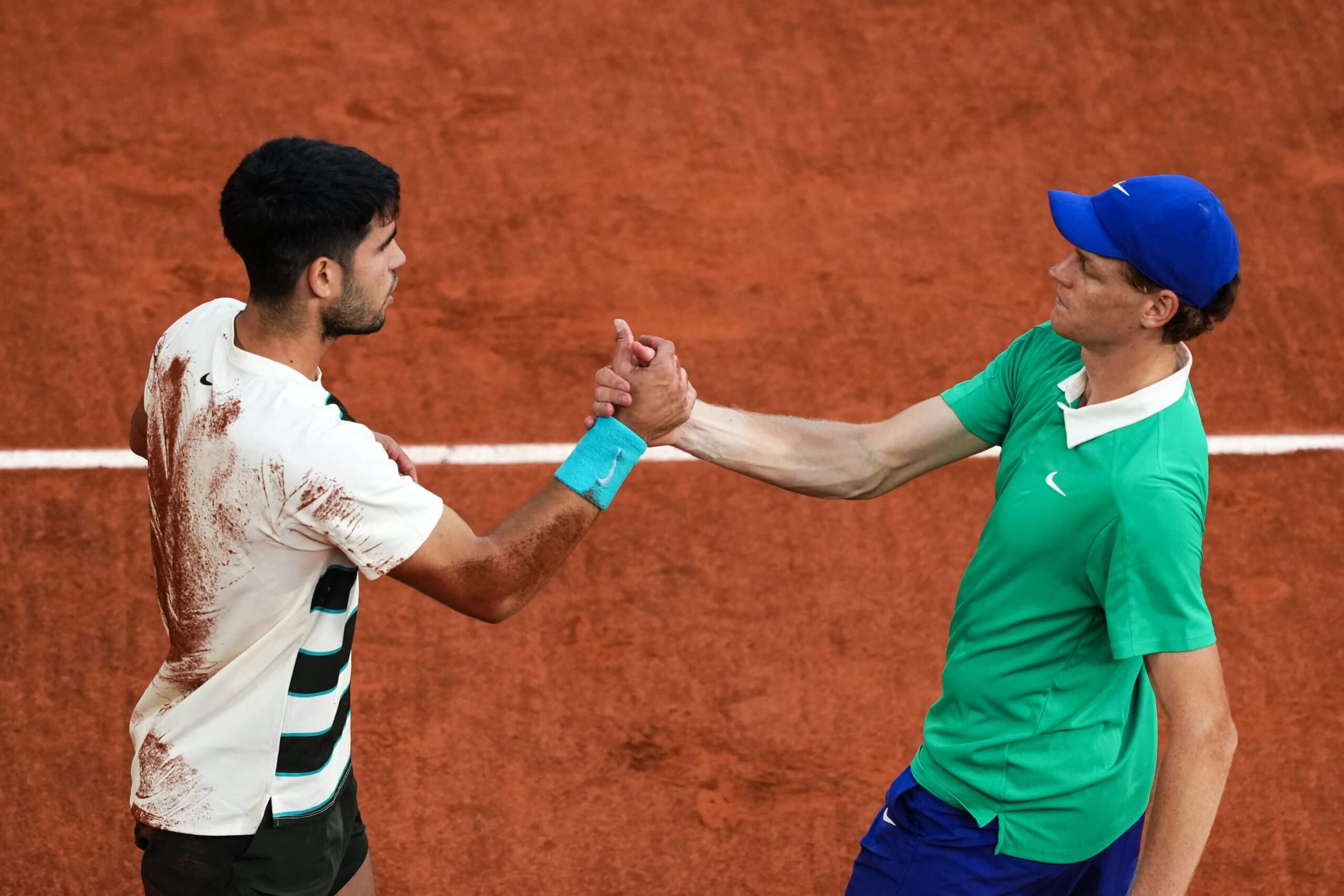
Alcaraz vs Sinner: Every Rivalry Match, Every Record & Who Wins at Roland Garros 2026
It was June 8, 2025. Roland Garros. Fourth set. Jannik Sinner was serving at 3–5, 0-40 — three consecutive championship points. The match was four hours old. Carlos Alcaraz, down two sets, looked finished. Then, inexplicably, he wasn’t. What followed over the next 89 minutes was not just a tennis match. It was a statement. Alcaraz saved all three championship points, broke Sinner’s serve, and eventually won the longest Roland Garros final in history — 5 hours and 29 minutes. Two sets down. Three match points saved. One legend confirmed. Alcaraz vs Sinner is not a rivalry still finding its shape. It is already, by almost every statistical and cultural measure, one of the greatest the sport has ever produced. Nine consecutive Grand Slams won between them. Three Grand Slam finals in a single season. And with Roland Garros 2026 approaching, the next chapter is almost here. Before the World Knew Their Names The Alcaraz–Sinner head-to-head record goes back further than most fans realise. Their first meeting was at the 2019 Alicante Challenger — a 15-year-old Alcaraz beating a 17-year-old Sinner. Even then, the outline of something special was visible. Their first ATP Tour match came at the 2021 Paris Masters, where an 18-year-old Alcaraz — ranked No. 35 in the world — upset Sinner in straight sets, knocking him out of ATP Finals contention. Weeks later, their first final at Umag went Sinner’s way, giving the Italian his first clay-court title. After winning that Paris match, the teenage Alcaraz predicted they would build a great rivalry. He was right in a way even he probably couldn’t have imagined. 2:50 AM and Five Hours of Madness The 2022 US Open quarterfinal is the match that announced this rivalry to the world. It lasted 5 hours and 15 minutes — a US Open record for the latest finish, ending at 2:50 AM. In a sport that has produced some of the most extraordinary endurance contests in history, this one still stands apart for its sheer quality. Alcaraz saved a match point in the fourth set and won in five. Between them they hit 124 winners and generated 42 break points. It was tennis at a level rarely seen, and the crowd knew it. Alcaraz went on to win the tournament, claiming his first Grand Slam title and becoming — at the time — the youngest world No. 1 in history. This wasn’t simply a great match. It was the moment the next generation officially took over. The Rivalry Timeline: Year by Year 2021 (3 meetings): Alcaraz wins the first ATP encounter in Paris. Sinner wins their Umag final. Early exchanges. No dominant force yet. 2022 (3 meetings): The US Open epic. Alcaraz wins his first Slam and No. 1 ranking. The rivalry’s defining match arrives before most people are ready for it. 2023 (3 meetings): Sinner wins two. The head-to-head sits at 4–4. Perfectly balanced. 2024 — Alcaraz Takes Control: Three meetings; Alcaraz wins all three. At Indian Wells, he snaps Sinner’s 19-match winning streak. At Roland Garros, he wins a five-set semifinal with both players dealing with injury. The China Open, Sinner leads 3–0 in the deciding tiebreak — Alcaraz wins seven straight points. After Roland Garros 2024, Sinner becomes world No. 1 for the first time. 2025 — Three Grand Slam Finals in One Season: This had never happened before in the Open Era. 2026 — Alcaraz Makes History: At the Australian Open final on February 1, Alcaraz defeated Novak Djokovic 2–6, 6–2, 6–3, 7–5 to complete the career Grand Slam — becoming the youngest man in tennis history to win all four majors at 22 years and 272 days old. He broke a record held by Rafael Nadal, and one that had stood since Don Budge in 1938. Together, Alcaraz and Sinner have now won nine consecutive Grand Slams. The Stats That Define the Rivalry Stat Alcaraz Sinner Overall H2H 11 wins 8 wins Grand Slam titles 7 4 ATP Ranking (March 2026) No. 1 No. 2 Grand Slam finals record 7–1 4–1 Clay H2H Alcaraz leads — Grass H2H — Sinner leads (2–0) Hard court H2H Alcaraz leads — Perhaps the most remarkable statistic: across all six of their 2025 meetings — all of which were finals — the total points won for the entire year were Alcaraz 1,651, Sinner 1,651. Perfectly tied. Nine consecutive Grand Slams between two players has only been achieved once before: Federer and Nadal, from 2010 to 2012. Alcaraz and Sinner are 22 and 24 years old. The Tactical Battle Beneath the Drama Alcaraz is the most complete player in the game — dominant on clay, exceptional on grass and hard courts, and statistically unmatched in the longest matches. His career record in fifth sets is 12–1. He is, simply, the best closer in tennis. Sinner is the most consistent ball-striker in men’s tennis. On fast surfaces, he is as close to a machine as the sport allows — a flawless baseline game, an elite serve at his best (as evidenced by that 84% first-serve points figure at Wimbledon 2025), and a mental composure that almost never cracks. Of his 24 career titles, 21 are on hard courts. The one well-documented weakness in Sinner’s game is extended matches. He has never won a match lasting over 3 hours and 50 minutes. Alcaraz, in contrast, was 12–1 in fifth sets heading into 2026. On clay, Alcaraz is superior. On grass, Sinner has beaten Alcaraz both times they’ve met. And hard courts, Alcaraz leads but Sinner is dangerous. This is what makes the rivalry genuine: there is no dominant surface equation. Roland Garros 2026: The Big Prediction Roland Garros 2026 begins in late May. The stakes are extraordinary. Alcaraz will be chasing a third consecutive Roland Garros title — which would make him only the second man in history to achieve three straight French Open wins, after Rafael Nadal. Sinner will be chasing the one Grand Slam missing from his collection — and
Read More
Hawk-Eye Technology in Tennis: How It Works, How Accurate It Is, and Why It Still Sparks Debate
Tennis has always been a sport where a single point can change everything. A match-winning ace, a crucial break point, a championship rally ending on the line. For most of tennis history, those decisions rested entirely in the hands of line judges and chair umpires. Then came Hawk-Eye, and the game was never quite the same again. What Is Hawk-Eye Technology in Tennis? Hawk-Eye is a computer vision system that uses a network of high-speed cameras placed around the court to track the trajectory of the tennis ball in real time. Developed by Paul Hawkins and introduced commercially in the early 2000s, it was first used in professional tennis at the 2006 US Open as part of the Electronic Line Calling (ELC) system, commonly known to fans as the Hawk-Eye Challenge or player review system. The system processes images from multiple cameras simultaneously, typically six to ten cameras per court, to triangulate the ball’s exact position at any given moment. It then generates a three-dimensional model of the ball’s path and calculates precisely where it landed in relation to the court lines. How Does Hawk-Eye Actually Work? Each camera captures the ball at around 340 frames per second. The software stitches these images together, removes visual noise, and calculates the ball’s trajectory using predictive modeling. Because a tennis ball compresses on impact, Hawk-Eye does not simply detect the ball touching the ground. Instead, it models the deformation and calculates the footprint of where the ball made contact with the surface. The final result is displayed on court screens and broadcast to fans within seconds, showing a visual representation of the ball’s bounce and its relationship to the line. What looks like a simple animation is actually the output of a complex real-time physics calculation. The Accuracy of Hawk-Eye Technology in Tennis This is where things get genuinely interesting. Hawk-Eye’s manufacturers claim an average margin of error of just 3.6 millimeters. To put that in perspective, a standard tennis ball is approximately 67 millimeters in diameter. That level of precision sounds extraordinary, and in most circumstances it is. However, accuracy depends heavily on how well the cameras are calibrated, the condition of the court surface, lighting conditions, and how cleanly the cameras can see the ball at the moment of impact. On clay courts, for example, the ball leaves a visible mark. Players and fans have occasionally noticed discrepancies between the physical skid mark on clay and what Hawk-Eye shows on screen, which became one of the most significant points of controversy in the technology’s history. Independent studies and peer-reviewed analyses have broadly supported Hawk-Eye’s reliability for grass and hard court surfaces. For these surfaces, the 3.6mm average error is generally accepted as accurate. The system has been audited multiple times by the ITF (International Tennis Federation) and has consistently passed the required accuracy thresholds for official use. Hawk-Eye on Clay Courts: The Biggest Controversy No conversation about Hawk-Eye technology in tennis is complete without addressing clay. For years, the French Open at Roland Garros was the only Grand Slam that did not use Hawk-Eye for player challenges, and the reason was straightforward: clay leaves a physical ball mark that is visible to the naked eye. Chair umpires would physically walk to the mark and inspect it, making the traditional system arguably more precise on that surface than any camera-based technology. Rafael Nadal, the undisputed king of clay, was among the most vocal critics of using Hawk-Eye at Roland Garros. In several interviews, he pointed out that the clay mark does not lie, and that a computerized model, however sophisticated, introduces a layer of abstraction that the physical mark does not. Roland Garros finally introduced electronic line calling in 2024, ending decades of reliance on human line judges for the clay court Grand Slam. The decision was controversial among purists but welcomed by those who argued that consistency across all four Grand Slams was long overdue. The Player Challenge System and How Fans Experience It When Hawk-Eye was first introduced as a challenge system, players were typically given two incorrect challenges per set, with an additional challenge granted if a set went to a tiebreak. The drama of a player burning a challenge, the crowd going quiet, the animated replay building tension on the screen, became one of tennis’s most electric moments. The challenge system did more than just correct mistakes. It changed the psychological dimension of the game. Players began using challenges tactically, sometimes to break an opponent’s momentum or to buy recovery time. It added a new layer of strategy that the sport had never seen before. Full Electronic Line Calling: Removing Humans From the Equation Entirely In recent years, the sport has moved beyond the challenge system toward what is called Live Electronic Line Calling or full ELC, where Hawk-Eye replaces human line judges entirely. Calls are made automatically and instantly by the system, with no challenge process needed because every call is already a machine call. The ATP Tour has been rolling out full ELC across tournaments steadily since 2021. The US Open and Australian Open have adopted it fully. Wimbledon, after considerable internal debate, introduced it in 2025, marking a significant cultural shift for the All England Club, which had long valued the traditions of the sport including the presence of line judges on court. The move to full ELC has not been without criticism. Some players and coaches feel that removing the human element strips the sport of something important. Others argue that human line judges, however skilled, will always be prone to errors that a well-calibrated machine can eliminate. High-Profile Controversies Involving Hawk-Eye Decisions Over the years, a number of specific incidents have put Hawk-Eye technology in tennis under the spotlight in uncomfortable ways. At Wimbledon 2007, a challenge by Andy Roddick showed a ball that Hawk-Eye marked as “out” but the visible grass mark suggested it may have clipped the line. The image became widely circulated and fueled early debates about whether
Read More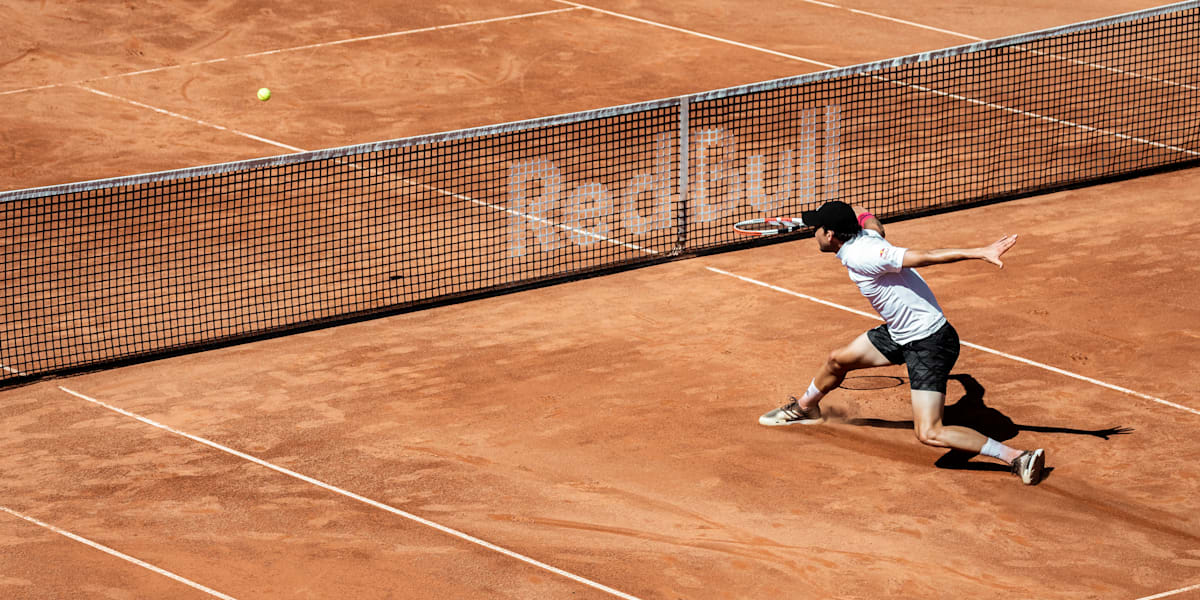
Clay Court Specialists: Why Some Players Dominate Red Dirt
Not every great tennis player is a great clay court player. The red dirt of Roland Garros, Monte Carlo, and Rome operates by a different physics, rewards a different physiology, and demands a different mentality than any other surface the sport is played on. Some of the finest players in tennis history have walked onto clay and found themselves completely undone by it. Others have walked onto it and never looked back. Understanding what separates those two outcomes is one of the most fascinating questions in professional tennis. This is the full story of clay court specialists, what builds them, what defines them, and why their dominance on red dirt remains the most compelling individual achievement the game produces. What Makes Clay Courts Different from Every Other Surface Clay slows everything down. The surface absorbs pace rather than amplifying it, reduces ball speed significantly, and produces a higher bounce that sits up into the body rather than skidding through low. Serves that are dominant weapons on grass or hard courts become far less threatening, and the advantage shifts from power to patience. Physically, clay is the most demanding surface the sport offers. Longer rallies, sliding footwork, and the cumulative toll of a full clay season place demands on the body that no other surface replicates. Players who succeed here are not simply good tennis players. They are specifically built for endurance. The Physical Profile of a True Clay Court Specialist Extreme topspin generation sits at the centre of every clay court specialist’s game. Heavy topspin produces a high, kicking bounce that pushes opponents further behind the baseline and above their strike zone, creating pressure that compounds across long rallies rather than resolving in a single shot. Footwork is the other defining characteristic. Sliding into position rather than stopping and planting allows elite clay players to cover angles and recover positions that would end points for almost anyone else. It is a skill that takes years to develop and immediately separates the specialist from the all-surface player. Rafael Nadal: The Greatest Clay Court Specialist in Tennis History Rafael Nadal won 14 French Open titles, compiled an 81-match winning streak on clay between 2005 and 2007, and retired with a 90.5 percent win rate across 535 clay court matches. Those numbers exist in a category so far beyond every other player that they require no qualification to convey their scale. What made Nadal functionally unbeatable was not one attribute but all of them expressed simultaneously. His topspin forehand, his defensive court coverage, his physical conditioning across five sets, and his psychological certainty that clay belonged to him each reinforced the others until opponents felt they were playing against the surface itself rather than just the man across the net. Bjorn Borg and the Origins of Clay Court Dominance Before Nadal redefined the ceiling, Bjorn Borg set the template. The Swede won six Roland Garros titles between 1974 and 1981, achieving four consecutively, and compiled a career win rate of 93 percent on clay, second only to Nadal in professional tennis history. He accomplished all of it before the age of 26. Borg’s game was built on heavy topspin, exceptional endurance, and a psychological stillness under pressure that unnerved opponents more effectively than any aggressive tactic. He was the first player to demonstrate that clay court dominance was not an accident of technique but a deliberate construction of physical and mental attributes around what the surface demands. Why Clay Court Specialists Struggle on Grass and Hard Courts The attributes that make a clay specialist elite on red dirt frequently limit them on faster surfaces. The extreme swing path that generates devastating spin on clay is slower to execute and more vulnerable to low, skidding balls, which is precisely what grass and hard courts deliver. The sliding footwork becomes redundant where stopping and planting is mechanically more effective. Nadal’s 14 French Open titles alongside two Wimbledon and four US Open titles reflect this dynamic precisely. Players like Casper Ruud and Guillermo Coria, who reached world-class level through clay, found translating those skills to grass and hard courts a persistent challenge throughout their careers. The Modern Clay Court Specialists Carrying the Tradition Forward Carlos Alcaraz has demonstrated multi-surface brilliance rare among clay-oriented players, winning Roland Garros, Wimbledon, and the US Open before turning 22. But his Roland Garros game, built on explosive movement, extreme topspin, and tactical intelligence, remains where his tennis reaches its highest expression. Casper Ruud reached the Roland Garros final in both 2022 and 2023, establishing himself as the most consistent clay specialist of the post-Nadal era. Stefanos Tsitsipas, with multiple Masters titles on the surface, rounds out a generation proving that the tradition Borg built and Nadal perfected remains very much alive. How Training and Tactics Are Built Around Clay Court Success Coaches who develop clay court specialists build programmes backwards from what the surface demands. Sliding drills and court coverage patterns form the daily foundation. Topspin development through thousands of low-to-high swing repetitions is treated as core skill work, not supplementary training. Tactically, clay coaching emphasises construction over destruction, building points across shot sequences designed to push opponents progressively further back rather than ending rallies through single aggressive strikes. The patience this requires is as much a trained quality as a natural one, and elite coaches invest as heavily in mental conditioning as in technical development. The Enduring Legacy of Clay Court Specialists and Their Greatest Champions Roland Garros remains the most romanticised Grand Slam in tennis, and the clay court specialists who have dominated it are among the most celebrated figures the sport has ever produced. There is something in the visible, exhausting, physical nature of clay court tennis, the dirty knees, the sliding recoveries, the rallies that test human endurance, that connects with audiences more deeply than faster surfaces can replicate. Clay court specialists have given tennis some of its most enduring narratives. Borg’s cold dominance. Nadal’s primal relationship with a surface that responded to him like
Read More
Davis Cup History: Nations’ Greatest Team Tennis Moments
The Davis Cup is the most prestigious team competition in tennis. Founded in 1900, it brings together nations from across the globe to compete not for individual glory but for the pride of an entire country. Unlike Grand Slams where players chase personal titles, the Davis Cup history is built on sacrifice, loyalty, and the rare electricity of playing for something bigger than yourself. Over more than a century, the tournament has produced some of the most emotional, dramatic, and unforgettable matches ever played on a tennis court. From underdog victories to legendary rivalries, the Davis Cup has consistently delivered the kind of tennis that stays in your memory long after the final point. The Origins of Davis Cup History: How It All Began In 1900, a young American player named Dwight F. Davis donated a silver bowl and proposed an international team competition between the United States and Great Britain. That simple idea launched what would become one of the most celebrated traditions in all of sport. The first match was held in Boston, and the United States won convincingly. Great Britain, then competing as the British Isles, returned to claim the cup in 1903 and went on to dominate the early years of the competition. For over a decade, only these two nations competed, but the tournament’s appeal quickly spread across the world. By the 1920s, countries like France and Australia had joined the competition, and the Davis Cup began transforming into a truly global event. The trophy itself, now affectionately called the “Salad Bowl” due to its size and shape, became one of the most recognized symbols in international sport. France’s Four Musketeers: A Golden Era in Davis Cup History One of the most celebrated chapters in Davis Cup history belongs to France and their legendary group of players known as the Four Musketeers. René Lacoste, Henri Cochet, Jean Borotra, and Jacques Brugnon dominated world tennis during the late 1920s and early 1930s in a way that had never been seen before. France won six consecutive Davis Cup titles between 1927 and 1932, ending years of American and British dominance. These four men played with elegance, intelligence, and an unbreakable team spirit that became the model for every Davis Cup squad that followed. Their run is still considered one of the greatest sustained team performances in tennis history. Australia vs America: The Greatest Rivalry in Davis Cup History No rivalry defines Davis Cup history more completely than the one between Australia and the United States. From the 1950s through the 1970s, these two nations traded the cup back and forth in a series of matches that produced legendary players and unforgettable moments. Australia’s golden generation included Rod Laver, Ken Rosewall, Lew Hoad, John Newcombe, and Tony Roche. The Americans responded with Stan Smith, Arthur Ashe, and Jimmy Connors. The battles between these squads attracted massive global attention and helped grow tennis from a niche sport into a mainstream spectacle. Australia holds the record for the most Davis Cup titles overall, a testament to the country’s deep and enduring love for the sport. Their victories were built on a culture of team commitment that turned individual talent into collective greatness. Arthur Ashe and the Meaning of Playing for Your Nation Few moments in Davis Cup history carry as much weight as Arthur Ashe’s performances for the United States. Ashe understood better than almost anyone what it meant to represent a country on a tennis court, and he carried that responsibility with both brilliance and dignity. His leadership helped the United States win multiple Davis Cup titles during the late 1960s and early 1970s. Ashe used the platform the Davis Cup gave him not only to win matches but to speak about equality, justice, and human rights. His legacy in the tournament is about far more than the points he played or the titles he helped capture. Sweden’s Dynasty: Björn Borg and Beyond Sweden entered Davis Cup history in a major way during the 1970s and became one of the competition’s dominant forces. Björn Borg was the catalyst, bringing his ice-cold focus and extraordinary talent to a team format that brought out an even more emotional side of his game. After Borg, Sweden continued to produce world-class players who kept the nation at the top of Davis Cup competition. Mats Wilander and Stefan Edberg carried the torch forward, winning multiple titles during the 1980s and cementing Sweden’s place as one of the great Davis Cup nations. The Swedes proved that a small country could become a tennis superpower through smart development and genuine team culture. Spain’s Modern Dominance in Davis Cup History The most successful Davis Cup nation of the modern era is Spain. Fueled by the talent of Rafael Nadal, Carlos Moyá, Àlex Corretja, and Feliciano Lopez, Spain assembled one of the most formidable Davis Cup squads ever seen. Nadal in particular elevated team tennis to a different level entirely. Spain won the Davis Cup in 2000, 2004, 2008, 2009, 2011, and 2019, building a legacy of excellence that spanned nearly two decades. Nadal’s performances in decisive fifth rubbers became the stuff of legend, with the Spaniard seemingly incapable of losing when the pressure was at its absolute highest. What made Spain’s run so compelling was not just the talent on display but the visible passion and brotherhood within the team. Players who competed fiercely against each other on the individual tour became completely unified when they wore the Spanish jersey. The Greatest Individual Performances in Davis Cup History Davis Cup history is full of individual performances that transcended team sport and entered the realm of pure tennis legend. John McEnroe’s performances for the United States throughout the 1980s were breathtaking in their intensity and skill. He played with a ferocity in the Davis Cup that even surpassed his Grand Slam form, famously declaring that representing his country brought out the best tennis of his life. Nicola Pietrangeli of Italy played an extraordinary 164 Davis Cup rubbers
Read More
US Open Night Sessions: Why They’re Tennis’s Most Electric Atmosphere
There is nothing in tennis quite like the US Open night sessions. As the sun sets over Flushing Meadows and the lights illuminate Arthur Ashe Stadium, something changes in the air. The crowd grows louder, the energy becomes more intense, and the matches take on a completely different character compared to anything played earlier in the day. Players feel it, fans feel it, and anyone watching from home can sense it through the screen. The US Open night sessions have become one of the most anticipated events on the entire sporting calendar, not just in tennis but across all of professional sport. What Makes US Open Night Sessions Truly Unique To understand why these sessions carry such a special energy, you first need to understand the setting. Arthur Ashe Stadium holds nearly 24,000 spectators, making it the largest tennis stadium in the world. When it is filled to capacity on a warm New York night, the atmosphere it generates is something that no other tennis venue on the planet can match. Wimbledon has its tradition, Roland Garros has its romance, but neither can produce the raw, almost overwhelming noise and excitement that Ashe delivers after dark. The crowd at the US Open night sessions is also unlike any other tennis crowd in the world. New York brings its own personality to everything, and that personality shows up in full force at Flushing Meadows. These are not the polite, hushed galleries of the All England Club. These are passionate, vocal, opinionated fans who cheer between points, react to every winner, and create an environment that is closer to a basketball arena or a boxing venue than a traditional tennis stadium. For players who thrive on crowd energy, there is no better stage on earth. The History Behind the US Open Night Session Tradition The US Open has been hosting night sessions since the 1970s when the tournament first moved to its current home at the USTA Billie Jean King National Tennis Center in Flushing Meadows. The introduction of floodlights and prime-time scheduling was a deliberate strategy to grow the sport’s television audience in the United States, and it worked beyond anyone’s expectations. Over the decades, the US Open night sessions became appointment viewing for millions of tennis fans. Networks would schedule their biggest matches during the evening hours precisely because the atmosphere and the audience were both at their peak. The tradition of placing the top draws in the night slots turned the evening matches into something closer to a headline concert or a championship fight than a regular tennis fixture. Players began to talk openly about the night sessions as a category of their own, something separate from and more significant than daytime matches. How the Atmosphere Affects Player Performance Ask any professional who has played in the US Open night sessions and they will tell you that stepping onto Arthur Ashe after dark is an experience unlike any other in their career. The crowd does not just watch the match, it participates in it. The energy feeds into the players in a way that can completely transform the quality and the drama of the tennis being played. Some players absolutely thrive under those lights. Serena Williams built much of her legendary status through her performances in the night sessions, treating Arthur Ashe like her personal theatre. Rafael Nadal, Roger Federer, Novak Djokovic, and in more recent years Carlos Alcaraz and Coco Gauff have all delivered some of their finest and most memorable tennis when the stakes were highest and the stadium was loudest. The crowd pushes them to another level, and in tight matches the momentum swings that a roaring crowd can create often become just as important as the tennis itself. On the other hand, the night sessions can also be genuinely difficult for players who prefer quieter, more controlled environments. The noise, the energy, and the electric unpredictability of a New York crowd can work against players who need silence and composure to maintain their best tennis. This tension between player temperament and crowd intensity is part of what makes the night sessions so compelling to watch. Iconic Matches That Defined the US Open Night Sessions The history of the US Open night sessions is essentially a highlight reel of some of the greatest tennis matches ever played. These evening slots have hosted countless unforgettable moments that fans still discuss years later. Serena Williams and Venus Williams produced fierce and emotionally charged matches under the Arthur Ashe lights that kept entire nations awake well past midnight. Andre Agassi, who made Flushing Meadows his home court in every meaningful sense, delivered legendary night session performances throughout his career, feeding off the New York crowd in a way that few players have ever managed before or since. More recently, the night sessions have introduced a new generation of stars to the world stage. Carlos Alcaraz’s extraordinary 2022 semi-final against Frances Tiafoe lasted into the early hours of the morning and had the crowd in a state of near delirium from start to finish. That match alone illustrated everything that makes the US Open night sessions special: the duration, the drama, the momentum swings, and the thunderous crowd reactions that turned a tennis match into something approaching a historic event. The Role of Prime Time Scheduling in Building the Drama Part of what gives the US Open night sessions their particular energy is the deliberate craft of the scheduling. The tournament organisers work carefully to ensure that the biggest names and the most anticipated matchups land in the evening slots. This means that by the time the night session begins, fans in the stadium and at home already know they are about to witness something significant. The prime-time television window in the United States means that the night sessions consistently draw massive viewing audiences. This commercial reality has the side effect of making the matches feel even more important, because the players know they are performing for the largest
Read More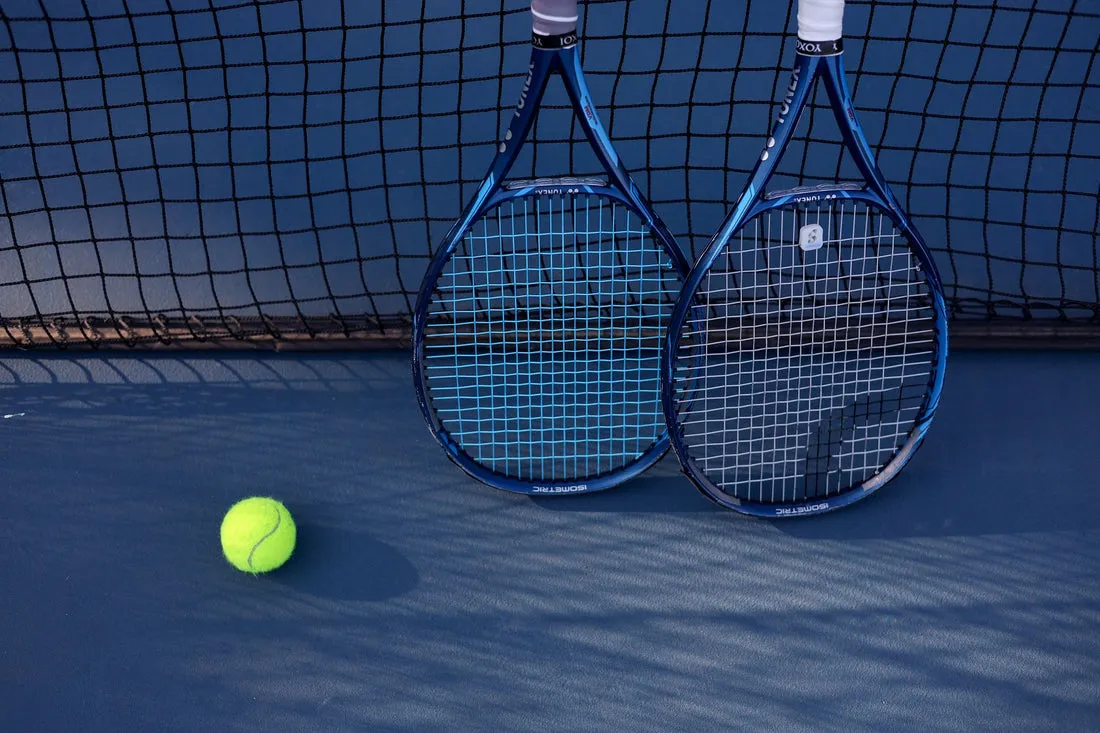
Tennis Equipment Evolution: From Wooden Rackets to Modern Technology
Tennis has always been a sport where the tools matter as much as the talent. The racket in a player’s hand, the strings across its frame, the shoes on the court — every single piece of equipment has undergone dramatic transformation since the game was first codified in the 1870s. What began with heavy wooden frames and rudimentary stringing is now a precision engineering exercise involving aerospace-grade materials, biomechanical research, and data-driven design. This is the full story of tennis equipment evolution, and how every major shift rewrote what was possible on court. How Tennis Equipment Evolution Began with the Wooden Racket Era The earliest tennis rackets were handcrafted from ash or beech wood, laminated in thin layers and pressed into shape over weeks. They were heavy by modern standards, typically weighing around 380 to 420 grams, with small heads measuring approximately 65 square inches and very little flexibility in the frame. Players adapted their entire game around these limitations, relying on flat, controlled strokes and net approaches because the equipment simply could not generate the power or spin that modern tennis demands. Despite their constraints, wooden rackets produced some of the most technically precise players the sport has ever seen. Rod Laver, Ken Rosewall, and Billie Jean King built careers of extraordinary quality using nothing more than crafted wood and natural gut strings. The limitations of the equipment shaped a playing style defined by touch, placement, and strategic intelligence rather than raw power. The Shift to Metal and Composite Frames The first serious challenge to wooden racket dominance came in the late 1960s when metal frames began appearing on tour. Wilson’s T2000 steel racket, famously used by Jimmy Connors throughout the 1970s, was one of the earliest metal frames to gain widespread visibility at the professional level. It offered a larger sweet spot and more consistent response across the stringbed compared to wood, though it introduced its own set of vibration issues that players had to manage. Aluminum frames followed, offering a lighter alternative that brought the racket to a broader recreational market. These composite and metal designs bridged the gap between the wooden past and the technological future, making the game more accessible to casual players and planting the seed for the revolution that was coming. How Graphite Rackets Changed Tennis Forever The arrival of graphite frames in the late 1970s and through the 1980s is the single most consequential moment in tennis equipment history. Howard Head’s oversized Prince Classic, introduced in 1976, paired a dramatically enlarged head size with composite materials and fundamentally altered what players could achieve. Graphite offered a combination of stiffness, low weight, and power transmission that no previous material had come close to matching. By the mid-1980s, graphite had effectively displaced every other material at the professional level. Rackets dropped to between 270 and 310 grams, head sizes expanded to between 95 and 110 square inches, and serve speeds climbed in ways that rewrote the statistical record books. The power baseline game that defines modern professional tennis — the heavy topspin forehands, the 200 km/h serves, the relentless groundstroke exchanges — became possible only because graphite made it structurally achievable. String Technology and Its Role in Tennis Equipment Evolution Racket frames receive most of the attention in any discussion of tennis equipment evolution, but string technology has been equally transformative. Natural gut, made from cow intestine, was the original stringing material and remained the professional standard for over a century due to its unmatched feel and tension maintenance. Many professionals still use natural gut in hybrid setups today because no synthetic material has fully replicated its responsiveness. The pivotal shift came with the widespread adoption of polyester strings from the 1990s onward. Polyester is stiffer and holds tension differently from natural gut, allowing players to swing harder and generate extreme topspin without losing control. Rafael Nadal’s ability to produce topspin at rates previously unseen in professional tennis is directly tied to this string technology. Luxilon, a Belgian brand, became the dominant polyester string manufacturer on tour and effectively helped define the physical, high-spin baseline game that characterises the modern era. The Tennis Ball and Court Surface Transformations Equipment evolution in tennis extends well beyond the racket. Tennis balls became pressurized as standard through the early twentieth century, and the introduction of fluorescent yellow balls at Wimbledon in 1986, replacing the traditional white, improved television visibility and became the global standard. Ball felt technology has continued to be refined across manufacturers to account for altitude, humidity, and the specific demands of different court speeds. Court surfaces themselves have evolved in parallel with racket and ball technology. The proliferation of hard courts globally from the 1980s onward created a medium-paced playing environment that suited the power game that graphite rackets enabled. Grass courts have been modified over decades to play faster and lower, while clay remains the surface most resistant to equipment-driven power, rewarding endurance and spin in ways that keep tactical diversity alive across the professional calendar. Footwear and Apparel as Part of the Modern Tennis Equipment Story The technological revolution in tennis equipment is not limited to rackets and strings. Footwear has become one of the most engineered components in a professional player’s arsenal. Court-specific tennis shoes now feature herringbone outsoles for clay, modified tread patterns for hard courts, and reinforced lateral support structures designed around the specific movement demands of each surface. Brands invest heavily in biomechanical research to reduce injury risk while maximising court coverage speed. Performance apparel has undergone an equally significant transformation. Moisture-wicking fabrics, compression technology, and heat regulation materials mean that players in today’s game are better physically supported by their clothing than any previous generation. What a player wears on court is now as technically considered as what they hold in their hand. What Today’s Modern Technology Means for the Future of Tennis Equipment The next phase of tennis equipment evolution is already underway. Babolat launched the first commercially available smart racket, the Babolat Play, in
Read More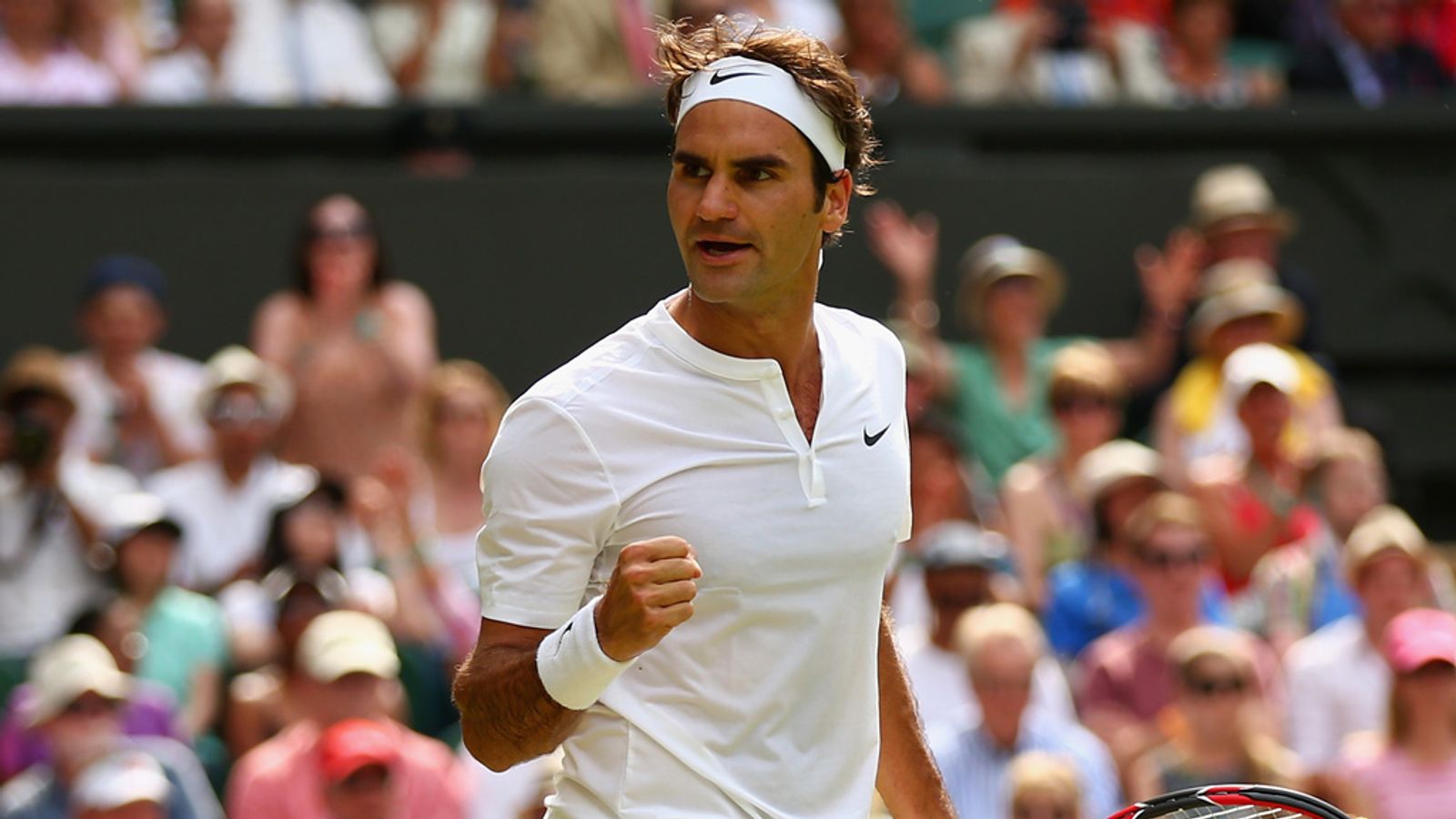
Wimbledon’s All-White Dress Code: History, Rules, and Controversies
Wimbledon is the oldest and most prestigious tennis tournament in the world. It is famous for its immaculate grass courts, royal connections, and strawberries with cream. But perhaps nothing defines its identity more stubbornly than its strict all-white dress code. Players must wear almost entirely white from head to toe, and the rule is enforced with an authority that has outlasted fashion trends, cultural shifts, and even medical debates. So where did this tradition come from? Why does it still exist? And who has pushed back against it? The Origins of Wimbledon’s All-White Dress Code The all-white rule dates back to the Victorian era, when Wimbledon held its first Championship in 1877. At the time, tennis was a sport for the upper classes, played on private lawns and country clubs. Wearing white was simply considered proper and genteel attire for outdoor sport among the British elite. There was also a more practical reason. In an age before deodorant and modern fabric technology, sweat was considered deeply improper to display in public, especially for women. White clothing, oddly enough, was thought to be less revealing of perspiration than colored garments. Keeping up appearances mattered enormously in Victorian society, and white tennis clothes reflected that obsession with decorum. As the decades passed and tennis evolved into a professional sport watched by millions, most other tournaments relaxed their dress codes entirely. Wimbledon, however, held firm. The all-white rule became part of its brand, a signal of tradition, prestige, and a certain British stubbornness that fans either love or find infuriating. What the Wimbledon Rule Actually Requires The current Wimbledon dress code is detailed and specific. According to the All England Club’s official guidelines, players must wear white, which means no off-white or cream. Colored trim is permitted but must be no wider than one centimeter. Socks and shoes should also be predominantly white. Even undergarments that are visible during play must be white. The rule extends beyond just clothing. Headbands, wristbands, and compression garments all fall under the same requirement. The Club has even addressed base layers worn under shirts, requiring those to be white as well. Players are inspected before going on court and can be asked to change if they are not compliant. This level of detail makes Wimbledon’s all-white dress code one of the strictest appearance regulations in professional sport, full stop. Memorable Controversies Over the Years The dress code has generated conflict and headlines throughout its history, and several high-profile incidents stand out. Andre Agassi famously refused to play Wimbledon for three years in the early 1990s, citing the all-white rule as one of his reasons. Agassi was known for his colorful, rebellious image, and the idea of conforming to a dress code felt fundamentally at odds with his personality. He eventually returned and even won the title in 1992, dressed in white, but his earlier boycott kept the debate alive. Anne White caused a sensation at the 1985 Championships when she appeared on court in a white, full-body Lycra catsuit. The outfit was technically white and therefore compliant, but the All England Club considered it inappropriate and asked her not to wear it again the following day. The incident raised an interesting question about what the rule was actually protecting: a color, or a more traditional silhouette of dress? Roger Federer ran into trouble in 2013 when he wore shoes with orange soles during a match. The Club asked him to change his footwear between matches. Even someone of Federer’s stature, a seven-time Wimbledon champion, was not exempt from the rules. It was a clear signal that the All England Club takes compliance seriously regardless of who is on court. More recently, Martina Navratilova and several medical professionals raised concerns about the rule as it applies to women during menstruation. The argument was that requiring white shorts or skirts can cause anxiety and discomfort for female players who may be on their period during a match. In 2023, Wimbledon responded by allowing women to wear dark undershorts beneath their white skirts, provided the undershorts were not visible. It was a meaningful concession, though critics noted it took far too long to arrive. Why Wimbledon Defends the Rule The All England Club has consistently defended Wimbledon’s all-white dress code as a matter of tradition and competitive equality. Their argument is that white clothing levels the playing field aesthetically, removing any commercial or personal branding advantage that bold colors might provide. Sponsors pay significant money to have their logos seen on court, and a uniform white background is thought to reduce the visual impact of that sponsorship. There is also the argument that the tradition itself has value. Wimbledon has successfully maintained an atmosphere unlike any other tournament in tennis. The grass courts, the Royal Box, the queue, the silence expected of the crowd during points, and yes, the white clothing, all contribute to an experience that feels genuinely distinct. Changing the dress code, the Club argues, would chip away at something irreplaceable. Many players, even those who have had minor violations, respect the rule once they are on the grounds. There is something to be said for walking out onto Centre Court dressed the same way champions have dressed for over a century. That continuity carries weight. The Criticism That Will Not Go Away Despite the Club’s defense of the rule, criticism continues to grow louder. Detractors argue that the all-white dress code is rooted in classism and colonial attitudes toward propriety. It was designed by and for a very particular demographic, and enforcing it in the modern era carries echoes of that exclusivity. There is also the commercial argument. Players at other Grand Slams can wear outfits negotiated by their kit sponsors, allowing those sponsors to fully showcase their designs. At Wimbledon, that creativity is restricted significantly. While it has not caused any player to withdraw in recent years over the issue, it remains a tension point between players, their sponsors, and the Club. The mental health
Read More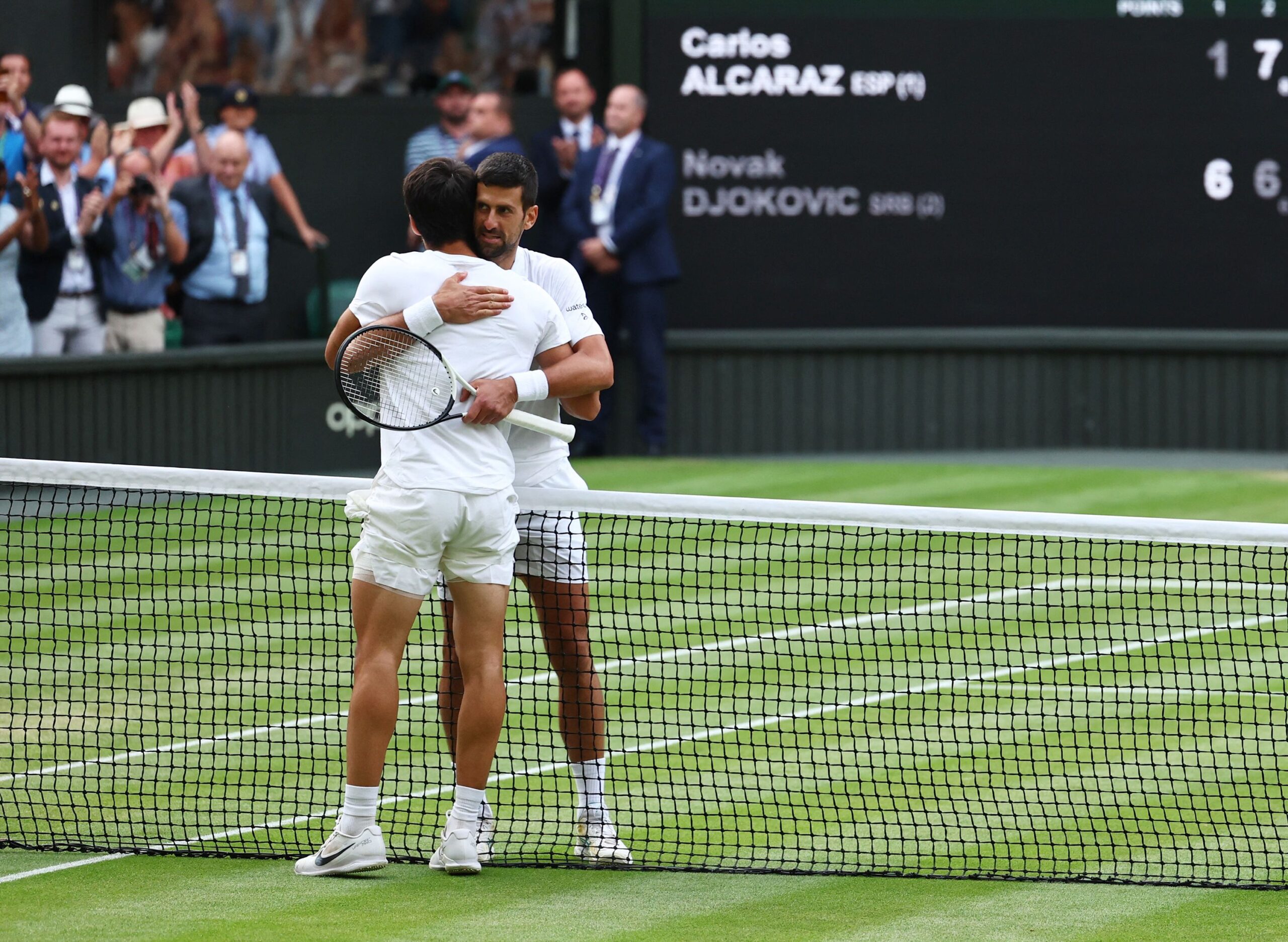
Australian Open 2026 Final: Djokovic’s Path to Glory Falls Short Against a Historic Alcaraz
The 2026 Australian Open Final delivered everything tennis fans had hoped for and more. On the night of February 1 at Rod Laver Arena, Melbourne Park became the stage for one of the sport’s most compelling storylines: a 38-year-old Novak Djokovic, chasing an unprecedented 25th Grand Slam title, against a 22-year-old Carlos Alcaraz hungry to complete his career collection. The result was a match that will be debated, replayed, and remembered for years to come. Alcaraz defeated Djokovic 2–6, 6–2, 6–3, 7–5 to claim his first Australian Open title and seventh Grand Slam overall, becoming the youngest man in tennis history to complete the career Grand Slam. But to understand the full magnitude of the night, you have to look at Djokovic’s extraordinary journey to get there. How Djokovic Reached the Australian Open 2026 Final At 38 years and 255 days old, Djokovic became the oldest man in history to reach the Australian Open final, and the oldest major finalist overall in decades. That alone tells you this was no ordinary campaign. The Serb, who had not won a major since the 2023 US Open, came into Melbourne Park with renewed hunger and a point to prove against a new generation that had largely taken over the Grand Slam stage. Djokovic’s semifinal win came against Jannik Sinner, the two-time defending champion, in a rematch of their clash two years prior. That victory ended Sinner’s remarkable streak of five consecutive major finals dating back to the 2024 US Open. Beating the reigning world number one going into a final is no small feat, and it showed that Djokovic’s competitive fire had not dimmed one bit despite his age. Djokovic was arguably fresher heading into the final, having spent four hours less on court than Alcaraz during the tournament, benefiting from a fourth-round walkover and an injury-forced retirement by Lorenzo Musetti in the quarterfinals. That physical freshness would prove critical in the opening stages of the match. The First Set: Djokovic Fires and Melbourne Roars The Australian Open 2026 Final began in stunning fashion for Djokovic. Under the open roof of Rod Laver Arena, with Rafael Nadal watching from the stands, the Serb came out with a level of intensity that silenced even his critics. Djokovic won five of six rallies over eight shots in the opening set, and with extra pace on his serve, clocking 170km/h compared to his tournament average of 166km/h, he was able to put Alcaraz under immediate pressure. Alcaraz won just one of eight points on his second serve in that first set. The crowd was electric, and for a moment it genuinely looked as though Djokovic might run away with the match entirely. He dispatched the first set 6–2, coming out firing from the baseline in a way that was characteristic of his best years. The dream of a 25th Grand Slam felt very much alive. The Turning Point: Alcaraz Adjusts and Djokovic Unravels What separates great champions from good ones is the ability to adapt mid-match, and that is precisely what Carlos Alcaraz did. The Australian Open 2026 Final turned dramatically in the second set as Alcaraz made subtle but decisive tactical changes. Alcaraz slowed his second-serve speed to 159km/h in the second set to disrupt Djokovic’s rhythm on return, and the adjustment worked immediately. Djokovic, who had been so clinical in the long rallies during the first set, began to force winners at the wrong moments, sending backhands down the line that sailed long or crashed into the net. Djokovic, averaging 28 unforced errors at AO 2026 before the final, had committed just four in the opening set. But as Alcaraz took control of the longer exchanges in the final two sets, that number swelled to 31 unforced errors. For a player of Djokovic’s calibre, that kind of statistical collapse tells the story of a match that slipped away from him one rally at a time. Alcaraz won 14 long rallies to Djokovic’s nine in the final three sets, completely reversing the first-set dynamic. The Spaniard also completed 48 sprints compared to Djokovic’s 22, which was 10 sprints above his own tournament average, demonstrating a relentless physical commitment that proved impossible to match. Djokovic’s Perfect Australian Open Record Ends For over a decade, Rod Laver Arena had been Novak Djokovic’s fortress. Ten finals, ten titles. No player in the Open Era had dominated a single Grand Slam with such completeness. The Australian Open 2026 Final was his first opportunity to go 11 from 11, and the pressure of that statistic weighed heavily on the night. Djokovic fended off six break points to hold serve in a marathon second game of the fourth set, sending his Serbian fans into a frenzy and showing every sign of his legendary fighting spirit. The match was not over. Not while Djokovic was still standing. But as Djokovic served at 5–6 to stay in the match and force a tiebreak, Alcaraz gained the upper hand in a nail-biting 24-stroke rally. Two errors from the Serb handed over championship points, and on the first of them, Djokovic’s forehand sailed out. Alcaraz fell to the ground and covered his face in disbelief and joy. A perfect record had finally been broken. Djokovic’s Gracious Response and Legacy What Djokovic said afterwards may have been even more striking than his performance. Cradling the finalist’s silverware for the first time in his Australian Open career, Djokovic told Alcaraz: “Congratulations Carlos, an amazing tournament. What you’ve been doing is, I think the best word to describe it is historic, legendary.” Coming from the most decorated men’s singles player in history, those words carry immense weight. Djokovic knows history. He has written most of it himself. And his acknowledgement of Alcaraz’s achievement says everything about the generational shift happening right now in men’s tennis. Djokovic’s wait for his elusive 25th Grand Slam title continues, and the 38-year-old is a runner-up at the Australian Open for the first time in his career. Yet finishing runner-up after
Read More