
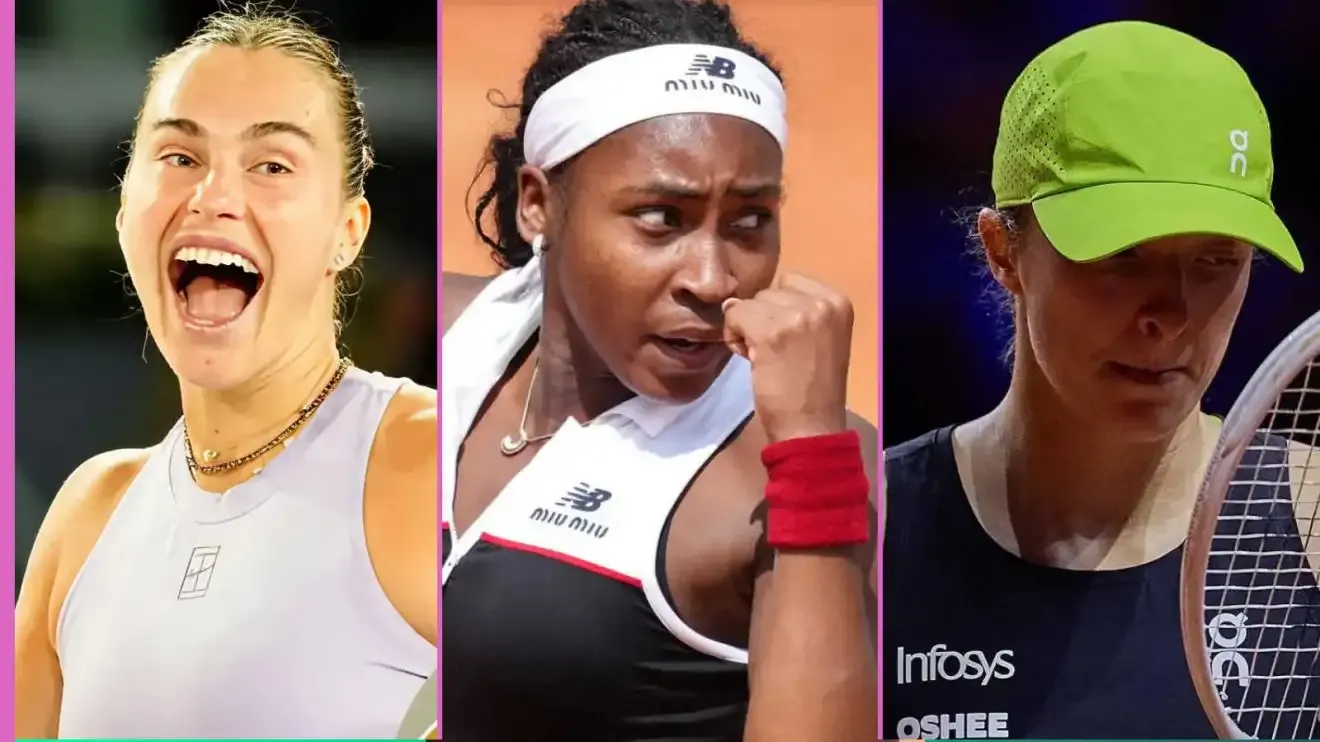
WTA Rankings Battle: Who Will Challenge Iga Swiatek in 2026?
Dominance in tennis is never permanent. It only feels that way when one player sets a standard others struggle to reach. Over the past few seasons, Iga Swiatek has defined the tempo of the WTA Tour with consistency, tactical clarity, and mental steel. As 2026 approaches, the question is no longer whether she deserves the top spot. The real intrigue lies in the coming WTA Rankings Battle 2026 and who possesses the tools to threaten her reign. Swiatek has already built a résumé that includes multiple Grand Slam titles and extended stays at World No.1. But history shows that every era eventually faces resistance. The 2026 season could represent the first sustained challenge to her authority. Understanding the WTA Rankings System To understand the potential challengers, one must understand how the rankings work. The Women’s Tennis Association operates a rolling 52-week ranking system. Players earn points based on performance at Grand Slams, WTA 1000, WTA 500, and WTA 250 events. Grand Slams offer 2,000 points to the champion. WTA 1000 tournaments provide up to 1,000 points. Crucially, players must defend points earned the previous year. Failure to replicate results leads to immediate ranking drops. This structure means consistency outweighs sporadic brilliance. A player cannot simply win one Slam and disappear. Sustained excellence across surfaces defines the WTA No.1 race 2026. Iga Swiatek’s Grip on the Top Spot Swiatek’s ranking dominance stems from three pillars: clay-court supremacy, hard-court evolution, and mental resilience. Her multiple titles at the French Open established her as the premier clay-court force of her generation. Yet she has also claimed major hard-court success, including titles at the US Open. Statistically, Swiatek separates herself through break-point conversion, return-game dominance, and sustained winning streaks. Her ability to control baseline exchanges forces opponents into reactive patterns. Unlike many power hitters, she constructs points with layered aggression rather than reckless force. However, dominance invites pursuit. Entering the WTA Rankings Battle 2026, Swiatek must defend significant ranking points, particularly on clay. Even minor dips in form could open doors for rivals. The Established Contenders – Proven Threats The first wave of challengers includes players already entrenched in the Top 10. Aryna Sabalenka brings explosive power and proven Grand Slam pedigree, including success at the Australian Open. Her aggressive style shortens rallies and can overwhelm even elite defenders. Elena Rybakina combines flat groundstrokes with one of the most effective serves on tour. Her grass-court title at Wimbledon Championships demonstrated her ability to peak on the biggest stage. Coco Gauff has matured tactically and mentally, adding Grand Slam credentials and defensive versatility. Each of these players owns weapons capable of disrupting Swiatek’s rhythm. The question is not talent. It is week-to-week reliability. The Rising Generation – Young Players Closing the Gap Beyond established stars, the next generation waits. Young players who have already posted breakthrough WTA 1000 results are gaining belief. Their games reflect modern baseline aggression paired with improved athleticism. For any emerging contender to lead the women’s tennis rankings battle, she must translate flashes of brilliance into consistent semifinal appearances across multiple surfaces. The rankings system rewards depth of tournament runs more than isolated upsets. Momentum, not hype, will determine who truly challenges in 2026. Surface Dynamics – Where Swiatek Is Most Vulnerable Surface distribution may decide the WTA No.1 race 2026. Swiatek’s clay dominance remains formidable. On slower hard courts, she controls tempo effectively. Grass, historically the most unpredictable surface, often produces volatility. Power players with flat trajectories tend to thrive on quicker courts. Should a rival accumulate strong results at Wimbledon and North American hard-court events while Swiatek defends heavy clay points, the standings could tighten rapidly. Surface specialization can create ranking pressure even without head-to-head superiority. The Mental Game – What It Takes to Dethrone a World No.1 The technical blueprint alone cannot dethrone a No.1. The psychological dimension separates contenders from champions. Challengers must embrace the burden of expectation. They must defend points, manage travel fatigue, and handle media scrutiny. Swiatek has demonstrated composure in high-stakes finals. Any rival must match that clarity under pressure. In a season-long WTA Rankings Battle 2026, mental endurance may outweigh isolated match brilliance. Injuries, Scheduling, and Ranking Volatility The WTA calendar remains demanding. A single injury absence during a Grand Slam can cost 2,000 potential points. Strategic scheduling also influences ranking swings. Players must balance physical preservation with mandatory tournament commitments. Volatility defines modern tennis. The difference between World No.1 and No.4 can narrow within months. As 2026 unfolds, durability could become the most decisive factor. Statistical Pathways to No.1 in 2026 Realistically, a challenger must accumulate multiple deep Slam runs and at least one WTA 1000 title to mount serious pressure. Consistent quarterfinal and semifinal appearances provide steady point accumulation. If Swiatek experiences early exits at one or two majors while a rival capitalizes, the points gap could shrink dramatically. The rankings system leaves little margin for complacency. The pathway is clear. Execution remains uncertain. Legacy at Stake – Is This Still Swiatek’s Era? Every era faces a turning point. Should Swiatek maintain her hold through 2026, she would cement a sustained period of dominance comparable to previous WTA greats. If a new No.1 emerges, it would signal the beginning of competitive redistribution at the top. The coming season is less about rivalry and more about structural change. Tennis history evolves in cycles. The WTA Rankings Battle 2026 may define the next one. Conclusion – The Coming Rankings War Iga Swiatek stands as the benchmark of her generation. Yet benchmarks exist to be tested. The structure of the rankings system ensures that every dominant phase invites calculated pursuit. The WTA Rankings Battle 2026 will not hinge on one final or one headline victory. It will unfold across 52 weeks of pressure, adaptation, and resilience. Whether Swiatek tightens her grip or a challenger rises, the coming season promises a defining chapter in modern women’s tennis.
Read More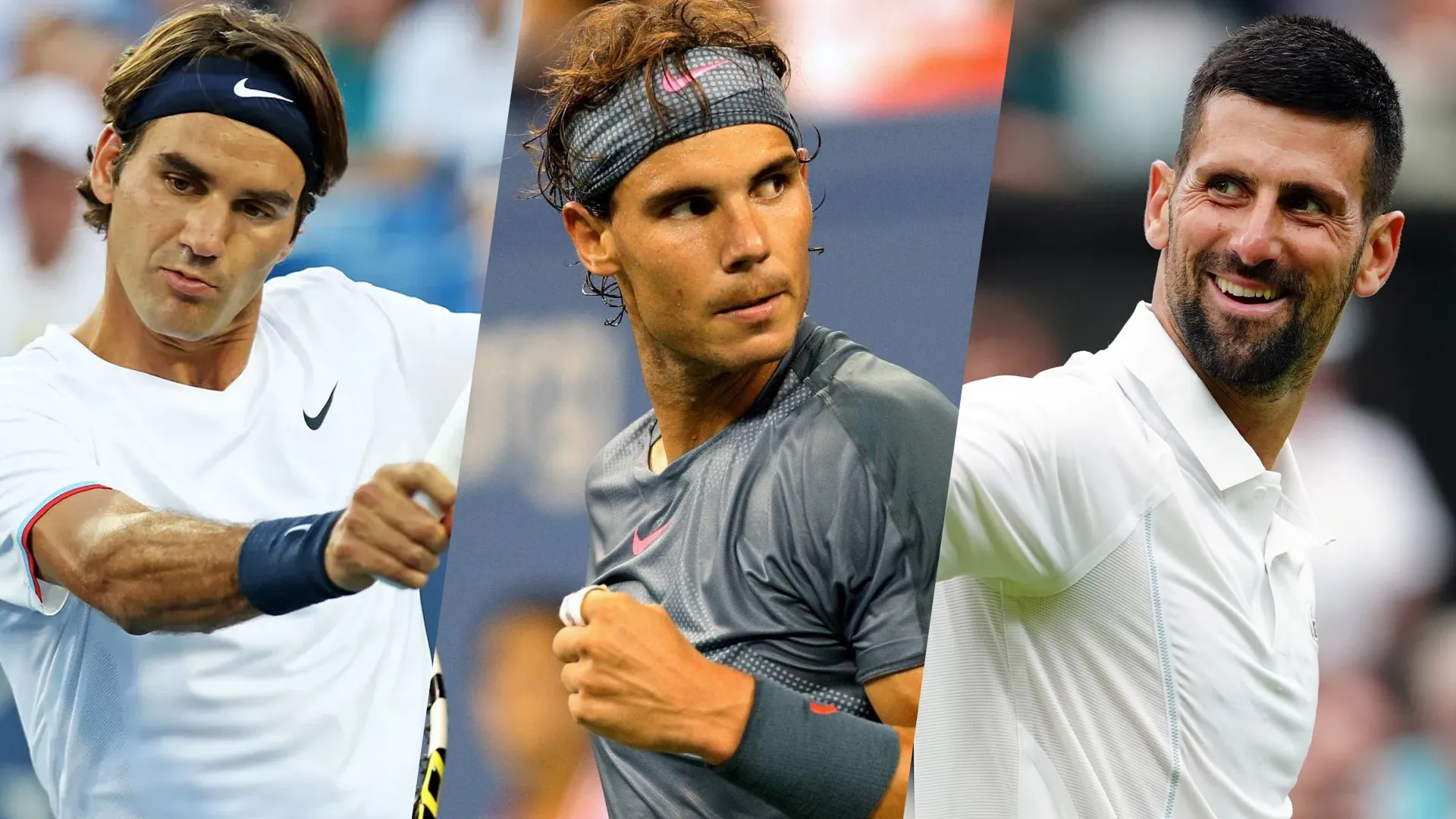
Big Three Era: Roger Federer, Rafael Nadal, Novak Djokovic’s Stranglehold on Tennis
For nearly two decades, men’s tennis was defined by a single reality: if you wanted to win a Grand Slam, you likely had to defeat one—or sometimes two—of Roger Federer, Rafael Nadal, or Novak Djokovic. The Big Three Era in tennis transformed the sport into a prolonged masterclass in excellence, rivalry, and endurance. Between them, the trio accumulated an unprecedented share of major titles, weeks at world No. 1, and iconic matches. Their dominance was not merely statistical; it reshaped expectations of greatness and extended the physical and mental limits of the modern game. The Birth of the Big Three Era The story began with Federer. From 2004 to 2007, the Swiss maestro produced one of the most dominant stretches in tennis history, blending elegance with ruthless efficiency. His fluid movement and attacking precision established a new aesthetic standard for the sport. Then came Nadal. Bursting onto the scene as a teenage phenom, the Spaniard’s heavy topspin forehand and unmatched intensity disrupted Federer’s reign—particularly on clay. By the late 2000s, their rivalry had already produced classics, most famously the 2008 Wimbledon final. Djokovic completed the triumvirate. After breaking through with his first major at the 2008 Australian Open, he elevated his game to historic levels in 2011, when he won three Grand Slams and began challenging both Federer and Nadal consistently. From that point onward, men’s tennis became a closed circle at the very top. Grand Slam Domination Explained The numbers illustrate the stranglehold. Federer finished his career with 20 Grand Slam singles titles, Nadal with 22, and Djokovic has surpassed them both, holding the all-time men’s record with 24 majors as of 2024. From 2003 through 2023, the trio won the overwhelming majority of Grand Slam tournaments, leaving only a handful for the rest of the field. Entire generations of talented players found themselves blocked by the same three names at semifinals and finals. No previous era—not even those of Borg, Sampras, or Laver—saw such sustained, collective dominance by three contemporaries over such a long period. Rivalries That Defined a Generation Federer vs Nadal – Elegance vs Relentless Power This rivalry contrasted styles as much as personalities. Federer’s attacking grace met Nadal’s physical resilience and topspin-heavy assault. Their 2008 Wimbledon final is often cited as one of the greatest matches ever played, symbolizing a shifting balance of power. Nadal vs Djokovic – Physical and Mental Warfare Few matchups tested human endurance like Nadal versus Djokovic. Their 2012 Australian Open final lasted 5 hours and 53 minutes, the longest Grand Slam final in the Open Era. Their baseline exchanges redefined defensive and counterpunching standards. Federer vs Djokovic – Precision vs Elastic Defense Djokovic’s ability to neutralize Federer’s attacking patterns produced numerous high-stakes encounters, including multiple Wimbledon finals. Their rivalry often hinged on narrow margins and mental resilience in tiebreaks and deciding sets. Together, these rivalries elevated tennis into a weekly showcase of contrasting philosophies and relentless adaptation. Surface Specialization and Adaptability Nadal built an unparalleled legacy at Roland Garros, winning 14 French Open titles—a record unlikely to be matched. Federer dominated grass courts, capturing eight Wimbledon titles, while also excelling on hard courts. Djokovic distinguished himself with all-surface mastery, winning multiple majors on clay, grass, and hard courts, and holding records at the Australian Open in particular. What made the Big Three Era in tennis extraordinary was not just specialization, but cross-surface excellence. Each forced the others to evolve beyond comfort zones. Mental Strength, Longevity, and Evolution Longevity separated the trio from the rest. Advances in sports science, nutrition, and recovery played roles, but their psychological resilience was equally vital. Federer reinvented his backhand late in his career. Nadal adjusted his serving patterns and court positioning. Djokovic transformed his fitness and flexibility, turning defense into offense with unmatched elasticity. Their ability to adapt prolonged their reign well into their 30s—an age once considered beyond peak performance in tennis. Records Broken and Benchmarks Redefined Beyond Grand Slams, the trio redefined consistency. Federer and Djokovic both surpassed 300 weeks at world No. 1, with Djokovic setting the all-time men’s record for most weeks atop the rankings. They also accumulated record numbers of Masters 1000 titles and ATP Finals appearances. Head-to-head battles between them filled the latter stages of major tournaments for over a decade. Impact on Other Generations of Players The so-called “Lost Generation”—players born in the late 1980s and early 1990s—faced perhaps the toughest competitive landscape in tennis history. Talented stars repeatedly ran into the same three obstacles. Only in recent years have younger players begun consistently breaking through, capitalizing on aging curves and physical wear. Criticism and Debate Around the Era Some argue that prolonged dominance limited unpredictability at majors. Others counter that the era’s depth was higher than ever, making sustained supremacy even more impressive. What remains undisputed is that the trio pushed each other to historically high standards. Their rivalries were symbiotic; without one another, none might have reached such towering heights. The Beginning of the End? Federer retired in 2022. Nadal has battled persistent injuries. Djokovic remains competitive, but generational transition is inevitable. The sport is now entering a post-dominance phase, with new champions emerging and redefining competitive balance. Why This Era May Never Be Repeated Modern tennis is deeper, more global, and more physically taxing than ever. The probability of three players maintaining elite form simultaneously for nearly two decades is extraordinarily low. The Big Three Era in tennis was a convergence of talent, rivalry, and timing that may never align again. Tennis’s Golden Age of Rivalry and Greatness The stranglehold of Federer, Nadal, and Djokovic was not accidental. It was forged through relentless improvement, tactical brilliance, and mental fortitude. The Big Three Era in tennis stands as a golden chapter in sporting history—defined not just by trophies, but by the elevation of the game itself. Their rivalry did not merely produce champions; it reshaped the very definition of greatness.
Read More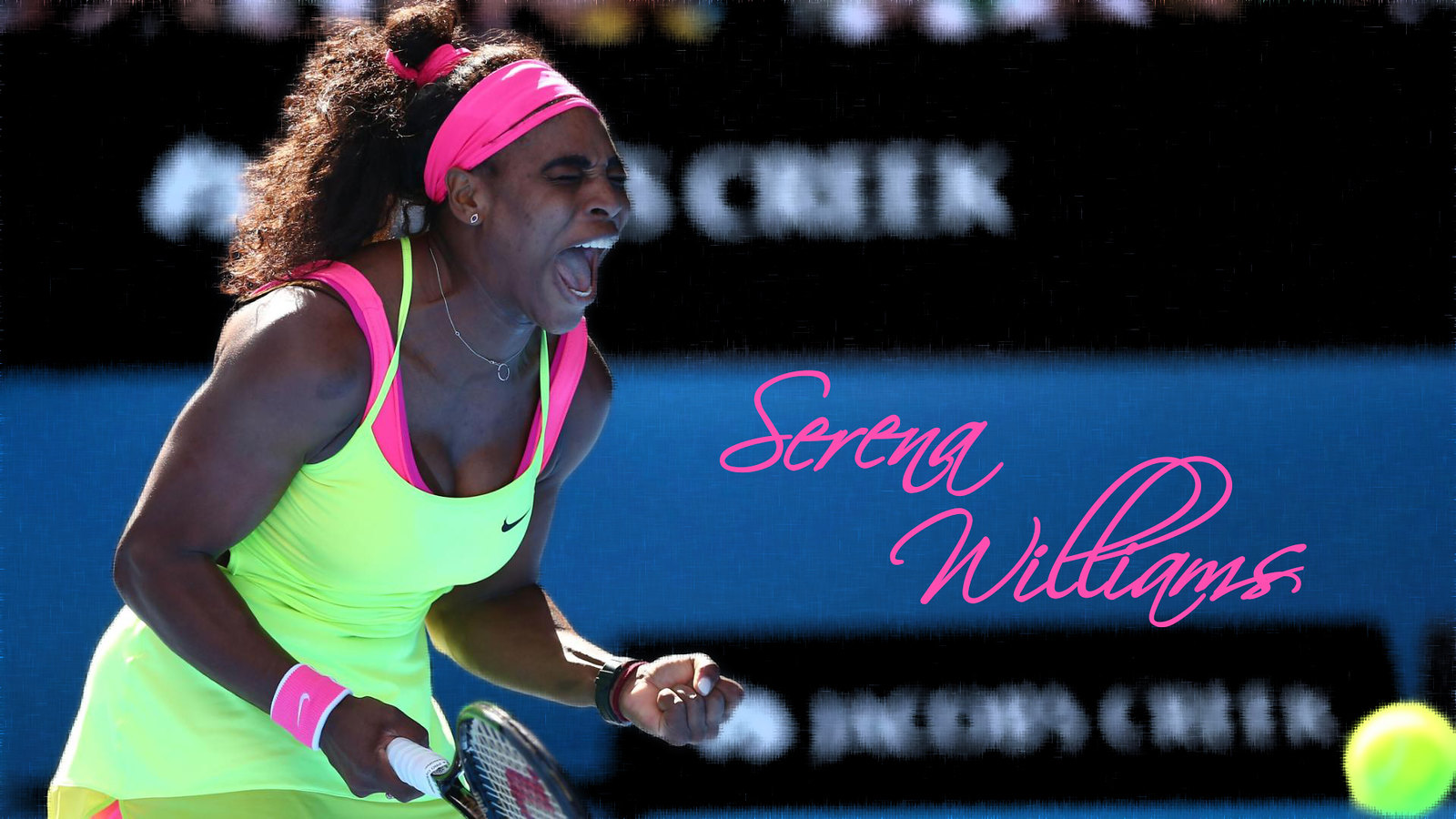
Serena Williams’ 23 Grand Slam Finals: Every Title Run Analyzed
Serena Williams didn’t just win Grand Slams. She hunted them, dominated them, and redefined what it meant to be a champion. Across four different decades, she stepped onto the biggest stages in tennis and delivered performances that left opponents, analysts, and fans in collective disbelief. Her 23 Grand Slam singles titles remain the most by any player in the Open Era, and understanding how she won each one reveals just how multidimensional her greatness truly was. The Early Years: How Serena Williams’ 23 Grand Slam Finals Began Serena’s first Grand Slam final came at the 1999 US Open when she was just 17 years old. She defeated Martina Hingis 6-3, 7-6 in a performance that announced her arrival in a way the tennis world hadn’t seen before. What made it remarkable wasn’t just the scoreline but the composure. She played like someone who had already been there, already won it, and was simply collecting what was hers. The Australian Open 2003 completed what became known as the “Serena Slam,” her holding all four Grand Slam titles simultaneously. This period of dominance showed her ability to win on every surface, hard court, clay, and grass, adjusting her game while keeping her serve as the most feared weapon in women’s tennis. The Australian Open: Her Most Successful Hunting Ground Serena claimed seven Australian Open titles, making Melbourne her most successful Grand Slam venue. Her finals there spanned from 2003 to 2017, covering 14 years of sustained excellence. Each title told a different story about where she was in her career and her life. Her 2017 Australian Open final win over Venus, achieved while eight weeks pregnant, stands as one of the most extraordinary athletic feats in sports history. She defeated her sister 6-4, 6-4 in a match that carried enormous emotional weight. It wasn’t just a title. It was a statement that even at 35, even carrying a child, Serena Williams was still the best player on the planet. The 2010 Australian Open final against Justine Henin showed a different kind of Serena, one who had fought through injury and personal hardship and returned to the top with something to prove. She dropped only one set across the entire tournament and delivered a masterclass in big-match tennis. Wimbledon Finals: Serena Williams’ 23 Grand Slam Finals on Grass Wimbledon gave Serena seven titles and some of her most iconic moments. Her serve on grass was essentially unplayable at its peak, and she used the surface to expose every weakness in her opponents’ games. Her 2003 Wimbledon final against Venus was the first time two sisters had met in back-to-back Grand Slam finals in the Open Era. Serena won 4-6, 6-4, 6-2 in a match that showed her mental resilience. Going down a set to your sister, in front of a global audience, requires a specific kind of mental steel that Serena possessed in quantities no one else could match. The 2012 Wimbledon final against Agnieszka Radwanska was perhaps her most dominant grass performance. She lost only six games across the entire match, serving 18 aces and barely giving her Polish opponent a foothold. It was destruction delivered with grace. Her 2016 Wimbledon title, her 22nd Grand Slam overall, was a career milestone that drew comparisons to Steffi Graf’s Open Era record of 22. When she held that trophy, she had equaled the greatest mark in women’s tennis history. The US Open Finals: Coming Home The US Open was where it all started, and Serena returned to Flushing Meadows six times as a champion. The New York crowd gave her energy that was almost visible, and she fed on it in ways that made her particularly lethal there. Her 2008 US Open final against Jelena Jankovic came during a period when Serena had faced questions about her commitment to tennis. She answered with a 6-4, 7-5 victory that was clean, sharp, and thoroughly professional. It served as a reminder that when Serena focused, outcomes were not really in doubt. The 2013 and 2014 back-to-back US Open titles showed her operating at the peak of her powers. She dropped just one set across both tournaments combined and played some of the most aggressive baseline tennis women’s tennis had ever seen. Her return game had evolved to complement her serve, and opponents simply had no answer. The French Open and the Clay Court Chapters Roland Garros was always considered her most challenging surface, yet she claimed three French Open titles. Clay slows the ball, neutralizes the serve advantage, and rewards baseline consistency above raw power. That Serena won there at all speaks to her adaptability. That she won three times speaks to her genius. Her 2015 French Open final against Lucie Safarova was her most dramatic clay court final. Safarova pushed her to three sets, and Serena had to dig into reserves that only champions possess. She won 6-3, 6-7, 6-2 in a match that reminded the world she wasn’t just a serve-and-power player. She could grind, problem-solve, and outlast. Rivalries That Defined the Finals Serena met Venus in nine Grand Slam finals, the most between siblings in the Open Era. The dynamic was always complex, the love between them evident, the competitiveness absolute. Serena won seven of those nine meetings, but the margins were often far closer than the scorelines suggested. Her finals against Maria Sharapova, Victoria Azarenka, and Angelique Kerber each brought different tactical challenges. Azarenka pushed her hardest, winning the 2012 Australian Open final and repeatedly testing Serena’s mental resolve in major finals. Against Kerber at the 2016 Wimbledon final, Serena underlined that even at 34 she remained the defining force in the sport. What Made Serena Williams’ 23 Grand Slam Finals Winnable Across all 23 titles, certain patterns emerge. Her first-serve percentage in Grand Slam finals consistently exceeded 60 percent. Her second-serve points won rarely dropped below 50 percent, a figure that most players cannot match even on first serves. She broke serve more often than any other player in women’s
Read More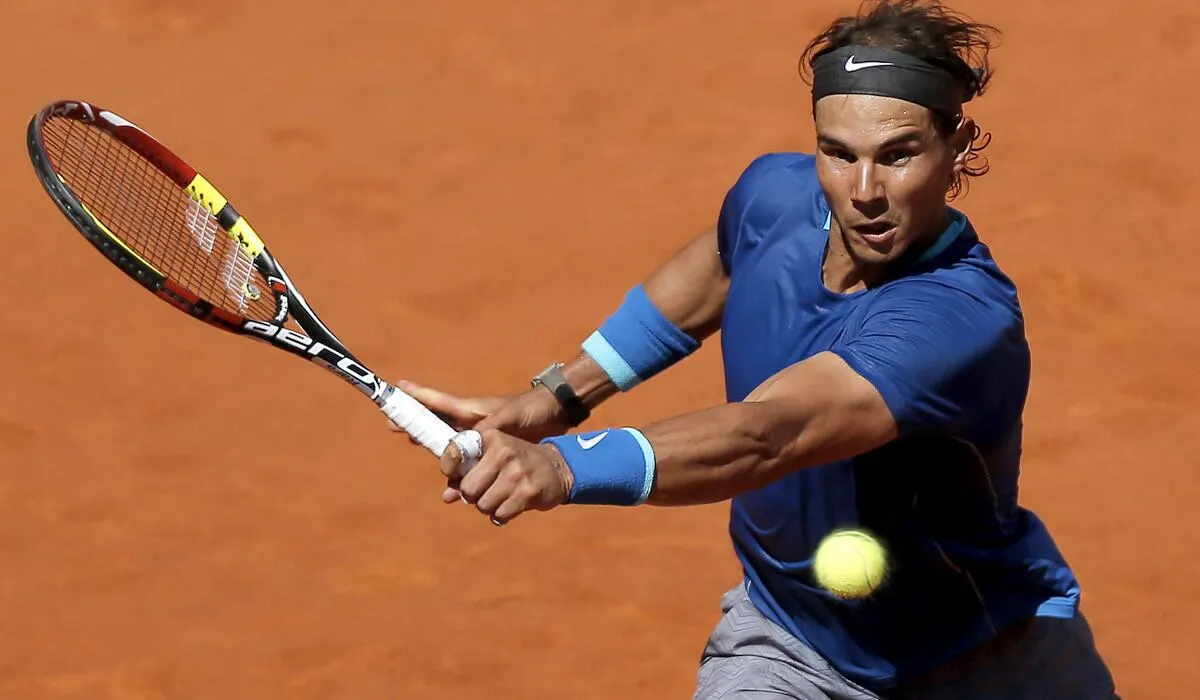
Rafael Nadal’s Clay Court Dominance: 14 French Open Titles Breakdown
In a sport defined by fine margins and constant evolution, one achievement stands almost beyond comparison. Rafael Nadal’s clay court dominance, particularly at the French Open, represents the most overwhelming display of superiority tennis has ever witnessed. Winning a Grand Slam once is a career milestone. Winning it 14 times borders on the unimaginable. At Roland Garros, Nadal didn’t just win titles, he redefined what dominance looks like on a single surface. Why Clay Courts Suit Nadal Perfectly Clay courts reward patience, endurance, and heavy topspin, all of which align perfectly with Nadal’s natural strengths. His left-handed forehand produces extreme topspin that pushes opponents far behind the baseline, especially on slower clay surfaces. The high bounce neutralizes flatter hitters, while Nadal’s speed and defensive instincts turn points into physical battles few can survive. Physical and Mental Endurance Clay matches often stretch into long rallies and extended matches. Nadal’s fitness, resilience, and willingness to grind gave him a decisive edge, allowing him to outlast even the most talented opponents. Nadal’s First French Open Triumph (2005) Nadal announced himself to the tennis world in 2005 at just 19 years old. In his first appearance at the French Open, he dominated the field and defeated Mariano Puerta in the final. It was immediately clear this was not a one-off breakthrough. His movement, confidence, and composure on clay suggested a future built around Roland Garros success. The Golden Years – Establishing Total Control Between 2006 and 2014, Nadal turned Paris into his personal fortress. During this period, he captured nine French Open titles, often winning with startling ease. He adapted to different opponents, weather conditions, and even rule changes, yet his grip on the tournament never loosened. Many finals were decided in straight sets, highlighting the gap between Nadal and the rest of the field on clay. Rivalries That Defined Nadal’s Clay Era Nadal’s dominance becomes even more impressive when considering the opponents he faced. He regularly battled legends like Roger Federer and Novak Djokovic, players who dominated other surfaces. Federer and Djokovic on Clay Federer, arguably the greatest grass-court player, struggled to impose his attacking style against Nadal’s heavy topspin. Djokovic pushed Nadal harder than anyone at Roland Garros, handing him rare defeats, yet Nadal still finished with a vastly superior clay record. Setbacks, Injuries, and Comebacks Nadal’s journey was not uninterrupted. Chronic knee and foot issues forced him to miss the French Open in 2009, 2017 preparation phases, and later years. Remarkably, setbacks often preceded comebacks. Each return seemed to strengthen his legend, as he repeatedly proved doubts premature. The Second Peak – Extending the Impossible Winning Grand Slams after age 30 is rare. Nadal won eight French Open titles after turning 25 and multiple titles in his mid-30s, including his final triumph in 2022. Adjustments to scheduling, shorter points, and improved serve efficiency allowed him to conserve energy while remaining lethal. Breakdown of the 14 French Open Titles From 2005 to 2022, Nadal amassed a 112–4 win-loss record at Roland Garros. He won 14 titles, many without dropping a set. His finals record stands at a perfect 14–0, an unmatched statistic in tennis history. Several of those victories came against top-ranked opponents, reinforcing that his dominance was not due to weak competition. Why Nadal at Roland Garros Is Untouchable Beyond technique and fitness, Nadal developed a psychological edge. Opponents often entered matches beaten before the first ball. Familiarity with the court, crowd support, and years of success created an aura that no other player has replicated at a single Grand Slam. Can Anyone Ever Match This Record? Modern tennis scheduling, surface homogenization, and physical demands make it highly unlikely any player will approach 14 French Open titles. Even winning half that number would be considered extraordinary. Nadal’s record stands as one of the most secure achievements in sports. What Nadal’s Clay Dominance Means for Tennis History Rafael Nadal clay court dominance reshaped discussions about greatness. It demonstrated that specialization, when paired with excellence, can redefine a sport. His achievements elevated the prestige of clay tennis and set a benchmark future generations may never reach. The King of Clay Forever Rafael Nadal did more than dominate clay courts, he became synonymous with them. His 14 French Open titles are not just records, they are monuments to perseverance, adaptation, and excellence. Long after statistics fade, Nadal’s legacy at Roland Garros will remain the gold standard for dominance in sport.
Read More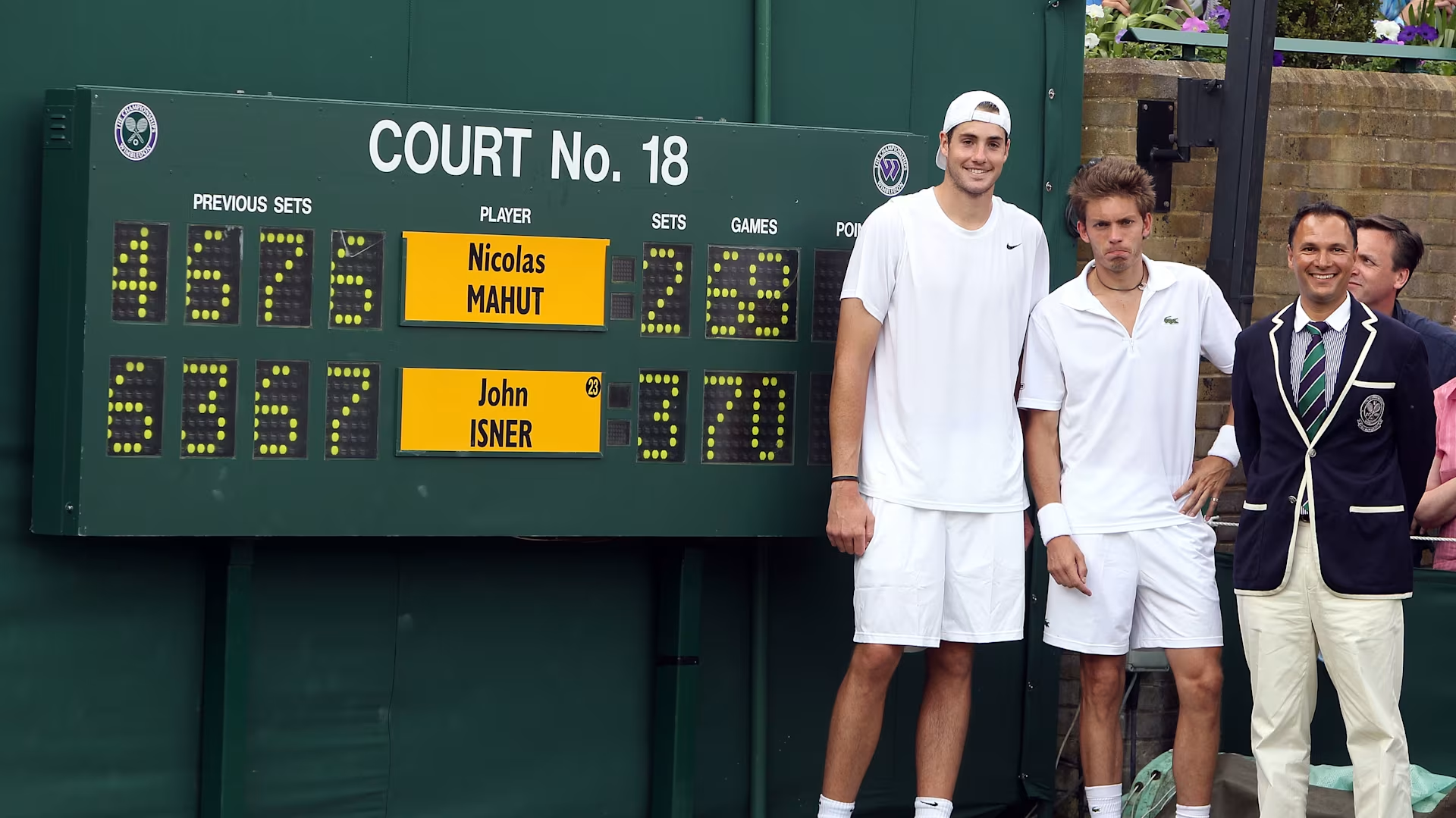
The Longest Tennis Match Ever: Isner vs Mahut at Wimbledon 2010
On June 22, 2010, John Isner and Nicolas Mahut walked onto Court 18 at the All England Club expecting a routine first-round match. Three days later, after 11 hours and 5 minutes of play, the tennis world had witnessed something it had never seen before. The longest tennis match ever played had just concluded, and the sport would never look at unlimited final sets the same way again. This is the complete story, how it unfolded across three days, every record it shattered, what changed in the rules afterward, and why it remains one of the most genuinely extraordinary events in professional sports history. The Two Players and the Setting In June 2010, neither competitor was among the tournament favorites. John Isner, 25 years old and from Greensboro, North Carolina, stood 6 feet 9 inches tall and was already known as one of the tour’s most powerful servers. Nicolas Mahut, 28 and French, had built a strong reputation on grass courts through a precise serve-and-volley game and exceptional tactical intelligence. Their first-round draw placed them on Court 18, one of Wimbledon’s smaller outside courts. The modest setting attracted little initial attention. That would change within 24 hours. Day One, June 22: The Beginning of Something Unprecedented The match began in the mid-afternoon and moved at a normal pace through the first four sets. Isner won the first 6-4. Mahut took the second and third 3-6 and 6-7. Isner won the fourth set tiebreak 7-6 (3). At this point the score was tied at two sets apiece, and nothing suggested the match was heading anywhere other than a standard five-set conclusion. Then the fifth set began. Under the rules at Wimbledon in 2010, no tiebreak was played in the deciding set. Players had to win by two clear games. With both men serving at an exceptional level, game after game went with serve. The score reached 20-20. Then 30-30. The scoreboard on Court 18, which was not designed to display games beyond 47, began struggling to keep up. At 9:10 PM, fading light forced the umpire to suspend play with the fifth set locked at 59-59. Isner had already served more than 90 aces. The match had been going for roughly six hours and was already approaching the all-time record for match duration — but neither player had yet broken serve in the deciding set. Day Two, June 23: The Records Start to Fall Word had spread overnight. When the players returned the following morning, the small outside court had become one of the most-watched spots in world sport. Spectators abandoned their seats on Centre Court to witness what was unfolding on Court 18. Television cameras from broadcasters around the world trained themselves on the scoreboard that could barely contain the numbers. On this day, the match surpassed the previous record for the longest tennis match ever played: the 6 hours and 33 minutes Fabrice Santoro and Arnaud Clement had spent on court at the 2004 French Open. The Isner-Mahut match passed that mark and kept going without pause. Both players continued to hold serve with extraordinary consistency. Isner’s average first-serve speed exceeded 120 miles per hour throughout. Mahut answered with precision placement and aggressive net approaches. Darkness forced a second suspension. The fifth set still stood at 59-59. Both men had now been competing across portions of two separate days and the physical toll was visible on both players, yet the quality of tennis remained remarkably high. Day Three, June 24: The End When the players returned for a third consecutive day, the atmosphere around Court 18 had taken on a quality that witnesses would later describe as unlike anything they had experienced at a regular-season match. Officials, journalists, and players from across the tournament grounds had gathered to watch the conclusion. After more games of serve-holds at the highest level, Isner finally broke Mahut’s serve in the 138th game of the fifth set. After 11 hours and 5 minutes of total play — and a fifth set that alone had lasted 8 hours and 11 minutes — the longest tennis match in history was over. Final score: John Isner defeated Nicolas Mahut 6-4, 3-6, 6-7 (9-7), 7-6 (3), 70-68. Isner collapsed to the court. Mahut stood at the net and received a standing ovation that matched the one given to the winner. Both men understood what they had been part of. The Court 18 scoreboard was not built to display numbers above 47 games per set. Wimbledon ground staff tracked and updated the score manually for the duration of the fifth set. The Records: Everything This Match Broke Category Isner-Mahut Record Previous Record Total match duration 11 hrs 5 min 6 hrs 33 min (2004 FO) Longest final set 8 hrs 11 min No comparable benchmark Fifth set score 70-68 (138 games) Never previously reached Total games in match 183 ~40-60 in a typical 5-setter Aces — Isner 113 Previous single-match high ~80 Aces — Mahut 103 First time both exceeded 100 Combined aces 216 Never approached before Total points played Isner 980 / Mahut 949 Far beyond any prior match To frame the scale of what happened: the fifth set of this match, taken alone, was longer than the previous record for an entire match. The 138 games in that deciding set exceeded the total game count of most complete five-set encounters. Both players hit more aces individually than many players accumulate across an entire Grand Slam tournament draw. How It Compares: The Longest Tennis Matches in History No other match in professional tennis comes close in terms of total duration, but several other marathon encounters have pushed the boundaries of endurance at the Grand Slam level: Rank Match / Event Duration Deciding Set Notes 1 Isner vs Mahut — Wimbledon 2010 R1 11h 5m 70-68 All records still stand 2 Isner vs Anderson — Wimbledon 2018 SF 6h 36m 26-24 Heat exhaustion; changed SF scheduling 3 Nadal vs Djokovic — AO Final 2012 5h 53m 7-5
Read More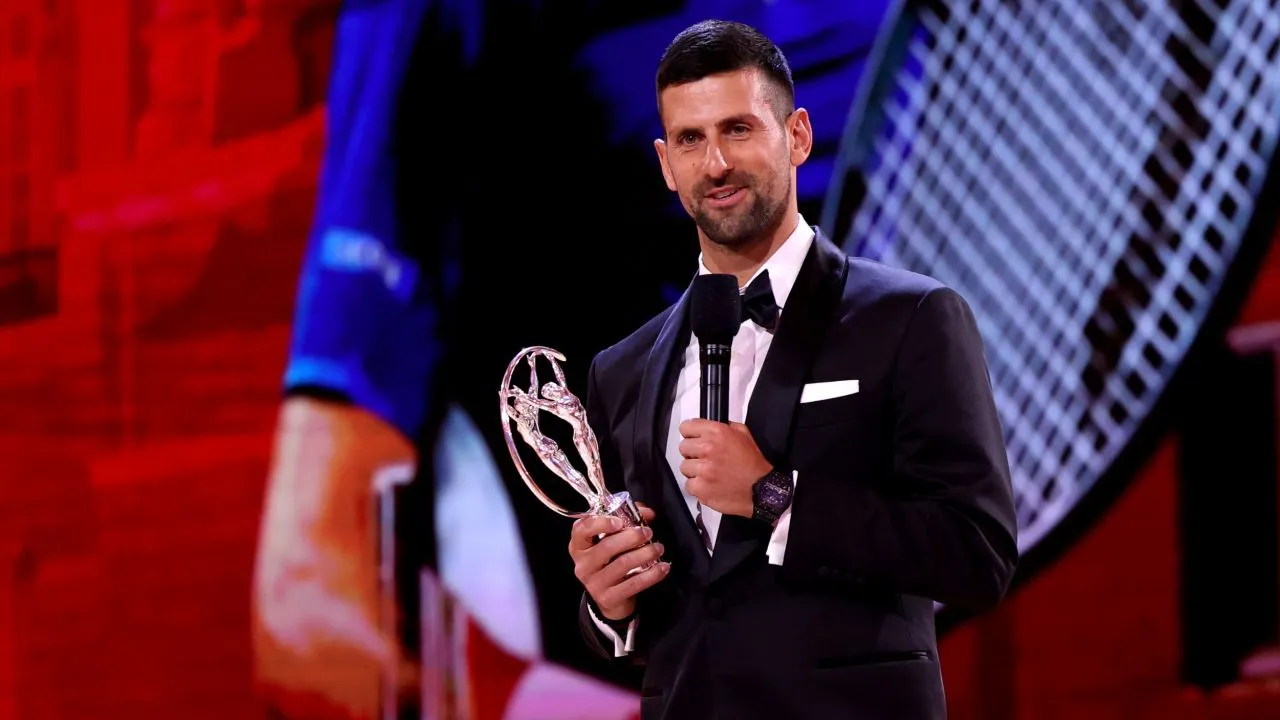
Novak Djokovic’s 25th Grand Slam Quest: Can He Reach 30?
Novak Djokovic’s achievement of 25 Grand Slam titles is a historic milestone in tennis, cementing his legacy as one of the sport’s greatest players. However, with rising competition and the physical toll of elite tennis, many wonder: can Djokovic push his Grand Slam tally to 30? In this article, we’ll explore his remarkable journey, the challenges ahead, and whether reaching 30 titles is a feasible goal. The Milestone of 25 Grand Slams Novak Djokovic’s 25th Grand Slam title is a monumental achievement that solidifies his place in the conversation of tennis greatness alongside Roger Federer and Rafael Nadal. Djokovic clinched his 25th Grand Slam at the 2023 US Open, a tournament where his victory not only extended his Grand Slam count but also solidified his reputation for resilience and skill at the highest level. Since his breakthrough win at the 2008 Australian Open, Djokovic has consistently been at the top of men’s tennis, dominating all surfaces and adapting his game to outlast the competition. His 25 Grand Slam titles make him one of the sport’s most decorated players, surpassing the previous milestone of 24 set by Serena Williams in 2017. Djokovic’s Journey to Dominance in Tennis Djokovic’s path to 25 Grand Slam titles has been a story of persistence, adaptability, and fierce competitiveness. He first emerged as a major contender in 2008, winning the Australian Open, and began to challenge Federer and Nadal’s dominance. Over the years, Djokovic’s game evolved, making him an incredibly tough opponent, especially on hard courts and grass courts, where he has claimed the majority of his titles. His most defining years came between 2011 and 2015, when he dominated the sport, winning numerous Grand Slam titles in succession. Djokovic’s 2021 season was one of the best in tennis history, where he won three out of the four major titles and nearly completed a calendar Grand Slam. It’s these kinds of dominant runs that set Djokovic apart, showing his ability to maintain consistency even against fierce competition. The Competition: Can Djokovic Keep Up with Younger Rivals? While Djokovic’s ability to perform at the highest level is unquestionable, the rising competition from younger players presents a significant challenge. Players like Carlos Alcaraz, Daniil Medvedev, and Alexander Zverev are coming into their own, with Alcaraz already showing that he can rival Djokovic’s success. Alcaraz, the 2022 US Open champion, has already proven he has the ability to dominate the sport with his powerful baseline game and athleticism. Medvedev, a former US Open champion, has shown that he can challenge Djokovic on hard courts, and Zverev, who has reached multiple Grand Slam finals, continues to develop into a formidable opponent. These younger players bring a new dynamic to the sport, creating a new level of competition for Djokovic. As he pushes towards 30 Grand Slam titles, Djokovic must navigate this emerging rivalry while maintaining his physical and mental edge. The Physical and Mental Challenge of Continuing at the Highest Level At 36 years old, Novak Djokovic is already one of the oldest players on the ATP Tour’s top rankings. The physical demands of tennis are immense, and as players age, the strain of competing in the sport’s most physically demanding tournaments becomes more pronounced. Injuries and recovery times increase, and the intense mental focus required to maintain a high level of performance can take its toll. However, Djokovic has shown remarkable resilience throughout his career. His commitment to fitness and recovery is unmatched, with a rigorous training routine and discipline in maintaining peak physical condition. His ability to recover quickly from injuries and sustain a high level of performance is one of the reasons why he remains competitive against much younger rivals. The mental challenge is also a key factor. Djokovic has always had a reputation for his psychological strength on the court. Whether it’s coming back from a set down or dealing with the pressure of playing in high-stakes matches, his ability to remain calm and composed has been one of his most valuable assets throughout his career. Strategies and Adaptations Djokovic Must Make to Reach 30 To achieve his goal of reaching 30 Grand Slam titles, Djokovic must continue to adapt both his physical game and his schedule. One strategy may be to reduce his participation in less important tournaments to focus more on the four major Grand Slams. By conserving his energy and focusing on these big events, Djokovic could maximize his chances of success. Additionally, Djokovic’s mental approach to the game may also play a significant role in his quest for 30. His experience in high-pressure moments can help him stay focused, but finding ways to stay fresh and mentally engaged throughout the season will be key to his long-term success. Managing expectations and maintaining a work-life balance, especially with his growing family, will also be important as he tries to extend his career. Key Upcoming Tournaments in Djokovic’s Grand Slam Pursuit As the tennis calendar progresses, several tournaments stand out as key opportunities for Djokovic to add to his Grand Slam tally. The 2024 Australian Open is the first major tournament of the year and one where Djokovic has enjoyed significant success throughout his career. With a record nine Australian Open titles, Djokovic will be hungry to add another to his collection. The French Open and Wimbledon are also crucial tournaments. Djokovic’s remarkable grass-court game has made him a favorite at Wimbledon, while his consistent performance at Roland Garros places him among the top contenders for the French Open as well. The US Open remains another target, with Djokovic’s recent victory there reminding the tennis world that he can still win in New York. The Legacy: Is 30 Grand Slams Feasible for Djokovic? Reaching 30 Grand Slam titles would be a monumental achievement, and while it may seem daunting, it’s certainly within the realm of possibility for Djokovic. His consistency, physical resilience, and mental fortitude are unparalleled in men’s tennis. Additionally, his ability to peak at the right moments and adjust his game
Read More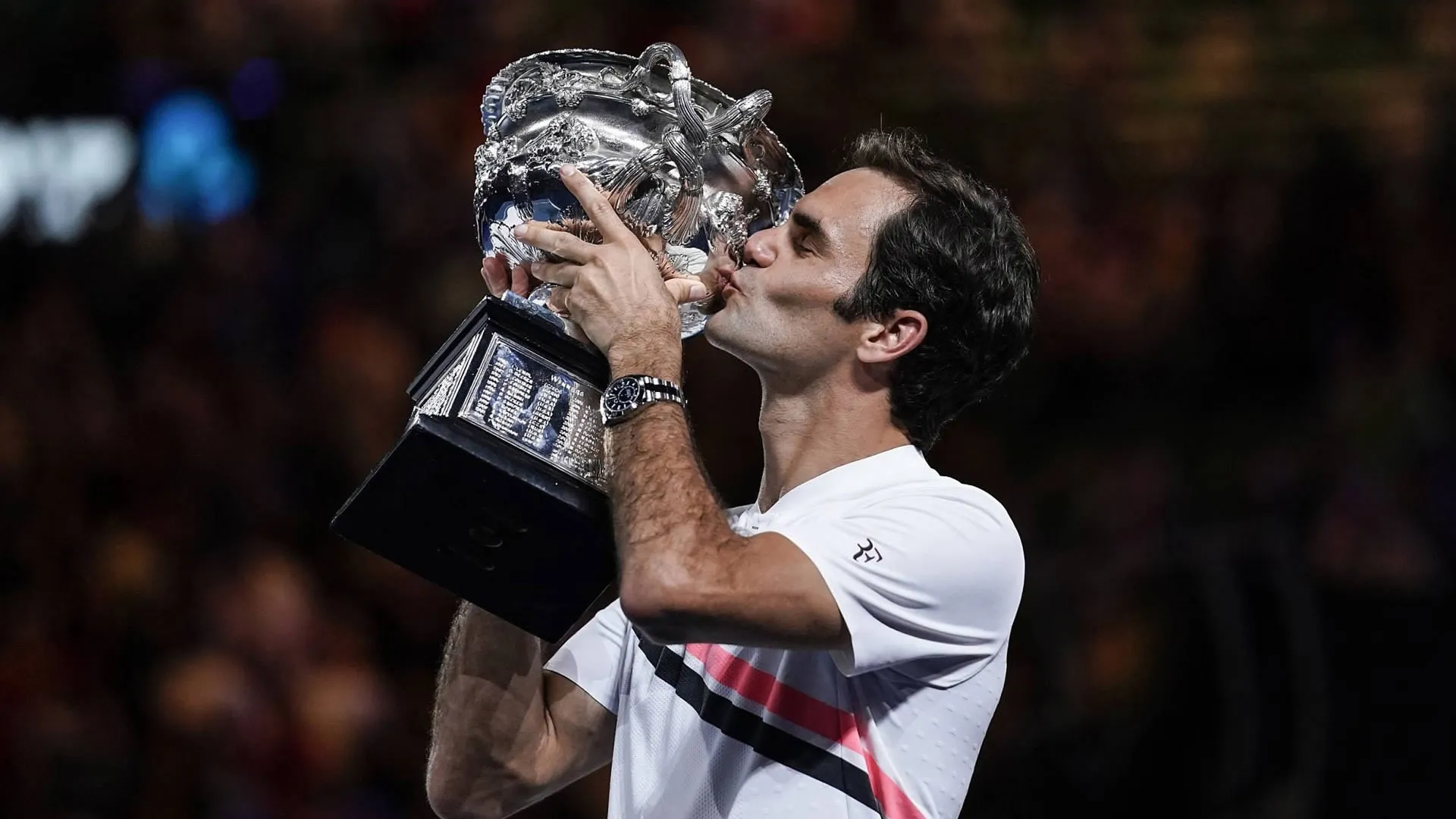
Roger Federer’s 20 Grand Slams: Breaking Down Each Title Victory
Roger Federer’s name is synonymous with elegance, longevity, and excellence. His 20 Grand Slam titles were not just trophies collected over time but milestones that shaped modern men’s tennis. Spread across different surfaces, eras, and rivals, each title tells a story of evolution, resilience, and unmatched skill. This article breaks down Roger Federer’s 20 Grand Slams victories and explains why they still matter in the history of the sport. The Legacy of Federer’s Grand Slam Era When Federer won his final major in 2018, he set a benchmark that once seemed untouchable. His success spanned nearly two decades, bridging generations of players and redefining what longevity at the highest level looks like. More than numbers, Federer’s Grand Slam record reflects consistency across surfaces, adaptability to change, and a playing style that influenced the global perception of tennis. Federer’s First Grand Slam Breakthrough Federer’s Grand Slam journey began at Wimbledon Championships in 2003, where he defeated Mark Philippoussis in the final. That victory marked his transformation from a gifted talent into a champion capable of dominating the sport. It also announced the arrival of a new grass-court king and laid the foundation for one of the greatest careers in tennis history. Dominance at Wimbledon Wimbledon was Federer’s most successful Grand Slam tournament, where he won eight titles, the most by any male player. His fluid movement, precise serve, and attacking instincts made him nearly unbeatable on grass. From early wins in the mid-2000s to the emotional triumph in 2017, Federer’s Wimbledon titles showcased his adaptability. Even as the game became more physical, his timing and shot-making allowed him to stay competitive against younger opponents. Wimbledon was where Federer’s elegance and efficiency were most visible. Australian Open Success Federer claimed six titles at the Australian Open, demonstrating his mastery on hard courts. His victories in Melbourne highlighted his ability to handle fast conditions while maintaining control from the baseline. The 2017 Australian Open stands out as one of the defining moments of his career. Returning from injury at age 35, Federer defeated Rafael Nadal in a classic final, proving that experience and tactical intelligence could still overcome youth and power. US Open Era of Supremacy Federer’s dominance at the US Open was unmatched during his peak. He won five consecutive titles from 2004 to 2008, a run that underlined his control over the men’s game. These victories came during the height of his athleticism, where his aggressive baseline play and improved serve made him nearly impossible to break. The US Open years cemented Federer’s reputation as the best player in the world during the mid-2000s. The French Open Challenge The French Open proved to be Federer’s greatest challenge, largely due to the dominance of Rafael Nadal on clay. Federer reached multiple finals but repeatedly fell short against his greatest rival. That changed in 2009, when Federer finally won the French Open, completing the career Grand Slam. Although Nadal was absent from the final, the victory was monumental. It removed the last remaining gap in Federer’s résumé and confirmed his versatility across all surfaces. Grand Slam Wins by Playing Style and Evolution Federer’s 20 Grand Slams can be divided into phases that reflect his evolution as a player. Early in his career, he relied on explosive shot-making and aggressive net play. During his peak years, he refined his baseline game and improved his defensive skills. In the later stages of his career, Federer reinvented himself. Shorter points, smarter shot selection, and a more aggressive backhand allowed him to compete effectively despite declining physicality. This ability to adapt was key to extending his Grand Slam success well into his 30s. Rivalries That Shaped Federer’s Grand Slam Wins Federer’s major victories were heavily influenced by his rivalries, particularly with Rafael Nadal and Novak Djokovic. Nadal pushed Federer to improve on clay and develop greater mental toughness, while Djokovic tested his endurance and precision on hard courts. Many of Federer’s most memorable Grand Slam finals came against these rivals. Even in defeat, those matches elevated the quality of tennis and defined an era often regarded as the greatest in the sport’s history. Comebacks and Late-Career Triumphs Winning Grand Slams after the age of 30 is rare in men’s tennis, yet Federer achieved this multiple times. His titles in 2017 and 2018 were not just victories but statements about preparation, discipline, and belief. By managing his schedule carefully and focusing on major tournaments, Federer extended his career at the top level. These late-career wins added depth to his legacy, proving that greatness is not confined to youth. Statistical Breakdown of Federer’s 20 Titles Federer’s Grand Slam tally breaks down as follows: He reached 31 Grand Slam finals overall, winning nearly two-thirds of them. His success across all four majors places him among the most complete players in tennis history. Why Federer’s 20 Grand Slams Still Matter Although other players have since surpassed Federer’s total, his 20 Grand Slams remain historically significant. He set the benchmark that others chased, changing expectations around longevity and consistency. Federer also globalized tennis in a new way. His sportsmanship, style, and accessibility attracted fans beyond traditional audiences, leaving an impact that statistics alone cannot capture. More Than Just 20 Trophies Roger Federer’s 20 Grand Slams titles represent more than numerical achievement. They tell the story of a player who evolved with the sport, faced legendary rivals, and maintained excellence across generations. While records may fall, Federer’s Grand Slam legacy endures as a symbol of balance between skill, grace, and competitive greatness.
Read More
Tennis Scoring System Origins: The 15-30-40 Mystery Finally Solved
If you have ever sat down to watch a tennis match and wondered why the score jumps from 0 to 15 to 30 to 40 instead of just counting 1, 2, 3 like every other sport on the planet, you are not alone. It is one of the most commonly asked questions in sports, and the answer takes us on a surprisingly deep journey through medieval France, clock faces, and centuries of sporting tradition. Understanding the tennis scoring system origins does not just satisfy curiosity. It gives you a whole new appreciation for every point played at Wimbledon, the US Open, or your local club court. Why Does Tennis Use 15, 30, and 40? The most widely accepted explanation for the tennis scoring system origins traces back to medieval France in the 1400s. The game played back then was called “jeu de paume,” which roughly translates to “game of the palm,” since players originally hit the ball with their hands before rackets came into use. This early version of tennis was enormously popular among French nobility, and its scoring was tied to something almost everyone owned in that era: a clock. The theory goes that a clock face was used to keep score. Each point won moved the hand of the clock forward by 15 minutes. So the first point moved the hand to 15, the second to 30, and the third to 45. When a player reached 60, they won the game. Simple enough, right? So where did 40 come from? The 45 That Became 40: A Linguistic Shortcut Here is where the tennis scoring system origins get genuinely interesting. The jump from 45 to 40 is most commonly attributed to a simple matter of practicality and pronunciation. When calling out scores quickly during a fast-moving match, “forty-five” was a mouthful. Over time, players and officials began shortening it to “forty,” and the abbreviation stuck permanently. There is also a second theory worth considering. Some historians believe the change from 45 to 40 was made deliberately to accommodate the concept of “deuce,” which requires a player to win two consecutive points after reaching a tied score. If both players reached 45, there would be no room on the clock face to represent the advantage point needed before winning. By dropping the final score to 40, the system allowed a logical progression: 40, then advantage, then game. Whether it was convenience or clever design, the result is the same scoring system tennis players use today across every tournament in the world. What Does “Love” Mean in Tennis and Where Did It Come From? No discussion of tennis scoring system origins is complete without addressing “love,” the term used for zero. If you have ever wondered why a score of nothing is called love, there are two main theories that historians debate. The first and most popular theory links the word to the French word “l’oeuf,” which means “the egg.” An egg, of course, is oval shaped and resembles a zero visually. This kind of number-to-object association is not unique to tennis. You see the same logic in cricket, where a score of zero is called a “duck” because of the duck-egg shape. Over time, English-speaking players may have anglicized “l’oeuf” into “love,” and the term carried forward through generations of the sport. The second theory suggests the word comes from the English phrase “to play for love,” meaning to play for the joy of the game rather than for money or reward. In this reading, starting at “love” means you have nothing to lose and everything to gain. While this interpretation is more poetic, most linguistic historians lean toward the French egg theory as the more likely origin. The Deuce Rule: Why Two Points Are Not Always Enough Understanding the tennis scoring system origins also means understanding deuce, which is arguably the most dramatic rule in the sport. When both players reach 40, the game does not end on the next point. Instead, the score is called deuce, and the winner must win two consecutive points to claim the game. The word “deuce” itself comes from the French word “deux,” meaning two, reflecting the requirement to win by two clear points. This rule was introduced to prevent matches from being decided by a single lucky shot when both competitors are evenly matched. It adds tension, drama, and a genuine test of mental and physical stamina. In high-level matches, players can spend several minutes locked in a deuce battle for a single game, which is part of what makes tennis so compelling to watch. How Did Tennis Scoring System Origins Influence the Modern Game? The scoring structure that evolved from those French courtyards has proven remarkably resilient. Despite centuries of change in equipment, court surfaces, and playing styles, the fundamental scoring system has remained almost entirely intact. That consistency speaks to how well-designed the system actually is, even if its origins were never planned with modern professional sport in mind. Today, some competitions have introduced tie-breaks and “no-ad” scoring to speed up matches, particularly in doubles and lower-stakes tournament formats. The ATP and WTA tours have experimented with formats like the match tie-break to reduce extremely long matches. But at the Grand Slams, traditional scoring largely rules, especially in the men’s game where five-set matches with standard deuce rules are still the norm. Other Theories Worth Knowing About Tennis Scoring While the clock face explanation dominates most conversations about tennis scoring system origins, it is worth noting that not all historians agree. Some researchers argue there is no direct documented evidence linking early tennis scores to actual clock faces. They suggest the clock theory may itself be a later rationalization invented to explain a system that grew more organically through custom and tradition. Another alternative theory points to the use of “chases” in real tennis, the older indoor version of the game still played in a handful of courts worldwide. In real tennis, court measurements and positional markers may have
Read More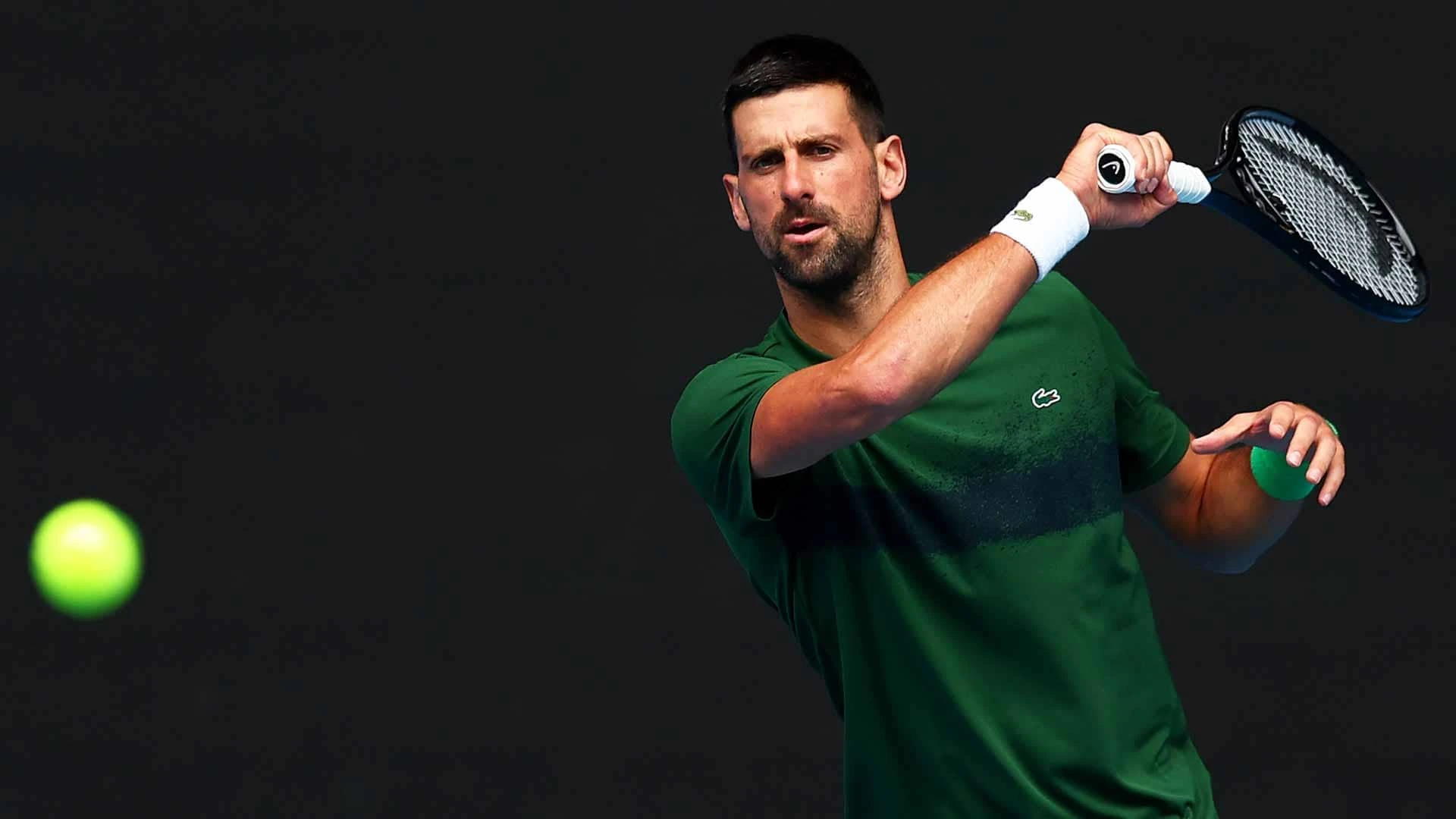
Djokovic Australian Open 2026: The Strategic Rest Formula Behind His 25th Slam Chase
Novak Djokovic is proving that experience and wisdom can triumph over youth and energy. His journey through the Djokovic Australian Open 2026 tournament reveals a champion who has mastered not just the game of tennis, but the art of managing his body at the highest level of competition. Breaking Records at Australian Open 2026 The Serbian legend has been unstoppable in Melbourne, achieving three incredible milestones within a single week. He secured his 100th match win at this prestigious event, became the first player ever to reach 400 Grand Slam victories, and surpassed Roger Federer to claim the record for most men’s quarterfinal appearances in tournament history. Even more remarkable is how efficiently he has reached this stage. The 38-year-old has spent only seven hours on court through four rounds without losing a single set. This efficiency stands in sharp contrast to his struggles in recent years, where grueling early matches depleted his energy reserves before reaching the tournament’s crucial stages. A Fortunate Break Changes Everything Lady luck intervened when 20-year-old Jakub Mensik withdrew from their fourth-round match due to an abdominal injury. While some players might worry about losing competitive rhythm, this unexpected rest day could prove invaluable for Djokovic at this stage of his career. Mensik would have been a serious challenge. The young Czech player arrived in Melbourne as the Auckland champion and has been firing an average of 16 aces per match this season. He even defeated Djokovic in the Miami Open final last year, showcasing the powerful serve that makes him dangerous against any opponent. For a player concerned about energy management deep in a tournament, avoiding this potential marathon match could be the difference between success and early elimination. The Revolutionary Training Approach for Djokovic Australian Open 2026 What truly sets this year’s campaign apart is the Serbian’s willingness to break conventional wisdom about tournament preparation. He has skipped practice sessions between matches, choosing preservation over perfection in a calculated gamble that seems to be paying dividends. His team evaluates his physical condition daily, making real-time decisions about whether additional court time helps or hurts his chances. After months of intensive preparation before arriving in Melbourne, Djokovic trusts his ball striking ability and focuses entirely on keeping his body fresh. This approach directly addresses his earlier comments about uncertainty regarding how his body would respond to extended tournament play. Rather than fight against aging, he has adapted his entire strategy around it. What Lies Ahead in the Quarterfinals Wednesday brings a quarterfinal showdown against either Taylor Fritz or Lorenzo Musetti. History heavily favors the 10-time champion, who holds a dominant 20-1 combined record against both potential opponents. However, Musetti pushed him to a three-hour battle in Athens last November, proving he can extend Djokovic even on favorable surfaces. That match took place in the Greek capital, where the Serbian star now makes his home, adding extra significance to their rivalry. The bigger challenge likely awaits in a potential semifinal against Jannik Sinner. The two-time defending champion ended Djokovic’s remarkable 33-match winning streak at this tournament two years ago and represents the new generation trying to dethrone the old guard. Why Timing Favors Djokovic Australian Open 2026 Success The champion himself recognizes that early season tournaments offer his best opportunity for Grand Slam glory. His body carries far less accumulated wear in January compared to the later months when Wimbledon, the US Open, and other major events take place. Recent history supports his concerns about physical durability. In 2024, he battled through seven hours of tennis and lost two sets in just his opening two matches. The following year followed a similar pattern with six hours played and two sets dropped in early rounds. Both tournaments ended in semifinal disappointment, including a retirement against Alexander Zverev after his exhausting comeback win over Carlos Alcaraz. This year’s smooth passage through the draw suggests he has learned valuable lessons from those physically draining campaigns. The Record Books Keep Changing Every victory adds another line to an already legendary resume. His next win will be number 103 at the Australian Open, moving him past Federer for most victories at a single Grand Slam tournament. But individual match records pale in comparison to his ultimate goal: capturing an unprecedented 25th major championship. Despite recent struggles against younger stars like Sinner and Alcaraz at the biggest events, Djokovic maintains complete confidence in his abilities. He believes that when his body feels good and his mind stays sharp, he can still defeat anyone in the world. The question is no longer whether he possesses the skill level. The question is whether his body will cooperate when it matters most. Energy Management as a Competitive Weapon The Djokovic Australian Open 2026 narrative centers on a simple but profound truth: at 38 years old, working smarter beats working harder. While younger competitors might fill every spare moment with additional training, the Serbian veteran trusts his experience and minimizes unnecessary physical stress. Where others might panic about rhythm after receiving a walkover, he recognizes an opportunity to bank precious energy for the battles ahead. Where conventional wisdom demands practice between matches, he prioritizes rest and recovery. His approach represents a masterclass in self-awareness. He understands his body’s limits, accepts the realities of aging, and adjusts his strategy accordingly without sacrificing competitive intensity. The Final Verdict Through the first week in Melbourne, this conservation strategy is working to perfection. Djokovic looks fresh, focused, and formidable. He moves efficiently on court, strikes the ball with authority, and shows no signs of the physical struggles that plagued his recent Grand Slam campaigns. Four more victories would deliver that historic 25th major title. Four more matches stand between him and tennis immortality. After decades of success built on relentless preparation and maximum effort, he is proving that sometimes the key to winning is knowing when to rest. The Djokovic Australian Open 2026 journey continues Wednesday. And based on everything we have seen so far, the smart money
Read More