
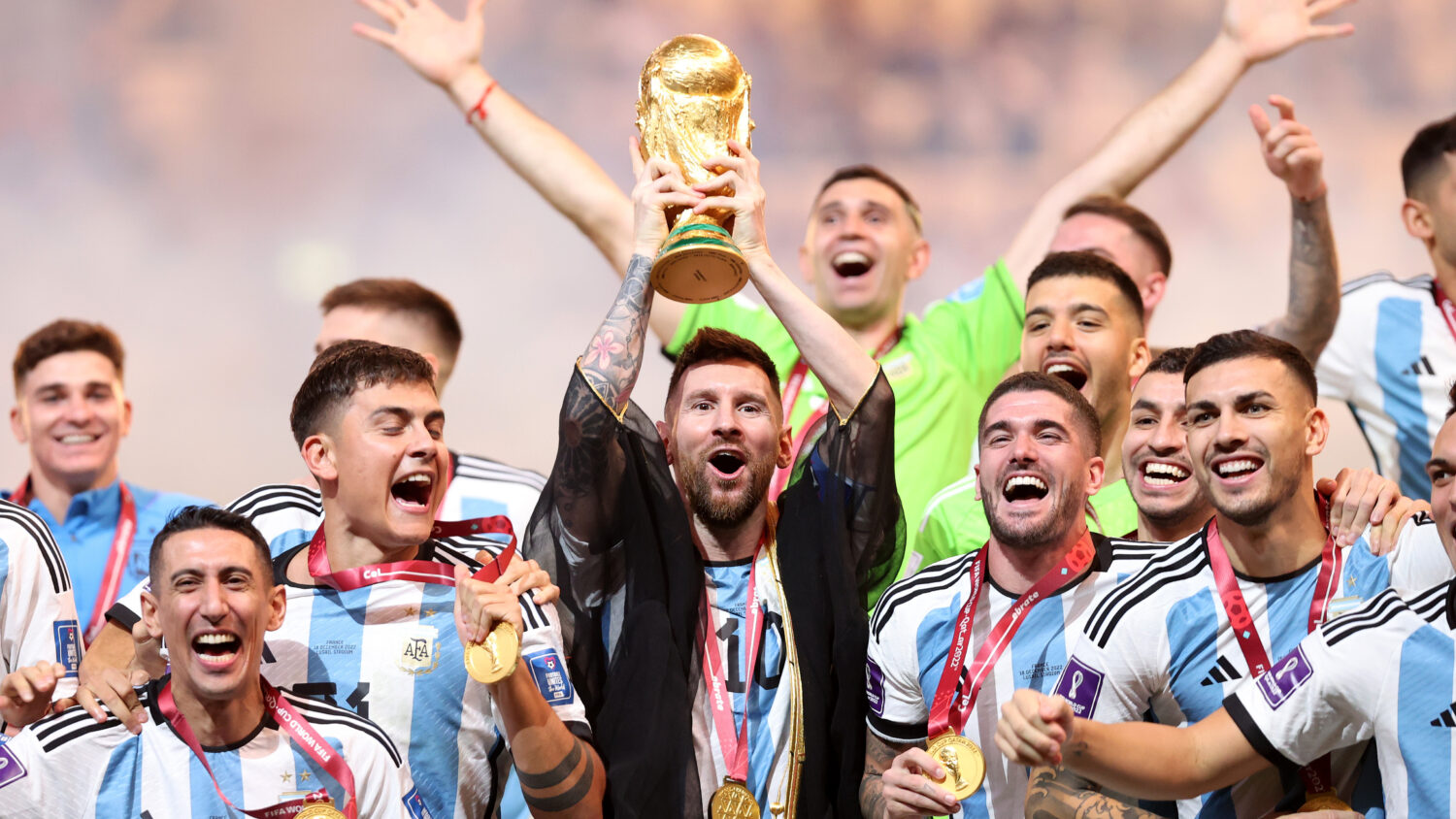

The FIFA World Cup is the most watched sporting event on the planet. Every four years, billions of fans tune in to watch the world’s best players compete for football’s ultimate prize. But while goals, trophies, and golden boots tend to dominate the headlines, there is another milestone that speaks volumes about a player’s greatness: the total number of World Cup appearances accumulated across an entire career.
Table of Contents
- Lionel Messi: The All-Time Leader with 26 World Cup Appearances
- Messi’s World Cup Appearances by Tournament
- Lothar Matthäus: The Former Record Holder Who Set the Standard
- What Made Matthäus’s Record So Remarkable
- Miroslav Klose: 24 Appearances and Football’s Greatest Goalscorer
- Paolo Maldini: Defensive Excellence Across 23 Appearances
- Why Defenders Often Build High Appearance Totals
- Cristiano Ronaldo: 22 Appearances and Chasing History in 2026
- The 20-Appearance Club: Legends Who Reached the Threshold
- Players with 20 or More FIFA World Cup Appearances
- What Enables Players to Reach Record World Cup Appearances
- How the 2026 FIFA World Cup Could Reshape the Record Books
- Why These Records Matter Beyond the Numbers
- Conclusion: A Record Built on Dedication, Longevity, and Greatness
Appearing at one World Cup requires talent. Appearing at two demands consistency. Making it to three, four, or even five editions of the tournament is a feat that separates true legends from everyone else. It requires not just elite ability but extraordinary physical durability, mental resilience, tactical adaptability, and the fortune of representing a nation capable of qualifying repeatedly.
Lionel Messi currently holds the all-time record with 26 World Cup appearances, a mark built across five tournaments spanning from Germany 2006 to Qatar 2022. With the 2026 FIFA World Cup fast approaching, the first 48-team edition co-hosted by the United States, Canada, and Mexico, records that stood for decades are now within reach of being rewritten entirely.
This article takes a deep dive into the players with the most FIFA World Cup appearances in history, examining what drove their longevity, how they adapted across different eras, and what the 2026 tournament could mean for the record books.
Lionel Messi: The All-Time Leader with 26 World Cup Appearances
No player in the history of the FIFA World Cup has stepped onto the pitch more times than Lionel Messi. His record of 26 appearances is the product of five consecutive tournament campaigns, each one adding another chapter to the most decorated individual career in football history.
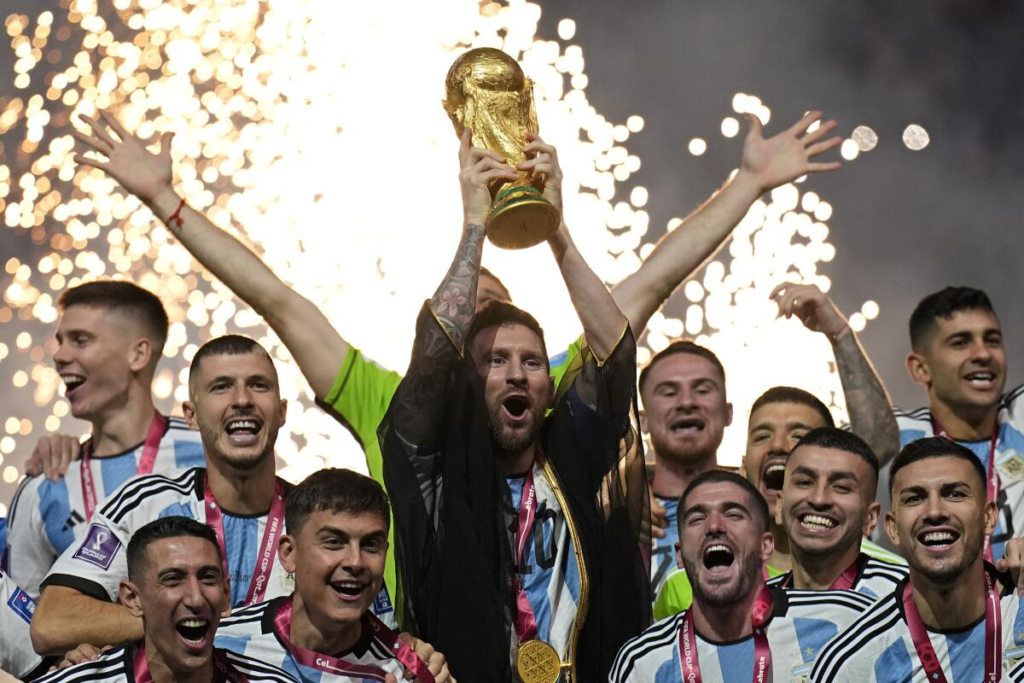
Messi made his World Cup debut at just 18 years old at Germany 2006, coming off the bench to score against Serbia and Montenegro. From that moment, he never missed another edition. He played all seven matches at South Africa 2010, reached the final at Brazil 2014 where he won the Golden Ball, participated fully at Russia 2018, and then capped everything with a trophy at Qatar 2022, where Argentina defeated France on penalties in arguably the greatest World Cup final ever played.
Messi’s World Cup Appearances by Tournament
| Tournament | Year | Host | Matches Played | Goals | Assists |
|---|---|---|---|---|---|
| Germany | 2006 | Germany | 3 | 1 | 1 |
| South Africa | 2010 | South Africa | 5 | 0 | 2 |
| Brazil | 2014 | Brazil | 7 | 4 | 1 |
| Russia | 2018 | Russia | 4 | 1 | 2 |
| Qatar | 2022 | Qatar | 7 | 7 | 3 |
| Total | 26 | 13 | 9 |
What elevates this record beyond pure statistics is the quality Messi delivered alongside the quantity. He did not simply accumulate appearances by featuring as a substitute or filling squad numbers. He was Argentina’s most important player in every single tournament, evolving from an electric young winger into a deep-lying playmaker and eventually a world champion and undisputed leader. If he participates at the 2026 World Cup, he could push his total even further into uncharted territory.
Lothar Matthäus: The Former Record Holder Who Set the Standard
Before Messi arrived to claim the crown, one name stood alone at the top of this list for over two decades. Lothar Matthäus of West Germany and Germany accumulated 25 World Cup appearances across five tournaments between 1982 and 1998, a record that seemed virtually untouchable at the time.
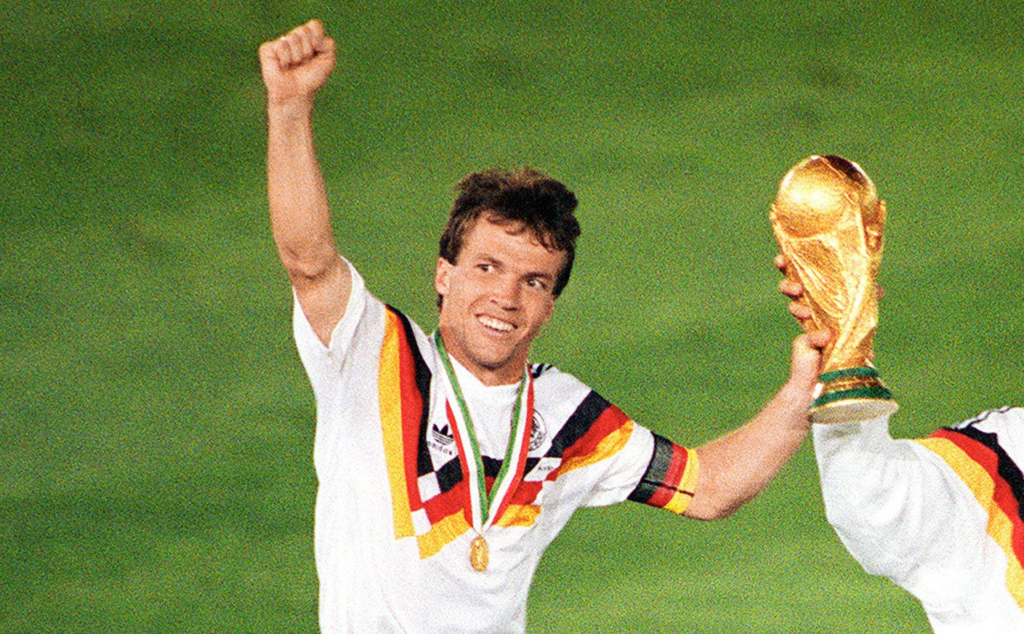
Matthäus was the complete midfielder. He combined physical power with exceptional technical quality, reading the game with a tactical intelligence that allowed him to remain relevant as the sport evolved around him. He began his World Cup career as a dynamic box-to-box player and finished it as a commanding libero, demonstrating the kind of positional adaptability that extended elite careers before modern sports science made it more common.
What Made Matthäus’s Record So Remarkable
Reaching 25 appearances in an era with fewer substitutions, less squad rotation, and significantly more physical contact makes Matthäus’s achievement genuinely extraordinary. He appeared in three consecutive World Cup finals in 1982, 1986, and 1990, winning the trophy as captain in Italy. His longevity was driven by several factors that modern analysts continue to reference:
- Positional versatility that allowed managers to use him in multiple roles across different stages of his career
- Elite fitness standards maintained long before personalised nutrition and recovery protocols became standard
- Leadership qualities that kept him central to Germany’s plans even as teammates around him changed
- Tactical intelligence that compensated for any physical decline in his later tournaments
His record stood for over 20 years, and the fact that only Messi has surpassed it underlines just how rare this level of sustained excellence truly is.
Miroslav Klose: 24 Appearances and Football’s Greatest Goalscorer
Miroslav Klose occupies a unique position in World Cup history. He ranks third on the all-time appearances list with 24 matches across four tournaments from 2002 to 2014, while simultaneously holding the record for most World Cup goals ever scored with 16. No player has combined volume and impact quite like Klose across the modern era.
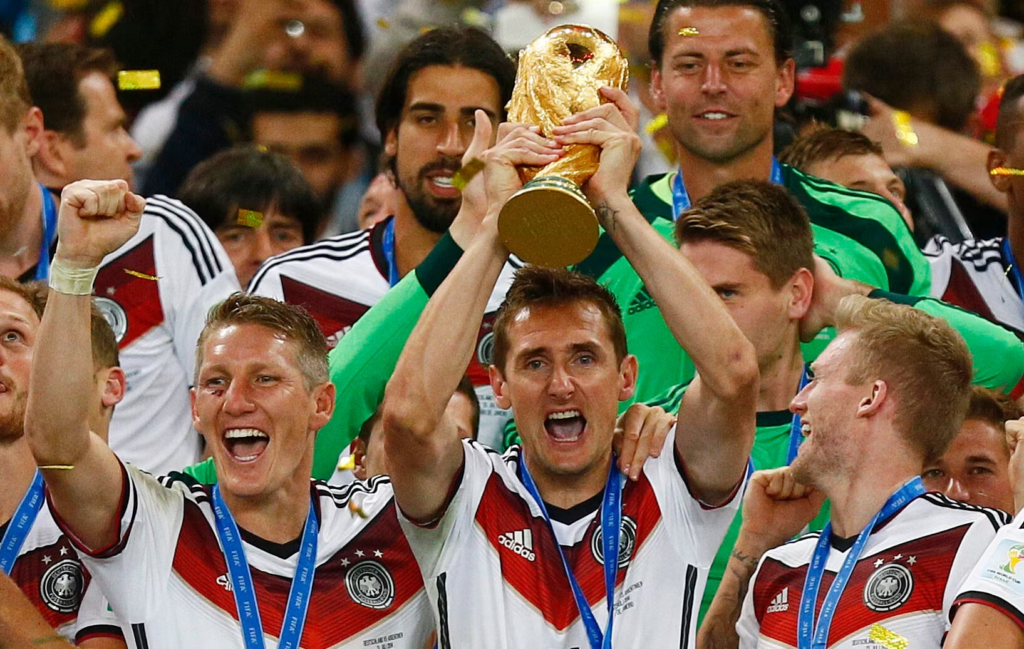
His World Cup career with Germany was defined by reliability. He scored in every single tournament he entered, delivered crucial goals in knockout rounds, and consistently elevated his performance when the pressure was highest. His aerial ability, intelligent movement, and selfless pressing style made him a nightmare for defenders and a perfect fit for Germany’s structured, progressive style of play.
Top Three All-Time World Cup Appearance Leaders
| Rank | Player | Nation | Appearances | Tournaments | Key Achievement |
|---|---|---|---|---|---|
| 1 | Lionel Messi | Argentina | 26 | 5 (2006 to 2022) | 2022 World Cup winner and Golden Ball |
| 2 | Lothar Matthäus | Germany | 25 | 5 (1982 to 1998) | 1990 World Cup winner as captain |
| 3 | Miroslav Klose | Germany | 24 | 4 (2002 to 2014) | All-time record of 16 World Cup goals |
Klose reaching 24 appearances across just four tournaments highlights the benefit of representing a nation that consistently advances deep into the knockout rounds. Germany reached the final in 2002, the semifinal in 2006 and 2010, and won the trophy in 2014. Those deep runs transformed a strong career into a record-breaking one.
Paolo Maldini: Defensive Excellence Across 23 Appearances
Paolo Maldini stands as the greatest defender in this conversation, having accumulated 23 World Cup appearances for Italy across four tournaments between 1990 and 2002. In an era when Italy’s football was synonymous with defensive organisation and tactical discipline, Maldini was the foundation upon which every campaign was built.
He featured at left-back and centre-back with equal authority, anchoring Italian backlines that conceded remarkably few goals throughout his international career. His 1994 campaign saw Italy reach the final, where they were defeated by Brazil on penalties. Through that heartbreak and across multiple tournament cycles, Maldini remained Italy’s most trusted defender and one of the most respected players of his generation.
Why Defenders Often Build High Appearance Totals
Maldini’s record reveals an interesting pattern in this list. Defenders and midfielders frequently accumulate more World Cup appearances than forwards, for several connected reasons:
- Role longevity — defensive players often maintain elite performance into their mid-30s because their game relies more on positioning and reading than explosive pace
- Squad stability — managers rarely rotate defensive leaders the way they might rotate attacking players across group stage matches
- Injury patterns — forwards tend to draw more physical attention and suffer more direct impact injuries than defenders operating deeper
- Tactical consistency — a settled defensive unit is often prioritised by coaches building for deep tournament runs
Maldini’s career embodies all of these factors, making him one of the most instructive case studies in what it takes to build a long World Cup career from a defensive position.
Cristiano Ronaldo: 22 Appearances and Chasing History in 2026
Cristiano Ronaldo currently sits fifth on the all-time list with 22 World Cup appearances across five tournaments from 2006 to 2022. Like Messi, Ronaldo made his World Cup debut at Germany 2006 as a teenager and has competed in every subsequent edition. Unlike Messi, he is yet to lift the trophy, a fact that makes 2026 a particularly significant chapter in his story.
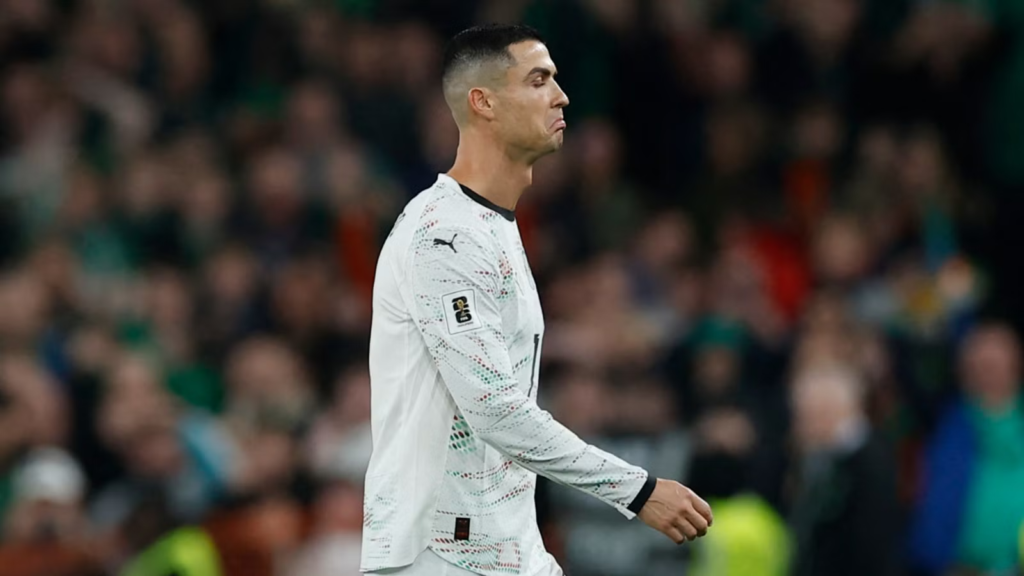
Portugal’s performances at recent tournaments have shown genuine improvement in squad depth and collective quality. If Ronaldo remains fit and earns selection for 2026, he becomes one of two players alongside Messi who could achieve the historic milestone of featuring in six separate World Cups. A deep Portuguese run could push his appearance total significantly, potentially challenging Matthäus and even creating a new contest for second place on the all-time list.
The 20-Appearance Club: Legends Who Reached the Threshold
Beyond the top five, a select group of players reached the 20-match mark, each representing a different era and style of play. Understanding who belongs to this exclusive group reveals the national footballing cultures most capable of producing sustained World Cup success.
Players with 20 or More FIFA World Cup Appearances
| Player | Nation | Appearances | Tournaments | Notable Achievement |
|---|---|---|---|---|
| Diego Maradona | Argentina | 21 | 4 | 1986 World Cup winner and Golden Ball |
| Wladyslaw Zmuda | Poland | 21 | 4 | 1974 bronze and 1982 bronze medallist |
| Uwe Seeler | West Germany | 21 | 4 | Scored in four consecutive tournaments |
| Hugo Lloris | France | 20 | 4 | 2018 World Cup winning captain |
| Bastian Schweinsteiger | Germany | 20 | 4 | 2014 World Cup winner |
| Javier Mascherano | Argentina | 20 | 4 | Defensive cornerstone of the Messi era |
| Grzegorz Lato | Poland | 20 | 3 | 1974 tournament top scorer |
Several clear patterns emerge from this table. Germany and Argentina dominate the list, reflecting their consistent ability to qualify and advance deep into knockout rounds across multiple decades. Midfielders and defenders appear more frequently than forwards. And every single player on this list represented a nation with a strong footballing infrastructure capable of regularly competing at the highest level.
What Enables Players to Reach Record World Cup Appearances
Accumulating 20 or more World Cup appearances is not simply a matter of talent. It requires a specific combination of individual qualities and external circumstances that very few players ever experience together.
The key factors that enable record appearances include:
- National team strength — representing a consistent qualifier like Germany, Argentina, Italy, or France dramatically increases the number of available tournaments
- Physical durability — sustaining elite fitness across a 12 to 16 year international career demands exceptional genetics, professional discipline, and smart load management
- Tactical evolution — the ability to redefine one’s role as physical attributes change is what separates players who last five tournaments from those who fade after two
- Deep knockout runs — a player who reaches semifinals and finals regularly will accumulate 6 to 7 appearances per tournament rather than 3 to 4, compounding totals significantly over time
- Manager trust — consistent selection across different coaching regimes requires a combination of performance and character that earns long-term institutional confidence
- Mental resilience — the four-year wait between tournaments, combined with the pressure of performing on the world’s biggest stage, tests psychological strength as much as physical ability
Modern sports science has added another layer to this conversation. Personalised nutrition, advanced recovery protocols, and data-driven training loads have allowed elite players to extend their competitive careers in ways that were simply not possible in Matthäus’s era. This is partly why Messi was still delivering his best World Cup performance at 35 years old in Qatar.
How the 2026 FIFA World Cup Could Reshape the Record Books
The 2026 tournament introduces a genuinely new variable into this conversation. For the first time in history, 48 nations will compete across three host countries, with an expanded group stage format that increases the total number of matches available per team. A team that advances through every round in 2026 will play eight matches, compared to seven in previous 32-team editions.
That single additional match per deep run may seem minor, but it has significant implications for players already close to historic records. Consider what 2026 could deliver:
- Messi could push his record to 32 or 33 appearances if Argentina advances to the final, a total that may stand for a generation
- Ronaldo could climb past Matthäus into second place all-time if Portugal makes a deep run
- A new generation of young players debuting in 2026 could begin accumulating appearances early enough to challenge these records by the 2030s and 2034 tournaments
The expanded format also means more nations competing, which creates opportunities for players from historically weaker footballing nations to begin building appearance totals that were previously impossible to reach.
Why These Records Matter Beyond the Numbers
Statistics in football can feel cold when separated from context. But World Cup appearance records carry something deeper than a number on a spreadsheet. Each appearance represents a four-year cycle of dedication, a qualification campaign survived, injuries overcome, and the mental weight of representing an entire nation on the world’s largest stage.
For Messi, those 26 appearances trace a career narrative from a nervous teenager in Germany to a world champion weeping with joy in Qatar. For Matthäus, 25 appearances across 16 years tell the story of West German and reunified German football at its most powerful. For Klose, 24 appearances and 16 goals represent perhaps the most efficient combination of volume and impact in tournament history.
These records connect generations of football supporters. A fan who watched Matthäus in 1982 and follows Messi today is experiencing the same conversation across four decades.
Conclusion: A Record Built on Dedication, Longevity, and Greatness
The most FIFA World Cup appearances by a single player is ultimately a record about much more than fitness or fortune. It is about choosing excellence repeatedly, across different tournaments, different teammates, different coaches, and different versions o f oneself as a footballer.
Messi’s 26 appearances lead the list today, but 2026 will test whether that number can be extended further. Ronaldo’s pursuit adds a compelling subplot. And somewhere in the current generation of young players, a future record-holder is likely already making their first steps toward the World Cup stage.
Which player’s World Cup journey do you find most impressive? Do you think Messi or Ronaldo can extend their records further in 2026? Share your thoughts in the comments below and explore our Football section for full 2026 World Cup previews, historical records, and in-depth analysis of the players and nations shaping the tournament.




No Comments