
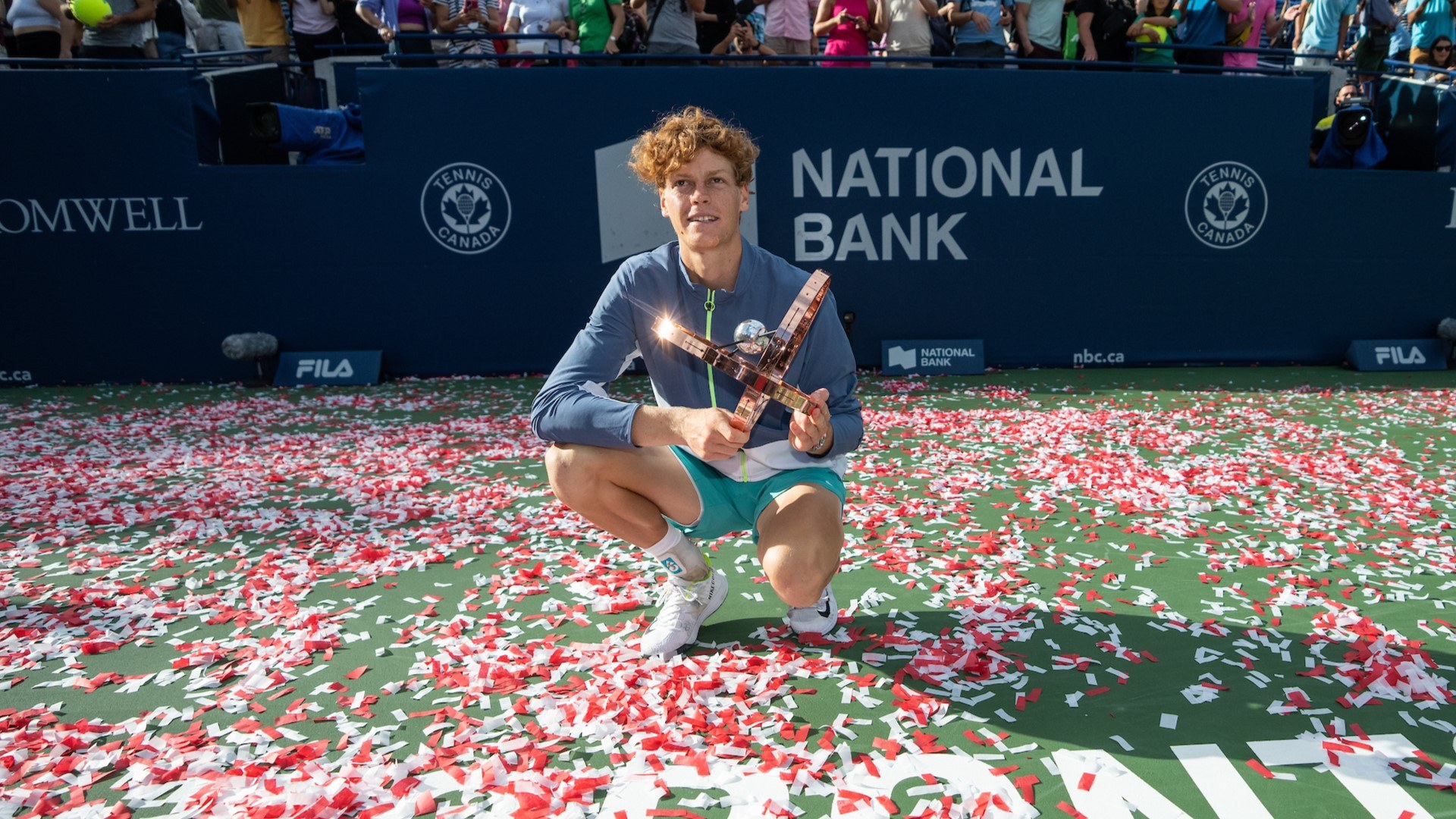
Jannik Sinner’s Net Worth in 2026: How the Gucci & Ferrari Effect Built a Financial Empire
Jannik Sinner is no longer just the best tennis player in the world. He is a brand, a lifestyle, and increasingly, a financial force that rivals the legends who defined the sport before him. At just 24 years old, the Italian maestro has turned a serve-and-baseline game into a global empire built on Grand Slam trophies, a landmark Nike contract, and two of Italy’s most iconic luxury symbols: Gucci and Ferrari. So just how much is Jannik Sinner worth in 2026, and what exactly is “the Gucci & Ferrari effect”? Let’s break it all down. Jannik Sinner’s Net Worth in 2026: The Big Number Sinner’s net worth in 2026 sits at roughly $40 million, according to Celebrity Net Worth, with the bulk of his earnings driven by tournament titles and a carefully curated sponsorship portfolio. His career prize money has already surpassed $56 million. His annual endorsement earnings are estimated between $25 million and $30 million, anchored by a 10-year Nike deal reportedly worth $158 million, signed in 2022. Here’s a snapshot of where things stand financially: Financial Metric Estimated Value (2026) Career Prize Money $56.6 million+ Annual Endorsement Income $25M – $30M Nike Deal (10-year) ~$158 million Estimated Total Net Worth ~$40 million These numbers don’t just reflect athletic excellence. They reflect something rarer: the ability to translate dominance on the court into cultural relevance off it. From Val Gardena to World No. 1: A Rise Worth Understanding Sinner was born in San Candido in the South Tyrol region of Italy, a town better known for skiing than tennis. He initially focused on skiing as a child before switching to tennis, where he quickly demonstrated the talent and discipline required to compete at the top level. The trajectory from there was steep. His first Grand Slam win came at the 2024 Australian Open, followed by the US Open later that year. In 2025, he defended his Australian Open title, reached the French Open final, and became the first Italian player to win Wimbledon. That kind of historic run doesn’t just fill trophy cabinets. It opens doors at boardrooms across Europe. The Gucci Effect: Redefining What a Tennis Player Can Look Like Of all the deals in Sinner’s portfolio, none has done more for his cultural cachet than his relationship with Gucci. The fashion house recruited him in 2021, and a defining moment came when his custom GG-monogrammed duffle bag turned heads at Wimbledon in 2023. This wasn’t a gimmick. It was a statement. Traditionally, players walk onto Centre Court carrying their racquet sponsor’s branded bag. Sinner showed up with Gucci. The internet noticed immediately, and the image spread far beyond the tennis world into fashion, lifestyle, and luxury media. What makes this partnership so powerful is the alignment of identity. Gucci’s current creative direction leans into what the industry calls “quiet luxury”: understated, refined, and confident without needing to shout. Sinner embodies exactly that. He doesn’t perform for the cameras. He wins, conducts himself with composure, and lets his results do the talking. That kind of personality is gold for a heritage fashion house. The result? Sinner now appears in high-fashion Gucci campaigns that reach audiences who have never watched a tennis match in their lives. His marketability has effectively escaped the sport. The Ferrari Effect: Italy’s National Hero Premium If Gucci gave Sinner cultural sophistication, Ferrari gave him something arguably more powerful in Italy: national icon status. By 2020, Alfa Romeo had already handed him the keys to a Stelvio Q4 Veloce, signaling a growing relationship between Sinner and Italy’s automotive world. His deeper association with Ferrari, attending Grand Prix events and visiting the Maranello factory, has truly elevated his “Italian premium.” In Italy, Ferrari is not merely a car brand. It is a symbol of national pride, precision engineering, and excellence. When Sinner stands beside that prancing horse, the message is clear: this is Italy’s greatest champion right now. That alignment has a measurable financial effect. It increases his attractiveness to other Italian institutions and global brands that want to tap into that national prestige. The result is a sponsorship ecosystem that snowballs. Because Sinner is linked to Gucci and Ferrari, he becomes more appealing to Rolex. Because he’s with Rolex, he enters the same “Legends” tier as Roger Federer. And because he carries that tier, Italian giants like Lavazza, Intesa Sanpaolo, and Eni see even more value in their existing associations. Jannik Sinner’s Full Sponsorship Portfolio in 2026 Sinner’s brand relationships are not scattered or opportunistic. They are deliberately tiered: luxury at the top, lifestyle in the middle, and functional partners at the base. Here’s how the portfolio breaks down: Luxury & Prestige Sports & Performance Finance & Insurance Lifestyle & Wellness Those endorsement deals reportedly netted Sinner over $15 million in 2024 alone, a figure that has since grown substantially as his stature has increased. On-Court Dominance: The Engine Behind the Brand No amount of marketing can manufacture what Sinner has built on the court. His financial ascent is ultimately grounded in sustained, historic performance. Wimbledon 2025 was his fourth Grand Slam in just 18 months, a run that started in Australia in 2024, followed by the US Open, then a defended Australian Open title in 2025, and finally the Wimbledon trophy. He reportedly earned $12 million alone from October to November 2024 by winning 13 consecutive tournaments. That kind of consistency doesn’t just add prize money. It keeps sponsors loyal, attracts new ones, and maintains the media visibility that keeps his name on front pages globally. Each title Sinner wins amplifies the value of every endorsement deal in his portfolio. Victory is not just sporting achievement. It is a marketing event. What Makes Sinner Different: The Quiet Luxury Athlete There is a broader cultural conversation happening around Sinner, and it explains why brands like Gucci and Ferrari are drawn to him specifically rather than other top players. The “quiet luxury” aesthetic, defined by subtle wealth, refined taste, and confidence without ostentation, has dominated
Read More
Golden Boot Winners: Tracking Football’s Prolific Scorers
The Golden Boot is the purest measure of a striker’s worth. No assists, no creative contributions, no defensive work rate — just goals, the only currency that ultimately decides football matches and defines careers. Across domestic leagues, World Cup tournaments, and continental competitions, the race to finish as the leading scorer each season has produced some of the most memorable individual achievements in the sport’s history. The players who have claimed these prizes most consistently have not simply been prolific. They have been relentless, redefining what is possible in front of goal across generation after generation. This is the full story of football’s greatest Golden Boot winners, the records they set, the eras they defined, and what separates them from every other striker the game has produced. What the Golden Boot Award Means in Football The Golden Boot exists in several forms, each carrying its own prestige and meaning. The European Golden Shoe, awarded annually to the top scorer across all of Europe’s top domestic leagues, represents the broadest measure of individual scoring excellence at club level. The FIFA World Cup Golden Boot identifies the tournament’s leading scorer every four years, placing a player’s performance on the sport’s largest global stage. The Premier League Golden Boot, presented since the competition’s founding in 1992, tracks the most prolific scorer in what many consider the world’s most competitive domestic league. Each award measures something slightly different, but all three share a common significance — they mark the player who, above everyone else in their competition, found ways to score when it mattered and did so with a consistency that no rival could match. The European Golden Shoe and Its Most Dominant Winners The European Golden Shoe has been awarded since the 1967-68 season, originally presented to the highest scorer across all European leagues regardless of competition strength. Since 1997, a weighted points system rewards goals scored in stronger leagues more heavily, ensuring the award reflects quality of opposition rather than volume of weaker fixtures alone. Lionel Messi holds the all-time record with six European Golden Shoes, won in 2009-10, 2011-12, 2012-13, 2016-17, 2017-18, and 2018-19, all for Barcelona. His peak season came in 2011-12 when he scored 50 La Liga goals, a figure that remains the single-season record for the award. Cristiano Ronaldo follows with four wins across Manchester United and Real Madrid. No other player in the history of the award has won it more than twice, which places the scale of the Messi-Ronaldo duopoly into sharp statistical relief. Kylian Mbappé claimed his first European Golden Shoe in 2024-25 with 31 goals for Real Madrid, becoming the first player since Ronaldo to win the award from the Santiago Bernabéu. Golden Boot Winners at the FIFA World Cup The World Cup Golden Boot carries a weight that no domestic award can fully replicate because it is contested once every four years, on the sport’s biggest stage, against the best defences every nation can produce. Eusébio set the benchmark for the modern era at the 1966 World Cup in England, scoring nine goals in six games for Portugal in one of the most individually dominant tournament performances the competition has ever witnessed. Just Fontaine of France holds the all-time single-tournament record with 13 goals at the 1958 World Cup in Sweden, a tally so far beyond any other player in a single edition that it has stood unreached for nearly seven decades. Kylian Mbappé became the most recent World Cup Golden Boot winner in Qatar 2022, scoring eight goals including a hat-trick in the final against Argentina, finishing one goal ahead of Lionel Messi’s seven. Remarkably, no player has ever won the FIFA World Cup Golden Boot more than once since the official award was introduced in 1982, reflecting the fierce unpredictability of tournament football. Premier League Golden Boot Winners and the Race for England’s Top Scorer The Premier League Golden Boot has been contested since the inaugural 1992-93 season, when Teddy Sheringham of Tottenham Hotspur claimed the first award with 22 goals. The standard has risen dramatically in the three decades since, with Erling Haaland setting the current single-season record of 36 goals for Manchester City in 2022-23, surpassing the 38-game era record of 32 set by Mohamed Salah in 2017-18. Thierry Henry and Mohamed Salah share the record for most Premier League Golden Boots won by a single player, with four each. Henry claimed his four in five seasons between 2001-02 and 2005-06, including a 30-goal campaign during Arsenal’s Invincibles season of 2003-04. Salah matched that total in 2024-25, scoring 29 goals as Liverpool claimed the Premier League title, becoming the first player in the competition’s history to finish a season as the leading scorer and provider of assists while also winning the Player of the Season award. How Ronaldo and Messi Redefined What Golden Boot Winners Look Like Before Lionel Messi and Cristiano Ronaldo dominated the European Golden Shoe landscape, no player in the award’s history had won it more than twice. Between 2008 and 2019, the two players claimed ten of twelve editions between them, establishing a standard of domestic scoring consistency that had no historical precedent and has not been approached since their peak years ended. Messi’s 50-goal La Liga season in 2011-12 and Ronaldo’s 48-goal return in 2014-15 both sit among the highest single-season league scoring tallies in European football history. Their rivalry across those years pushed each player to output levels that, in any previous era, would have been considered statistically implausible. The generation of Golden Boot winners that followed them, from Robert Lewandowski’s consecutive wins in 2020-21 and 2021-22 to Haaland and Mbappé’s current pursuit, has been shaped entirely by the standards Messi and Ronaldo established. The Forwards Who Won the Golden Boot and Changed Their Clubs Forever Some of the most significant Golden Boot seasons in football history are defined not just by the goal tallies but by what those goals delivered collectively. Luis Suárez’s Premier League Golden Boot in 2013-14 with 31
Read More
Luka Modric World Cup Career: From Underdog to Legend
Croatia has fewer than four million people. It has no history of football dominance. It has no pipeline of resources to rival the nations it faces. And yet, across four World Cups, it has reached heights that its size and means should never have allowed. That story has one engine at its centre. One player who carried more than any individual should be asked to carry, and delivered more than anyone expected. Luka Modric’s World Cup career is not simply the story of one man. It is the story of a small nation that refused to accept the limits the world placed on it. Croatia’s Underdog Identity and Where Modric Fits Croatia’s football identity was built on the 1998 World Cup in France, where they made the semifinals in their very first tournament as a nation following the breakup of Yugoslavia. Davor Suker won the Golden Boot. The world took notice. Then, for years, Croatia flickered in and out of tournament football without producing another run of that magnitude. Modric inherited that tradition. He became the creative engine, the leader, and the symbol of everything Croatian football aspired to be. His influence on every World Cup campaign went beyond any statistic. He was the heartbeat. Every attack flowed through him. Every defensive transition started with his pressing. And every moment of adversity was answered, at least in part, by his composure. 2006: A Quiet Debut on the Biggest Stage Modric made two appearances at the 2006 FIFA World Cup finals as a substitute in the group fixtures against Japan and Australia. He was 20 years old. His total playing time across both appearances was 35 minutes. Croatia were eliminated at the group stage. There were no headlines attached to that debut. No defining moments. Just a young midfielder absorbing the scale of the World Cup for the first time and storing everything he experienced. Players who become great at tournaments rarely arrive as finished articles. They arrive as learners. Modric’s 2006 campaign was exactly that. 2014: The Weight of Expectation By 2014 in Brazil, Modric was one of the finest midfielders on the planet. He had won the Champions League with Real Madrid weeks before the tournament. Croatia were placed in Group A alongside hosts Brazil, Mexico, and Cameroon. Croatia faced Brazil in their opening game and took the lead first through Marcelo’s own goal, but lost 1-3. Modric suffered a minor foot injury in the match. Croatia beat Cameroon 4-0 in their second game but then lost 1-3 to Mexico in the final group match, finishing third in their group and going home. It was a second consecutive group stage exit. Modric was playing the best football of his club career. The gap between individual quality and collective tournament success had never felt wider. What happened four years later made that frustration worthwhile. 2018: The Tournament That Defined a Career Russia 2018 is the centrepiece of the Luka Modric World Cup career. Croatia became the first team to earn three come-from-behind victories at a single FIFA World Cup, with all three matches going into extra time. What that statistic does not capture is the psychological demand of sustaining belief through three consecutive knockout matches decided beyond 90 minutes. In the round of 16, Croatia faced Denmark. Both teams drew 1-1 after extra time. Modric took a penalty in extra time but it was saved by Kasper Schmeichel. Croatia won the subsequent shootout 3-2. He stepped up again in the shootout and scored. The composure required to take a second penalty after missing the first is not taught. It is earned. The quarterfinal against hosts Russia produced another 1-1 draw after 90 minutes. Croatia took a 2-1 lead in extra time when Domagoj Vida headed in from Modric’s corner. Russia equalised in the 115th minute. Croatia won the shootout 4-3. The semifinal against England in Moscow saw Croatia trail to a Kieran Trippier free kick inside five minutes. Ivan Perisic equalised. Mario Mandzukic won it in the 109th minute. Croatia were in a World Cup final. The final against France in Moscow ended 4-2. Croatia led 1-0 through an early own goal before France took control. The defeat was painful. Modric won the Golden Ball as the tournament’s best player. He became the first player in over a decade to claim the award ahead of both Lionel Messi and Cristiano Ronaldo. The recognition was not simply for one tournament. It was for a body of work, across five weeks, that had stretched the limits of what a team his size should be capable of achieving. 2022: One Final Act at 37 Qatar 2022 brought Modric back to the World Cup stage at 37 years old. Croatia reached the semifinals again, losing 3-0 to Argentina. They finished third after beating Morocco in the third-place playoff. At the 2022 World Cup, he led the team to a third-place finish, winning the Bronze Ball as the tournament’s third best player. Two semifinals in four tournaments. That is the measure of what Modric built around himself. Not a superteam. Not a golden generation of eight world-class players. A well-organised, deeply motivated group of footballers who, when led by him, consistently exceeded what their talent level alone would have allowed. What Made Modric Unplayable at World Cups The tactical explanation for Modric’s World Cup performances centres on his ability to do two jobs simultaneously. He won the ball back with the urgency of a defensive midfielder. He then distributed it with the vision of a playmaker. No single opponent could neutralise both functions at once. Pressing him high left space in behind. Sitting off him gave him time to dictate the rhythm of the entire match. Beyond the tactical, the psychological dimension was equally decisive. He missed a penalty in a World Cup knockout match against Denmark and then stepped up to take another one minutes later in the same shootout. That is not a quality that can be coached. It is the definition
Read More
Miami Open History: From Humble Beginnings to Tennis’ “Fifth Slam”
The Miami Open history is a story of growth, legacy, and elite competition. Since its launch in 1985, the tournament has evolved into one of the most important events in professional tennis, often referred to as the “Fifth Slam.” Held annually on outdoor hard courts in Miami Gardens, Florida, the Miami Open is a cornerstone of both the ATP Masters 1000 and WTA 1000 circuits. It consistently delivers high-quality matches, iconic champions, and defining moments that shape the sport. The Origins of Miami Open History The Miami Open began in 1985 under the name Lipton International Players Championships. The goal was ambitious: create a tournament that could rival the scale and prestige of Grand Slams. The first champion, Tim Mayotte, set the tone for what would quickly become a world-class competition. From the outset, top players participated, giving the tournament immediate credibility. By the late 1980s, the Miami Open had already secured its place as a major stop on the tennis calendar. Key Biscayne Era: Where the Legacy Was Built From 1987 to 2018, the tournament was hosted at Key Biscayne. This period is widely considered the foundation of Miami Open history. During these years, the event grew in stature, attracting massive crowds and global attention. It became known not just for tennis, but for its vibrant atmosphere and high-energy matches. Players like Andre Agassi, Pete Sampras, and Ivan Lendl defined this era. Among them, Agassi stood out with his dominance and connection to the tournament, becoming one of its most successful champions. A Tournament Defined by Greatness As the competition evolved, so did its legends. The 2000s and 2010s brought a new level of excellence with the rise of tennis icons. Roger Federer brought elegance and composure, producing unforgettable performances.Rafael Nadal added intensity, reaching multiple finals and delivering classic battles despite never winning the title.Novak Djokovic emerged as the most dominant force, matching the all-time record of six titles. One of the most iconic moments in Miami Open history came in the 2005 final, where Federer staged a dramatic comeback against Nadal after being two sets down. Matches like these helped elevate the tournament’s global reputation. Miami Open at a Glance Milestone Detail First Edition 1985 Current Venue Hard Rock Stadium Move to New Venue 2019 Surface Outdoor Hard Court Category ATP Masters 1000 / WTA 1000 This evolution reflects how the tournament has continuously adapted to modern standards while preserving its legacy. Record Holders and Historic Achievements The Miami Open history is filled with remarkable records that highlight the tournament’s competitive depth. In recent years, Jannik Sinner added his name to the history books by setting a record for consecutive sets won at Masters level during the 2026 tournament. The Move to Miami Gardens In 2019, the Miami Open entered a new phase by moving to Hard Rock Stadium in Miami Gardens. This shift marked a modern transformation for the tournament. The new venue brought: This move ensured the tournament could continue growing while maintaining its elite status. A New Generation Emerges Recent editions of the tournament highlight a shift in Miami Open history, with younger players taking center stage. Names like Carlos Alcaraz, Daniil Medvedev, and Jannik Sinner have introduced a new era of competition. The variety of recent winners reflects the increasing unpredictability and depth in modern tennis, making the tournament even more exciting for fans. The 2025 Final: A Defining Moment One of the most inspiring chapters in recent Miami Open history came in 2025, when Jakub Menšík shocked the tennis world. He defeated Novak Djokovic in the final to win his first major title. What made this victory remarkable was that he nearly withdrew before the tournament due to injury. Instead, he went on to complete one of the most unexpected and memorable runs in the tournament’s history. Women’s Excellence in Miami Open History The women’s side has been just as influential in shaping the tournament’s legacy. Serena Williams leads all players with eight titles, making her the most successful champion in Miami Open history.Steffi Graf follows with five titles, including a dominant three-year streak.Victoria Azarenka also made her mark with multiple wins. In recent years, players like Aryna Sabalenka and Iga Świątek have carried the tournament forward with powerful and consistent performances. Why the Miami Open Is Called the “Fifth Slam” The Miami Open has earned its nickname through decades of excellence. It offers: These factors combine to give it a Grand Slam-like importance within the tennis world. Conclusion: A Legacy Still Being Written The Miami Open history reflects the evolution of tennis itself. From its beginnings in 1985 to its current status as a global sporting spectacle, the tournament has consistently delivered excellence. It has been a stage for legends, a launchpad for future stars, and a source of unforgettable moments. As new champions emerge and records continue to fall, the Miami Open remains one of the most important and exciting tournaments in the sport. Its story is far from over, and that’s what makes it truly special.
Read More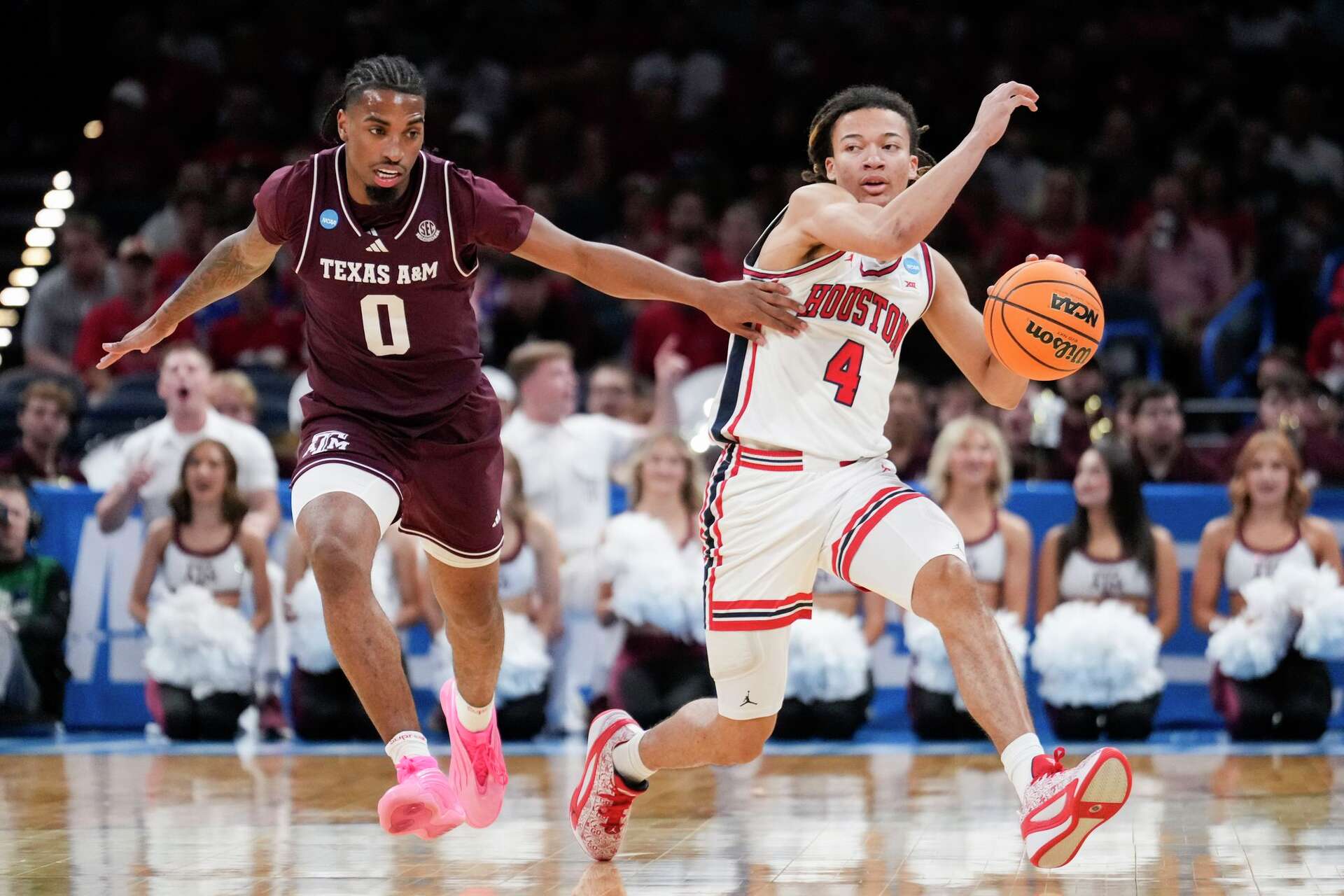
March Madness Sweet Sixteen 2026: Houston Ends Texas A&M Run as Next Round Begins
The March Madness Sweet Sixteen 2026 is officially set after a dramatic second round that saw top teams advance and brackets busted. The biggest headline came as Houston Cougars delivered a dominant performance to eliminate Texas A&M Aggies, ending their tournament journey. With just 16 teams remaining, the NCAA Tournament now shifts into the highly anticipated regional semifinals, tipping off Thursday, March 26. Houston Dominates as Texas A&M Exits Tournament Texas A&M’s campaign came to a heavy defeat as Houston secured an emphatic 88-57 victory in the second round. The second-seeded Cougars controlled the game from start to finish, leaving little room for a comeback. The result marks a disappointing end for the Aggies, while Houston continues to build momentum heading into the next stage of the tournament. March Madness Sweet Sixteen 2026 Schedule The Sweet Sixteen begins Thursday with a packed schedule featuring some of the tournament’s most exciting matchups. Thursday, March 26 Fixtures Matchup Time (Central) Purdue Boilermakers vs Texas Longhorns 6:10 PM Nebraska Cornhuskers vs Iowa Hawkeyes 6:30 PM Arizona Wildcats vs Arkansas Razorbacks 8:45 PM Houston Cougars vs Illinois Fighting Illini 9:05 PM The South Regional games will take place at the Toyota Center, adding a home-state advantage for Houston. Betting Odds and Predictions for Thursday Early predictions suggest clear favorites in several matchups based on current betting markets. These projections highlight a mix of expected outcomes and potential surprises as teams battle for a spot in the Elite Eight. No Perfect Brackets Remain This year’s tournament has already delivered major upsets, eliminating all perfect brackets. Two key results reshaped the competition: These outcomes underline the unpredictability that defines March Madness every year. Friday March Madness 2026 Matchups and Predictions Looking ahead, Friday’s Sweet Sixteen fixtures also promise high-stakes action with several top teams in contention. Key Friday Odds The most competitive matchup appears to be: Title Race Heats Up As the tournament narrows, attention is shifting toward potential national champions. Current projections suggest: With no clear runaway favorite, the race for the championship remains wide open. Conclusion The March Madness Sweet Sixteen 2026 is shaping up to be one of the most competitive in recent years. Houston’s dominant win over Texas A&M highlights the intensity of the tournament, while upsets and tight odds continue to keep fans on edge. With powerhouse programs and underdog stories colliding, the next round promises drama, unpredictability, and defining moments on the road to the Final Four.
Read More
Serie A Tactical History: From Catenaccio to Modern Italian Football
Few football leagues in the world carry the tactical weight that Serie A does. Italy’s top division has never just been about goals and glory, it has always been a laboratory of ideas, a place where coaches turned defence into philosophy and structure into art. The journey from the tight bolts of Catenaccio to today’s high-pressing, possession-hungry football is one of the most fascinating tactical stories the sport has ever produced. What Is Catenaccio and Where Did It Come From? The term Catenaccio, meaning “door-bolt,” captured the essence of the system: to lock down the defence and frustrate the opposition. But contrary to popular belief, it was not an Italian invention. Italian Catenaccio was influenced by the verrou system invented by Austrian coach Karl Rappan, who, as coach of Switzerland in the 1930s and 1940s, played a defensive sweeper positioned just ahead of the goalkeeper. Italy took this foundation and built something entirely its own. Italian versions of Catenaccio revolved around man-marking, a compact backline, and a libero or sweeper behind the central defence. This player was not just a safety net but often the first to start a counterattack. The system required exceptional individual defenders, tactical discipline, and acute spatial awareness. The Architects Who Built Catenaccio Into a National Identity Two names stand above all others in shaping this system into a winning formula. Highly influential Italian coach Nereo Rocco implemented similar ideas at Triestina, developing Ivano Blason into arguably the world’s first widely celebrated libero and managing a shock second-place Serie A finish as a result. Rocco later joined AC Milan, where he introduced similar tactical ideas and won two Serie A titles, three Coppa Italia titles, two European Cups, two European Cup Winners’ Cups, and an Intercontinental Cup. The system was then adopted by various managers across Italy, following the decision of Argentine-French coach Helenio Herrera to use it at Internazionale, leading the club to a number of Serie A championships in the 1960s. Herrera’s version was particularly sophisticated. His Grande Inter side did not merely defend, they suffocated opponents and struck with clinical speed on the counter. The system became a badge of honour, something uniquely Italian in character even if it had foreign roots. Serie A in the 1960s and 1970s: Catenaccio at Its Peak The 1960s were the golden decade for defensive Italian football on the European stage. Clubs like Inter Milan and AC Milan used the system to dominate continental competition. But the 1970s brought a different kind of richness to Serie A. The 1970s were a transformative decade for Serie A, combining tactical sophistication, the rise of new stars, and intense competition among clubs. The era is often remembered for the widespread adoption of Catenaccio, defensive discipline, and strategic play, yet it also witnessed the emergence of attacking talents who dazzled fans. Juventus clearly emerged as the dominant force during the decade, securing five titles, while Lazio and Torino enjoyed memorable victories. Catenaccio remained prominent, though teams increasingly blended defensive discipline with attacking flexibility. This blending was a sign of things to come. The system was beginning to bend under the pressure of new ideas from across Europe. The Challenge: Total Football and the Cracks in the Wall In 1972, Michels’ Ajax defeated Inter 2–0 in the European Cup final, and Dutch newspapers announced the “destruction of Catenaccio” at the hands of Total Football. The following year, Ajax defeated Milan 6–0 in the second leg of the European Super Cup, which was the worst defeat for an Italian team in a UEFA competition final. These results forced Italian football to look inward. As man-marking alone was insufficient to cope with the fluidity of Total Football, coaches began to create a new tactical system that mixed man-marking with zonal defence, which came to be known as zona mista, meaning “mixed zone” in Italian. The 1992 back-pass rule also accelerated change. Goalkeepers had to be more involved with their feet, which required defenders who could play forward, not just clear danger. The old libero role was becoming extinct. A new kind of defender was needed, one who could read the game, build from the back, and press when required. Arrigo Sacchi and the Revolutionary AC Milan If one man can be credited with dragging Italian football into the modern era, it is Arrigo Sacchi. His AC Milan side of the late 1980s and early 1990s was a seismic shift. Sacchi combined strong defensive organisation with pressing and a high tempo, creating a hybrid that drew from Catenaccio’s core principles while pushing the tactical envelope. Milan under Sacchi played a flat back four, applied pressure high up the pitch, and worked in organised defensive lines. Players like Franco Baresi redefined what a modern defender could be. Baresi’s leadership and defensive prowess transformed AC Milan into a fortress during its glory days, and with an innate understanding of Catenaccio tactics, he redefined the role of a modern defender. This era proved that Italian football could be both defensively elite and aesthetically exciting — a duality that would define Serie A’s identity for years ahead. The 3-5-2 and Italian Tactical Innovation While Catenaccio gets most of the headlines, Italy’s tactical contribution to world football goes well beyond one system. Italian football also pioneered the modern 3-5-2 formation, which brought a fresh perspective to the game’s tactical landscape. This formation employed three central defenders, with two wing-backs tasked with providing width and supporting both attack and defence, allowing for greater control in midfield. Teams like AC Milan and Juventus found great success with this formation, as it offered flexibility, solidity, and the ability to quickly transition from defence to attack. The 3-5-2 formation remains a popular choice for many teams worldwide, a testament to the lasting impact of Italian tactical innovation. Here is a quick overview of how Serie A’s core tactical systems evolved across decades: Era Dominant System Key Characteristic 1950s–60s Catenaccio Deep defence, man-marking, libero sweeper 1970s Zona Mista Blend of man-marking and zonal defence
Read More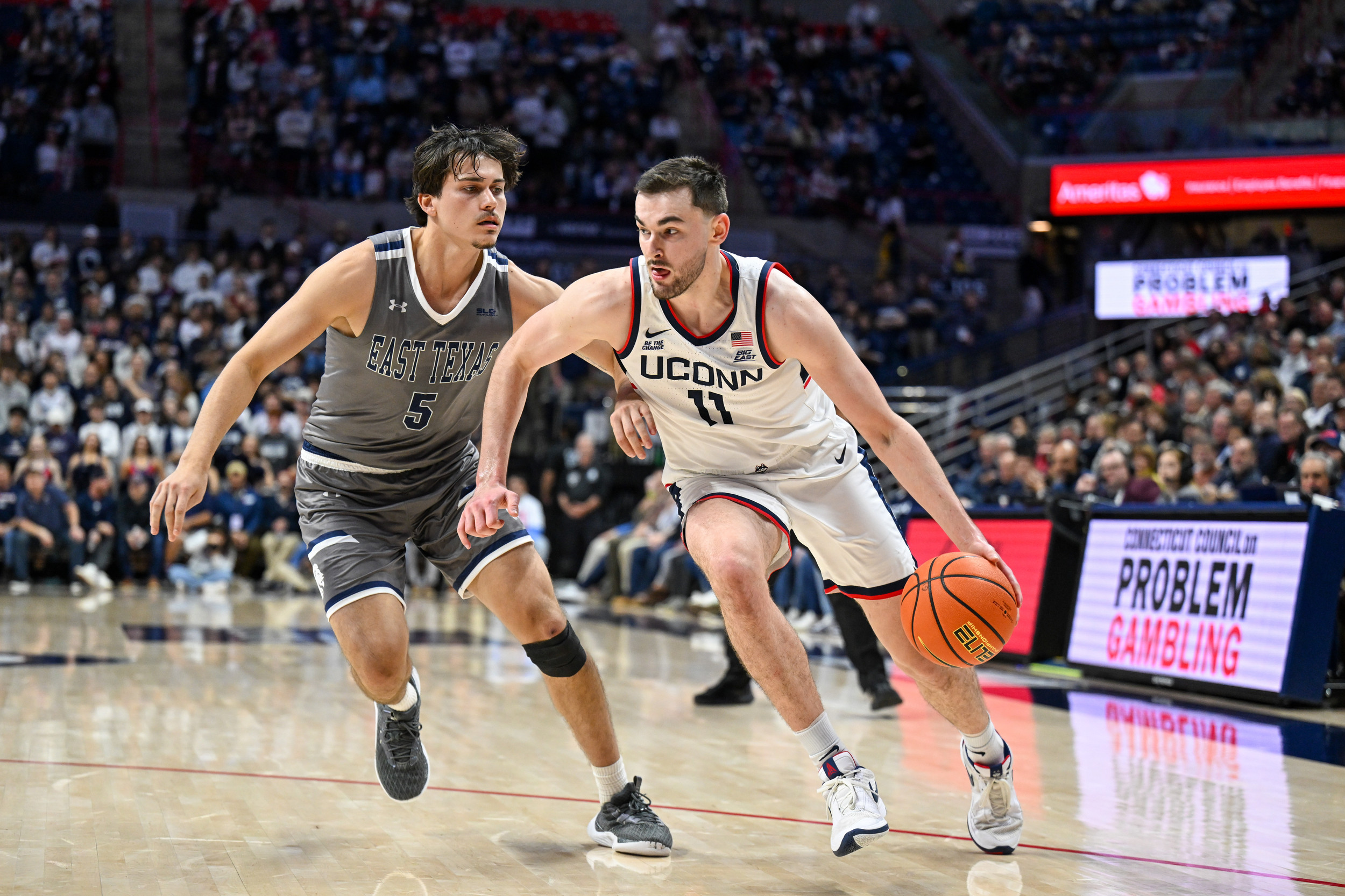
Alex Karaban Explodes for Career High as UConn Punches Sweet 16 Ticket with Win Over UCLA
Alex Karaban delivered the finest scoring performance of his college career on Sunday night, pouring in 27 points to lead the second-seeded Connecticut Huskies past UCLA 73-57 in the NCAA Tournament second round. The victory sends UConn back to the Sweet 16, where they will face third-seeded Michigan State on Friday in Washington, D.C. Karaban Takes Center Stage The fourth-year senior, who has become UConn’s all-time leader in three-point field goals, was virtually unstoppable from beyond the arc. He knocked down four three-pointers, including a dagger during a pivotal stretch that silenced any hopes of a Bruin comeback. His performance drew a roaring ovation from the Huskies-heavy crowd in Philadelphia, which included actor Bill Murray, whose son Luke serves as a UConn assistant coach. Murray himself joined in the celebration, flashing the “6-7” hand gesture during a timeout as his son’s team pulled away. Karaban’s consistency and loyalty are notable in modern college basketball. In an era defined by the transfer portal and NIL money, he has played all four seasons at UConn and started 146 of 147 career games, a rare feat that has now yielded three Sweet 16 appearances. A Decisive Run Breaks the Game Open The Huskies put the game away with a 14-0 scoring run that stretched their lead to 56-44. From that point forward, UCLA was unable to mount a serious challenge. Braylon Mullins contributed 17 points in support, while Tarris Reed Jr. posted a steady double-double of 10 points and 13 rebounds, a quieter night after he had registered a staggering 31 points and 27 rebounds in the opening round. UCLA Could Not Overcome Biloudeau’s Absence The Bruins, finishing their season at 24-12, were undermined by the continued absence of their leading scorer Tyler Biloudeau. Xavier Booker led the UCLA offense with 13 points, but the team had no effective answer for UConn’s balanced attack or Karaban’s shooting. Hurley’s Huskies Back on Familiar Ground Head coach Dan Hurley, who guided UConn to back-to-back national championships in 2023 and 2024, has his program back among the nation’s elite eight despite a modest 2-2 finish to the regular season that included a loss to St. John’s in the Big East Tournament final. Last year’s early exit, a second-round defeat at the hands of eventual champion Florida, appears to have served as fuel. The Huskies improved to 31-5 on the season and now prepare for a Sweet 16 showdown with Michigan State in the nation’s capital.
Read More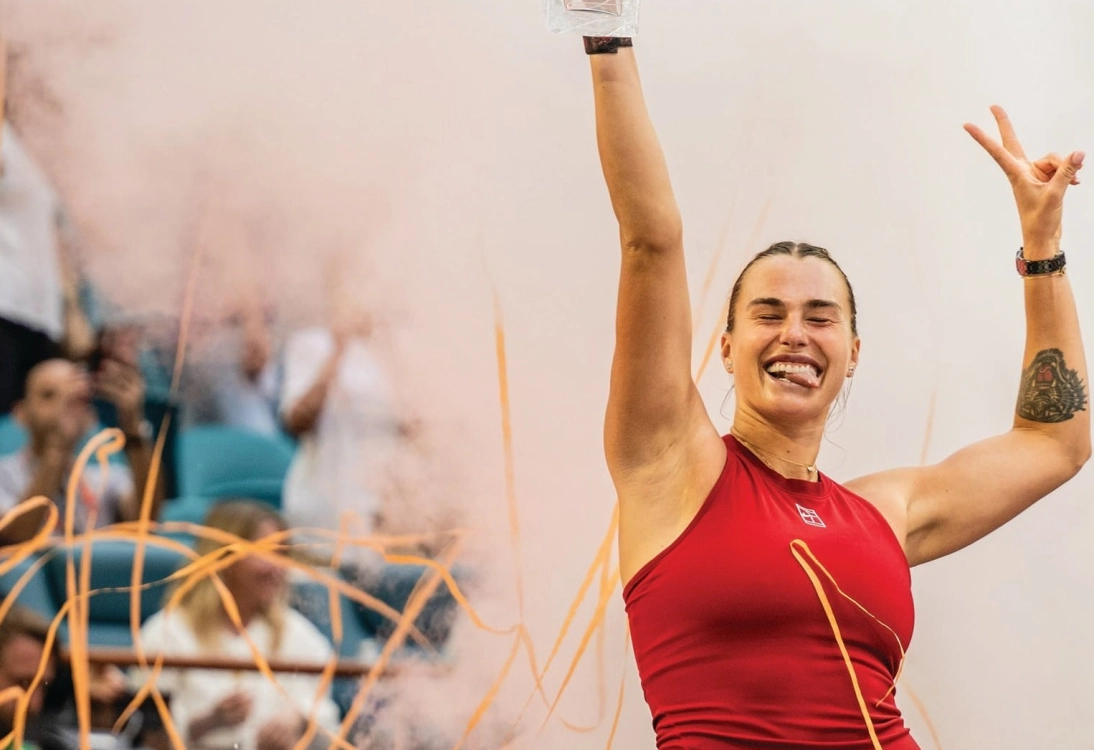
Miami Open 2026 Preview: Can Anyone Stop the Sunshine Double Favorites?
The desert dust of Indian Wells has barely settled, and already the tennis world is pivoting south. The Miami Open 2026 is here, and with it comes one of the sport’s most compelling fortnights: fast courts, heavy air, electric crowds, and the relentless pressure of the Sunshine Double. Held at Hard Rock Stadium in Miami Gardens, this tournament is not just a Masters 1000 event on the men’s side or a WTA 1000 on the women’s, it is a statement. Whoever lifts a trophy here does so knowing they have conquered one of the toughest environments in professional tennis. What Makes the Miami Open a Unique Challenge Before diving into the contenders, it is worth understanding why this tournament breaks players down in ways that few others can. Miami is not Indian Wells. The transition between these two events, often called the Sunshine Double, is deceptively brutal. Players move from the dry, high-altitude desert air of California to the sea-level humidity of South Florida within the space of a week. The balls feel heavier in the Miami air. The courts play differently. Groundstrokes that zipped through the atmosphere in the desert now require significantly more physical effort to generate the same pace. Add to that the mental weight of nearly a month on the road, living out of hotel rooms, managing travel, and competing at the absolute highest level night after night, and you begin to understand why even top seeds have crumbled early in Miami. The tournament has a long history of upsets, and 2026 will be no different. The Men’s Draw: A Two-Man Race With Dangerous Outsiders The ATP landscape heading into the Miami Open 2026 is clear at the top. Carlos Alcaraz and Jannik Sinner are the favorites, and the rest of the field knows it. Carlos Alcaraz: Playing the Most Complete Tennis of His Career The World No. 1 arrives in South Florida in remarkable form. What makes Alcaraz so difficult to beat in Miami specifically is his ability to slide on the gritty hard courts and retrieve balls that most players would abandon. He treats the surface almost like clay, turning defense into offense with a fluidity that is genuinely rare. His serve has become more consistent, his shot selection sharper, and his mental resilience arguably stronger than at any previous point in his career. Alcaraz has already won Miami once, and there is no reason to believe the conditions will trouble him this time around. Jannik Sinner: Built for This Surface Sinner is the man chasing history. The World No. 2 has spent the last 18 months establishing himself as the undisputed king of hard courts, and the Miami Open 2026 represents his best chance yet at completing the Sunshine Double. His flat, penetrating groundstrokes are ideally suited for the conditions here. The heavy Miami air actually benefits a ball-striker like Sinner because his shots stay low and drive through the court without the extra bounce that slower conditions might provide. Coming off a deep run in Indian Wells, his confidence is high and his legs are fresh enough to go the distance. The Americans Are No Longer Just Hoping Home support in Miami is loud, passionate, and genuinely impactful, and for the first time in years, American fans have real reasons to believe. Ben Shelton has cracked the Top 10, arriving with a serve that regularly surpasses 230 km/h and an attitude that seems completely unbothered by occasion. Taylor Fritz, the model of quiet consistency, has built his game around a clinical backhand and a tactical intelligence that makes him particularly dangerous in the longer humid night sessions when conditions slow the game down and patience becomes a weapon. Then there is Jakub Menšík, the young Czech who has quietly rocketed into the Top 20 this year. His aggressive first-strike tennis suits the faster outer courts at Hard Rock Stadium perfectly. He is the kind of player who does not wait for opportunities but creates them, and in a draw filled with power hitters, his willingness to take the ball early could make him the most unpredictable name in the men’s field. Tournament Essentials: Schedule and Logistics For fans attending or tuning in globally, here is the roadmap for the next fortnight: Round Dates Key Feature Qualifying March 15–16 The “Grind” for a main draw spot. First Round March 17–19 Early upsets and local Wild Cards. Round of 16 March 23 “Manic Monday” – top stars collide. Women’s Final March 28 The crowning of the WTA Queen. Men’s Final March 29 The grand finale of the hard-court spring. The Women’s Draw: Sabalenka’s Crown to Lose The WTA picture heading into the Miami Open 2026 is equally compelling, and in many ways more unpredictable. The humidity and wind that define Miami often level the playing field between power hitters and more tactical players. Aryna Sabalenka: The Defending Champion Returns Sabalenka is not just the defending champion here. She is the World No. 1 operating at something close to her ceiling. The transformation of her serve from a liability into a consistent weapon has been one of the defining stories of the WTA circuit in recent seasons, and her movement has improved to the point where opponents can no longer simply redirect the ball and expect to win the point. If she finds her rhythm in the early rounds, she will be extraordinarily difficult to dislodge. Iga Świątek: Looking to Solve the Miami Puzzle Świątek’s record in Miami has never quite matched her dominance elsewhere. The faster, skiddier bounce here creates an awkward interaction with her extreme Western forehand grip, and historically this has cost her in the later rounds. However, the 2026 version of Świątek is tactically more diverse. She has incorporated more net approaches into her game, shortening points and reducing the number of rallies where her grip becomes a disadvantage. A fully evolved Świątek at the Miami Open 2026 is a prospect that should concern everyone in the draw. Amanda Anisimova:
Read More
Glenn McGrath’s Ashes Dominance: How England’s Nightmare Bowler Changed Cricket Forever
There is a moment in the 1997 Ashes that tells you everything you need to know about Glenn McGrath. Day one at Lord’s had been entirely washed out by rain. Day two was reduced to just 21 overs. In those 21 overs, McGrath had already ripped out England’s top three, Mark Butcher, Mike Atherton, and Alec Stewart, for a combined total of seven runs. England were 13 for 3. The weather had interrupted him. It had not saved England. When he returned the next morning, he took five more wickets to finish with figures of 8 for 38 as England were dismissed for 77, their lowest total at Lord’s in the entire 20th century. That single innings performance captured the essence of Glenn McGrath’s Ashes dominance across a decade: methodical, merciless, and utterly unforgettable. Lord’s Was Glenn McGrath’s Cathedral McGrath himself later recalled that Lord’s tended to be “tailor made for my bowling. If I could pick it up, put it in my pocket and take it anywhere in the world: happy days.” He was not exaggerating. Every time he ran in at the Home of Cricket against England, something remarkable seemed to happen. His 8-38 in 1997 remains the best innings figures ever recorded in an Ashes Test at Lord’s. The conditions that day were overcast and the pitch offered movement, but what made the spell so devastating was not the conditions alone. McGrath found his rhythm early and set about systematically dismantling the England batting order, targeting the off stump relentlessly and letting the seam do the rest. Nasser Hussain, Graham Thorpe, and Darren Gough were among his victims. Only Thorpe managed to reach double figures with 21 as the top scorer. Paul Reiffel took the remaining two wickets. The match ended in a draw, largely because of rain. England knew only the weather had averted a crushing defeat. Eight years later, McGrath returned to Lord’s in the 2005 Ashes and did it again. This time it was the top four he tore through as England struggled to 19 for 4. They recovered to make 155, with McGrath finishing with 5 for 53, followed by 4 for 29 in the second innings to seal England’s fate. Australia won that match comfortably, and McGrath was named man of the match. The 2001 Series: Four Five-Wicket Hauls in Consecutive Matches If Lord’s 1997 was McGrath’s single most devastating innings in Ashes cricket, then the 2001 series in England was his most dominant series performance. The 2001 Ashes series saw McGrath make four five-wicket hauls in consecutive matches. Australia won the series 4-1, and McGrath was at the heart of nearly every significant moment. He finished that series with 32 wickets, dismantling England’s batting lineup repeatedly across the summer. At Lord’s in that series, he took 5 for 86 in the first innings as Australia won by 187 runs. Even when carrying a heel injury that would eventually force him to miss the final Test, he refused to be anything less than a threat every time he picked up the ball. England’s batsmen could not relax for a single delivery when he was operating. The Milestone That Said Everything About His Control One of the most telling moments of Glenn McGrath’s Ashes dominance came in the very first Test of the 2005 series at Lord’s. McGrath became the fourth bowler in history to take 500 Test wickets with the dismissal of Marcus Trescothick. That wicket was also the start of a productive spell of 5 for 2 that led to England being bowled out for 155. Read that again. He reached 500 Test wickets and then, in the same spell, took four more for two runs. That is not just a milestone. That is a statement of intent from a bowler who understood the weight of the moment and responded to it with ruthless precision. He then took 4 for 29 in the second innings and was named man of the match in what turned out to be Australia’s only win in that famous 2005 series. The 2005 Ashes: When Injury Changed History The 2005 Ashes series is rightly celebrated as one of cricket’s greatest. England won 2-1 in a series that gripped an entire nation. But the story of England’s triumph is also, unavoidably, the story of McGrath’s absence at the most critical moments. McGrath trod on a cricket ball and injured his ankle the morning before the start of the second Test at Edgbaston. He was unable to play in the match, in which England amassed 407 runs in one day against the McGrath-less bowling attack to win by two runs. That two-run margin remains one of the closest finishes in Ashes history, and few who watched it could argue that Australia would have conceded 407 runs in a single day with McGrath fit and running in. He was rushed back when not fully fit for the third Test at Old Trafford, where he earned another five-wicket haul in the second innings of a drawn game, batting in a last-wicket partnership with Brett Lee in the last hour of the Test to deny an English victory. He then missed the fourth Test at Trent Bridge, which England won by three wickets, with an elbow injury. McGrath’s injury problems are seen as a key factor in England regaining the Ashes, as their victories came in matches in which he was absent. England’s victories in 2005 were real and deserved. But they came in the matches where the one bowler England could never solve was standing in the dressing room watching rather than steaming in from the Pavilion End. The 2006-07 Glenn McGrath’s Farewell: One Final Destruction McGrath saved one of his most satisfying Ashes chapters for last. Coming back from time away from the game to help his wife Jane through her cancer treatment, he rejoined the Australia squad for the 2006-07 home Ashes series at age 36. He took a six-wicket haul in his comeback innings in the
Read More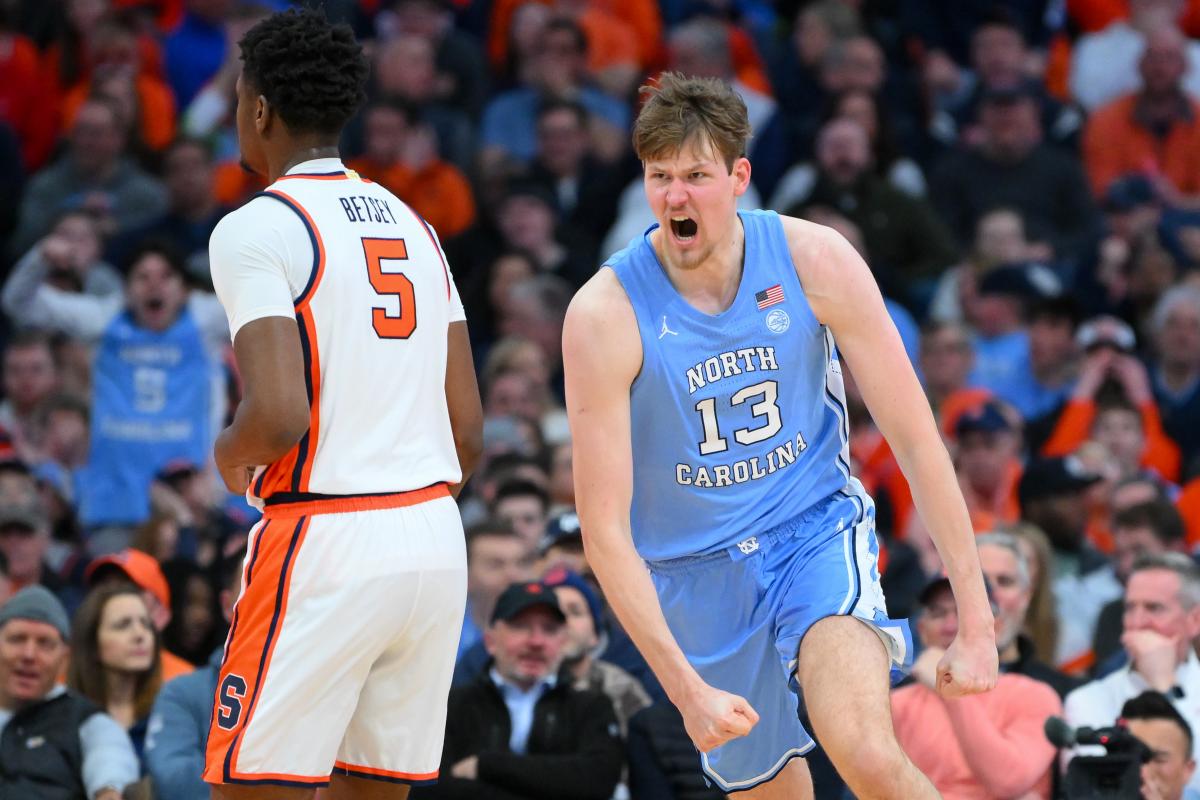
VCU Stuns North Carolina in March Madness 2026: Down 19, Then Gone in One of the Greatest Upsets of the Tournament
March Madness does not ask for permission. It does not care about seedings, records, or pre-tournament logic. It picks a moment, picks a player, and rewrites the story. On Thursday night in Greenville, South Carolina, it picked Terrence Hill Jr. The VCU sophomore guard finished with 34 points off the bench as the 11th-seeded Rams came back from 19 points down to stun sixth-seeded North Carolina 82-78 in overtime, delivering one of the great first-round upsets in recent tournament memory. Down 19 With Seven Minutes Left. Nobody Told VCU North Carolina held a 70-56 lead with seven minutes to play in the second half. The game felt settled. UNC center Henri Veesaar had been dominant all night, controlling the paint and silencing any VCU momentum before it could build. What kept VCU breathing throughout was their bench. The Rams outscored North Carolina’s reserves 24-7 across the game, an advantage that had kept the deficit from becoming embarrassing but had not yet turned it into a contest. That was about to change. The Moment Hill Changed Everything Hill had gone into the season averaging just 3.4 points as a freshman. This year he became VCU’s lead scorer off the bench, averaging 14.5 points per game while shooting 40% from three-point range. Nothing about his season, however, matched what he produced on Thursday night. Sixteen of his points came in the second half as VCU clawed, scrambled and refused to accept what the scoreboard was telling them. With nine seconds left in regulation and the game tied at 75, Hill scored the tying layup to force overtime and send the Greenville crowd into chaos. North Carolina had one final chance to win it in regulation. Seth Trimble’s desperation three-pointer at the buzzer missed. Overtime and a Miss That Will Haunt Chapel Hill The overtime period was brutal, tight, and defined by one sequence that North Carolina will replay for a long time. With 4.2 seconds left and VCU leading 80-78, UNC big man Henri Veesaar — a 62% free-throw shooter this season — was fouled and stepped to the line needing both makes to force a second overtime. He missed the first. He then intentionally missed the second in hopes of grabbing the rebound for a putback. He could not corral it. VCU sealed the win on free throws and won 82-78. Veesaar had played his heart out, finishing with 26 points and 10 rebounds, but came up short at the only moment the entire night that truly mattered. The Numbers Behind the Miracle This VCU upset was not luck. It was built on structure, depth, and one player catching fire at the exact right moment. VCU entered the tournament having won 16 of their last 17 games under first-year coach Phil Martelli Jr., including the Atlantic 10 Tournament championship over Dayton. The Rams ranked seventh nationally in bench points, averaging 34 per game, an identity that paid off completely when their reserves outscored North Carolina’s substitutes by 17 points across 40-plus minutes. North Carolina entered without star freshman Caleb Wilson, who had been ruled out for the season following surgery on a broken thumb. His absence made Veesaar indispensable — and when Veesaar stepped to that free-throw line with the season on the line, the fragility of UNC’s depth was exposed completely. Who Is Terrence Hill Jr. and Why Nobody Saw This Coming Terrence Hill Jr. grew up in Portland, Oregon, played both football and basketball in high school, and averaged 21.9 points per game in his senior season at Roosevelt High School. He is a sophomore. He is 20 years old. He just scored 34 points in the NCAA Tournament on one of college basketball’s biggest stages. “Going into the season, I just wanted to have a lot of confidence,” Hill said earlier this year. “I knew the work I put in over the summer, so I just went in knowing what I’m capable of.“ On Thursday night at Bon Secours Wellness Arena, he showed everyone exactly what that is. This Is What March Madness Was Made For VCU advances to the Round of 32 to face the winner of the No. 3 Michigan State and No. 14 North Dakota State matchup. The tournament continues through the Final Four in Indianapolis on April 4 and 6. North Carolina’s tournament is over. The Tar Heels have now lost three of their last five tournament openers, a brutal trend for one of college basketball’s most storied programs. As for Hill — he came off the bench, spotted his team down 19, and personally dismantled one of the ACC’s best teams in the biggest game of his life. That is not a footnote. That is a March Madness story.
Read More