
Jonathan Wheatley Emerges as Top Candidate for Aston Martin Team Principal Role Amid Audi Exit Reports
Aston Martin’s search for a permanent team principal is heating up, and one name is rising to the top of the shortlist: Jonathan Wheatley, currently heading operations at Audi’s Formula 1 project. Reports suggest the experienced motorsport figure is open to leaving his post in Switzerland, making him one of the most realistic candidates available to Lawrence Stroll right now. Aston Martin’s Rocky Start to 2026 Forces Internal Rethink The 2026 Formula 1 season has been nothing short of a nightmare for Aston Martin. The AMR26 has been plagued by persistent vibration issues and mechanical unreliability, and both Fernando Alonso and Lance Stroll are yet to see the chequered flag in a race this season. The pressure on the team’s leadership structure has become impossible to ignore. Adrian Newey was appointed to the team principal role following Andy Cowell’s transition to Chief Strategy Officer, a move Lawrence Stroll framed as playing to the team’s collective strengths. However, it has since emerged that Newey was always considered a caretaker in that position rather than a permanent appointment. Stroll has reportedly been searching for a long-term replacement for months, even as Newey was publicly installed in the role. Who Has Already Said No to Aston Martin? Finding the right person has not been straightforward. Several high-profile figures in the paddock have already declined the opportunity. Gianpiero Lambiase, widely respected for his work at Red Bull, turned down the approach. Mattia Binotto, the former Ferrari team principal, also said no. Martin Whitmarsh, who previously led McLaren, appears to have done the same after stepping away from the sport in 2024. With those doors closed, attention has shifted toward candidates who are either available or motivated to make a change. Why Wheatley Is Now in the Frame Jonathan Wheatley spent many years at Red Bull Racing building a reputation as one of the sharpest sporting directors in the business. His move to lead Audi’s Formula 1 project was seen as a major coup for the German manufacturer, but reports now indicate that his time there may be shorter than expected. According to journalist Mat Coch, Wheatley is keen to move on from his role in Switzerland, and an offer from Aston Martin has reportedly been made. That combination, an open door at Aston Martin and a restless candidate at Audi, makes this one of the more credible transfer stories to emerge from the paddock in recent weeks. Andreas Seidl Also in Contention Wheatley is not the only name in the frame. Andreas Seidl, who previously served as McLaren’s team principal and oversaw a significant part of their recent resurgence, is also considered a frontrunner for the position. Seidl is currently a free agent, which makes any negotiation considerably more straightforward compared to approaching someone still under contract elsewhere. His availability gives Aston Martin flexibility, and his track record of rebuilding a team’s culture and performance from the ground up is exactly the kind of experience Stroll appears to be looking for. The Bigger Question Around Newey’s Role David Croft and others in the media have raised valid concerns about whether Newey was ever the right fit for the team principal chair. The role demands constant media engagement, sponsor commitments, personnel management, and strategic oversight across every department. Newey’s genius has always lived on the drawing board, and loading him with administrative and public-facing responsibilities may have stretched him beyond his natural strengths. If Aston Martin can bring in a proven operational leader to handle the running of the team, it could theoretically free Newey to focus entirely on the technical side, which is where his real value lies. Whether that revised structure is what Stroll ultimately has in mind remains to be seen. What Comes Next for Aston Martin The coming weeks will be critical for Aston Martin both on and off the track. Resolving the leadership question is only one part of the challenge. The car still needs to be fixed, results need to come, and the confidence of two experienced drivers needs to be maintained through what has already been a deeply frustrating campaign. Whoever steps into the team principal role permanently will inherit a team with enormous financial backing, genuine technical talent, and a car that, on paper, should be performing far better than it currently is. The job is a significant challenge, but also a significant opportunity. With Wheatley and Seidl both in the conversation, Aston Martin at least appear to be targeting the right calibre of candidate to turn things around.
Read More
How Does FIFA World Cup Qualification Work? The Complete Guide
The FIFA World Cup is the most-watched sporting event on the planet, but before any team sets foot on that grand stage, they must survive one of football’s most grueling gauntlets: the qualification process. Millions of fans around the world follow these matches obsessively, yet many still wonder exactly how FIFA World Cup qualification works and why some regions get more spots than others. This guide breaks it all down. What Is FIFA World Cup Qualification? FIFA World Cup qualification is the series of regional competitions that determine which national teams earn the right to compete at the World Cup finals. With 211 FIFA member associations spread across six continental confederations, and only a limited number of spots available at the tournament, the road to the World Cup is long, competitive, and often heartbreaking. The host nation receives an automatic berth, which means the remaining spots are distributed among the six confederations based on a formula that FIFA revises ahead of each tournament cycle. How Many Teams Qualify for the World Cup? Starting from the 2026 FIFA World Cup, hosted jointly by the United States, Canada, and Mexico, the tournament expanded from 32 to 48 teams. This expansion significantly changed how many teams each confederation can send, giving more nations a genuine shot at qualifying for the first time in history. The 48-team format distributes spots roughly as follows across the six confederations: Additionally, two intercontinental playoff spots are available, where teams from different confederations compete in a mini-tournament for the final World Cup berths. How Does FIFA World Cup Qualification Work in Europe (UEFA)? UEFA’s qualification process is one of the most straightforward but also deeply competitive. The 55 UEFA member nations are divided into groups based on their FIFA rankings, and they play a home-and-away round-robin format against each other. Group winners earn direct qualification. Depending on the exact format, runners-up and some Nations League group winners then enter a playoff round, where they compete in single-leg or two-leg ties for the remaining UEFA berths. The Nations League pathway has added a fascinating new dimension, rewarding consistent performance across the broader UEFA calendar rather than just the traditional qualification window. How Does Qualification Work in South America (CONMEBOL)? South America uses one of the simplest and most ruthless formats in world football. All 10 CONMEBOL nations are placed into a single round-robin league, where every team plays every other team home and away across 18 matchdays spanning nearly two years. The top teams at the end of this marathon campaign qualify directly. The team finishing in the fifth or sixth position, depending on the cycle, enters the intercontinental playoff for a chance to secure an additional spot. This format means no nation, not even Brazil or Argentina, can afford to sleepwalk through the campaign. How Does Asia (AFC) Qualify for the World Cup? The AFC qualification process runs in multiple rounds. In the early rounds, lower-ranked Asian nations compete to advance, gradually whittling the field down. The later stages involve groups of higher-ranked Asian nations playing home-and-away matches. The top finishers from these groups earn direct World Cup berths. Teams finishing in certain playoff positions then enter a further knockout round for the remaining AFC spots and the intercontinental playoff place. The expanded 2026 format has been particularly welcomed across Asia, where nations like Vietnam, India, and others now have a more realistic path to the finals. How Does Africa (CAF) Determine Its World Cup Teams? CAF qualification typically begins with a group stage format across multiple groups. African nations play home-and-away matches within their groups, and the group winners advance directly to the World Cup. For the 2026 cycle, CAF’s increased allocation means more African nations than ever will make it to the finals. Given the continent’s enormous footballing talent and passionate fan base, this expansion has been widely celebrated. Historic qualifiers like Nigeria, Ghana, Senegal, and Cameroon now face even fiercer competition from rising nations hungry for their own World Cup moment. How Does CONCACAF Run Its Qualification? CONCACAF qualification is one of the more complex processes in world football. The region covers a wide range of footballing abilities, from powerhouses like Mexico and the United States to smaller island nations in the Caribbean. The process begins with preliminary rounds where the lowest-ranked nations compete, and the survivors then enter the main qualification rounds. The top finishers from the final round earn direct berths, while others compete in the intercontinental playoff. The expanded format has brought genuine excitement to nations like Jamaica, Panama, and El Salvador, who now have real shots at reaching the World Cup. What Are the Intercontinental Playoffs? The intercontinental playoffs are a fascinating and often tense part of FIFA World Cup qualification. Teams from different confederations that narrowly missed out on direct qualification are placed into a small tournament or two-legged ties to compete for the final World Cup spots. These playoffs can throw up extraordinary matchups, such as an Asian nation facing a South American team or an African side taking on a CONCACAF qualifier. The drama and unpredictability of these clashes make them some of the most compelling fixtures in the entire qualification cycle. Why Do Some Continents Get More World Cup Spots? The distribution of World Cup spots is based on a combination of factors including the number of FIFA member nations in each confederation, the overall quality of football in the region, and the commercial and cultural reach of the game in those areas. UEFA and CAF receive the largest allocations because they represent the highest number of competitive nations. FIFA also periodically revises allocations to reflect football’s global growth. The expansion to 48 teams is partly a response to the sport’s rapid development in Asia, North America, and Africa, where investment in football infrastructure has grown significantly over the past two decades. When Does World Cup Qualification Start and End? Qualification campaigns typically begin two to three years before the tournament itself. For the 2026 World
Read More
Liverpool’s 2005 Champions League Miracle: The Istanbul Final Comeback That Shocked the World
The date was May 25, 2005. The Atatürk Olympic Stadium in Istanbul, Turkey, was packed with over 69,000 fans, and millions more were watching across the globe. Liverpool faced AC Milan in the UEFA Champions League Final, a match that would go on to be called the greatest game in football history. Nobody could have predicted what was about to unfold. By halftime, Liverpool were three goals down. The game looked finished. Commentators were already writing their post-match analyses about Milan’s dominance. And yet, what followed in the second half was nothing short of a sporting miracle, six minutes that changed everything and delivered Liverpool their fifth European Cup. AC Milan’s Dominant First Half: Liverpool on the Brink AC Milan arrived at the final as overwhelming favourites. They had players like Paolo Maldini, Kaka, Hernan Crespo, and Andriy Shevchenko, one of the most feared attacking lineups in European football at the time. Liverpool, managed by Rafael Benitez, were talented but considered outmatched on paper. The game began in the worst possible way for Liverpool. Paolo Maldini scored after just 51 seconds, the earliest goal ever scored in a Champions League Final. Milan were fluid, composed, and ruthless. By the time the halftime whistle blew, Hernan Crespo had added two more brilliant goals, and the scoreline read 3-0 to AC Milan. In the Liverpool dressing room, players sat in stunned silence. Some reports suggest tears were shed. It felt impossible. It felt over. But Rafael Benitez had other ideas. The Halftime Team Talk That Changed History What Benitez said in that dressing room has become the stuff of legend. He reorganised his team tactically, shifting Didi Hamann into a holding midfield role to provide more defensive stability and give Liverpool’s attacking players the freedom to push forward. He told his players to score one goal and then see what happened. He reminded them who they were. Captain Steven Gerrard stood up in that dressing room and spoke. He urged his teammates not to give up, not to let the fans down, and to go out there and fight. That leadership in one of football’s darkest moments is one of the reasons Gerrard is remembered as one of the greatest captains in the history of the sport. Liverpool walked back out for the second half as a completely different team, not just in formation, but in belief. Six Minutes That Rewrote Football History What happened between the 54th and 59th minutes of the 2005 Champions League Final will never be forgotten by anyone who witnessed it. Liverpool scored three goals in six extraordinary minutes to level the match at 3-3, producing the most dramatic comeback in Champions League history. Steven Gerrard started it. A powerful header from a cross in the 54th minute made it 3-1, and suddenly the Liverpool end of the stadium erupted. The momentum had shifted. You could feel it. Vladimir Smicer, who had come on as a substitute, then fired a long-range shot that went in off the post in the 56th minute to make it 3-2. Disbelief was spreading across the stadium. AC Milan, moments ago so composed and dominant, looked shaken. Then came the decisive moment. Xabi Alonso was brought down in the penalty area, and he stepped up to take the spot kick himself. His initial penalty was saved by Dida, the Milan goalkeeper, but Alonso followed up in an instant and smashed the rebound into the net. 3-3. The comeback was complete. The crowd went into absolute delirium. Six minutes. Three goals. One of the most remarkable moments in the entire history of sport. Extra Time and the Penalty Shootout: Nerves of Steel After those breathtaking six minutes, both teams had to dig deep through 30 minutes of extra time. AC Milan, still stunned, came closest to scoring again. Shevchenko had a chance that seemed certain to go in, but Liverpool goalkeeper Jerzy Dudek made a miraculous double save, arms and body sprawling across the line, to keep the scores level. That save is ranked among the greatest in Champions League history and proved that this night belonged to Liverpool. As the match went to a penalty shootout, the atmosphere inside the Atatürk Stadium was electric. Dudek, clearly inspired, danced and wobbled on his goal line trying to put the Milan players off — a move reportedly suggested to him by Benitez, who had studied how Bruce Grobbelaar used similar tactics in Liverpool’s 1984 European Cup Final. It worked. Serginho, Pirlo, and Shevchenko all failed to score from the spot. Liverpool, in contrast, were composed and clinical. Hamann, Cisse, Riise, and Smicer all converted. When Shevchenko’s tame penalty was saved by Dudek, the entire Liverpool end exploded. The final was over. Liverpool had won the Champions League for the fifth time in their history. Why the Liverpool 2005 Champions League Miracle Matters Beyond Football The Istanbul comeback is not just a football story. It is a story about human resilience, belief, and the refusal to accept defeat when all logic says otherwise. It is the reason sport captures the imagination of billions of people around the world. For Liverpool fans who were inside that stadium, or watching from pubs and living rooms in England and across the globe, May 25, 2005, is a night they will carry with them forever. It is passed down in conversations, replayed on YouTube millions of times, and referenced every time someone says something is impossible. Neutrals who watched it still speak about it with the same energy and disbelief as they did in the moment. Football journalists who have covered the sport for decades routinely name it as the single greatest match they have ever witnessed. That alone tells you how rare and extraordinary that night truly was. The Legacy of Istanbul and What It Did for Liverpool Football Club The Liverpool 2005 Champions League miracle did far more than win a trophy. It gave a generation of supporters a memory that defines what it means to
Read More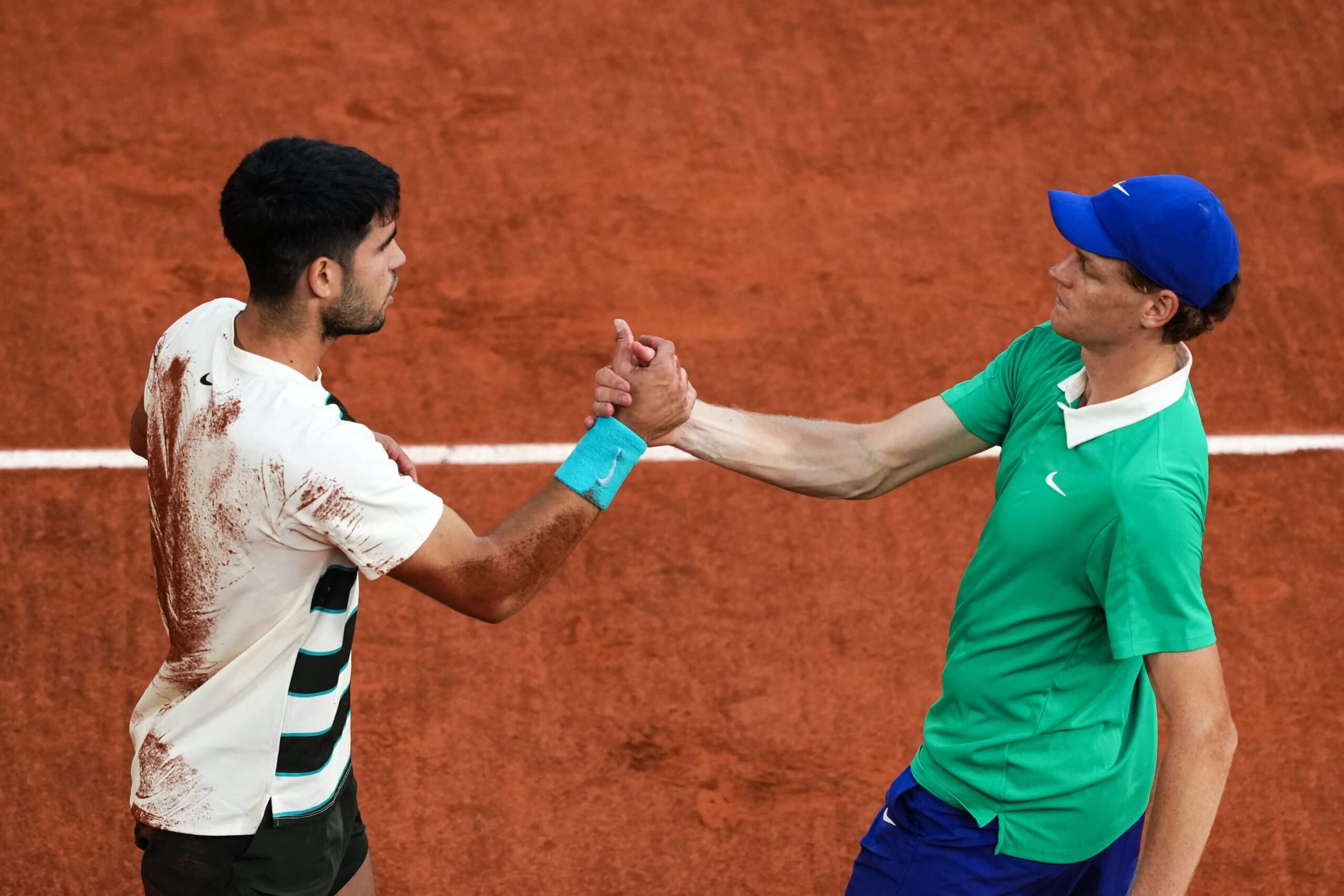
Alcaraz vs Sinner: Every Rivalry Match, Every Record & Who Wins at Roland Garros 2026
It was June 8, 2025. Roland Garros. Fourth set. Jannik Sinner was serving at 3–5, 0-40 — three consecutive championship points. The match was four hours old. Carlos Alcaraz, down two sets, looked finished. Then, inexplicably, he wasn’t. What followed over the next 89 minutes was not just a tennis match. It was a statement. Alcaraz saved all three championship points, broke Sinner’s serve, and eventually won the longest Roland Garros final in history — 5 hours and 29 minutes. Two sets down. Three match points saved. One legend confirmed. Alcaraz vs Sinner is not a rivalry still finding its shape. It is already, by almost every statistical and cultural measure, one of the greatest the sport has ever produced. Nine consecutive Grand Slams won between them. Three Grand Slam finals in a single season. And with Roland Garros 2026 approaching, the next chapter is almost here. Before the World Knew Their Names The Alcaraz–Sinner head-to-head record goes back further than most fans realise. Their first meeting was at the 2019 Alicante Challenger — a 15-year-old Alcaraz beating a 17-year-old Sinner. Even then, the outline of something special was visible. Their first ATP Tour match came at the 2021 Paris Masters, where an 18-year-old Alcaraz — ranked No. 35 in the world — upset Sinner in straight sets, knocking him out of ATP Finals contention. Weeks later, their first final at Umag went Sinner’s way, giving the Italian his first clay-court title. After winning that Paris match, the teenage Alcaraz predicted they would build a great rivalry. He was right in a way even he probably couldn’t have imagined. 2:50 AM and Five Hours of Madness The 2022 US Open quarterfinal is the match that announced this rivalry to the world. It lasted 5 hours and 15 minutes — a US Open record for the latest finish, ending at 2:50 AM. In a sport that has produced some of the most extraordinary endurance contests in history, this one still stands apart for its sheer quality. Alcaraz saved a match point in the fourth set and won in five. Between them they hit 124 winners and generated 42 break points. It was tennis at a level rarely seen, and the crowd knew it. Alcaraz went on to win the tournament, claiming his first Grand Slam title and becoming — at the time — the youngest world No. 1 in history. This wasn’t simply a great match. It was the moment the next generation officially took over. The Rivalry Timeline: Year by Year 2021 (3 meetings): Alcaraz wins the first ATP encounter in Paris. Sinner wins their Umag final. Early exchanges. No dominant force yet. 2022 (3 meetings): The US Open epic. Alcaraz wins his first Slam and No. 1 ranking. The rivalry’s defining match arrives before most people are ready for it. 2023 (3 meetings): Sinner wins two. The head-to-head sits at 4–4. Perfectly balanced. 2024 — Alcaraz Takes Control: Three meetings; Alcaraz wins all three. At Indian Wells, he snaps Sinner’s 19-match winning streak. At Roland Garros, he wins a five-set semifinal with both players dealing with injury. The China Open, Sinner leads 3–0 in the deciding tiebreak — Alcaraz wins seven straight points. After Roland Garros 2024, Sinner becomes world No. 1 for the first time. 2025 — Three Grand Slam Finals in One Season: This had never happened before in the Open Era. 2026 — Alcaraz Makes History: At the Australian Open final on February 1, Alcaraz defeated Novak Djokovic 2–6, 6–2, 6–3, 7–5 to complete the career Grand Slam — becoming the youngest man in tennis history to win all four majors at 22 years and 272 days old. He broke a record held by Rafael Nadal, and one that had stood since Don Budge in 1938. Together, Alcaraz and Sinner have now won nine consecutive Grand Slams. The Stats That Define the Rivalry Stat Alcaraz Sinner Overall H2H 11 wins 8 wins Grand Slam titles 7 4 ATP Ranking (March 2026) No. 1 No. 2 Grand Slam finals record 7–1 4–1 Clay H2H Alcaraz leads — Grass H2H — Sinner leads (2–0) Hard court H2H Alcaraz leads — Perhaps the most remarkable statistic: across all six of their 2025 meetings — all of which were finals — the total points won for the entire year were Alcaraz 1,651, Sinner 1,651. Perfectly tied. Nine consecutive Grand Slams between two players has only been achieved once before: Federer and Nadal, from 2010 to 2012. Alcaraz and Sinner are 22 and 24 years old. The Tactical Battle Beneath the Drama Alcaraz is the most complete player in the game — dominant on clay, exceptional on grass and hard courts, and statistically unmatched in the longest matches. His career record in fifth sets is 12–1. He is, simply, the best closer in tennis. Sinner is the most consistent ball-striker in men’s tennis. On fast surfaces, he is as close to a machine as the sport allows — a flawless baseline game, an elite serve at his best (as evidenced by that 84% first-serve points figure at Wimbledon 2025), and a mental composure that almost never cracks. Of his 24 career titles, 21 are on hard courts. The one well-documented weakness in Sinner’s game is extended matches. He has never won a match lasting over 3 hours and 50 minutes. Alcaraz, in contrast, was 12–1 in fifth sets heading into 2026. On clay, Alcaraz is superior. On grass, Sinner has beaten Alcaraz both times they’ve met. And hard courts, Alcaraz leads but Sinner is dangerous. This is what makes the rivalry genuine: there is no dominant surface equation. Roland Garros 2026: The Big Prediction Roland Garros 2026 begins in late May. The stakes are extraordinary. Alcaraz will be chasing a third consecutive Roland Garros title — which would make him only the second man in history to achieve three straight French Open wins, after Rafael Nadal. Sinner will be chasing the one Grand Slam missing from his collection — and
Read More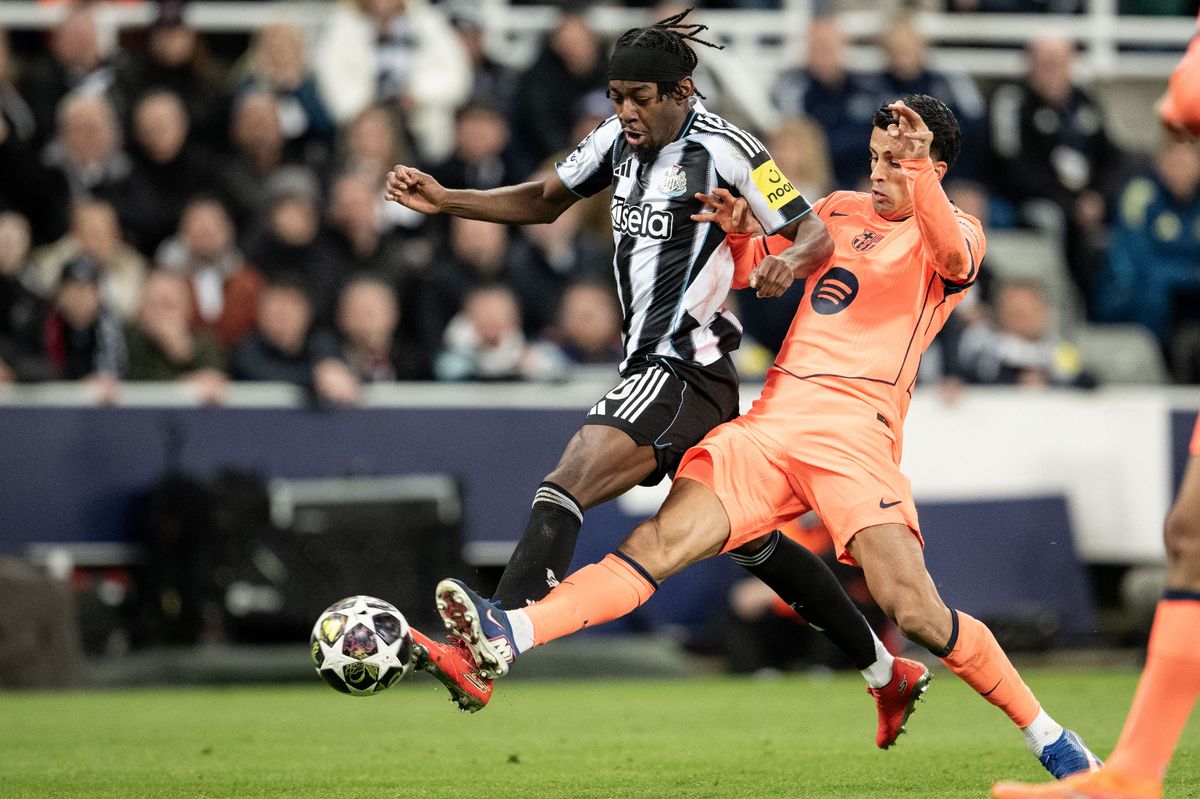
Anthony Elanga Scored Twice at Camp Nou, And It Counted for Absolutely Nothing
Some nights in football break your heart not because you failed, but because you were brilliant and it still meant nothing. Anthony Elanga had that night on Wednesday at the Spotify Camp Nou. The Swedish winger had not scored in 35 consecutive games across the Premier League and Champions League this season before facing Barcelona. Then, in the space of 13 minutes, he scored twice at one of football’s most intimidating grounds. Barcelona still won 7-2, progressing 8-3 on aggregate. Elanga’s goals counted for nothing. His night will be forgotten by Friday. £55 Million and Zero Goals. Until Wednesday Night Newcastle signed Elanga from Nottingham Forest in July 2025 for a reported £55 million transfer fee, a significant investment in a player who had just concluded a career-high six-goal season. The expectation was simple: deliver goals and creativity on the right wing for a Newcastle side building toward a genuine Champions League challenge. Across 26 Premier League appearances and nine Champions League appearances this season, Elanga had registered zero goals and just one assist before Wednesday night. For a £55 million winger, those are deeply uncomfortable numbers and the scrutiny had been growing louder with every blank week. The Two Goals That Silenced Camp Nou When Raphinha put Barcelona ahead in the sixth minute, the tie looked to be drifting away from Newcastle already. The first Elanga goal arrived in the 15th minute. Lewis Hall and Harvey Barnes combined down the left, and Elanga was picked out behind the Barcelona defence. His finish was perfect — low, precise, and unstoppable. Camp Nou went quiet. The second goal was even better. Lamine Yamal gave the ball away deep in his own half, Harvey Barnes beat Ronald Araujo to play the ball across the box, and Elanga ghosted in behind Joao Cancelo to tap home at the back post. Four goals in 28 minutes. A Champions League tie suddenly, improbably, level. Elanga had done the extraordinary. And Then Barcelona Woke Up For thirteen glorious minutes Newcastle fans believed. Then reality arrived wearing a Barca shirt. Lamine Yamal converted a penalty in first-half stoppage time to restore Barcelona’s lead at 3-2. In the second half, Fermin Lopez, Robert Lewandowski with a brace, and Raphinha again completed a 7-2 rout that was as comprehensive as it was ruthless. The seven goals equals the most Barcelona has ever scored in a Champions League knockout match. Newcastle’s seven goals conceded is tied for the most ever by an English team in a single UEFA competition game. Elanga watched it all from the pitch, unable to affect what had become a collapse. His two goals, extraordinary in isolation, had been swallowed whole by a second half that Newcastle simply could not survive. The Numbers Behind a Season of Silence This is where the Elanga story cuts deepest. In the 2025-26 Premier League season alone, Elanga played 1,152 minutes across 26 appearances and recorded zero goals, averaging a FotMob rating of 6.4 — a number that reflects a player present but never decisive. A winger bought for £55 million is expected to score. He has spent most of his first season at Newcastle proving that he cannot. The statistic that defines his season most starkly: zero goals in 35 consecutive games before Wednesday night, in the Premier League or Champions League. Two goals at Camp Nou is a remarkable moment. But one remarkable moment inside 35 blank appearances is not a solution. It is a reminder of a problem. One Night of Magic. One Season of Questions That Won’t Go Away Wednesday night gives Elanga something rare — a headline and a highlight reel. For a player who has spent most of the season invisible, that matters more than it should. His contract at Newcastle expires in June 2026, a detail that makes Wednesday night either a timely audition or a bittersweet farewell moment. If Newcastle choose not to extend, clubs across Europe now have fresh footage of a 23-year-old scoring twice at Camp Nou. That footage will open doors that a goalless league season would not. The Final Verdict Nobody Wants to Say Out Loud For Newcastle, the Champions League journey is over. Barcelona will face either Atletico Madrid or Tottenham Hotspur in the quarterfinals. The Magpies go home having given one of Europe’s giants a genuine scare before being buried under five unanswered goals. Elanga scored twice at Camp Nou. He was brilliant when it mattered least. And in a season that has asked painful questions about his £55 million price tag, Wednesday night gave answers that arrived four months too late.
Read More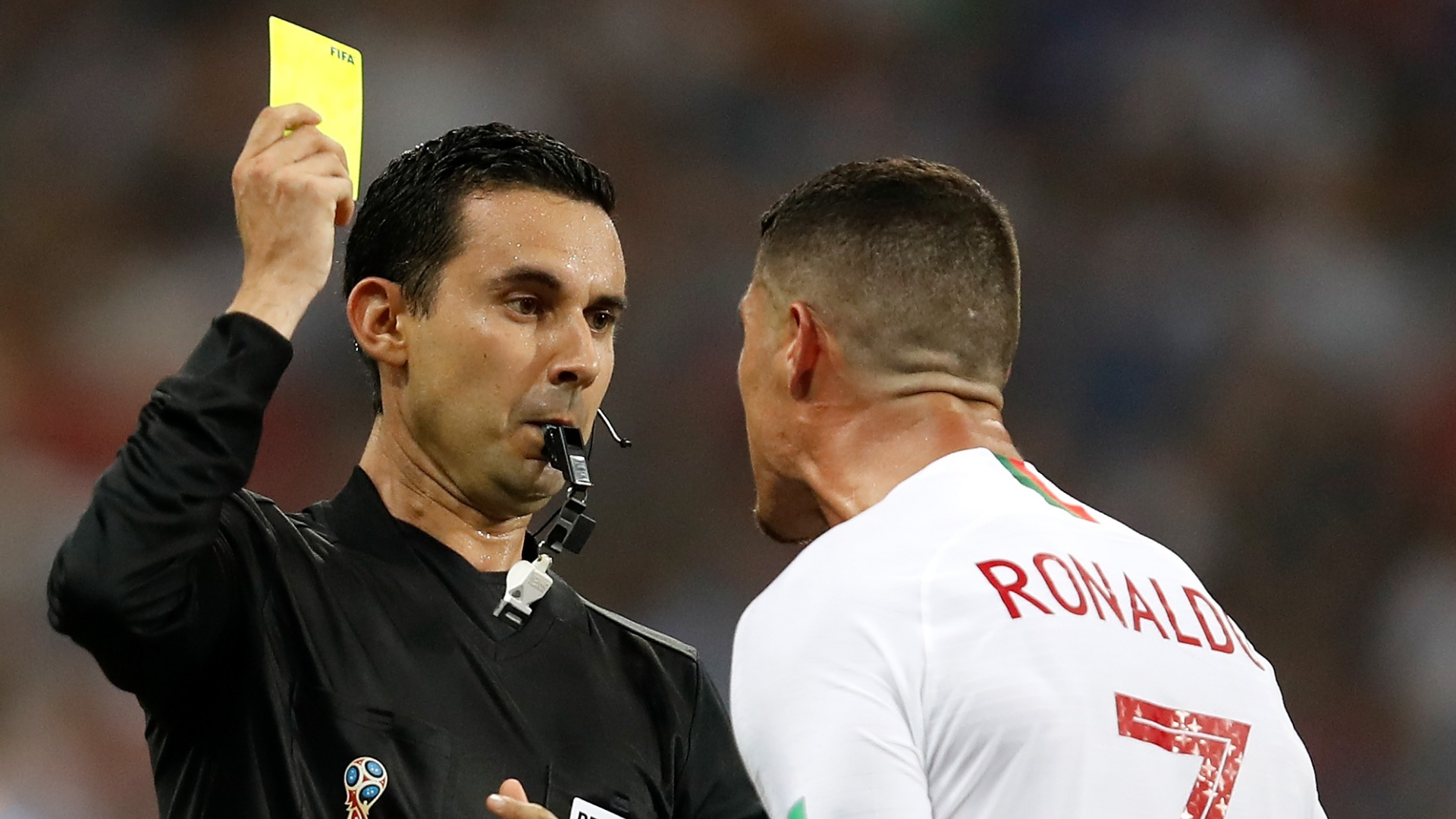
Most Yellow Cards in World Cup History: Full Record List
A referee reaches into his pocket. The crowd holds its breath. On the World Cup stage, that moment carries consequences that extend far beyond the match itself. A yellow card at this level can end a player’s tournament through suspension. It can shift momentum in a knockout tie. It can define how a nation’s campaign is remembered. Discipline, or the collapse of it, has shaped World Cup outcomes as decisively as any goal. The records behind those bookings tell a story the scorelines alone never could. The Most Carded Tournament in World Cup History The 2006 World Cup in Germany produced 345 yellow cards and 28 red cards across 64 matches, both individual records for a single World Cup. That is an average of more than five cards per game. FIFA No edition of the tournament before or since has come close to those numbers. The physicality of that tournament was documented in real time. Referees were under instruction to clamp down hard on tactical fouling. The result was a disciplinary record that still stands nearly two decades later. The Most Yellow-Carded Match in World Cup History For years, the Battle of Nuremberg held the record. Russian referee Valentin Ivanov issued a FIFA World Cup record four red cards and 16 yellow cards during the Portugal vs Netherlands round of 16 tie in 2006. Portugal won 1-0 through a Maniche strike. Both teams were reduced to nine men. The match became one of the most notorious in the tournament’s history. Then 2022 arrived. Spanish referee Antonio Mateu Lahoz issued a FIFA World Cup record 18 yellow cards and one red card during the Netherlands vs Argentina quarterfinal at the Lusail Stadium on 9 December 2022. In total, 15 players on the field received a card, a World Cup record. Argentina won on penalties. The match was immediately nicknamed the Battle of Lusail. The Guinness World Record for most yellow cards in a single World Cup match now belongs to that night in Qatar. The Player With the Most Yellow Cards in World Cup History Individual discipline records are as revealing as team ones. Javier Mascherano of Argentina has received seven yellow cards during the World Cup, the most of any player. The next with six is Cafu from Brazil, all of which were yellow, making him the most yellow-carded player before Mascherano surpassed the record. Mascherano earned his seventh and final booking in Argentina’s defeat to France at the 2018 World Cup. His record reflects both longevity and a combative style that never softened on the biggest stage. The Teams With the Most Yellow Cards in World Cup History At the team level, the numbers reflect decades of accumulated pressure. Germany has accumulated 122 yellow cards, the most of any World Cup team. Argentina follows with 112. Both nations have contested numerous knockout rounds across multiple tournaments, which naturally inflates the numbers. Argentina’s total is also coloured by the intense and physical nature of their campaigns across the tournament’s modern era, including the Battle of Lusail in 2022. How Yellow Cards Have Decided World Cup Outcomes The consequences of a booking extend well beyond the match in which it is given. In the knockout stages, accumulated yellow cards result in automatic one-game suspensions. Those suspensions have altered the trajectory of tournaments in ways that are rarely fully appreciated. At the 2006 World Cup, Portugal lost their suspended playmaker Deco for the quarterfinal against England after his red card in the Battle of Nuremberg. England, reduced to ten men themselves after Wayne Rooney’s red card, still lost. France in 1998 managed Zidane’s card accumulation with extreme care throughout the tournament, aware that losing him to suspension would cripple their chances. The mental discipline required to perform at the highest level while managing the risk of suspension is one of the most underrated aspects of World Cup preparation. How Refereeing and the Rules Have Evolved The use of physical red and yellow cards to indicate dismissals and cautions is a later invention, having been introduced at the 1970 tournament. Only players are listed in the official records, even if they were at the substitutes’ bench at the time of the sending off. The first red card at a World Cup was not issued until 1974, despite the system being introduced in 1970. The rules governing accumulated bookings have also shifted. In 2010, FIFA moved the card reset point to follow the World Cup’s quarterfinal games. The last two teams standing are guaranteed to be at full strength, barring injury or a red card in the semifinal. The card tally no longer resets after the opening games, so the longest stretch players have to go without receiving two yellow cards is five games instead of three. The introduction of VAR in 2018 brought another shift. Red card numbers fell sharply. Since 2010, the count has trended downward, with 17 red cards in 2010, dropping to 10 in 2014, and reaching record lows of 4 in both 2018 and 2022. VAR removed many of the erroneous dismissals that had historically inflated the numbers. What it could not remove was the intensity that produces yellow cards in the first place. Discipline as the Hidden Force of Every World Cup The most yellow cards in World Cup history belong to specific tournaments, specific matches, and specific players. But the broader truth runs beneath all of them. Discipline is not a footnote in the World Cup story. It is a decisive force that has altered finals, eliminated contenders, and defined entire campaigns. The teams that win the trophy are almost never the ones collecting the most bookings. They are the ones who channel their aggression precisely, who compete at maximum intensity without crossing the line. The referee’s pocket, in that sense, is as decisive as any boot that has ever struck a ball.
Read More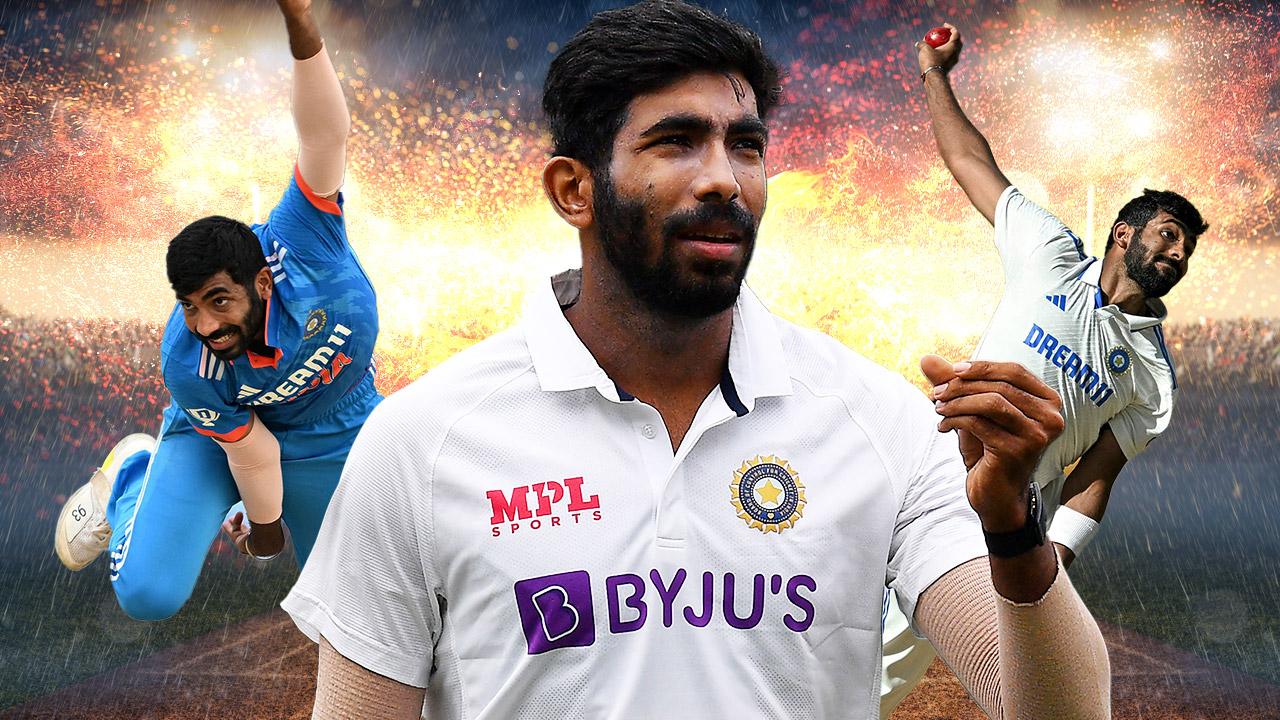
Jasprit Bumrah’s Yorker Mastery: Death Bowling Perfection
There is a moment, familiar to every cricket fan who has watched India in the final overs of a chase, when the captain tosses the ball to Jasprit Bumrah and the atmosphere changes entirely. Not just in the stadium. On television screens, in living rooms, and in the body language of every batter walking to the crease. Few deliveries in the history of the sport have generated the kind of anticipatory dread that Bumrah’s yorker produces. It is not simply a good delivery. It is a weapon that has reshaped what death bowling means at the highest level. This is the full breakdown of Jasprit Bumrah’s yorker mastery, what makes it work, where it has decided matches, and why it stands alone in the modern game. What Makes Jasprit Bumrah’s Yorker the Most Feared Delivery in World Cricket The yorker is, in theory, a straightforward delivery. Full, aimed at the base of the stumps or the batter’s toes, designed to minimise scoring options by cramping the shot. In practice, executing it consistently at pace, under pressure, with swing, and against batters who know it is coming, is one of the most technically demanding skills in cricket. Bumrah executes it at a level no contemporary bowler approaches. Former Pakistan captain and fast bowling legend Wasim Akram, himself the greatest exponent of the yorker his generation produced, stated in 2019 that Bumrah possesses the best and most effective yorker among all fast bowlers in international cricket. That assessment, from the man widely considered the benchmark for intelligent fast bowling, carries a weight that no statistic can fully match. The Unorthodox Action Behind Bumrah’s Death Bowling Genius Bumrah’s action is the foundation of everything. His chest-on, slingy delivery stride with hyperextended elbows and a stiff-armed release creates angles and release points that no coaching manual recommends and no batter has been able to consistently decode. His short, stuttering run-up gives nothing away about what is coming, and his unusual point of release means the ball arrives from a trajectory that disrupts a batter’s natural reading process. This unorthodox mechanics allow him to bowl at an average speed of 142 km/h with a recorded peak of 153 km/h, achieved during the first Test of the 2018 India tour of Australia at Adelaide. Mumbai Indians bowling coach and former New Zealand fast bowler Shane Bond, who worked closely with Bumrah in the IPL, confirmed that despite its unconventional appearance, the action is repeatable and reliable at elite level. That repeatability is precisely what transforms an unusual action into a championship weapon. Jasprit Bumrah’s Yorker Mastery Across All Three Formats What separates Bumrah from every other death bowling specialist in contemporary cricket is his ability to execute his yorker at the same level across Test cricket, ODIs, and T20 Internationals. He became the first bowler in history to reach the number one position in the ICC Men’s Player Rankings across all three formats simultaneously, a record that directly reflects how completely his skills translate regardless of context or format. In Tests, he averages 19.79 with the ball across 52 matches and 234 wickets, a figure that places him among the most economical fast bowlers the format has ever produced. In the 2024 T20 World Cup, he took 15 wickets at an economy rate of 4.17 across the tournament, earning him the Player of the Tournament award as India claimed their second T20 World Cup title. Each format demands different execution of the same delivery, and Bumrah adjusts the length, pace, and swing direction of his yorker accordingly without ever losing the core precision that makes it so effective. The Art of Bowling at the Death and Why So Few Master It Death bowling is the most exposed role in limited-overs cricket. The bowler knows the batter is targeting boundaries. The batter knows the bowler knows. Every delivery becomes a tactical negotiation under maximum pressure, with the match result frequently hinging on a margin of centimetres. Most elite bowlers avoid the responsibility of the final overs because the risk to their statistics and reputation is disproportionate to the reward. Bumrah actively seeks that responsibility. He has spoken publicly about using pressure as fuel rather than experiencing it as friction, approaching the final overs with a problem-solving mentality that treats each delivery as a calculation rather than a gamble. That psychological inversion, shared by almost no other bowler of his generation at the same sustained level, is as much a part of his death bowling identity as the technical precision of the delivery itself. Bumrah’s Most Defining Death Bowling Performances The 2024 T20 World Cup final against South Africa at Kensington Oval, Bridgetown, stands as the most complete expression of Bumrah’s death bowling on the biggest stage. His 15 wickets across the tournament at an economy of 4.17 in T20 conditions, where scoring rates routinely exceed nine runs per over, confirmed that his standards do not drop when the stakes rise highest. In the 2018 calendar year, he became the first Asian bowler to take five-wicket hauls in Australia, England, and South Africa in the same year, finishing with a career-best figure of 6 for 33 in the Boxing Day Test. During the 2024 to 2025 Border-Gavaskar Trophy, he finished with 32 wickets across the series, earning him the Player of the Series award even as India lost overall. His hat-trick against the West Indies in 2019, dismissing Darren Bravo, Shamarh Brooks, and Roston Chase in consecutive deliveries, placed him in the select history of Indian bowlers to achieve the feat in Test cricket. How Bumrah Prepares and Maintains His Yorker Consistency Bumrah has revealed in interviews that his yorker was originally developed not in the nets with a hard ball but through repetitive practice with a tennis ball as a child in Ahmedabad. The lightness and unpredictability of a tennis ball forces a bowler to develop feel and precision rather than relying on pace alone, and that foundational discipline has never left his execution. The physical
Read More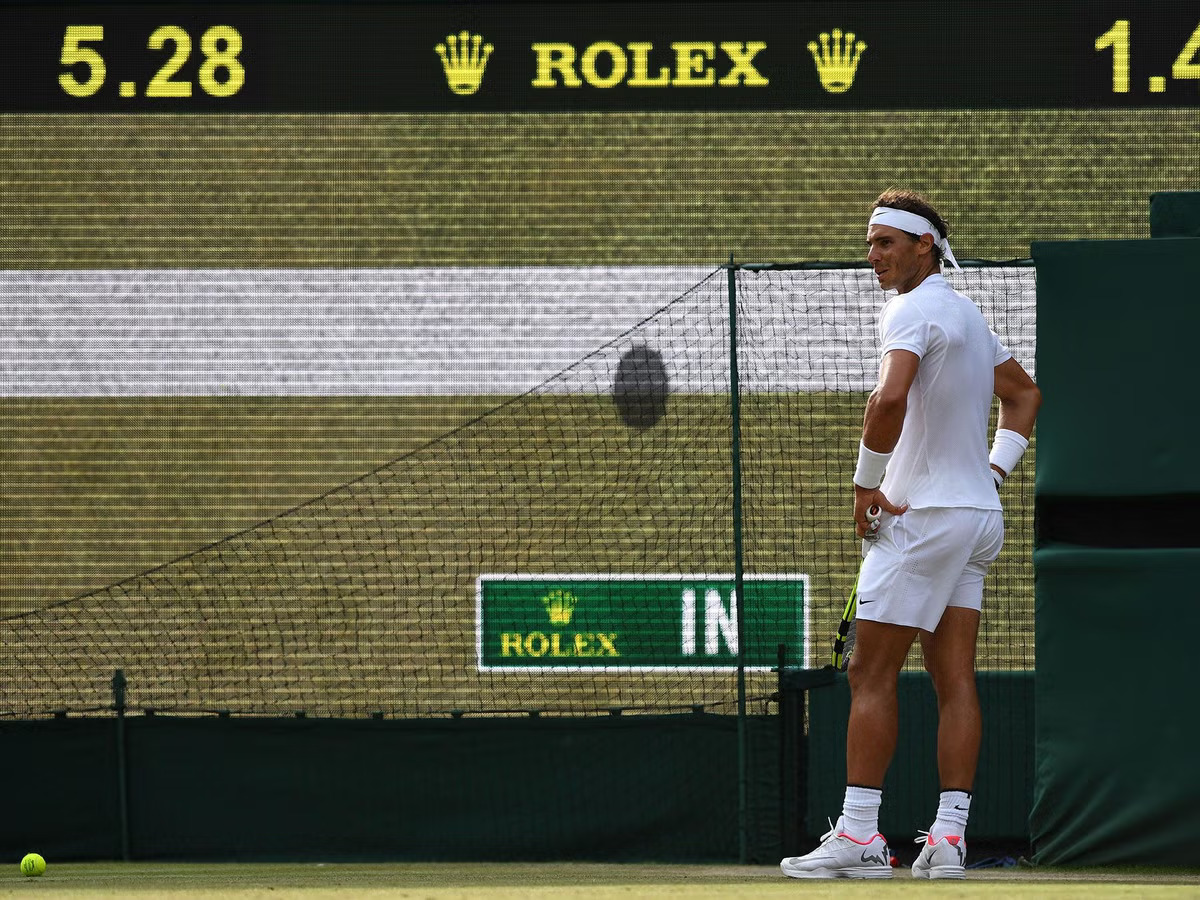
Hawk-Eye Technology in Tennis: How It Works, How Accurate It Is, and Why It Still Sparks Debate
Tennis has always been a sport where a single point can change everything. A match-winning ace, a crucial break point, a championship rally ending on the line. For most of tennis history, those decisions rested entirely in the hands of line judges and chair umpires. Then came Hawk-Eye, and the game was never quite the same again. What Is Hawk-Eye Technology in Tennis? Hawk-Eye is a computer vision system that uses a network of high-speed cameras placed around the court to track the trajectory of the tennis ball in real time. Developed by Paul Hawkins and introduced commercially in the early 2000s, it was first used in professional tennis at the 2006 US Open as part of the Electronic Line Calling (ELC) system, commonly known to fans as the Hawk-Eye Challenge or player review system. The system processes images from multiple cameras simultaneously, typically six to ten cameras per court, to triangulate the ball’s exact position at any given moment. It then generates a three-dimensional model of the ball’s path and calculates precisely where it landed in relation to the court lines. How Does Hawk-Eye Actually Work? Each camera captures the ball at around 340 frames per second. The software stitches these images together, removes visual noise, and calculates the ball’s trajectory using predictive modeling. Because a tennis ball compresses on impact, Hawk-Eye does not simply detect the ball touching the ground. Instead, it models the deformation and calculates the footprint of where the ball made contact with the surface. The final result is displayed on court screens and broadcast to fans within seconds, showing a visual representation of the ball’s bounce and its relationship to the line. What looks like a simple animation is actually the output of a complex real-time physics calculation. The Accuracy of Hawk-Eye Technology in Tennis This is where things get genuinely interesting. Hawk-Eye’s manufacturers claim an average margin of error of just 3.6 millimeters. To put that in perspective, a standard tennis ball is approximately 67 millimeters in diameter. That level of precision sounds extraordinary, and in most circumstances it is. However, accuracy depends heavily on how well the cameras are calibrated, the condition of the court surface, lighting conditions, and how cleanly the cameras can see the ball at the moment of impact. On clay courts, for example, the ball leaves a visible mark. Players and fans have occasionally noticed discrepancies between the physical skid mark on clay and what Hawk-Eye shows on screen, which became one of the most significant points of controversy in the technology’s history. Independent studies and peer-reviewed analyses have broadly supported Hawk-Eye’s reliability for grass and hard court surfaces. For these surfaces, the 3.6mm average error is generally accepted as accurate. The system has been audited multiple times by the ITF (International Tennis Federation) and has consistently passed the required accuracy thresholds for official use. Hawk-Eye on Clay Courts: The Biggest Controversy No conversation about Hawk-Eye technology in tennis is complete without addressing clay. For years, the French Open at Roland Garros was the only Grand Slam that did not use Hawk-Eye for player challenges, and the reason was straightforward: clay leaves a physical ball mark that is visible to the naked eye. Chair umpires would physically walk to the mark and inspect it, making the traditional system arguably more precise on that surface than any camera-based technology. Rafael Nadal, the undisputed king of clay, was among the most vocal critics of using Hawk-Eye at Roland Garros. In several interviews, he pointed out that the clay mark does not lie, and that a computerized model, however sophisticated, introduces a layer of abstraction that the physical mark does not. Roland Garros finally introduced electronic line calling in 2024, ending decades of reliance on human line judges for the clay court Grand Slam. The decision was controversial among purists but welcomed by those who argued that consistency across all four Grand Slams was long overdue. The Player Challenge System and How Fans Experience It When Hawk-Eye was first introduced as a challenge system, players were typically given two incorrect challenges per set, with an additional challenge granted if a set went to a tiebreak. The drama of a player burning a challenge, the crowd going quiet, the animated replay building tension on the screen, became one of tennis’s most electric moments. The challenge system did more than just correct mistakes. It changed the psychological dimension of the game. Players began using challenges tactically, sometimes to break an opponent’s momentum or to buy recovery time. It added a new layer of strategy that the sport had never seen before. Full Electronic Line Calling: Removing Humans From the Equation Entirely In recent years, the sport has moved beyond the challenge system toward what is called Live Electronic Line Calling or full ELC, where Hawk-Eye replaces human line judges entirely. Calls are made automatically and instantly by the system, with no challenge process needed because every call is already a machine call. The ATP Tour has been rolling out full ELC across tournaments steadily since 2021. The US Open and Australian Open have adopted it fully. Wimbledon, after considerable internal debate, introduced it in 2025, marking a significant cultural shift for the All England Club, which had long valued the traditions of the sport including the presence of line judges on court. The move to full ELC has not been without criticism. Some players and coaches feel that removing the human element strips the sport of something important. Others argue that human line judges, however skilled, will always be prone to errors that a well-calibrated machine can eliminate. High-Profile Controversies Involving Hawk-Eye Decisions Over the years, a number of specific incidents have put Hawk-Eye technology in tennis under the spotlight in uncomfortable ways. At Wimbledon 2007, a challenge by Andy Roddick showed a ball that Hawk-Eye marked as “out” but the visible grass mark suggested it may have clipped the line. The image became widely circulated and fueled early debates about whether
Read More
Denver Broncos Acquire Wide Receiver Jaylen Waddle From Miami Dolphins in Draft Pick Trade
The Denver Broncos have made their most significant offensive splash of the offseason, completing a trade to bring wide receiver Jaylen Waddle over from the Miami Dolphins. In the deal, Denver sends its first-round pick (30th overall) along with third and fourth-round selections (94th and 130th overall) to Miami. In return, the Broncos receive Waddle and the Dolphins’ fourth-round pick (111th overall). A Solution to Denver’s Offensive Struggles The Broncos trade for Jaylen Waddle addresses a persistent weakness that plagued the team throughout the 2025 season. Despite finishing 14-3 in the regular season and earning the AFC’s top seed, Denver ranked 29th in the league in three-and-out drives, with a staggering 25% of offensive possessions ending without a first down. The team’s playoff run came to a painful halt in the AFC Championship Game against the New England Patriots, where the offense managed just 32 yards in the second half, totaling only one first down after halftime. Head coach Sean Payton acknowledged the unit’s shortcomings and later handed playcalling duties to newly promoted offensive coordinator Davis Webb. Waddle, 27, is widely regarded as one of the fastest players in the NFL. His addition gives the Broncos a dynamic playmaker capable of stretching defenses and creating explosive chunk plays, something their receiving corps has desperately lacked. His 64 receptions, 910 receiving yards and six touchdowns from last season would have ranked second, second, and second respectively among all Broncos receivers in 2025. Waddle’s Career at a Glance Selected by Miami with the sixth overall pick in the 2021 NFL Draft, Waddle broke the NFL rookie record for receptions with 104 catches in his debut season. He continued to flourish after the Dolphins traded for Tyreek Hill, posting a career-high 1,356 yards and eight touchdowns in 2022, followed by 1,014 yards and four touchdowns in 2023. His production dipped slightly in the last two seasons, dropping from fifth in the league in yards per route run (2.73) during 2022-23 to 34th (1.96) over the past two campaigns. The Broncos believe a change of scenery and a more defined role in Sean Payton’s system could help Waddle recapture his earlier form. Since entering the league, Waddle ranks 10th in receiving yards and 11th in yards after the catch among all wide receivers. He finished eighth in the NFL in yards per target (9.2) last season. Contract Details Waddle signed a three-year, $84.75 million extension before the 2024 season. Denver will absorb a $5 million salary cap hit in 2026 and take on the remaining obligations of his contract, which runs through 2028. Miami had already covered a significant portion of his 2026 guarantee, though the Broncos retain the option to restructure the deal. Denver’s Receiving Corps Gets a Boost Waddle joins a Broncos receiving room that includes Courtland Sutton, Pat Bryant, Troy Franklin, Marvin Mims Jr., Lil’Jordan Humphrey, and Michael Bandy. While Sutton had been the team’s only receiver ranked among the top 48 in receptions of 20-plus yards last season (tied 9th with 17), the rest of the depth chart offered little in terms of big-play production. Notably, before this trade the Broncos had been the only NFL team that had not signed a single free agent from another club since the market formally opened last week, having instead re-signed 17 of their own free agents. Miami Loads Up on Draft Capital For the Dolphins, the move is a clear pivot toward rebuilding through the draft. Miami now holds two first-round picks in the upcoming draft, sitting at 11th and 30th overall, joining the Jets, Browns, Chiefs, and Cowboys as teams with multiple first-round selections. Overall, the Dolphins currently hold 11 total picks heading into draft month. Tutu Atwell now leads Miami’s receiver room, alongside Jalen Tolbert, Terrace Marshall Jr., Malik Washington, Tahj Washington, Theo Wease Jr., and AJ Henning. The NFL Draft is scheduled for next month.
Read More
Champions League Top Scorers: Ronaldo’s 140-Goal Record and the Greatest Scorers in UCL History
The UEFA Champions League is the pinnacle of club football, and nowhere is elite talent more clearly measured than in its all-time scoring charts. Since the competition’s modern format began in 1992/93, a select group of extraordinary forwards have elevated goal-scoring into an art form on Europe’s biggest stage. At the summit of this list stands Cristiano Ronaldo, whose record of 140 goals across 183 appearances remains the most celebrated individual achievement in Champions League history. Yet the story of the top scorers extends far beyond one player. From Lionel Messi’s equally staggering 129 goals to Robert Lewandowski’s relentless rise into triple figures, and from Karim Benzema’s trophy-laden career at Real Madrid to the emerging threats posed by Kylian Mbappe and Erling Haaland, the Champions League goal-scoring pantheon is rich, diverse, and fiercely competitive. All-Time Champions League Top Scorers (Top 10) Rank Player Clubs Apps Goals 1 Cristiano Ronaldo (POR) Man Utd, Real Madrid, Juventus 183 140 2 Lionel Messi (ARG) Barcelona, PSG 163 129 3 Robert Lewandowski (POL) Dortmund, Bayern Munich, Barcelona 120+ 107 4 Karim Benzema (FRA) Lyon, Real Madrid 170+ 90 5 Raul Gonzalez (ESP) Real Madrid, Schalke 144 71 6 Kylian Mbappe (FRA) Monaco, PSG, Real Madrid 100+ 68 7 Thomas Muller (GER) Bayern Munich 150+ 57 8= Erling Haaland (NOR) Salzburg, Dortmund, Man City 79 56 8= Ruud van Nistelrooy (NED) PSV, Man Utd, Real Madrid 73 56 10 Thierry Henry (FRA) Monaco, Arsenal, Barcelona 112 50 Cristiano Ronaldo: The 140-Goal Mountain Cristiano Ronaldo’s Champions League record is, in statistical terms, without peer. Across 183 appearances for three different clubs, the Portuguese forward amassed 140 goals, a total that surpasses the second-placed Messi by 11 goals. What makes this achievement especially remarkable is that it was built across vastly different playing environments, from the electric atmospheres of Old Trafford to the Galactico era at the Santiago Bernabeu and a final chapter in Serie A with Juventus. Ronaldo’s journey to the top of the all-time chart was not linear. In his first 32 European outings, he managed just a single goal. Yet once he found his footing, his progression became extraordinary. At Real Madrid, where he spent nine years, he scored 105 of his 140 Champions League goals, including 10 against Juventus alone, the most any player has scored against a single opponent in the competition’s history. On 18 April 2017, Ronaldo became the first player in history to reach 100 Champions League goals, achieving the milestone with a hat-trick against Bayern Munich in his 137th appearance. He went on to finish his competitive Champions League career with five titles: one with Manchester United (2008) and four with Real Madrid (2014, 2016, 2017, 2018). He remains the only player to have scored in three separate Champions League finals. Ronaldo’s Champions League Goals by Club Club Period Appearances Goals Manchester United 2003–2009 ~40 21 Real Madrid 2009–2018 101 105 Juventus 2018–2021 ~40 14 TOTAL 183 140 Among his many records, Ronaldo scored in 93 different Champions League matches, representing 51% of all his appearances. He netted against 38 different opponents and shared the competition record of eight hat-tricks with Messi. His most prolific single season came in 2013/14, when he scored 17 goals, a tally that stood as the Champions League record for several years. Lionel Messi: 129 Goals and Unmatched Club Loyalty Lionel Messi’s 129 Champions League goals are all the more astonishing when considered in context. Of those, 120 were scored for a single club, Barcelona, making him the most prolific scorer for one team in the competition’s history. His nine additional goals came during an underwhelming stint at Paris Saint-Germain, where he struggled to replicate his Camp Nou brilliance at the highest level. Messi became the second player to reach 100 Champions League goals in October 2017, reaching the landmark in 122 games, 15 fewer than Ronaldo required. He has been the top scorer in six Champions League seasons, one fewer than Ronaldo’s seven. Messi also holds the record for scoring against the most different opponents in the competition, finding the net against 40 separate clubs, two more than Ronaldo. Perhaps the most jaw-dropping individual performance in Champions League history belonged to Messi in March 2012, when he scored five goals in Barcelona’s 7-1 demolition of Bayer Leverkusen. He shares the record of eight hat-tricks with Ronaldo and posted a goals-per-game ratio of 0.79, placing him alongside the legendary figures of the pre-modern era such as Alfredo Di Stefano (0.84) and Ferenc Puskas (0.85). Robert Lewandowski: The Third Member of the 100 Club Robert Lewandowski achieved a milestone that only two players before him had managed when he reached 100 Champions League goals on 26 November 2024, scoring for Barcelona against Brest. His total of 107 goals across clubs including Borussia Dortmund, Bayern Munich, and Barcelona places him third on the all-time list, though the gap to Messi (22 goals) and Ronaldo (33 goals) remains substantial. What distinguishes Lewandowski is his efficiency. He required just 100 games to reach 80 Champions League goals, a pace faster than both Messi (102 games) and Ronaldo (116 games) to that same milestone. He also holds the unique distinction of scoring a hat-trick for three different clubs in the Champions League, a feat no other player has matched. At Bayern Munich alone, he scored 69 of his 107 goals, surpassing the club’s previous European record set by Gerd Muller. Benzema, Raul, and the Rest of the Elite Karim Benzema’s 90 Champions League goals place him fourth on the all-time list and cement his legacy as one of Real Madrid’s most important players in the modern era. His tally is built on consistent output across more than a decade at the club, with his Champions League record particularly outstanding in the knockout stages, where he proved decisive in some of the competition’s most memorable comebacks. Raul Gonzalez sits fifth with 71 goals and remains one of the defining figures of Champions League football from the late 1990s
Read More