
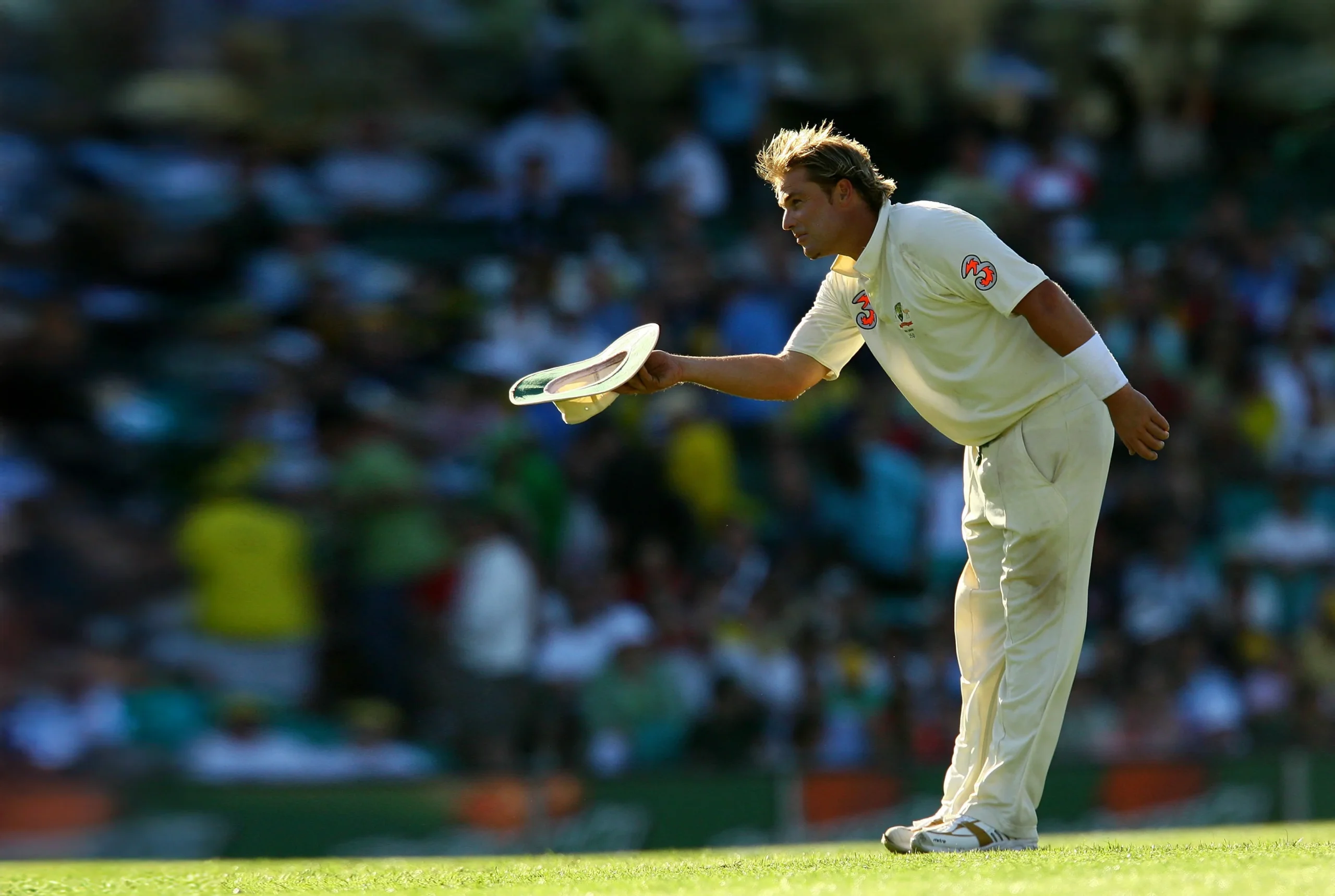
Shane Warne’s 708 Test Wickets: The Legacy of Spin Bowling’s Greatest Artist
Shane Warne did not just play cricket. He reinvented it. In an era when fast bowling dominated Test cricket and leg-spin was considered a dying art, this blond Australian from Melbourne walked onto the world stage and changed everything. His 708 Test wickets stand as a monument to skill, courage, and an unmatched competitive spirit that burned in him until his very last delivery. How Shane Warne’s 708 Test Wickets Began With a Single Ball Most careers take years to define themselves. Shane Warne’s was defined in a single moment. On June 4, 1993, at Old Trafford in Manchester, Warne bowled his very first delivery in an Ashes Test match to England’s Mike Gatting. The ball pitched outside leg stump and turned viciously to clip the off stump. Gatting stood at the crease in absolute disbelief. The commentators fell silent. Cricket had just witnessed what would forever be called the Ball of the Century. That one delivery announced to the world that something extraordinary had arrived. It was not just a great ball. It was a statement. Warne had declared war on batsmen everywhere, and over the next 14 years, he made good on that promise 708 times in Test cricket alone. The Art and Science Behind Shane Warne’s Spin Bowling Mastery What separated Warne from every other leg-spinner before or after him was his ability to combine raw skill with psychological warfare. He did not simply bowl. He performed. Every delivery was a trap, a story, a piece of theatre designed to make the batsman doubt himself before the ball had even left Warne’s hand. His arsenal was breathtaking in its variety. The standard leg break, bowled with precision and dangerous drift, was his stock delivery. But surrounding it were weapons that kept batsmen permanently off balance. The flipper, a back-spinning delivery that skidded low and fast through the air, trapped countless batsmen lbw who were expecting a turning ball. The googly, a ball that turned the opposite way to a leg break, was used sparingly but devastatingly. His slider was almost undetectable even to expert eyes. What made it all work was Warne’s control. He could land the ball on a precise spot over and over again, varying pace, flight, and spin while keeping his action deceptively similar. Batsmen who faced him described a feeling of helplessness, not because they did not know what was coming, but because knowing still was not enough to stop it. Shane Warne’s 708 Test Wickets Across the Greatest Rivalries in Cricket No collection of 708 wickets tells a complete story without examining where and against whom those wickets were taken. Warne was at his most dangerous against England. He took 195 wickets in Ashes contests alone, a number that terrified generations of English batsmen and defined the Ashes rivalry for an entire era. The sight of Warne steaming in at Headingley, the MCG, or Lord’s became something English fans both dreaded and somehow admired. South Africa, India, New Zealand, Sri Lanka, the West Indies — no team escaped his dominance. He was equally effective on flat pitches in subcontinental heat as he was on green English tracks. Adaptability was part of his genius. Where other spinners required helpful conditions, Warne created his own. His battles with Brian Lara, Sachin Tendulkar, and Rahul Dravid were among cricket’s greatest individual contests. Tendulkar, in particular, was a batsman Warne respected deeply, and their duels produced some of Test cricket’s most technically absorbing passages of play. Neither man ever fully mastered the other, which is exactly how great rivalries should work. The Numbers Behind Shane Warne’s 708 Test Wickets Warne played 145 Test matches across 14 years and claimed his 708 wickets at an average of 25.41. That average is extraordinary for a spinner in Test cricket, reflecting not just how often he took wickets but how cheaply he did so. He took five wickets in an innings 37 times and ten wickets in a match on 10 occasions. These are not just statistics. They are evidence of relentless, sustained excellence. He was the first bowler in Test history to reach 700 wickets. When he retired in January 2007 after Australia’s 5-0 Ashes whitewash, he held the record for most Test wickets ever taken. Muttiah Muralitharan later surpassed him, but the debate about who was cricket’s greatest bowler has never truly settled, and perhaps it should not. Both men redefined what was possible in their craft. Shane Warne’s Influence on Leg-Spin Bowling Around the World Before Warne, leg-spin was considered too expensive and too risky for Test cricket. Coaches discouraged it. Selectors avoided it. The art form was genuinely in danger of disappearing from the highest level of the game. Warne’s success did not just save leg-spin. It created a global revival. A generation of young bowlers across Australia, India, Pakistan, and beyond picked up the ball differently because of what they saw him do. Coaches who once told promising young spinners to bowl off-spin or seam instead suddenly found parents and children arriving at cricket academies wanting to learn the leg break, the flipper, and the googly. Warne made leg-spin glamorous again. His impact extended beyond technique. He showed that a spin bowler could be aggressive, theatrical, and match-winning from the very first over. He wore the ball as a weapon rather than a support act to the fast bowlers, and in doing so he changed how captains around the world thought about spin bowling in Test cricket. Why Shane Warne’s 708 Test Wickets Remain Unmatched in Spirit Numbers in cricket can be broken. Records come and go. But what Warne built across those 708 wickets was something numbers cannot fully capture. He changed the atmosphere of a cricket ground the moment he was thrown the ball. Crowds leaned forward. Batsmen tightened. Something was always about to happen. He was also a cricketer who performed at his highest in the biggest moments. World Cups, Ashes series, final day chases, Warne rose when cricket demanded
Read More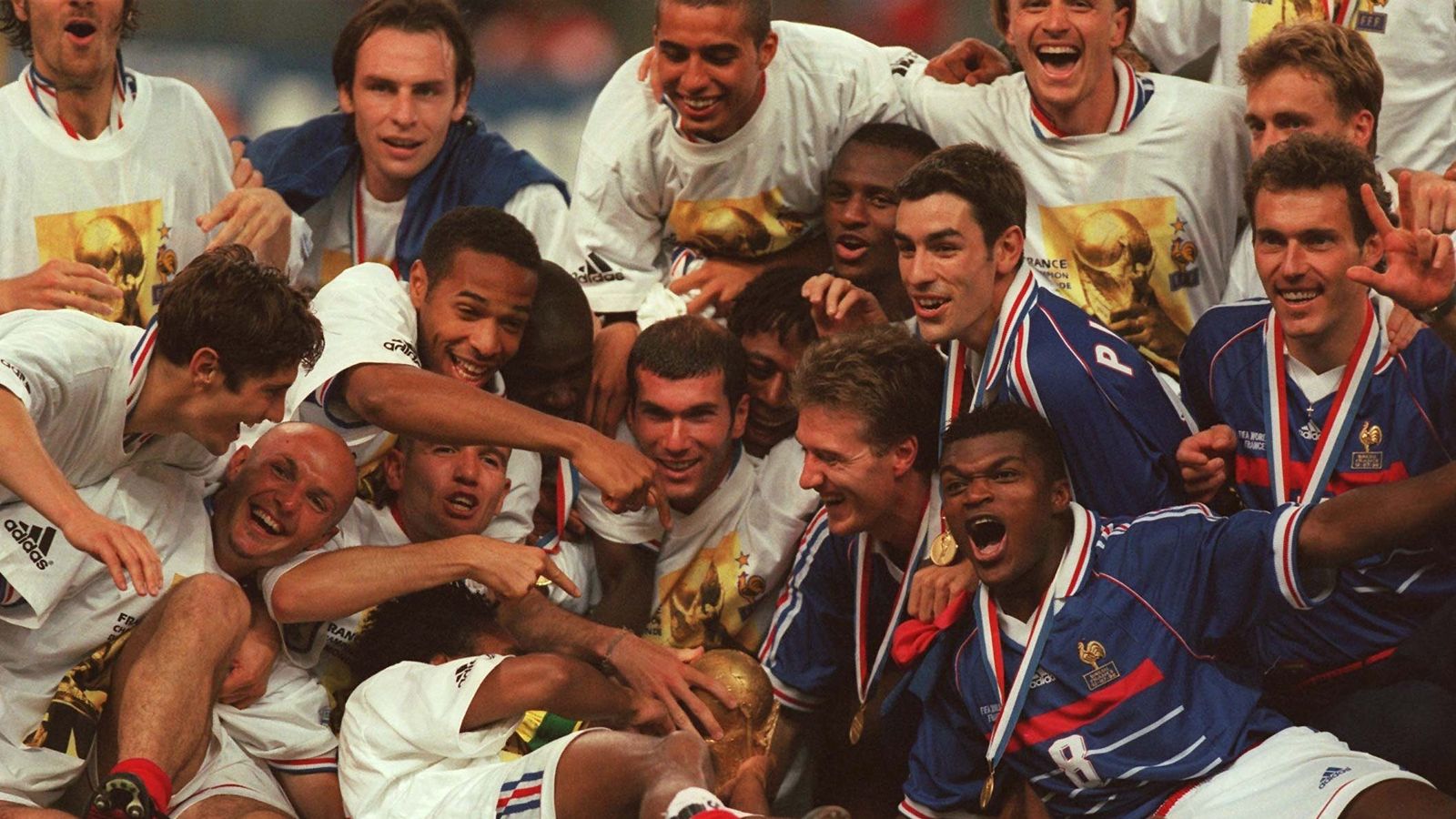
France World Cup History: Two Trophies and One Tragedy
Two World Cup trophies. One of the most humiliating exits the tournament has ever witnessed. A headbutt that stopped the world. And a final comeback so extraordinary it has already entered the permanent folklore of the game. France World Cup history is not a story of steady dominance. It is a story of the highest highs and the most crushing lows, often separated by just a few years. No nation has given the tournament more emotional extremes at the top level. The two stars on the French shirt were earned through brilliance, but the journey between them was never straightforward. Before the Glory: France’s Early World Cup Story France were founding members of the World Cup in 1930. Their early campaigns were largely unremarkable. The first genuine flash of world-class quality arrived in 1958 in Sweden, when Just Fontaine scored 13 goals in a single tournament. That remains the all-time record for goals in one World Cup edition. France finished third that year. Then came years of underachievement and failed qualification attempts through the 1960s and 1970s. Michel Platini’s generation provided the next high point, finishing third at the 1986 World Cup in Mexico. It was a foundation, not yet a dynasty. What followed twelve years later changed French football forever. 1998: The First Trophy, On Home Soil Aimé Jacquet’s France arrived at their own World Cup carrying enormous weight. The expectation was national. So was the pressure. But the squad Jacquet had built was different. It combined individual genius with defensive discipline and collective spirit. Zinedine Zidane was at its centre, but Didier Deschamps led it from the back, Thierry Henry terrorised defences from the flanks, and Emmanuel Petit controlled the tempo. The final against Brazil on July 12, 1998, at the Stade de France, was the perfect night. Zidane scored twice in the first half with headers from corners, 27th and 45th minute. Petit added a third in stoppage time. The final score was 3-0. France were world champions for the first time. The streets of Paris held one of the largest public gatherings in French peacetime history. The multicultural squad that won it represented a vision of France that the nation celebrated with fierce pride. It was more than a football match. It was a cultural moment. The Tragedy of 2002: Defending Champions Eliminated Without Scoring Four years later, France arrived in South Korea and Japan as world champions and European champions simultaneously. The most decorated international side on the planet. They were eliminated in the group stage without scoring a single goal. It remains the most catastrophic defence of a World Cup title in the tournament’s history. Zidane was injured for the opening two matches. France lost 1-0 to Senegal in the tournament’s very first game. Papa Bouba Diop scored the only goal. Then came a 0-0 draw with Uruguay, during which Thierry Henry was sent off for a reckless challenge. France needed to beat Denmark by two goals in the final group game. Zidane returned but was clearly unfit. Denmark won 2-0. Three games. Zero goals. One point. Exit. The psychological collapse behind those numbers was rooted in complacency, injury, and the curse of arriving as the overwhelming favourite with nothing to prove. Roger Lemerre was sacked the following week. 2006: A Final That Will Never Be Forgotten Four years after the lowest point in French football history, a retiring generation gathered for one final act. Zidane came out of international retirement. Raymond Domenech’s side reached the final against Italy in Berlin. France were competitive throughout. They went ahead early through a Zidane penalty. Then came the headbutt. In extra time, with the match level, Marco Materazzi said something to Zidane. What exactly was said has been debated for nearly two decades. What happened next was not. Zidane turned, walked back, and drove his head into Materazzi’s chest. The red card was immediate. France, reduced to ten men, lost on penalties. Zidane’s final act as a professional footballer was one of the most discussed moments in sporting history. The exit was simultaneously heroic and heartbreaking. That paradox is perfectly French. 2018: The Second Star Twenty years after 1998, Didier Deschamps returned to the World Cup final. This time as manager rather than captain. The squad he brought to Russia was built around different qualities. Mbappé provided the explosion. Antoine Griezmann provided the craft. Paul Pogba provided the power. Hugo Lloris provided the calm. The final against Croatia was won 4-2. Mbappé scored at 19 years old. Griezmann scored from the penalty spot. The second star was sewn onto the French shirt. Deschamps became only the third man to win the World Cup as both player and manager, following Brazil’s Mário Zagallo and Germany’s Franz Beckenbauer. The collective system he built, channelling individual brilliance into disciplined structure, was the same formula that had delivered 1998. History had found a way to repeat itself. 2022: So Close Again The 2022 final in Qatar against Argentina produced one of the most extraordinary evenings in World Cup history. France were 2-0 down with around ten minutes of normal time remaining. Mbappé scored twice in two minutes to level at 2-2. Messi put Argentina back ahead in extra time. Mbappé converted a penalty to make it 3-3. After 120 minutes, the finest World Cup final of the modern era went to penalties. France lost 4-2 in the shootout. Mbappé scored a hat trick in a final and still finished on the losing side. French football wept. The rest of the world stared in disbelief. A World Cup Legacy Built on Extremes France World Cup history is not a story of consistency. It is a story of intensity. Two titles separated by two decades. A group-stage exit without scoring. A red card in a final. One of the greatest comeback performances in the tournament’s history. No nation has delivered more drama at the highest level of the competition. The stars on the shirt were earned. Everything around them was lived
Read More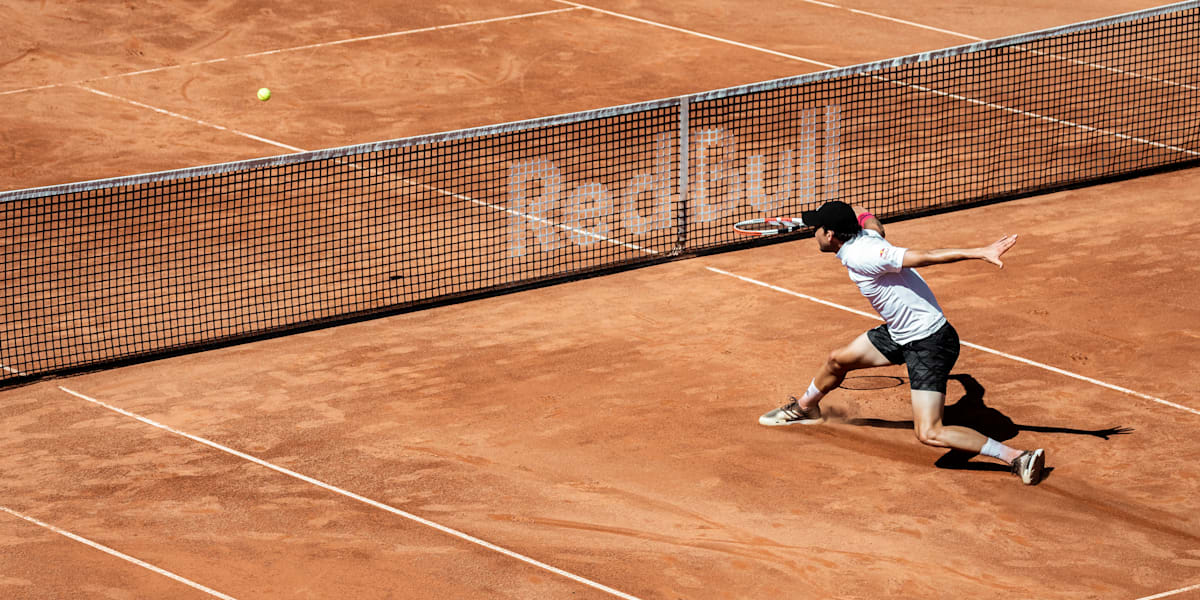
Clay Court Specialists: Why Some Players Dominate Red Dirt
Not every great tennis player is a great clay court player. The red dirt of Roland Garros, Monte Carlo, and Rome operates by a different physics, rewards a different physiology, and demands a different mentality than any other surface the sport is played on. Some of the finest players in tennis history have walked onto clay and found themselves completely undone by it. Others have walked onto it and never looked back. Understanding what separates those two outcomes is one of the most fascinating questions in professional tennis. This is the full story of clay court specialists, what builds them, what defines them, and why their dominance on red dirt remains the most compelling individual achievement the game produces. What Makes Clay Courts Different from Every Other Surface Clay slows everything down. The surface absorbs pace rather than amplifying it, reduces ball speed significantly, and produces a higher bounce that sits up into the body rather than skidding through low. Serves that are dominant weapons on grass or hard courts become far less threatening, and the advantage shifts from power to patience. Physically, clay is the most demanding surface the sport offers. Longer rallies, sliding footwork, and the cumulative toll of a full clay season place demands on the body that no other surface replicates. Players who succeed here are not simply good tennis players. They are specifically built for endurance. The Physical Profile of a True Clay Court Specialist Extreme topspin generation sits at the centre of every clay court specialist’s game. Heavy topspin produces a high, kicking bounce that pushes opponents further behind the baseline and above their strike zone, creating pressure that compounds across long rallies rather than resolving in a single shot. Footwork is the other defining characteristic. Sliding into position rather than stopping and planting allows elite clay players to cover angles and recover positions that would end points for almost anyone else. It is a skill that takes years to develop and immediately separates the specialist from the all-surface player. Rafael Nadal: The Greatest Clay Court Specialist in Tennis History Rafael Nadal won 14 French Open titles, compiled an 81-match winning streak on clay between 2005 and 2007, and retired with a 90.5 percent win rate across 535 clay court matches. Those numbers exist in a category so far beyond every other player that they require no qualification to convey their scale. What made Nadal functionally unbeatable was not one attribute but all of them expressed simultaneously. His topspin forehand, his defensive court coverage, his physical conditioning across five sets, and his psychological certainty that clay belonged to him each reinforced the others until opponents felt they were playing against the surface itself rather than just the man across the net. Bjorn Borg and the Origins of Clay Court Dominance Before Nadal redefined the ceiling, Bjorn Borg set the template. The Swede won six Roland Garros titles between 1974 and 1981, achieving four consecutively, and compiled a career win rate of 93 percent on clay, second only to Nadal in professional tennis history. He accomplished all of it before the age of 26. Borg’s game was built on heavy topspin, exceptional endurance, and a psychological stillness under pressure that unnerved opponents more effectively than any aggressive tactic. He was the first player to demonstrate that clay court dominance was not an accident of technique but a deliberate construction of physical and mental attributes around what the surface demands. Why Clay Court Specialists Struggle on Grass and Hard Courts The attributes that make a clay specialist elite on red dirt frequently limit them on faster surfaces. The extreme swing path that generates devastating spin on clay is slower to execute and more vulnerable to low, skidding balls, which is precisely what grass and hard courts deliver. The sliding footwork becomes redundant where stopping and planting is mechanically more effective. Nadal’s 14 French Open titles alongside two Wimbledon and four US Open titles reflect this dynamic precisely. Players like Casper Ruud and Guillermo Coria, who reached world-class level through clay, found translating those skills to grass and hard courts a persistent challenge throughout their careers. The Modern Clay Court Specialists Carrying the Tradition Forward Carlos Alcaraz has demonstrated multi-surface brilliance rare among clay-oriented players, winning Roland Garros, Wimbledon, and the US Open before turning 22. But his Roland Garros game, built on explosive movement, extreme topspin, and tactical intelligence, remains where his tennis reaches its highest expression. Casper Ruud reached the Roland Garros final in both 2022 and 2023, establishing himself as the most consistent clay specialist of the post-Nadal era. Stefanos Tsitsipas, with multiple Masters titles on the surface, rounds out a generation proving that the tradition Borg built and Nadal perfected remains very much alive. How Training and Tactics Are Built Around Clay Court Success Coaches who develop clay court specialists build programmes backwards from what the surface demands. Sliding drills and court coverage patterns form the daily foundation. Topspin development through thousands of low-to-high swing repetitions is treated as core skill work, not supplementary training. Tactically, clay coaching emphasises construction over destruction, building points across shot sequences designed to push opponents progressively further back rather than ending rallies through single aggressive strikes. The patience this requires is as much a trained quality as a natural one, and elite coaches invest as heavily in mental conditioning as in technical development. The Enduring Legacy of Clay Court Specialists and Their Greatest Champions Roland Garros remains the most romanticised Grand Slam in tennis, and the clay court specialists who have dominated it are among the most celebrated figures the sport has ever produced. There is something in the visible, exhausting, physical nature of clay court tennis, the dirty knees, the sliding recoveries, the rallies that test human endurance, that connects with audiences more deeply than faster surfaces can replicate. Clay court specialists have given tennis some of its most enduring narratives. Borg’s cold dominance. Nadal’s primal relationship with a surface that responded to him like
Read More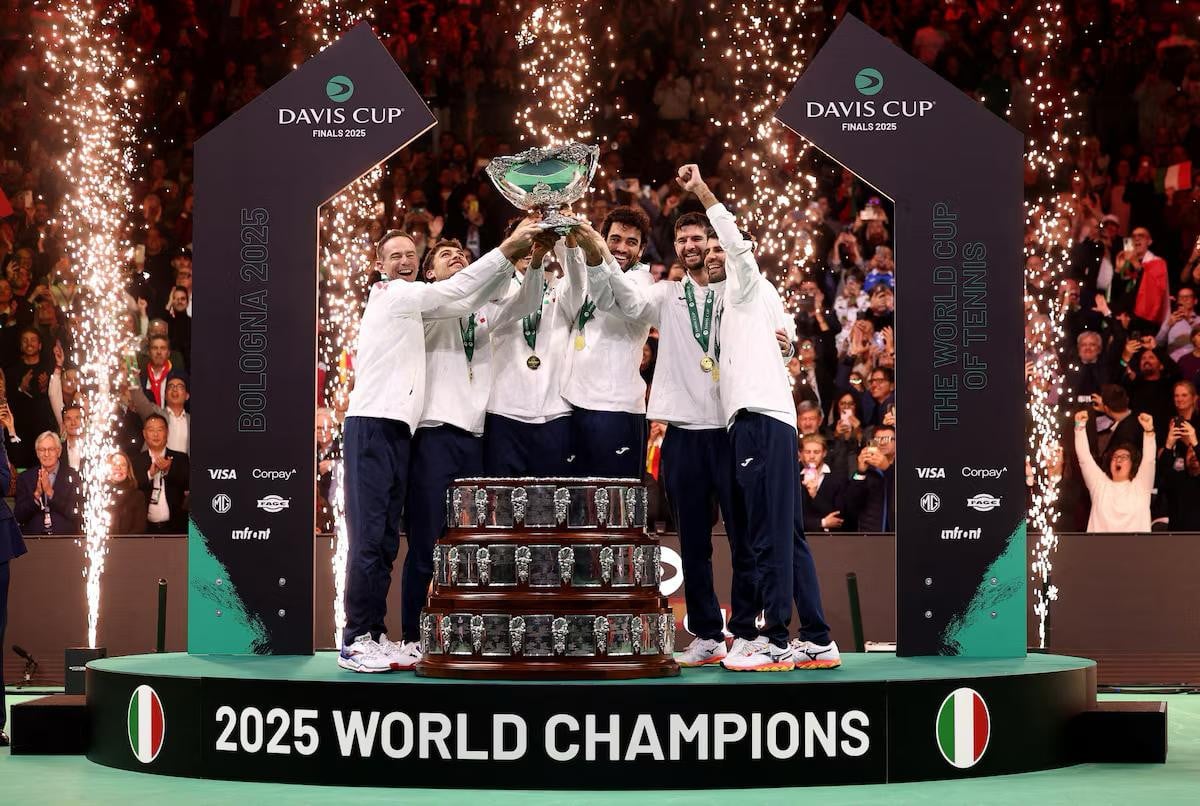
Davis Cup History: Nations’ Greatest Team Tennis Moments
The Davis Cup is the most prestigious team competition in tennis. Founded in 1900, it brings together nations from across the globe to compete not for individual glory but for the pride of an entire country. Unlike Grand Slams where players chase personal titles, the Davis Cup history is built on sacrifice, loyalty, and the rare electricity of playing for something bigger than yourself. Over more than a century, the tournament has produced some of the most emotional, dramatic, and unforgettable matches ever played on a tennis court. From underdog victories to legendary rivalries, the Davis Cup has consistently delivered the kind of tennis that stays in your memory long after the final point. The Origins of Davis Cup History: How It All Began In 1900, a young American player named Dwight F. Davis donated a silver bowl and proposed an international team competition between the United States and Great Britain. That simple idea launched what would become one of the most celebrated traditions in all of sport. The first match was held in Boston, and the United States won convincingly. Great Britain, then competing as the British Isles, returned to claim the cup in 1903 and went on to dominate the early years of the competition. For over a decade, only these two nations competed, but the tournament’s appeal quickly spread across the world. By the 1920s, countries like France and Australia had joined the competition, and the Davis Cup began transforming into a truly global event. The trophy itself, now affectionately called the “Salad Bowl” due to its size and shape, became one of the most recognized symbols in international sport. France’s Four Musketeers: A Golden Era in Davis Cup History One of the most celebrated chapters in Davis Cup history belongs to France and their legendary group of players known as the Four Musketeers. René Lacoste, Henri Cochet, Jean Borotra, and Jacques Brugnon dominated world tennis during the late 1920s and early 1930s in a way that had never been seen before. France won six consecutive Davis Cup titles between 1927 and 1932, ending years of American and British dominance. These four men played with elegance, intelligence, and an unbreakable team spirit that became the model for every Davis Cup squad that followed. Their run is still considered one of the greatest sustained team performances in tennis history. Australia vs America: The Greatest Rivalry in Davis Cup History No rivalry defines Davis Cup history more completely than the one between Australia and the United States. From the 1950s through the 1970s, these two nations traded the cup back and forth in a series of matches that produced legendary players and unforgettable moments. Australia’s golden generation included Rod Laver, Ken Rosewall, Lew Hoad, John Newcombe, and Tony Roche. The Americans responded with Stan Smith, Arthur Ashe, and Jimmy Connors. The battles between these squads attracted massive global attention and helped grow tennis from a niche sport into a mainstream spectacle. Australia holds the record for the most Davis Cup titles overall, a testament to the country’s deep and enduring love for the sport. Their victories were built on a culture of team commitment that turned individual talent into collective greatness. Arthur Ashe and the Meaning of Playing for Your Nation Few moments in Davis Cup history carry as much weight as Arthur Ashe’s performances for the United States. Ashe understood better than almost anyone what it meant to represent a country on a tennis court, and he carried that responsibility with both brilliance and dignity. His leadership helped the United States win multiple Davis Cup titles during the late 1960s and early 1970s. Ashe used the platform the Davis Cup gave him not only to win matches but to speak about equality, justice, and human rights. His legacy in the tournament is about far more than the points he played or the titles he helped capture. Sweden’s Dynasty: Björn Borg and Beyond Sweden entered Davis Cup history in a major way during the 1970s and became one of the competition’s dominant forces. Björn Borg was the catalyst, bringing his ice-cold focus and extraordinary talent to a team format that brought out an even more emotional side of his game. After Borg, Sweden continued to produce world-class players who kept the nation at the top of Davis Cup competition. Mats Wilander and Stefan Edberg carried the torch forward, winning multiple titles during the 1980s and cementing Sweden’s place as one of the great Davis Cup nations. The Swedes proved that a small country could become a tennis superpower through smart development and genuine team culture. Spain’s Modern Dominance in Davis Cup History The most successful Davis Cup nation of the modern era is Spain. Fueled by the talent of Rafael Nadal, Carlos Moyá, Àlex Corretja, and Feliciano Lopez, Spain assembled one of the most formidable Davis Cup squads ever seen. Nadal in particular elevated team tennis to a different level entirely. Spain won the Davis Cup in 2000, 2004, 2008, 2009, 2011, and 2019, building a legacy of excellence that spanned nearly two decades. Nadal’s performances in decisive fifth rubbers became the stuff of legend, with the Spaniard seemingly incapable of losing when the pressure was at its absolute highest. What made Spain’s run so compelling was not just the talent on display but the visible passion and brotherhood within the team. Players who competed fiercely against each other on the individual tour became completely unified when they wore the Spanish jersey. The Greatest Individual Performances in Davis Cup History Davis Cup history is full of individual performances that transcended team sport and entered the realm of pure tennis legend. John McEnroe’s performances for the United States throughout the 1980s were breathtaking in their intensity and skill. He played with a ferocity in the Davis Cup that even surpassed his Grand Slam form, famously declaring that representing his country brought out the best tennis of his life. Nicola Pietrangeli of Italy played an extraordinary 164 Davis Cup rubbers
Read More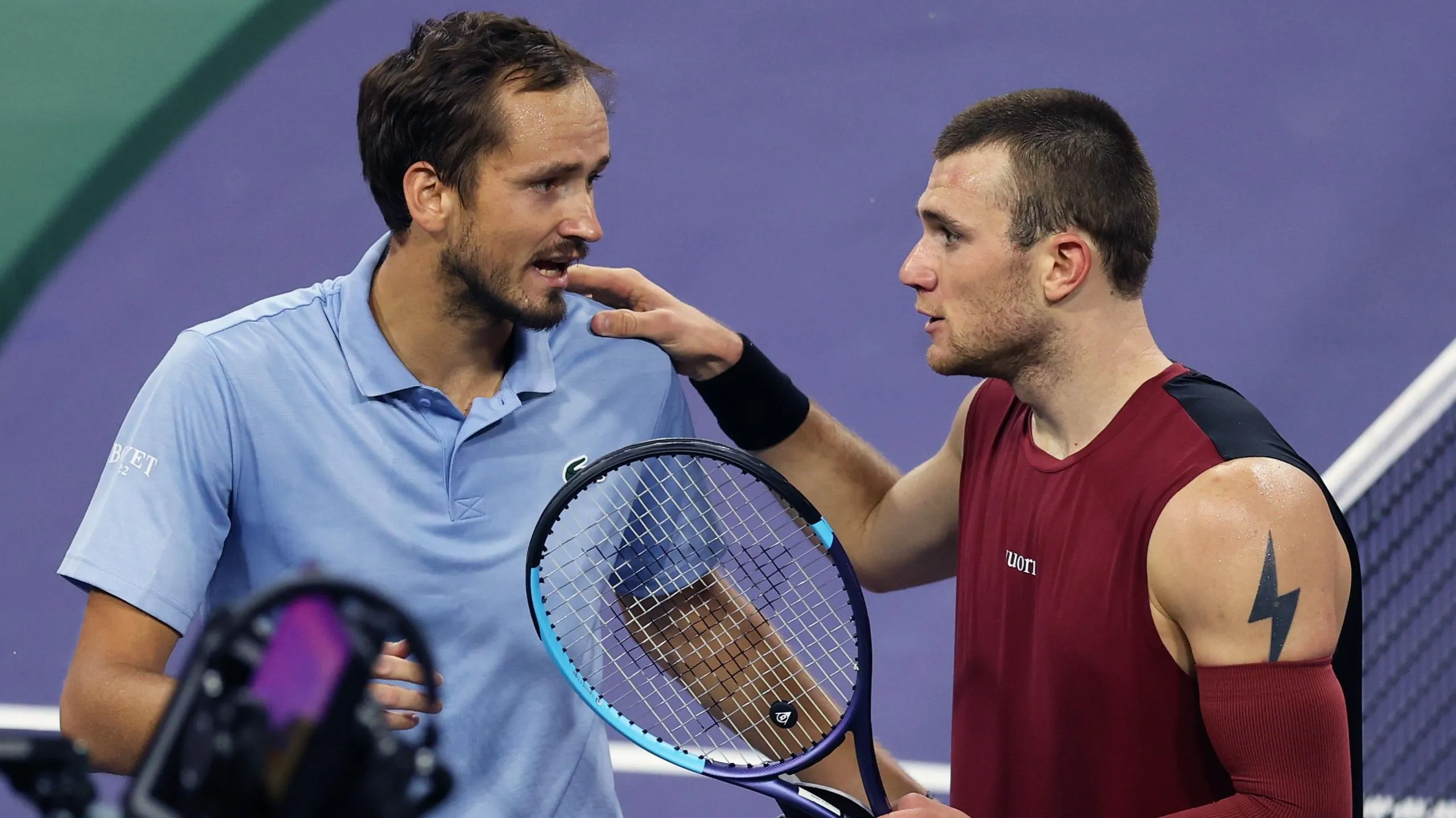
Did Medvedev Cheat His Way to the Indian Wells Final? The Draper Controversy Explained
Daniil Medvedev is through to the Indian Wells final. He beat defending champion Jack Draper 6-1, 7-5 on Thursday. And almost nobody is talking about how well he played. Instead, tennis is consumed by a single moment — a raised arm, a video review, and a point that arguably decided the match. The Medvedev Draper hindrance controversy at Indian Wells has cracked open one of the sport’s most uncomfortable questions: are players now allowed to weaponise the rulebook? What Actually Happened The decisive moment came late in the second set with the score locked at 5-5, 0-15 on Draper’s serve. During a rally, Draper raised his arms after returning a shot, momentarily believing Medvedev’s forehand had landed long. The rally continued for three more shots before Medvedev eventually hit the ball into the net. Instead of accepting the lost point, Medvedev turned to chair umpire Aurelie Tourte and requested a video review, claiming Draper’s gesture had distracted him. Tourte reviewed the footage and ruled in Medvedev’s favour, explaining: “Mr. Draper made a gesture with his hand which is different than in a normal point. Therefore this is considered a hindrance.” The point was awarded to Medvedev. He broke serve immediately after. The match was effectively over. Draper’s Response Said Everything Draper was calm but unmistakably furious. “Players do this all the time,” he told Tourte at the chair. “There’s no way it distracted him enough. We played two shots afterwards. I think you’ve got that wrong.“ At the net after the match, Draper told Medvedev: “You won the match fair and square, but I don’t think it distracted you.” He then shook hands with both Medvedev and the umpire and walked off without another word. The crowd, however, was far less composed — booing Medvedev loudly at the change of ends and again when he sealed the victory. Medvedev Admitted He Didn’t Feel Great About It To his credit, Medvedev did not pretend the incident was clean. He just refused to apologise for using the rules available to him. “I have a good relationship with Jack. I don’t think this incident influenced the outcome. I told the chair umpire that if she didn’t consider the distraction enough, then it should be 15-15 and we keep playing. I don’t feel good about what happened, but I also don’t think I cheated.” “If you look at the first forehand I did after it happened, I think I could have done a better shot if there was no gesture from Jack,” he added, offering his only real justification for why the review was warranted. It was a carefully worded defence. But the timing of the appeal — after the point was already lost — is what has tennis talking. Even Sabalenka Said It Out Loud World No. 1 Aryna Sabalenka was asked about the incident and did not hold back. “What I think is really awkward is you can finish the point and then ask for that,” she said, pointing directly at the rule that allowed Medvedev to wait until after the rally ended before requesting a review. “About Daniil, theoretically he made the move, but I don’t think it actually bothered Daniil that much,” she added. Sabalenka went further, arguing that if a player is genuinely distracted, they should stop play immediately and request a review in real time, not wait to see whether they win or lose the point first. The implication was clear. Medvedev would likely have said nothing had he won that rally. The Rulebook Loophole Nobody Wants to Talk About The hindrance rule itself is not new — but the ability to request a video review after the point ends is where this gets dangerous. Under Rule 7.22(F) of the ATP Tour’s 2026 Rulebook, a hindrance refers to any situation where a player is distracted by something outside their control, including body movements and loose items. According to video review procedures at Indian Wells, reviews can be sought after point-ending shots or if a player immediately stops play. The umpire is required to give the benefit of the doubt to the appealing player when reviewing hindrance calls, a standard that critics argue is dangerously open to exploitation when the appeal comes after the outcome of the point is already known. Did It Actually Cost Draper the Match This is the question that cuts through all the noise — and the honest answer is probably yes. Draper had clawed back to 5-5 in the second set despite clearly feeling the physical effects of his gruelling three-set win over Djokovic less than 24 hours earlier. The 24-year-old was visibly weary, still feeling the strain of a two-hour 35-minute battle that ended only the evening before. At 5-5 and 0-15 down on serve, holding that game was everything. Instead, the point was handed to Medvedev. He broke. He served out the match. He is in the final. Tennis Has a Problem It Can No Longer Ignore The Medvedev Draper hindrance controversy at Indian Wells will not disappear quietly. Calls for the ATP to revise the video review protocol for hindrance rulings are growing louder, with players and coaches pointing out that allowing an appeal after the point ends creates an obvious incentive to game the system. Medvedev goes into Sunday’s final against Jannik Sinner as a legitimate contender and a deeply polarising figure this week. Draper goes home wondering what might have been. And somewhere in the rulebook, a loophole sits quietly — waiting for the next player brave enough, or calculating enough, to use it.
Read More
Daniil Medvedev Net Worth in 2026: The $25M Man Who Refused to Fade Away
Twelve months ago, Daniil Medvedev was losing in the first round of Grand Slams, splitting with his longtime coach, and watching his ranking slide toward irrelevance. Today, he is the hottest player on the ATP Tour — unbeaten in three finals this season, with a Tour-leading 18 wins, and a net worth that keeps growing whether he wins or loses. As of 2026, Daniil Medvedev’s net worth is estimated at $25 million — and after his stunning semifinal win over World No. 1 Carlos Alcaraz at Indian Wells yesterday, that number is only heading in one direction. What Is Daniil Medvedev’s Net Worth in 2026? Daniil Medvedev’s net worth in 2026 sits at an estimated $25 million, built across three distinct pillars: ATP prize money, a stacked endorsement portfolio, and smart off-court investments. According to Celebrity Net Worth, Medvedev has accumulated over $46.94 million in career ATP prize money as of 2025, placing him among the top seven all-time earners in men’s tennis history. His net worth figure is lower than his prize money total because taxes, coaching staff, travel, and living costs in Monaco absorb a significant portion of earnings each year. Career Prize Money: Where the Foundation Was Built Medvedev’s standout earning year on court was 2023, when he collected $11.55 million in prize money alone, his single most lucrative season as a professional. That figure reflected deep runs at every major and a dominance on hard courts that briefly made him look untouchable. His total career prize money reached $43 million by November 2024, ranking him 7th on the all-time ATP earnings list. By the time his 2025 title drought finally ended at the Almaty Open, that ranking had held firm, a testament to how much he had banked during his peak years. The Endorsement Empire Behind the Baseline Prize money is only part of the story. The bigger financial engine for Medvedev has always been his endorsements. He earns approximately $15 million annually from his full endorsement portfolio, with Lacoste, his primary apparel sponsor since 2019, sitting at the top of that list. The Lacoste contract was extended through 2026 following his Paris Masters victory that year. That deal not only covers his on-court kit but gave him his own personalised logo, a rare privilege reserved for the brand’s biggest ambassadors. Beyond Lacoste, Medvedev’s sponsor list includes Tecnifibre for racquets, Bovet for luxury watches, BMW Russia for automotive, and Tinkoff Bank for financial services. His gaming interests have also translated directly into commercial deals. He serves as a Game Ambassador for Rainbow Six Siege and co-owns esports organisation M80, an investment he made in November 2023 that reflects both his personal passion and his understanding of where sports culture is heading. Forbes reported $8 million in endorsement earnings in 2021, rising to approximately $15 million in 2022, a figure that reflects how significantly his market value jumped after winning the 2021 US Open. The 2025 Collapse That Could Have Cost Him Everything To understand why Medvedev’s financial story in 2026 feels so significant, you have to sit with what happened in 2025. It was a dire season by any measure. He won just one match across all four Grand Slams combined. Sponsors do not pull contracts overnight, but a prolonged slump at that level puts every renewal conversation under pressure. After the season ended, he parted ways with longtime coach Gilles Cervara, the man who had guided him through every major milestone of his career, including the 2021 US Open title and his rise to World No. 1. Working with new coaches Thomas Johansson and Rohan Goetzke, Medvedev finally ended his 882-day title drought at the 2025 Almaty Open, a result that felt more significant than the trophy alone. 2026: The Comeback That Changed His Financial Story The numbers in 2026 tell a very different story from the ones that defined his 2025. Medvedev won the Brisbane title to open the season, beating Brandon Nakashima in the final, his 22nd ATP title in 22 different cities. He then claimed Dubai for the second time after his opponent withdrew from the final. By the time he arrived in Indian Wells, he was carrying an 18-set winning streak and an unbeaten record in finals this season. On Saturday, he added the biggest result of his resurgence, dismantling World No. 1 Carlos Alcaraz 6-3, 7-6(3) to reach the Indian Wells final. A victory over Jannik Sinner on Sunday would make it three titles from three finals in 2026 and almost certainly trigger a wave of new commercial conversations with sponsors whose contracts expire at year’s end. What Comes Next for Medvedev’s Wallet Medvedev’s financial trajectory in 2026 will be shaped by two things: how deep he goes at Roland Garros and Wimbledon, and what his next major sponsorship cycle looks like when the Lacoste deal concludes. At an estimated $25 million net worth today, Medvedev sits comfortably among the top ten wealthiest active players on the ATP Tour. A Masters 1000 title at Indian Wells this weekend would add over $1.2 million in prize money alone and considerably more in brand visibility heading into the clay season. For a player who was being written off less than a year ago, that is quite a financial resurrection. The comeback, it turns out, has been good for business.
Read More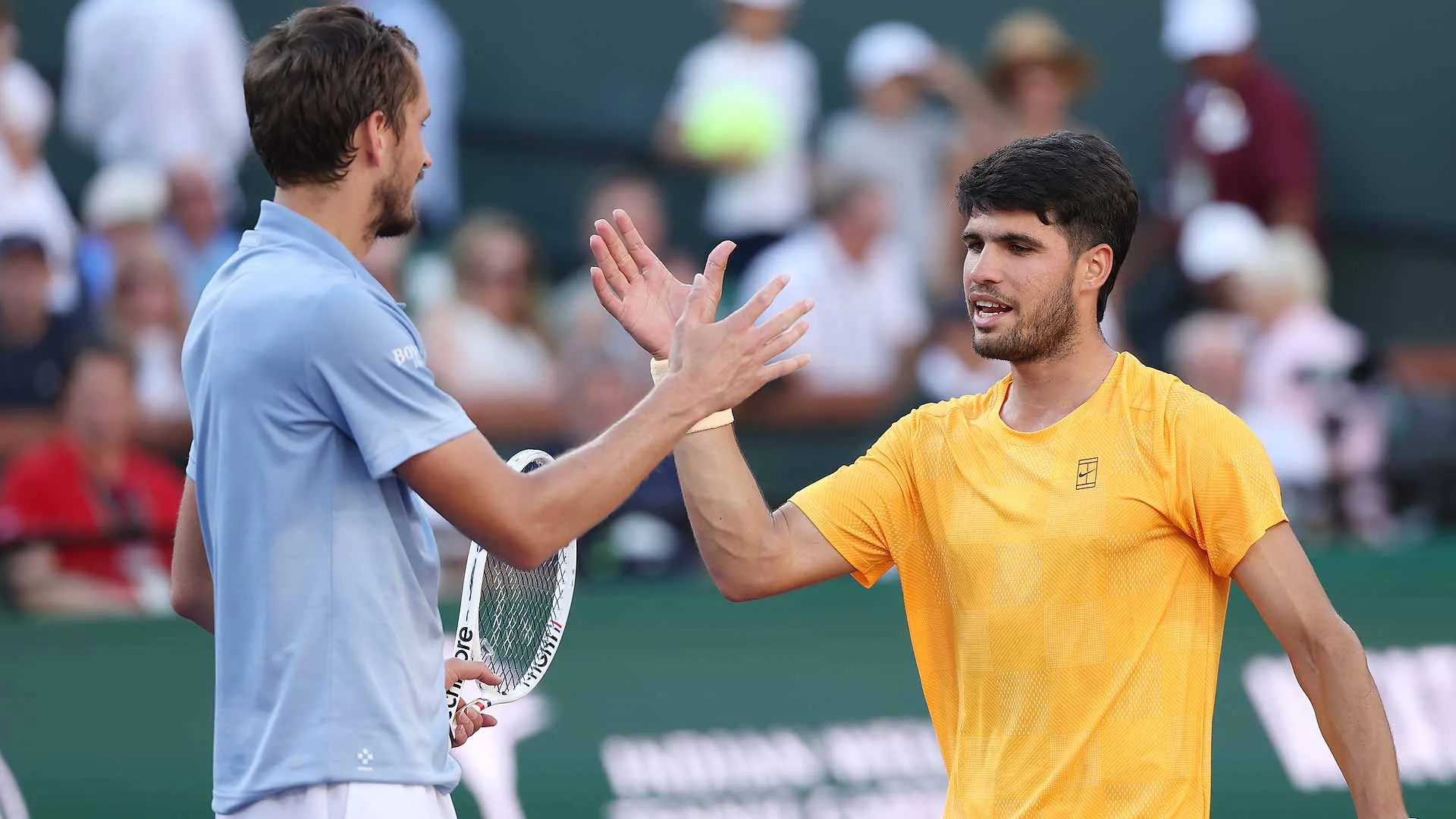
Medvedev Stuns Alcaraz at Indian Wells 2026 — Perfect Season Over After 16-0 Start
Carlos Alcaraz arrived at Indian Wells carrying a 16-0 record, two titles, and the kind of momentum that makes opponents feel defeated before the first serve. Daniil Medvedev did not get that memo. The Russian shocked the World No. 1 6-3, 7-6(3) in the BNP Paribas Open semifinals on Saturday, snapping Alcaraz’s 16-match winning streak and handing the 22-year-old his first loss of the 2026 season. It was clinical, composed, and completely against the script. One Break. One Set. One Statement. Medvedev needed just 34 minutes to take the opening set. He broke Alcaraz at 3-1 and never looked back, winning 74% of points behind his first serve and giving the Spaniard nothing to work with. The second set was a different story. Alcaraz broke early to lead 3-1 and even held two set points on Medvedev’s serve at 4-5. Medvedev fought off the first with a blistering inside-out forehand, swatted the second away with a service winner, and forced a tiebreak. The Tiebreak That Ended the Perfect Season Once the tiebreak arrived, the match was over in spirit before it ended on paper. After dropping the opening point, Medvedev reeled off six consecutive points to race to a 6-1 lead and reach quintuple match point. Alcaraz saved two but could not save the third. Medvedev rifled an ace up the middle to close it out — the perfect ending to a near-perfect performance. Medvedev’s Numbers Tell the Full Story This was not a lucky win. It was a masterclass in controlled aggression. Medvedev won 73% of second-serve points and saved four of five break points across the entire match. It was his first win over Alcaraz since the 2023 US Open, ending a four-match losing run against the Spaniard — and his first win over a sitting World No. 1 since beating Sinner at Wimbledon in 2024. What Alcaraz Was Protecting To feel the full weight of this result, you need to understand what was on the line. Alcaraz came into this tournament as arguably the most dominant player in tennis history through the first ten weeks of a season. His 16-0 hard-court record in 2026 placed him alongside Federer, Djokovic, Nadal, and Sinner as the only players to begin a season that flawlessly in the Open Era. The Australian Open title. The Doha title. Sixteen wins without a single defeat. Medvedev ended every bit of it in two sets. In His Own Words Medvedev was measured but clearly emotional in his post-match interview. “Honestly, it’s a great feeling. Someone like Carlos, you play many times, you lose many times. He’s an amazing player with amazing shots, defense, attack, serve, return, everything — so you need to be at your best. And I was.” That last sentence deserves to sit alone. And I was. Sinner Awaits in Sunday’s Final Medvedev now faces Jannik Sinner in Sunday’s Indian Wells final — and the challenge gets no easier. Sinner leads their all-time head-to-head 8-7, and the Italian has not dropped a single set throughout this entire tournament. Medvedev, however, arrives unbeaten in finals this season — Brisbane and Dubai already in the bag. “Whenever you play a tournament where both are playing, there’s a big chance that if you want to win the tournament, you need to beat both — and it’s okay, that’s how tennis is right now,” Medvedev said when asked about the prospect of facing Sinner. For a player ranked 13th in the world at the end of 2025, that is the kind of confidence that only comes from form that feels truly unbreakable. The Comeback Nobody Saw Coming Twelve months ago, Medvedev was losing in the first round of Grand Slams and splitting with his longtime coach after years of declining results. The critics were writing his second act as a footnote. He enters Sunday’s final with a Tour-leading 18 wins this season and an 18-set winning streak that began in Dubai. A victory over Sinner would make him the Indian Wells champion — and complete one of the most compelling comeback stories in recent tennis history. As for Alcaraz — his 2026 season remains historically exceptional by any measure. One loss to a player playing the tennis of his life is not a crisis. It is a test. The only question now is how he responds.
Read More
Youngest Players to Score at the FIFA World Cup
The crowd is at its loudest. The weight of a nation sits on every touch. And somewhere on that pitch stands a teenager, unburdened by history, unconcerned with pressure, about to do something nobody expected. The FIFA World Cup has always had this quality. It does not wait for players to be ready. It rewards those who arrive without fear. Some of the most iconic goals in tournament history have come from players barely old enough to vote. Their names are now written permanently into the game’s greatest story. The Record That Started It All: Pelé in 1958 No name in football carries more weight on this subject than Pelé. On June 19, 1958, in Gothenburg, Sweden, a 17-year-old striker stepped onto the World Cup stage for the first time in a knockout match. He scored the only goal against Wales in the quarterfinal. At 17 years and 239 days, he became the youngest scorer in FIFA World Cup history. That record has stood for over 65 years. He did not stop there. Against France in the semifinal, he scored a hat-trick. In the final against Sweden, he scored twice in a 5-2 victory. At 17 years and 249 days, he became the youngest player ever to score in a World Cup final. Both records remain unbroken. Pelé is still the only player in history to score at a World Cup before turning 18. The Goal That Announced a Generation: Michael Owen, 1998 Forty years after Pelé, another teenager arrived on the World Cup stage with something to say. Michael Owen came off the bench for England against Romania in France 1998, scoring an equalizer in the 83rd minute at just 18 years and 190 days old. It was enough to earn him a starting place. What came next changed everything. In the round of 16 against Argentina, Owen received the ball just past the halfway line. He ran at the defence, beat two players, and finished calmly past the goalkeeper. It was 18-year-old composure on the biggest stage. The goal is still voted among the finest in World Cup history. It announced a generation and confirmed that the tournament belonged to the fearless. The Pattern of Teenage Arrivals Owen was not an isolated case. The World Cup has repeatedly served as the moment a young player crosses from promising to iconic. Cesc Fàbregas, aged 19, was part of Spain’s 2006 squad that signalled a golden era approaching. Wayne Rooney arrived at that same tournament carrying the hopes of England at 20, playing through injury and still scoring against Trinidad and Tobago. Then came Gavi. At the 2022 World Cup in Qatar, the Barcelona midfielder scored against Costa Rica at just 18 years old. He became the youngest Spanish scorer in World Cup history. Each generation has its arrival moment. The World Cup manufactures them with remarkable consistency. Mbappé: The Modern Standard No teenager in the modern era has matched what Kylian Mbappé produced in Russia in 2018. He scored four goals at 19 years old. He was the tournament’s joint second-highest scorer as France lifted the title. His goal in the final against Croatia made him the second teenager after Pelé to score in a World Cup final. Sixty years separated those two moments. What made Mbappé’s tournament historically significant was not just the goals. It was the manner of them. Two goals against Argentina in the round of 16. A final goal struck from 25 yards. He combined raw pace with decision-making that most players develop over a decade. He received the Best Young Player award and left Russia as the most exciting footballer on the planet. What the Youngest Scorers Share Look at Pelé, Owen, Mbappé, and Gavi together and patterns emerge. None of them were weighed down by expectation in the way senior players often are. Inexperience, in their cases, became an asset. They played with the freedom that comes from having nothing yet to lose. Each also possessed a specific quality that separated them from technically gifted players who never quite delivered on the World Cup stage. They raised their game for the biggest moments rather than retreating from them. Pressure clarified them. It made them sharper, not more cautious. That quality is not taught. It is discovered in the moment, and the World Cup has always been the moment where the truly exceptional discover it first. The Next Generation: Who Could Join the List The 2026 World Cup, expanding to 48 teams, will give more young players than ever the opportunity to write their own chapter. Lamine Yamal of Spain will be 18 during the tournament. His performances at Euro 2024, scoring in the final as a 16-year-old, confirmed a talent that transcends age. Brazil’s Endrick, already a Real Madrid player, will be 19 in 2026 and carries the physical and technical profile to score on the biggest stage. The list is about to grow. The World Cup Has Always Belonged to the Bold The youngest scorers in FIFA World Cup history share one thing above all else. They did not arrive hoping to contribute. They arrived expecting to decide. Pelé scored in a final at 17. Owen dismantled Argentina at 18. Mbappé redefined teenage excellence at 19. The World Cup does not ask players how old they are. It only asks whether they are ready. The ones on this list answered before anyone thought to pose the question.
Read More
Bracketology 2026: Complete March Madness Men’s Field Predictions and What to Expect
Selection Sunday is here, and the college basketball world is locked in on who earns a spot in the 2026 NCAA Tournament field of 68. Joe Lunardi’s Bracketology captures the race to March Madness holistically, tracking movement across the bracket throughout Champ Week as action unfolds around the clock. With conference tournaments wrapping up and the bracket picture coming into sharp focus, here is everything you need to know about the projected 2026 March Madness field. Who Are the Four No. 1 Seeds in the 2026 NCAA Tournament? Bracketologists largely agree the top four seeds are relatively set, with ESPN, CBS, and Bracket Matrix all featuring the same four schools in the No. 1 seed spots: Duke, Michigan, Arizona, and UConn. That said, Florida has also been in the conversation throughout the final weeks of the season. At the apex is Duke, the No. 1 team in America. The Blue Devils are led by national player of the year favorite Cameron Boozer and coach of the year contender Jon Scheyer. They already have wins over Florida and Michigan, two of the other projected 1-seeds in the latest Bracketology, and they are on pace to finish the 2025-26 season with the highest NET rating on KenPom in nearly 30 years. Duke has won 17 of its last 18 games, including wins over ranked opponents such as Louisville, SMU, Michigan, and Virginia, propelling the Blue Devils to the projected No. 1 overall seed. They are seeking a No. 1 seed for the second consecutive season under head coach Jon Scheyer. Duke Injuries and What They Mean for the No. 1 Overall Seed While Duke enters the ACC Tournament as the favorite for the No. 1 overall seed, recent injuries to Caleb Foster and Patrick Ngongba II could make the road bumpier for the Blue Devils. A Duke loss to Clemson in the ACC Tournament opens the door for a new No. 1 overall seed by Sunday night. That is how tight the race at the top truly is heading into the final weekend. Michigan, Arizona, and Florida Round Out the Top Seeds Despite their defeat to Duke, the Michigan Wolverines remain one of the deadliest programs in the nation, finishing their regular season with a 29-2 record. The Big Ten has been the dominant conference all season, and Michigan leads that charge as a consensus No. 1 seed. Arizona started the year with a 23-0 overall record before stumbling with back-to-back defeats in early February. After that, the Wildcats won all their remaining games and claimed the Big 12 regular-season title, making them the likely No. 1 seed in the West Region. Florida finished their regular season as SEC regular-season champions after winning their last 11 games from late January onwards. They are the expected No. 1 seed of the South Region. The reigning national champion is one of the four No. 1 seeds in Lunardi’s projections, and it might not be a stretch to say the Gators played better over the final month of the regular season than they did during the same span of their championship run. The Big Ten Leads All Conferences in Projected Bids The Big Ten couldn’t be in a better place as the season hits the stretch run. The “conference of quantity” has added a large measure of high quality, giving it the best chance in a long time to end a 25-year national title drought. The top of the seed list is dotted with Big Ten names, with five teams on the top three lines led by Michigan. The SEC, meanwhile, remains deep but faces a more competitive landscape than a year ago. The conference still has enough depth to send double-digit teams to the NCAA tournament, but SEC fans expecting the conference to replicate last March’s results, which included two No. 1 seeds, two No. 2 seeds, a 3-seed, and a 4-seed, are going to be disappointed. This season is more balanced between high-major conferences. The 2026 March Madness Bubble: Who Is In and Who Is Out The bubble heading into Selection Sunday has been one of the weakest in recent memory, creating real uncertainty for a handful of programs. Lunardi currently lists Auburn as his “Last Team In,” with Indiana, Virginia Tech, Stanford, and New Mexico on the “First Four Out” line. VCU is firmly on the bubble ahead of its conference tournament matchup, with expectations that the league produces two NCAA Tournament teams. However, if another team wins the tournament as a bid stealer, that could be bad news for teams expecting at-large bids from other leagues. Seton Hall’s run in the Big East tournament came to a close after their loss to St. John’s as heavy underdogs. The Pirates rank outside the top 50 nationally in résumé average with only a single Quadrant 1 win, and their bubble has likely burst. On the other side, Santa Clara sits at 24-7 with a strong conference record, but the Broncos’ NCAA tournament hopes may hinge on their success in their conference tournament, as the West Coast Conference rarely receives more than two bids. Key Conference Tournament Games That Could Shake Up the Bracket Florida needs a win or two at the SEC Tournament to secure the fourth No. 1 seed. Tennessee and Vanderbilt are battling for a final 4-seed, while Kansas and Houston are set for a massive Big 12 showdown, with the Cougars all but guaranteed the hometown South Region at this point. The Big East race is particularly fascinating. Only one of the Big East semifinals contains any real bracket intrigue, as St. John’s has already wrapped up the regular-season title and is a heavy favorite heading into the postseason. The SEC could finish with anywhere from nine to twelve bids, with Texas, Oklahoma, and Auburn all still very much in question as Selection Sunday approaches. The Freshmen Class That Is Defining the 2026 NCAA Tournament One of the most compelling storylines heading into this year’s tournament is the unprecedented
Read More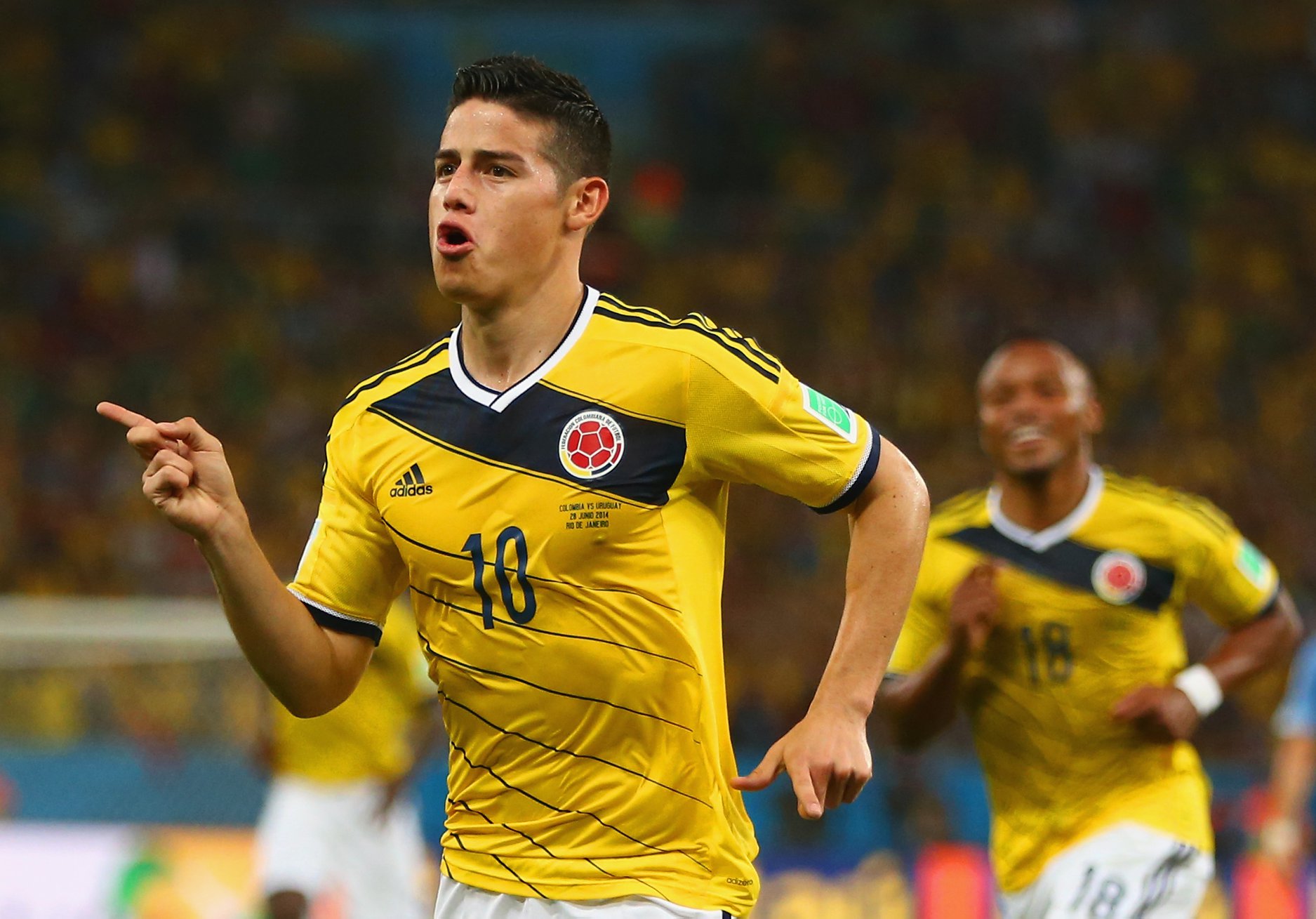
Top 10 Greatest World Cup Goals of All Time That You’ll Never Forget
The FIFA World Cup is the biggest stage in football, and some players have used that stage to create moments that live forever. Not just in highlight reels or history books, but in the collective memory of billions of fans across the globe. The greatest World Cup goals of all time are more than just goals. They are moments of pure human brilliance that stopped the world, changed tournaments, and turned players into legends overnight. Whether you watched them live or discovered them years later on YouTube, these goals have a way of giving you chills every single time. Here is a countdown of the 10 greatest World Cup goals of all time, ranked by their skill, drama, and lasting impact on the beautiful game. 10. Saeed Al-Owairan — Saudi Arabia vs. Belgium (1994) Not many players from outside the traditional football powers have left a mark this deep on World Cup history. Al-Owairan picked up the ball inside his own half and went on an extraordinary solo run, dancing past five Belgian defenders before calmly slotting it home. It was Saudi Arabia’s debut World Cup appearance and they announced themselves in the most stunning way possible. That goal helped them reach the Round of 16, a feat the country has never repeated since. In a tournament full of big names, a relatively unknown winger from Saudi Arabia stole the show. 9. Siphiwe Tshabalala — South Africa vs. Mexico (2010) Opening games of a World Cup rarely produce moments worth remembering decades later, but Tshabalala had other plans. Playing in front of a roaring home crowd, the South African midfielder picked up the ball on the left side, drove forward, and unleashed a thunderous left-footed strike that flew into the top corner. The vuvuzelas went into overdrive and the whole stadium shook. It was more than just a goal. It was a symbol of an entire continent’s passion for football and a historic moment for the first African nation ever to host the tournament. 8. Manuel Negrete — Mexico vs. Bulgaria (1986) Mexico in 1986 had the home crowd behind them and Negrete gave them every reason to roar. In the Round of 16, he received the ball at the top of the box and without hesitation launched himself into a perfectly timed scissor kick volley that crashed into the bottom corner. The technique was flawless, the timing was precise, and the execution was breathtaking. It is no surprise that FIFA fans later voted it the Greatest Goal in World Cup History in an official poll. Some goals are beautiful. This one was a work of art. 7. Ronaldinho — Brazil vs. England (2002) Still debated to this day, Ronaldinho’s outrageous free kick from 35 yards against England in the quarterfinals remains one of the greatest World Cup goals of all time. He spotted England goalkeeper David Seaman off his line and chipped the ball up and over him in a way that seemed almost impossible from that distance. Whether it was intentional or not, the net bulged and England were on their way out. Brazil went on to win the tournament and Ronaldinho went on to become one of the most beloved players of his generation. That single moment announced him to the entire world. 6. James Rodríguez — Colombia vs. Uruguay (2014) The 2014 World Cup in Brazil produced many memorable moments, but nothing quite captured the world’s attention like this goal from Colombia’s James Rodríguez. Receiving the ball on his chest with his back to goal and a defender breathing down his neck, he swiveled and smashed a first-time volley that hit the underside of the bar and bounced in. The stadium erupted, social media exploded, and within days the whole planet knew his name. That goal won him the Puskás Award, earned Colombia a place in the quarterfinals for the first time ever, and led to a blockbuster transfer to Real Madrid. 5. Landon Donovan — USA vs. Algeria (2010) Sometimes a goal is not just a goal. Sometimes it is a cultural moment. With the United States seconds away from crashing out of the group stage, goalkeeper Tim Howard launched a counterattack and Landon Donovan chased it down and buried the rebound in the 91st minute. The commentary, the celebration, and the pure relief on every American face watching was unforgettable. That goal did more for football in the United States than almost anything before or since. It pushed the sport into the mainstream conversation and gave a generation of American fans a reason to believe. 4. Dennis Bergkamp — Netherlands vs. Argentina (1998) If you want to understand what composure under pressure looks like, watch this goal on repeat. With the score tied 1-1 and minutes remaining in the quarterfinals, Frank de Boer played a 60-yard pass over the top. Bergkamp brought it down with a single touch, shifted the ball past his marker with the second, and lifted it over the keeper with the third. Three touches. One breathtaking goal. The Netherlands went through and Bergkamp cemented his place among the all-time greats. It is the kind of goal that players dream about and coaches use to teach composure and technique to this day. 3. Maxi Rodríguez — Argentina vs. Mexico (2006) Extra time in a knockout game is not where you expect to see a goal of this quality. Argentina and Mexico were locked in tension when Maxi Rodríguez received a long diagonal pass, controlled it on his chest, and before the ball even hit the ground, he smashed a left-footed volley into the top corner. Unstoppable. Unrepeatable. The technique required to pull off a strike like that under that kind of pressure is almost impossible to comprehend. Argentina went through and Maxi had the greatest moment of his career. Some goals make you jump off your seat. This one makes you question what is even physically possible. 2. Pelé — Brazil vs. Sweden (1958) At just 17 years old, Pelé
Read More