
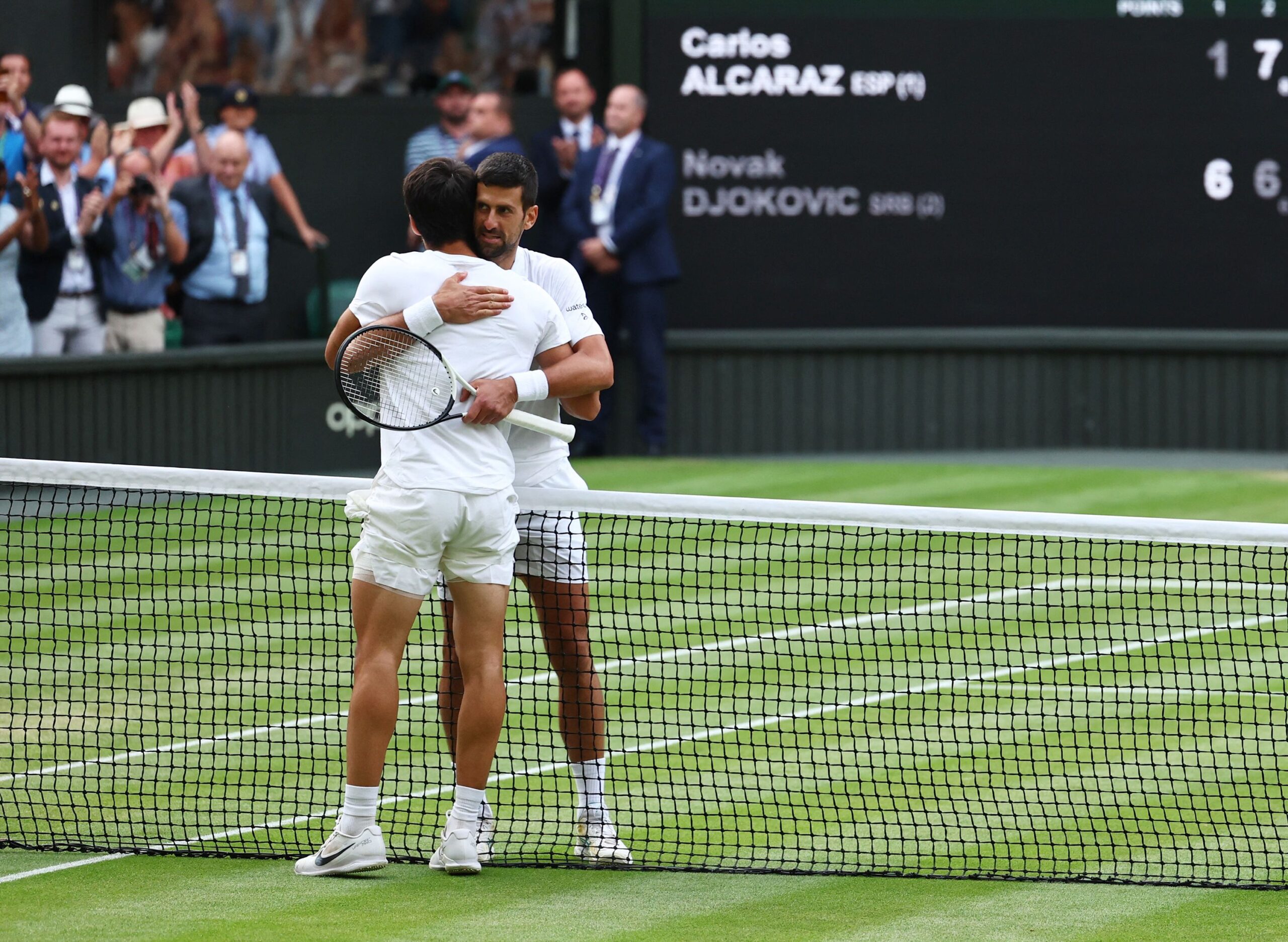
Australian Open 2026 Final: Djokovic’s Path to Glory Falls Short Against a Historic Alcaraz
The 2026 Australian Open Final delivered everything tennis fans had hoped for and more. On the night of February 1 at Rod Laver Arena, Melbourne Park became the stage for one of the sport’s most compelling storylines: a 38-year-old Novak Djokovic, chasing an unprecedented 25th Grand Slam title, against a 22-year-old Carlos Alcaraz hungry to complete his career collection. The result was a match that will be debated, replayed, and remembered for years to come. Alcaraz defeated Djokovic 2–6, 6–2, 6–3, 7–5 to claim his first Australian Open title and seventh Grand Slam overall, becoming the youngest man in tennis history to complete the career Grand Slam. But to understand the full magnitude of the night, you have to look at Djokovic’s extraordinary journey to get there. How Djokovic Reached the Australian Open 2026 Final At 38 years and 255 days old, Djokovic became the oldest man in history to reach the Australian Open final, and the oldest major finalist overall in decades. That alone tells you this was no ordinary campaign. The Serb, who had not won a major since the 2023 US Open, came into Melbourne Park with renewed hunger and a point to prove against a new generation that had largely taken over the Grand Slam stage. Djokovic’s semifinal win came against Jannik Sinner, the two-time defending champion, in a rematch of their clash two years prior. That victory ended Sinner’s remarkable streak of five consecutive major finals dating back to the 2024 US Open. Beating the reigning world number one going into a final is no small feat, and it showed that Djokovic’s competitive fire had not dimmed one bit despite his age. Djokovic was arguably fresher heading into the final, having spent four hours less on court than Alcaraz during the tournament, benefiting from a fourth-round walkover and an injury-forced retirement by Lorenzo Musetti in the quarterfinals. That physical freshness would prove critical in the opening stages of the match. The First Set: Djokovic Fires and Melbourne Roars The Australian Open 2026 Final began in stunning fashion for Djokovic. Under the open roof of Rod Laver Arena, with Rafael Nadal watching from the stands, the Serb came out with a level of intensity that silenced even his critics. Djokovic won five of six rallies over eight shots in the opening set, and with extra pace on his serve, clocking 170km/h compared to his tournament average of 166km/h, he was able to put Alcaraz under immediate pressure. Alcaraz won just one of eight points on his second serve in that first set. The crowd was electric, and for a moment it genuinely looked as though Djokovic might run away with the match entirely. He dispatched the first set 6–2, coming out firing from the baseline in a way that was characteristic of his best years. The dream of a 25th Grand Slam felt very much alive. The Turning Point: Alcaraz Adjusts and Djokovic Unravels What separates great champions from good ones is the ability to adapt mid-match, and that is precisely what Carlos Alcaraz did. The Australian Open 2026 Final turned dramatically in the second set as Alcaraz made subtle but decisive tactical changes. Alcaraz slowed his second-serve speed to 159km/h in the second set to disrupt Djokovic’s rhythm on return, and the adjustment worked immediately. Djokovic, who had been so clinical in the long rallies during the first set, began to force winners at the wrong moments, sending backhands down the line that sailed long or crashed into the net. Djokovic, averaging 28 unforced errors at AO 2026 before the final, had committed just four in the opening set. But as Alcaraz took control of the longer exchanges in the final two sets, that number swelled to 31 unforced errors. For a player of Djokovic’s calibre, that kind of statistical collapse tells the story of a match that slipped away from him one rally at a time. Alcaraz won 14 long rallies to Djokovic’s nine in the final three sets, completely reversing the first-set dynamic. The Spaniard also completed 48 sprints compared to Djokovic’s 22, which was 10 sprints above his own tournament average, demonstrating a relentless physical commitment that proved impossible to match. Djokovic’s Perfect Australian Open Record Ends For over a decade, Rod Laver Arena had been Novak Djokovic’s fortress. Ten finals, ten titles. No player in the Open Era had dominated a single Grand Slam with such completeness. The Australian Open 2026 Final was his first opportunity to go 11 from 11, and the pressure of that statistic weighed heavily on the night. Djokovic fended off six break points to hold serve in a marathon second game of the fourth set, sending his Serbian fans into a frenzy and showing every sign of his legendary fighting spirit. The match was not over. Not while Djokovic was still standing. But as Djokovic served at 5–6 to stay in the match and force a tiebreak, Alcaraz gained the upper hand in a nail-biting 24-stroke rally. Two errors from the Serb handed over championship points, and on the first of them, Djokovic’s forehand sailed out. Alcaraz fell to the ground and covered his face in disbelief and joy. A perfect record had finally been broken. Djokovic’s Gracious Response and Legacy What Djokovic said afterwards may have been even more striking than his performance. Cradling the finalist’s silverware for the first time in his Australian Open career, Djokovic told Alcaraz: “Congratulations Carlos, an amazing tournament. What you’ve been doing is, I think the best word to describe it is historic, legendary.” Coming from the most decorated men’s singles player in history, those words carry immense weight. Djokovic knows history. He has written most of it himself. And his acknowledgement of Alcaraz’s achievement says everything about the generational shift happening right now in men’s tennis. Djokovic’s wait for his elusive 25th Grand Slam title continues, and the 38-year-old is a runner-up at the Australian Open for the first time in his career. Yet finishing runner-up after
Read More
WTA Rankings Battle: Who Will Challenge Iga Swiatek in 2026?
Dominance in tennis is never permanent. It only feels that way when one player sets a standard others struggle to reach. Over the past few seasons, Iga Swiatek has defined the tempo of the WTA Tour with consistency, tactical clarity, and mental steel. As 2026 approaches, the question is no longer whether she deserves the top spot. The real intrigue lies in the coming WTA Rankings Battle 2026 and who possesses the tools to threaten her reign. Swiatek has already built a résumé that includes multiple Grand Slam titles and extended stays at World No.1. But history shows that every era eventually faces resistance. The 2026 season could represent the first sustained challenge to her authority. Understanding the WTA Rankings System To understand the potential challengers, one must understand how the rankings work. The Women’s Tennis Association operates a rolling 52-week ranking system. Players earn points based on performance at Grand Slams, WTA 1000, WTA 500, and WTA 250 events. Grand Slams offer 2,000 points to the champion. WTA 1000 tournaments provide up to 1,000 points. Crucially, players must defend points earned the previous year. Failure to replicate results leads to immediate ranking drops. This structure means consistency outweighs sporadic brilliance. A player cannot simply win one Slam and disappear. Sustained excellence across surfaces defines the WTA No.1 race 2026. Iga Swiatek’s Grip on the Top Spot Swiatek’s ranking dominance stems from three pillars: clay-court supremacy, hard-court evolution, and mental resilience. Her multiple titles at the French Open established her as the premier clay-court force of her generation. Yet she has also claimed major hard-court success, including titles at the US Open. Statistically, Swiatek separates herself through break-point conversion, return-game dominance, and sustained winning streaks. Her ability to control baseline exchanges forces opponents into reactive patterns. Unlike many power hitters, she constructs points with layered aggression rather than reckless force. However, dominance invites pursuit. Entering the WTA Rankings Battle 2026, Swiatek must defend significant ranking points, particularly on clay. Even minor dips in form could open doors for rivals. The Established Contenders – Proven Threats The first wave of challengers includes players already entrenched in the Top 10. Aryna Sabalenka brings explosive power and proven Grand Slam pedigree, including success at the Australian Open. Her aggressive style shortens rallies and can overwhelm even elite defenders. Elena Rybakina combines flat groundstrokes with one of the most effective serves on tour. Her grass-court title at Wimbledon Championships demonstrated her ability to peak on the biggest stage. Coco Gauff has matured tactically and mentally, adding Grand Slam credentials and defensive versatility. Each of these players owns weapons capable of disrupting Swiatek’s rhythm. The question is not talent. It is week-to-week reliability. The Rising Generation – Young Players Closing the Gap Beyond established stars, the next generation waits. Young players who have already posted breakthrough WTA 1000 results are gaining belief. Their games reflect modern baseline aggression paired with improved athleticism. For any emerging contender to lead the women’s tennis rankings battle, she must translate flashes of brilliance into consistent semifinal appearances across multiple surfaces. The rankings system rewards depth of tournament runs more than isolated upsets. Momentum, not hype, will determine who truly challenges in 2026. Surface Dynamics – Where Swiatek Is Most Vulnerable Surface distribution may decide the WTA No.1 race 2026. Swiatek’s clay dominance remains formidable. On slower hard courts, she controls tempo effectively. Grass, historically the most unpredictable surface, often produces volatility. Power players with flat trajectories tend to thrive on quicker courts. Should a rival accumulate strong results at Wimbledon and North American hard-court events while Swiatek defends heavy clay points, the standings could tighten rapidly. Surface specialization can create ranking pressure even without head-to-head superiority. The Mental Game – What It Takes to Dethrone a World No.1 The technical blueprint alone cannot dethrone a No.1. The psychological dimension separates contenders from champions. Challengers must embrace the burden of expectation. They must defend points, manage travel fatigue, and handle media scrutiny. Swiatek has demonstrated composure in high-stakes finals. Any rival must match that clarity under pressure. In a season-long WTA Rankings Battle 2026, mental endurance may outweigh isolated match brilliance. Injuries, Scheduling, and Ranking Volatility The WTA calendar remains demanding. A single injury absence during a Grand Slam can cost 2,000 potential points. Strategic scheduling also influences ranking swings. Players must balance physical preservation with mandatory tournament commitments. Volatility defines modern tennis. The difference between World No.1 and No.4 can narrow within months. As 2026 unfolds, durability could become the most decisive factor. Statistical Pathways to No.1 in 2026 Realistically, a challenger must accumulate multiple deep Slam runs and at least one WTA 1000 title to mount serious pressure. Consistent quarterfinal and semifinal appearances provide steady point accumulation. If Swiatek experiences early exits at one or two majors while a rival capitalizes, the points gap could shrink dramatically. The rankings system leaves little margin for complacency. The pathway is clear. Execution remains uncertain. Legacy at Stake – Is This Still Swiatek’s Era? Every era faces a turning point. Should Swiatek maintain her hold through 2026, she would cement a sustained period of dominance comparable to previous WTA greats. If a new No.1 emerges, it would signal the beginning of competitive redistribution at the top. The coming season is less about rivalry and more about structural change. Tennis history evolves in cycles. The WTA Rankings Battle 2026 may define the next one. Conclusion – The Coming Rankings War Iga Swiatek stands as the benchmark of her generation. Yet benchmarks exist to be tested. The structure of the rankings system ensures that every dominant phase invites calculated pursuit. The WTA Rankings Battle 2026 will not hinge on one final or one headline victory. It will unfold across 52 weeks of pressure, adaptation, and resilience. Whether Swiatek tightens her grip or a challenger rises, the coming season promises a defining chapter in modern women’s tennis.
Read More
The Ashes History: England vs Australia’s 140-Year Rivalry
Few rivalries in sport carry the weight of time quite like The Ashes history. It began not with a trophy ceremony, but with satire. In 1882, after Australia defeated England at The Oval, a British newspaper published a mock obituary declaring that English cricket had died and “the body will be cremated and the ashes taken to Australia.” That line ignited what would become the most storied bilateral contest in cricket. More than 140 years later, England vs Australia remains a contest layered with pride, memory, and national identity. The Ashes is not merely a Test series. It is a narrative passed from generation to generation. Origins of the Ashes – From Satire to Sporting Institution The famous obituary appeared in The Sporting Times following Australia’s first Test victory on English soil in 1882. Later that winter, England captain Ivo Bligh traveled to Australia determined to “recover the Ashes.” During the 1882–83 tour, Bligh received a small urn from Melbourne socialites, said to contain the ashes of a burnt cricket bail. The urn itself now resides at Lord’s under the care of the Marylebone Cricket Club. Though the original urn is symbolic and rarely travels, its mythology defines the contest. Every Ashes series since has been played under that shadow of legacy. What began as humor became an institution. The Ashes history grew into cricket’s benchmark rivalry. Early Battles – Establishing Dominance in the Pre-War Era In the early decades, England often held the upper hand, leveraging experience and structured domestic cricket systems. However, Australia’s rise in the early 20th century reshaped competitive balance. Tours were long, travel was arduous, and uncovered pitches added unpredictability. Yet even then, tactical patterns began forming. Fast bowling duels, attritional batting, and psychological edge-play defined encounters. By the time the First World War interrupted international cricket, the rivalry had already embedded itself into sporting culture on both sides of the world. The Bradman Era – Statistical Supremacy and Psychological Impact No discussion of The Ashes history is complete without Don Bradman. Bradman’s dominance during the 1930s transformed the rivalry into a contest of containment. His record in Ashes cricket remains staggering. Bradman averaged over 89 in Ashes Tests and scored multiple double centuries against England. His overall Test average of 99.94 remains the highest in history. England’s infamous Bodyline strategy during the 1932–33 series sought to counter Bradman through short-pitched bowling aimed at the body with leg-side fields. While tactically controversial, it demonstrated how far England would go to reclaim competitive parity. Bradman elevated the rivalry from competitive to psychological warfare. Post-War Shifts – Cycles of Control and Iconic Series After World War II, the rivalry entered cycles of dominance. Australia’s post-war sides, including the 1948 “Invincibles,” maintained control. England responded in later decades with resilient teams built around disciplined bowling attacks. The 1970s and 1980s saw fluctuating supremacy, often defined by charismatic captains and fast-bowling intensity. The rivalry evolved with changing cricket economics, broadcast expansion, and professional fitness standards. Yet regardless of era, Ashes contests retained their emotional volatility. Modern Ashes Classics – 2005 and the Revival of Global Interest Few modern series captured global imagination like The Ashes 2005. England’s dramatic 2–1 victory ended Australia’s extended dominance and revitalized public interest in Test cricket. The series featured narrow finishes, individual heroics, and sustained tension across five Tests. It demonstrated that even in a rapidly commercializing cricket landscape, the Ashes could still command universal attention. Subsequent series have continued to oscillate in competitiveness, often reflecting home advantage trends. Australia has historically dominated at home, while England has frequently leveraged English conditions to their benefit. The Statistical Rivalry – Numbers Behind 140 Years As of recent completed series, Australia holds a slight overall edge in total Ashes series wins. Across more than 70 series played since 1882–83, the balance has shifted multiple times. Home advantage plays a significant role. English swing conditions contrast sharply with Australian pace-friendly pitches. This environmental divergence shapes squad selection and strategic planning. Milestones further enrich Ashes statistics. Multiple players have crossed 5,000 Ashes runs or claimed 100 Ashes wickets, embedding their names permanently in the rivalry’s record books. Numbers alone, however, do not capture the emotional currency of these contests. Psychology and National Identity – Why the Ashes Means More England vs Australia extends beyond sport. The rivalry reflects colonial history, cultural competition, and mutual respect tinged with defiance. Players often describe Ashes series as uniquely pressurized. Media scrutiny intensifies. Public expectation multiplies. Tactical sledging and verbal sparring become strategic tools. In this environment, composure defines champions. Careers can be defined or derailed by Ashes performance. That psychological weight distinguishes the series from ordinary bilateral contests. Tactical Evolution – How the Rivalry Mirrors Cricket’s Development The Ashes mirrors cricket’s broader evolution. Early contests unfolded on uncovered pitches with minimal protective gear. Modern series feature Decision Review System technology, high-performance analytics, and structured rotation policies. Bowling philosophies have oscillated between pace dominance and spin strategy depending on conditions. Batting approaches have shifted from attritional accumulation to more assertive run-scoring, particularly in recent English approaches emphasizing tempo. Each generation adapts, but the rivalry’s core remains unchanged: win the Ashes at all costs. The Future of the Ashes – Tradition in a T20 World In an era increasingly influenced by franchise cricket and T20 leagues, questions arise about the future of five-Test series. Scheduling congestion and commercial pressures challenge traditional formats. Yet the Ashes continues to command full houses and global broadcast audiences. Its narrative continuity gives it resilience. Even as cricket modernizes, this rivalry anchors the sport’s historical identity. If anything, the contrast between fast-paced formats and traditional Ashes contests enhances appreciation for Test cricket’s endurance. Conclusion – A Rivalry That Outlives Generations The Ashes history is not a simple ledger of wins and losses. It is a living chronicle of cricket’s evolution, shaped by iconic players, tactical innovation, and national pride. From a satirical obituary in 1882 to packed stadiums in the modern era, England vs Australia remains cricket’s
Read More
Detroit Red Wings Acquire Justin Faulk from St. Louis Blues in Last-Second Trade Deadline Deal
The Detroit Red Wings pulled off one of the most dramatic moves of the NHL trade deadline, finalizing a blockbuster deal for St. Louis Blues defenseman Justin Faulk with virtually no time remaining on the clock. The acquisition sends a clear message to the rest of the league: Detroit is done rebuilding and ready to compete for a deep postseason run. What Detroit Gave Up To bring Faulk to Hockeytown, the Red Wings parted with a first-round pick, a third-round pick, and prospect Justin Holl, according to TSN insider Darren Dreger. It’s a significant package that reflects just how heated the market for elite right-shot defensemen became in the hours leading up to the deadline. Detroit didn’t flinch, and that willingness to pay a premium speaks volumes about the organization’s playoff ambitions this spring. Why the Red Wings Targeted Faulk Two compelling factors made Faulk the ideal trade deadline target for Detroit. First and most importantly, he fills a genuine and pressing need on the Red Wings’ blue line. Second, his contract expires at the end of this season, which means Detroit isn’t taking on any long-term financial risk. This is a calculated rental move with a singular focus, winning in the playoffs. At 33 years old, Faulk arrives with over 1,041 NHL games under his belt, bringing a wealth of experience and composure that younger defensive units simply cannot replicate. In 61 games with St. Louis this season, he produced 11 goals and 21 assists, proving he can still contribute offensively at an impressive rate for a defenseman. Beyond the scoresheet, Faulk also logged 102 blocked shots and 49 hits, showcasing the physical, defensive commitment that postseason hockey demands. Throughout his career, Faulk has accumulated 141 goals and 349 assists, cementing his status as one of the most productive and reliable defensemen of his generation. How the Deal Came Together Detroit was reportedly in discussions with the Vancouver Canucks for defenseman Tyler Myers before those negotiations fell apart. Rather than settling or walking away empty-handed, the Red Wings pivoted quickly and aggressively. Ultimately landing a player many would argue is the superior option, even at a higher cost. The fact that Detroit was willing to part with a first-round pick to get a deal done tells you everything about how seriously this front office is taking its playoff window. With Faulk now in the fold, the Red Wings’ defensive core looks considerably stronger heading into what promises to be an exciting stretch run.
Read More
How Has DRS Technology in Cricket Changed the Game Forever?
Cricket has always been a game of fine margins. A ball kissing the edge of the bat, an lbw appeal that divides a stadium, a run-out decided by millimetres. For most of cricket’s history, these moments came down to the judgment of two men standing on a field with nothing but their eyes and experience. That changed when DRS technology in cricket was formally introduced, and the sport has never looked back. What Is DRS Technology in Cricket? The Decision Review System, commonly known as DRS, is a technology-based process that allows players to challenge on-field umpiring decisions during a match. It was developed to reduce the impact of human error in officiating and to give teams a structured way to seek justice when they believe a decision is wrong. Under the DRS framework, each team is given a limited number of reviews per innings. If a team challenges a decision and the review overturns the call, they retain that review. If the original decision stands, they lose one. This system keeps the review process meaningful rather than turning it into a free-for-all appeal mechanism. The ICC formally adopted DRS for Test cricket in 2009, and it has since been expanded to One Day Internationals and T20 Internationals, though its use in domestic and franchise cricket depends on available technology and governing body regulations. The Core Technologies Behind DRS What makes DRS technology in cricket so powerful is that it is not a single tool but a suite of systems working in combination. Each component targets a specific aspect of decision-making. Hawk-Eye Ball Tracking is perhaps the most widely recognised element. Originally developed for tennis, Hawk-Eye uses multiple high-speed cameras to track the ball’s trajectory from the moment it leaves the bowler’s hand. For lbw decisions, it predicts where the ball would have gone had the batsman not intercepted it. This predictive element is why lbw calls under DRS come with a margin of uncertainty, sometimes resulting in the famous “umpire’s call” outcome when the ball is only clipping the stumps. UltraEdge (Snickometer) detects faint nicks by measuring sound waves produced when the ball passes or touches the bat. Combined with a live waveform display synced to video footage, it allows the third umpire to identify edges that are invisible to the naked eye. Before this technology, a nick that flew to the keeper could go either way based entirely on gut reaction. Hot Spot uses infrared imaging to detect the heat generated by friction when ball meets bat or pad. A white spot appears on the infrared image at the point of contact, offering visual confirmation of an edge. Hot Spot is not universally used in all DRS setups due to its cost, but when available it adds a valuable layer of confirmation. Ball Spin RPM and Trajectory Analysis has also been introduced by some broadcasters to help viewers understand spin bowling in real time, though this is more of an analytical broadcasting tool than a formal DRS component. Together, these technologies give the third umpire a comprehensive picture that no on-field official could ever replicate in real time. How DRS Technology in Cricket Changed Umpiring Before DRS, umpiring errors were simply part of the game. Batsmen walked off for balls that never touched the bat. Bowlers were denied wickets by plumb lbws given not out. Over time, these errors accumulated and shaped match results in ways that had nothing to do with skill. DRS fundamentally altered the accountability structure of cricket officiating. On-field umpires still make the first call, and their authority remains intact. But the existence of a review system has been shown to sharpen concentration at the crease level. Teams now study technology data to understand tendencies, pace their reviews strategically, and use the system as a tactical as well as a corrective tool. The introduction of “umpire’s call” was a deliberate design choice that preserved on-field authority while still correcting clear errors. It acknowledged that technology has margins of uncertainty and that umpires should not be completely overridden by probabilistic models alone. This balance remains one of the more nuanced aspects of how DRS technology in cricket operates. Controversies and Criticism No system is without flaws, and DRS has generated its fair share of debate. The “umpire’s call” ruling has frustrated players and fans who feel that if technology exists to make a call, it should be definitive. Why introduce a review system, the argument goes, if its outcome can still be partly subjective? Hawk-Eye’s predictive modelling has also been questioned. The ball’s path after hitting the pad is a mathematical extrapolation, not a certainty. If the prediction has even slight error at the point of contact, that error compounds over distance. Critics argue that decisions hinging on millimetres of projected trajectory are not as scientific as they appear. There is also the question of access. Franchise tournaments and lower-tier international cricket often operate without full DRS technology due to cost and infrastructure limitations. This creates an uneven standard across different formats and venues, where the same type of disputed decision might be reviewed in one match and simply accepted in another. The Strategic Dimension of DRS Beyond correcting errors, DRS technology in cricket introduced an entirely new layer of strategy to the game. Captains must now decide when to review, how to conserve reviews for critical moments, and how to read their players’ certainty before committing to a challenge. Some teams have developed strong review cultures. Players are coached on when to ask for a review based on feel, ball position, and the nature of the dismissal. Experienced wicketkeepers often serve as informal review advisers because of their close vantage point on edges and pad contact. This in-game intelligence gathering has become a genuine skill set. The pressure of a fading review count can also affect team morale. Losing both reviews early in an innings leaves a team exposed to unchallenged errors later. Conversely, a well-timed review that overturns a match-turning decision can
Read More
David Perron Returns to Detroit in Red Wings’ First Deal of the Season
The Ottawa Senators ship the veteran winger back to his former team in exchange for a conditional 2026 fourth-round pick, as Detroit looks to sharpen its five-on-five attack. The Detroit Red Wings have made their first move of the 2025–26 season, and it comes in the form of a reunion. Veteran forward David Perron is heading back to Detroit after the Red Wings struck a deal with the Ottawa Senators, sending a conditional 2026 fourth-round draft pick in the other direction. Perron previously wore the Winged Wheel from 2022 to 2024, earning a reputation as one of the most influential voices in the dressing room while providing consistent offensive production. He came close to helping the franchise end a lengthy playoff drought during that stint, and now, General Manager Steve Yzerman is counting on him to help push Detroit over the finish line once more. Trade Breakdown →Detroit receives: David Perron (RW, age 37) →Ottawa receives: Conditional 2026 fourth-round pick (upgrades to a third-rounder if Detroit reaches the second round of the playoffs and Perron plays in at least 50% of first-round games) Pick only conveys if Perron plays in at least one game before the end of the regular season or during the playoffs What This Means for the Red Wings Generating consistent offense at five-on-five has been a recurring challenge for Detroit this season, and Perron is precisely the kind of player who can address that gap. The 37-year-old excels at working below the goal line and in tight spaces around the crease, skills that should complement the existing forward group well. Through 49 games with Ottawa this season, Perron accumulated 25 points, including 10 goals. That goal total currently ranks sixth among all Red Wings skaters, a figure that underscores the offensive dimension he adds to the roster. Perron’s ability to control pucks along the boards and generate sustained offensive-zone pressure makes him a meaningful addition, regardless of where he slots into the lineup. Perron has not appeared in a game since January 20, when a sports hernia required surgery. He is currently skating on his own, and his availability in the short term remains to be determined. That said, the low acquisition cost gives Detroit the flexibility to absorb some uncertainty around his return timeline. His leadership value is just as relevant as his on-ice contributions. Perron wore an alternate captaincy letter during his first Red Wings tenure and is known for his vocal presence and emotional investment in the locker room. Those qualities can be difficult to quantify but are rarely overlooked by coaching staffs. With the cost of the deal remaining minimal, the Red Wings retain cap space and draft capital to pursue additional upgrades before the 3:00 p.m. ET deadline on Friday. Reinforcing the right side of the blue line remains an area of interest. What This Means for the Senators Ottawa’s decision to part ways with Perron was triggered largely by the preceding day’s acquisition of Warren Foegele, which created a surplus of bottom-six forwards. With Perron set to become an unrestricted free agent at season’s end and still working his way back from surgery, it made sense for the Senators to move on and recoup draft assets. Perron had been a solid fit for Ottawa since signing ahead of the 2024–25 campaign. After navigating some personal family matters and an early-season injury that disrupted his first half, he found his footing on a second line alongside Dylan Cozens and Drake Batherson, contributing to Ottawa’s first postseason appearance in eight years. During the current season, Perron moved through various lineup spots before finding a particularly effective home on a fourth line with Nick Cousins and Lars Eller. That trio stood out for its relentless forecheck and its ability to limit scoring chances against. His January surgery brought that run to an abrupt end, and the Senators chose the trade deadline as the right moment to turn that situation into future value. The conditional fourth-round pick, which can escalate to a third, adds to Ottawa’s already growing collection of late-round selections as the franchise continues to build depth for the future.
Read More
Barcelona’s Tiki-Taka Revolution That Changed Football
Barcelona’s Tiki-Taka is one of the most influential football philosophies ever developed. At its core, it is a style of play built on short, precise passing, constant movement, relentless pressing, and maintaining possession to dominate opponents rather than simply outscoring them. The name itself comes from the Spanish onomatopoeia for the quick “tick-tack” sound of a ball moving rapidly between players. While the roots of this philosophy trace back to Johan Cruyff’s “Total Football” era at Barcelona in the late 1980s, it reached its absolute peak between 2008 and 2012 under Pep Guardiola, producing what many football analysts consider the greatest club side ever assembled. The Origins: From Cruyff to Guardiola To understand Barcelona’s Tiki-Taka, you have to go back to Johan Cruyff. When the Dutch legend took charge of Barcelona as manager in 1988, he planted the philosophical seeds that would eventually blossom decades later. Cruyff believed football should be played with intelligence, positional discipline, and creativity. He installed a 4-3-3 system, emphasised technical youth development through La Masia, and demanded his players think faster than the opposition. Pep Guardiola, who played under Cruyff during those years, absorbed every lesson. When Guardiola was appointed Barcelona’s first-team manager in 2008, he had already coached the B team and understood the club’s DNA deeply. He didn’t reinvent the wheel. He refined it to an extraordinary degree, combining Cruyff’s positional principles with obsessive pressing, intelligent spacing, and world-class talent to create something the football world had never quite seen before. The Core Principles That Made Tiki-Taka Unstoppable Barcelona’s Tiki-Taka rested on several non-negotiable tactical principles that worked together as a unified system rather than isolated ideas. Positional Play and Spatial Control was the foundation. Guardiola demanded his players always position themselves to create numerical superiority in any zone of the pitch. The idea was simple but brutally difficult to execute: always have more passing options available than the opponent has defenders nearby. This stretched the opposition and created pockets of space that elite technicians like Xavi Hernández and Andrés Iniesta could exploit in an instant. High Pressing After Losing the Ball was equally central. Barcelona famously operated on the “six-second rule,” a concept Guardiola drilled relentlessly. The moment possession was lost, every player pressed aggressively to win it back within six seconds. This transformed defence into an extension of attack. The opposition rarely had time to transition or think, which psychologically dismantled teams before they could settle into any rhythm. Dominating Possession Without Purpose was something Guardiola actively rejected. Critics often misrepresent Tiki-Taka as passing for the sake of passing, but Guardiola was explicit that possession only mattered when it moved the opponent out of shape. Every sequence of passes had an underlying intention, to stretch, to tire, to create a gap, or to draw a press before switching the play. The Players Who Brought Tiki-Taka to Life No tactical system, however brilliant on a whiteboard, functions without the right players executing it. Barcelona were fortunate to have an extraordinary generation of talent, many of whom came through La Masia, perfectly suited to Guardiola’s demands. Xavi Hernández was the conductor. Arguably the greatest passing midfielder in football history, Xavi’s ability to receive under pressure, scan the pitch, and deliver the ball to exactly the right teammate at exactly the right moment was the heartbeat of the system. He averaged pass accuracy figures that had never been seen at elite level before. Andrés Iniesta provided the creativity and unpredictability that prevented Tiki-Taka from becoming predictable. While Xavi controlled the tempo, Iniesta broke lines with dribbles, through balls, and movement that defenders simply could not plan for. Sergio Busquets anchored the defensive structure as a deep-lying playmaker. His spatial awareness and ability to receive in tight areas while shielding the defence gave Barcelona complete control in the build-up phase. Many coaches argue Busquets was the single most important player in the system. And then there was Lionel Messi. Guardiola’s decision to deploy Messi as a “false nine,” dropping deep to receive rather than staying high as a traditional striker, was genius. It created constant confusion in opposition defences who had no template for dealing with the problem. Messi became the most devastating attacking force in football history operating within this system, winning the Ballon d’Or four consecutive times between 2009 and 2012. The Trophy Haul That Proved the Philosophy Worked Between 2008 and 2012, Barcelona’s Tiki-Taka didn’t just win games beautifully. It dominated world football in a way that is almost impossible to repeat. Under Guardiola, the club won two UEFA Champions League titles, three La Liga titles, two Copa del Rey trophies, two FIFA Club World Cups, and multiple Supercopa de España and UEFA Super Cup honours. The 2009 treble winning season, where Barcelona claimed La Liga, the Copa del Rey, and the Champions League, remains one of the greatest single-season achievements in the sport’s history. The famous 6-2 victory over Real Madrid at the Bernabéu in May 2009 became symbolic of this era. It wasn’t just the scoreline that stunned football. It was how effortlessly Barcelona dismantled a world-class opponent on their own ground. How Tiki-Taka Influenced Football Globally Barcelona’s Tiki-Taka changed the way coaches, analysts, and academies across the world thought about football at every level. The Spanish national team, built almost entirely around the Barcelona core, won three consecutive major international tournaments, Euro 2008, the 2010 World Cup, and Euro 2012, validating the philosophy on the biggest international stage possible. Coaches worldwide began rethinking their approaches to pressing, possession, and positional play. Guardiola himself went on to implement evolved versions of the philosophy at Bayern Munich and Manchester City, winning league titles in Germany and England with dominant, possession-based football. His work at City produced one of the Premier League’s highest ever points totals, 100 points in the 2017/18 season, proving the system could be adapted and exported. Even coaches who oppose possession-based football openly acknowledge that Barcelona’s Tiki-Taka forced them to develop new counter-strategies, which in itself changed
Read More
Ballon d’Or vs FIFA The Best: Understanding Football’s Top Individual Awards
Few debates in modern football generate as much confusion as Ballon d’Or vs FIFA The Best. Casual fans often treat them as interchangeable. Analysts know they are not. Both honor the world’s best footballer, yet they differ in history, voting structure, and philosophical weight. The discussion intensified during the era dominated by Lionel Messi and Cristiano Ronaldo, when every award announcement carried implications for legacy and the GOAT debate. To understand which trophy carries greater prestige, one must first understand how they emerged, how they function, and what they truly represent. The Origins – How the Ballon d’Or and FIFA The Best Were Born The Ballon d’Or dates back to 1956. French magazine France Football created it to honor the best European player of the year. Over time, eligibility expanded. In 1995, non-European players at European clubs became eligible. By 2007, it transformed into a global award open to all professional footballers worldwide. FIFA launched its own global player award in 1991 under the title FIFA World Player of the Year. In 2010, FIFA merged its award with the Ballon d’Or, creating the FIFA Ballon d’Or. That partnership lasted until 2015. In 2016, the organizations split, and FIFA introduced the The Best FIFA Football Awards as a separate entity. Since then, football has operated with two major individual honors, each claiming to crown the world’s best. Voting Systems Explained – Who Actually Decides the Winner? The core difference in the Ballon d’Or vs FIFA The Best debate lies in who votes and how those votes are weighted. Ballon d’Or Voting Structure France Football organizes the Ballon d’Or voting process. As of recent editions, a select group of international journalists from top-ranked FIFA nations cast ballots. Each journalist ranks five players, assigning points on a structured scale. The cumulative total determines the winner. This journalist-only model emphasizes analytical evaluation. It prioritizes informed observation, statistical output, and season-long impact. FIFA The Best Voting Structure FIFA’s award distributes voting power across four groups: national team captains, national team coaches, selected media representatives, and fans worldwide. Each group accounts for 25 percent of the final tally. This broader democratic approach integrates public voice alongside professional opinion. While it increases inclusivity, critics argue it can amplify popularity over performance. Voting structure alone often explains why winners occasionally differ between the two awards. Criteria and Philosophy – What Each Award Claims to Reward Both awards assess performance over roughly a one-year period, but they differ in evaluation emphasis. The Ballon d’Or traditionally focuses on individual performance, team achievements, and a player’s class and fair play. In recent years, it has clarified criteria to include individual brilliance, decisive impact, and collective success. FIFA The Best considers achievements during a defined period, typically aligned with the European football season rather than the calendar year. It also includes contributions to team success and overall influence on the game. The distinction between calendar-year evaluation and seasonal assessment has contributed to different outcomes in certain years. When Results Differ – Controversial Years and Split Decisions There have been seasons where the awards aligned and others where they diverged. These splits fuel online debate and amplify scrutiny of voting systems. For example, in 2018, Luka Modrić won both awards, signaling consensus. In other seasons, results have varied due to timing differences and voting composition. Such divergence highlights a central truth: football performance is interpretive. Numbers tell part of the story, but narrative, leadership, and tournament impact often shape perception. Prestige and Perception – Which Award Carries More Weight? Historically, the Ballon d’Or carries deeper legacy. Its lineage stretches back nearly seven decades, linking modern stars with legends such as Johan Cruyff and Michel Platini. FIFA The Best benefits from institutional authority. FIFA governs global football, organizes the World Cup, and commands commercial power. The award ceremony reflects that scale and spectacle. Among players and historians, many still view the Ballon d’Or as the most prestigious football award due to its history and perceived voting purity. However, FIFA The Best carries immense contemporary influence and global visibility. The Role of Era Dominance – Messi, Ronaldo, and Award Inflation The sustained excellence of Messi and Ronaldo reshaped individual awards. Messi has won multiple Ballon d’Or titles, while Ronaldo has accumulated his own collection across both award formats. Their dominance created a near-monopoly that defined the 2010s. This era intensified scrutiny. Every trophy became evidence in legacy arguments. Some critics argue that repeated victories diluted unpredictability. Others contend that dominance simply reflected unmatched consistency. As new stars emerge, the perception of these awards may recalibrate. Statistical Impact – Measuring Legacy Through Individual Awards Individual awards influence how history remembers players. In GOAT discussions, Ballon d’Or totals frequently serve as shorthand for greatness. Media narratives often equate award count with historical rank. Commercially, these trophies enhance marketability. Sponsors, clubs, and national federations leverage award wins to reinforce brand value. The symbolism extends beyond football into global recognition. Yet awards complement statistics rather than replace them. Goals, assists, trophies, and decisive performances ultimately define legacy more comprehensively than a single annual ceremony. Are They Redundant or Complementary? The coexistence of two global awards raises a structural question. Does football benefit from multiple validations of excellence, or does it fragment authority? Supporters argue that separate systems provide balance. Journalistic assessment offsets popularity voting. Institutional oversight contrasts with independent editorial judgment. A unified award might simplify narrative, but diversity of evaluation also enriches debate. Football thrives on argument as much as achievement. Conclusion – Recognition, Legacy, and Football’s Need for Validation The Ballon d’Or vs FIFA The Best debate ultimately reflects football’s evolving identity. One trophy carries decades of historical gravitas. The other represents modern inclusivity and global reach. Neither award defines greatness alone. Together, they shape how the sport measures excellence. In a game built on collective triumph, these individual honors capture moments when one player rises above all others. Legacy in football will always depend on more than votes. But when the envelopes open and the
Read More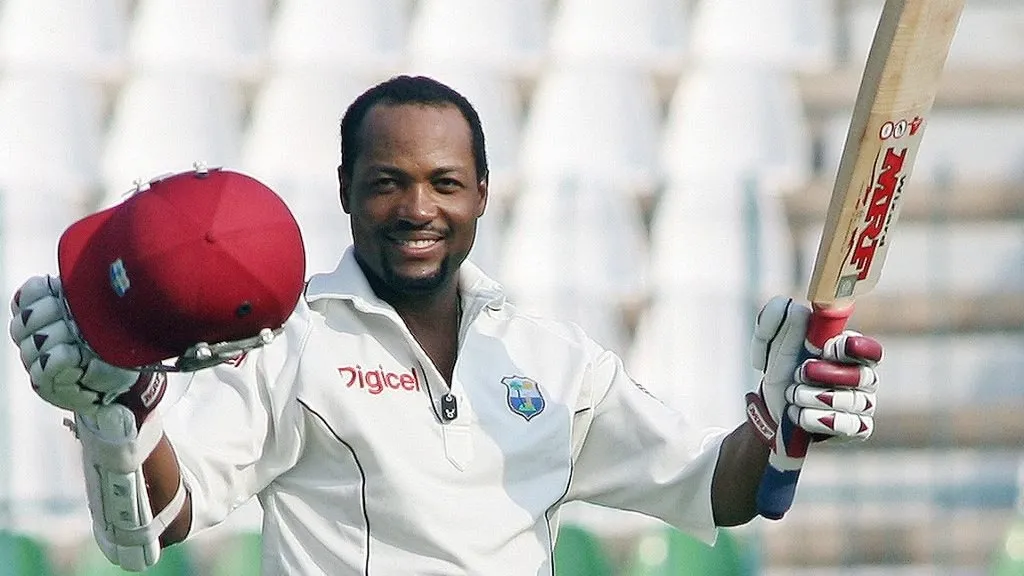
Brian Lara’s 400 Not Out: Test Cricket’s Highest Individual Score
Some records feel temporary. Others feel eternal. Brian Lara 400 not out belongs firmly in the second category. In April 2004, at the Antigua Recreation Ground, Lara crafted an innings so monumental that it reshaped how cricket viewed individual greatness. Test cricket has seen triple centuries, heroic fourth-innings chases, and match-saving marathons. But 400 not out remains its highest individual score, a summit untouched for more than two decades. It was not merely about volume. It was about reclaiming supremacy, carrying history, and batting long enough to bend time itself. The Setting – West Indies vs England, Antigua 2004 The stage was the fourth Test between West Indies and England in Antigua. The series had already been decided in England’s favor, but pride, especially in Caribbean cricket, never loses relevance. The pitch at the Antigua Recreation Ground offered steady bounce and limited early threat, ideal for batting once settled. Lara entered the match with a point to prove. Months earlier, Australia’s Matthew Hayden had scored 380 against Zimbabwe in Perth, breaking Lara’s long-standing world record of 375 set in 1994 against England. The symbolism was unavoidable. Lara had lost his crown. In Antigua, he would attempt to reclaim it. The Road to 400 – How the Innings Unfolded Lara did not begin recklessly. The early phase of the innings was structured and controlled. He absorbed the new ball, found rhythm through timing rather than aggression, and built partnerships that anchored the innings. As the hours passed, fluency replaced caution. His footwork against spin became decisive, and his drives through cover carried the authority that defined his career. By the time he crossed 200, the match had slowed into a personal pursuit of history. When he moved beyond 300, the stadium shifted from anticipation to inevitability. The crowd sensed they were witnessing something singular. With precision and composure, Lara edged past Hayden’s 380 and then his own previous mark of 375. He finally reached 400 not out off 582 deliveries, batting for 778 minutes and striking 43 boundaries and four sixes. West Indies declared at 751 for 5. The match eventually ended in a draw, but the result felt secondary. The record had been reclaimed. Reclaiming the Crown – Breaking Matthew Hayden’s Record The psychological layer of the Brian Lara 400 not out innings cannot be overstated. He remains the only cricketer to have broken the world record for the highest individual Test score twice. In 1994, his 375 against England in Antigua had surpassed Sir Garfield Sobers’ 365*. Nearly a decade later, Hayden eclipsed him. Many assumed the era of monumental individual scores had passed him by. Instead, Lara responded with something even larger. Reclaiming the record was not coincidence. It was intent backed by extraordinary endurance. Technical Masterclass – What Made 400 Possible Lara’s technique during the innings revealed remarkable discipline. His balance at the crease allowed him to manipulate gaps effortlessly. Against pace, he relied on soft hands and precise placement. Against spin, he used nimble footwork to convert good balls into scoring opportunities. Despite the marathon nature of the innings, his strike rate remained controlled yet progressive. He never appeared rushed, nor did he stagnate. Risk was calculated, never forced. Over 778 minutes at the crease, concentration became the defining skill. Fitness also played a role. Batting for nearly 13 hours in Caribbean heat demands not just stamina but mental clarity. Fatigue often breeds error. Lara refused to yield. The Mental Architecture Behind 400 Not Out Statistics alone cannot explain such longevity. The mental framework behind the Brian Lara 400 not out innings reflects a rare capacity to compartmentalize pressure. Lara later described focusing on incremental milestones rather than the distant summit. Fifty became one hundred. One hundred became two hundred. Each passage of play was segmented into manageable goals. There was also national expectation. Caribbean cricket, once dominant, had entered a rebuilding phase. Lara carried the weight of history and hope simultaneously. The 400 was both personal redemption and collective pride. Statistical Breakdown of the 400 Not Out The raw numbers underline the scale: At the time of writing, it remains the highest individual score in Test cricket history. Only a handful of batters have crossed 350, and none have surpassed 400. Compared to other triple centuries, Lara’s innings stands apart for both duration and final tally. How 400* Redefined Individual Greatness in Test Cricket Before Antigua 2004, the idea of a 400-run individual score in Test cricket felt theoretical. After Lara, it felt achievable—but only in theory. Modern Test cricket’s tempo, declarations, and result-oriented strategies make such marathon innings increasingly rare. The record has survived despite flatter pitches, heavier bats, and evolving training methods. That endurance adds to its aura. The number 400 carries symbolic weight precisely because it has resisted replication. The Debate – Was It the Greatest Test Innings Ever? Critics sometimes point to context. The match ended in a draw. England’s bowling attack was disciplined but not among the most feared in history. Yet greatness in Test cricket is not always defined by match result. It is often defined by endurance, concentration, and technical supremacy. When compared to other monumental innings, Lara’s 400 stands out for scale alone. It was less about urgency and more about permanence. Legacy – Why Brian Lara’s 400 Still Towers Over Cricket Brian Lara highest Test score is not merely a statistical entry; it is a cultural landmark in West Indies cricket. It symbolizes resilience during a transitional era and affirms Lara’s place among batting immortals. The fact that no one has crossed 400 since reinforces its mythic status. As formats accelerate and attention spans shorten, the idea of batting nearly 13 hours feels almost archaic. That contrast enhances the legacy. Conclusion – A Monument Carved in Time Records in sport are built to be broken. Some are surpassed quickly. Others endure across generations. The Brian Lara 400 not out remains cricket’s highest individual Test score not just because of its numerical value, but because of
Read More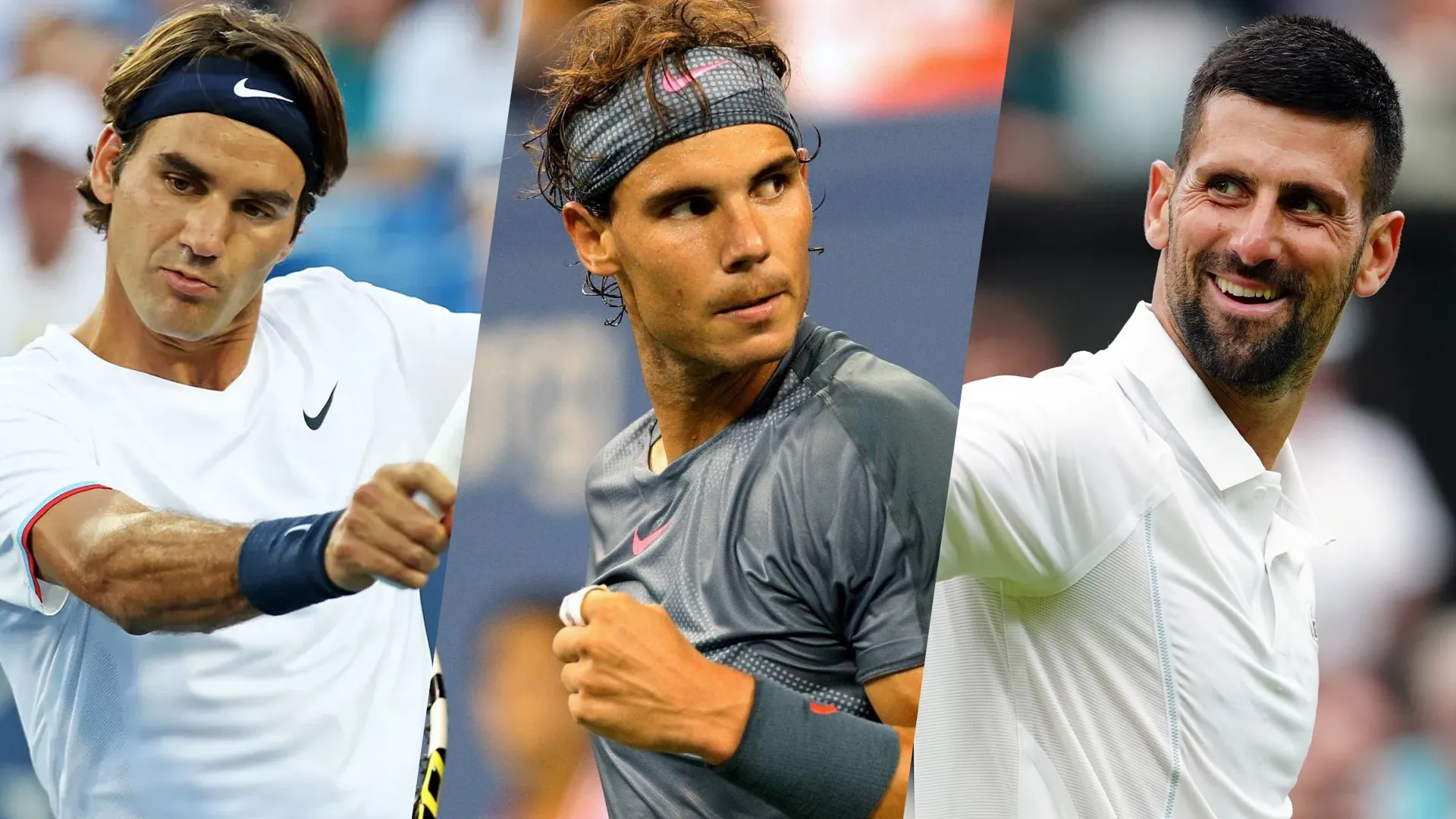
Big Three Era: Roger Federer, Rafael Nadal, Novak Djokovic’s Stranglehold on Tennis
For nearly two decades, men’s tennis was defined by a single reality: if you wanted to win a Grand Slam, you likely had to defeat one—or sometimes two—of Roger Federer, Rafael Nadal, or Novak Djokovic. The Big Three Era in tennis transformed the sport into a prolonged masterclass in excellence, rivalry, and endurance. Between them, the trio accumulated an unprecedented share of major titles, weeks at world No. 1, and iconic matches. Their dominance was not merely statistical; it reshaped expectations of greatness and extended the physical and mental limits of the modern game. The Birth of the Big Three Era The story began with Federer. From 2004 to 2007, the Swiss maestro produced one of the most dominant stretches in tennis history, blending elegance with ruthless efficiency. His fluid movement and attacking precision established a new aesthetic standard for the sport. Then came Nadal. Bursting onto the scene as a teenage phenom, the Spaniard’s heavy topspin forehand and unmatched intensity disrupted Federer’s reign—particularly on clay. By the late 2000s, their rivalry had already produced classics, most famously the 2008 Wimbledon final. Djokovic completed the triumvirate. After breaking through with his first major at the 2008 Australian Open, he elevated his game to historic levels in 2011, when he won three Grand Slams and began challenging both Federer and Nadal consistently. From that point onward, men’s tennis became a closed circle at the very top. Grand Slam Domination Explained The numbers illustrate the stranglehold. Federer finished his career with 20 Grand Slam singles titles, Nadal with 22, and Djokovic has surpassed them both, holding the all-time men’s record with 24 majors as of 2024. From 2003 through 2023, the trio won the overwhelming majority of Grand Slam tournaments, leaving only a handful for the rest of the field. Entire generations of talented players found themselves blocked by the same three names at semifinals and finals. No previous era—not even those of Borg, Sampras, or Laver—saw such sustained, collective dominance by three contemporaries over such a long period. Rivalries That Defined a Generation Federer vs Nadal – Elegance vs Relentless Power This rivalry contrasted styles as much as personalities. Federer’s attacking grace met Nadal’s physical resilience and topspin-heavy assault. Their 2008 Wimbledon final is often cited as one of the greatest matches ever played, symbolizing a shifting balance of power. Nadal vs Djokovic – Physical and Mental Warfare Few matchups tested human endurance like Nadal versus Djokovic. Their 2012 Australian Open final lasted 5 hours and 53 minutes, the longest Grand Slam final in the Open Era. Their baseline exchanges redefined defensive and counterpunching standards. Federer vs Djokovic – Precision vs Elastic Defense Djokovic’s ability to neutralize Federer’s attacking patterns produced numerous high-stakes encounters, including multiple Wimbledon finals. Their rivalry often hinged on narrow margins and mental resilience in tiebreaks and deciding sets. Together, these rivalries elevated tennis into a weekly showcase of contrasting philosophies and relentless adaptation. Surface Specialization and Adaptability Nadal built an unparalleled legacy at Roland Garros, winning 14 French Open titles—a record unlikely to be matched. Federer dominated grass courts, capturing eight Wimbledon titles, while also excelling on hard courts. Djokovic distinguished himself with all-surface mastery, winning multiple majors on clay, grass, and hard courts, and holding records at the Australian Open in particular. What made the Big Three Era in tennis extraordinary was not just specialization, but cross-surface excellence. Each forced the others to evolve beyond comfort zones. Mental Strength, Longevity, and Evolution Longevity separated the trio from the rest. Advances in sports science, nutrition, and recovery played roles, but their psychological resilience was equally vital. Federer reinvented his backhand late in his career. Nadal adjusted his serving patterns and court positioning. Djokovic transformed his fitness and flexibility, turning defense into offense with unmatched elasticity. Their ability to adapt prolonged their reign well into their 30s—an age once considered beyond peak performance in tennis. Records Broken and Benchmarks Redefined Beyond Grand Slams, the trio redefined consistency. Federer and Djokovic both surpassed 300 weeks at world No. 1, with Djokovic setting the all-time men’s record for most weeks atop the rankings. They also accumulated record numbers of Masters 1000 titles and ATP Finals appearances. Head-to-head battles between them filled the latter stages of major tournaments for over a decade. Impact on Other Generations of Players The so-called “Lost Generation”—players born in the late 1980s and early 1990s—faced perhaps the toughest competitive landscape in tennis history. Talented stars repeatedly ran into the same three obstacles. Only in recent years have younger players begun consistently breaking through, capitalizing on aging curves and physical wear. Criticism and Debate Around the Era Some argue that prolonged dominance limited unpredictability at majors. Others counter that the era’s depth was higher than ever, making sustained supremacy even more impressive. What remains undisputed is that the trio pushed each other to historically high standards. Their rivalries were symbiotic; without one another, none might have reached such towering heights. The Beginning of the End? Federer retired in 2022. Nadal has battled persistent injuries. Djokovic remains competitive, but generational transition is inevitable. The sport is now entering a post-dominance phase, with new champions emerging and redefining competitive balance. Why This Era May Never Be Repeated Modern tennis is deeper, more global, and more physically taxing than ever. The probability of three players maintaining elite form simultaneously for nearly two decades is extraordinarily low. The Big Three Era in tennis was a convergence of talent, rivalry, and timing that may never align again. Tennis’s Golden Age of Rivalry and Greatness The stranglehold of Federer, Nadal, and Djokovic was not accidental. It was forged through relentless improvement, tactical brilliance, and mental fortitude. The Big Three Era in tennis stands as a golden chapter in sporting history—defined not just by trophies, but by the elevation of the game itself. Their rivalry did not merely produce champions; it reshaped the very definition of greatness.
Read More