

Which FIFA 2026 Teams Are Built for Mexico City?
When the opening whistle sounds at the Estadio Azteca on June 11, 2026, the 48-team era of FIFA World Cup football officially begins. The cameras will pan to packed stands, the anthems will echo across one of sport’s most iconic venues, and billions of viewers worldwide will settle in for what promises to be a historic tournament. But for the coaches and analysts in those dugouts, the most important opponent on that opening day will not be wearing a jersey. It will be the air. Mexico City sits at 2,240 meters above sea level. At that altitude, the human body operates under measurably different physiological conditions. Oxygen availability drops, sprint recovery time extends, and the cumulative cost of high-intensity movement compounds at a rate that catches tactically unprepared teams completely off guard. In modern football, where “Gegenpressing” and relentless high-tempo transitions have dominated coaching philosophy for the better part of a decade, the Azteca represents a direct challenge to the sport’s most fashionable ideas. The question that every serious analyst needs to answer before June is simple: which FIFA 2026 teams are built for Mexico City? Not which teams have the most talent or the highest FIFA rankings, but which squads have the specific energy architecture, tactical discipline, and physical profile to operate effectively at altitude across ninety demanding minutes. This article answers that question with tactical evidence, historical precedent, and performance data. Understanding the Altitude Problem: Why Mexico City Punishes the Wrong Style Before identifying which FIFA 2026 teams are built for Mexico City, it is essential to understand precisely what the altitude demands from players and why most modern tactical systems are poorly suited to it. At sea level, an elite winger might complete 30 to 40 high-intensity sprints during a standard Premier League or La Liga match. At 2,240 meters, that same player will feel the physiological effects of “oxygen debt” after approximately ten equivalent efforts. The muscles are working just as hard, but the oxygen replenishment cycle is slower, meaning fatigue accumulates faster and recovery between sprints is incomplete. The practical consequence for football is significant. Teams that rely on constant pressing, high defensive lines, and repeated transitional sprints will find themselves running on empty by the 60th minute. The game does not slow down to accommodate them. Opponents with more efficient movement patterns simply take over in the final third of the match when the exhausted pressing team can no longer close space. The Three Pillars of Altitude-Adapted Football Winning in Mexico City requires a tactical philosophy built on three measurable principles. 1. Low Sprint Volume Teams that move the ball rather than the body preserve energy across the full 90 minutes. A team playing 10-yard passes in a structured grid forces opponents to do the chasing. Every unnecessary sprint by a pressing team at altitude is an investment that cannot be fully recovered. 2. Rest Defense Discipline “Rest defense” refers to the ability of a team to maintain their defensive shape while the opponent holds possession, without pressing aggressively and without covering large distances. Teams that can sit in a compact block and force opponents into lateral passing rather than chasing the ball are rewarded at altitude in ways they are not at sea level. 3. Technical Security Under Pressure At sea level, losing possession triggers a recovery sprint that costs perhaps 3 to 4 seconds of high-intensity effort. At 2,240 meters, the same recovery sprint costs nearly double that in physiological terms. Technical security, the ability to keep the ball under pressure and avoid unforced turnovers, therefore becomes not just a stylistic preference but a survival mechanism. The Historical Blueprint: What 1970 and 1986 Taught Us Understanding which FIFA 2026 teams are built for Mexico City requires a look at what history has already established. The Azteca has hosted two previous World Cups, and both produced remarkably clear lessons about which tactical philosophies survive at altitude. In 1970, Pelé’s Brazil did not win the tournament through relentless pressing or physical dominance. They won through rhythmic, patient possession play that exploded into clinical attacking sequences only when the moment was perfectly constructed. Their “Samba” style was not simply aesthetically beautiful. It was physiologically intelligent. Brazil conserved energy for the moments that mattered and let opponents exhaust themselves chasing a ball they could rarely win cleanly., In 1986, Diego Maradona’s Argentina deployed a 3-5-2 system specifically designed to flood the midfield and reduce the running burden on their defensive unit. The wing-backs provided width, the three center-backs held their positions without the need for extended recovery sprints, and Maradona operated in pockets of space rather than covering the entire pitch at high intensity. It was energy architecture before that phrase existed in coaching vocabulary. Historical Altitude Performance: Key Lessons Tournament Winner Tactical Style Altitude Adaptation 1970 Mexico Brazil Rhythmic possession and clinical transitions Excellent: low sprint volume, high technical security 1986 Mexico Argentina 3-5-2 midfield flood system Excellent: reduced defensive running load 2026 Mexico City TBD Economy football and rest defense Required for survival The pattern is consistent across 56 years. Teams that approach Mexico City with a possession-oriented, technically secure, low-sprint philosophy win. Teams that attempt to impose a high-energy style are punished by the 12th player that never appears on a team sheet: the altitude itself. Which FIFA 2026 Teams Are Built for Mexico City: The Four Best Equipped Squads With the tactical requirements established and the historical evidence examined, the analysis now focuses on specific squads. These are the teams whose style, squad profile, and coaching philosophy give them a structural advantage at the Estadio Azteca. 1. Spain: The Masters of Technical Conservation If any team in the 2026 tournament was designed by accident for Mexico City, it is Spain. Their footballing DNA, rooted in possession as a defensive tool rather than simply an attacking weapon, aligns almost perfectly with what altitude survival demands. Under Luis de la Fuente, Spain continue to prioritize pass completion rates that consistently exceed 88% in
Read More
Madrid Open 2026 Technical Audit: Jannik Sinner’s Path to a Historic Fifth Masters 1000 Title
The 2026 Mutua Madrid Open was always going to be a landmark event. A 48-team World Cup on the horizon, a tennis calendar at its most competitive in years, and the Caja Mágica preparing to host what many expected to be a generational three-way rivalry between Jannik Sinner, Carlos Alcaraz, and Novak Djokovic. Then the draw was made, the injury reports arrived, and everything changed. Alcaraz, the Spanish home hero, withdrew with a wrist injury. Djokovic followed. The “Big Three” showdown that broadcasters had been building toward for months evaporated before a single ball was struck. What remained was a fundamentally reshaped tournament landscape, and at the center of it, calm and statistically dominant, stood Jannik Sinner. This Madrid Open 2026 technical audit does not simply ask whether Sinner can win. The data already answers that question with near certainty. The more interesting questions are how he will win, what the tournament reveals about his Roland Garros readiness, and what the absence of the sport’s two most commercially valuable players means for the wider ATP ecosystem. Let us go through it all methodically. The Altitude Factor: Why Madrid Is Tennis’s Most Misunderstood Surface Most tennis analysis treats Madrid as simply another clay-court tournament in the European spring swing. That framing misses the most important variable in the Caja Mágica’s competitive equation. Before any meaningful Madrid Open 2026 technical audit can begin, the geographical context must be established clearly. Madrid sits at approximately 667 meters above sea level. That elevation reduces air density significantly compared to sea-level venues like Monte Carlo, Rome, or Roland Garros. Lower air density means reduced aerodynamic drag on the ball, which produces two measurable tactical consequences that separate Madrid from every other clay event on the calendar. How Altitude Reshapes Tactical ROI at the Caja Mágica The first consequence is increased ball velocity. Shots that would lose pace and sit up invitingly on the heavier clay of Paris travel faster and flatter through Madrid’s thinner air. This directly benefits players whose game is built on taking the ball early and driving through the court rather than constructing points through spin accumulation. The second consequence is an altered bounce profile. Despite the clay surface technically slowing the ball compared to hard courts, altitude causes the ball to jump higher and more unpredictably off the surface. Heavy topspin that would produce a manageable shoulder-height ball in Rome can explode toward the chest or head in Madrid, disrupting the timing of defenders who rely on comfortable contact points. Together, these two factors explain a consistent pattern in Madrid’s results: hard-court specialists and aggressive baseliners outperform their clay-court seedings, while pure grinders who depend on spin and defense underperform relative to the rest of the spring season. The altitude effect in practical terms: Jannik Sinner in 2026: The Statistical Case for Inevitability Any thorough Madrid Open 2026 technical audit must spend serious time on Sinner’s numbers, because they are genuinely historic. The Italian world number one enters Madrid carrying a 2026 season record of 24 wins and 2 losses, a 92.3% win rate that places him among the most dominant players in Open Era history across a comparable period. More significantly for this tournament’s context, his Masters 1000 record in 2026 stands at 17 wins and zero losses. He has won four consecutive Masters 1000 titles: Paris at the back end of 2025, then Indian Wells, Miami, and Monte Carlo in the opening months of 2026. A victory in Madrid would make him the first man in tennis history to win five consecutive Masters 1000 events, a record that has never been approached in the modern era. Sinner’s 2026 Key Performance Metrics Metric Sinner 2026 ATP Tour Average 2026 Elite Tier Benchmark First Serve Points Won 80.6% 71.2% 78%+ Return Points Won 41.3% 34.8% 39%+ Masters 1000 Win Rate 100% (17-0) N/A N/A Top 10 Win Rate 85.7% (6-1) 52.3% 70%+ Overall 2026 Win Rate 92.3% (24-2) N/A N/A What makes these numbers particularly significant for a Madrid Open 2026 technical audit is the return points won figure. At 41.3%, Sinner is winning nearly half of all points when his opponent is serving, which is an extraordinary rate that reflects both his reading of serve patterns and his ability to neutralize big servers before they can control points. Why Sinner’s Game Is Built for Madrid’s Conditions Sinner’s technical profile aligns almost perfectly with what Madrid’s altitude demands. His groundstrokes are flat and driven rather than heavily loaded with topspin, which means the thin air amplifies his natural ball speed without disrupting his shot-making mechanics. His lateral movement and early-ball-striking habit allow him to absorb the higher bounce that altitude produces and redirect pace before opponents can reset their positioning. His Monte Carlo victory earlier in 2026 was the final piece of evidence that he has completed what analysts call the “clay conversion puzzle,” the challenge every hard-court dominant player faces when adapting their game to slower, more physically demanding conditions. By shortening his backswing on clay and trusting his footwork to create aggressive contact points, Sinner has neutralized the defensive advantages that clay-court specialists typically enjoy. Casper Ruud: The Defending Champion’s Structural Crisis Ruud’s presence in Madrid carries a weight that extends beyond the tennis court. As defending champion, he arrives at the Caja Mágica protecting nearly 50% of his total ATP ranking points over the next two weeks. The pressure of that mathematical reality has the potential to affect tactical decision-making in ways that are difficult to quantify but impossible to ignore. His game is built on high-RPM topspin forehand play, averaging over 3,200 rotations per minute. Under normal clay conditions, this is a devastating weapon that forces opponents deep behind the baseline and creates short balls that Ruud punishes with his court sense. In Madrid, however, the altitude turns that same topspin into a liability. The ball jumps higher and more unpredictably, but Ruud’s ability to control depth suffers in the thinner air, which means his loops
Read More
The 5 Defensive Managers to Watch in FIFA World Cup 2026
The popular narrative heading into the 2026 FIFA World Cup is about goals, stars, and spectacular attacking football. Kylian Mbappé cutting through defenses. Vinicius Jr. tormenting fullbacks. Jude Bellingham dictating tempo from midfield. These are the stories that dominate headlines, and for good reason. But anyone who has studied how World Cups are actually won knows a quieter, more disciplined truth: tournaments belong to the tacticians who can organize a defensive block and make it hold. The April 2026 FIFA Series friendlies confirmed what analysts had been tracking for months. High-scoring nations like England and Brazil are increasingly struggling to break compact, well-drilled defensive structures. Japan’s 1-0 victory over England on March 28, 2026 was not a fluke. It was a tactical statement. Morocco’s continued dominance at the back following their 2025 Africa Cup of Nations triumph is not accidental. It is engineered. In the 48-team era, where smaller nations now have a genuine platform to compete against the giants, the defensive managers to watch are not underdogs hoping to survive. They are strategic architects who have built systems specifically designed to exploit the overconfidence of traditionally dominant teams. This article profiles the five coaches who have mastered that art and explains precisely why their systems could reshape the 2026 World Cup. Why Defensive Mastery Wins World Cups: The Case for the Tactician Before diving into individual profiles, it is worth establishing why defensive organization has become the dominant trend in international football heading into 2026. The expansion to 48 teams has fundamentally changed the tournament’s psychological landscape. Larger nations can no longer expect to coast through group stages on reputation alone. Every fixture carries consequence, and a single defensive error against a well-organized smaller nation can eliminate a team that spent four years building toward the tournament. The margin for complacency has shrunk to zero. This environment rewards managers who can do three things exceptionally well: structure their defensive block with tactical precision, trigger their press at the right moments rather than pressing constantly, and then transition quickly from defense to attack the moment possession is won. The five defensive managers to watch in 2026 all possess these qualities in measurable, data-supported ways. What Separates a Great Defensive Manager from an Average One The 5 Defensive Managers to Watch at FIFA World Cup 2026 The following profiles are built on performance data from the March 2026 FIFA Series, official AFC, CAF, and CONMEBOL qualifying records, and third-party tactical scouting platforms. Each manager represents a distinct school of defensive thought, and together they paint a comprehensive picture of where the game is heading. 1. Fabio Cannavaro (Uzbekistan): The Master of the Central Asian Catenaccio Of all the defensive managers to watch in 2026, Fabio Cannavaro’s story carries the most remarkable context. The 2006 Ballon d’Or winner and Italy’s World Cup-winning captain arrived in Tashkent in late 2024 to take charge of a Uzbekistan side that was leaking goals, losing defensive shape under pressure, and averaging a clean sheet percentage of just 22%. What he has built in under 18 months is one of the most impressive defensive transformations in the history of Asian football. Cannavaro’s system is a hybrid 5-4-1 Low Block that converts into a 3-4-3 during attacking phases. The cornerstone of the structure is the “Rule of Three”: regardless of how high the ball travels up the pitch, three central defenders always remain behind the ball. This eliminates the transition vulnerability that previously made Uzbekistan so easy to exploit on the counter. The results are statistically undeniable. Their defensive line now sits at an average height of 34.5 meters, compared to 48.2 meters before Cannavaro arrived. That 13.7-meter drop in line height has fundamentally changed the space available to opposing attackers. Clean sheet percentage has risen from 22% to 58%. Pass completion in their own half has jumped from 76% to 91%, meaning Uzbekistan no longer give the ball away cheaply under pressure. Their PPDA sits at 8.1, which signals a pressing system built on intelligent triggers rather than chaotic chasing. Uzbekistan only press when the situation is tactically favorable, not constantly, which preserves their defensive shape and their physical energy. Why Cannavaro is one of the top defensive managers to watch: For a full technical breakdown of his system, see our Uzbekistan Technical Audit. 2. Hajime Moriyasu (Japan): The Architect of the Planned Retreat Japan’s 1-0 victory over England at Hampden Park on March 28, 2026 sent a message that the global football community cannot afford to ignore. Under Hajime Moriyasu, Japan have quietly abandoned the possession-heavy style that defined their football for much of the 2010s and rebuilt themselves as one of the most dangerous transition teams in the world. Moriyasu’s system is a fluid 3-1-4-2 that can collapse instantly into a five-man backline when possession is lost. The “Planned Retreat” is not passive defending. It is calculated pressure management. Japan allow opponents to build play in front of them, identify the precise moment when the opponent’s shape is overextended, and then trigger an aggressive press designed to win the ball in dangerous areas. Their PPDA of 8.1 matches Uzbekistan’s, which is remarkable given the difference in resources and history between the two programs. Japan’s elite Bundesliga and Premier League based players have internalized Moriyasu’s system at club level, meaning the tactical intelligence required to execute it is already embedded before they arrive at international camp. What makes Moriyasu’s system uniquely dangerous: 3. Néstor Lorenzo (Colombia): The Box Midfield Pioneer Colombia enter the 2026 World Cup as one of CONMEBOL’s most disciplined and tactically evolved sides. Néstor Lorenzo has made Colombia genuinely difficult to break down, a quality they demonstrated emphatically by drawing with Brazil and defeating Argentina during qualifying. Lorenzo’s foundation is a rigid 4-2-3-1 built around two “anchor” midfielders who maintain a permanent connection to the center-backs. This double pivot is not simply defensive cover. It is the engine of Lorenzo’s entire system, controlling the width of passing lanes available to opposing playmakers
Read More
Uzbekistan’s Path to FIFA 2026: A Technical Audit of Fabio Cannavaro’s Defensive Block
On June 5, 2025, Uzbekistan’s “White Wolves” achieved something no Uzbek football generation had ever done before: they Qualified for the FIFA World Cup. In a tournament expanded to 48 teams, that achievement could have been dismissed as a product of favorable mathematics. It was not. Uzbekistan earned their place through a systematic, data-driven overhaul of their entire footballing identity, and the architect behind it is one of the most decorated defenders in the history of the sport. Fabio Cannavaro, the 2006 Ballon d’Or winner and World Cup-winning captain with Italy, took charge of Uzbekistan in late 2024. What followed was not a gradual evolution. It was a structural revolution. The team that once leaked goals against Tier-1 AFC opponents is now one of the most defensively disciplined sides in Asian football, having conceded just 3 goals in their last 10 international matches. Uzbekistan’s path to FIFA 2026 is not a lucky story. It is a tactical case study. This article breaks down exactly how Cannavaro rebuilt the White Wolves from the back line forward, what Group K presents as a challenge, and why this team could be the tournament’s most surprising success story. The Problem Cannavaro Inherited: A Team Built on Hope Before understanding what Cannavaro changed, it is important to understand what he walked into. Uzbekistan under previous management was a team with genuine attacking talent but a defensive structure that crumbled under sustained pressure from quality opposition. Against Tier-1 AFC sides like Japan and South Korea, Uzbekistan consistently found themselves exposed in transition. Their 4-3-3 system offered attacking fluidity but left the central defenders isolated whenever the midfield was bypassed. The clean sheet percentage sat at a modest 22%, and their defensive line averaged 48.2 meters in height, a figure that invited opponents to exploit the space in behind with devastating regularity. Pass completion in their own half was 76%, meaning that even when Uzbekistan won possession defensively, they gave it away under pressure far too often. Cannavaro identified these vulnerabilities immediately. His solution was not to simply organize the existing system. He replaced it entirely. The Cannavaro Effect: From Flair to Defensive Mastery Cannavaro’s coaching philosophy is built on the Italian tradition of defensive structure, but it is not the rigid, suffocating Catenaccio of the 1960s. It is a modern, data-informed iteration that prioritizes compactness, pressure triggers, and controlled transitions. His core tactical implementation at Uzbekistan is a hybrid 5-4-1 Low Block that fluidly transitions into a 3-4-3 during offensive phases. The brilliance of this system is its dual identity. When Uzbekistan defend, they are an impenetrable wall. When they attack, those same wing-backs push forward to create a three-pronged front that can trouble any defense in Asia. The “Rule of Three” is central to everything. Regardless of what happens in the final third, Cannavaro demands that three central defenders remain behind the ball at all times. This principle alone has eliminated the exposed transitions that previously made Uzbekistan vulnerable to counterattacks from faster, more technical opponents. Tactical Evolution: 2024 vs 2026 by the Numbers The statistical transformation under Cannavaro is striking. These numbers represent not just improvement but a complete change in footballing identity. Metric 2024 (Pre-Cannavaro) 2026 (Current) Change Average Defensive Line Height 48.2 meters 34.5 meters 28% deeper Clean Sheet Percentage 22% 58% +36 points Pass Completion in Own Half 76% 91% +15 points PPDA (Passes Per Defensive Action) 12.4 8.1 Higher aggression Goals Conceded (Last 10 Matches) N/A 3 Elite level A PPDA of 8.1 is particularly significant. Lower PPDA means a team allows fewer opponent passes before winning the ball back, which signals an aggressive, well-organized pressing structure rather than passive sitting. Cannavaro is not just asking his team to defend deep. He is teaching them when and how to press with purpose. Abdukodir Khusanov: The Tactical Heartbeat of the White Wolves No analysis of Uzbekistan’s path to FIFA 2026 is complete without spending serious time on Abdukodir Khusanov. The center-back is the single most important piece in Cannavaro’s defensive architecture, and his development over the past 18 months has been one of the most impressive in Asian football. Khusanov functions as the Libero in Cannavaro’s system. While the two flanking center-backs engage in tight man-marking assignments, Khusanov operates with greater freedom to read passing lanes, intercept through-balls, and cover the space created when his partners step to press. His elite recovery speed allows the midfield unit to push higher up the pitch with confidence, knowing that any ball played in behind has a defender capable of winning the race. His recent performances at Manchester City in March 2026, where he earned Player of the Month recognition, confirmed that his development is not limited to the international stage. He is operating at the highest club level with composure and authority. That experience is transferable and Uzbekistan benefit directly from it every time they take the field. Khusanov’s Role in Uzbekistan’s Defensive System Group K: A Forensic Breakdown of Uzbekistan’s World Cup Schedule Uzbekistan’s placement in Group K is simultaneously challenging and navigable. It is a group that rewards tactical discipline over individual brilliance, which suits Cannavaro’s approach perfectly. Let’s examine each fixture in detail. Group K Fixture Schedule and Strategic Priorities Date Opponent Venue Strategic Focus June 17, 2026 Colombia Mexico City Stadium Containment: neutralizing wing-play and Díaz June 23, 2026 Portugal Houston Stadium Transition: exploiting space behind high press June 27, 2026 DR Congo Atlanta Stadium Domination: switching to 3-4-3 for three points Fixture 1: Colombia (June 17, Mexico City) Colombia represents Uzbekistan’s most nuanced tactical challenge in the group. The Colombians rely heavily on inverted wingers, with Luis Díaz being the most dangerous creative threat on their roster. Díaz’s tendency to cut inside from the left creates diagonal runs that pull defensive lines apart, opening channels for runners from midfield. Cannavaro’s expected response is a “Box Midfield” configuration that blocks central passing lanes and forces Colombia’s build-up play wide. The wing-backs in Uzbekistan’s system will be asked to
Read More
How to Watch NBA Playoffs 2026 in the Philippines for Free
Filipino basketball fans, the wait is over. The 2026 NBA Playoffs are officially here, and if you are trying to watch NBA Playoffs 2026 in the Philippines without emptying your wallet, you are in exactly the right place. From free-to-air television channels to app promotions and smart streaming hacks, there are more legitimate, affordable ways to catch every clutch shot and buzzer-beater than most fans realize. This guide breaks down every legal option available to Pinoy hoopheads, including step-by-step setup instructions, device tips, schedules, and insider advice on maximizing your viewing experience without paying full price. Whether you are following Shai Gilgeous-Alexander’s Thunder, cheering for LeBron’s Lakers, or hoping Stephen Curry conjures one more miracle playoff run with the Warriors, this is your go-to resource for 2026 playoff coverage. Why the 2026 NBA Playoffs Are Must-Watch Television This is not just another postseason. The 2026 NBA Playoffs represent a genuine crossroads moment for the league, blending generational passing of the torch with veteran legends refusing to step aside. Consider what is on the line. Victor Wembanyama makes his first real playoff statement with the San Antonio Spurs. Curry, at 38, defied a 37-45 regular season record to drag the Warriors through the play-in tournament. The Oklahoma City Thunder enter as the Western Conference’s top seed with a 64-18 regular season record, a historically dominant performance built around Shai Gilgeous-Alexander, Chet Holmgren, and Jalen Williams. Meanwhile, the Detroit Pistons have risen to the East’s top seed, a storyline that would have seemed unthinkable even two seasons ago. Every series carries a compelling narrative. That makes having reliable, legal access to games not just a convenience but a genuine necessity for any serious basketball fan in the Philippines. Official NBA Broadcast Partners in the Philippines for 2026 Before exploring free options, it helps to understand who actually holds the broadcast rights for the 2026 NBA Playoffs in the Philippines. The media landscape has expanded significantly this season, giving fans more access points than ever before. Key broadcast partners for 2026: Platform Type Cost What You Get One Sports / RPTV Free-to-air TV Free Select playoff games, Conference Finals, NBA Finals Disney+ Philippines Streaming Paid (Basic/Premium) Select live playoff games from April 19 NBA TV Philippines (Cignal Ch. 262 HD) Cable Paid 18-30+ playoff games per round Prime Video (Amazon) Streaming Paid/Trial Marquee weekend games and select playoffs Pilipinas Live (Cignal OTT) App Free registration, paid full access Live games and highlights NBA League Pass Streaming Paid with promos Full out-of-market game access The most important takeaway for budget-conscious fans is that One Sports and RPTV offer completely free, legal access with no subscription, no cable bill, and no internet connection required. These channels are your foundation. How to Watch NBA Playoffs 2026 in the Philippines on Free-to-Air TV Free-to-air television remains the single most accessible and reliable option to watch NBA Playoffs 2026 in the Philippines without spending anything. No app downloads, no passwords, no payment details required. One Sports and RPTV broadcast select high-profile playoff matchups, including games from the Conference Finals and the NBA Finals. TV5 occasionally simulcasts overflow coverage as well. During the first round, expect between two and four key games per week to air on these channels, with frequency increasing as the playoffs deepen toward the Finals. Setting Up Free-to-Air TV: Step-by-Step Getting your antenna set up properly takes less than 15 minutes and costs nothing if you already have a digital TV. The Philippines’ UTC+8 time zone is actually a genuine advantage for NBA viewing. Many games tip off between 8:00 AM and 10:00 AM PHT, meaning weekend morning games are a realistic viewing option. NBA Finals games, typically the highest-profile broadcasts of the season, often air on free-to-air channels in prime evening slots. Free and Low-Cost Streaming Apps: Your Mobile Options If you prefer watching on your phone, tablet, or smart TV, several apps offer free registration with legitimate access to select content. Knowing which apps to download before the playoffs start saves you valuable setup time during game day. Pilipinas Live: The Local OTT Essential Pilipinas Live, tied to Cignal Digital TV, is the most locally focused OTT platform for NBA content in the Philippines. It carries a wide volume of playoff games and is optimized for Philippine internet speeds. How to set up Pilipinas Live: Even without paying, registering on Pilipinas Live unlocks push notifications for game start times, free highlights, and occasional promotional free streams during major playoff games. During the NBA Finals, free streaming windows have historically been offered to all registered users. NBA App and NBA ID: Unlock Free Games The official NBA App, available on both Android and iOS, combined with a free NBA ID registration, is one of the most underutilized tools among Filipino fans. In 2026, the NBA has been running a promotion that unlocks up to eight free NBA games for NBA ID members in the Philippines. These include select first-round and second-round playoff matchups. Registration is completely free at nba.com. Steps to claim free games via NBA ID: This promotion is time-sensitive and typically most active during the first two rounds of the playoffs, so setting up your NBA ID before the first games on April 18 and 19 is strongly recommended. Maximizing Paid Platforms You Might Already Have Many Filipino households already subscribe to platforms that include NBA Playoffs coverage without realizing it. Before purchasing any additional subscriptions, check what you already have access to. Disney+ Philippines: Check Your Existing Subscription Disney+ is the primary streaming home for select playoff games in the Philippines for the 2025-26 season. If you or any family member already has a Basic or Premium Disney+ subscription, NBA Playoffs coverage is included at no additional charge. Playoff coverage on Disney+ begins April 19, with one Conference Finals series available live and additional coverage depending on the broadcast schedule. A single Disney+ Basic subscription also supports multiple profiles, meaning households can legally share one account across several devices simultaneously.
Read More
NBA Playoffs 2026 First Round What to Watch: Key Storylines Before Tip-Off
The 2026 NBA Playoffs are finally here, and the first round is already shaping up to be one of the most compelling in recent memory. From a transformed Detroit franchise chasing its first championship in decades, to Victor Wembanyama making his postseason debut, to LeBron James entering an unprecedented 19th playoff run, the storylines are layered, the stakes are enormous, and the basketball is going to be exceptional. This is not your typical “preview” piece. We are going deep, series by series, storyline by storyline, with tactical analysis, statistical context, historical framing, and bold predictions backed by reasoning. Whether you are a casual fan trying to pick your bracket or a diehard analyst looking for the angles nobody else is talking about, this guide has you covered. Games tip off April 18 with four marquee matchups. Let’s break down everything you need to know. Eastern Conference First Round: Power, Pride, and Playoff Stakes The Eastern Conference enters the 2026 playoffs with a fascinating mix of established contenders and surprising newcomers. Three of the four matchups feature teams that either won a title or reached the Finals within the last three years, yet none of the series feel like guaranteed clean sweeps. 1 Detroit Pistons vs. 8 Charlotte Hornets: The Redemption Arc Reaches Its Defining Moment The Detroit Pistons’ transformation is one of the great modern NBA stories. Just two seasons ago, this franchise set a near-record for futility at 14 wins. Now they arrive as the East’s No. 1 seed with a 60-22 record, home-court advantage in every round, and a generational talent in Cade Cunningham leading the charge. Cunningham averaged 24.2 points per game this season while recovering from a collapsed lung, a detail that underscores just how mentally and physically dominant he has become. Detroit’s offense is one of the league’s most efficient, and their defense ranks in the top five in points allowed per 100 possessions. This is not a soft No. 1 seed built on a weak schedule. The Pistons earned it. Charlotte earned the No. 8 seed through a gritty play-in run and will lean on LaMelo Ball’s playmaking to generate any kind of chaos. The Hornets’ up-tempo approach is their only real path: if they can push pace, force turnovers, and hit threes in bunches, they may steal a game. But Detroit’s defensive discipline makes that extremely difficult. Series Breakdown Table Factor Detroit Pistons Charlotte Hornets Regular Season Record 60-22 Play-in qualifier Key Player Cade Cunningham (24.2 PPG) LaMelo Ball Offensive Rating Top 5 in NBA Below average Defensive Rating Top 5 in NBA Bottom third Playoff Experience Growing Limited Home-Court Yes No Bold Prediction: Detroit wins in four games. Cunningham puts up back-to-back 30-point games, and the Pistons’ defense holds LaMelo to under 18 points on poor efficiency for at least three of the four contests. If Charlotte somehow wins a game, it will come on a night when Detroit’s role players go cold from three. 2 Boston Celtics vs. 7 Philadelphia 76ers: The Classic Rivalry Returns With New Urgency Few matchups in NBA history carry the weight of Celtics versus Sixers. The 2026 edition arrives with Boston as the clear favorite, the No. 2 seed with Jayson Tatum healthy and a roster purpose-built for deep playoff runs, but Philadelphia brings something dangerous: desperation. The 76ers advanced through the play-in tournament with Tyrese Maxey leading a resilient charge. Maxey’s speed, shot creation, and fearlessness on the road make him one of the most dangerous players in the bracket regardless of seed. Joel Embiid’s health remains the variable that no one can fully predict. When Embiid is right, he creates interior problems that Boston’s defense genuinely struggles to solve. Boston’s edge is depth and championship experience. The Celtics’ spacing, ball movement, and defensive versatility under head coach Joe Mazzulla have been refined over multiple playoff runs. They know how to manage momentum shifts, close quarters, and hostile environments, skills that the battle-tested Sixers will need to counter if they hope to steal games at TD Garden. Key Factors Favoring the Celtics: Key Factors Favoring the Sixers: Bold Prediction: Boston wins in six, but Maxey drops a 40-point performance in Game 4 that gives this series its signature moment. Philadelphia’s inability to close games on the road ultimately seals their fate. 3 New York Knicks vs. 6 Atlanta Hawks: When the Garden Comes Alive Madison Square Garden in the playoffs is one of sport’s great atmospheres, and the Knicks have built their team around thriving in exactly that environment. Jalen Brunson has established himself as one of the premier clutch performers in the league, and New York’s physical, gritty brand of basketball is tailor-made for postseason intensity. Atlanta’s late-season surge, including a 19-5 stretch to close the regular season, earned them genuine respect as a disruptive No. 6 seed. Trae Young remains one of the most dynamic playmakers in the sport. His ability to draw fouls, orchestrate in the pick-and-roll, and pull up from 30 feet means the Knicks cannot afford a single defensive lapse. The tension in this series will come from the battle between Young’s offensive freedom and New York’s defensive physicality. The Knicks have the personnel to make Young’s drives uncomfortable, but overcommitting on drives opens Atlanta’s shooters. Head-to-Head Competitive Metrics (2025-26) Metric New York Knicks Atlanta Hawks Points Per Game 114.8 118.2 Opponent PPG 109.4 115.1 Pace (possessions/48) 97.2 101.6 Clutch Net Rating +8.3 +2.1 Brunson/Young PPG 27.4 26.8 Three-Point % 36.8% 37.5% Bold Prediction: Knicks in six with Brunson delivering the series-clinching performance on the road. Young’s brilliance extends this past five games, but New York’s late-game execution is simply superior. 4 Cleveland Cavaliers vs. 5 Toronto Raptors: The Sleeper Series Nobody Is Talking About Enough Donovan Mitchell is one of the most reliable playoff scorers in the game. Cleveland’s system around him is built on defensive discipline and offensive efficiency, not the most glamorous combination, but effective. The Cavaliers arrive as the No. 4 seed with enough experience
Read More
Madrid Open 2026 Preview: Alcaraz, Sinner’s 110-Point War, and Everything That Matters at the Caja Mágica
The red clay of the Caja Mágica has a way of reducing tennis to its most primal elements. Strip away the hard-court statistics, the indoor surface wins, the comfortable tour rhythm — and what you’re left with is raw clay-court ability, physical endurance, and the pressure of playing under an open Madrid sky at 650 metres above sea level. That altitude changes everything about how the game is played, and it makes the Madrid Open 2026 one of the most unpredictable and compelling ATP Masters 1000 events on the entire calendar. This year, the stakes transcend the usual Masters 1000 prestige. Two men arrive in Madrid separated by a margin so thin it barely qualifies as a lead. One of them will likely leave holding the No. 1 ranking. The other will spend two more weeks chasing it. The Caja Mágica tournament runs from April 20 to May 3, with qualifying beginning Monday and the men’s final scheduled for Sunday, May 3 at 5:00 PM CEST. Somewhere in between, the 2026 clay season finds its true shape. The 110-Point Tightrope: Sinner vs. Alcaraz for No. 1 Jannik Sinner arrives in Madrid at 13,350 ranking points. Carlos Alcaraz sits at 13,240. That margin — 110 points — is less than the difference between a first-round exit and a second-round exit. It is, in practical terms, one match’s worth of separation between the two best players on the planet, and the Madrid Open 2026 draw will go a significant way toward resolving it. Sinner’s challenge is legitimate and underappreciated. His dominance on hard courts this season has been near-total, but the Madrid clay is a different proposition. The altitude makes the ball skid through faster than at Roland Garros, which actually works in Sinner’s favour — his flat, hard-hitting baseline game translates better to fast clay than to the heavy red dirt of Paris. Still, Alcaraz on Spanish soil is a different animal entirely, and Sinner knows that a loss before the quarterfinals here could hand his rival the No. 1 ranking before a ball is struck in Paris. For a deep dive into how this rivalry has evolved match by match, SportyAura’s Alcaraz vs Sinner: Every Rivalry Match, Every Record & Who Wins at Roland Garros 2026 is essential reading before the draw even begins. The Alcaraz Factor: Home Clay, High Stakes Carlos Alcaraz missed the Madrid Open in 2025. He is not the type of player who forgets something like that. His return to the Caja Mágica carries a weight that goes beyond rankings — this is his surface, his country, and in many ways his tournament to own for the next decade. The form concerns are real. A surprise third-round exit to Sebastian Korda in Miami raised questions about his consistency, and Alcaraz himself has pointed to Monte Carlo and Madrid Open 2026 as the “turning points” he needs to reset his season. The statistical foundation, however, remains extraordinary. His 84.4% win rate on clay is the third-highest in the Open Era, behind only Rafael Nadal and Björn Borg — two names that don’t often appear in the same sentence as a 22-year-old. On clay, in Spain, with a home crowd behind him, Alcaraz is always dangerous regardless of recent form. His path to a potential Sinner final will require navigating two weeks of high-altitude clay tennis in the toughest Masters 1000 draw of the year. If he does it, he reclaims No. 1. If he stumbles early, the momentum swings firmly to Sinner heading into Roland Garros. This thread runs through every match Alcaraz plays here. SportyAura’s piece on Next Gen ATP Stars 2026: Alcaraz, Sinner Lead New Wave captures exactly why this rivalry defines the entire generation. ATP Seeds, Points & Storylines Player Points Tournament storyline 1 Jannik Sinner 13,350 (No. 1) Defending his ranking lead — only +110 pts ahead of Alcaraz. Needs a QF+ to hold off the chase. 2 Carlos Alcaraz 13,240 (Chasing) The local hero returning to home clay after missing 2025. A title here flips the No. 1 ranking. 3 Alexander Zverev 5,555 (Threat) Two-time Madrid champion (2018, 2021). Altitude suits his big serve — a legitimate title contender. 4 Novak Djokovic 4,710 (Veteran) Managing his schedule ahead of Roland Garros. Never write him off on any surface, any week. 5 Felix Auger-Aliassime 4,100 (Dark horse) Last year’s finalist — still hunting his first Masters 1000 title. Madrid is unfinished business. 6 Ben Shelton 3,820 (Dark horse) A 650m serve at altitude could be unplayable. His clay form has quietly been improving all spring. Beyond the top two, the ATP field offers genuine depth. Alexander Zverev has won this title twice before (2018 and 2021) and understands the Madrid altitude better than almost anyone in the draw. His big serve at 650m elevation becomes a weapon that even the best returners struggle to neutralise consistently. Zverev is not a favourite, but he is absolutely a finalist candidate — and in a wide-open bottom half of the draw, he may face a clearer path than his seeding suggests. Novak Djokovic at No. 4 is managing his clay-season schedule with Roland Garros as the primary target, which is both a limitation and a wild card. A rested Djokovic playing loose, pressure-free tennis in the middle rounds is exactly the kind of opponent nobody wants to face. For context on how Djokovic continues to operate at this level, SportyAura’s Novak Djokovic’s 2026 Diet and Longevity Plan is a fascinating read. Felix Auger-Aliassime arrives as last year’s finalist with unfinished business to settle. He came within two sets of a Masters 1000 title in 2025 and returns to a draw where his all-court game suits the conditions well. Ben Shelton at No. 6 is the name to circle as a potential first-week disruption — a 650m-altitude serve from a player his size is genuinely problematic for any opponent, and his clay results have improved meaningfully across the spring. The defending champion, Casper Ruud, enters unseeded at World No. 12. His 2025 Madrid
Read More
Young Blood vs. Old Guard: The NBA Playoffs 2026 First Round Storylines That Will Define a Generation
The tip-off whistle sounds on Saturday, and for the first time in years, I genuinely don’t know who’s walking out of this postseason with the trophy. That uncertainty — that glorious, uncomfortable not-knowing — is exactly what makes the NBA playoffs 2026 first round storylines so compelling. This isn’t a normal year. The league’s axis has shifted, and the opening round of these playoffs is where we’ll first feel the tremors. Three teams that were lottery jokes two or three years ago — Oklahoma City, San Antonio, and Detroit — finished with a combined 186 regular-season wins and now hold three of the four top seeds between both conferences. Meanwhile, the Golden State Warriors and Los Angeles Clippers — franchises that defined the last decade of basketball — were fighting just to survive the play-in. The changing of the guard isn’t coming. It’s already here. Team type Key representative Primary strength Potential flaw Youth Detroit Pistons Historic net rating (+10.9) — best in the league all season Untested in 7-game playoff series; Cade Cunningham injury risk Youth San Antonio Spurs Wembanyama’s defensive dominance; 2nd-best West net rating Playoff debut pressure on a 22-year-old franchise cornerstone Elite OKC Thunder Depth, MVP-level SGA, historic +11.1 margin of victory Target on their back; no playoff experience at this stage Veteran Denver Nuggets Playoff IQ, Nikola Jokić — the gold standard in 7-game series Defensive depth strained against fast, athletic young teams Veteran LA Lakers LeBron & AD experience; thrive as the dangerous underdog Injury concerns to key rotation players heading into Game 1 Veteran Boston Celtics 4th-best defense in the league; Tatum’s elite clutch scoring Maxey’s speed could expose perimeter gaps in rotation The Thunder Are Carrying an Impossible Target Let’s start with the elephant in the room. Oklahoma City finished 64–18, the best record in the Western Conference, led by Shai Gilgeous-Alexander in the most dominant regular season of his career. Their +11.1 average margin of victory is historic. They enter with the best title odds at +110. On paper, they are the best team in basketball. And that’s precisely what makes me nervous about them. Playoff basketball isn’t regular-season basketball. The target on OKC’s back is enormous, and no amount of depth or brilliant SGA performances will neutralize the pressure of being the hunted. Every opponent they face will be playing the game of their lives. The Thunder are talented enough to handle that — but they haven’t done it before at this stage, and that matters. Playoff IQ is earned, not assumed. If you want context on who could give OKC fits, be sure to check out SportyAura’s breakdown of the NBA Players to Watch in the 2026 Playoffs — several of those names are first-round opponents who’ve spent all season preparing for this exact opportunity. Wembanyama’s Playoff Debut Is the Most Important Game of the Round On April 20, Victor Wembanyama plays his first career NBA playoff game. Let that settle for a moment. Wemby is 22 years old, in his third season, and has already dragged San Antonio to a 62–20 record and the West’s #2 seed. His defensive impact alone — the blocked shots, the altered trajectories, the way he forces offenses to abandon entire quadrants of the floor — is the primary reason the Spurs posted the second-best net rating in the Western Conference this season. But the Spurs’ opponent, the Portland Trail Blazers, are their own fascinating story. Portland is the Cinderella of this bracket — a team that was in the lottery two years ago, that just upset Phoenix in the play-in, and that now arrives with nothing to lose and everything to prove. They are fast, they play with abandon, and they have no fear of Wembanyama because, quite frankly, they’ve never been afraid of anything this postseason. My opinion: Wembanyama handles it. But Portland will make him work. Expect at least one game from the Blazers where they push San Antonio to the edge and remind everyone why Cinderella stories exist in the first place. LeBron and the Veterans: One Last Stand or a Different Kind of Legacy? Here is where I’ll stake an unpopular opinion: the Los Angeles Lakers are not done. Not yet. LeBron James and Anthony Davis enter as the 4th seed, a “low” seed that virtually every analyst in the country is treating as a sleeping giant. They’re matched up against a young Houston Rockets team (52–30) that leans heavily on home-court advantage — a 30–11 record at home is excellent, but it also tells you something about their road vulnerability. The Lakers have been this underdog before. They know how to sit in that role and weaponize it. The wrinkle is health. Both Luka Dončić — who you might ask what he’s doing on the Lakers at all, which is a separate column — and Austin Reaves are carrying injury concerns into Game 1. If either is significantly limited, Houston’s youth and energy could be the difference. The NBA playoffs 2026 first round storylines in this particular series hinge almost entirely on who’s available and at what percentage. For the full picture on how the play-in round set up these matchups, SportyAura’s NBA Play-In 2026 Final Recap: Warriors Advance and First Round Bracket Locked gives you the complete bracket context leading into this weekend. The Coaching Chess Match Nobody Is Talking About The tactical subplot of this first round is being massively underappreciated in mainstream coverage, and it’s one of the NBA playoffs 2026 first round storylines I find most compelling. Consider the Celtics vs. 76ers matchup. Boston finished 56–26, built on the league’s 4th-best defense and Jayson Tatum’s scoring. Philadelphia, led by Tyrese Maxey, arrives surging off a play-in victory and playing with the loose, nothing-to-lose energy that makes seventh seeds dangerous. The chess match here is Maxey’s exceptional burst against Boston’s disciplined perimeter rotations. Boston’s coaching staff will try to funnel Maxey into help — Philly’s coaches will try to find the seams in
Read More
IPL 2026 Power Rankings Week 3: Punjab Kings Rise to the Top as MI and KKR Hit Rock Bottom
Three weeks and 24 matches into the season, IPL 2026 has torn up every pre-tournament prediction. Mumbai Indians and Chennai Super Kings — franchises that together own 10 IPL titles — are slumped in 9th and 8th place respectively. Meanwhile, a team that had never lifted the trophy and had spent years perfecting the art of the entertaining collapse sits proudly at the summit: Punjab Kings, the league’s last unbeaten side. This is your complete IPL 2026 power rankings Week 3 breakdown — full standings, individual brilliance, tactical deep-dives, and what to watch in the crucial weeks ahead. The Week 3 Standings at a Glance As of April 16, 2026 — following Match 24 between MI and PBKS — here is how the table stands: Rank Team Record (W-L-NR) Points Key Trend 1 Punjab Kings (PBKS) 4-0-1 9 Only unbeaten side; surging 2 Royal Challengers Bengaluru (RCB) 4-1-0 8 Defending champs; best NRR (+1.503) 3 Rajasthan Royals (RR) 4-1-0 8 Solid record; slight dip after recent loss 4 Sunrisers Hyderabad (SRH) 2-3-0 4 Inconsistent; leads the mid-table pack 5 Delhi Capitals (DC) 2-2-0 4 Game in hand; pushing for Top 4 For the full NRR breakdown and live standings, check the IPL 2026 points table on Sporty Aura. At the very bottom, the picture is grim. Kolkata Knight Riders have zero wins from five games. Mumbai Indians have managed just one win in five outings — a sobering reality check for two of the most decorated franchises in IPL history. #1 Punjab Kings — The League’s Unbeaten Force Record: 4-0-1 | Points: 9 The IPL 2026 power rankings Week 3 story belongs entirely to Punjab Kings. Under the Ricky Ponting-Shreyas Iyer axis, PBKS have built something that IPL fans have not seen from them before: a team with identity, calm, and ruthlessness in equal measure. Three specific pillars explain the rise. Shreyas Iyer: The Captain Who Changed Everything For years, the PBKS dugout was defined by frantic energy — brilliant players, erratic results, and the perennial sense that something would go wrong. Shreyas Iyer has dismantled that reputation match by match. His numbers tell part of the story: 203 runs in five games, three half-centuries, and a batting average of 67.67 that places him sixth in the Orange Cap standings. But the bigger contribution is the composure he brings to a chase. His role as the middle-order anchor allows the explosive players around him to take risks without consequence. When PBKS needed 196 to win against Mumbai Indians at the Wankhede Stadium, Iyer was not the highest scorer on the night — but he was the spine around which an improbable chase was completed in just 16.3 overs. Prabhsimran Singh: The Powerplay Destroyer If Iyer is the anchor, Prabhsimran Singh is the wrecking ball. Week 3 was his finest moment yet: an 80 not out from just 39 deliveries against MI that set the tone for the whole chase. His strike rate of 205.13 makes him one of the most destructive Powerplay batters in the competition, and his tally of 211 runs has him firmly inside the top five of the Orange Cap standings. The key detail is not just the volume of scoring but where he does it. Wankhede — with its drop-in pitches and pace-friendly conditions — is traditionally one of the tougher venues for openers in the early overs. Prabhsimran treated it like a batting paradise. Arshdeep Singh: The Death Bowling Anchor While the batters grab the headlines, the quietest pillar of this PBKS run is Arshdeep Singh at the death. His figures of 3/22 against MI — with an economy of 5.5 across his four overs — were extraordinary given the trajectory of that innings. At the midpoint, the total had looked likely to exceed 200. Arshdeep leads the league in defensive economy during the final four overs, a metric that quietly wins close games. For context on how rare and valuable this skill set is at the highest level of T20 cricket, Sporty Aura’s analysis of Jasprit Bumrah’s yorker mastery outlines the technical demands of death bowling with real precision. The Ponting Blueprint: Minimalism Over Marquee Names The philosophy behind this squad deserves its own examination. Ricky Ponting — a coach whose approach to team culture and accountability has been much discussed in the wake of Australian cricket’s difficult years, as explored in Sporty Aura’s piece on how sandpaper gate shaped modern cricket coaching — has applied a deliberately minimalist auction strategy at PBKS. Rather than spending on high-profile overseas names, Ponting and the management built around a stable Indian core: Arshdeep Singh, Yuzvendra Chahal, and Shashank Singh. Those decisions, previewed in detail in the IPL 2026 mini auction analysis on Sporty Aura, have aged exceptionally well. #2 Royal Challengers Bengaluru — The Benchmark Record: 4-1-0 | Points: 8 | NRR: +1.503 RCB remain the team every other side is being measured against. As defending champions, their NRR of +1.503 is the best in the league by a significant margin — a sign that their four wins have been comprehensive rather than scrappy. The one defeat has not dented the squad’s confidence or their capacity to produce dominant performances. But PBKS’s win over MI officially knocked RCB off the top spot, and the weight of the title defence now sits more visibly on their shoulders. #3 Rajasthan Royals — Quietly Dangerous Record: 4-1-0 | Points: 8 Rajasthan Royals have largely avoided the spotlight in the IPL 2026 power rankings Week 3 conversation, and that may be their greatest asset. A 4-1 record demands respect, tied on points with RCB and separated only by NRR. Their single loss came in a genuinely competitive fixture rather than a capitulation. With enough batting firepower to challenge any attack, RR remain credible contenders for a top-two finish — a team that is quietly building rather than loudly proclaiming. #4 Sunrisers Hyderabad — Talent Without a Plan Record: 2-3-0 | Points: 4 SRH are IPL 2026’s most frustrating team
Read More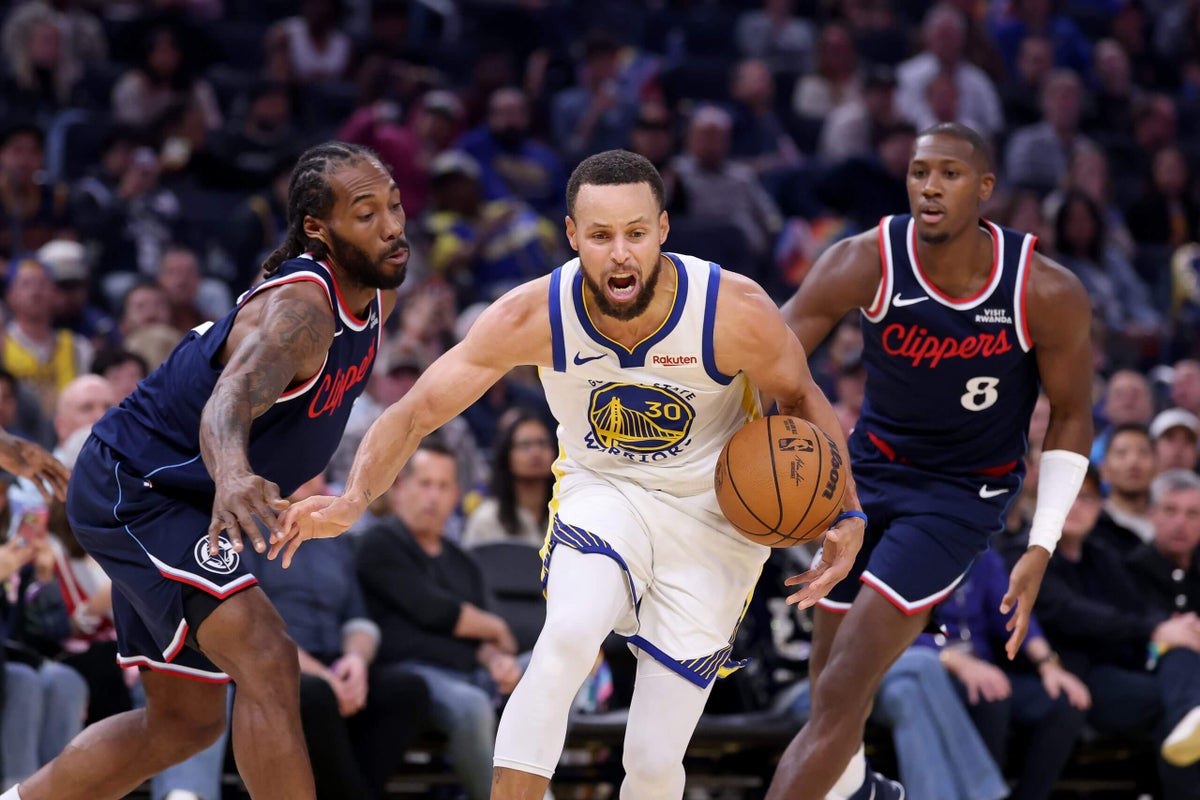
NBA Play-In 2026 Final Recap: Warriors Advance and First Round Bracket Locked
The NBA Play-In 2026 final recap is everything fans hoped for: last-second drama, veteran heroics, and a bracket that promises one of the most compelling postseasons in recent memory. From Stephen Curry silencing doubters in Los Angeles to Deni Avdija’s jaw-dropping 41-point eruption in Phoenix, the 2026 play-in tournament delivered high-stakes basketball at its finest. Eight teams entered with playoff dreams. Four left standing. Here is everything you need to know about how it all unfolded and what it means for the first round. How the 2026 NBA Play-In Tournament Works Before diving into the action, it helps to understand the format that made all of this possible. The play-in tournament, now in its sixth year since its 2020 introduction, gives seeds 7 through 10 in each conference a second chance at the playoffs. The rules are straightforward: It is a format designed to reward consistency while punishing complacency. Critics once argued it cheapened the regular season. Six years later, with overtime classics and Cinderella stories becoming annual traditions, those criticisms have largely faded. NBA Play-In 2026 Final Recap: Western Conference Results Warriors Stun Clippers in Win-or-Go-Home Thriller The story everyone is still talking about. The Golden State Warriors, carrying a modest 37-45 regular season record and the No. 10 seed, walked into Intuit Dome on April 15 as underdogs and walked out as survivors. The final score was 126-121 in favor of Golden State, but the number barely captures how dramatic it was. The Warriors trailed for significant stretches against the No. 9 Los Angeles Clippers, a team that finished 42-40 and entered with genuine first-round aspirations fueled by a healthier Kawhi Leonard. What changed the game? Curry. Stephen Curry, 38 years old and carrying every mile of a 20-season career, erupted for 35 points on a barrage of three-pointers that left Intuit Dome stunned. In the second half, when the Clippers were building separation, Curry refused to let the Warriors fold. His gravity — the way defenses collapse and rotate simply because he is on the floor, created easy looks for teammates in critical moments. Key performances from the Warriors’ play-in win: Player Points Assists Rebounds Key Stat Stephen Curry 35 5 4 Multiple clutch threes Draymond Green 8 9 6 Anchored late defense Brandin Podziemski 14 4 7 Hustle and playmaking Al Horford 11 2 5 Timely floor spacing Draymond Green’s impact stretched far beyond his stat line. His communication on defense, especially in limiting Leonard’s second-half efficiency, proved decisive. Brandin Podziemski, the young forward emerging as a legitimate two-way threat, contributed seven rebounds and kept possessions alive when it mattered most. The win eliminated the Clippers’ season entirely and advanced Golden State to a second play-in game against the Phoenix Suns on April 17, with the No. 8 seed on the line. Trail Blazers Upset the Suns Behind Avdija’s Historic Night While Curry was turning back the clock in Los Angeles, Portland was making its own statement. On April 14, the No. 8 Portland Trail Blazers knocked off the No. 7 Phoenix Suns 114-110 in a result that genuinely surprised most analysts. The headline belonged to Deni Avdija, whose 41-point performance was the single most explosive individual effort of the entire play-in tournament. Avdija, increasingly central to Portland’s offensive identity, attacked off the dribble, knocked down perimeter shots, and made plays in transition that exposed Phoenix’s defensive rebounding lapses. The result locked Portland into the No. 7 seed and set up a first-round date with the No. 2 San Antonio Spurs. The Suns, meanwhile, dropped into must-win territory, a brutal position given they would now face a Warriors team that had just beaten the Clippers on the road. Western Conference Play-In Summary: Game Date Winner Score Next Step Suns (7) vs. Trail Blazers (8) April 14 Trail Blazers 114-110 Portland earns No. 7 seed Warriors (10) vs. Clippers (9) April 15 Warriors 126-121 Golden State advances Warriors vs. Suns April 17 TBD TBD Winner earns No. 8 seed NBA Play-In 2026 Final Recap: Eastern Conference Results 76ers Lock In No. 7 Seed Without Embiid In the East, the Philadelphia 76ers made a statement of their own. On April 15, they defeated the No. 8 Orlando Magic 109-97 in a performance that raised serious questions about how dangerous this team can be in a full playoff series. Tyrese Maxey led the way with 31 points, using his speed and floater game to dismantle Orlando’s normally suffocating defense. With Joel Embiid sidelined, Maxey stepped into a primary offensive role and looked entirely comfortable. His growth from complementary piece to genuine first option has been one of the quieter storylines of the 2025-26 season. Orlando, despite a strong defensive identity and the presence of Paolo Banchero, could not match Philadelphia’s offensive firepower on the night. The Magic advance to a second-chance game but exit having gained valuable experience on a young roster still learning how to win in pressure situations. Hornets Edge Heat in Overtime Classic If one game captured the play-in’s essence perfectly, it was the Charlotte Hornets defeating the Miami Heat 127-126 in overtime on April 14. LaMelo Ball delivered when it mattered most, stepping up in the closing moments of overtime to secure Charlotte’s survival. Miami’s veteran core, battling injury concerns throughout the season, pushed the game to the limit but came up just short. The loss ended Miami’s season in the cruelest fashion, one possession separating a playoff berth from an early summer. For Charlotte, the win extended their youthful momentum and set up a second play-in game against Orlando on April 17, where the East’s final eighth seed would be decided. Eastern Conference Play-In Summary: Game Date Winner Score Next Step 76ers (7) vs. Magic (8) April 15 76ers 109-97 Philly earns No. 7 seed Hornets (9) vs. Heat (10) April 14 Hornets 127-126 (OT) Charlotte advances Hornets vs. Magic April 17 TBD TBD Winner earns No. 8 seed The 2026 NBA Playoffs First Round Bracket: Full Breakdown With the play-in results in,
Read More