
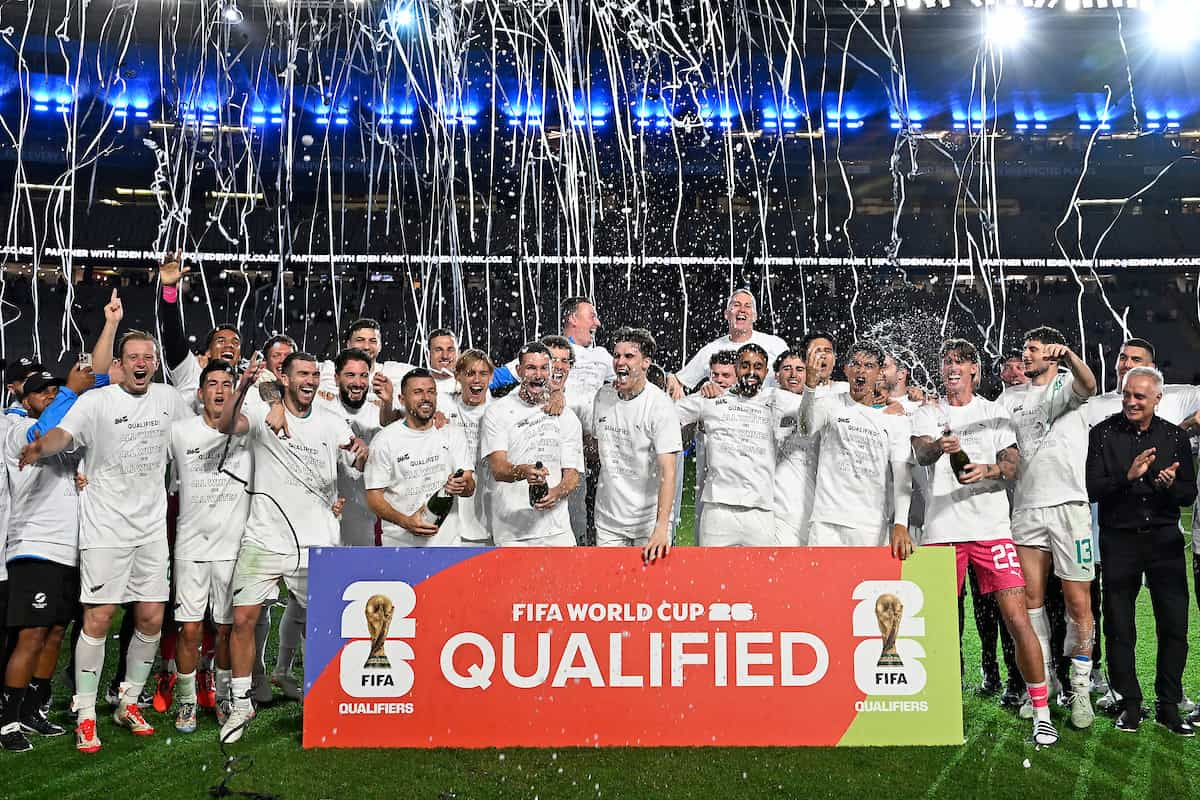
How Does FIFA World Cup Qualification Work? The Complete Guide
The FIFA World Cup is the most-watched sporting event on the planet, but before any team sets foot on that grand stage, they must survive one of football’s most grueling gauntlets: the qualification process. Millions of fans around the world follow these matches obsessively, yet many still wonder exactly how FIFA World Cup qualification works and why some regions get more spots than others. This guide breaks it all down. What Is FIFA World Cup Qualification? FIFA World Cup qualification is the series of regional competitions that determine which national teams earn the right to compete at the World Cup finals. With 211 FIFA member associations spread across six continental confederations, and only a limited number of spots available at the tournament, the road to the World Cup is long, competitive, and often heartbreaking. The host nation receives an automatic berth, which means the remaining spots are distributed among the six confederations based on a formula that FIFA revises ahead of each tournament cycle. How Many Teams Qualify for the World Cup? Starting from the 2026 FIFA World Cup, hosted jointly by the United States, Canada, and Mexico, the tournament expanded from 32 to 48 teams. This expansion significantly changed how many teams each confederation can send, giving more nations a genuine shot at qualifying for the first time in history. The 48-team format distributes spots roughly as follows across the six confederations: Additionally, two intercontinental playoff spots are available, where teams from different confederations compete in a mini-tournament for the final World Cup berths. How Does FIFA World Cup Qualification Work in Europe (UEFA)? UEFA’s qualification process is one of the most straightforward but also deeply competitive. The 55 UEFA member nations are divided into groups based on their FIFA rankings, and they play a home-and-away round-robin format against each other. Group winners earn direct qualification. Depending on the exact format, runners-up and some Nations League group winners then enter a playoff round, where they compete in single-leg or two-leg ties for the remaining UEFA berths. The Nations League pathway has added a fascinating new dimension, rewarding consistent performance across the broader UEFA calendar rather than just the traditional qualification window. How Does Qualification Work in South America (CONMEBOL)? South America uses one of the simplest and most ruthless formats in world football. All 10 CONMEBOL nations are placed into a single round-robin league, where every team plays every other team home and away across 18 matchdays spanning nearly two years. The top teams at the end of this marathon campaign qualify directly. The team finishing in the fifth or sixth position, depending on the cycle, enters the intercontinental playoff for a chance to secure an additional spot. This format means no nation, not even Brazil or Argentina, can afford to sleepwalk through the campaign. How Does Asia (AFC) Qualify for the World Cup? The AFC qualification process runs in multiple rounds. In the early rounds, lower-ranked Asian nations compete to advance, gradually whittling the field down. The later stages involve groups of higher-ranked Asian nations playing home-and-away matches. The top finishers from these groups earn direct World Cup berths. Teams finishing in certain playoff positions then enter a further knockout round for the remaining AFC spots and the intercontinental playoff place. The expanded 2026 format has been particularly welcomed across Asia, where nations like Vietnam, India, and others now have a more realistic path to the finals. How Does Africa (CAF) Determine Its World Cup Teams? CAF qualification typically begins with a group stage format across multiple groups. African nations play home-and-away matches within their groups, and the group winners advance directly to the World Cup. For the 2026 cycle, CAF’s increased allocation means more African nations than ever will make it to the finals. Given the continent’s enormous footballing talent and passionate fan base, this expansion has been widely celebrated. Historic qualifiers like Nigeria, Ghana, Senegal, and Cameroon now face even fiercer competition from rising nations hungry for their own World Cup moment. How Does CONCACAF Run Its Qualification? CONCACAF qualification is one of the more complex processes in world football. The region covers a wide range of footballing abilities, from powerhouses like Mexico and the United States to smaller island nations in the Caribbean. The process begins with preliminary rounds where the lowest-ranked nations compete, and the survivors then enter the main qualification rounds. The top finishers from the final round earn direct berths, while others compete in the intercontinental playoff. The expanded format has brought genuine excitement to nations like Jamaica, Panama, and El Salvador, who now have real shots at reaching the World Cup. What Are the Intercontinental Playoffs? The intercontinental playoffs are a fascinating and often tense part of FIFA World Cup qualification. Teams from different confederations that narrowly missed out on direct qualification are placed into a small tournament or two-legged ties to compete for the final World Cup spots. These playoffs can throw up extraordinary matchups, such as an Asian nation facing a South American team or an African side taking on a CONCACAF qualifier. The drama and unpredictability of these clashes make them some of the most compelling fixtures in the entire qualification cycle. Why Do Some Continents Get More World Cup Spots? The distribution of World Cup spots is based on a combination of factors including the number of FIFA member nations in each confederation, the overall quality of football in the region, and the commercial and cultural reach of the game in those areas. UEFA and CAF receive the largest allocations because they represent the highest number of competitive nations. FIFA also periodically revises allocations to reflect football’s global growth. The expansion to 48 teams is partly a response to the sport’s rapid development in Asia, North America, and Africa, where investment in football infrastructure has grown significantly over the past two decades. When Does World Cup Qualification Start and End? Qualification campaigns typically begin two to three years before the tournament itself. For the 2026 World
Read More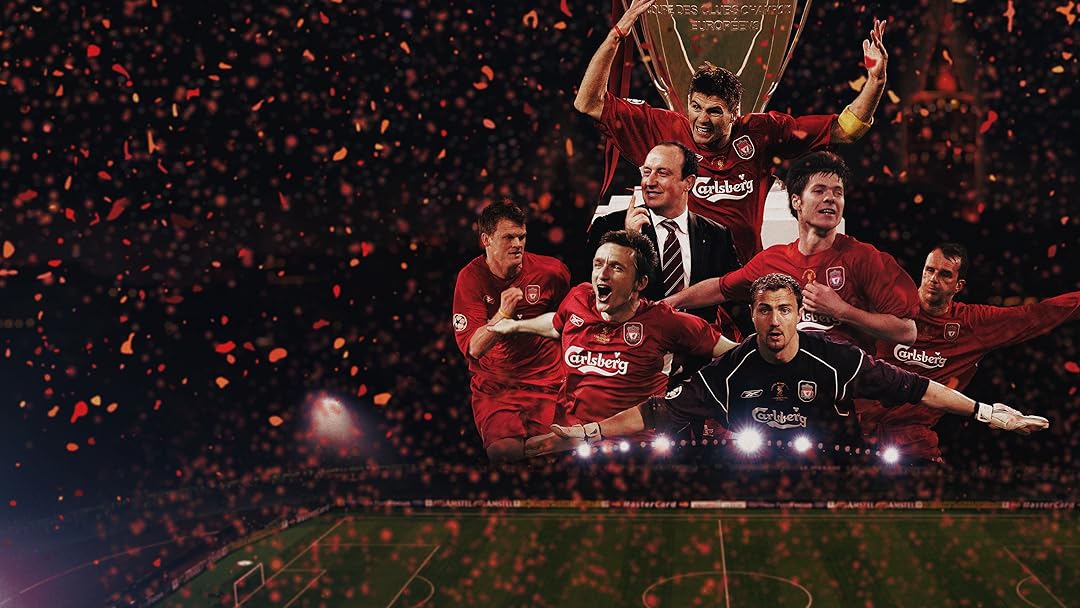
Liverpool’s 2005 Champions League Miracle: The Istanbul Final Comeback That Shocked the World
The date was May 25, 2005. The Atatürk Olympic Stadium in Istanbul, Turkey, was packed with over 69,000 fans, and millions more were watching across the globe. Liverpool faced AC Milan in the UEFA Champions League Final, a match that would go on to be called the greatest game in football history. Nobody could have predicted what was about to unfold. By halftime, Liverpool were three goals down. The game looked finished. Commentators were already writing their post-match analyses about Milan’s dominance. And yet, what followed in the second half was nothing short of a sporting miracle, six minutes that changed everything and delivered Liverpool their fifth European Cup. AC Milan’s Dominant First Half: Liverpool on the Brink AC Milan arrived at the final as overwhelming favourites. They had players like Paolo Maldini, Kaka, Hernan Crespo, and Andriy Shevchenko, one of the most feared attacking lineups in European football at the time. Liverpool, managed by Rafael Benitez, were talented but considered outmatched on paper. The game began in the worst possible way for Liverpool. Paolo Maldini scored after just 51 seconds, the earliest goal ever scored in a Champions League Final. Milan were fluid, composed, and ruthless. By the time the halftime whistle blew, Hernan Crespo had added two more brilliant goals, and the scoreline read 3-0 to AC Milan. In the Liverpool dressing room, players sat in stunned silence. Some reports suggest tears were shed. It felt impossible. It felt over. But Rafael Benitez had other ideas. The Halftime Team Talk That Changed History What Benitez said in that dressing room has become the stuff of legend. He reorganised his team tactically, shifting Didi Hamann into a holding midfield role to provide more defensive stability and give Liverpool’s attacking players the freedom to push forward. He told his players to score one goal and then see what happened. He reminded them who they were. Captain Steven Gerrard stood up in that dressing room and spoke. He urged his teammates not to give up, not to let the fans down, and to go out there and fight. That leadership in one of football’s darkest moments is one of the reasons Gerrard is remembered as one of the greatest captains in the history of the sport. Liverpool walked back out for the second half as a completely different team, not just in formation, but in belief. Six Minutes That Rewrote Football History What happened between the 54th and 59th minutes of the 2005 Champions League Final will never be forgotten by anyone who witnessed it. Liverpool scored three goals in six extraordinary minutes to level the match at 3-3, producing the most dramatic comeback in Champions League history. Steven Gerrard started it. A powerful header from a cross in the 54th minute made it 3-1, and suddenly the Liverpool end of the stadium erupted. The momentum had shifted. You could feel it. Vladimir Smicer, who had come on as a substitute, then fired a long-range shot that went in off the post in the 56th minute to make it 3-2. Disbelief was spreading across the stadium. AC Milan, moments ago so composed and dominant, looked shaken. Then came the decisive moment. Xabi Alonso was brought down in the penalty area, and he stepped up to take the spot kick himself. His initial penalty was saved by Dida, the Milan goalkeeper, but Alonso followed up in an instant and smashed the rebound into the net. 3-3. The comeback was complete. The crowd went into absolute delirium. Six minutes. Three goals. One of the most remarkable moments in the entire history of sport. Extra Time and the Penalty Shootout: Nerves of Steel After those breathtaking six minutes, both teams had to dig deep through 30 minutes of extra time. AC Milan, still stunned, came closest to scoring again. Shevchenko had a chance that seemed certain to go in, but Liverpool goalkeeper Jerzy Dudek made a miraculous double save, arms and body sprawling across the line, to keep the scores level. That save is ranked among the greatest in Champions League history and proved that this night belonged to Liverpool. As the match went to a penalty shootout, the atmosphere inside the Atatürk Stadium was electric. Dudek, clearly inspired, danced and wobbled on his goal line trying to put the Milan players off — a move reportedly suggested to him by Benitez, who had studied how Bruce Grobbelaar used similar tactics in Liverpool’s 1984 European Cup Final. It worked. Serginho, Pirlo, and Shevchenko all failed to score from the spot. Liverpool, in contrast, were composed and clinical. Hamann, Cisse, Riise, and Smicer all converted. When Shevchenko’s tame penalty was saved by Dudek, the entire Liverpool end exploded. The final was over. Liverpool had won the Champions League for the fifth time in their history. Why the Liverpool 2005 Champions League Miracle Matters Beyond Football The Istanbul comeback is not just a football story. It is a story about human resilience, belief, and the refusal to accept defeat when all logic says otherwise. It is the reason sport captures the imagination of billions of people around the world. For Liverpool fans who were inside that stadium, or watching from pubs and living rooms in England and across the globe, May 25, 2005, is a night they will carry with them forever. It is passed down in conversations, replayed on YouTube millions of times, and referenced every time someone says something is impossible. Neutrals who watched it still speak about it with the same energy and disbelief as they did in the moment. Football journalists who have covered the sport for decades routinely name it as the single greatest match they have ever witnessed. That alone tells you how rare and extraordinary that night truly was. The Legacy of Istanbul and What It Did for Liverpool Football Club The Liverpool 2005 Champions League miracle did far more than win a trophy. It gave a generation of supporters a memory that defines what it means to
Read More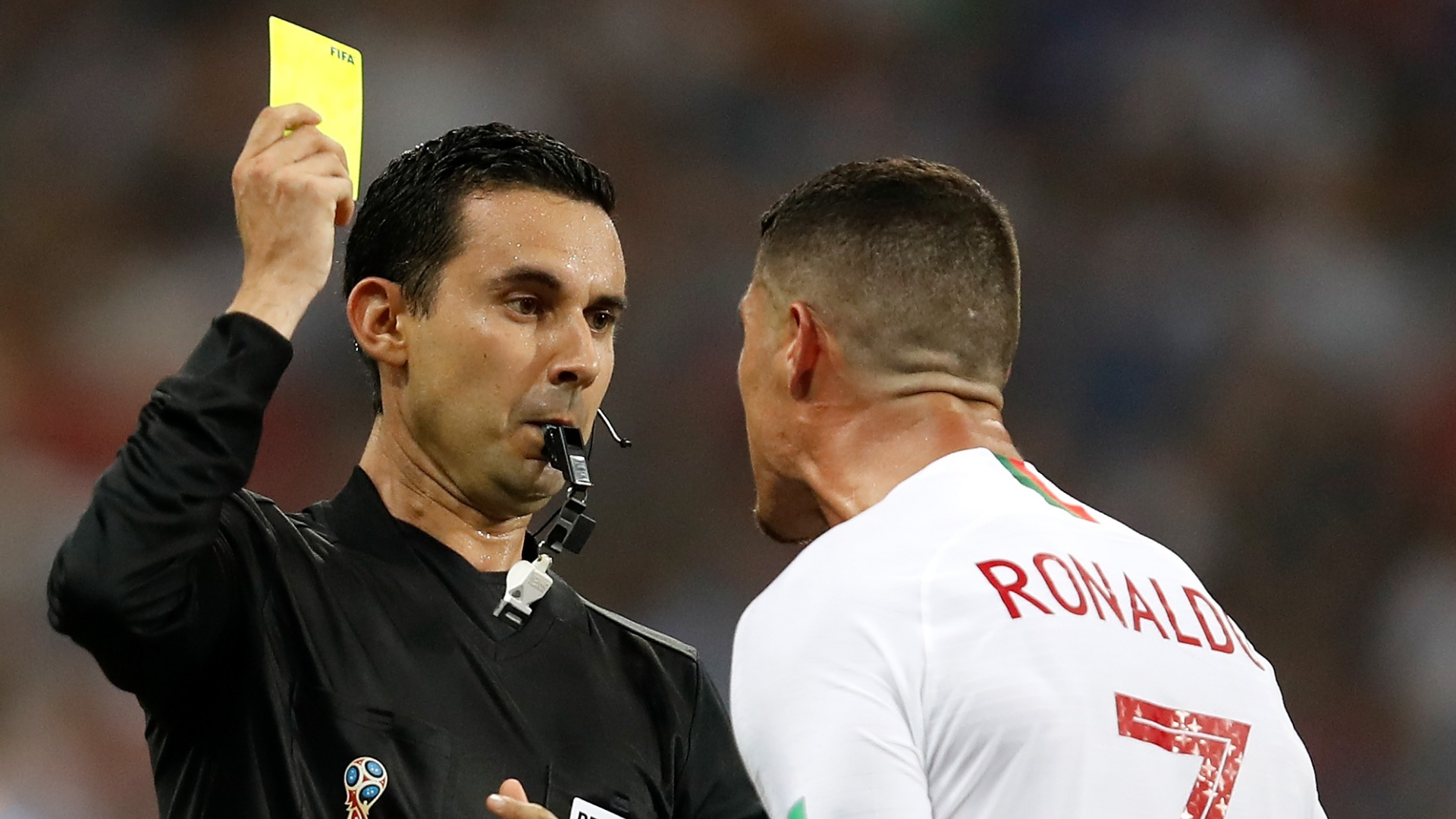
Most Yellow Cards in World Cup History: Full Record List
A referee reaches into his pocket. The crowd holds its breath. On the World Cup stage, that moment carries consequences that extend far beyond the match itself. A yellow card at this level can end a player’s tournament through suspension. It can shift momentum in a knockout tie. It can define how a nation’s campaign is remembered. Discipline, or the collapse of it, has shaped World Cup outcomes as decisively as any goal. The records behind those bookings tell a story the scorelines alone never could. The Most Carded Tournament in World Cup History The 2006 World Cup in Germany produced 345 yellow cards and 28 red cards across 64 matches, both individual records for a single World Cup. That is an average of more than five cards per game. FIFA No edition of the tournament before or since has come close to those numbers. The physicality of that tournament was documented in real time. Referees were under instruction to clamp down hard on tactical fouling. The result was a disciplinary record that still stands nearly two decades later. The Most Yellow-Carded Match in World Cup History For years, the Battle of Nuremberg held the record. Russian referee Valentin Ivanov issued a FIFA World Cup record four red cards and 16 yellow cards during the Portugal vs Netherlands round of 16 tie in 2006. Portugal won 1-0 through a Maniche strike. Both teams were reduced to nine men. The match became one of the most notorious in the tournament’s history. Then 2022 arrived. Spanish referee Antonio Mateu Lahoz issued a FIFA World Cup record 18 yellow cards and one red card during the Netherlands vs Argentina quarterfinal at the Lusail Stadium on 9 December 2022. In total, 15 players on the field received a card, a World Cup record. Argentina won on penalties. The match was immediately nicknamed the Battle of Lusail. The Guinness World Record for most yellow cards in a single World Cup match now belongs to that night in Qatar. The Player With the Most Yellow Cards in World Cup History Individual discipline records are as revealing as team ones. Javier Mascherano of Argentina has received seven yellow cards during the World Cup, the most of any player. The next with six is Cafu from Brazil, all of which were yellow, making him the most yellow-carded player before Mascherano surpassed the record. Mascherano earned his seventh and final booking in Argentina’s defeat to France at the 2018 World Cup. His record reflects both longevity and a combative style that never softened on the biggest stage. The Teams With the Most Yellow Cards in World Cup History At the team level, the numbers reflect decades of accumulated pressure. Germany has accumulated 122 yellow cards, the most of any World Cup team. Argentina follows with 112. Both nations have contested numerous knockout rounds across multiple tournaments, which naturally inflates the numbers. Argentina’s total is also coloured by the intense and physical nature of their campaigns across the tournament’s modern era, including the Battle of Lusail in 2022. How Yellow Cards Have Decided World Cup Outcomes The consequences of a booking extend well beyond the match in which it is given. In the knockout stages, accumulated yellow cards result in automatic one-game suspensions. Those suspensions have altered the trajectory of tournaments in ways that are rarely fully appreciated. At the 2006 World Cup, Portugal lost their suspended playmaker Deco for the quarterfinal against England after his red card in the Battle of Nuremberg. England, reduced to ten men themselves after Wayne Rooney’s red card, still lost. France in 1998 managed Zidane’s card accumulation with extreme care throughout the tournament, aware that losing him to suspension would cripple their chances. The mental discipline required to perform at the highest level while managing the risk of suspension is one of the most underrated aspects of World Cup preparation. How Refereeing and the Rules Have Evolved The use of physical red and yellow cards to indicate dismissals and cautions is a later invention, having been introduced at the 1970 tournament. Only players are listed in the official records, even if they were at the substitutes’ bench at the time of the sending off. The first red card at a World Cup was not issued until 1974, despite the system being introduced in 1970. The rules governing accumulated bookings have also shifted. In 2010, FIFA moved the card reset point to follow the World Cup’s quarterfinal games. The last two teams standing are guaranteed to be at full strength, barring injury or a red card in the semifinal. The card tally no longer resets after the opening games, so the longest stretch players have to go without receiving two yellow cards is five games instead of three. The introduction of VAR in 2018 brought another shift. Red card numbers fell sharply. Since 2010, the count has trended downward, with 17 red cards in 2010, dropping to 10 in 2014, and reaching record lows of 4 in both 2018 and 2022. VAR removed many of the erroneous dismissals that had historically inflated the numbers. What it could not remove was the intensity that produces yellow cards in the first place. Discipline as the Hidden Force of Every World Cup The most yellow cards in World Cup history belong to specific tournaments, specific matches, and specific players. But the broader truth runs beneath all of them. Discipline is not a footnote in the World Cup story. It is a decisive force that has altered finals, eliminated contenders, and defined entire campaigns. The teams that win the trophy are almost never the ones collecting the most bookings. They are the ones who channel their aggression precisely, who compete at maximum intensity without crossing the line. The referee’s pocket, in that sense, is as decisive as any boot that has ever struck a ball.
Read More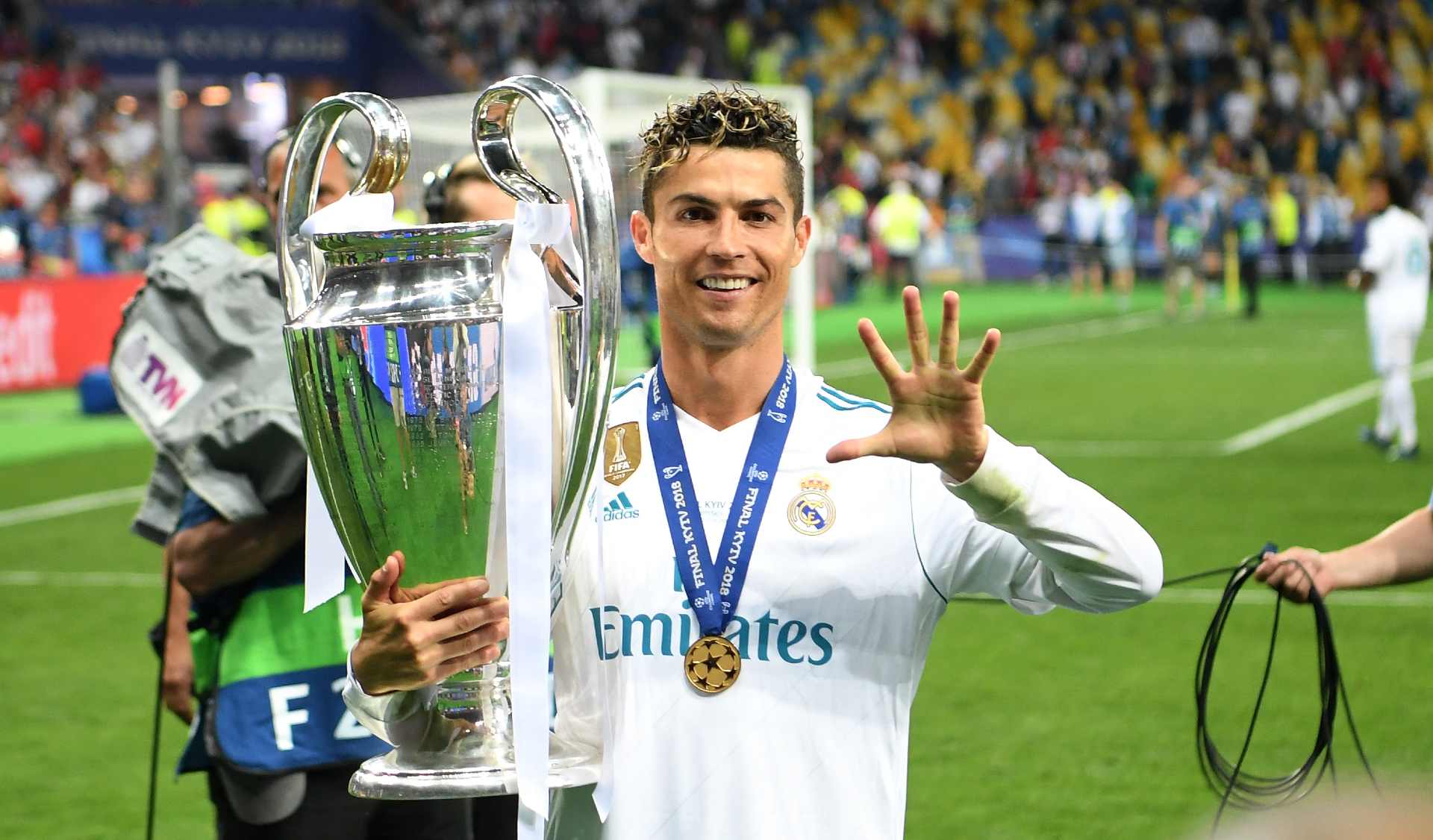
Champions League Top Scorers: Ronaldo’s 140-Goal Record and the Greatest Scorers in UCL History
The UEFA Champions League is the pinnacle of club football, and nowhere is elite talent more clearly measured than in its all-time scoring charts. Since the competition’s modern format began in 1992/93, a select group of extraordinary forwards have elevated goal-scoring into an art form on Europe’s biggest stage. At the summit of this list stands Cristiano Ronaldo, whose record of 140 goals across 183 appearances remains the most celebrated individual achievement in Champions League history. Yet the story of the top scorers extends far beyond one player. From Lionel Messi’s equally staggering 129 goals to Robert Lewandowski’s relentless rise into triple figures, and from Karim Benzema’s trophy-laden career at Real Madrid to the emerging threats posed by Kylian Mbappe and Erling Haaland, the Champions League goal-scoring pantheon is rich, diverse, and fiercely competitive. All-Time Champions League Top Scorers (Top 10) Rank Player Clubs Apps Goals 1 Cristiano Ronaldo (POR) Man Utd, Real Madrid, Juventus 183 140 2 Lionel Messi (ARG) Barcelona, PSG 163 129 3 Robert Lewandowski (POL) Dortmund, Bayern Munich, Barcelona 120+ 107 4 Karim Benzema (FRA) Lyon, Real Madrid 170+ 90 5 Raul Gonzalez (ESP) Real Madrid, Schalke 144 71 6 Kylian Mbappe (FRA) Monaco, PSG, Real Madrid 100+ 68 7 Thomas Muller (GER) Bayern Munich 150+ 57 8= Erling Haaland (NOR) Salzburg, Dortmund, Man City 79 56 8= Ruud van Nistelrooy (NED) PSV, Man Utd, Real Madrid 73 56 10 Thierry Henry (FRA) Monaco, Arsenal, Barcelona 112 50 Cristiano Ronaldo: The 140-Goal Mountain Cristiano Ronaldo’s Champions League record is, in statistical terms, without peer. Across 183 appearances for three different clubs, the Portuguese forward amassed 140 goals, a total that surpasses the second-placed Messi by 11 goals. What makes this achievement especially remarkable is that it was built across vastly different playing environments, from the electric atmospheres of Old Trafford to the Galactico era at the Santiago Bernabeu and a final chapter in Serie A with Juventus. Ronaldo’s journey to the top of the all-time chart was not linear. In his first 32 European outings, he managed just a single goal. Yet once he found his footing, his progression became extraordinary. At Real Madrid, where he spent nine years, he scored 105 of his 140 Champions League goals, including 10 against Juventus alone, the most any player has scored against a single opponent in the competition’s history. On 18 April 2017, Ronaldo became the first player in history to reach 100 Champions League goals, achieving the milestone with a hat-trick against Bayern Munich in his 137th appearance. He went on to finish his competitive Champions League career with five titles: one with Manchester United (2008) and four with Real Madrid (2014, 2016, 2017, 2018). He remains the only player to have scored in three separate Champions League finals. Ronaldo’s Champions League Goals by Club Club Period Appearances Goals Manchester United 2003–2009 ~40 21 Real Madrid 2009–2018 101 105 Juventus 2018–2021 ~40 14 TOTAL 183 140 Among his many records, Ronaldo scored in 93 different Champions League matches, representing 51% of all his appearances. He netted against 38 different opponents and shared the competition record of eight hat-tricks with Messi. His most prolific single season came in 2013/14, when he scored 17 goals, a tally that stood as the Champions League record for several years. Lionel Messi: 129 Goals and Unmatched Club Loyalty Lionel Messi’s 129 Champions League goals are all the more astonishing when considered in context. Of those, 120 were scored for a single club, Barcelona, making him the most prolific scorer for one team in the competition’s history. His nine additional goals came during an underwhelming stint at Paris Saint-Germain, where he struggled to replicate his Camp Nou brilliance at the highest level. Messi became the second player to reach 100 Champions League goals in October 2017, reaching the landmark in 122 games, 15 fewer than Ronaldo required. He has been the top scorer in six Champions League seasons, one fewer than Ronaldo’s seven. Messi also holds the record for scoring against the most different opponents in the competition, finding the net against 40 separate clubs, two more than Ronaldo. Perhaps the most jaw-dropping individual performance in Champions League history belonged to Messi in March 2012, when he scored five goals in Barcelona’s 7-1 demolition of Bayer Leverkusen. He shares the record of eight hat-tricks with Ronaldo and posted a goals-per-game ratio of 0.79, placing him alongside the legendary figures of the pre-modern era such as Alfredo Di Stefano (0.84) and Ferenc Puskas (0.85). Robert Lewandowski: The Third Member of the 100 Club Robert Lewandowski achieved a milestone that only two players before him had managed when he reached 100 Champions League goals on 26 November 2024, scoring for Barcelona against Brest. His total of 107 goals across clubs including Borussia Dortmund, Bayern Munich, and Barcelona places him third on the all-time list, though the gap to Messi (22 goals) and Ronaldo (33 goals) remains substantial. What distinguishes Lewandowski is his efficiency. He required just 100 games to reach 80 Champions League goals, a pace faster than both Messi (102 games) and Ronaldo (116 games) to that same milestone. He also holds the unique distinction of scoring a hat-trick for three different clubs in the Champions League, a feat no other player has matched. At Bayern Munich alone, he scored 69 of his 107 goals, surpassing the club’s previous European record set by Gerd Muller. Benzema, Raul, and the Rest of the Elite Karim Benzema’s 90 Champions League goals place him fourth on the all-time list and cement his legacy as one of Real Madrid’s most important players in the modern era. His tally is built on consistent output across more than a decade at the club, with his Champions League record particularly outstanding in the knockout stages, where he proved decisive in some of the competition’s most memorable comebacks. Raul Gonzalez sits fifth with 71 goals and remains one of the defining figures of Champions League football from the late 1990s
Read More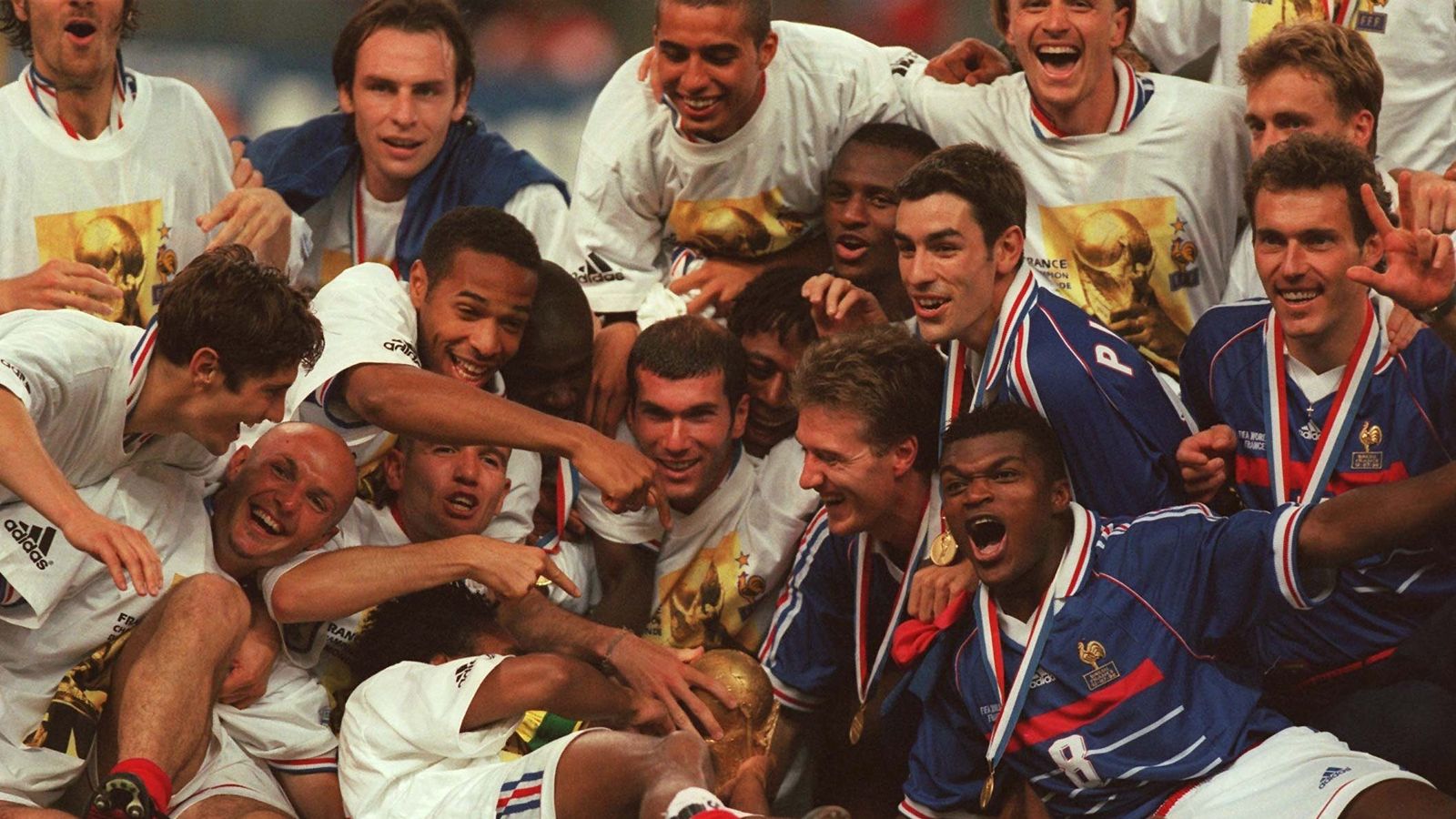
France World Cup History: Two Trophies and One Tragedy
Two World Cup trophies. One of the most humiliating exits the tournament has ever witnessed. A headbutt that stopped the world. And a final comeback so extraordinary it has already entered the permanent folklore of the game. France World Cup history is not a story of steady dominance. It is a story of the highest highs and the most crushing lows, often separated by just a few years. No nation has given the tournament more emotional extremes at the top level. The two stars on the French shirt were earned through brilliance, but the journey between them was never straightforward. Before the Glory: France’s Early World Cup Story France were founding members of the World Cup in 1930. Their early campaigns were largely unremarkable. The first genuine flash of world-class quality arrived in 1958 in Sweden, when Just Fontaine scored 13 goals in a single tournament. That remains the all-time record for goals in one World Cup edition. France finished third that year. Then came years of underachievement and failed qualification attempts through the 1960s and 1970s. Michel Platini’s generation provided the next high point, finishing third at the 1986 World Cup in Mexico. It was a foundation, not yet a dynasty. What followed twelve years later changed French football forever. 1998: The First Trophy, On Home Soil Aimé Jacquet’s France arrived at their own World Cup carrying enormous weight. The expectation was national. So was the pressure. But the squad Jacquet had built was different. It combined individual genius with defensive discipline and collective spirit. Zinedine Zidane was at its centre, but Didier Deschamps led it from the back, Thierry Henry terrorised defences from the flanks, and Emmanuel Petit controlled the tempo. The final against Brazil on July 12, 1998, at the Stade de France, was the perfect night. Zidane scored twice in the first half with headers from corners, 27th and 45th minute. Petit added a third in stoppage time. The final score was 3-0. France were world champions for the first time. The streets of Paris held one of the largest public gatherings in French peacetime history. The multicultural squad that won it represented a vision of France that the nation celebrated with fierce pride. It was more than a football match. It was a cultural moment. The Tragedy of 2002: Defending Champions Eliminated Without Scoring Four years later, France arrived in South Korea and Japan as world champions and European champions simultaneously. The most decorated international side on the planet. They were eliminated in the group stage without scoring a single goal. It remains the most catastrophic defence of a World Cup title in the tournament’s history. Zidane was injured for the opening two matches. France lost 1-0 to Senegal in the tournament’s very first game. Papa Bouba Diop scored the only goal. Then came a 0-0 draw with Uruguay, during which Thierry Henry was sent off for a reckless challenge. France needed to beat Denmark by two goals in the final group game. Zidane returned but was clearly unfit. Denmark won 2-0. Three games. Zero goals. One point. Exit. The psychological collapse behind those numbers was rooted in complacency, injury, and the curse of arriving as the overwhelming favourite with nothing to prove. Roger Lemerre was sacked the following week. 2006: A Final That Will Never Be Forgotten Four years after the lowest point in French football history, a retiring generation gathered for one final act. Zidane came out of international retirement. Raymond Domenech’s side reached the final against Italy in Berlin. France were competitive throughout. They went ahead early through a Zidane penalty. Then came the headbutt. In extra time, with the match level, Marco Materazzi said something to Zidane. What exactly was said has been debated for nearly two decades. What happened next was not. Zidane turned, walked back, and drove his head into Materazzi’s chest. The red card was immediate. France, reduced to ten men, lost on penalties. Zidane’s final act as a professional footballer was one of the most discussed moments in sporting history. The exit was simultaneously heroic and heartbreaking. That paradox is perfectly French. 2018: The Second Star Twenty years after 1998, Didier Deschamps returned to the World Cup final. This time as manager rather than captain. The squad he brought to Russia was built around different qualities. Mbappé provided the explosion. Antoine Griezmann provided the craft. Paul Pogba provided the power. Hugo Lloris provided the calm. The final against Croatia was won 4-2. Mbappé scored at 19 years old. Griezmann scored from the penalty spot. The second star was sewn onto the French shirt. Deschamps became only the third man to win the World Cup as both player and manager, following Brazil’s Mário Zagallo and Germany’s Franz Beckenbauer. The collective system he built, channelling individual brilliance into disciplined structure, was the same formula that had delivered 1998. History had found a way to repeat itself. 2022: So Close Again The 2022 final in Qatar against Argentina produced one of the most extraordinary evenings in World Cup history. France were 2-0 down with around ten minutes of normal time remaining. Mbappé scored twice in two minutes to level at 2-2. Messi put Argentina back ahead in extra time. Mbappé converted a penalty to make it 3-3. After 120 minutes, the finest World Cup final of the modern era went to penalties. France lost 4-2 in the shootout. Mbappé scored a hat trick in a final and still finished on the losing side. French football wept. The rest of the world stared in disbelief. A World Cup Legacy Built on Extremes France World Cup history is not a story of consistency. It is a story of intensity. Two titles separated by two decades. A group-stage exit without scoring. A red card in a final. One of the greatest comeback performances in the tournament’s history. No nation has delivered more drama at the highest level of the competition. The stars on the shirt were earned. Everything around them was lived
Read More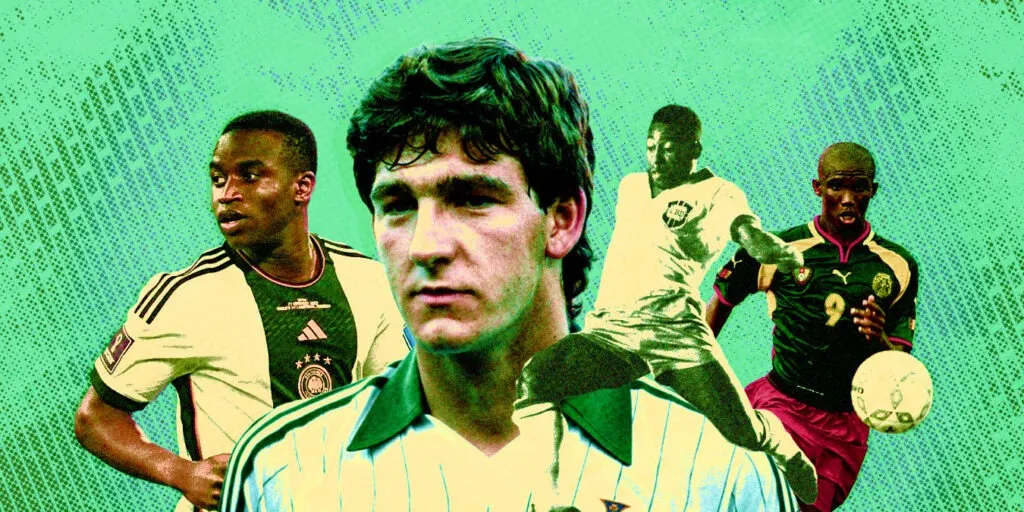
Youngest Players to Score at the FIFA World Cup
The crowd is at its loudest. The weight of a nation sits on every touch. And somewhere on that pitch stands a teenager, unburdened by history, unconcerned with pressure, about to do something nobody expected. The FIFA World Cup has always had this quality. It does not wait for players to be ready. It rewards those who arrive without fear. Some of the most iconic goals in tournament history have come from players barely old enough to vote. Their names are now written permanently into the game’s greatest story. The Record That Started It All: Pelé in 1958 No name in football carries more weight on this subject than Pelé. On June 19, 1958, in Gothenburg, Sweden, a 17-year-old striker stepped onto the World Cup stage for the first time in a knockout match. He scored the only goal against Wales in the quarterfinal. At 17 years and 239 days, he became the youngest scorer in FIFA World Cup history. That record has stood for over 65 years. He did not stop there. Against France in the semifinal, he scored a hat-trick. In the final against Sweden, he scored twice in a 5-2 victory. At 17 years and 249 days, he became the youngest player ever to score in a World Cup final. Both records remain unbroken. Pelé is still the only player in history to score at a World Cup before turning 18. The Goal That Announced a Generation: Michael Owen, 1998 Forty years after Pelé, another teenager arrived on the World Cup stage with something to say. Michael Owen came off the bench for England against Romania in France 1998, scoring an equalizer in the 83rd minute at just 18 years and 190 days old. It was enough to earn him a starting place. What came next changed everything. In the round of 16 against Argentina, Owen received the ball just past the halfway line. He ran at the defence, beat two players, and finished calmly past the goalkeeper. It was 18-year-old composure on the biggest stage. The goal is still voted among the finest in World Cup history. It announced a generation and confirmed that the tournament belonged to the fearless. The Pattern of Teenage Arrivals Owen was not an isolated case. The World Cup has repeatedly served as the moment a young player crosses from promising to iconic. Cesc Fàbregas, aged 19, was part of Spain’s 2006 squad that signalled a golden era approaching. Wayne Rooney arrived at that same tournament carrying the hopes of England at 20, playing through injury and still scoring against Trinidad and Tobago. Then came Gavi. At the 2022 World Cup in Qatar, the Barcelona midfielder scored against Costa Rica at just 18 years old. He became the youngest Spanish scorer in World Cup history. Each generation has its arrival moment. The World Cup manufactures them with remarkable consistency. Mbappé: The Modern Standard No teenager in the modern era has matched what Kylian Mbappé produced in Russia in 2018. He scored four goals at 19 years old. He was the tournament’s joint second-highest scorer as France lifted the title. His goal in the final against Croatia made him the second teenager after Pelé to score in a World Cup final. Sixty years separated those two moments. What made Mbappé’s tournament historically significant was not just the goals. It was the manner of them. Two goals against Argentina in the round of 16. A final goal struck from 25 yards. He combined raw pace with decision-making that most players develop over a decade. He received the Best Young Player award and left Russia as the most exciting footballer on the planet. What the Youngest Scorers Share Look at Pelé, Owen, Mbappé, and Gavi together and patterns emerge. None of them were weighed down by expectation in the way senior players often are. Inexperience, in their cases, became an asset. They played with the freedom that comes from having nothing yet to lose. Each also possessed a specific quality that separated them from technically gifted players who never quite delivered on the World Cup stage. They raised their game for the biggest moments rather than retreating from them. Pressure clarified them. It made them sharper, not more cautious. That quality is not taught. It is discovered in the moment, and the World Cup has always been the moment where the truly exceptional discover it first. The Next Generation: Who Could Join the List The 2026 World Cup, expanding to 48 teams, will give more young players than ever the opportunity to write their own chapter. Lamine Yamal of Spain will be 18 during the tournament. His performances at Euro 2024, scoring in the final as a 16-year-old, confirmed a talent that transcends age. Brazil’s Endrick, already a Real Madrid player, will be 19 in 2026 and carries the physical and technical profile to score on the biggest stage. The list is about to grow. The World Cup Has Always Belonged to the Bold The youngest scorers in FIFA World Cup history share one thing above all else. They did not arrive hoping to contribute. They arrived expecting to decide. Pelé scored in a final at 17. Owen dismantled Argentina at 18. Mbappé redefined teenage excellence at 19. The World Cup does not ask players how old they are. It only asks whether they are ready. The ones on this list answered before anyone thought to pose the question.
Read More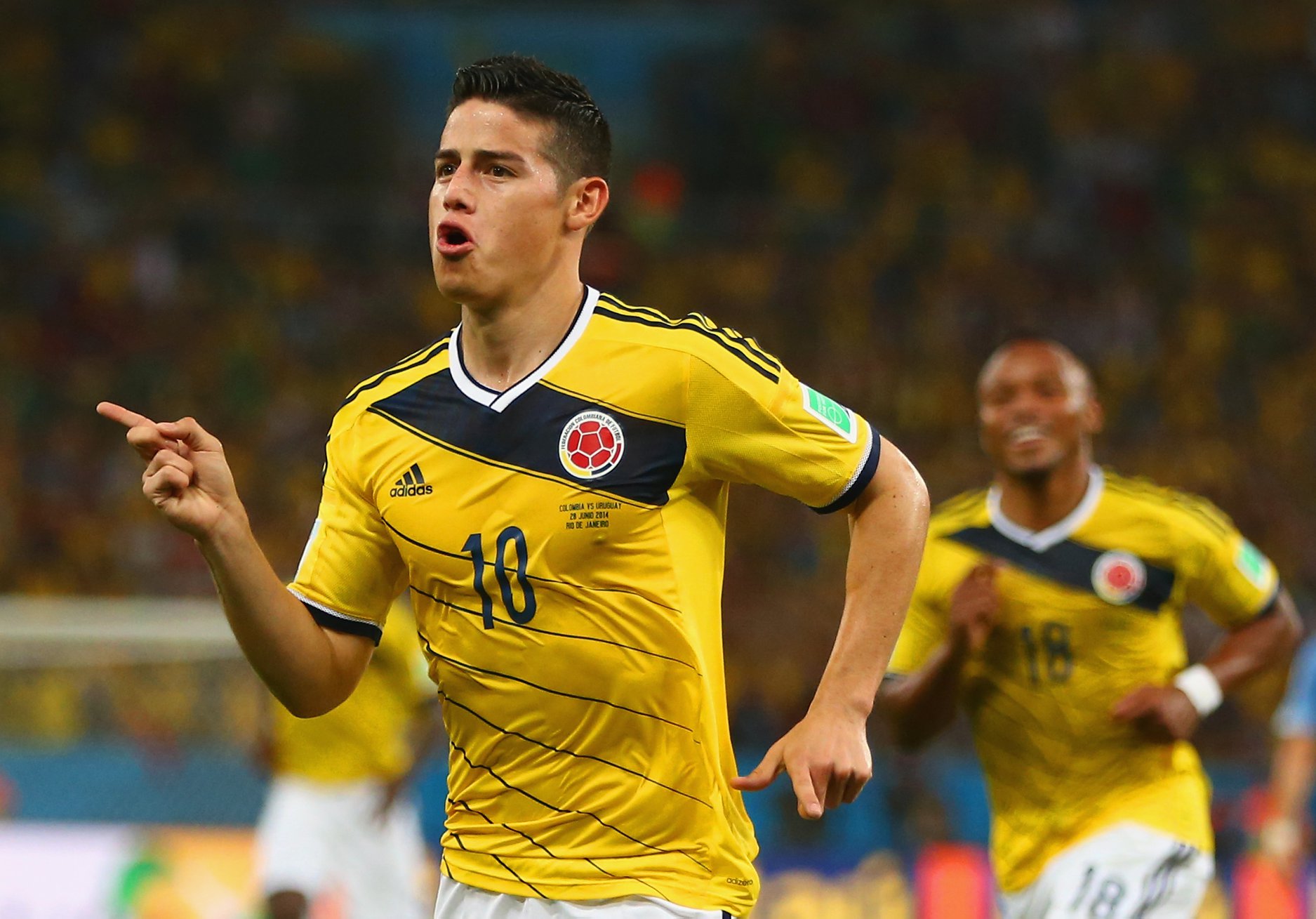
Top 10 Greatest World Cup Goals of All Time That You’ll Never Forget
The FIFA World Cup is the biggest stage in football, and some players have used that stage to create moments that live forever. Not just in highlight reels or history books, but in the collective memory of billions of fans across the globe. The greatest World Cup goals of all time are more than just goals. They are moments of pure human brilliance that stopped the world, changed tournaments, and turned players into legends overnight. Whether you watched them live or discovered them years later on YouTube, these goals have a way of giving you chills every single time. Here is a countdown of the 10 greatest World Cup goals of all time, ranked by their skill, drama, and lasting impact on the beautiful game. 10. Saeed Al-Owairan — Saudi Arabia vs. Belgium (1994) Not many players from outside the traditional football powers have left a mark this deep on World Cup history. Al-Owairan picked up the ball inside his own half and went on an extraordinary solo run, dancing past five Belgian defenders before calmly slotting it home. It was Saudi Arabia’s debut World Cup appearance and they announced themselves in the most stunning way possible. That goal helped them reach the Round of 16, a feat the country has never repeated since. In a tournament full of big names, a relatively unknown winger from Saudi Arabia stole the show. 9. Siphiwe Tshabalala — South Africa vs. Mexico (2010) Opening games of a World Cup rarely produce moments worth remembering decades later, but Tshabalala had other plans. Playing in front of a roaring home crowd, the South African midfielder picked up the ball on the left side, drove forward, and unleashed a thunderous left-footed strike that flew into the top corner. The vuvuzelas went into overdrive and the whole stadium shook. It was more than just a goal. It was a symbol of an entire continent’s passion for football and a historic moment for the first African nation ever to host the tournament. 8. Manuel Negrete — Mexico vs. Bulgaria (1986) Mexico in 1986 had the home crowd behind them and Negrete gave them every reason to roar. In the Round of 16, he received the ball at the top of the box and without hesitation launched himself into a perfectly timed scissor kick volley that crashed into the bottom corner. The technique was flawless, the timing was precise, and the execution was breathtaking. It is no surprise that FIFA fans later voted it the Greatest Goal in World Cup History in an official poll. Some goals are beautiful. This one was a work of art. 7. Ronaldinho — Brazil vs. England (2002) Still debated to this day, Ronaldinho’s outrageous free kick from 35 yards against England in the quarterfinals remains one of the greatest World Cup goals of all time. He spotted England goalkeeper David Seaman off his line and chipped the ball up and over him in a way that seemed almost impossible from that distance. Whether it was intentional or not, the net bulged and England were on their way out. Brazil went on to win the tournament and Ronaldinho went on to become one of the most beloved players of his generation. That single moment announced him to the entire world. 6. James Rodríguez — Colombia vs. Uruguay (2014) The 2014 World Cup in Brazil produced many memorable moments, but nothing quite captured the world’s attention like this goal from Colombia’s James Rodríguez. Receiving the ball on his chest with his back to goal and a defender breathing down his neck, he swiveled and smashed a first-time volley that hit the underside of the bar and bounced in. The stadium erupted, social media exploded, and within days the whole planet knew his name. That goal won him the Puskás Award, earned Colombia a place in the quarterfinals for the first time ever, and led to a blockbuster transfer to Real Madrid. 5. Landon Donovan — USA vs. Algeria (2010) Sometimes a goal is not just a goal. Sometimes it is a cultural moment. With the United States seconds away from crashing out of the group stage, goalkeeper Tim Howard launched a counterattack and Landon Donovan chased it down and buried the rebound in the 91st minute. The commentary, the celebration, and the pure relief on every American face watching was unforgettable. That goal did more for football in the United States than almost anything before or since. It pushed the sport into the mainstream conversation and gave a generation of American fans a reason to believe. 4. Dennis Bergkamp — Netherlands vs. Argentina (1998) If you want to understand what composure under pressure looks like, watch this goal on repeat. With the score tied 1-1 and minutes remaining in the quarterfinals, Frank de Boer played a 60-yard pass over the top. Bergkamp brought it down with a single touch, shifted the ball past his marker with the second, and lifted it over the keeper with the third. Three touches. One breathtaking goal. The Netherlands went through and Bergkamp cemented his place among the all-time greats. It is the kind of goal that players dream about and coaches use to teach composure and technique to this day. 3. Maxi Rodríguez — Argentina vs. Mexico (2006) Extra time in a knockout game is not where you expect to see a goal of this quality. Argentina and Mexico were locked in tension when Maxi Rodríguez received a long diagonal pass, controlled it on his chest, and before the ball even hit the ground, he smashed a left-footed volley into the top corner. Unstoppable. Unrepeatable. The technique required to pull off a strike like that under that kind of pressure is almost impossible to comprehend. Argentina went through and Maxi had the greatest moment of his career. Some goals make you jump off your seat. This one makes you question what is even physically possible. 2. Pelé — Brazil vs. Sweden (1958) At just 17 years old, Pelé
Read More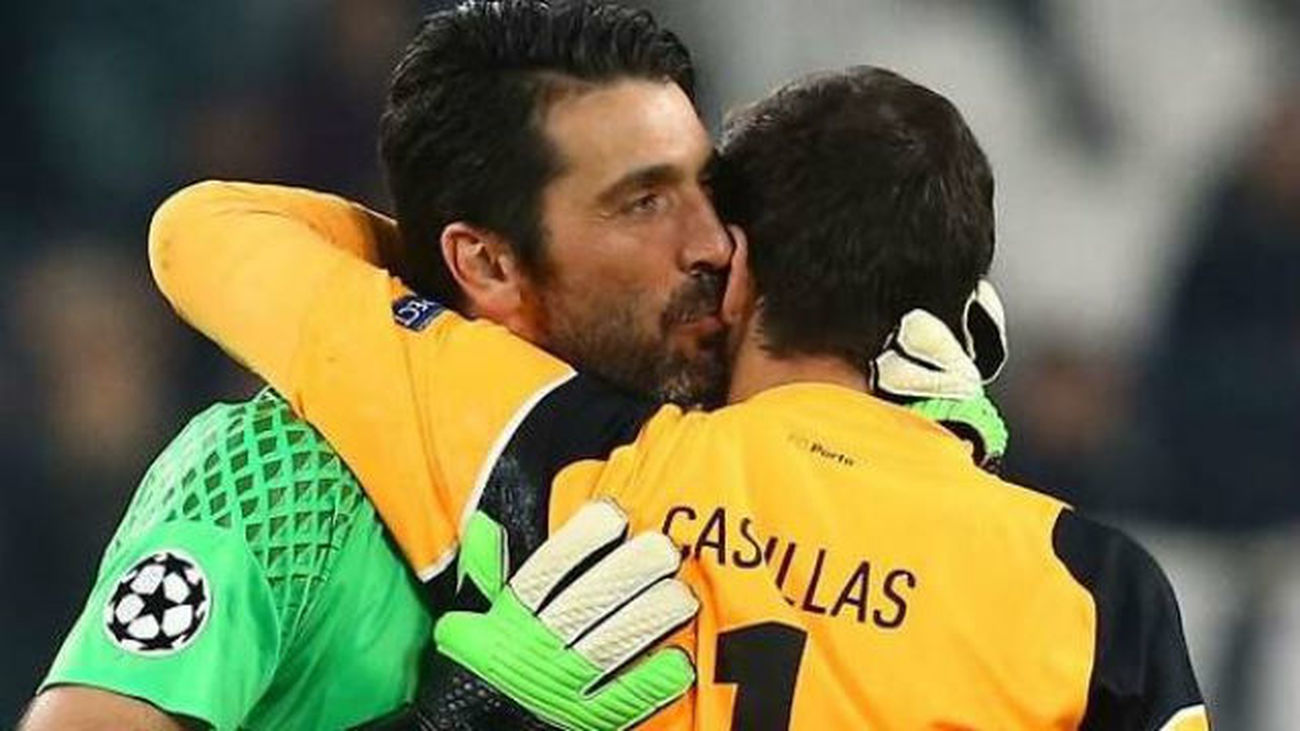
Who Has the Most Clean Sheets in Football History? The Goalkeeping Legends Ranked
In football, a striker might win a single game, but a legendary goalkeeper wins championships. The clean sheet, finishing a match without conceding a single goal, is the ultimate measure of a goalkeeper’s greatness. It demands 90 minutes of flawless concentration, elite reflexes, and the tactical intelligence to organize an entire defense. Across eras, a select group of keepers turned their goalposts into an impenetrable fortress and etched their names into history. What Does It Mean to Have the Most Clean Sheets in Football History A clean sheet is more than just an empty scoreline. It represents collective defensive discipline, but at its heart, it lives or dies with the goalkeeper. One lapse, one misjudged angle, one slow reaction and it is gone. That is precisely why the keepers who consistently kept their nets untouched are revered far beyond their clubs and countries. These are the men who made the impossible routine, and their records tell a story that statistics alone cannot fully capture. Petr Čech: The Man With the Most Clean Sheets in Premier League History When the conversation turns to the most clean sheets in football history within English football, one name stands alone. Petr Čech holds the record for the most clean sheets in Premier League history with an extraordinary 202. Playing in one of the most physically demanding leagues in the world, that number is a testament to both his individual brilliance and his relentless consistency over more than a decade. His 2004-05 season with Chelsea remains the gold standard. He kept 24 clean sheets in a single Premier League campaign, a benchmark that still stands today. Perhaps even more remarkable is the pace at which he reached his century. Čech hit 100 Premier League clean sheets in just 180 games, a rate that no other keeper has matched. His positional intelligence and extraordinary reach made him the cornerstone of some of the most dominant defensive units English football has ever seen. Gianluigi Buffon: The Goalkeeper With the Most Clean Sheets in the 21st Century If there is one goalkeeper whose name is synonymous with the most clean sheets in football history, it is Gianluigi Buffon. The Italian legend is widely regarded as the greatest of all time, and his numbers support that claim with authority. Over a career spanning more than two decades at the highest level, Buffon accumulated over 500 clean sheets for club and country combined, a figure that may never be surpassed. His crowning achievement came during Italy’s 2006 World Cup winning campaign. Buffon conceded just two goals throughout the entire tournament and its qualifying rounds, keeping 10 clean sheets along the way. His most jaw-dropping individual record, however, is the longest consecutive scoreless streak in Serie A history: 974 uninterrupted minutes without a goal past him. For over 10 full matches, Buffon was simply unbeatable. His leadership, composure under pressure, and world-class shot-stopping made him far more than a goalkeeper. He was the backbone of an entire footballing philosophy. Iker Casillas: The Goalkeeper With the Most Clean Sheets in Champions League History Iker Casillas did not earn the nickname “Saint Iker” by accident. The Spanish legend had an almost supernatural ability to produce saves in the moments that mattered most, turning near-certain goals into nothing. He was the heartbeat of the most dominant international era in recent memory, anchoring the Spain squads that won back-to-back European Championships in 2008 and 2012 and the World Cup in 2010. At club level, Casillas holds the outright record for the most clean sheets in UEFA Champions League history with 57, making him one of the most decorated keepers when it comes to the most clean sheets in football history at European level. Across a career spanning nearly two decades at Real Madrid and Porto, he accumulated 439 clean sheets in total. His reflexes and agility in tight situations made him the definitive big-game goalkeeper of his generation. When the stakes were at their highest, Casillas was at his very best. Lev Yashin: The Legend Who Redefined What Most Clean Sheets in Football History Means Any conversation about the most clean sheets in football history that overlooks Lev Yashin is incomplete. The Soviet goalkeeper remains the only keeper in history to win the Ballon d’Or, claiming the award in 1963, a recognition of his complete dominance over the position during his era. Yashin was a pioneer in every sense, introducing sweeper-keeper instincts to a position that had previously been purely reactive. He is estimated to have kept over 270 clean sheets across his career and reportedly saved more than 150 penalties, a rate that borders on the mythical. In nearly half of all matches he played, the opposition failed to score. In an era with far less defensive structure and organization than modern football, that achievement puts him firmly in the debate for the most clean sheets in football history relative to his time. How These Goalkeeping Legends Compare Side by Side Across different eras, leagues, and tactical systems, these keepers defined what goalkeeping excellence looks like at its peak. Čech dominated England’s top flight with 202 Premier League clean sheets. Buffon conquered Europe and the world stage with 500-plus across his entire career. Casillas owned the Champions League with his record 57. Yashin rewrote the position itself with a clean sheet rate of nearly 50 percent per game. Edwin van der Sar’s 1,311-minute scoreless league streak and Manuel Neuer’s record-breaking Bundesliga clean sheet tally are also part of this conversation, but the four legends above represent the absolute pinnacle across the broadest and most competitive stages in the game. Why the Most Clean Sheets in Football History Still Matters Today Modern goalkeeping has evolved dramatically. Keepers like Manuel Neuer and Alisson Becker are now evaluated as much on their ability to play out from the back and act as an eleventh outfield player as they are on pure shot-stopping. Distribution, pressing triggers, and line management are now core demands of the position. Yet
Read More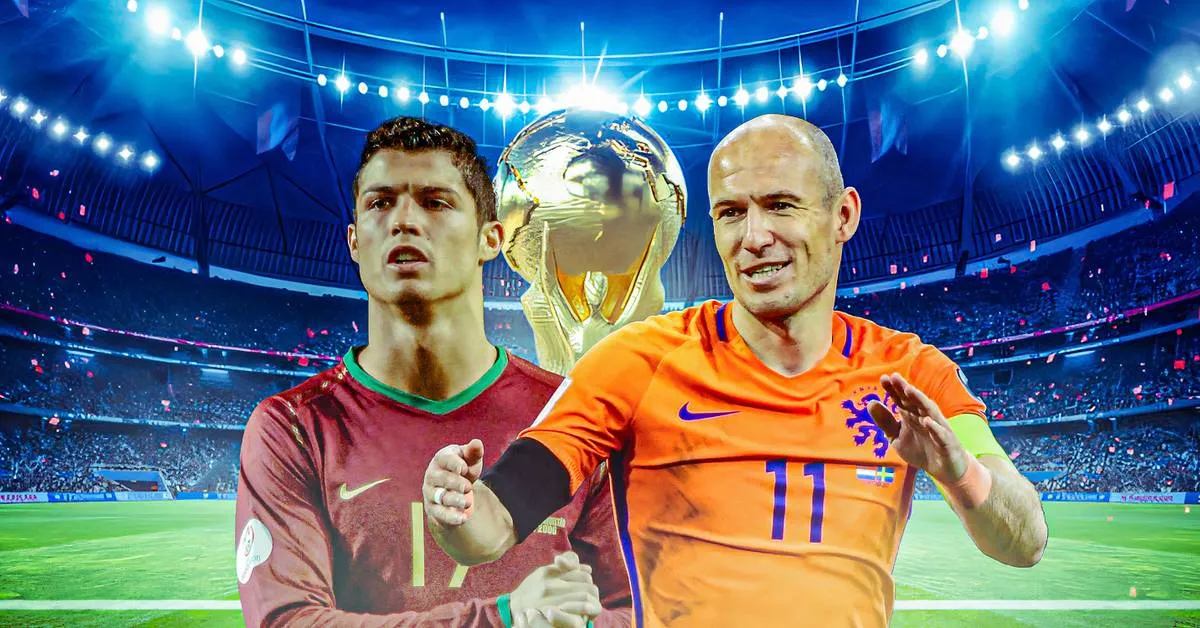
Countries That Have Never Won the FIFA World Cup
Ninety-four years of competition. Twenty-two editions of the greatest sporting event on earth. And in all that time, only eight nations have ever lifted the FIFA World Cup trophy. Brazil, Germany, Italy, Argentina, France, Uruguay, England, and Spain form the most exclusive club in sport, a list that has not changed since 2010. What makes that fact so striking is not who is on it. It is who is not. Some of football’s most passionate, most talented, and most historically significant nations have played the game at the highest level for generations and have never once stood on that final podium. Their stories are not stories of failure. They are stories of the brutal, beautiful unpredictability that makes the World Cup unlike anything else in sport. The Eight Who Won — And the World Left Behind The eight World Cup-winning nations share certain characteristics: periods of tactical innovation, generational squads peaking at the right moment, and the fortune of tournament draws that aligned when it mattered most. Yet countries that have never won the FIFA World Cup include nations that have dominated continental football, produced some of the game’s most celebrated players, and reached the final stages of multiple tournaments without completing the journey. The Netherlands have contested three finals and won none. Portugal reached the semifinals in four separate tournaments. Cameroon became the first African nation to reach a World Cup quarterfinal in 1990. South Korea finished fourth on home soil in 2002. The talent has existed. The victories in the final moment have not. The Most Painful Story in World Cup History: The Netherlands No nation carries the weight of World Cup near-misses quite like the Netherlands. Three finals, three defeats, spanning 36 years. In 1974, Johan Cruyff’s Total Football side produced some of the most breathtaking football the World Cup had ever seen, only to lose the final 2-1 to West Germany in Munich. In 1978, without Cruyff, who had withdrawn from the tournament for personal reasons, the Netherlands reached the final again, this time losing to hosts Argentina in extra time. Then came 2010 in Johannesburg, where a new generation built around Arjen Robben, Wesley Sneijder, and Robin van Persie made the final against Spain. Robben missed a one-on-one with Iker Casillas that would have made the score 1-0. Spain won 1-0 in extra time through Andres Iniesta. Three generations. Three different styles of football. Three defeats on the final day. The Netherlands are the defining example of a nation whose World Cup legacy is defined not by what they achieved but by what was so narrowly taken from them. Dutch football’s identity, its commitment to attacking, technical, expressive football, was forged in those tournaments and has shaped the global game permanently. The trophy, however, has never followed. Individual Brilliance Without the Collective: Portugal Portugal’s World Cup story is inseparable from the story of its great individuals. In 1966, Eusébio, one of the finest forwards of any generation, carried Portugal to a third-place finish at their first World Cup, finishing as the tournament’s top scorer with nine goals. Decades later, Cristiano Ronaldo, widely regarded as one of the two greatest players in football history, gave everything to deliver the World Cup to his nation and fell short each time. Portugal finished third again in 2022 in Qatar under Fernando Santos, Ronaldo’s likely final World Cup, and still the trophy remained out of reach. What has historically defined and limited Portugal is the gap between individual quality and collective organisation. Ronaldo’s brilliance was never in question. What the team around him lacked, across different tournaments and different squads, was the structural cohesion and shared system that World Cup winners have consistently demonstrated. A single player, no matter how exceptional, cannot carry a team to the trophy alone. Portugal’s World Cup history is the most compelling proof of that reality. Africa and Asia’s Closest Challengers Beyond Europe’s nearly men, some of football’s most passionate footballing cultures from Africa and Asia have come closer to breaking through than the record books suggest. Cameroon’s Roger Milla-inspired run to the quarterfinals in 1990 in Italy was a watershed moment, the first time an African nation had progressed that far in the tournament. Senegal reached the quarterfinals in 2002, eliminating defending champions France along the way. Ghana came closest of all African nations to a semifinal in 2010, losing to Uruguay in a quarterfinal penalty shootout after Luis Suárez’s infamous handball on the goal line. From Asia, South Korea’s run to the semifinals on home soil in 2002 remains the high-water mark for the continent, though it came amid considerable controversy around refereeing decisions. Japan has consistently qualified and performed creditably, reaching the round of 16 multiple times and causing genuine upsets against major nations. Morocco’s extraordinary run to the semifinals at the 2022 World Cup in Qatar, beating Spain and Portugal along the way, announced African football’s readiness to compete with the very best in a way that could not be dismissed or qualified. The structural and financial investment gaps between confederations have historically stacked the odds against these nations. The performances have increasingly refused to reflect those disadvantages. Why Winning the World Cup Demands More Than Talent The list of countries that have never won the FIFA World Cup is not a list of nations that lacked quality. It is a list of nations that never had every required element aligned at the same moment. World Cup winners share a specific combination of characteristics that transcends individual brilliance: squad depth across every position, a settled tactical system that has been rehearsed across multiple qualifying campaigns, tournament experience in the squad’s key players, and a collective belief that sustains performance across seven matches in a month. Belgium’s golden generation, widely considered one of the most talented squads in the world between 2014 and 2022, never progressed beyond a semifinal despite containing world-class players at every position. The alignment of all factors simply never arrived in the same tournament. There is
Read More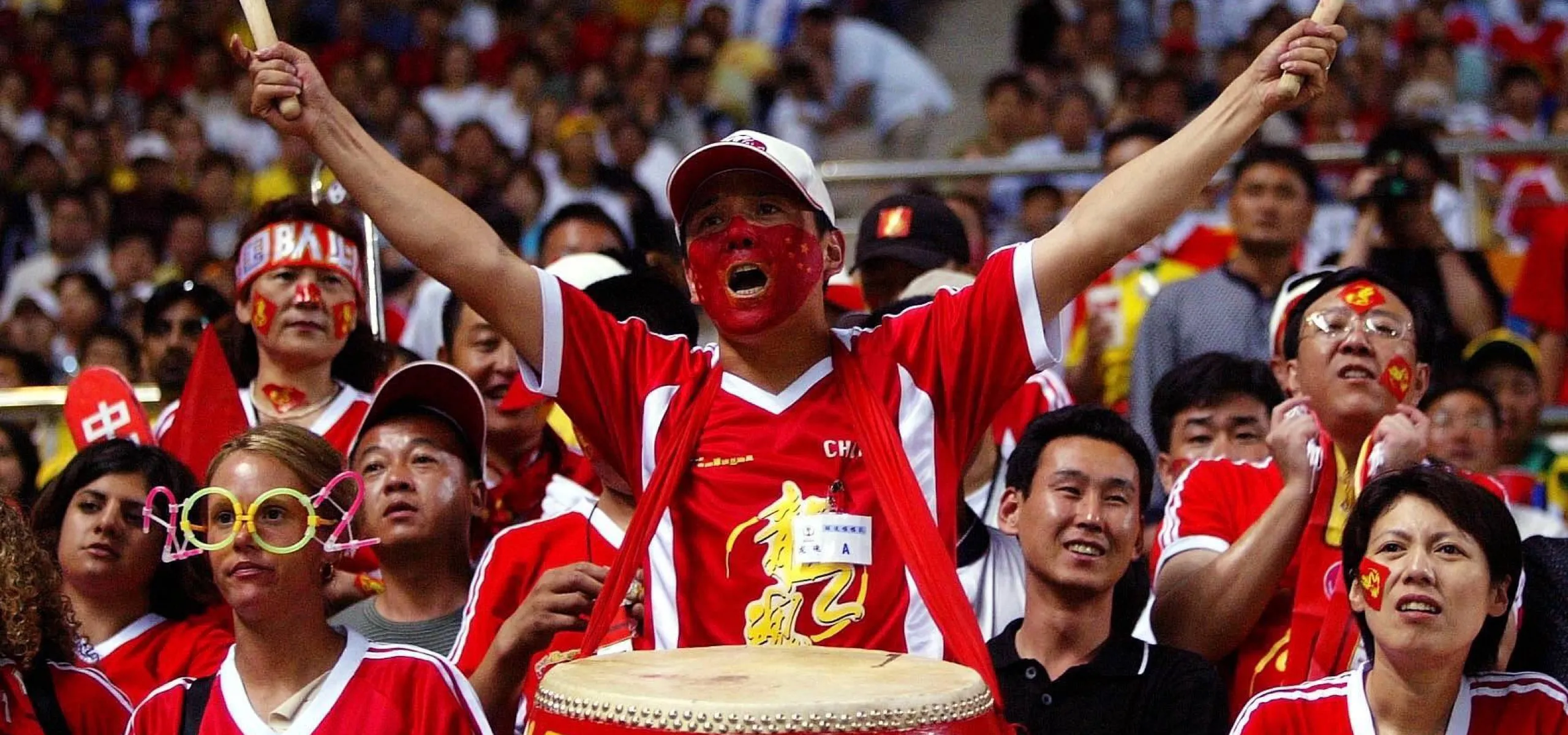
FIFA World Cup 2002: The Most Surprising Tournament in History
The FIFA World Cup 2002 was unlike anything football had ever seen before. Co-hosted by South Korea and Japan, it was the first World Cup held in Asia and the first to be shared between two nations. But the venue was not what made it extraordinary. What truly set the FIFA World Cup 2002 apart was the sheer volume of shocks, upsets, and underdog stories that unfolded over the course of just a few weeks. Traditional giants crumbled, newcomers rose to glory, and the entire footballing world was left speechless. Why FIFA World Cup 2002 Defied All Expectations Before the tournament began, most football fans expected the usual suspects to dominate. France were the reigning World Cup champions and European champions, Argentina had one of the most talented squads on the planet, and Italy and Germany were always reliable forces in world football. Yet within the first two rounds, the tournament had already been turned completely on its head. France, despite having Zinedine Zidane, Thierry Henry, and Patrick Vieira in their squad, failed to score a single goal and crashed out in the group stage. They were eliminated without even registering a shot on target in their opening match against Senegal, a game they lost 1-0. Argentina, loaded with stars like Gabriel Batistuta, Juan Sebastian Veron, and Hernan Crespo, also failed to advance past the group stage after a shock defeat to England and a draw with Sweden. Portugal, another heavyweight, were sent home early after a stunning loss to the United States. Senegal’s Fairytale Run That Shocked the World One of the most celebrated stories of the FIFA World Cup 2002 was Senegal’s extraordinary debut on the world stage. Playing in their first ever World Cup, the African nation opened the tournament by defeating reigning champions France. That result alone would have been enough to make history, but Senegal did not stop there. They advanced from the group stage, defeated Sweden in the round of 16, and pushed Turkey hard before eventually losing in extra time at the quarter-final stage. Coached by Bruno Metsu and led by players like El-Hadji Diouf and Papa Bouba Diop, Senegal played with incredible energy, confidence, and skill. Their run captured hearts across the globe and remains one of the greatest debut performances by any nation at a World Cup. The Rise of South Korea and the Home Advantage Factor No story from the FIFA World Cup 2002 generated more debate than the incredible run of co-hosts South Korea. Under the guidance of Dutch manager Guus Hiddink, South Korea became the first Asian team to reach the semi-finals of a World Cup. Along the way, they eliminated some of the most decorated teams in the history of the tournament. They knocked out Spain in the quarter-finals on penalties after a match filled with controversy surrounding refereeing decisions. Before that, they had sent Italy home in the round of 16, with Ahn Jung-hwan scoring a golden goal in extra time. South Korea’s players were tireless, technically sharp, and unbelievably motivated in front of their passionate home crowd. Whether you believe the results were purely earned or partly influenced by controversial officiating, there is no denying that their journey to the semi-finals was extraordinary. They eventually lost to Germany and then fell to Turkey in the third-place playoff, finishing fourth overall. Germany’s Unlikely Path to the Final Ironically, while most of the pre-tournament favourites were being eliminated, Germany quietly marched to the final despite playing some of the most uninspiring football the tournament had seen. They were far from the dominant force of years past, but Oliver Kahn was virtually unbeatable in goal and proved to be the most outstanding goalkeeper of the tournament. Germany defeated Paraguay, the United States, South Korea, and then faced Brazil in the final. Kahn had been virtually untouchable throughout, but he made a rare error in the final, allowing Ronaldo’s shot to slip through for Brazil’s first goal. It summed up the tournament in many ways: even the reliable heroes had their moments of fallibility, and the script never played out as expected. Brazil and Ronaldo’s Unforgettable Redemption If there was one story of triumph that felt earned and deserved, it was Brazil’s, and in particular Ronaldo’s. After suffering a mysterious seizure on the eve of the 1998 World Cup final, Ronaldo’s career had been derailed by injury and illness. Many had written him off entirely. The FIFA World Cup 2002 became the stage for one of sport’s greatest comebacks. Ronaldo finished the tournament as top scorer with eight goals, including two in the final against Germany. He was electric throughout, combining pace, power, and finishing ability in a way that no defender could handle. His partnership with Ronaldinho and Rivaldo gave Brazil an attacking force that was simply irresistible. Brazil won the tournament without losing a single game, claiming their record fifth World Cup title. For Ronaldo personally, it was the complete redemption of a career that had once seemed broken beyond repair. Controversial Refereeing and the Lingering Debates No honest account of the FIFA World Cup 2002 would be complete without acknowledging the refereeing controversies that surrounded certain matches. Several decisions during the tournament drew enormous criticism from neutrals and football analysts alike. Italy had a goal disallowed that appeared perfectly legitimate, and Francesco Totti was controversially sent off against South Korea in the round of 16 match. Spain also had goals ruled out in their quarter-final defeat to the hosts. These incidents sparked debate about the influence of home advantage, pressure on officials, and the standard of refereeing at the highest level. FIFA later implemented several refereeing reforms partly in response to the controversy generated during this tournament. Regardless of one’s interpretation of those events, they added another layer of drama and discussion to an already unforgettable competition. A Tournament That Permanently Changed World Football The FIFA World Cup 2002 left a legacy that extended far beyond the results on the pitch. It proved that African
Read More